STRATEGY SESSION 1
US Strategy Options for Iran
7 March 2025 | 10:00 AM-11:30AM EST
1717 K St, NW, Suite 900, Washington, DC 20006
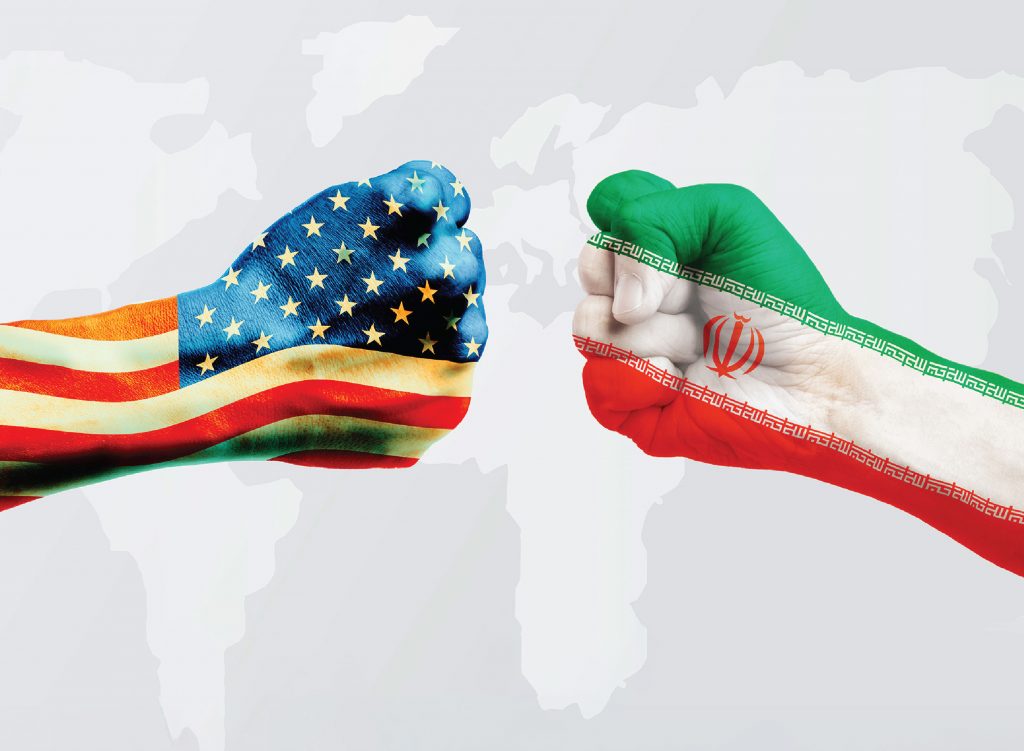
On 7 March 2025, TRENDS US, the Washington, DC office of TRENDS Research & Advisory, held its first Strategy Session, entitled US Strategy Options for Iran. The session, which is the first of a new series for TRENDS US, analyzed Iran’s changing strategic position in the Middle East and explored US strategy options under the Trump administration.
Guest speakers Kenneth Pollack, Vice President for Policy at the Middle East Institute, and Karim Sadjadpour, Senior Fellow with Carnegie Endowment for International Peace, addressed the issue of Iran’s relative weakness in the region, Tehran’s potential calculations, Trump’s likely approach vis-à-vis Tehran, and Israel’s possible courses of action. Held under the Chatham House rule, this exclusive event brought together top experts on the Middle East from academia, the think tank community, the private sector, and the US government.
Key Insights and Recommendations
- Participants engaged in a spirited discussion about whether Iran is able to rebuild the regional militia network it so painstakingly built over decades. There was some agreement that while that task would be incredibly difficult given the military defeats of Hezbollah and Hamas following the war with Israel and the collapse of the Syrian regime, it wasn’t unthinkable. Iran adopts a “vulture doctrine,” as one participant described it, always preying on the political fragilities and sectarian divisions of its Arab neighbors. So long as those exist and Iran can exploit them, Tehran has a shot at rebounding regionally, even if this time around, it will take longer.
- One participant mentioned that while Tehran is often able to exercise pragmatism, it is committed to certain principles that are non-negotiable: death to America, death to Israel, and the mandatory hijab for Iranian women. It is unclear if there is a real debate today inside the regime on whether significant adjustments in foreign policy should be made. Several participants agreed that there are limits to Iranian rapprochement with the United States due to ideology and raison d’être.
- How the Trump administration might approach the Iran policy issue was a topic of intense debate among the participants. One participant surmised that the Trump administration might adopt a gradual approach of pressure against Iran, dialing up or down depending on the Iranian response. The goal, and priority, of US President Donald Trump is to negotiate a nuclear deal with Iran, as mentioned by one participant. The other elements of the Iran policy issue—the regional militia network and the missile arsenal—have reduced strategic significance for Trump, according to one participant.
- Trump’s warmer personal relationships with several Gulf Arab leaders, along with his penchant for big deals in foreign policy, should, in theory, serve US-GCC relations. The key, as one of the participants said, is to find areas of common ground, issue a strategic dialogue (or dialogues with individual GCC countries), and devise strategies that promote collective interests.
- A participant suggested that Washington should first seek to better understand its Gulf Arab partners’ strategic positions, preferences, and concerns. Not all of them will be met, of course, but core ones, once identified, should be considered to avoid disappointments and frustrations, as experienced in the lead-up to the signing of the Iran nuclear deal in 2015.
- All participants agreed that Saudi Arabia, the United Arab Emirates, and Qatar have no interest in seeking any confrontation with Iran. The opportunity to further weaken Iran exists, and they can see it, but they won’t take the lead. They never have and probably never will.
- The days of lobbying Washington for a more aggressive approach toward Iran—especially on the issue of the Islamic Revolutionary Guard Corps’ sponsorship of political violence across the region—are over for the foreseeable future, a participant said. Riyadh, Abu Dhabi, and others have chosen the path of accommodation and normalization with Tehran so they can focus on their top priority: economic development. They want a calm and stable region that can attract the foreign direct investment they need to fulfill the goals they laid out in their long-term economic visions.
- As a participant cautioned, none of this suggests that the Arab partners suddenly trust Iran or do not worry about their security. But it means that whatever opportunity Iran’s current relative weakness presents, the Arab partners have a ceiling in terms of security cooperation with Washington and Israel. • Trump seems to have prioritized the issue of reaching a nuclear settlement with Iran, but this doesn’t mean that he will ignore its destabilizing activities in the region, according to one participant. In his first term, he ordered the killing of Quds Force commander Qasem Soleimani in January 2020. It was a debilitating blow to Iran’s military power in the region. Soleimani was the glue that kept Tehran’s regional network together, and the Iranians have had a very hard time finding a capable replacement. Trump might view such aggressive US tactics against Iran as a means to compel Tehran to make concessions on its nuclear program.
- But beyond the general dispositions of Trump and the Arab partners, there is no question that there is plenty of room for further security cooperation, all participants affirmed. Indeed, there is no philosophical clash or major disagreement on Iran between the two sides. Each will pursue its national interest, as always, but it would be foolish not to take advantage of this historic moment in the region—one where Iran is not on the ascendancy and wreaking havoc across the region but on the decline.
- The ultimate form of security cooperation is a scenario whereby President Trump extends a formal defense pact to Saudi Arabia—and possibly other Arab partners—either as a result of a bilateral negotiation or a multilateral one that includes Israel (the US idea presented so far is that a Saudi-Israeli normalization would earn the Palestinians a path toward an independent state and the Saudis a formal defense guarantee from Washington).
- Should that come to pass, it could considerably influence how Saudi Arabia (and again, possibly others) decides to treat its cooperation with the United States on regional security. With a robust US defense pact, Riyadh could accept greater risk than before, knowing that if a conflict with Iran erupts or if Iran attacks the kingdom again as it did in September 2019, the United States will be legally obligated to intervene militarily on its behalf. Under such a framework and the US security umbrella, various forms of security cooperation between the two countries could be entertained and instituted, especially on integrated air and missile defense, which could benefit the whole region.
- Trump will ask for the Gulf Arab states’ cooperation on post-conflict reconstruction in Gaza and Lebanon and on regional security should a contingency with Iran arise, similar to what happened last year when Iran and Israel traded direct blows twice. The Gulf Arab partners may oblige, but only if the US plan(s) serve their interests and long-term visions for their economies and societies.
- Some of the black swans, or unexpected scenarios, that were discussed during the meeting and could have a dramatic effect on US policy included Iran racing to the bomb and Supreme Leader Ayatollah Ali Khamenei dying, either of which could lead to an Israeli military strike against Iran’s nuclear infrastructure. One participant mentioned that the chances of an Israeli attack against Iranian nuclear facilities are higher than ever but still low. How, and how quickly, the Trump administration approaches the Iran issue will have direct implications for how Israel acts vis-à-vis Iran.