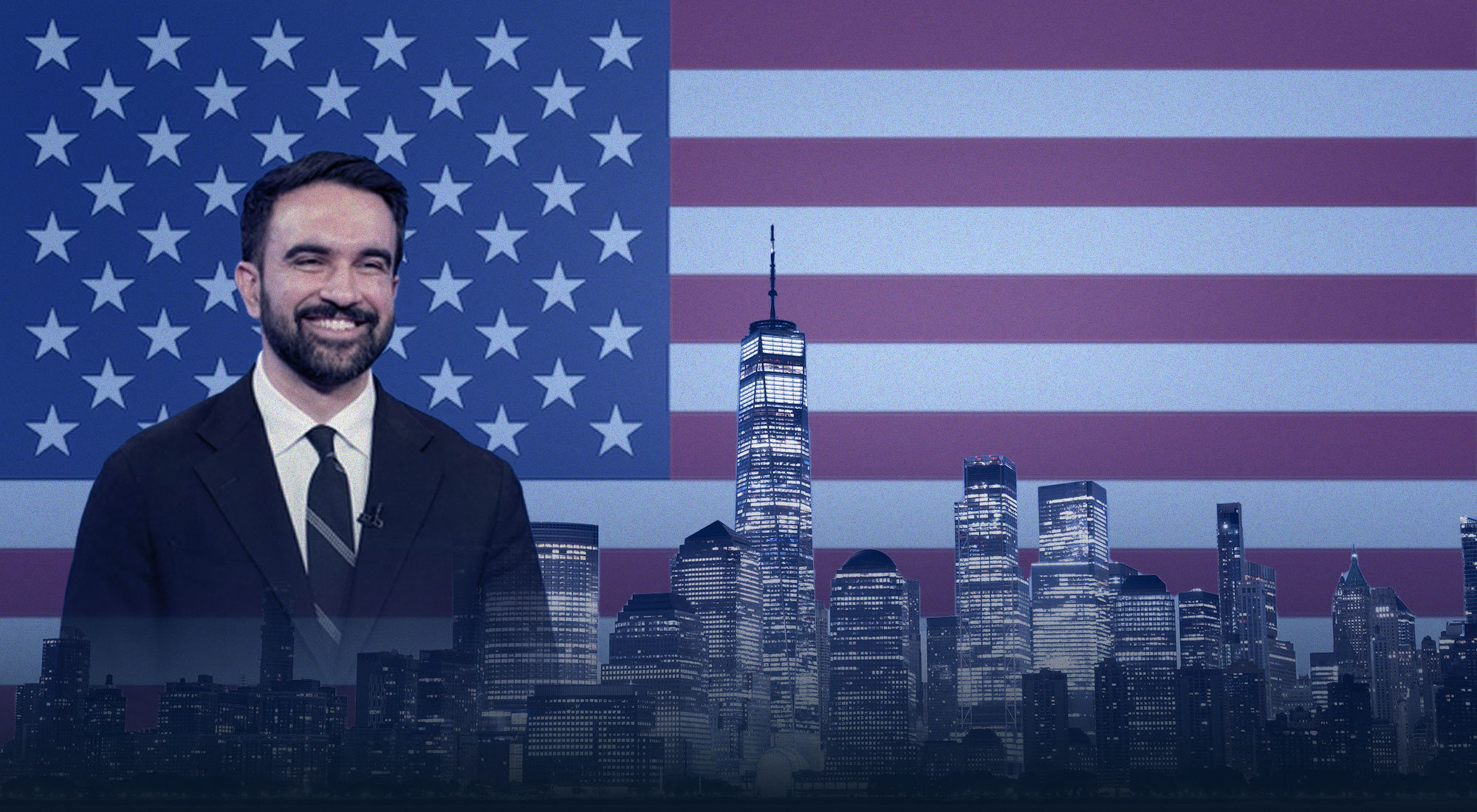
New York has a unique and important role to play in the governance of cities around the world since it is both a global financial hub and a center of international decision-making. As the headquarters of the United Nations and home to many financial institutions, media networks, and global NGOs, the city is at the intersection of local government and international diplomacy.
New York’s institutions and networks allow it to play a distinct role in shaping international policies, norms, and collaborations, making it a true hub of global governance. The election of Zohran Mamdani as the 111th mayor of the city, therefore, constitutes more than a local political shift; it signals a possible re-orientation of how one of the world’s pre-eminent cities is managed, financed, and represented on the international stage.
Mamdani represents a generational shift in the aging leadership of the Democratic Party and a progressive spearhead against his fellow New Yorker in the White House, President Donald Trump, who has threatened to withhold funds from his “beloved first home”. How does this affect American politics, and what does this mean for left-wing or radical politicians around the world? This insight analyzes the electoral context, Mamdani’s policy agenda, comparative implications for global‑city leadership, the challenges that lie ahead, and strategic opportunities that could reshape New York’s urban future.[1]
The Trump-Mamdani Meeting
One of the earliest indicators of Mamdani’s potential behavior as mayor was his meeting with President Trump at the White House, which was widely expected to be contentious. Many anticipated that the Oval Office meeting would turn into a political confrontation following months of criticizing each other (Trump calling Mamdani a “communist,” Mamdani calling Trump a “despot”).[2]
Rather, it produced an unexpectedly friendly and cooperative tone.
Both leaders stressed their mutual goal in addressing New York’s affordability issue while standing side by side. Trump openly hailed Mamdani as a “really great mayor” candidate, but Mamdani steered the controversial questions back to housing and living expenses. A short-term alignment of goals was suggested by their shared emphasis on cost, a topic that is essential to both of their political brands.[3]
This friendliness may also hamper Republican attempts to paint Mamdani as a radical ahead of the 2026 midterm elections. Trump’s support disproves claims that Mamdani poses a radical threat, and Mamdani’s reasonable demeanor shows that he is prepared to work cooperatively with federal leadership despite ideological differences.
Overall, the meeting gave an early glimpse at Mamdani’s leadership style, which may influence how he interacts with state and federal actors after taking office. He is progressive in his policies but pragmatic in his political stance.
Political and Social Context of the Election: Behind Mamdani’s Victory
The 2025 mayoral contest featured three principal candidates: Zohran Mamdani, former governor Andrew Cuomo (who re-entered the race as an independent after losing the Democratic primary), and Republican Curtis Sliwa. Voter turnout surpassed two million people, the highest since 1969, reflecting a heightened public appetite for change. Affordability, the housing crisis, and a cost-of-living squeeze dominated the public agenda—especially among younger, first-time voters who were mobilized by Mamdani’s promise of “relentless improvement.”[4]
Mamdani’s victory is historic on several dimensions; he is the city’s first Muslim mayor, the first mayor of South Asian descent, and the youngest elected chief executive in more than a century. These “firsts” underscore a generational shift and the growing political salience of identity-based representation in urban politics. The election is part of a larger progressive movement. A group of labor unions, tenant organizations, climate activists, and community organizers came together under a platform that called for rent control, universal daycare, and a US$30 minimum wage.[5]
Mamdani’s Agenda: What He Has Promised and Priorities
Madani has set a very ambitious agenda. What helped increase votes is that he is a different candidate, and increasingly American voters want change. He has promised to solve issues that the citizens of New York are facing, such as economic affordability. Mamdani’s platform can be grouped into four main aspects: housing affordability, labor and wages, public transit, and progressive taxation. Mamdani said in an interview that his supporters wanted “a politics of consistency” and aggressive action, including on taxing the rich.[6]
- Housing Affordability: Mamdani’s top priority is to address New York’s housing crisis. He promised to freeze rents on nearly one million rent-stabilized apartments immediately through the Rent Guidelines Board, whose members he chooses. He believes in housing as a public benefit rather than a commercial commodity, and he plans to build 200,000 affordable housing units and expand community land trusts.[7]
- Labor and Wages: Mamdani plans to raise the minimum wage to US$30 by 2030 to reduce poverty and lessen the reliance on public assistance for working families. This demonstrates his commitment to addressing wage stagnation and correcting the social covenant in one of the world’s most unequal cities. His concepts are predicated on “Power to the Neighborhoods!” and establish a connection between equitable compensation and shared prosperity. He also emphasizes the significance of effective collective bargaining and stronger unions in the pursuit of economic justice.[8]
- Public Transit: Mamdani proposes a city-wide, fare-free bus system and the acceleration of bus‑rapid‑transit (BRT) corridors. The “Addressing urban social and spatial stratification” article notes that integrating affordable transit is essential to preventing spatial segregation and to delivering equitable access to employment.
- Progressive Taxation and Public Investment: The following projects will be paid for by higher taxes on the city’s richest people and large businesses. This fiscal plan is in line with what the Public Housing Preservation Trust document says, which says that “redistributive universalism” is needed to fix racial and economic inequality in the system.[9]
- Universal Free Child Care: Mamdani has stated that his top priority is implementing free childcare to the age of five with an estimated annual cost of ~US$6 billion, which requires State legislative approval and funding cooperation.[10]
Mamdani’s agenda also includes the creation of a Department of Community Safety that pairs policing with mental health and homelessness services and a pledge to hire thousands of new teachers and expand universal childcare. Together, these policies aim to rebalance the city’s budget toward a “people‑first” model of governance.
Challenges and Risks Ahead: Internal Governance Constraints
The big question that follows Mamdani’s agenda is, how will he fund many of these extremely ambitious economic affordability agenda items? Most of the popular initiatives are very expensive. Here are some challenges Mamdani could face:
- Fiscal Constraints and Budget Pressures
Mamdani’s plan to expand free city services (e.g., free buses and city-run grocery stores) faces funding challenges and could generate high costs with limited economic return.
- State-Level Obstacles to Approval
Large-scale initiatives necessitate collaboration from statewide organizations like the Metropolitan Transportation Authority (MTA), which slows policy execution and creates uncertainty in implementation.[11]
- Housing Policy’s Institutional Opposition
The results of California, where comparable measures increased construction prices and decreased the overall supply of housing while encountering opposition from real estate and development interests, may be replicated by subsidizing “affordable” housing.
- Opposition to the Education System
Given that elite public schools aid in the advancement of gifted minority children, parents, school officials, and equity activists may oppose efforts to dismantle or modify these institutions.
- Risk to Reputation and Governance
Similar to the political ramifications in San Francisco (Chesa Boudin) and Chicago (Brandon Johnson), symbolic socialist initiatives may cause backlash and harm to the national narrative if they don’t work out.
- Economic Base Erosion
Financial-sector companies may relocate more quickly due to New York City’s high expenses and unclear policies, which would reduce the income base required to finance Mamdani’s goal.
- Political Distraction
Religion, ideology, and foreign policy disputes may dominate public discourse, overshadowing fundamental governance requirements like public services, infrastructure, and cost.
The Rise of the Digital Mayor
Additionally, Mamdani’s rise is partly due to his effective use of social media to discuss politics, something that few politicians are able to achieve. He has built a digitally native brand that really connected with younger people, unlike conventional New York mayors who relied on news conferences and old media. He was able to talk about concerns in simple terms, show that he was open about how he made decisions, and make his campaign more human-centric by posting behind-the-scenes content on Instagram, TikTok, and X. He was able to get over traditional media gatekeepers, get first-time voters to vote, and create a story of authenticity that was different from the way politicians like Cuomo were seen by the establishment.
Researchers say that modern city leaders are increasingly using interactive digital engagement to gain trust and legitimacy, especially among younger, more diverse, and less politically active groups. Mamdani’s use of social media not only spread his progressive message, but it also made people feel like they were directly involved, turning followers into volunteers, advocates, and finally, voters.[12]
Conclusion
The election of Zohran Mamdani is a turning point for New York City and for leadership in cities around the world. His agenda contradicts the market-centric consensus that has long defined the city’s growth model by placing rent control, a US$30 minimum wage, free transit, and progressive taxation at the top of the list. To make this plan work, the mayor will have to meet budget problems, fight against powerful real estate interests, and build good relationships between the federal government and the city.
If the mayor can develop affordable housing, public transportation, and better economic equality, New York might become a model of “municipal socialism” that other big cities look upon when they want to reconsider the balance between profit and public welfare. On the other hand, not keeping these pledges could make people more skeptical about progressive urban administration and give opposing groups more power.
Furthermore, Mamdani’s experience as a leader from a culturally diverse metropolis may enhance New York’s standing as a global symbol of inclusivity and multiculturalism. His government might take an active position in city-to-city diplomacy, cultivating alliances that support common ideals and cooperative approaches to international problems.
The next few years will be a very important test to see if a young, progressive, and identity-affirming leader can change how a global metropolis is run.
[1] Bronwen Maddox and Laurel Rapp, “Independent Thinking: Mamdani Won in New York. For Trump, Was It a Setback or Backlash?” Chatham House, November 5, 2025, https://www.chathamhouse.org/2025/11/independent-thinking-mamdani-won-new-york-trump-was-it-setback-or-backlash. Accessed November 19, 2025.
[2] Kayla Epstein, “Takeaways from Trump and Mamdani’s Surprisingly Cordial Meeting,” BBC, November 21, 2025, www.bbc.com/news/articles/cvgqd42gl0qo.
[3] Ibid.
[4] Katie Houlis and Renee Anderson, “Zohran Mamdani Claims Victory in NYC Democratic Mayoral Primary in Speech to Supporters,” CBS News, June 25, 2025, www.cbsnews.com/newyork/news/zohran-mamdani-claims-victory-nyc-mayoral-primary/. Accessed November 7, 2025.
[5] Ibid.
[6] Emma G. Fitzsimmons, “An Emboldened Mamdani Sheds Conciliatory Tone,” The New York Times, November 5, 2025, www.nytimes.com/2025/11/05/nyregion/zohran-mamdani-wins-interview.html?searchResultPosition=1.
[7] Emma G. Fitzsimmons, “What Does Zohran Mamdani Want to Do as NYC Mayor? These Are His Top 5 Priorities,” The New York Times, November 5, 2025, www.nytimes.com/2025/11/05/nyregion/zohran-mamdani-nyc-mayor-priorities-agenda.html.
[8] Ibid.
[9] Fitzsimmons, “An Emboldened Mamdani Sheds Conciliatory Tone.”
[10] Ibid.
[11] Sam Mellins, Julia Rock, and Colin Kinniburgh, “Can Zohran Mamdani’s Agenda Survive Albany?” New York Focus, June 26, 2025, nysfocus.com/2025/06/26/zohran-mamdani-albany-taxes.
[12] Rohan Sathyamoorthy, “A Note to Politicians Hoping to Emulate Mamdani’s Social Media Strategy: Without the Right Policies, It’s Pointless,” The Guardian, November 6, 2025, www.theguardian.com/commentisfree/2025/nov/06/zohran-mamdani-new-york-zack-polanski-donald-trump-social-media-politics.