Introduction
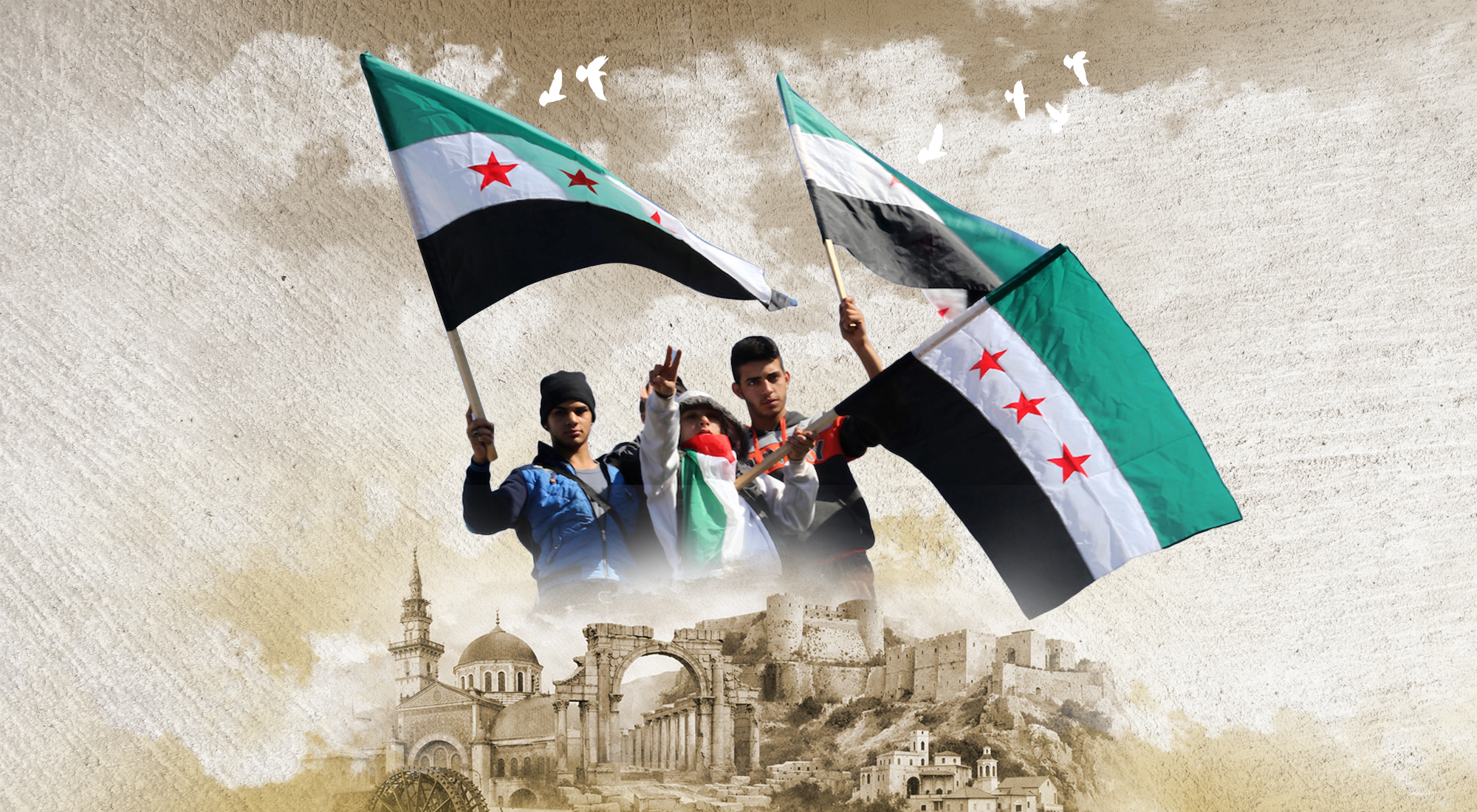
Syria has reached the first anniversary of Assad’s fall. However, the post-Assad transition continues to be challenged by deep historical grievances, nationwide crippling economic hardship, a fragmented security landscape, and a fragile political and social environment, amongst a malady of other challenges. Decades of institutional decay, lack of transitional justice, a battered political landscape, and ongoing factionalism within the armed forces are just some of the key challenges that are yet to be sufficiently addressed by the current transitional authorities in Damascus.
Since December 2024, the interim government led by President Ahmad al-Sharaa has sought to balance between attaining international recognition and consolidating authority across the country. During the first months of the transitional period, Damascus prioritized foreign policy over domestic needs. It focused on rebuilding ties with the international community, reestablishing Syria’s place within the Arab fold, and lobbying for the removal of Assad-era sanctions. This came at the expense of addressing urgent governance, security, economic, and institutional reform at home, which deepened divisions and increased resentment amongst some segments of Syrian society, not least following the March clashes in the coastal regions and the disastrous July military campaign in Suwayda.
While Damascus has since then shifted its focus toward addressing domestic challenges, progress remains uneven, constrained by weak institutional coherence, limited administrative capacity, and persistent rivalries among competing centers of power. Key milestones of the transition, including the National Day of Dialogue, the Constitutional Declaration, and the Parliamentary elections, were each undermined by shortcomings such as limited or tokenistic inclusivity, lack of transparency, and rushed implementation. The revival of government institutions has also been slow and largely ineffective, hindered by bureaucratic red tape, nepotism, and the exclusion of civil servants from the Assad era. The growing concentration of power within the presidency and among senior officials across the Ministries of Defence, Interior, and Foreign Affairs has further constrained institutional reform. The latter now overseas domestic political affairs through the newly established General Secretariat for Political Affairs, reinforcing centralization and limiting the emergence of accountable, transparent, and participatory governance structures within Syria’s transition.
The following analysis synthesizes findings from recent field trips to Syria by the authors, involving interviews with Syrians from the political analysis, legal, business/entrepreneurial, ex-government, INGO, civil society, and development consulting spaces. The objective of the work is to provide a collective analysis of key risks and opportunities across five critical pillars that will largely define the success of the transition process and the emergence of Syria as a stable state: 1) rule of law/institutional development, 2) political integration, 3) transitional justice/social reconciliation, 4) civil society development, and 5) security sector reform. By identifying commonly occurring patterns and underlying dynamics, this report aims to produce a systems-level understanding of the current state and prospects for stability and success in Syria’s ongoing transition.
These five pillars are not isolated, but, as will be shown below, are interdependent. Progress or failure in one area inevitably impacts the others. For instance, a weak rule of law can undermine efforts at political integration by eroding trust, while a collapsing economy can severely impede civil society development and exacerbate security challenges by fostering desperation and reliance on non-state actors. The success of the overall transition hinges on a holistic and coordinated approach across all these dimensions.
In recognition of this interdependence, the aim of this analysis is not to be too granular, but instead to provide a big picture perspective on the priority risks facing the transition perspective. This framing best enables a systems perspective of the transition process, thus in turn enabling the discovery and examination of interconnections between the various risks. This perspective accordingly simplifies the process of conceptualising interventions, whether policy or otherwise, that target the most effective leverage point/s in addressing these problems.
In this regard, this report will be divided into three main sections. The first section will explain the five abovementioned pillars and justify why they are critical foundations that must be established in a fragile state context like post-Assad Syria for a successful transition process. Drawing primarily on findings from the authors’ various field trips, but also other recent material, the second section examines the primary risks within these respective pillars, highlighting the key shortcomings that continue to impede reforms. Finally, the third section identifies key points of leverage and offers targeted, realistic, and implementable policy recommendations for national and international actors seeking to support a sustainable political transition in Syria.
Section 1: Explanation and Justification of the 5 Pillars
Institutional and Rule of Law Development
Institutional and rule of law development pertains to establishing legitimate, transparent, and accountable state institutions and a robust legal framework. Establishing effective, accountable, and inclusive governance structures is crucial for the long-term stability and development of the new state in Syria. Here, achieving such legitimate, representative, and accountable political institutions can only be achieved through genuine power-sharing, constitutional reform, and decentralization. These remain essential for addressing societal grievances and building trust between the state and its diverse citizenry by developing political institutions like parliament, political parties, and civil society – thus moving towards a more participatory system of governance. If grounded in democratic norms and principles, these frameworks and institutions should operate as mutual checks and balances, ensuring that power remains distributed across the main branches of government and preventing the concentration of authority.
However, this development also necessitates building the capacity of state institutions to effectively perform core functions and deliver essential services through comprehensive public administration reform. Such reform extends beyond the technical aspects of governance – it entails promoting institutional effectiveness, transparency, and accountability, while ensuring that decision-making processes and public services are equitable and inclusive. For instance, ensuring the ability of civil society to engage with these governance structures – i.e. improving state-society interaction – is critical here for sustainable peace and development.
Focusing on such institutional development is often paramount amongst all other change areas in a transition process. While transforming fragile societies is a generational process, some events, like a change of political system seen in Syria, can be pivotal moments to catalyze change, as there is an ability for governments in these settings to achieve quick wins. Here, through simple, modest actions regarding the abovementioned development and reform, the resulting tangible improvements for citizens means said governments can start to build confidence and buy-in from the populace from the outset, preventing backslides into conflict.
The often paramount nature of this institutional development amongst other change areas is that it is also the inescapable foundation for any sustained economic revival. Pursuing macroeconomic stabilization, creating jobs, and ensuring equitable access to resources and opportunities are all vital for revival and sustainable development. These are essential in addressing the underlying economic grievances and inequalities that contributed to the conflict, and that could lead to its reemergence. However, such economic revival cannot occur in the absence of legal, financial, and administrative institutions to support private sector growth, successfully administer resources (physical and non-material), and ensure due process in case of commercial disputes.
Political Integration of Fragmented Regions/Communities
Political integration entails unifying Syria’s diverse regions and communities within a coherent national framework and an inclusive and legitimate state structure. Achieving this objective requires addressing long-standing territorial fragmentation and reconciling competing governance models—particularly the autonomy and power-sharing aspirations of actors such as the SDF and Druze communities.
A negotiated political arrangement that combines national cohesion with varying degrees of local autonomy is therefore essential. Failure to establish a balanced and inclusive framework that enables the rights and legitimate aspirations of Syria’s non-Sunni Arab communities to be protected just as strongly risks entrenching the current de facto divisions, thus perpetuating instability. Within such a process, different levels of decentralization may be pursued without making Syria fundamentally decentralized or undermining Syria’s territorial integrity. Administrative decentralization could enable local authorities to manage service delivery and planning within national oversight, while fiscal decentralization would allow subnational bodies limited control over revenues and expenditures to enhance accountability. Political decentralization could provide for elected provincial assemblies with defined powers, and asymmetric arrangements may grant specific regions broader autonomy based on their demographic or historical context. Even quasi-federal models could be explored as long as they preserve a unified national identity and state sovereignty.
Ultimately, the aim is not fragmentation but empowerment—building space for inclusive governance and local participation within a unified constitutional framework. A clear roadmap should therefore prioritize the establishment of a political system that guarantees meaningful representation through functional political parties, independent unions, and a representative parliament, thereby rebuilding public trust, fostering national unity, and laying the institutional foundations for a sustainable post-conflict order.
Transitional Justice and Social Reconciliation
Transitional justice is a framework of judicial and non-judicial measures implemented to help societies transition from eras of conflict, massive human rights abuses, or repressive rule. Its objective is to address the legacy of the violations to ensure accountability, serve justice, and prevent recurrence of the abuses that occurred. As a framework, it is built on four complementary pillars: first is the establishment of a record of what occurred, often through mechanisms like truth commissions; second is holding perpetrators accountable, usually through prosecution; third is providing redress and acknowledgement to victims through reparations (for instance, compensation or symbolic measures); and fourth is guarantees of non-recurrence through reforming the security sector and judicial institutions whose malpractice was central to the past atrocities as well as constitutional and legal reforms to establish more robust protection of all parts of society.
These four pillars enable the foundation for the pursuit of societal healing and coexistence. Lasting peace in Syria hinges on genuine social reconciliation that rebuilds trust, restores cohesion, defines a shared sense of national identity, and ultimately leads to the establishment of a new social contract. The pursuit of transitional justice and subsequent beginning of social reconciliation is not about forgetting the past, but about establishing a new social contract based on mutual respect across society, inclusion, and the non-violent resolution of political differences.
Security Sector Reform and Integration of Armed Factions
The goal of security sector reform (SSR) is to prevent the re-emergence of repressive security forces that can intervene in politics, the economy, and society. SSR and integration of armed factions entails reforming state security apparatuses (police, military, intelligence, judiciary) and integrating diverse armed groups into a unified, accountable national security force. This is essential for maintaining law and order, protecting citizens, and ultimately rests on reforming security institutions to be professional and under civilian control. In the context of a setting like present-day Syria, genuine SSR should also ensure that members of Syria’s diverse ethnic and religious communities are represented across the armed forces, police, intelligence services, and relevant ministries – not as token figures but based on merit and professional competence.
However, aside from all of these top-down processes, SSR should also expand to bottom-up approaches, focusing on community-based security approaches. Here, SSR focuses on empowering communities to actively participate in defining and addressing their own security challenges (e.g., crime or specific types of violence) through mechanisms like community policing, joint safety committees, and forums for citizens to report concerns and hold authorities accountable. Through this, relationships are strengthened between the public and security/justice institutions, and a focus on human security (the promotion of the individual person—rather than the state or nation—as the primary subject of security concern) is enabled as opposed to purely top-down, state-imposed security solutions. In other words, formal, state-led processes are integrated with informal, civil society-led approaches to develop security systems that lead to tangible improvements in the community’s own experience and perception of safety as opposed to merely focusing on the capacity of state forces.
Civil Society Development
In the context of a post-civil war fragile state, civil society development is the process of building, strengthening, and protecting the space for voluntary, organized, collective action around shared interests and values that plays a mediating or intermediary role between public authorities and citizens. Civil society development thus pertains to empowering the formation or growth of independent civil society organizations (CSOs) to contribute to governance, accountability, and community building. This development is vital in a fragile, post-conflict state, as it helps fill a critical void and serves as a necessary bridge between a weak or untrusted state and its citizens in several ways.
First is the rebuilding of the social contract and trust between citizens and the state. Here, if state institutions are absent or are viewed with suspicion, CSOs fill the void of service delivery (health, education, basic needs provision), providing a foundation for future state capacity to build on. In this respect, CSOs are also critical for promoting dialogue and reconciliation within and between communities, working to transform cultures of violence or revenge to ones of peace by building incrementally larger circles of trust.
Second is ensuring accountability and appropriate governance. CSOs act as a watchdog, tracking wrongdoings like peace agreement transgressions and human rights abuses – a crucial capacity for preventing the re-emergence of repressive security forces. Indeed, CSOs are critical actors in providing civilian oversight of SSR processes, ensuring that reforms are genuinely translated into effective, accountable, and non-discriminatory service provision at the local level.
Third is promoting inclusivity and community empowerment. CSOs often represent marginalised groups who were disenfranchised in the pre-war order and/or are underrepresented following the conflict: women, youth, ethnic and religious minorities, etc. Given the reality that post-conflict societies are often deeply divided, CSOs thus play a crucial role in giving a voice at the policy table to the parts of society on the various sides of these divisions. This enfranchisement thus weakens these divisions due to its weakening of perceptions of vulnerability and neglect that cause inter-communal tension. Separately, the local ownership that occurs through CSOs empowering communities to engage in decision-making processes and project implementation strengthens peacebuilding and state-building processes as the processes become less dependent on external, top-down actors and thus are more sustainable.
Section 2: Priority Risks from Each Pillar
Institutional and Rule of Law Development
Pervasive legal ambiguity and a lack of clear laws represent a significant impediment to Syria’s transition. Multiple accounts highlight a substantial legal vacuum and uncertain regulatory frameworks that actively decrease confidence in the business environment and deter investment.[1] One interviewee explicitly stated that “nobody knows, is there a new law in Syria, or we are working on the next law? No, nobody knows. It’s not clear,” going on to attribute this lack of clarity to the government’s apprehension of appearing weak if new laws are not consistently followed.[2] This observation is corroborated by others who note the “complete paralysis of the legal system,” where “no rules, no law, no constitutional law till now, no court of law, justice palace…it’s completely stopped”.[3] This legal paralysis extends directly to economic activities, with potential investors facing crippling hurdles. For instance, the practical impossibility of secure financial transactions, such as a client being unable to retrieve 24 million euros from the Central Bank despite signed documents,[4] underscores how the absence of a predictable legal environment actively stifles economic reconstruction and individual livelihoods.
This persistent lack of clarity, coupled with the government’s apparent reluctance to properly clarify laws, suggests that this ambiguity might not be mere incompetence but a calculated strategy. Such an approach allows for arbitrary decision-making and the circumvention of formal procedures, which directly facilitates corruption and personal gain for those in power. As one interviewee warned, decisions “taken by an individual” rather than through “real study” “will lead to corruption” and risks Syria descending into “the shape of current Iraq”.[5] This transformation of the state into a vehicle for individual interests rather than a public institution fundamentally cripples its capacity to govern effectively, attract legitimate, large-scale investment, or achieve long-term stability.
Beyond legal ambiguity, there is a consistent critique of dysfunctional governance and severe bureaucratic capacity deficits. Interviewees describe the government’s structure as amateurish, lacking coordination, and suffering from immense human resource weaknesses.[6] The bureaucracy is reported to operate under an “invisible ceiling,” indicating a pervasive lack of initiative and a culture of risk aversion, partially a legacy of decades of centralized control under the Ba’ath system.[7] This suggests that the problem extends beyond a mere skills gap to a systemic pathology where individual initiative is disincentivised.
Internal mistrust within ministries, where “former employees don’t talk to the new ones” and “new ones don’t trust the old ones,” severely impedes knowledge transfer and institutional memory.[8] This internal fragmentation and the loss of specific “bureaucratic knowledge” further compound the problem, making it exceedingly difficult to rebuild effective governance.[9] Moreover, recruitment and staffing remain persistent challenges, particularly in critical ministries such as Foreign Affairs, Interior, and Defence. Appointments continue to be shaped more by personal connections and nepotism than merit, largely due to the absence of transparent and competitive hiring processes.[10] This results in institutional paralysis that directly impacts the government’s ability to address the economic crisis, implement reforms, and provide essential services. Without functional, trusted institutions, any recovery efforts are likely to be ad hoc, vulnerable to corruption, and ultimately ineffective. The “humongous” gap between policy vision and execution is a direct consequence of this systemic deficiency.[11] This problem is more intractable than simple capacity building; it requires a fundamental cultural shift within the bureaucracy, which is challenging when loyalty often trumps expertise, as evidenced by the “prioritization of loyalty over expertise in appointments” and the appointment of “extremist figures”.[12]
This systemic dysfunction is further exacerbated by corruption and arbitrary decision-making.[13] The bureaucracy is described as having been “built on corruption” for 60 years,[14] implying an entrenched structural problem that is continuing into the post-Ba’ath era due to bureaucratic culture as well as norms deeply rooted in Syria’s political economy. Reports indicate that numerous officials view the country’s resources as “game” for personal gain,[15] suggesting a deliberate exploitation of state resources for private enrichment. This systemic corruption directly undermines public trust, deters legitimate investment, and diverts resources from public services, exacerbating poverty and instability. It also reinforces a culture of impunity. Addressing this requires more than just new laws; it necessitates a fundamental shift in the political economy of governance in Syria.
Political Integration of Fragmented Regions/Communities
A critical risk to political integration is the absence of a shared national identity and the deepening societal fragmentation.[16] There is a severe erosion of a unified Syrian identity – or perhaps the exposure of the lack of one to begin with due to the stifling structure of the Ba’ath regime. Observations indicate that “Syrian communities don’t really know each other” and Syrian society is experiencing a high level of polarization and fragmentation.[17] Syria’s “historical failure to establish a genuine national identity,” largely suppressed by the Ba’ath regime, has left a vacuum that is now being filled by sub-national affiliations.[18] Various ethno-religious groups are increasingly identifying along geographic or “sectarian and ethnic lines rather than as a unified Syrian people,” with this fragmentation reportedly “worsening daily”.[19] Syria’s different communities are drawing on divergent historical and cultural reference points: Arab-Sunnis asserting ties to Banu Umayyah (Umayyads), Druze in Suwayda grounding themselves in Jebel Bashan (biblical area in Southern Syria), and Kurds aligning with the wider imagining of Kurdistan.
Current efforts by the transitional authorities to craft a unified Syrian national identity have largely fallen short. Initiatives such as adopting a new flag, visual identity, and coat of arms were intended to symbolize inclusivity but instead deepened existing divisions, as these symbols quickly came to represent specific social and political constituencies – predominantly Sunni Arab groups aligned with the current authorities.[20] Discussions around introducing a new national anthem risk compounding these divides further. Beyond their polarizing effect, such moves also raise legal concerns, as they contravene the provisions of the existing Constitutional Declaration.
This identity crisis poses a generational challenge, with some estimates suggesting it would take “100 years” to resolve.[21] This implies that political agreements will likely fail without addressing the underlying social fabric. Sectarian tensions, historical divisions, and lack of a shared national identity critically undermine efforts towards national unity, making political integration through top-down decrees difficult, as citizens’ primary allegiance often lies with sub-national groups.[22] This environment also creates fertile ground for external actors to exploit, as foreign powers can align with specific sectarian or ethnic groups as part of a proxy strategy, thus further entrenching divisions.
Compounding this fragmentation is the prevalence of exclusionary “one-colour” governance and token representation.[23] Key government posts are almost exclusively filled by figures previously affiliated with HTS or Ahmed al-Sharaa’s family, with many sensitive army and ministry appointments following the same pattern. The current administration is widely perceived as non-inclusive, actively alienating diverse communities.[24] Its stance of not making political decision-making an inclusive process is largely attributed to a “justice of the victorious”[25] or “He who liberates, decides” (من يحرر يقرر) mentality – a winner-takes-all approach that actively marginalizes opposition and diverse groups. The government is described as “one colour”, with only “token representation” from minorities, leading to a lack of genuine tasharukiyah/تشاركية (participation/a participatory system).[26] This prioritization of narrow power interests over broad national representation creates a significant credibility gap, leading to widespread distrust and alienation among excluded communities.
Transitional Justice and Social Reconciliation
A widespread culture of impunity and selective justice represents a significant risk to transitional justice and social reconciliation.[27] There is commonly held anger that perpetrators of past atrocities remain unpunished or even hold positions of power, thus fostering impunity.[28] The government’s cooperation with individuals involved in atrocities, such as former National Defense Force Commander in Damascus, Fadi Saqr, under the rationale of maintaining stability, directly undermines the principles of transitional justice and social reconciliation. This practice institutionalizes impunity, signaling that expediency outweighs justice, thereby alienating segments of the population, particularly pro-revolution communities and victims, and eroding public trust in the future judicial system. The current judicial system (if it can be called a system) is also seeing an immense lack of trust from much of the public. As one interviewee noted, “People are committing crimes. But because they came from Idlib, they (HTS) just say, okay, we will punish you next time. Go.”[29]
This culture is often exacerbated by the “justice of the victorious” mentality, where HTS is forgoing pursuing genuine accountability for all crimes committed during the conflict. The current decree on transitional justice is criticized for not including crimes committed by ISIS, SDF, SNA factions or HTS itself, creating a perception of selective justice.[30] This selective approach will fundamentally undermine efforts towards social reconciliation and trust-building. The misconception that economic security alone is sufficient to create a stable society in the absence of pursuing justice is dangerous, as individuals who have lost family members or experienced severe atrocities “won’t forget,” regardless of economic benefits.[31] Attempting to trade economic recovery for justice will lead to a superficial and unsustainable peace.
A lack of “fair distribution of wealth” is a key issue, with observations that the “poor are becoming poorer”.[32] Economic hardships, whether crippling food insecurity, measly salaries, or otherwise, are linked to a sense of injustice. A more holistic look at transitional justice may therefore be required: focusing not merely on addressing past atrocities but also on rectifying present economic inequities. The “justice of the victorious” mentality, which appears to prioritize the remaining and emerging economic elite, directly contradicts the aim of building trust across a society.[33] Without addressing the economic dimensions of injustice and the grievances arising from widespread poverty, any efforts at social reconciliation will be superficial and unsustainable.
There is indeed already a deep-rooted hatred and a cycle of revenge that is posing an immense barrier to reconciliation.[34] One interviewee’s stark assessment that “will people love each other? No. Will people trust each other? No” due to religious hatred, coupled with acts like killing children as punishment for other sectarian violence, signifies a deeply entrenched cycle of animosity and revenge.[35] This sectarian violence is now reportedly largely triggered by inter-communal conflict or issues, often matters like housing and property disputes or revenge cycles.[36]
Security Sector Reform and Integration of Armed Factions
A critical risk to security sector reform is the lack of central control and discipline over security forces, particularly those integrated (either nominally or more substantively) in the Ministry of Defence, leading to a fragmented and unprofessional apparatus. Incidents of undisciplined violence are often attributed to forces making decisions independently.[37] Also, the observation of differences in police behaviour – some being very strict, others laissez-faire – and the lack of standardization or systematized approaches to issues by police highlights the unpredictability of the security apparatus.[38] Similarly, many local-level Ministry of Interior security officials across regions are underperforming and failing to enforce discipline among their subordinates. These local-level officials are a primary determinant of the behavior of rank-and-file forces.[39] This pattern of inconsistent application of law and unpredictable, often over-authoritative behaviour points to a fragmented command structure and, again, a culture of impunity.
Despite some armed factions being nominally integrated under the Ministry of Defence and the removal of factional logos, these integrations have often been superficial.[40] The observation that “still the same fighters (with the same commanders) in the same region” raises concerns about the legitimacy and sustainability of this integration, potentially allowing old loyalties and structures to persist beneath the surface.[41] These factions are described as “not unified” and prone to “inter-fighting” and “rivalry,” competing over each other.[42] The underlying loyalties within these factions are not to a unified national apparatus or ideal but to subgroup interests.
The economic disenfranchisement of former militants is a significant potential driver of instability. Many armed factions have historically relied on illicit income streams, such as checkpoints, fuel smuggling, and narcotics trade. As the transitional government attempts to integrate these groups and consolidate control, these traditional revenue sources are being disrupted. This process risks disenfranchising commanders and fighters who are accustomed to higher, illicit incomes and may not accept legitimate positions with limited Ministry of Defence salaries. [43] The consequence is a potential transformation of militancy into organized crime, where former combatants, deprived of their previous means, turn to illicit activities to sustain themselves. Similarly, the masses of now unemployed ex-regime soldiers, who to a large extent are being blocked from re-enlisting in the new army, pose a comparable risk of becoming feeder populations of criminality and/or future insurgencies.[44]
Finally, an ideological skew within the security sector risks alienating non-Islamic or non-conservative groups and communities, exacerbating fragmentation. The mention of “Islamic training” in police and army schools,[45] with many official videos accompanied by Islamic Nasheeds, risks hindering the establishment of a neutral, nationally representative force, thereby exacerbating political fragmentation rather than resolving it. This persistent fragmentation of the security sector is a critical barrier to all other pillars of the transition, particularly national political integration and the rule of law.
Civil Society Development
The purported seeming or implicit distrust of civil society organizations by much of the government poses risks to their development and effectiveness.[46] Accounts assert that this lack of trust is causing the government to “shut down the space for independent work”.[47] Accounts also point to a governmental preference for centralized control over collaborative governance, limiting the space for independent civil society voices.[48] For instance, the Political Affairs Directorate, which is under the jurisdiction of the Ministry of Foreign Affairs and is responsible for approving, monitoring, and regulating all political activities in the country, is “actively undermining inter-faith civil society organizations – including intimidating members and outright banning some of their work” in some governorates (like Tartous, an Alawi-dominant territory), although allowing them and even supporting them in other governorates (Homs and Hama being key examples).[49]
This environment is further constrained by widespread political apathy and economic prioritization among the populace, which limits appetite for civic engagement.[50] A significant portion of the population expresses a deep disinterest in political activity,[51] a legacy of the old regime’s suppression (“do whatever you want, but do not get involved in politics”).[52] Decades of political repression have cultivated an entrenched civic disengagement, transforming political apathy into a significant barrier to bottom-up civil society development and civic participation. The overwhelming focus on “economic improvement” over “political development” among the majority of Syrians,[53] while very understandable given Syria’s situation, risks further entrenching a depoliticized society where civic engagement is low. This leaves the field open for armed groups and authoritarian tendencies, preventing the emergence of a vibrant civil society capable of advocating for rights or participating in governance.
The severe economic deterioration in Syria continuously constrains civil society’s ability to function effectively. Characterized by widespread poverty, a severe lack of employment opportunities, and the collapse of basic services, these conditions mean that communities are often preoccupied with survival, reducing their capacity for civic engagement and participation.[54] This creates a vicious cycle where economic decline undermines governance, which in turn hinders economic recovery. Furthermore, a “zero-sum economic mindset,” purported by one interviewee to be characteristic of much of Syrian society, where individuals prefer “100% of a small pie as opposed to 50% of a massive pie,”[55] could hinder collaboration, innovation, and the pursuit of shared development, which are foundational for a thriving civil society that relies on collective benefit and cooperation.
Finally, the brain drain and exodus (or refusal to return) of skilled labor pose a critical long-term challenge.[56] Many skilled professionals have left Syria, and many diaspora members are unwilling to return so long as the economic and security situation remains fragile.[57] This systematically depletes Syria of critical human capital necessary for reconstruction and civil society. Without these individuals, the ability to rebuild institutions, stimulate the economy, or foster an active civil society could be curtailed, creating a long-term challenge for national recovery.[58]
Section 3: Moving Forward: Recommendations for Syrian and Foreign Policymakers and Stakeholders
The five pillars examined in this report —rule of law, political integration, transitional justice, security sector reform, and civil society development —are deeply interconnected. Progress in one domain creates momentum in others. However, failures will thus similarly cascade across the entire transition process. Rather than addressing each pillar in isolation, this section identifies strategic leverage points where targeted interventions by Syrian authorities and international stakeholders can generate ripple effects across multiple dimensions of the transition.
These recommendations are organized according to their strategic impact and are sequenced to reflect the realities facing implementation. Some actions can and must begin immediately to build credibility and prevent further deterioration. Others require foundational work before they can succeed. Still others represent generational investments that will take years to bear fruit. Throughout, we indicate the recommended timeline for each set of actions, recognising the short-, medium-, and long-term dimensions and realities of Syria’s transition.
Leverage Point 1: Economic Integration as Foundation for Political and Social Cohesion
Strategic rationale: Economic interdependence can bridge political and social divides that formal agreements cannot immediately resolve. By creating shared commercial interests across communities and regions, economic integration builds practical relationships and mutual dependencies that lay the groundwork for deeper political integration – a dynamic that will also increase the rate of genuine, full militant faction integration into the Ministry of Defence. This approach addresses immediate survival needs while simultaneously advancing longer-term reconciliation and state-building objectives. It also provides alternative livelihoods for ex-militants or soldiers to transition into instead of illicit activities. This overall change to Syria’s political economy and the administrative capability necessary to achieve it will in turn provide impetus to spur institutional development and bureaucratic capacity building on national and local levels.
During the immediate phase (0-6 months), the transitional government must prioritize targeted commercial law reforms that directly respond to investor demands while simultaneously addressing the crippling salary crisis within civil service. The current median salary of approximately $400 for mid-career ministerial positions – insufficient even for basic housing in Damascus – represents an existential barrier to institutional capacity. Building on Qatar’s earlier support for public sector salaries, Damascus should work urgently with Gulf partners to establish a dedicated fund for competitive civil service compensation, tied explicitly to transparent recruitment processes and performance metrics. These emergency measures must be accompanied by visible progress on specific commercial legal frameworks (building on current measures like the nascent Saudi-Syrian investment protection framework), particularly in company law and contract enforcement, to signal to potential investors that the business environment is becoming more predictable but also more aligned with the rule of law. These targeted legal reforms are more manageable than comprehensive legal overhaul and can demonstrate reform viability and momentum for broader reform while attracting crucial investment in the meantime.
Within the medium term (6-18 months), economic integration should be deliberately leveraged as a political bridge-builder across Syria’s fragmented communities. Rather than pushing immediately for formal political integration of contested regions, Damascus and international partners (including the World Bank) should prioritize building commercial ties and equitable distribution of economic benefits across previously divided areas. This should be accompanied by transparent revenue-sharing arrangements between Damascus and governorates. Practical cooperation through trade often precedes political agreements by gradually building interdependence that can soften entrenched divisions. International financial institutions should design conditional lending programs that incentivize this equitable resource distribution, making tangible economic benefits a visible dividend of the peace process. This development will rely on systematically rebuilding inter-ministerial coordination for government decision-making, including structured communication channels
Over the long term (18+ months), foreign stakeholders should condition their reconstruction engagement not only to reward demonstrable progress in the above governance improvements, but also progress in political decentralization frameworks that ensure local authorities have both fiscal resources and administrative capacity to respond to their communities’ needs. Simultaneously, these foreign partners, alongside the World Bank and other development agencies, should support the empowerment of these administrative bodies through this process, enabling knowledge transfer and mentorship. Such capacity building should also involve these actors supporting the establishment of independent think tanks and policy institutes in Syria that can provide ongoing research and analysis capacity to inform government decision-making.
Leverage Point 2: Transparency and Inclusive Institutional Processes as Trust- and Capacity-Building Mechanisms
Strategic rationale: Syria’s transition is fundamentally constrained by mistrust —between communities, between citizens and state, and between different centres of power. Transparent, inclusive processes in decision-making and institution-building can begin to rebuild this trust. Citizen demand for procedural legitimacy in selection criteria for officials presents an opportunity to establish credibility through transparency. Better enabling civil society organisations to act as the bridge between the public and state—filling service delivery gaps, providing accountability oversight, providing avenues for public participation in civic life—will enable both trust and capacity building.
Immediate actions (0-6 months) must focus on process transparency to rebuild public trust. Even amid delayed elections, the government can significantly enhance credibility by making selection criteria for appointments publicly known and establishing clear deadlines for institutional formation. This addresses the widespread public demand for transparent processes. Establishing public reporting mechanisms for key government decisions is also critical, particularly for those decisions affecting economic policy (like budgets), legal reforms, and security sector appointments. Regular public communication builds accountability and counters perceptions of arbitrary governance.
Foreign state partners and development agencies can condition different segments of their financing of the reconstruction on measurable progress towards these governance transparency measures, including publication of selection criteria, regular public reporting, and documentation of consultative processes. These actors should also provide technical support for establishing transparency mechanisms such as government communication systems, public information offices, and consultation frameworks.
The transitional authorities should begin formalizing and resourcing existing local peace committees in regions like the coast and Suwayda, creating protected spaces for community dialogue while maintaining local ownership. This must be accompanied by clear, nationally consistent frameworks for CSO operation that reverse their inconsistent treatment, where CSOs are undermined in some governorates (like Tartous) but permitted in others (Homs, Hama).[59]
During the medium-term phase (6-18 months), the transitional authorities, alongside technical assistance from Arab partners and the World Bank, should expand the work of institutions like the National Institute of Public Administration, but with crucial modifications to integrate experienced personnel from diverse backgrounds. This broader regeneration of the bureaucracy should include diaspora experts and appropriately vetted former civil servants in order to tap into pre-existing institutional memory. The government should also establish clear inter-ministerial coordination mechanisms (again aided by technical assistance from Arab partners and the World Bank) and transparent appointment processes that prioritize expertise, thus beginning to shift the culture from risk aversion toward initiative and innovation.
Gulf states, the EU and the US —the key host regions of highly educated Syrian diaspora —should also work with Damascus to facilitate the establishment of expert advisory bodies that utilise diaspora expertise, alongside other Syrian specialists, that can provide technical guidance to ministries without requiring formal government positions. These diaspora members possess not only valuable expertise for state-building but also crucial regional connections that can benefit reconstruction.
Concurrently, foreign state partners and development agencies can support Syrian civil society organizations that can monitor and report on government transparency commitments, creating accountability without direct foreign pressure. But these external partners should emphasise capacity building and aid for Syrian CSOs more broadly, particularly those working on immediate service delivery, local peace-building, and missing persons documentation, and other transitional justice issues (highly experienced Syrian CSO’s already exist in this latter category in particular and are primed for financial support). This capacity and financial support will need to be accompanied by constructive diplomatic engagement with the government to ensure these CSOs are enabled with the space to operate.
Long-term governance foundations (18+ months) require comprehensive public administration reform that extends beyond technical capacity building to transform decision-making processes, accountability mechanisms, and citizen engagement models. To start building towards this, the government should establish formal mechanisms for civil society consultation on policy development, particularly in areas affecting service delivery, justice, and local governance. And the abovementioned international partners and organisations should in turn support capacity building for Syrian civil society organizations to engage effectively in consultative processes, providing training in policy analysis, advocacy, and constructive engagement with authorities. This support should also involve facilitating platforms for inter-communal CSO cooperation and networking, thus building horizontal connections that enable coordination and more effective advocacy. Again, these external partners can create incentives for the government engaging in these measures through conditioning different elements of reconstruction financing on progress made in their implementation.
Leverage Point 3: Phased Justice and Pragmatic Security Reform
Strategic rationale: The tension between immediate stability needs and long-term justice requirements presents one of Syria’s most difficult dilemmas. However, strategic prosecution of prominent perpetrators combined with economic alternatives for rank-and-file fighters offers a pragmatic pathway. Similarly, security sector reform must balance idealistic goals of full professionalization with realistic recognition of current constraints and opportunities—particularly widespread fighter exhaustion and emerging external consensus for de-factionalization.
Immediate actions (0-6 months) must involve the government accelerating its nascent yet promising shift from mass recruitment to professional training within security institutions,[60] expanding programs already supported by international partners. These initial training cohorts should include not only technical skills development but also human rights education and community engagement principles, creating visible examples of professional security forces that communities can begin to trust. This will also necessitate starting to build diverse ethnic and religious community representation across the armed forces, police, and intelligence services that will naturally need to be accompanied by reversing the emerging Islamic character given to security sector training and identity so far. However, this reversal will need to be a subtle wind back process that occurs gradually over time (i.e. in the long-term timeframe below) in order to avoid triggering backlash from particularly conservative elements of the security sector, which is still highly vulnerable to factionalism.
During the medium-term phase (6-18 months), prosecution of select prominent perpetrators of atrocities from the pre- and post-Assad era must be pursued, strategically increasing over time to address broader accountability while maintaining transparency with the public regarding limitations and realistic timelines given political constraints. While full justice may not be immediately feasible, this strategically geared trajectory of prosecution can begin to address grievances and begin building trust. The prosecution of former regime officials will also be key to inducing the officer class across the new security sector to become willing to accept the sectarian diversification of the security sector
In tandem with the above, foreign development agencies should support the establishment and capacity building of more local civil peace committees, such as those in coastal regions, which not only enable coordination between security officials and locals but also provide localized platforms for dialogue, reconciliation, and peacebuilding within and between communities.
The government must improve oversight and accountability of local-level Ministry of Interior officials, who are the primary determinants of rank-and-file force behavior, as many are currently underperforming and failing to enforce discipline.
For the long term (18+ months), SSR must consolidate transparent recruitment systems, merit-based promotion criteria, and robust civilian oversight mechanisms. This will prevent the re-emergence of politicized security forces, enable the genuine investigation of abuses, and enforce accountability. Over this period, security institutions must evolve beyond purely state-centered approaches to embrace community-based security models like community policing and joint safety committees or forums for citizens to report concerns and hold authorities accountable, strengthening relationships between the public and security institutions. International stakeholders should support this transformation through sustained capacity-building programs, diplomatic pressure on regional actors to respect Syria’s security sovereignty and withhold from spoiler behaviour, and conditional reconstruction financing tied to measurable progress toward the above.
These foreign stakeholders should also engage Damascus to support the establishment of legitimate truth and reconciliation processes that target the cycles of revenge and sectarian violence. This engagement must recognise that such reconciliation processes will need to be multi-generational efforts requiring sustained involvement.
Conclusion
Syria’s transition will be a multi-year process that far outlasts the five-year transitional government mandate, and some dimensions like social reconciliation may take generations to complete. However, the leverage points identified above offer pathways to genuine progress in the near and medium term while laying foundations for longer-term holistic transformation.
The recommendations are intentionally sequenced to build momentum: the immediate actions establish credibility and create space for reform, the medium-term actions build institutional foundations and begin changing structural problems, and the long-term measures ensure sustainability and prevent backsliding.
Success here will require coordination between Syrian authorities and international stakeholders, but also recognition of their different roles and responsibilities. Syrian authorities must demonstrate genuine commitment to inclusive, transparent governance while international actors must provide sustained, patient support that acknowledges the complexity and duration of transformation.
The window for achieving early wins that build confidence and momentum is limited, but it remains open. The choices made in coming months will largely determine whether Syria’s transition moves toward consolidation of exclusionary rule or evolution toward more inclusive, stable governance that can genuinely serve all Syrians, and indeed the long-term interests of its partners.
[1] Nicholas Lyall interview with Damascus-based entrepreneur, investor, and analyst (3 June, Damascus); Nicholas Lyall interview with Syrian director of a development consulting firm (6 June, Damascus); Nicholas Lyall interview with Senior Syrian employee of a major humanitarian INGO (9 June, Aleppo); Nicholas Lyall interview with Syrian businessman and ex-Damascus municipal official (7 June, Damascus); Nicholas Lyall interview with Syrian lawyer (6 June, Damascus); Nicholas Lyall interview with Syrian serial entrepreneur connected to former political elites (7 June, Damascus)
[2] Nicholas Lyall interview with Syrian businessman and ex-Damascus municipal official (7 June, Damascus)
[3] Nicholas Lyall interview with Syrian lawyer (6 June, Damascus)
[4] Nicholas Lyall interview with Syrian lawyer (6 June, Damascus)
[5] Nicholas Lyall interview with Syrian businessman and ex-Damascus municipal official (7 June, Damascus)
[6] Nicholas Lyall interview with Syrian political analyst (5 June, Damascus); Nicholas Lyall interview with Damascus-based entrepreneur, investor, and analyst (3 June, Damascus); Nicholas Lyall interview with Syrian director of a development consulting firm (6 June, Damascus); Nicholas Lyall interview with Senior Syrian employee of a major humanitarian INGO (9 June, Aleppo); Nicholas Lyall interview with Syrian businessman and ex-Damascus municipal official (7 June, Damascus); Nicholas Lyall interview with Syrian lawyer (6 June, Damascus); Nicholas Lyall interview with Syrian serial entrepreneur connected to former political elites (7 June, Damascus)
[7] Nicholas Lyall interview with Damascus-based entrepreneur, investor, and analyst (3 June, Damascus)
[8] Nicholas Lyall interview with Syrian director of a development consulting firm (6 June, Damascus)
[9] Nicholas Lyall interview with Damascus-based entrepreneur, investor, and analyst (3 June, Damascus)
[10] Samy Akil interview with Syrian Ministry of Foreign Affairs official (12 December, Damascus)
[11] Nicholas Lyall interview with Damascus-based entrepreneur, investor, and analyst (3 June, Damascus)
[12] Nicholas Lyall interview with Syrian political analyst (5 June, Damascus)
[13] Nicholas Lyall interview with Syrian director of a development consulting firm (6 June, Damascus); Nicholas Lyall interview with senior Syrian employee of a major humanitarian INGO (9 June, Aleppo); Nicholas Lyall interview with Syrian political analyst (5 June, Damascus)
[14] Nicholas Lyall interview with senior Syrian employee of a major humanitarian INGO (9 June, Aleppo)
[15] Nicholas Lyall interview with Syrian political analyst (5 June, Damascus)
[16] Nicholas Lyall interview with Syrian serial entrepreneur connected to former political elites (7 June, Damascus); Nicholas Lyall interview with senior Syrian employee of a major humanitarian INGO (9 June, Aleppo); Nicholas Lyall interview with senior Syrian employee of a (different to 9 June interview) major humanitarian INGO (11 June, Aleppo); Nicholas Lyall interview with Syrian political analyst (5 June, Damascus); Nicholas Lyall interview with Syrian businessman and ex-Damascus municipal official (7 June, Damascus); Nicholas Lyall interview with Syrian lawyer (6 June, Damascus)
[17] Nicholas Lyall interview with Syrian director of a development consulting firm (6 June, Damascus)
[18] Nicholas Lyall interview with senior Syrian employee of a major humanitarian INGO (9 June, Aleppo)
[19] Nicholas Lyall interview with Syrian political analyst (5 June, Damascus)
[20] Samy Akil interview with Syrian civil society expert (16 October, remote)
[21] Nicholas Lyall interview with senior Syrian employee of a major humanitarian INGO (9 June, Aleppo)
[22] Nicholas Lyall interview with Syrian political analyst (5 June, Damascus); Nicholas Lyall interview with senior Syrian employee of a major humanitarian INGO (9 June, Aleppo); Nicholas Lyall interview with Syrian lawyer (6 June, Damascus)
[23] Nicholas Lyall interview with senior Syrian employee of a transitional justice INGO (5 June, Damascus); Nicholas Lyall interview with Syrian director of a development consulting firm (6 June, Damascus); Nicholas Lyall interview with Syrian political analyst (5 June, Damascus); Nicholas Lyall interview with Syrian businessman and ex-Damascus municipal official (7 June, Damascus)
[24] Nicholas Lyall interview with senior Syrian employee of a transitional justice INGO (5 June, Damascus); Nicholas Lyall interview with Damascus-based entrepreneur, investor, and analyst (3 June, Damascus); Nicholas Lyall interview with Syrian director of a development consulting firm (6 June, Damascus); Nicholas Lyall interview with Syrian political analyst (5 June, Damascus); Nicholas Lyall interview with Syrian businessman and ex-Damascus municipal official (7 June, Damascus)
[25] Nicholas Lyall interview with Syrian director of a development consulting firm (6 June, Damascus)
[26] Nicholas Lyall interview with Syrian businessman and ex-Damascus municipal official (7 June, Damascus)
[27] Nicholas Lyall interview with Syrian serial entrepreneur connected to former political elites (7 June, Damascus); Nicholas Lyall interview with senior Syrian employee of a major humanitarian INGO (9 June, Aleppo); Nicholas Lyall interview with senior Syrian employee of a (different to 9 June interview) major humanitarian INGO (11 June, Aleppo); Nicholas Lyall interview with Syrian lawyer (6 June, Damascus)
[28] Nicholas Lyall interview with senior Syrian employee of a transitional justice INGO (5 June, Damascus); Nicholas Lyall interview with senior Syrian employee of a major humanitarian INGO (9 June, Aleppo)
[29] Nicholas Lyall interview with Syrian lawyer (6 June, Damascus)
[30] Nicholas Lyall interview with senior Syrian employee of a transitional justice INGO (5 June, Damascus); Nicholas Lyall interview with Syrian businessman and ex-Damascus municipal official (7 June, Damascus)
[31] Nicholas Lyall interview with senior Syrian employee of a (different to 9 June interview) major humanitarian INGO (11 June, Aleppo)
[32] Nicholas Lyall interview with Syrian director of a development consulting firm (6 June, Damascus)
[33] Nicholas Lyall interview with Syrian political analyst (5 June, Damascus); Nicholas Lyall interview with Syrian businessman and ex-Damascus municipal official (7 June, Damascus); Nicholas Lyall interview with Syrian director of a development consulting firm (6 June, Damascus)
[34] Nicholas Lyall interview with senior Syrian employee of a (different to 9 June interview) major humanitarian INGO (11 June, Aleppo); Nicholas Lyall interview with Syrian lawyer (6 June, Damascus); Nicholas Lyall interview with Syrian serial entrepreneur connected to former political elites (7 June, Damascus)
[35] Nicholas Lyall interview with Syrian lawyer (6 June, Damascus)
[36] Gregory Waters. 2025. “A New Syria Starts to Take Shape: Continued improvements and new concerns, reflections from the field.” Syria Revisited, September 29, 2025. https://www.syriarevisited.com/p/a-new-syria-starts-to-take-shape.
[37] Nicholas Lyall interview with Syrian serial entrepreneur connected to former political elites (7 June, Damascus); Nicholas Lyall interview with Syrian businessman and ex-Damascus municipal official (7 June, Damascus); Nicholas Lyall interview with Syrian lawyer (6 June, Damascus)
[38] Nicholas Lyall interview with Syrian serial entrepreneur connected to former political elites (7 June, Damascus)
[39] Gregory Waters. 2025. “A New Syria Starts to Take Shape: Continued improvements and new concerns, reflections from the field.” Syria Revisited, September 29, 2025. https://www.syriarevisited.com/p/a-new-syria-starts-to-take-shape.
[40] Nicholas Lyall interview with Syrian director of a development consulting firm (6 June, Damascus); Nicholas Lyall interview with senior Syrian employee of a major humanitarian INGO (9 June, Aleppo); Nicholas Lyall interview with senior Syrian employee of a (different to 9 June interview) major humanitarian INGO (11 June, Aleppo); Nicholas Lyall interview with Syrian businessman and ex-Damascus municipal official (7 June, Damascus)
[41] Nicholas Lyall interview with senior Syrian employee of a major humanitarian INGO (9 June, Aleppo)
[42] Nicholas Lyall interview with senior Syrian employee of a (different to 9 June interview) major humanitarian INGO (11 June, Aleppo)
[43] Nicholas Lyall interview with senior Syrian employee of a major humanitarian INGO (9 June, Aleppo)
[44] Gregory Waters. 2025. “A New Syria Starts to Take Shape: Continued improvements and new concerns, reflections from the field.” Syria Revisited, September 29, 2025. https://www.syriarevisited.com/p/a-new-syria-starts-to-take-shape.
[45] Nicholas Lyall interview with Syrian businessman and ex-Damascus municipal official (7 June, Damascus)
[46] Nicholas Lyall interview with senior Syrian employee of a transitional justice INGO (5 June, Damascus); Nicholas Lyall interview with Syrian director of a development consulting firm (6 June, Damascus); Nicholas Lyall interview with Syrian political analyst (5 June, Damascus); Nicholas Lyall interview with Syrian businessman and ex-Damascus municipal official (7 June, Damascus)
[47] Nicholas Lyall interview with senior Syrian employee of a transitional justice INGO (5 June, Damascus)
[48] Nicholas Lyall interview with Syrian businessman and ex-Damascus municipal official (7 June, Damascus); Nicholas Lyall interview with senior Syrian employee of a transitional justice INGO (5 June, Damascus)
[49] Gregory Waters. 2025. “A New Syria Starts to Take Shape: Continued improvements and new concerns, reflections from the field.” Syria Revisited, September 29, 2025. https://www.syriarevisited.com/p/a-new-syria-starts-to-take-shape.
[50] Nicholas Lyall interview with Syrian serial entrepreneur connected to former political elites (7 June, Damascus); Nicholas Lyall interview with Syrian lawyer (6 June, Damascus); Nicholas Lyall interview with Syrian political analyst (5 June, Damascus); Nicholas Lyall interview with senior Syrian employee of a major humanitarian INGO (9 June, Aleppo)
[51] Nicholas Lyall interview with senior Syrian employee of a major humanitarian INGO (9 June, Aleppo)
[52] Nicholas Lyall interview with Syrian lawyer (6 June, Damascus)
[53] Nicholas Lyall interview with senior Syrian employee of a major humanitarian INGO (9 June, Aleppo)
[54] Nicholas Lyall interview with Syrian political analyst (5 June, Damascus); Nicholas Lyall interview with Syrian director of a development consulting firm (6 June, Damascus)
[55] Nicholas Lyall interview with Syrian serial entrepreneur connected to former political elites (7 June, Damascus)
[56] Nicholas Lyall interview with Damascus-based entrepreneur, investor, and analyst (3 June, Damascus); Nicholas Lyall interview with senior Syrian employee of a major humanitarian INGO (9 June, Aleppo); Nicholas Lyall interview with Syrian lawyer (6 June, Damascus)
[57] Nicholas Lyall interview with Damascus-based entrepreneur, investor, and analyst (3 June, Damascus)
[58] Samy Akil interview with Gregory Waters (21 October 2025, remote).
[59] Gregory Waters. 2025. “A New Syria Starts to Take Shape: Continued improvements and new concerns, reflections from the field.” Syria Revisited, September 29, 2025. https://www.syriarevisited.com/p/a-new-syria-starts-to-take-shape.
[60] Gregory Waters. 2025. “A New Syria Starts to Take Shape: Continued improvements and new concerns, reflections from the field.” Syria Revisited, September 29, 2025. https://www.syriarevisited.com/p/a-new-syria-starts-to-take-shape.