


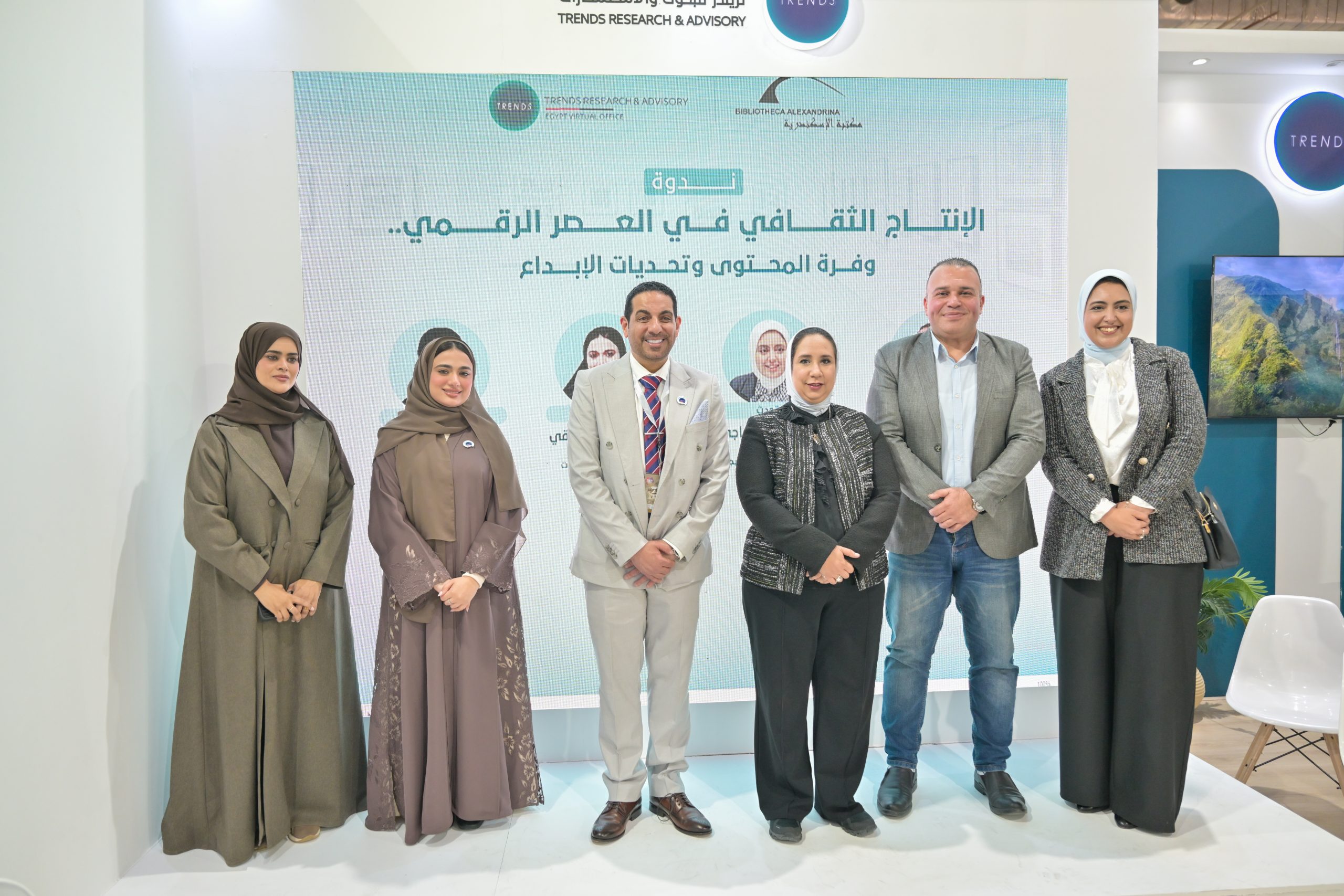
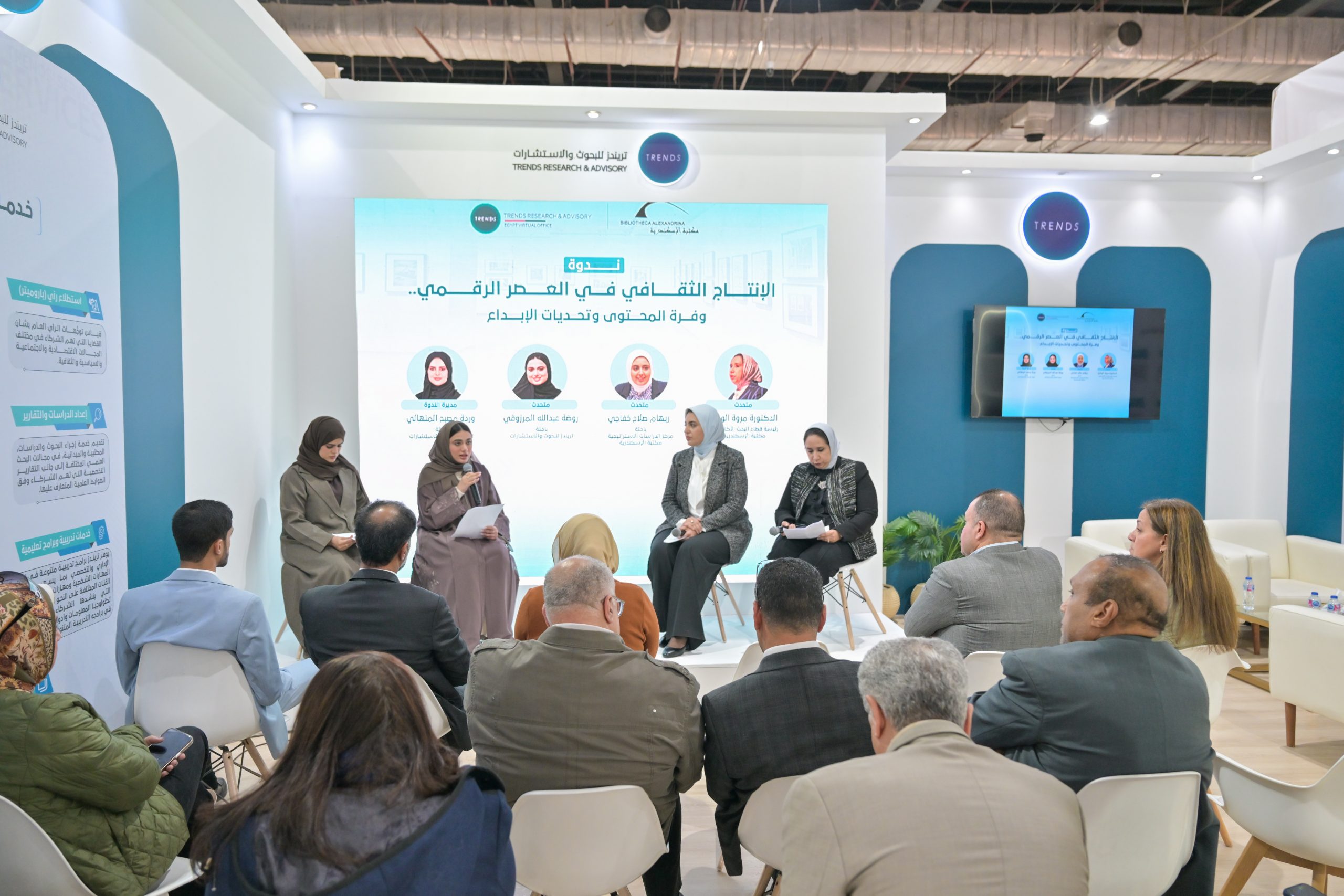
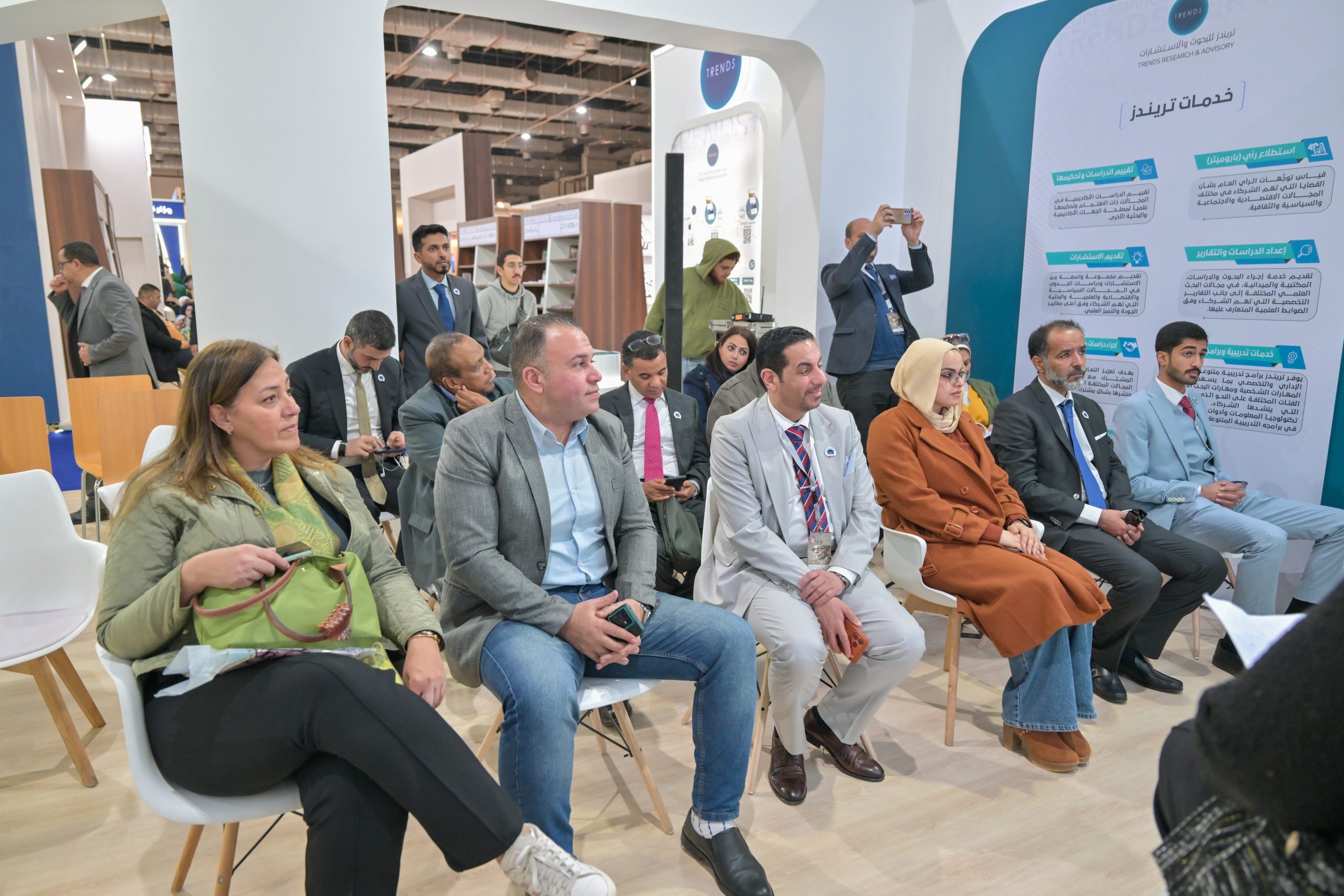
On the sidelines of its research tour to Cairo, TRENDS Research & Advisory, through its virtual office in Egypt, organized a seminar, Cultural Production in the Digital Age: Content Abundance and the Challenges of Creativity, in partnership with the Bibliotheca Alexandrina. as part of TRENDS’ participation in the 57th edition of the Cairo International Book Fair (2026).
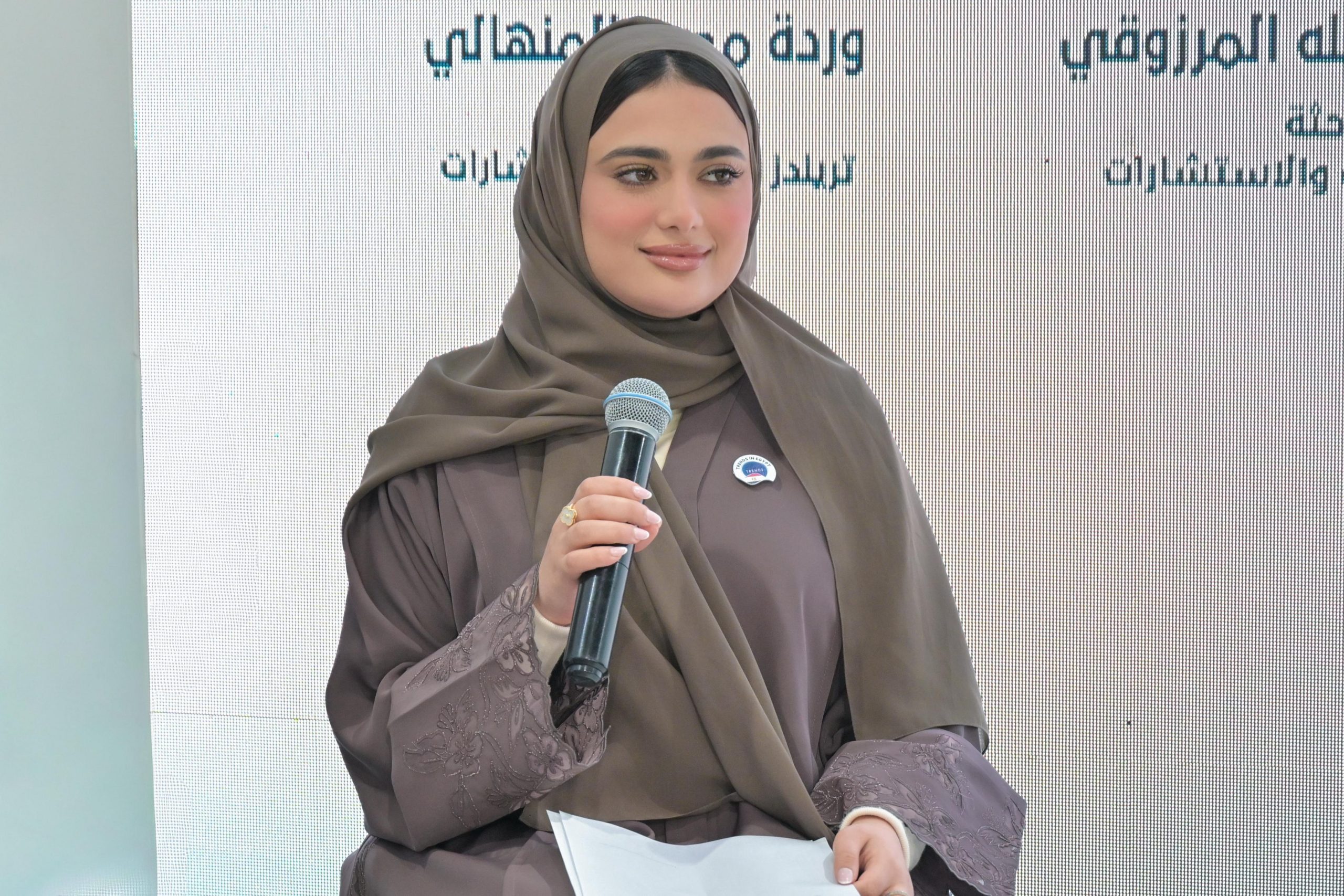
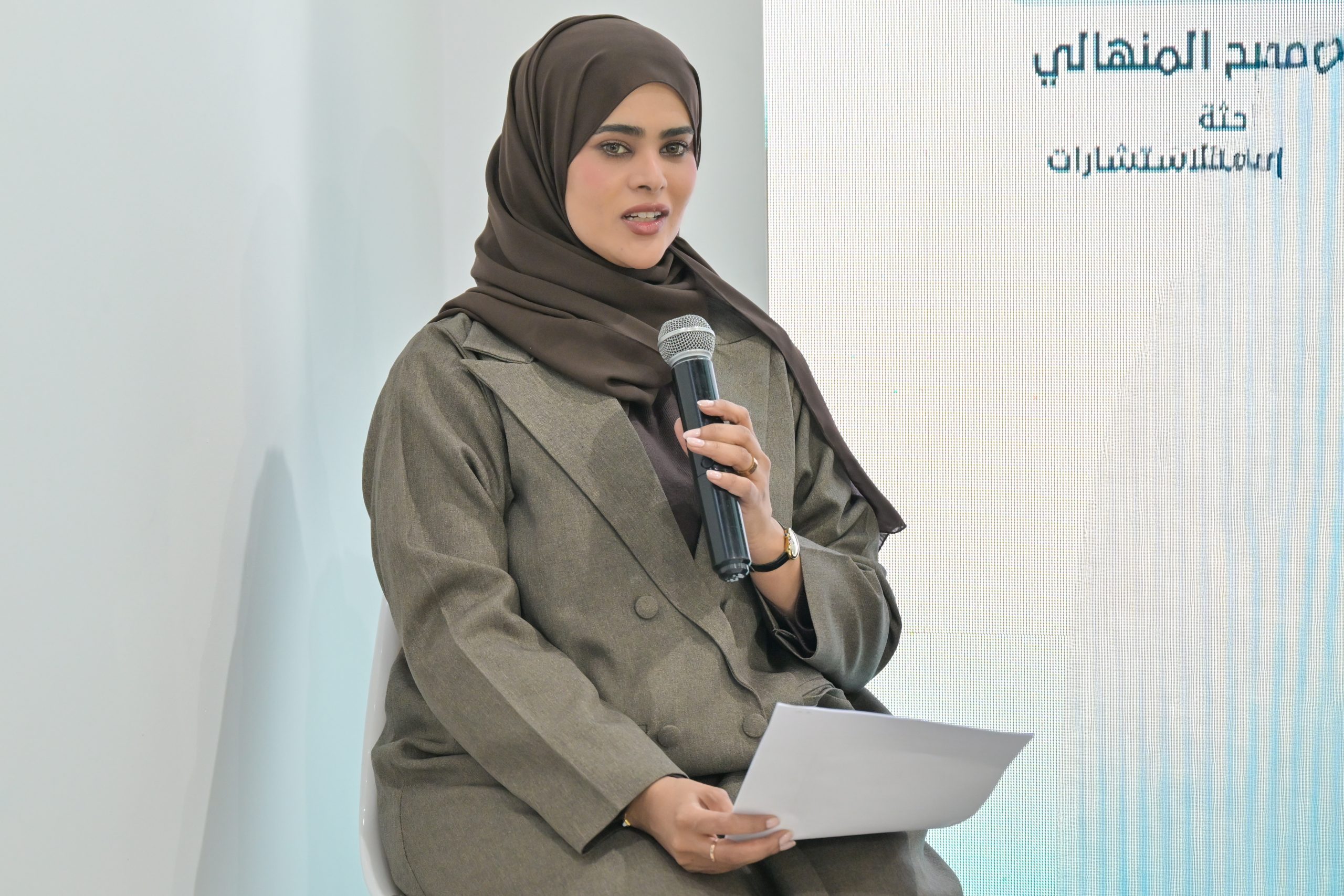
Warda Al-Menhali, Researcher and Director of the Corporate Communication Department at TRENDS, moderated the seminar. The participants emphasized that cultural and intellectual creativity constitutes a true duality between creativity in ideas and in modes of presentation. They noted that originality in the digital age is not a fixed state but rather a continuous process of conscious resistance and an ongoing attempt to achieve a balance between depth and dissemination. The participants further explained that creators in the digital age need to acquire new skills to navigate the attention economy consciously. These skills include the ability to transform meaning into attention-worthiness, awareness of algorithmic mechanisms, the enhancement of ethical awareness in creative practice, and a critical understanding of generative artificial intelligence.
Commodification of Culture
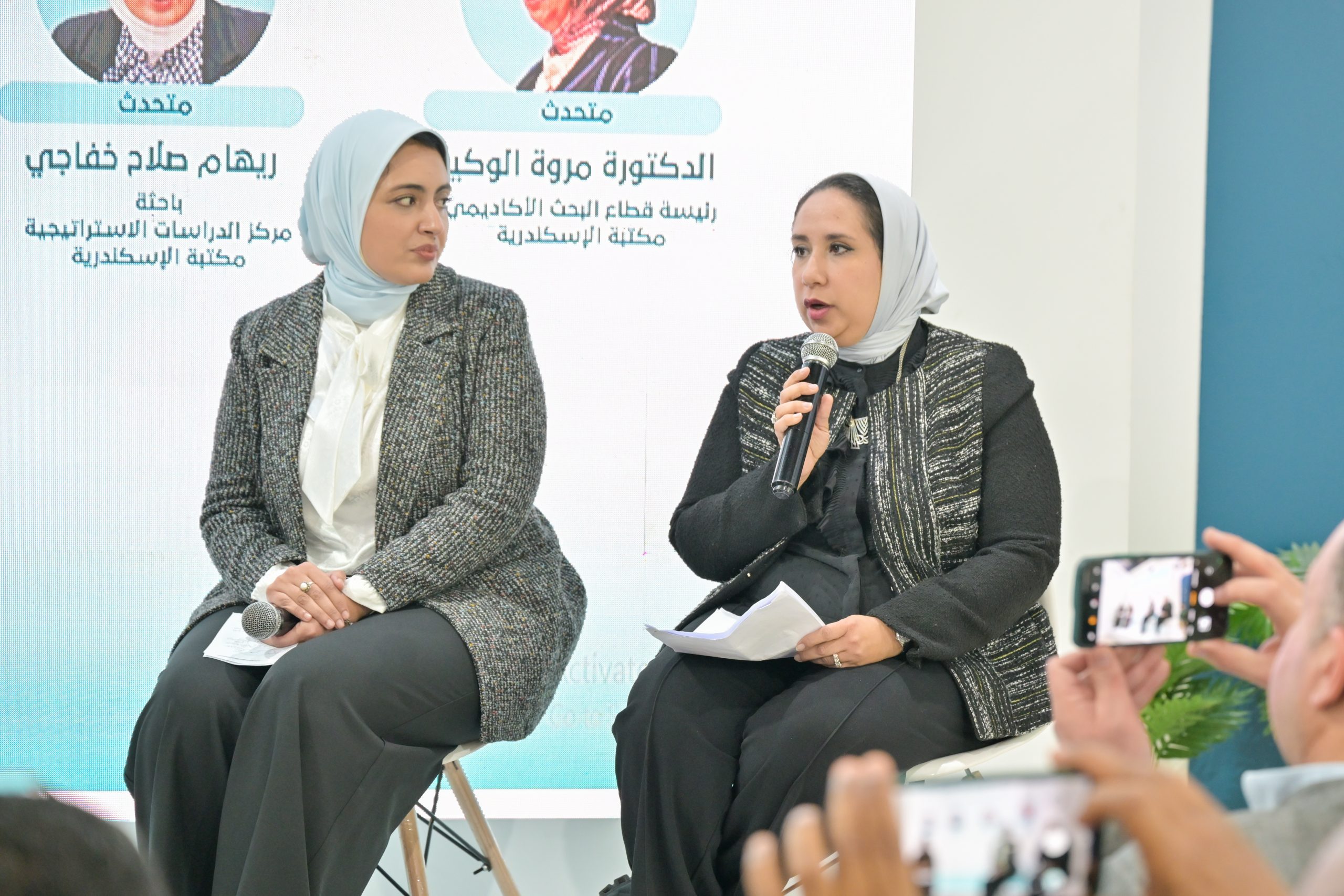
Dr. Marwa Al-Wakil, Head of the Academic Research Sector at the Bibliotheca Alexandrina, opened the seminar by stating that digital media has become one of the dominant contemporary media forms. It is characterized by its departure from traditional frameworks, low cost, rapid dissemination, and ease of access. This type of media has provided greater space for freedom of expression, enabling more individuals to raise issues and engage in public debate. Consequently, it has contributed to the diversification of topics discussed and to the decline of the traditional role of elites in shaping public opinion.
She explained that digital algorithms are not neutral, as they are built on data and past behaviors that may contain social and cultural biases. As a result, they may promote specific patterns while marginalizing others. Algorithms also indirectly influence individual decision-making by narrowing the scope of information presented or by suggesting pre-determined choices. In this context, what may be termed “trend culture” emerges, leading to the commodification of culture. This process involves presenting culture in the form of fast, easily consumable content; as a result, it loses its symbolic and historical depth and becomes a fleeting fashion.
Algorithm Bias
Al-Wakil pointed out that biases embedded in algorithms cause some underrepresented languages, dialects, and cultures to appear weaker or to be entirely marginalized. While digital platforms provide abundance and ease of access, they often come at the expense of deep cultural appreciation, which requires time, reflection, and intentional selection. This impact does not affect audiences alone but extends to creators themselves. Instead of producing content that genuinely reflects their values or perspectives, creators are often compelled to generate content that aligns with algorithmic logic to ensure visibility and dissemination. This pressure may negatively affect both the quality and originality of creative output.
She further noted that several studies indicate the possibility of resistance and balance. Accordingly, the solution lies not only in improving algorithms but also in encouraging individuals to articulate their preferences, engage in dialogue with others, and consciously cultivate their tastes, rather than allowing automated systems to shape them entirely. Al-Wakil explained that algorithms influence artistic and cultural taste through three primary mechanisms: restricting what is presented to users, pushing creators to adapt their work to algorithmic logic, and deepening cultural disparities through programmed biases. The result is the flattening of culture and its transformation from a profound human experience into a fast, replaceable consumer product.
Digital Jamming
On the other hand, Rawdha Al-Marzooqi, Researcher and Director of Distribution and Exhibitions at TRENDS, explained that contemporary society is living in an era in which content production has become accessible to everyone. Digital platforms have created unprecedented spaces for expression and have opened the door to new voices that previously struggled to reach the public. However, this expansion has led to a surge in content production and a state of digital overcrowding, making it increasingly difficult to identify genuine creativity and distinguish it from intellectual pretension.
She stated that the challenge no longer lies in publishing but in discerning quality amid the continuous flow of content. Digital platforms do not operate according to cultural logic; instead, they function through algorithms that reward dissemination and virality rather than quality. As a result, purely commercial interaction is often prioritized over depth, reflection, and rational discourse.
Negotiating with Algorithms
Al-Marzooqi noted that research literature in media studies and digital culture indicates that the relationship between creativity, originality, and the logic of digital platforms is highly complex. The contemporary digital environment is governed by algorithms that reward speed, reach, and instant interaction—criteria that differ significantly from traditional standards of creativity, which emphasize depth, innovation, and sustained intellectual engagement. She noted that preserving originality is not impossible; however, it requires conscious effort on the part of creators. Such efforts include redefining originality within the digital environment, negotiating with algorithms rather than resisting them outright, utilizing platform tools without compromising the core of the idea, developing new forms of presentation suited to digital spaces, and cultivating a qualitative audience capable of engaging with non-superficial content.
Changing Thinking Patterns
Riham Khafagy, a researcher at the Center for Strategic Studies affiliated with the Bibliotheca Alexandrina, affirmed that the digital age has not only transformed the quantity of available information, but has also altered patterns of thinking themselves. Contemporary digital environments reward speed, short attention spans, and emotional responses more than they reward careful analysis and critical thinking. Consequently, the practice of critical thinking has become increasingly demanding.
She explained that digital audiences appear heterogeneous not only because of differences in cultural or political backgrounds, but also because individuals are exposed to distinct versions of digital reality tailored to their data, interactions, and consumption patterns. This dynamic reinforces polarization and may open the door to forms of digital extremism. As a result, audiences become divided into separate cognitive worlds that are difficult to engage with collectively. Moreover, as the pace and intensity of digital consumption increase, the mental space required for understanding, analysis, and evaluation diminishes. Although this represents a complex and challenging equation, it places a genuine collective responsibility on all stakeholders.
Attention Economy
Khafagy further explained that understanding the concept of “digital presence” and its associated skills requires examining the intersection between the attention economy and the creative economy. This intersection necessitates the development of new skills that enable creators to navigate the attention economy consciously. These skills include the ability to transform meaning into content worthy of attention, as well as the cultivation of ethical awareness in creative practice. In addition, creators must develop a critical understanding of generative artificial intelligence while maintaining human leadership over the creative process.
She concluded by emphasizing that the decisive role ultimately remains with humans: selecting ideas, directing digital tools, and evaluating outputs ethically and aesthetically. Artificial intelligence should be employed to accelerate experimentation rather than to diminish the value of ideas, and it can be effectively used in research, preliminary conceptualization, and the generation of multiple formulations. Nevertheless, the final creative decision must remain in the hands of the creator, who should be fully aware of the limitations, biases, and potential impact of digital tools on cultural and creative taste.

