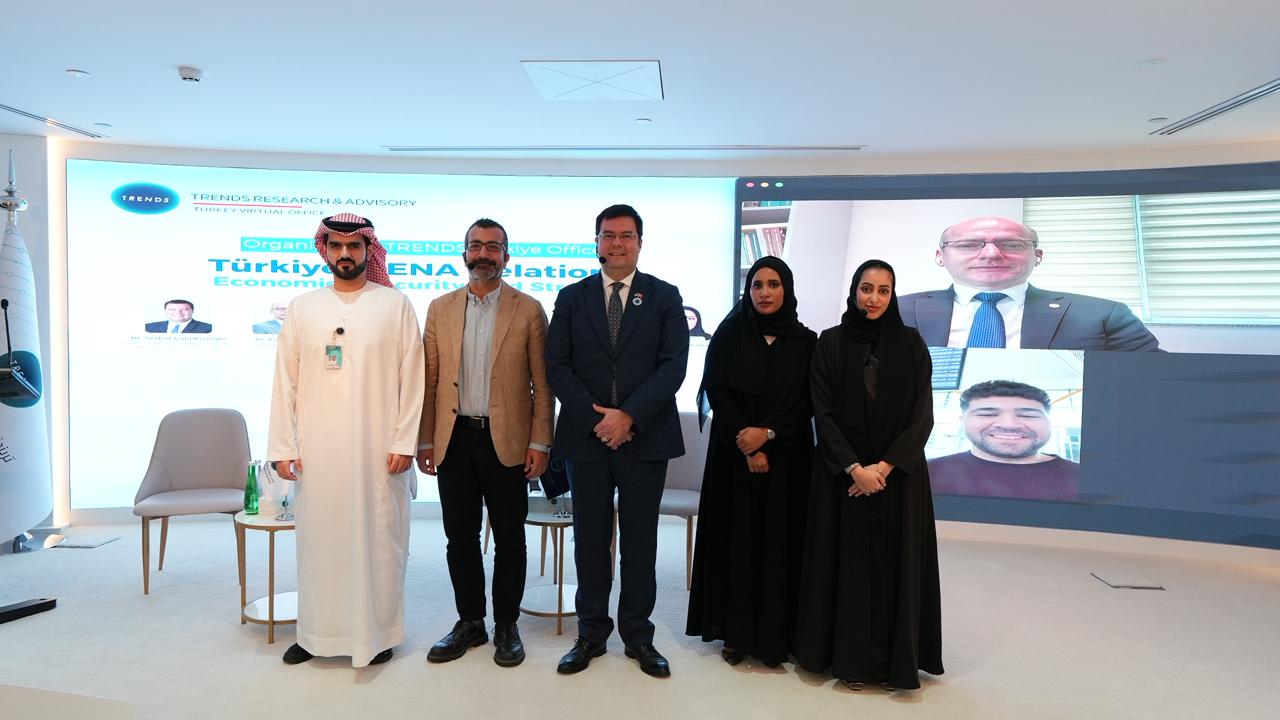
Experts and researchers affirmed during a discussion seminar organized by TRENDS Research & Advisory through its virtual office in Turkey that Turkey’s relations with the Middle East and North Africa are entering a phase of strategic repositioning amid an international system increasingly oriented toward multipolarity and flexible alliances. They stressed the need to move beyond managing short-term balances toward building an institutional and sustainable framework for security and economic cooperation.
The seminar — Turkey’s Relations with the Middle East and North Africa: Economy, Security, and Strategy — held at TRENDS’ headquarters in Abu Dhabi coincided with the visit of Turkish President Recep Tayyip Erdoğan to the United Arab Emirates. It brought together academics, experts, and researchers to examine the prospects for Gulf–Turkish partnerships in the post-2020 phase, particularly in the UAE–Turkey relationship, which has witnessed significant developments across the political, economic, technological, and defense spheres.
Strategic Transformation
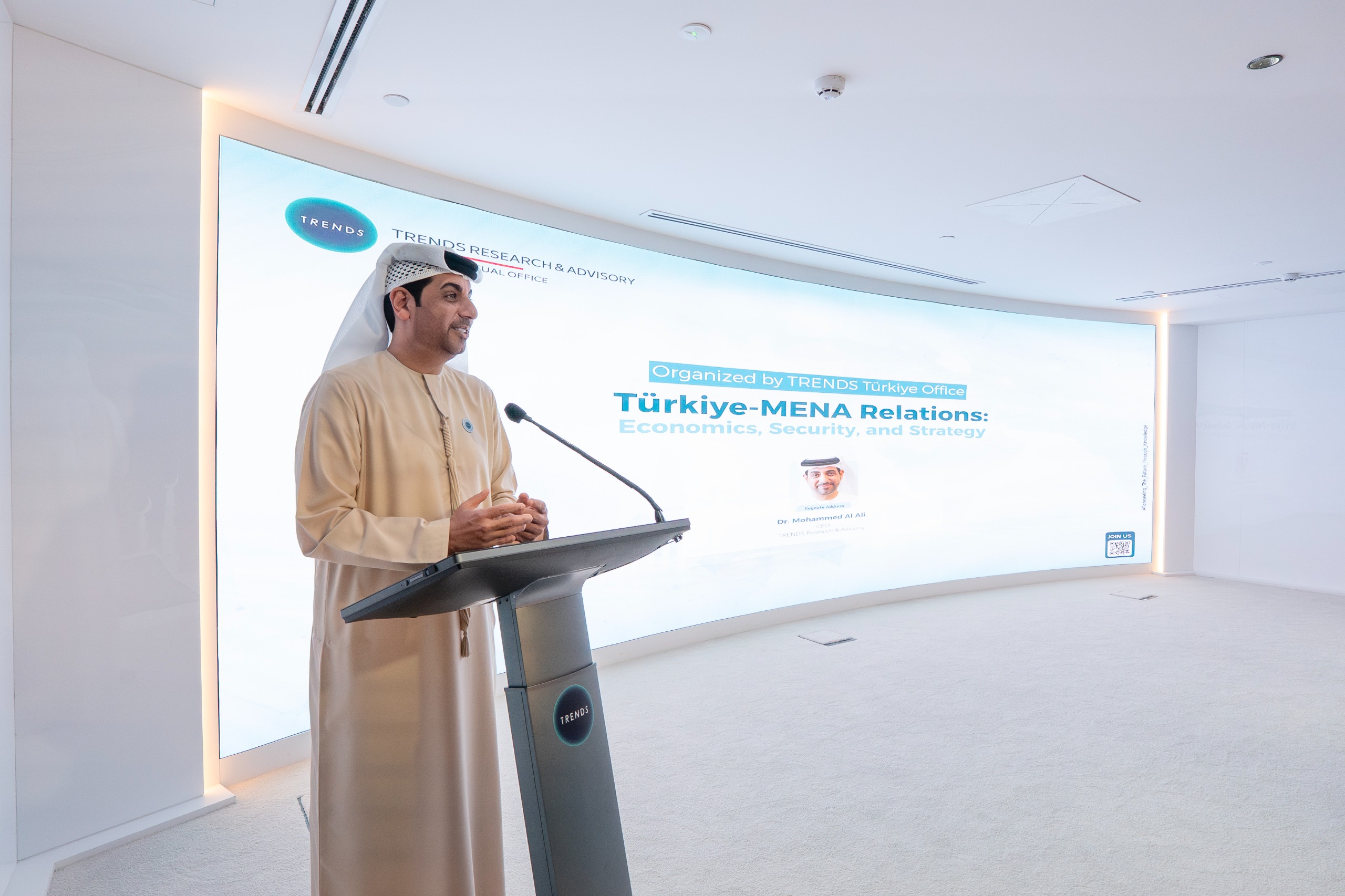
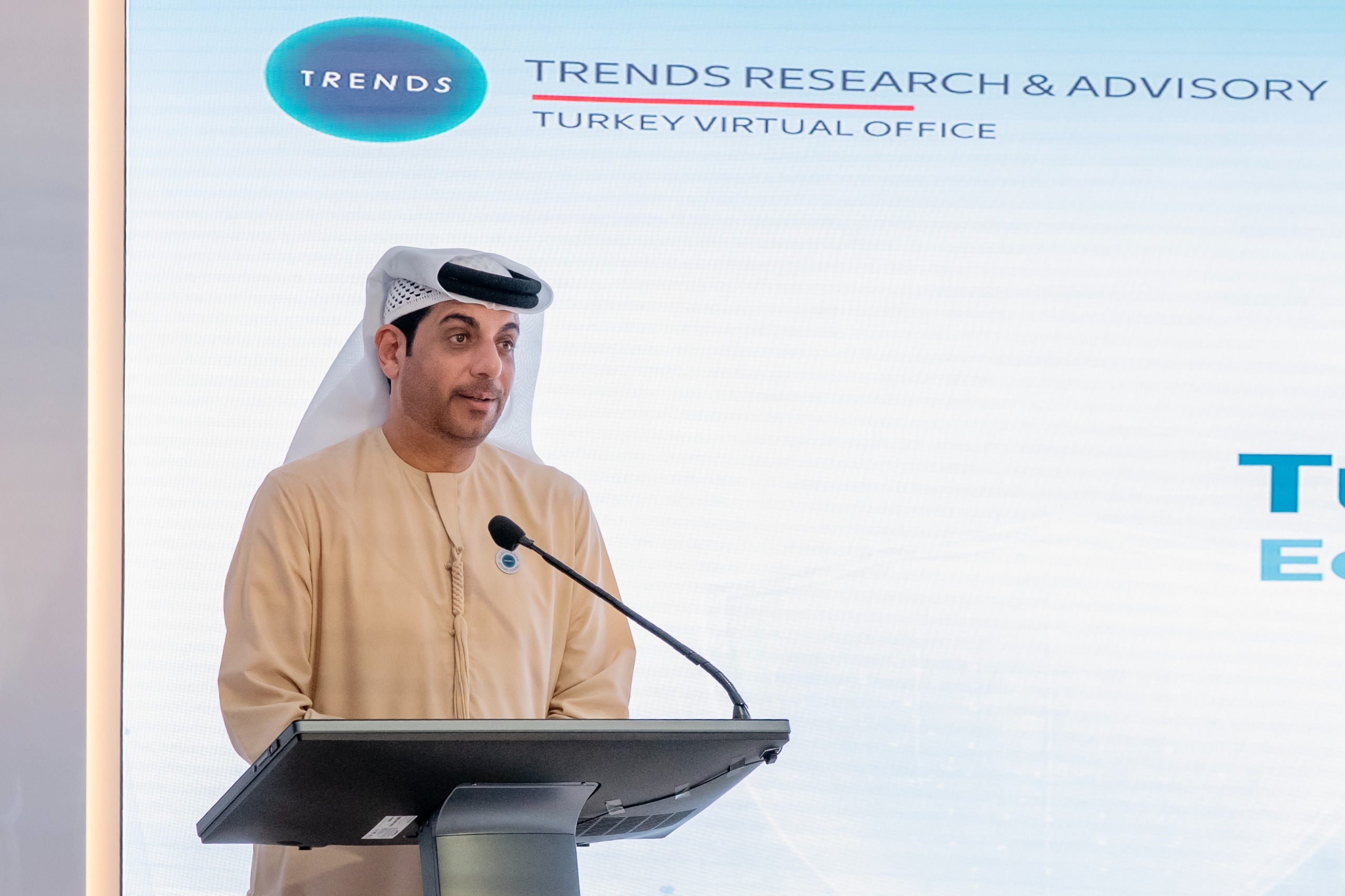
In his opening remarks, Dr. Mohammed Abdullah Al-Ali, CEO of the TRENDS Research & Advisory Center, emphasized that Turkey–Middle East relations are undergoing a qualitative transformation, as reflected in clear quantitative indicators, shifting from complex competition to the building of strategic partnerships based on mutual interests. He noted that the model of relations between the United Arab Emirates and Turkey clearly illustrates this transformation—not only in political discourse but also in tangible economic and investment outcomes.
Dr. Al Ali pointed out that this seminar, alongside the visit of His Excellency Turkish President Recep Tayyip Erdoğan to the United Arab Emirates, reflects the growing momentum in bilateral relations and underscores the importance of complementing this rapprochement with an intellectual dialogue that deepens understanding and supports the path of strategic partnership between the two countries.
Dr. Al-Ali explained that among the most prominent quantitative indicators supporting this trajectory is the non-oil trade volume between the UAE and Turkey, which exceeded USD 16 billion (approximately AED 59 billion) in 2025, with a target of raising it to USD 40 billion within five years. In addition, an Emirati investment fund worth USD 10 billion was launched to support strategic sectors of the Turkish economy. By 2025, the volume of UAE foreign direct investment in Turkey surpassed USD 6 billion. Several important agreements were also signed, including a currency swap agreement worth AED 18 billion (approximately USD 4.9 billion), which enhances financial and trade stability between the two countries. Moreover, around 600 Emirati companies operate in the Turkish market, alongside a growing expansion of Turkish companies within the UAE.
He noted that these figures reflect a transition in UAE–Turkish relations from managing differences to building interdependence in the fields of economy, energy, defense, and advanced technology.
Dr. Al-Ali stressed that this quantitative–strategic trajectory strengthens political trust, sends signals of stability to international markets, and supports the region’s orientation toward long-term partnerships capable of confronting geopolitical and economic challenges.
He concluded by emphasizing that reading these figures in their strategic context shows that Turkey–Middle East relations are moving toward a more mature phase of pragmatic cooperation, balance-building, and the promotion of stability and development in the region, as the Turkish president’s visit to the UAE today embodies this approach.
Balancing Powers and Regional Responsibility
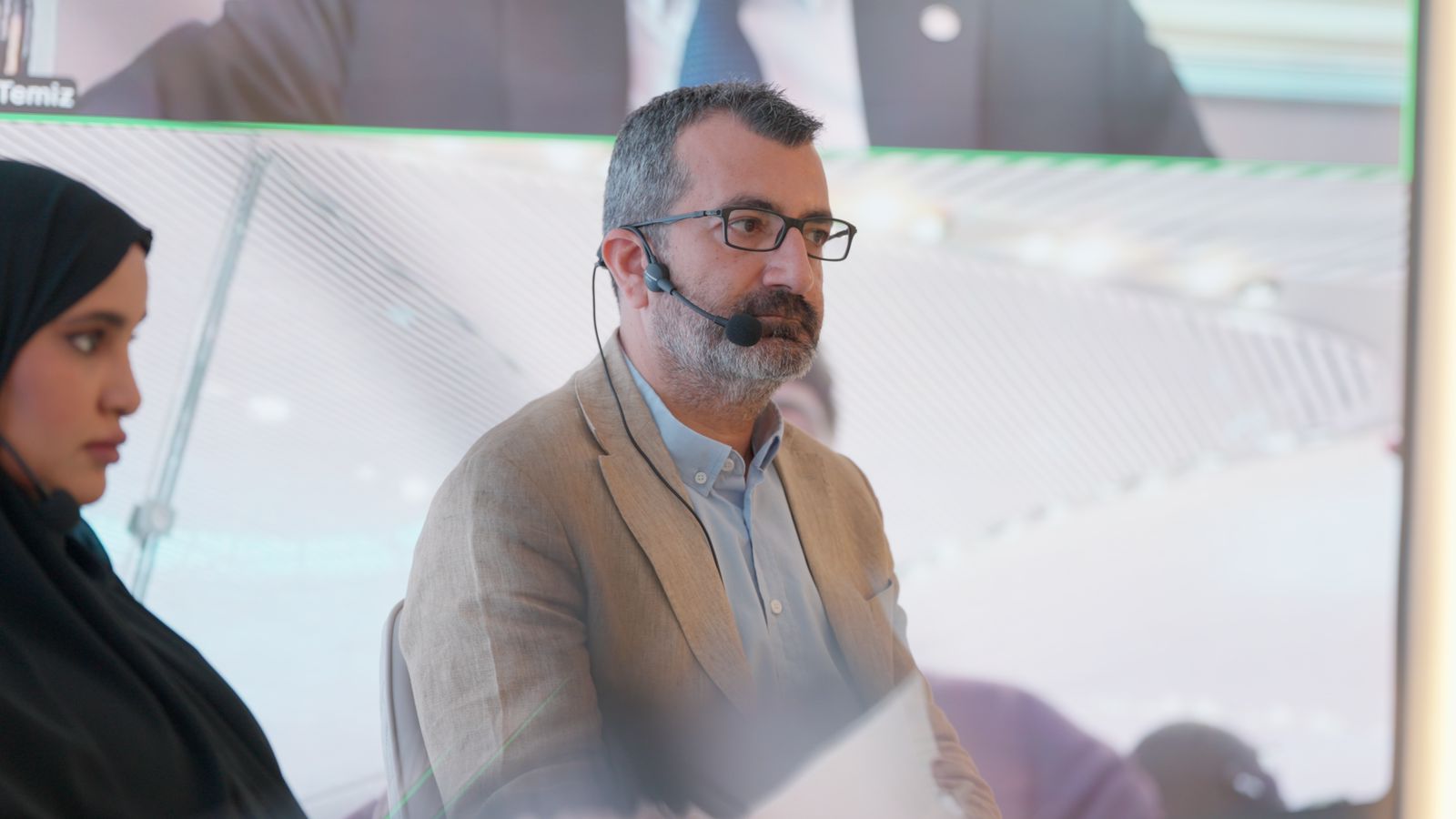
Addressing global competition in the region, Dr. Kadir Temiz, Director of ORSAM in Ankara, highlighted Türkiye’s approach of “responsible balancing” among the United States, Russia, and Iran, while preserving strategic maneuverability to safeguard its security and economic interests. He noted that Türkiye’s engagement in Syria and Iraq combines security measures with reconstruction efforts and state-building support, integrating security and development objectives to preserve territorial integrity, promote inclusive governance, and combat terrorism.
Dr. Temiz noted that the region is undergoing profound transformations, reshaping the balance of power. He explained that Türkiye is adopting a long-term vision that leverages what participants described as its “hybrid identity” – a pivotal regional actor, a NATO member, and an economy simultaneously interconnected with Central Asia, Europe, and the Middle East.
UAE–Türkiye Strategic Partnership
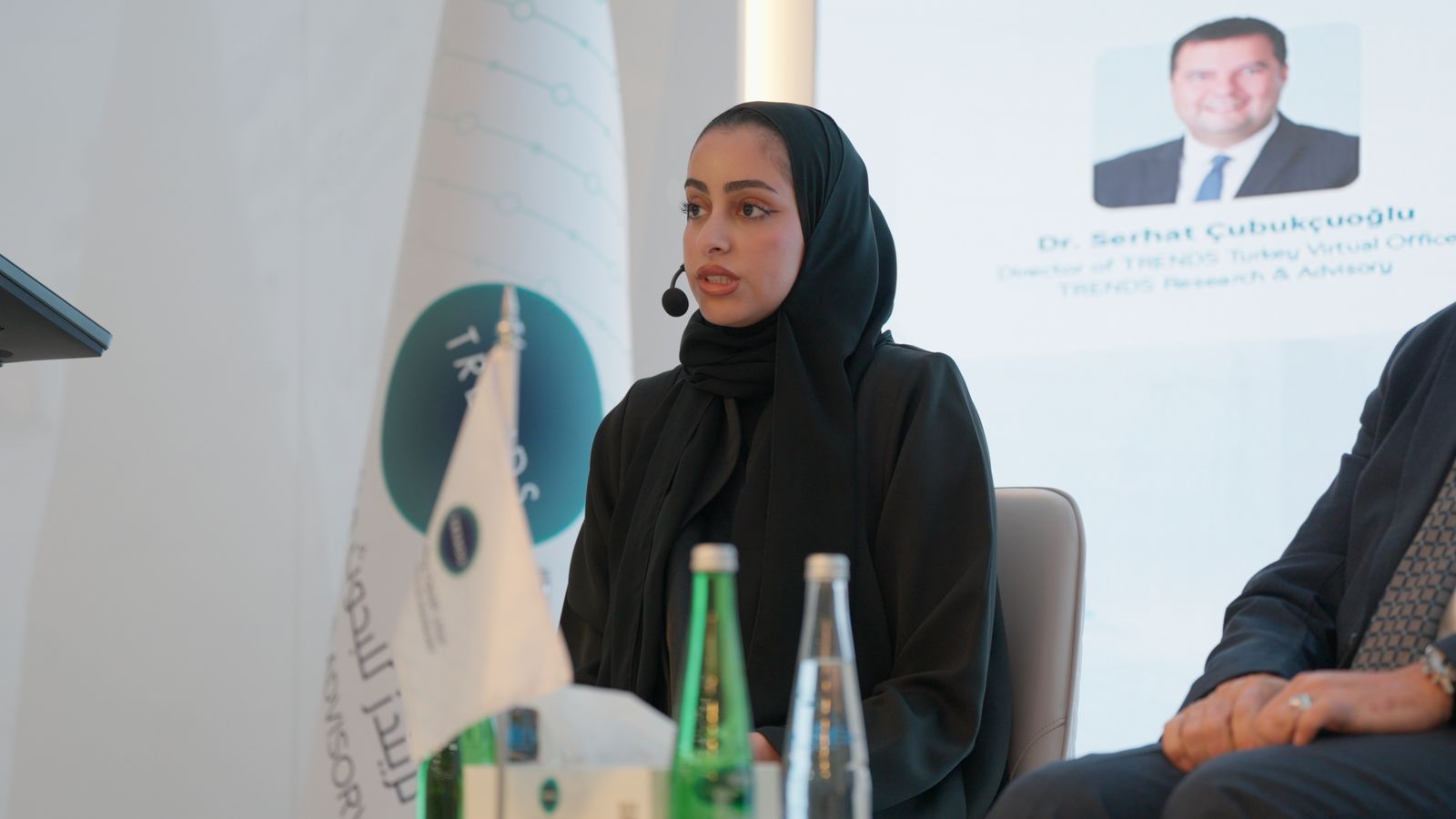
Sara Al Neyadi, Director of Strategic Studies at TRENDS, underscored that UAE–Türkiye relations have evolved since 2020 from a phase of de-escalation to structured diplomatic and strategic councils, strengthening the institutional foundation of bilateral cooperation.
She emphasized that mutual investments have become a key driver of diplomacy between the two countries, with expanding cooperation in defense industries, advanced technology, artificial intelligence, renewable energy, and logistics connectivity projects. She also pointed to joint humanitarian coordination, including support for Gaza, reflecting converging visions for regional stability.
Economic Integration and Regional Corridors
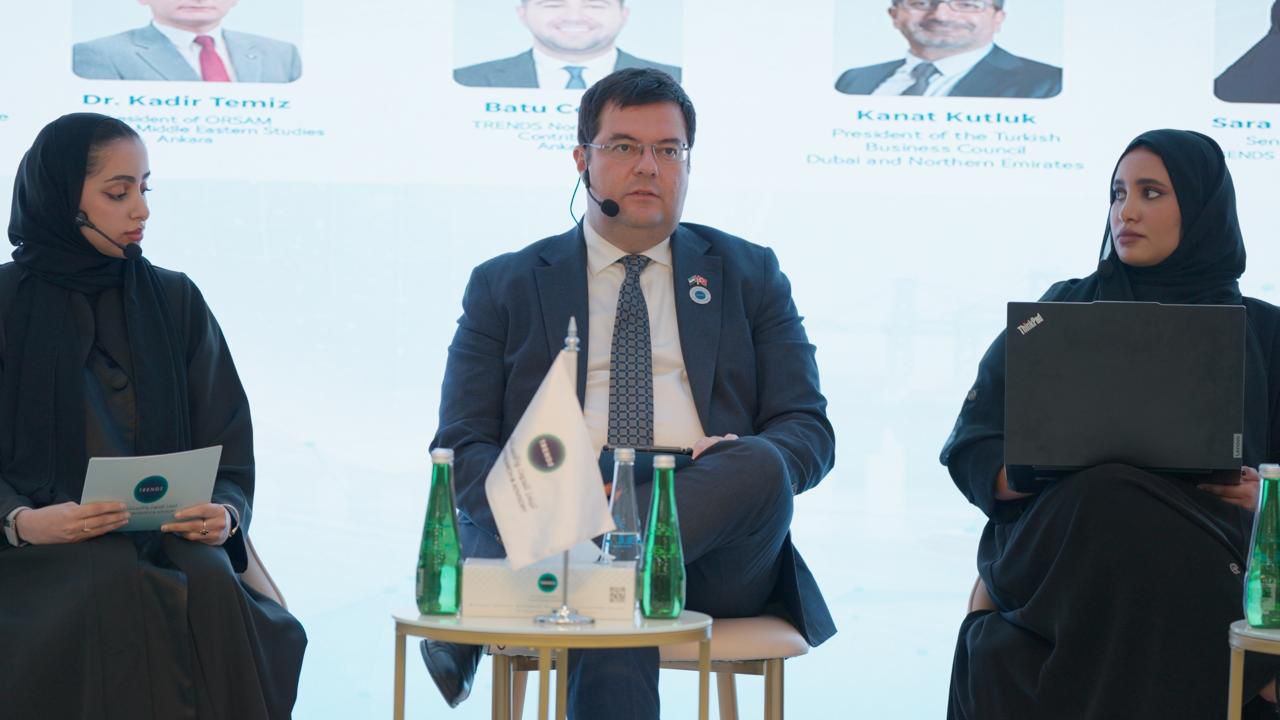
On the economic front, Mr. Kanat Kutluk, Chairman of the Turkish Business Council in Dubai, stressed the importance of shifting from traditional construction-based cooperation toward partnerships in fintech, high-tech industries, and advanced value chains. He added that Africa represents a promising arena for joint Gulf–Türkiye initiatives, leveraging financial hubs such as Dubai and Abu Dhabi to promote cross-border economic integration.
Risk Containment and Strategic Coordination
In assessing regional challenges, researcher Batu Coşkun noted that Gulf–Türkiye coordination regarding Iran follows a pragmatic and flexible risk-containment approach aimed at preventing escalation while preserving diplomatic maneuverability. He explained that such informal coordination reflects shared concerns over energy security and maritime routes, reinforcing functional cooperation without over-confrontation.
Policies Toward Iran
In his opening remarks, Dr. Serhat S. Çubukçuoğlu, Senior Researcher and Director of TRENDS Türkiye Office, said that GCC–Türkiye coordination on Iran is more than ad hoc crisis management but is not evolving into a formalized security framework either. What we are seeing is a functional risk-containment alignment driven by shared vulnerability to spillover risks – such as migration, energy shocks, maritime insecurity, and proxy escalation – rather than shared threat perceptions or alliance logic.
Dr. Serhat said that Türkiye’s coordination with GCC countries to discourage U.S. or Israeli escalation reflects a broader Gulf shift toward regional agency and escalation management in an environment where U.S. crisis control is increasingly selective and reactive. He added that Ankara positioned itself as a balancing middle power, aligned with Gulf stability concerns but avoiding overt confrontation. Institutionalization is therefore likely to remain light, informal, and issue-specific, relying on diplomatic channels rather than formal mechanisms.
Syria and Reconstruction Prospects
Regarding Syria, participants discussed opportunities for Gulf–Türkiye cooperation in supporting stabilization and reconstruction efforts, noting that progress toward a stable, state-centered framework would create favorable conditions for rebuilding infrastructure and enhancing regional connectivity. They emphasized that convergence on preserving Syria’s territorial integrity and countering extremist groups could serve as a basis for broader coordination on infrastructure, energy, and regional integration projects.
Dr. Serhat said that the rollback of SDF-YPG control represents a clear strategic inflection point that brings Türkiye’s long-standing security objectives closer to the preferences of several Gulf states for state-centric stabilization and the rollback of non-state armed actors, not just the YPG but also the likes of Houthis and Hezbollah. From a GCC perspective, this shift reduces fragmentation risks and creates conditions more conducive to Syria’s gradual reintegration into regional economic and political frameworks, with Türkiye increasingly viewed as an operational enabler rather than a spoiler.
Dr. Serhat said, GCC-Türkiye cooperation will advance pragmatically rather than politically. Governance capacity in Damascus, sequencing of reconstruction, and questions of legitimacy mean that GCC–Türkiye coordination is most likely to materialize first in transactional domains—logistics, transit corridors, border trade, infrastructure rehabilitation, and connectivity linking the Gulf to the Eastern Mediterranean—rather than through grand reconstruction compacts. In this sense, Syria is becoming less a battlefield for rivalry and more a testing ground for managed convergence among middle powers like Türkiye.
Strategic Recommendations
The discussion concluded with several key recommendations, including:
- Institutionalizing dialogue through a permanent platform between Turkish and Gulf think tanks to provide periodic policy recommendations.
- Advancing economic diversification by prioritizing advanced industries, artificial intelligence, and renewable energy.
- Developing joint early-warning mechanisms to shield economic cooperation from political shocks.
- Supporting sustainable regional security and economic architecture based on shared responsibility and gradual integration.
Speakers also commended TRENDS’ Türkiye Virtual Office as a knowledge platform that enhances mutual understanding and supports evidence-based policymaking, contributing to strategic partnerships that promote stability and prosperity across the Middle East and North Africa.