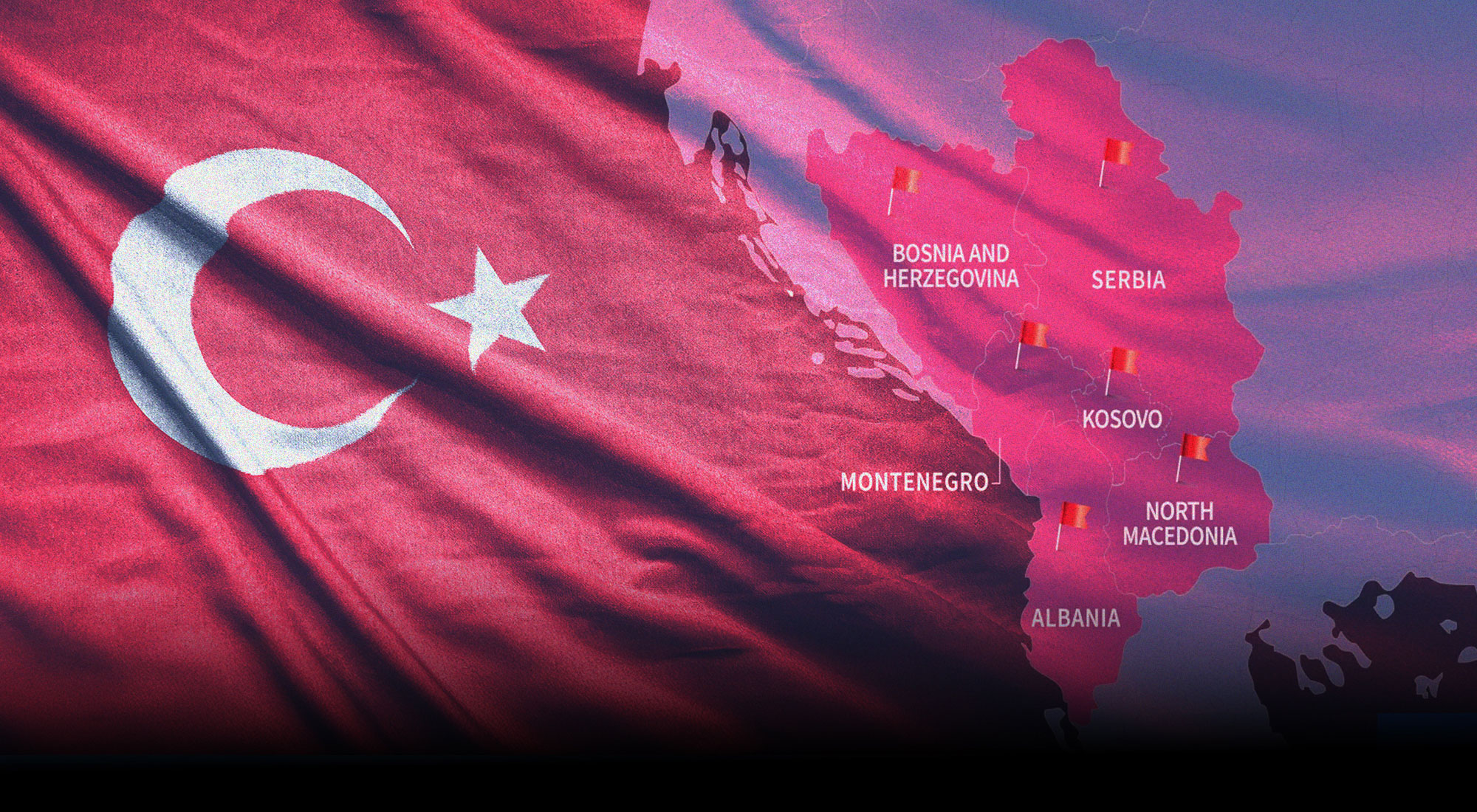

Türkiye’s engagement with the Western Balkans is deeply rooted in a shared history that spans over five centuries, dating back to the Ottoman era. The Ottoman Empire’s influence is still palpable across Bosnia and Herzegovina, Albania, Kosovo, North Macedonia, and other countries in the region, not only in the architectural relics and urban landscapes but also in the interwoven social fabrics and cultural traditions that persist today. This enduring legacy is foundational to Türkiye’s continued interest in the Balkans, shaping both its foreign policy outlook and societal perceptions. The Ottoman Empire’s dissolution in the early twentieth century did not sever these connections; rather, it created new avenues for engagement as many members of the Turkish Republic’s founding elite traced their ancestry to the Balkans,[1] fostering a sense of shared fate and kinship.
Figure 1: Şirok Street in Manastır (Bitola), North Macedonia. Manastır Military High School, where Türkiye’s founder Mustafa Kemal Atatürk studied between 1896 and 1898
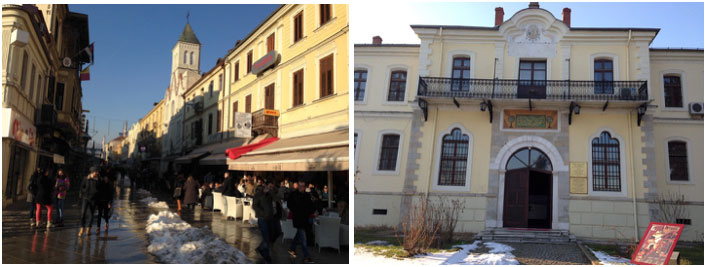
Source: Dr. Serhat S. Çubukçuoğlu (personal archive)
The collective memory of the Ottoman era, along with the migration of Muslim populations and the preservation of religious and linguistic ties,[2] has sustained a unique relationship between Türkiye and the Balkan peoples. This relationship has proven resilient to shifting trends in geopolitics, enduring through the collapse of empires, the rise of nation-states, and the ideological divides of the twentieth century. Over time, these historical and social bonds have translated into acute political interest, with Türkiye consistently viewing the stability and prosperity of the Balkans as intertwined with its own national security and regional aspirations.
As the Balkans navigated the tumultuous processes of decolonization, state formation, and modernization, Türkiye’s involvement evolved from passive observation to active engagement. The region’s proximity to Türkiye’s western borders, its role as a corridor for migration and trade, and the presence of sizable Muslim communities have all contributed to the deepening of ties. This historical grounding remains a critical lens to understand contemporary Turkish policy in the Western Balkans, serving as both a source of soft power and a driver of diplomatic and strategic initiatives.[3]
Post-Cold War dynamics
The dissolution of the Soviet Union and the subsequent collapse of Yugoslavia in the early 1990s marked a turning point in Türkiye’s engagement with the Western Balkans. As the region descended into ethnic violence and political fragmentation, Türkiye found itself compelled to assume a more assertive role, guided by a combination of historical responsibility, cultural affinity, and strategic calculation, and ultimately Ankara’s role in the NATO Alliance.
Figure 2: A view from Prizren, Kosovo, where about 10,000 Turkish-origin people live
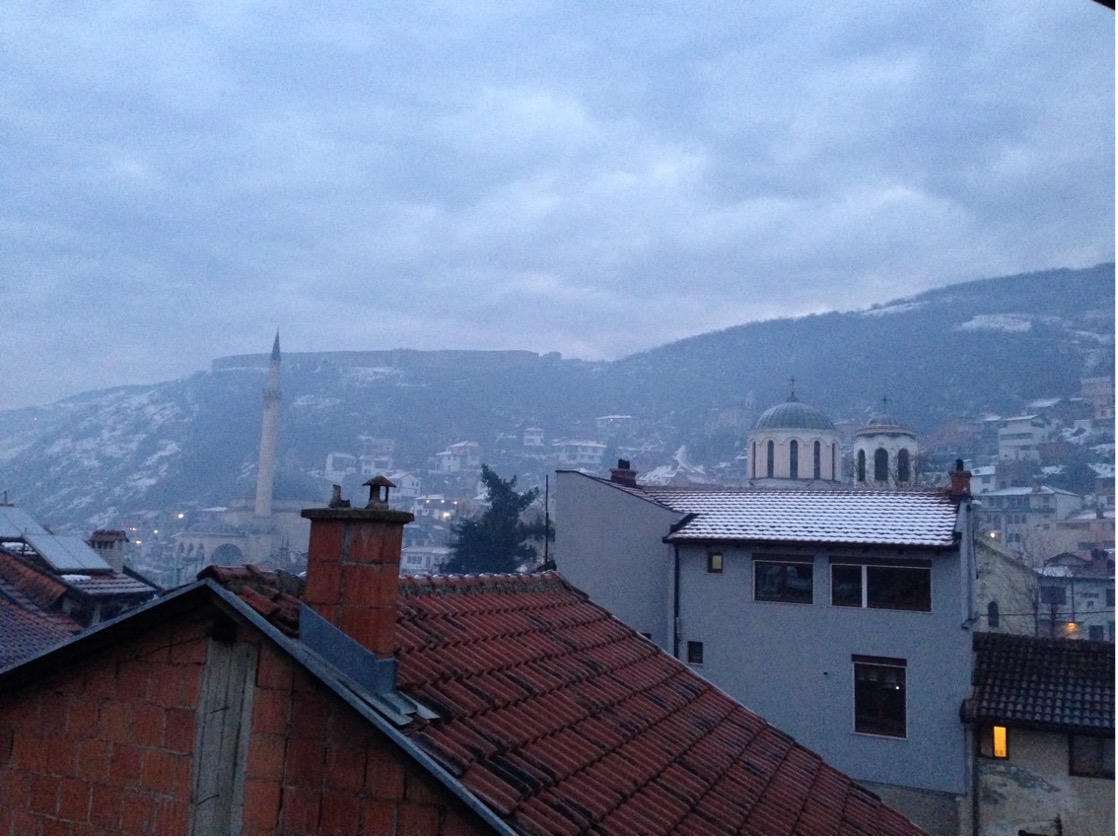
Source: Dr. Serhat S. Çubukçuoğlu (personal archive)
The wars that ravaged Bosnia and Herzegovina, Croatia, and later Kosovo, were characterized by atrocities and humanitarian crises that drew international condemnation. Türkiye, in alignment with its NATO allies and the broader international community, participated in peacekeeping and humanitarian operations. In Bosnia, Turkish forces contributed to UN Protection Force (UNPROFOR) missions and later to NATO’s Implementation Force (IFOR) and Stabilization Force (SFOR), providing logistical support, medical aid, and security to vulnerable populations. Similarly, during the Kosovo crisis, Türkiye was among the first regional actors to advocate for humanitarian intervention and subsequently participated in the Kosovo Force (KFOR) under NATO command.
Figure 3: Tomb of Ottoman Sultan Murat I in Priştina, Kosovo
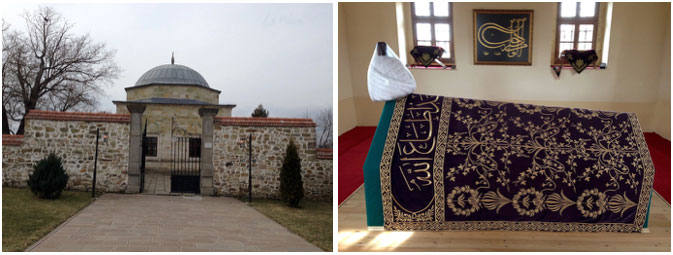
Source: Dr. Serhat S. Çubukçuoğlu (personal archive)
Türkiye’s involvement in these operations was not merely a matter of alliance obligations; it was also informed by a sense of kinship with the region’s Muslim communities and a desire to prevent the recurrence of atrocities reminiscent of the late Ottoman period. Turkish diplomats and military officials played active roles in mediation efforts, supporting the Dayton Accords and other peace initiatives. In this period, Türkiye’s foreign policy shifted toward a more multidimensional approach, balancing Western alignment with regional engagement and humanitarian advocacy.
The post-war years saw Türkiye establish itself as a reliable partner in the reconstruction of the Balkans. Turkish agencies, such as the Turkish Cooperation and Coordination Agency (TİKA), invested in rebuilding schools, mosques, and infrastructure, while cultural exchanges and educational programs fostered people-to-people ties. The legacy of this period endures in the form of ongoing Turkish contributions to EUFOR Althea in Bosnia and KFOR in Kosovo, cementing Türkiye’s status as a stakeholder in Balkan security and stability.
Current strategic engagement
Over the past two decades, Türkiye’s role in the Western Balkans has expanded far beyond the remit of peacekeeping and humanitarian assistance. Today, Türkiye boasts robust diplomatic relations and multifaceted partnerships with all Western Balkan states, including Montenegro and Serbia. This modern engagement is marked by increasing economic investment, strategic cooperation, and high-level political dialogue.
Economically, Türkiye has emerged as a significant investor and trading partner in the region. Turkish companies operate in sectors ranging from construction, banking, and telecommunications to energy, retail, and agriculture. Landmark projects such as the construction of highways, airports, and energy infrastructure underscore Ankara’s commitment to regional development. Turkish banks have established branches in major Balkan cities, facilitating cross-border commerce and financial integration. The mutual benefit of these investments is evident: the Western Balkans gain access to capital, expertise, and markets, while Türkiye secures new avenues for economic growth and influence.
Diplomatic relations have also deepened, with frequent exchanges of visits at the presidential, ministerial, and parliamentary levels. Bilateral agreements on trade, visa liberalization, education, and security cooperation have been signed with most countries in the region. Türkiye has positioned itself as a mediator in inter-Balkan disputes, leveraging its historical ties and neutral stance to facilitate dialogue and conflict resolution. In Serbia, North Macedonia, and Montenegro, Türkiye has cultivated constructive relations despite occasional political differences, demonstrating a pragmatic approach that prioritizes mutual interests and regional stability.
The cultural dimension of Türkiye’s engagement remains salient. Through institutions such as Yunus Emre Institutes, scholarships for Balkan students, and support for cultural heritage restoration, Türkiye continues to exercise soft power, reinforcing the sense of shared identity and historical continuity. These efforts are complemented by the activities of Turkish diaspora communities, who serve as bridges between Ankara and the Balkan capitals.
Türkiye’s security role
Security cooperation remains a cornerstone of Türkiye’s engagement with the Western Balkans. As a longstanding member of NATO and a contributor to European Union (EU)-led missions, Türkiye has consistently advocated for stability, conflict prevention, and capacity-building in the region. Turkish military personnel continue to serve in NATO’s KFOR and the EU’s Operation Althea in Bosnia and Herzegovina, providing essential support to peacekeeping operations and demonstrating Ankara’s commitment to collective security.
Türkiye’s approach to security in the Balkans is multifaceted. It encompasses traditional military cooperation, joint exercises, intelligence sharing, and training programs for local security forces. Turkish defense companies have supplied equipment and technology to several Balkan states, enhancing their capabilities and interoperability with NATO standards. At the same time, Türkiye has promoted initiatives aimed at countering transnational threats such as organized crime, terrorism, and human trafficking, which pose significant risks to regional stability.
In recent years, Türkiye has moved to institutionalize its security engagement through the creation of the Balkan Peace Platform. This platform, launched in July 2025 and convening its second meeting in January 2026,[4] brings together Montenegro, Serbia, Albania, Kosovo, Bosnia and Herzegovina, and North Macedonia under a Turkish-led framework dedicated to fostering dialogue, cooperation, and conflict resolution. The platform reflects Türkiye’s aspiration to act not only as a security provider but also as a convener and mediator, capable of bridging divides and facilitating collective action in the face of persistent challenges.
Balkan Peace Platform
The Balkan Peace Platform represents a significant innovation in Türkiye’s regional diplomacy.[5] Conceived as an inclusive and flexible forum, it seeks to bind together Türkiye’s bilateral relationships in the Western Balkans into a loose but effective regional organization. The platform is not intended to supplant existing European or transatlantic structures; rather, it provides an alternative avenue for dialogue and cooperation, particularly in areas where EU and NATO mechanisms are either absent or insufficient.
The objectives of the Balkan Peace Platform are threefold. First, it aims to provide a regularized setting for the discussion of security, economic, and political issues among member states. This includes addressing ongoing disputes, fostering trust-building measures, and promoting joint initiatives in areas such as border management, infrastructure, and energy security. Second, the platform seeks to enhance regional resilience against external interference and destabilizing influences, with Türkiye leveraging its diplomatic clout and historical legitimacy to facilitate consensus. Third, the platform aspires to contribute to the broader integration of the Western Balkans into European and transatlantic frameworks, acting as a preparatory space for candidate countries and a bridge for those not yet on the path to membership.
Türkiye’s leadership within the platform is characterized by a commitment to equidistance and impartiality. While Ankara’s historical affinities have often aligned it more closely with Muslim-majority states such as Bosnia and Albania, recent years have seen a deliberate effort to cultivate balanced relations with all Balkan countries, including Serbia and Montenegro. This approach enhances Türkiye’s credibility as a mediator and arbiter, enabling it to play a constructive role in managing intra-regional tensions and navigating the complex web of alliances and rivalries that define the Balkans.
The platform’s meetings have yielded tangible outcomes, including agreements on joint security exercises, cross-border infrastructure projects, and collaborative responses to emerging threats such as cyberattacks and disinformation campaigns. By fostering a culture of dialogue and practical cooperation, the Balkan Peace Platform contributes to the gradual normalization of relations among states with fraught histories and competing interests.
Geopolitical Context
The Western Balkans are situated at the intersection of several great power interests, making the region a focal point of geopolitical competition and uncertainty. Despite the aspirational rhetoric of European integration, progress toward EU and NATO membership has been halting and uneven, with many Balkan states frustrated by protracted accession processes, shifting criteria, and internal EU divisions.
All Western Balkan states have declared their ambition to join the EU, but the pace of enlargement has slowed considerably in recent years. The EU’s preoccupation with internal challenges, such as Brexit, migration, and economic crises, has limited its capacity to offer credible membership prospects or address the persistent governance deficits, corruption, and rule of law issues that plague candidate countries. This has led to a sense of stagnation and disillusionment across the region, fueling nationalist rhetoric and undermining reform efforts.
Inter-Balkan tensions remain a source of instability, particularly regarding the status of Kosovo, disputes over minority rights, and historical grievances dating back to the Yugoslav wars. While mechanisms such as the Berlin Process and various EU-facilitated dialogues have sought to mitigate these conflicts, progress has been incremental at best. The persistence of unresolved disputes creates opportunities for external actors to exploit divisions and pursue their own strategic agendas.
Russia’s role in the Western Balkans has grown more pronounced in the wake of its confrontation with the West over Ukraine and other theaters. Moscow has cultivated close ties with Serbia,[6] Republika Srpska (the Serb entity in Bosnia and Herzegovina), and various nationalist groups, providing political, economic, and informational support. The Kremlin views the Balkans as a critical arena for projecting influence, counterbalancing NATO expansion, and destabilizing Euro-Atlantic integration efforts. Russian involvement has been particularly evident in episodes of political crisis, such as the attempted coup in Montenegro (2016), support for secessionist rhetoric in Bosnia, and opposition to Kosovo’s international recognition.
Against this backdrop, Türkiye’s engagement is framed by the need to navigate a complex regional environment marked by competing interests, strategic ambiguity, and the ever-present risk of escalation. Ankara’s ability to serve as a stabilizing force depends on its capacity to maintain constructive relations with both Western and non-Western actors, while advancing its own security and economic priorities.
Competing interests: Türkiye, Russia, and the EU
The Western Balkans have become a theater for strategic rivalry among Türkiye, Russia, and the EU, each pursuing distinct but sometimes overlapping objectives. While the EU remains the primary engine for reform, investment, and normative alignment in the region, its influence is increasingly challenged by the assertiveness of other actors.
Russia’s approach is characterized by selective engagement,[7] leveraging historical, religious, and political affinities to cultivate influence, particularly among Orthodox Christian populations and nationalist elites. In Bosnia and Herzegovina, Moscow has supported the leadership of Republika Srpska, notably Milorad Dodik, whose secessionist ambitions threaten the country’s fragile unity. Dodik’s alignment with the Kremlin, including public endorsements and receipt of state honors from President Vladimir Putin, underscores the depth of Russian penetration in certain political circles. However, recent moves by Bosnian authorities to censure and remove Dodik from office highlight the limits of Moscow’s influence and the resilience of local institutions.
In Serbia, Russia has maintained a privileged relationship, bolstered by energy ties, military cooperation, and shared opposition to Kosovo’s independence. Belgrade’s refusal to join Western sanctions against Russia in the wake of the Ukraine war and its ongoing diplomatic balancing act have positioned Serbia as a pivotal player in the regional power matrix. The nexus between Serbian nationalism, Russian support, and internal political dynamics has allowed President Aleksandar Vučić to manage domestic dissent and external pressures, occasionally leveraging nationalist sentiment to divert attention from governance challenges.
The EU, for its part, has struggled to maintain momentum in the enlargement process and to offer a compelling alternative to external suitors. The EU’s focus on its internal agenda, coupled with security uncertainties following diminishing U.S. engagement, has led to a perception of strategic drift. While Brussels remains the ultimate destination for most Balkan states, its capacity to shape outcomes is increasingly constrained by limited resources, bureaucratic inertia, and divergent member state interests.
Türkiye occupies a unique position within this competitive landscape. Unlike the EU, Türkiye has demonstrated agility in responding to regional crises and flexibility in engaging with a diverse array of actors. Also, unlike Russia, Türkiye’s influence is grounded in a combination of historical legitimacy, economic investment, and active diplomacy, rather than coercion or subversion. Ankara’s refusal to impose sanctions on Russia, while maintaining its commitments to NATO and the EU, exemplifies its pragmatic approach to regional geopolitics.
Türkiye’s ability to act as a balancer in the Western Balkans stems from its nuanced understanding of the region’s complexities and its willingness to engage with all sides, regardless of historical grievances or ideological differences. Turkish diplomacy in the Balkans is characterized by a combination of proactive mediation, confidence-building measures, and the cultivation of personal relationships with key leaders.
In Bosnia and Herzegovina, Türkiye has played a behind-the-scenes role in defusing political crises and supporting the integrity of the state. Reports indicate that Ankara has engaged directly with figures such as Milorad Dodik to prevent the escalation of secessionist threats and to encourage dialogue among the country’s constituent entities. Despite lingering animosity from some Serb nationalist quarters, Türkiye has maintained open channels of communication with all major political actors, positioning itself as an honest broker.
In Serbia, Türkiye’s engagement has focused on expanding economic ties, fostering cultural exchanges, and supporting Serbia’s gradual integration into regional and international frameworks. While differences persist over issues such as Kosovo, Ankara has refrained from taking sides, instead advocating for negotiated solutions and mutual respect. Türkiye’s diplomatic outreach extends to North Macedonia, Montenegro, and Albania, where it has supported efforts to resolve disputes and promote regional cooperation.
Türkiye’s unique positioning is further enhanced by its ability to bridge divides between Western and non-Western actors. As a member of NATO, a candidate for EU membership, and a country with enduring ties to Russia and the Middle East, Türkiye can navigate the region’s diverse alliances and fault lines. This flexibility enables Ankara to act as a stabilizing force, advocating for inclusive solutions and resisting the polarization that has often bedeviled Balkan politics.
Challenges and opportunities
Despite its achievements, Türkiye faces a range of challenges as it seeks to consolidate its role in the Western Balkans. The region remains vulnerable to political instability, economic volatility, and external manipulation. Unresolved disputes over borders, minority rights, and the status of Kosovo continue to generate tension and, at times, violence. The slow pace of EU and NATO integration has created a vacuum that external actors are eager to fill, raising the stakes for regional security.
Türkiye’s responsibilities in this context are manifold. As a leading regional power, Ankara is expected to provide not only security and economic support but also diplomatic leadership and normative guidance. The success of initiatives such as the Balkan Peace Platform depends on Türkiye’s ability to maintain impartiality, foster trust among diverse actors, and deliver concrete benefits to participating states. At the same time, Türkiye must manage its own domestic constraints, including economic pressures, political polarization, and the demands of its broader foreign policy agenda.
Opportunities for further engagement abound. The Western Balkans offer a dynamic market for Turkish goods and services, as well as a strategic corridor for energy transit and connectivity projects. By investing in infrastructure, education, and technology, Türkiye can contribute to the region’s long-term development and resilience. Enhanced cooperation on security, including counterterrorism, cyber defense, and border management, can help mitigate shared risks and build mutual confidence.
Looking ahead, Türkiye’s challenge will be to balance its ambitions with the realities of a fragmented and competitive regional environment. Success will depend on sustained commitment, adaptive strategies, and the ability to respond to evolving threats and opportunities.
Conclusion
Türkiye’s role in the Western Balkans has evolved from that of a historical stakeholder to a proactive and multidimensional actor. Drawing on deep-rooted cultural, religious, and historical ties, Türkiye has established itself as a key player in the region’s security, economic development, and diplomatic affairs. Through peacekeeping missions, economic investment, and the creation of innovative platforms such as the Balkan Peace Platform, Ankara has demonstrated its capacity to foster stability, mediate disputes, and promote regional integration.
The geopolitical landscape of the Western Balkans is increasingly complex, shaped by the competing interests of the European Union, Russia, and other external actors. Türkiye’s unique positioning as both a NATO member and a country with longstanding ties to the region enables it to act as a balancer and bridge-builder. However, this role comes with significant responsibilities and challenges, including the need to maintain impartiality, manage external pressures, and deliver tangible benefits to its partners.
For policymakers, analysts, and stakeholders, the key question is how Türkiye can sustain and enhance its constructive engagement in the Balkans while navigating the uncertainties of regional and global politics. Continued investment in economic development, support for democratic governance, and commitment to inclusive dialogue will be essential. At the same time, Türkiye should leverage its soft power assets, cultural diplomacy, educational exchange, and diaspora engagement to reinforce the foundations of trust and mutual respect.
In the years ahead, the Western Balkans will remain a region of both opportunity and risk. Türkiye’s evolving role as a security provider, economic partner, and diplomatic mediator offers a model for constructive regional engagement. By building on its historical legacy and adapting to contemporary challenges, Türkiye can help to anchor the Balkans in a framework of peace, prosperity, and cooperation, benefiting not only the region but also the broader Euro-Atlantic community.
[1] Lingkai Kong, “The Changes and Continuities Between the Ottoman Empire and the Turkish Republic,” European Journal of Humanities and Social Sciences 2, no. 5, September 23, 2022, 17–22, https://eu-opensci.org/index.php/ejsocial/article/view/18314.
[2] Dimitar Bechev and Ahmet Erdi Öztürk, “Competing over Islam: Turkey, Saudi Arabia, and Iran in the Balkans,” Middle East Institute, January 11, 2022, https://mei.edu/publication/competing-over-islam-turkey-saudi-arabia-and-iran-balkans/.
[3] Nafisa Latic, “Why Türkiye Is Becoming Western Balkans’ Most Useful Partner,” Türkiye Today, January 23, 2026, https://www.turkiyetoday.com/opinion/why-turkiye-is-becoming-western-balkans-most-useful-partner-3213436?s=.
[4] Türkiye Seeks Balkan Unity with Strategic Peace Platform,” Daily Sabah, January 23, 2026, https://www.dailysabah.com/politics/diplomacy/turkiye-seeks-balkan-unity-with-strategic-peace-platform.
[5] Mehmet Uğur Ekinci, “A New Cooperation Initiative by Türkiye in the Balkans: Balkan Peace Platform,” SETA, August 1, 2025, https://www.setav.org/en/a-new-cooperation-initiative-by-turkiye-in-the-balkans-balkan-peace-platform.
[6] Stephen Blank, “Bosnia: Moscow’s Second Front in Europe,” Center for European Policy Analysis, May 7, 2025, https://cepa.org/article/bosnia-moscows-second-front-in-europe/.
[7] Sam Blewett, “With All Eyes on Ukraine, Europe Is Urged Not to Forget the Other Hotspot,” Politico Europe, April 9, 2025, https://www.politico.eu/article/with-all-eyes-on-ukraine-europe-is-urged-not-to-forget-the-other-hotspot/.