


The succession process cannot be viewed merely as a technical constitutional procedure. Instead, it is a revealing moment for the balance of power within Iran’s deep state.
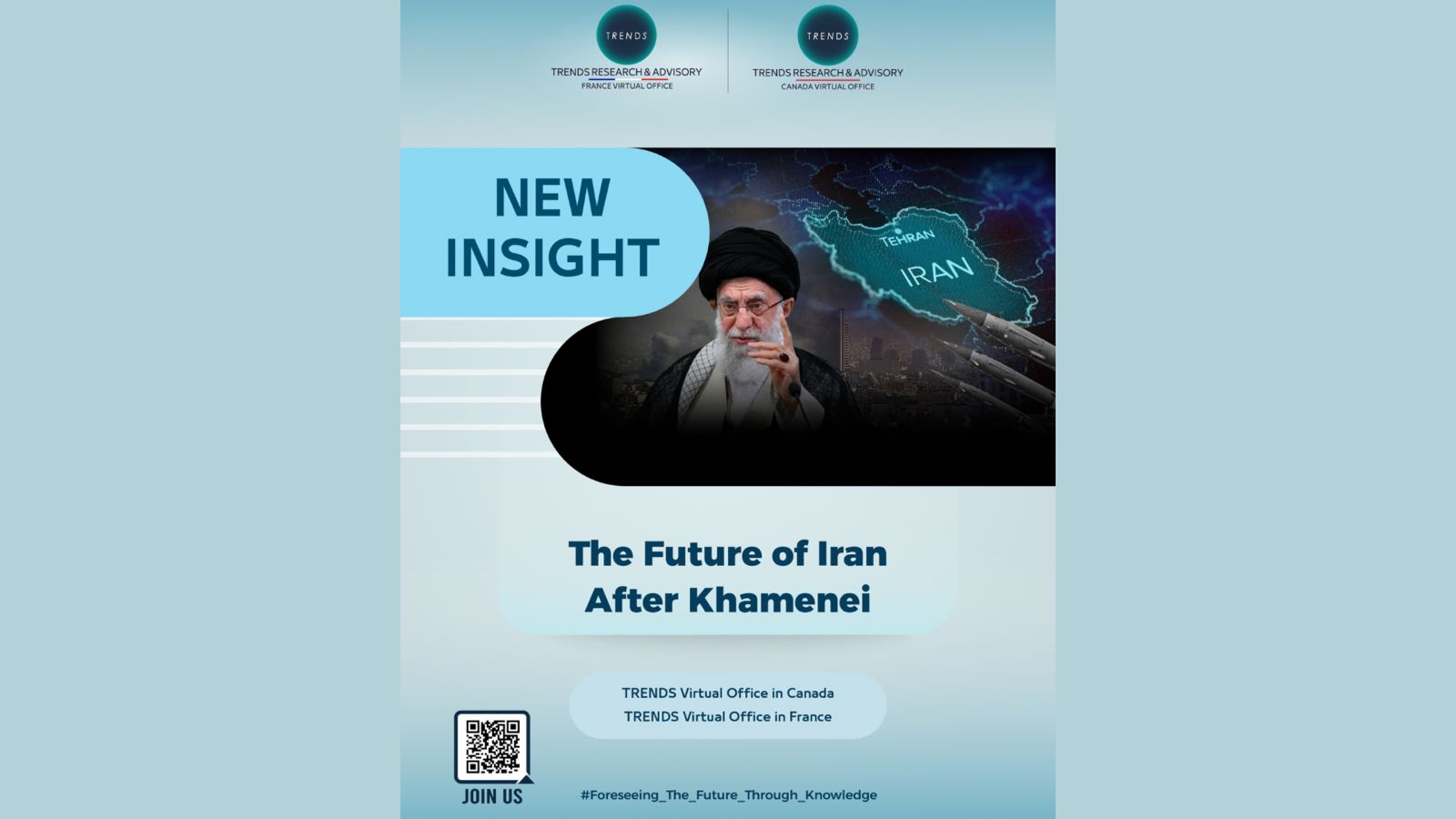
A study released by TRENDS Research & Advisory has stated that Iran’s political system after Supreme Leader Ali Khamenei may move toward one of five main scenarios. These range from managed continuity of the regime and an expansion of the security-military establishment’s influence to temporary collective leadership, gradual systemic erosion, and ultimately the possibility of comprehensive collapse if multiple internal and external crises converge.
The study, prepared by the TRENDS Virtual Offices in Canada and France, explained that the absence of the Supreme Leader amid war and mounting economic pressure would represent a structural test for the Iranian system. This is because the position of the Supreme Leader embodies the convergence of religious legitimacy, political authority, and security influence within the Iranian state.
It added that the succession process cannot be viewed merely as a technical constitutional procedure. Instead, it is a revealing moment for the balance of power within Iran’s deep state. While the Assembly of Experts formally holds the authority to appoint the Supreme Leader, political and security considerations inevitably intersect with this process.
Managed Continuity
The study suggests that the managed continuity scenario is the most likely in the near term, as religious, political, and security elites may seek to ensure a swift and orderly transition of power to avoid a leadership vacuum.
Under this scenario, a temporary council could oversee the transitional period before the Assembly of Experts appoints a new Supreme Leader, while preserving the system’s existing structure based on the doctrine of Wilayat al-Faqih.
Expanding Influence of the IRGC
The study also examined the possibility of expanding influence of the security-military establishment, particularly the Islamic Revolutionary Guard Corps, which has become a major actor in Iran’s politics, economy, and regional strategy.
It noted that the absence of the Supreme Leader could grant the IRGC greater weight in the leadership selection process or in shaping strategic decision-making, potentially pushing the system toward a model more heavily reliant on security authority.
Temporary Collective Leadership
The study also discussed a temporary collective leadership scenario, under which the ruling elite might establish a leadership council to manage the transitional phase and postpone a final decision on succession until a broader political consensus emerges within the system.
Gradual Systemic Erosion
Another scenario highlighted in the study is gradual systemic erosion, driven by the interaction of three key factors: military attrition if conflict persists, mounting economic pressure, and declining political legitimacy.
Possibility of Comprehensive Collapse
The study did not rule out the scenario of comprehensive collapse or rapid systemic disintegration if several factors occur simultaneously, including failure among elites to manage the succession process, escalating popular protests, and divisions within security and military institutions.
A Critical Turning Point
The study concluded that the post-Khamenei phase represents a critical turning point in the history of the Islamic Republic. Iran’s future, it emphasized, will largely depend on the interaction of three decisive variables: the cohesion of the ruling elite, the resilience of the economy under sanctions and conflict, and the positions of international powers regarding the crisis.
