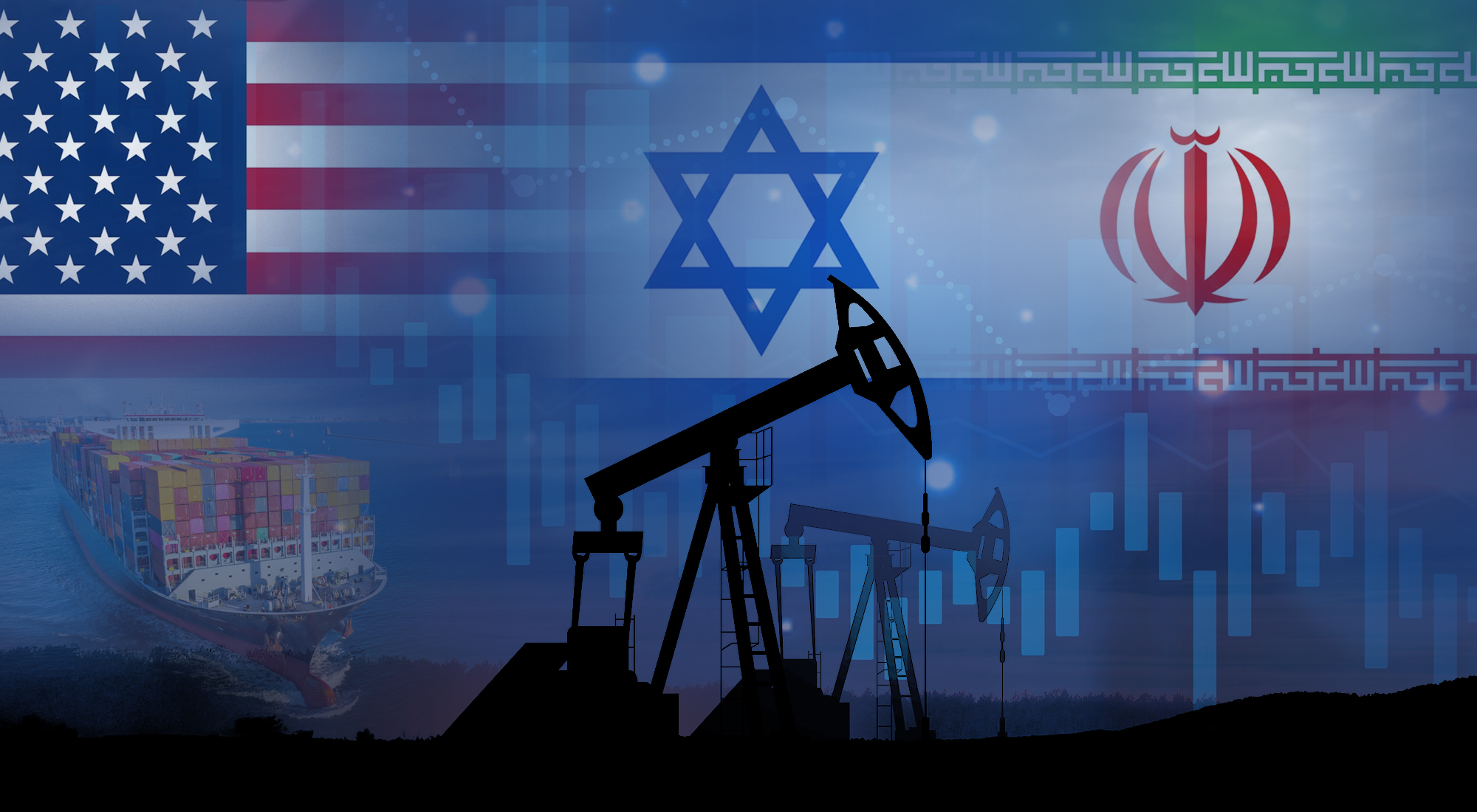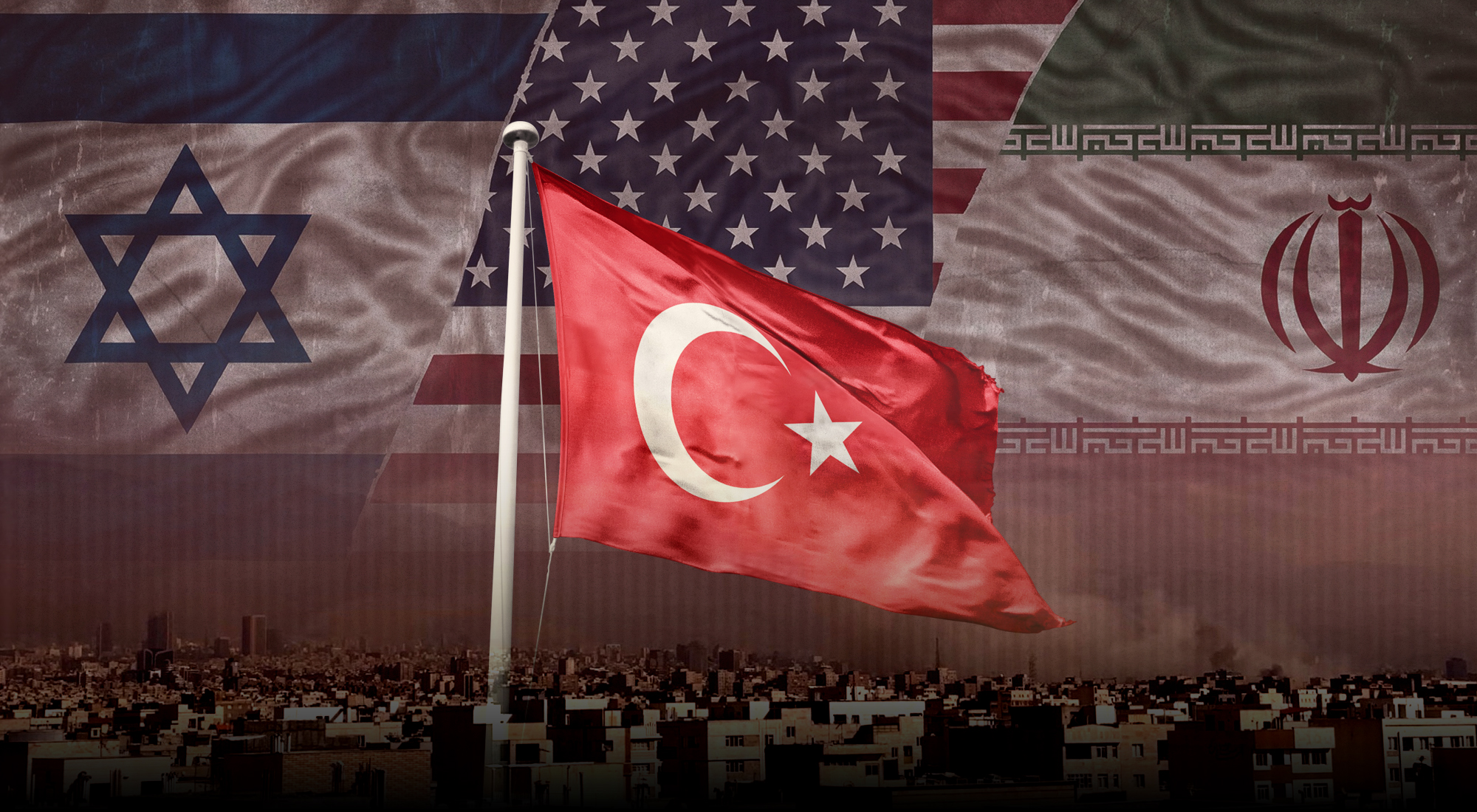



The coordinated U.S. and Israeli strikes against the Iranian government, military, and nuclear infrastructure targets on 28 February sent shockwaves from the Strait of Hormuz to the cold waters of the Bosphorus. For Türkiye, like many other regional actors, a conflict with Iran spiraling into regional chaos was an ultimate scenario that should have been avoided, despite the low possibility of Iranian attacks on the U.S. bases stationed in Türkiye. There are many vital factors Türkiye should consider in case of a regime collapse, a civil war inside Iran’s borders, or an extended war.
At an unusually broad-based press conference in Istanbul in early 2026, Turkish Foreign Minister Hakan Fidan had already set the stage for Ankara’s take on a possible joint action against Iran. Moving beyond the standard declaratory soundbites of diplomacy, Fidan’s briefing felt more like a masterclass in strategic realism. His message was precise: Türkiye opposes any military intervention against Iran. Despite Türkiye’s increasingly vocal opposition in recent weeks, a military operation, nevertheless, took place. Türkiye’s influence in preventing an attack on Iran was highly limited.[1]
Now, it is time for another crisis management and risk minimization process for Türkiye, which already neighbors multiple war-torn countries from its north to its south. This history informs the current “cold peace” between Iran and Türkiye. The Turks view Iran as a necessary counterweight to other regional influences, given, in the current scenario, that Iran remains weak enough to manage but strong enough to prevent a vacuum. To understand the Turkish view, one must look back at the Treaty of Qasr-e Shirin in 1639 between the Ottoman Empire and the Safavids. This treaty established the current Iran-Türkiye border four centuries ago, which has remained remarkably stable despite the collapse of the Ottoman Empire, the rise of the Turkish Republic, and many drastic changes inside Iran.[2][3]
This stance is not driven by ideological affinity or a sudden warmth toward Tehran, but rather by a cold, clinical assessment of the accumulation of risk. For Ankara, the war in Iran is a multidirectional crisis that touches upon migration, trade, counterterrorism, energy security, and the very survival of the regional order.
Instability in Iran
To understand Türkiye’s view of the war, one must first understand its very recent traumas. For over a decade, Türkiye has navigated the “Syria Lesson”—the devastating consequences of a neighboring country’s collapse, characterized by millions of refugees, the rise of extremist networks such as Daesh, and the creation of power vacuums. During the Syrian war, many projectiles and rockets fell inside Türkiye’s borders, mostly not on purpose, without causing major harm, but showing how close the conflicts were taking place near its borders.
Türkiye and Iran have been in opposing camps in the Syria conflict, and Iran’s position has predictably been weakened after Assad’s fall in December 2024. Despite intense rivalry for more than a decade due to Shia expansionism, both states run their business as usual, especially in terms of energy and non-energy trade.
For Ankara, whatever happens in Iran is not a distant problem. It is a neighboring system whose internal collapse would have immediate and multidirectional consequences. As Turkish FM Fidan articulated, the concern is not regime change as an abstract Western ideal, but the manner and speed of the potential transformation. A sudden collapse, particularly one facilitated by external military force, would trigger a chain reaction that Türkiye is ill-equipped to manage alone.[4]
Economic effects
Türkiye will be affected by a prolonged conflict in the Gulf region as the country depends on exported energy sources to a large extent. With the Strait of Hormuz effectively closed to tanker traffic, global Brent crude has spiked toward US$80–$90 per barrel on the second day of the conflict (1 March), with tail-risk projections reaching US$140. For Türkiye, every US$10 increase in oil prices adds approximately US$2.5 billion to its current account deficit and pushes inflation up by roughly 1 percentage point. Türkiye’s recent increase in oil production is not anywhere close to meeting its domestic demand.
According to official figures from 2025, Türkiye produces roughly 135,000 barrels per day, which is only above 10 percent of its domestic consumption. Any sudden peak in oil prices will affect Türkiye’s inflation-struck economy quickly. This may force Türkiye’s Central Bank to reconsider planned interest rate cuts and likely put the country’s Finance Minister, who came to the post with the promise of curbing inflation, in a hard spot. British economist Timothy Ash argues, “In moments like this, prudence and sound macroeconomic management matter even more, so I tend to think that Simsek’s standing has been strengthened by the new Gulf war”. Türkiye had stopped buying Iranian oil in 2019 in line with extensive US sanctions on Iranian oil.[5][6][7]
Iran typically supplies about 13–15 percent of Türkiye’s natural gas. While the Tabriz-Ankara pipeline has not been physically destroyed, there might be a situation where Iran may suspend flows as a “precautionary” measure or to prioritize domestic needs during the conflict. However, Türkiye’s recent LNG contracts, mainly with U.S.-based energy companies, and Türkiye’s recently discovered natural gas reserves might play a role in diminishing Türkiye’s concern in natural gas supplies. Its household gas demand will go down as the peak winter season is almost behind.
As of early March, the three main gates between Türkiye and Iran remain open for commercial cargo. For Turkish exporters, Iran is the primary “land bridge” to Central Asia; the current insecurity has effectively paralyzed the East-West Middle Corridor via Iran, forcing a shift toward the more expensive Trans-Caspian route. The economic impact of the war has been immediate and painful. On 2 March 2026, the Borsa Istanbul (BIST 100) plummeted by 7 percent in the opening as investors reacted to the U.S.-Israeli strikes.
An isolated and weakened Iran can, in some tactical respects, benefit Türkiye. An economically vibrant, globally integrated Iran with a young, educated population would pose a serious challenge to Türkiye’s private sector and regional policy goals. Therefore, economic and political self-imposed isolation benefits Türkiye’s interests as a country with a young population and manufacturing power. However, a ‘fragmented’ Iran would create many unpredictable scenarios for Türkiye.
Proposed Istanbul talks
Iran views Türkiye as a significant regional rival. Türkiye’s offer to mediate between Iran and the United States in January 2025 was a calculated attempt to institutionalize the proposed “Istanbul Process” as the primary diplomatic engine for regional stability, reinforcing Ankara’s status as an indispensable arbiter between the West and the Islamic world.
By hosting the talks, Ankara sought to ensure that any potential resolution would prioritize the containment of refugee flows and the protection of trade corridors, effectively preventing a “Syria-style” collapse on its eastern flank. However, Tehran viewed the prospect of an Istanbul-based summit as a strategic trap that would have forced it to negotiate under the shadow of Türkiye’s growing regional influence and NATO identity. Türkiye hoped to have more leverage over the Iran issue and to affect U.S. leadership against a military action. However, Türkiye’s effort to include regional actors in the talks with a broader agenda, including Iran’s missile program, may have pushed Tehran out of the talks even before the start.
For the Iranian leadership, the “Omani model” was preferable because it offered a discreet, technical environment that excluded regional rivals from the table, ensuring the survival of the regime was not seen as a concession to ‘Turkish primacy’. Ultimately, Iran’s pivot to Muscat signaled a determination to keep the negotiations strictly bilateral, avoiding a high-visibility diplomatic stage that would have elevated President Erdoğan at a moment when Tehran felt strategically cornered.
The geography of chaos
Ankara is concerned that a U.S. military operation against Iran could create a power vacuum, potentially transforming the region into a fertile breeding ground for PJAK, the Iranian wing of the outlawed PKK. To mitigate this risk, Türkiye is leveraging its regional peace initiative to pressure PJAK into disarming and following the PKK’s 2025 symbolic dissolution. Ultimately, Turkish officials view the neutralization of PJAK as a critical step in preventing the transnational militant network from exploiting regional instability caused by potential regime change in Tehran. In recent weeks, Turkish officials have been advocating for a ‘regional peace initiative’, referring to the disarmament of all PKK-tied armed organizations, including PJAK.[8]
However, a recent media report alleviated Türkiye’s concerns about border security. According to an Axios report on 3 March, President Trump reportedly held high-level phone calls with Iraqi Kurdish leaders Massoud Barzani and Bafel Talabani to discuss the ongoing U.S.-Israeli military campaign against Iran. Central to these discussions is the potential for a coordinated ground offensive involving the PJAK, which is widely considered the most militarily capable among the newly formed “Coalition of Political Forces in Iranian Kurdistan.”[9]
While Netanyahu has lobbied for mobilizing these groups to trigger an internal uprising, the involvement of PJAK remains a flashpoint that could drive security coordination between Türkiye and the Iranian regime at some point.
Turkish security officials have long warned that a destabilized Iran would generate a “terrorist ecosystem” along an exceptionally wide geography. Specifically, Ankara fears the activation of dormant militant networks from the Caucasus to the Levant. We have already seen the early indicators: in recent weeks, Türkiye proactively informed Tehran of PKK militants attempting to exploit the chaos by crossing the Iranian border.
Turkish analyst Deniz Karakullukçu frames this as a structural dilemma. Both extremes, Iran’s full normalization into Western systems or its deep instability, carry significant risks for Ankara. Normalization could alter regional balances and intensify competition, but collapse would generate unmanaged security spillovers. Consequently, stability, however imperfect, transactional, or uncomfortable, remains Türkiye’s preferred outcome.
Turkish minority in Iran
Ankara maintains a highly cautious stance, recognizing that any attempt to provoke the Turkish minority in Iran would be a strategic miscalculation with catastrophic blowback. While estimates vary, the Turkic population in Iran is substantial, numbering between 15 and 20 million, making them the largest ethnic minority in the country.[10]
Crucially, unlike separatist movements elsewhere, this population is deeply embedded within the Iranian state architecture and religious hierarchy, with the majority identifying itself with the Twelver Shia theology rather than pan-Turkic nationalism that would drive them toward Türkiye politically. From the late Supreme Leader to the presidency, ethnic Turks hold pivotal positions of power, ensuring that their loyalty is often tethered to the survival of the Iranian state. In modern times, Türkiye has never attempted to use Iran’s Turkish minority against the ‘Persian state.’
Consequently, Ankara views this community not as a tool for subversion, but as a stabilizing bridge that must remain intact to prevent the total fragmentation of the Iranian plateau. Any external effort to weaponize ethnic identity would likely trigger a nationalist backlash within Iran that would unify the population against foreign interference, ultimately undermining Türkiye’s own border security and long-term regional interests.
Defense Industry Catalyst
The war between the U.S.-Israel coalition and Iran would compel a rapid acceleration of Türkiye’s planned “Steel Dome” multilayered air defense project to counter escalating regional missile threats. The war showcased, once again, the importance of airpower. However, the 12-Day War between Iran and Israel in June 2025 had already alerted Türkiye’s threat perceptions and defense preparations.
Over the past decade, Türkiye has executed a paradigm-shifting leap in its defense industry, evolving from a major arms importer into a self-reliant global exporter. By 2026, the nation’s domestic production rate has surpassed 80 percent, a dramatic surge from approximately 20 percent in the early 2000s, effectively insulating its national security from foreign embargoes and supply chain pressures. This transformation is anchored by high-tech, field-proven platforms such as the Bayraktar UAVs, the KAAN fifth-generation fighter jet, and an expanding naval fleet under the MİLGEM program. Despite the leap in Turkish local defense production, Türkiye still needs crucial Western hardware to maintain and expand its air power.
As instability threatens neighboring supply chains, Turkish private-sector contractors are positioned to fill the security vacuum, potentially transforming the nation into the primary provider of high-tech defense solutions for a volatile Middle East.
“Türkiye is next” narrative
The escalating Iran-Israel conflict will possibly provide President Erdoğan with a powerful narrative of “stability in a sea of chaos” ahead of his potential 2027 reelection bid. As the Turkish public increasingly adopts a “Türkiye is next” mindset, fearing that Israeli regional aggressiveness represents an existential threat to Türkiye’s national interests, the government may shift the national discourse from economic grievances to security priorities.
Central to this strategy is the elevation of the indigenous defense industry as a symbol of sovereign resilience; by showcasing high-tech platforms like the 5th-generation KAAN fighter jet and the Steel Dome air defense system, Erdoğan positions himself as the only leader capable of deterring high-end regional threats. According to surveys after the 12-Day War in June 2025, Erdoğan’s popularity increased as he offers ‘stability’ in the eyes of a large majority.
His “defense industry-first” political campaigns in the last election cycles resonate deeply across the political spectrum, including among the younger generation, effectively neutralizing opposition critiques by framing military self-sufficiency as a non-partisan achievement. Furthermore, the conflict allows the administration to justify continued fiscal sacrifices and defense taxes as necessary components of a “Total Defense” doctrine.
The war in Iran may do the impossible: it may soften Türkiye’s deep domestic polarization. Across the political spectrum, from the ultra-nationalist MHP to the secular-Kemalist opposition, a “Türkiye next” narrative has taken hold. The narrative was also popular after the U.S. invasion of Iraq and the civil war in Syria.
We have witnessed how Türkiye’s domestic peace process with the PKK has started. On 17 June 2025, Devlet Bahceli, leader of the government-allied Nationalist Movement Party (MHP), declared that “Israel’s objective is to encircle the Anatolian geography”, warning that Türkiye is the “ultimate target”.
The ‘Türkiye is next’ narrative is not rooted in mere conspiracy, but in a decades-long sequence of foreign interventions: Iraq in 2003, Libya in 2011, and the fallout in Syria. Turkish political memory is haunted by the image of once-stable Muslim nations being systematically dismantled. As Iran and Israel engage in a mutually destructive war, the belief that Türkiye is the final piece of the puzzle has moved from the fringes to the mainstream of Turkish political thought.
Conclusion: Navigating the “ring of fire” through strategic realism
Türkiye’s stance on the escalating war in Iran is defined by a cold, clinical assessment of geography and history rather than ideological sentiment. For Ankara, the current crisis represents the ultimate stress test for its “strategic autonomy” doctrine. As the smoke rises over Iranian nuclear and military infrastructure, Türkiye is forced into a high-stakes balancing act: maintaining its obligations as a NATO member while preventing a neighboring systemic collapse that would unleash a “terrorist ecosystem” and unmanageable waves of migration across its eastern borders.
The “Syria lesson” remains the primary driver of Turkish caution. Ankara recognizes that while a weakened Iran may tactically diminish a regional rival, a failed Iran would be catastrophic. The potential for a power vacuum to be filled by PJAK or other militant networks represents an existential security threat that no amount of defense exports can fully mitigate. Consequently, Türkiye’s policy is one of “active neutrality”, striving to be the only actor capable of communicating with all sides of the conflict. By advocating for a regional peace initiative and the disarmament of PKK-tied organizations, Ankara is attempting to preemptively secure its borders against the inevitable spillovers of a destabilized Iranian plateau.
Economically, the conflict has placed Türkiye in a precarious position. The spike in global oil prices and the paralysis of the Middle Corridor land bridge to Central Asia threaten to undo years of inflation-targeting policies.
Domestic political unity has emerged as an unexpected byproduct of the regional chaos. The “Türkiye is next” narrative may bridge the gap between different camps in Türkiye’s political landscape, creating a rare moment of national consensus centered on the pursuit of “Total Defense”. By framing the defense industry as a non-partisan symbol of sovereign resilience, President Erdoğan has effectively shifted the domestic conversation from economic hardship to national survival, positioning himself as the architect of stability in an increasingly volatile Middle East.
Ultimately, Türkiye’s primary objective is to ensure the 1639 Treaty of Qasr-e Shirin remains the bedrock of regional geography. In an era where once-stable nations are being dismantled by external intervention, Ankara views a managed, stable Iran as a necessary pillar of the regional order.
Endnotes
[1] Ilker Sezer, “Fidan’s long presser and what it showcases,” Türkiye Today, January 17, 2026, https://www.turkiyetoday.com/opinion/fidans-long-presser-and-what-it-showcases-3213093.
[2] Gökhan Bacik, “The Iranian Moment and Turkey,” GMF, May 25, 2016,https://www.gmfus.org/news/iranian-moment-and-turkey.
[3] “Treaty of Qaṣr-i Shīrīn,” Britannica, https://www.britannica.com/topic/Treaty-of-Qasr-i-Shirin
[4] https://enerji.gov.tr/haber-detay?id=31700.
[5] Timothy Ash, “War on Iran might hurt Türkiye’s never-ending fight with inflation,” Türkiye Today, March 3, 2026, https://www.turkiyetoday.com/opinion/war-on-iran-might-hurt-turkiyes-never-ending-fight-with-inflation-3215504?s=1.
[6] “Istanbul exchange drops over 5% amid Iran conflict jitters,” Türkiye Today, March 2, 2026, https://www.turkiyetoday.com/business/istanbul-exchange-drops-over-5-amid-iran-conflict-jitters-3215429.
[7] U.S. Department of the Treasury, “Treasury Designates Free Life Party of Kurdistan a Terrorist Organization,” February 4, 2009, https://home.treasury.gov/news/press-releases/tg14.
[8] Barak Ravid and Marc Caputo, “Scoop: Trump calls Kurdish leaders in Iran war effort,” Axios, March 3, 2026, https://www.axios.com/2026/03/02/trump-iran-war-kurds-iraq.
[9] Deniz Karakullukcu, “Fidan’s deliberate silence points to Türkiye’s nuclear ambiguity,” Türkiye Today, February 13, 2026, https://www.turkiyetoday.com/opinion/fidans-deliberate-silence-points-to-turkiyes-nuclear-ambiguity-3214461.
[10] Alireza Nader and Robert Stewart, “Iran’s Forgotten Ethnic Minorities,” RAND, April 4, 2013, https://www.rand.org/pubs/commentary/2013/04/irans-forgotten-ethnic-minorities.html.
[11] Esra Karataş Alpay, “‘This is a revolution’: How the Steel Dome reinvents Türkiye’s air defence,” TRT World, September 4, 2025, https://www.trtworld.com/article/4e3cb9470a2c.