


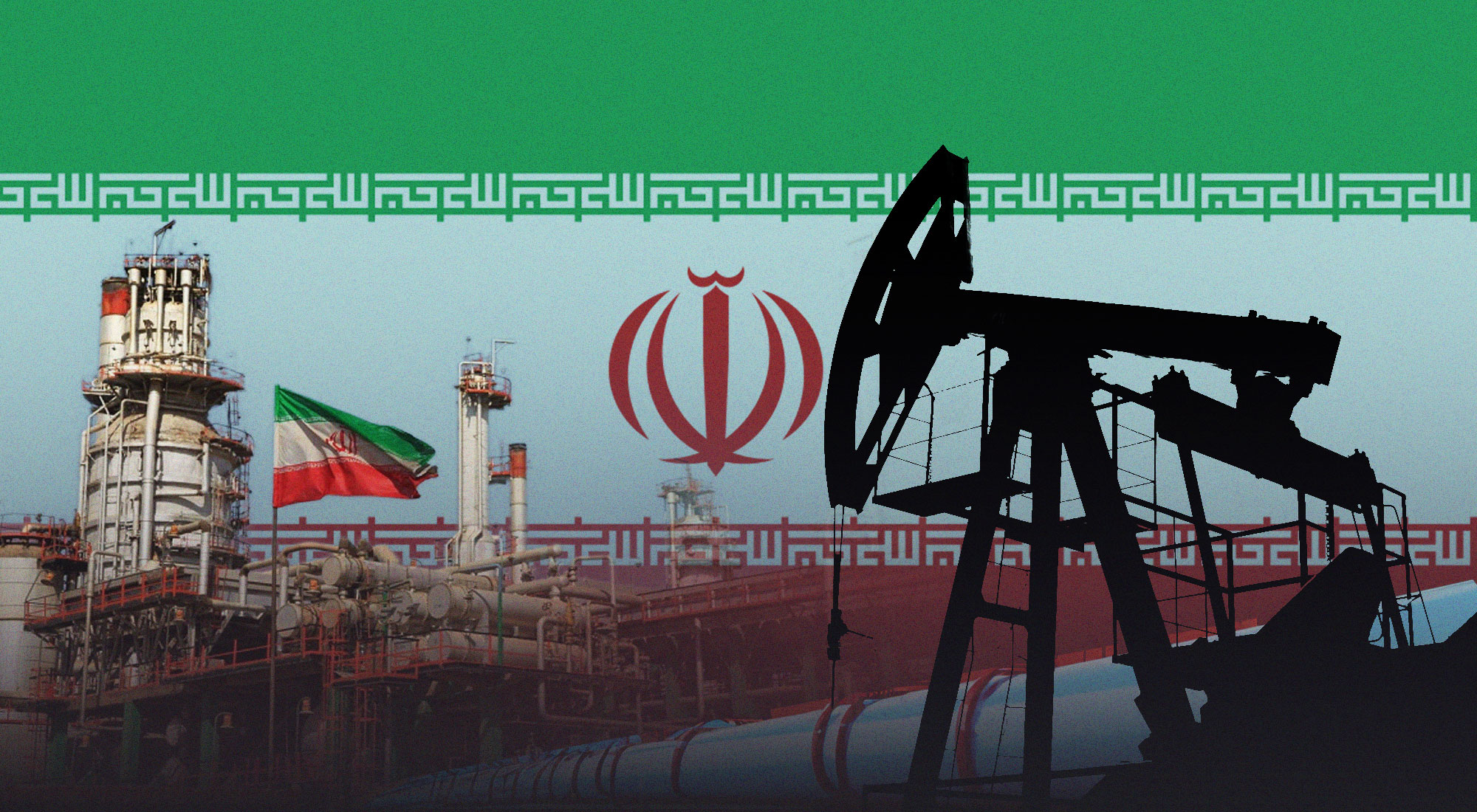
According to the study, Iran’s oil production reached approximately 3.2 to 3.5 million barrels per day in early 2026, with exports stabilizing between 1.5 and 1.8 million barrels per day.
TRENDS Research & Advisory has released a study confirming that Iran’s energy sector, despite continuing production and exports, is facing mounting structural economic pressures that weaken its ability to generate real returns and support overall macroeconomic stability.
The study, prepared by Dr. Omid Shokri, Energy Strategist & Senior Visiting Fellow at George Mason University, U.S. explains that Iran possesses one of the world’s largest oil and gas reserves. However, this advantage is no longer sufficiently reflected in economic performance due to increasing internal and external challenges.
It highlights that the depreciation of the Iranian currency to around 1.4–1.5 million rials per US dollar, along with inflation rates of 40%-50%, has driven up operating and import costs. This has reduced profit margins across the oil, gas, and petrochemical sectors, while also weakening investment capacity and operational efficiency.
The study claims that Iran’s oil production reached approximately 3.2 to 3.5 million barrels per day in early 2026, with exports stabilizing between 1.5 and 1.8 million barrels per day, generating monthly revenues of $3 to $4 billion. However, these figures do not reflect genuine economic improvement, as they reflect price discounts of $8–10 per barrel relative to Brent crude, along with higher transportation and financing costs linked to sanctions.
The study also notes that U.S. threats to impose 25% tariffs on countries dealing with Iran serve more as a political pressure tool than a fully enforceable measure. Nevertheless, they contribute to increased uncertainty and higher transaction costs, particularly in shipping, insurance, and financing.
It further emphasizes that Iran’s energy sector has become heavily dependent on the Asian market, with China accounting for 80% to 90% of oil exports. This strengthens buyer leverage and forces Iran to offer deeper discounts. Meanwhile, gas exports remain limited due to high domestic consumption and weak infrastructure.
The study sheds light on Iran’s worsening electricity crisis, driven by insufficient investment in power generation and transmission networks. This results in frequent outages that negatively impact both energy and industrial sectors, increasing operational costs.
On the financial side, the study points out that oil revenues are increasingly used to cover short-term needs rather than being reinvested into sector development, leading to a gradual erosion of the production base over the long term.
The study concludes that Iran’s energy sector is undergoing a structural shift characterized by operational continuity but declining economic efficiency. The sector is now focused on maintaining production and export levels without the ability to generate sustainable added value.
It warns that the future of the sector will largely depend on its ability to attract investment, improve infrastructure efficiency, and ease the constraints imposed, cautioning that the continuation of the current situation may lead to a gradual erosion of production capabilities despite ongoing oil flows.

