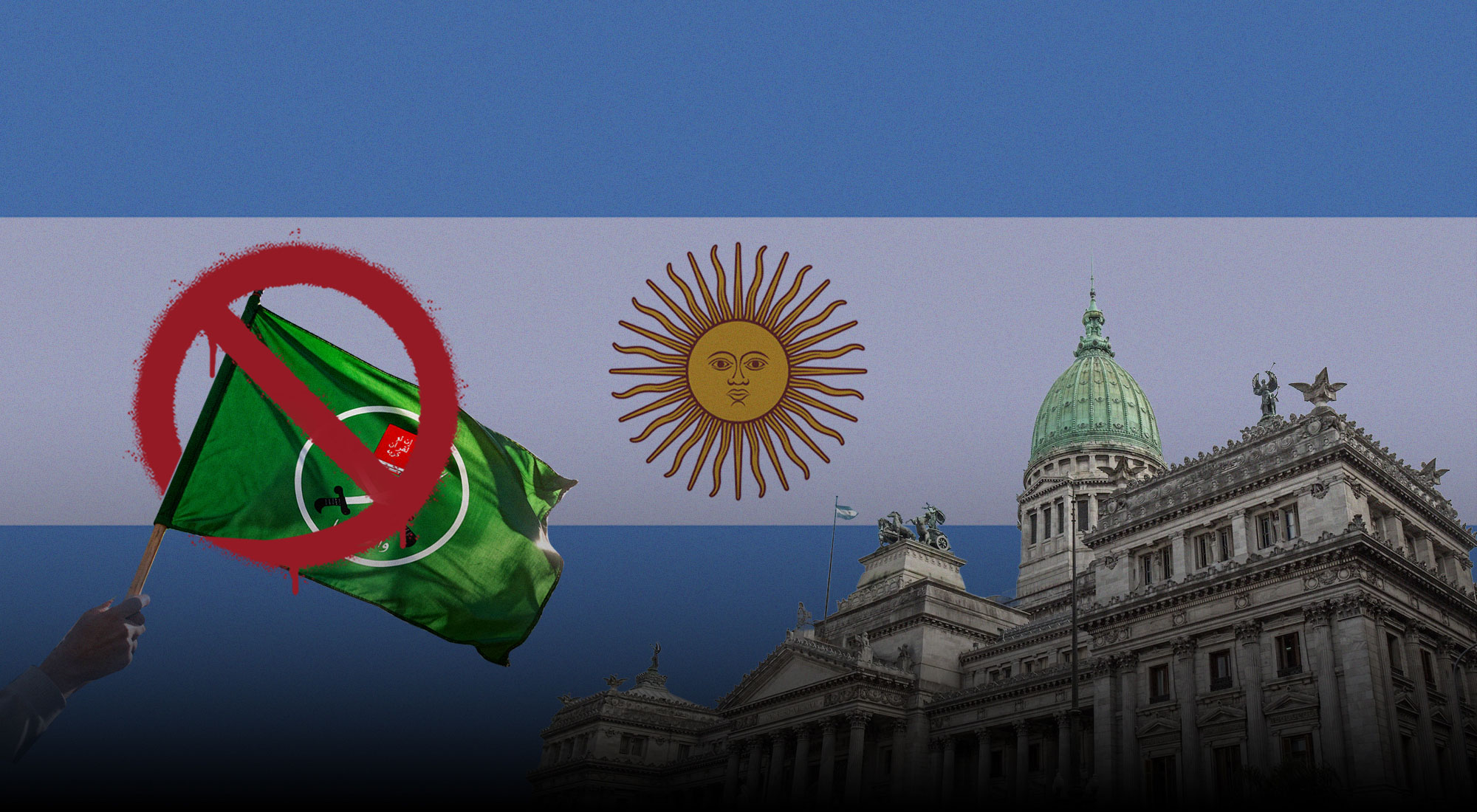



On 14 January 2026, the Argentine government announced that it had designated the Lebanese, Egyptian and Jordanian branches of the Muslim Brotherhood as terrorist organizations.[1] These branches were thus added to the Public Registry of Persons and Entities Linked to Acts of Terrorism and their Financing (RePET). According to Argentine law, individuals and organizations on this list[2] are prohibited from operating in Argentina, and their financial resources may be frozen automatically.
Argentine regulations
RePET was created by Decree 489/2019[3] within the purview of the Ministry of Justice,[4] based on Law 25,246 (May 2000). This law established the Financial Information Unit (UIF), based on recommendations from the Financial Action Task Force (FATF) and the Financial Action Task Force of Latin America (GAFILAT). These organizations derive their actions from various United Nations resolutions.
The FATF has established ‘International Standards on Combating Money Laundering, Terrorist Financing and the Financing of the Proliferation of Weapons of Mass Destruction’, also known as the ’40 Recommendations.’[5] FATF Recommendation 6, which relates to ‘targeted financial sanctions related to terrorism and terrorist financing’, led to the creation of the UIF.
RePET is a useful tool for identifying individuals and organizations that may be linked to terrorist activities or the financing of such actions. It also provides an updated framework requiring all national institutions to report to the UIF on the activities of those included in RePET.
Inclusion in RePET follows the guidelines set out in United Nations Security Council Resolution 1267 (1999) and all subsequent resolutions on this matter, particularly Resolution 1373 (2001)[6] concerning the prevention, classification and combating of terrorism and the financing of such activities.
The Argentine Republic has adopted an approach aligned with international law, encompassing United Nations Security Council resolutions, international and Latin American financial action groups, the establishment of a financial information unit, and the creation of RePET within the Ministry of Justice.
However, as United Nations agencies can be slow to make progress, Argentina has decided that contrary to the provisions of Decree No. 918/12, which stated that only persons or entities included in the United Nations Security Council’s consolidated lists could be added to RePET, Decree 496/2024[7] will allow persons and organizations designated as such by the Argentine government to be included in the list.
The same has happened with the three chapters of the Muslim Brotherhood. This approach has been adopted to ensure a coordinated institutional response to security issues, since inaction or delay could have worse consequences for the country’s security.
This list is constantly updated in line with international developments in terms of investigations and actions by organizations and countries involved in the fight against terrorism, as well as our own investigations.
Argentina and the fight against terrorism
Through the aforementioned agencies and legislation at local, regional, and international levels, Argentina has made combating terrorism one of its main security priorities. This is understandable, given the two terrorist attacks that took place in the country: the 1992 attack on the Israeli Embassy in Buenos Aires and the 1994 attack on the AMIA building, which is home to the main organization of the Argentine Jewish community. In both cases, the Argentine justice system concluded that Hezbollah and officials and agencies of the Islamic Republic of Iran were involved.
The fight against terrorism is a socially sensitive issue in Argentina because it is not just a theoretical matter, but something that has directly affected Argentine citizens. Although these events took place more than thirty years ago, their impact on Argentine society is still very much felt.
Despite maintaining formal relations, ties between Argentina and Iran remain very tense. On 17 January, President Javier Milei designated the Quds Force of the Iranian Revolutionary Guard as a terrorist organization.[8] This prompted a response from Ismail Baghaei, spokesperson for the Iranian Ministry of Foreign Affairs, who insisted that the decision was illegal under international law and politically motivated.[9]
Islamist-inspired terrorism is thus considered a threat. Even though we cannot confirm that the Muslim Brotherhood has carried out activities in Argentina, acting in this way demonstrates the government’s commitment to a multilateral approach.
The priorities of Argentine foreign policy
The designation of these three branches of the Muslim Brotherhood as terrorist organizations is also linked to Argentina’s foreign policy priorities. President Javier Milei’s administration has repeatedly stated that its foreign policy is aligned with the positions of the United States and Israel.
This stance has drawn criticism from the domestic opposition, who have pointed out that it amounts to automatic alignment with Washington on foreign policy issues. Over the past two years, Javier Milei has prioritized the United States on many issues, as we discussed recently in relation to Argentina’s response to the arrest of Nicolás Maduro.[10]
In this case, Argentina has taken note of the United States’ actions, which occurred just a few hours earlier and saw the Lebanese, Egyptian and Jordanian branches of the Muslim Brotherhood declared terrorist organizations.[11]
Washington’s reaction was very positive, acknowledging the significant alignment in the fight against terrorism.[12]
Beyond the connection between the Milei and Trump administrations, the truth is that there is a significant gap in Latin America between right-wing governments, such as Milei in Argentina, Kast in Chile, Bukele in El Salvador and Paz Pereira in Bolivia, and left-wing governments, including Lula da Silva in Brazil, Sheinbaum in Mexico, Petro in Colombia and, until recently, Maduro in Venezuela. Right-wing governments consider greater U.S. influence in Latin America as desirable, whereas left-wing governments believe the opposite.
This is why a close relationship with the United States forms part of a general foreign policy framework that manifests itself in all aspects. However, it also has an internal support base, with some sectors of Argentine society supporting President Milei because they see these actions as the realization of their ideas.
However, we must not forget that the pre-eminence and unilateralism of the United States in Latin America is a reality. The revival of the so-called ‘Monroe Doctrine’ in the 2025 National Security Strategy, as well as events in Venezuela, are not unexpected, but rather part of a political trend. Therefore, supporting the United States is not illogical for right-wing governments in the region; it is an acknowledgement of a reality that would be illogical to oppose.
In this regard, we should expect to see many more actions by these governments in support of U.S. policies, including those related to fighting terrorism.
Whether it is because of the general foreign policy framework that prioritizes alignment with the United States, the relevance of terrorism to Argentine society or the desire to meet international anti-terrorism standards, the decision to designate the Lebanese, Egyptian and Jordanian chapters of the Muslim Brotherhood is not surprising. Rather, it is the result of a political logic yielding both external benefits, such as distancing itself from left-wing regional governments, and internal benefits, such as strengthening electoral support from those who believe in close ties with the United States.
In countries such as Argentina, which has a strong presidential system, the president’s decisions, based on his beliefs, take precedence over any other consideration.
Argentina and the United Arab Emirates
Another aspect of Argentina’s decision regarding the Muslim Brotherhood that we must consider is the potential impact on bilateral relations between Argentina and the United Arab Emirates.
As noted in the official statement from the United Arab Emirates Embassy in Argentina,[13] Argentina’s decision finds Buenos Aires and Abu Dhabi on the same side in the fight against the Muslim Brotherhood. It is important to note that the UAE outlawed the Muslim Brotherhood in 2014.
Identifying the same threats will undoubtedly strengthen relations between the two countries.
It is therefore very positive that the two countries’ foreign policies continue to align in all areas, including security, as mentioned above, and trade, as evidenced by the progress in negotiations for a free trade agreement between the UAE and MERCOSUR, as well as the recent visit by the UAE Minister of State for International Cooperation, Reem Al Hashimy.[14]
In the 50 years since diplomatic relations were established between Argentina and the UAE, there have rarely been so many coincidences at all levels.
[1] Oficina del Presidente, (@OPRArgentina), X, January 15, 2026, https://x.com/OPRArgentina/status/2011548838390349982.
[2] https://repet.jus.gob.ar/.
[3] https://www.boletinoficial.gob.ar/detalleAviso/primera/211523/20190717.
[4] https://www.boletinoficial.gob.ar/detalleAviso/primera/211717/20190719.
[5] https://biblioteca.gafilat.org/wp-content/uploads/2025/10/RecomendacionesyMetodologiaAgosto2025.pdf.
[6] https://www.unodc.org/pdf/crime/terrorism/res_1373_spanish.pdf.
[7] https://www.boletinoficial.gob.ar/detalleAviso/primera/308731/20240606.
[8] Oficina del Presidente, (@OPRArgentina), X, January 17, 2026, https://x.com/OPRArgentina/status/2012510336302116876/photo/1.
[9] https://www.infobae.com/politica/2026/01/18/iran-rechazo-la-decision-de-argentina-de-catalogar-como-terrista-a-la-fuerza-quds-y-advirtio-habra-respuesta/.
[10] Paulo Botta, “United States and Venezuela,” TRENDS Research & Advisory, January 4, 2026, https://trendsresearch.org/insight/united-states-and-venezuela/?srsltid=AfmBOoqDOZ4SyH8guDrwk3JVUWcE8MZgSogez0gEX8Cnjs-mejR8SMD-.
[11] U.S. Department of State, “Terrorist Designations of Muslim Brotherhood Chapters,” Marco Rubio, Secretary of State, Press Statement ,https://www.state.gov/releases/office-of-the-spokesperson/2026/01/terrorist-designations-of-muslim-brotherhood-chapters.
[12] State Dept CT Bureau, (@StateDeptCT), “The United States welcomes the announcement from Argentina’s Office of the President banning chapters of the Muslim Brotherhood. We value our strong counterterrorism cooperation with Argentina on a wide range of issues,” X, January 15, 2026, https://x.com/StateDeptCT/status/2011869225577501129.
[13] UAE Embassy – Buenos Aires, (@UAEEmbassyBA), “UAE Embassy in Buenos Aires Welcomes Argentine Designation of Several Muslim Brotherhood Branches as Terrorist Organizations,” X, January 15, 2026, https://x.com/UAEEmbassyBA/status/2011889718880059888.
[14] https://www.hcdn.gob.ar/prensa/noticia/MARTIN-MENEM-RECIBIO-A-LA-MINISTRA-DE-ESTADO-PARA-LA-COOPERACION-INTERNACIONAL-DE-LOS-DE-EMIRATOS-ARABES-UNIDOS./.