TRENDS Research & Advisory participated in a virtual seminar organized by the Bahrain Center for Strategic, International and Energy Studies (DERASAT), in partnership with the Arab Energy Forum, titled: “Developments in the Strait of Hormuz: Between Geography and Global Energy Security.” The seminar examined the accelerating geopolitical implications affecting the stability of the global energy system.
H.E. Dr. Sheikh Abdullah bin Ahmed Al Khalifa, Minister of Transportation and Telecommunications and Chairman of the Board of Trustees of DERASAT, welcomed the participants, emphasizing the importance of strengthening regional and international dialogue on energy security and maritime developments. He also stressed the need for continued coordination between research centers and decision-makers to support the stability of global energy markets.
A Strategic Opportunity
Dr. Mohammed Al Ali, CEO of TRENDS Group, highlighted that the recent regional crisis and accompanying security developments in the Gulf represent a strategic opportunity to recalibrate Gulf countries’ relations with international partners on more balanced foundations. These foundations should take into account shared energy security requirements and reinforce the region’s position in the global economy.
He explained that recent developments have revealed a key strategic reality: energy security is no longer merely a local or regional issue, but a transnational sovereign concern, where global economic considerations intersect with international security and stability dynamics. The events also underscored the sensitivity of the Strait of Hormuz as a critical chokepoint in the global economic system, where any disruption has immediate repercussions on global markets and supply chains.
Dr. Al Ali further noted that threats to maritime navigation and the use of vital waterways as tools of political pressure constitute a form of economic warfare and a clear violation of international law, necessitating more effective international action to ensure the security of these routes.
He emphasized the importance of reassessing Gulf relations with major powers based on mutual interests, prioritizing partners who have contributed to regional security and stability. He also called for adopting new strategic approaches, including the so-called “defensive interlinking strategy,” which links the interests of major consuming nations to the stability of maritime routes, thereby increasing the likelihood of international intervention to protect them when threatened.
Strengthening the Arab Role in Global Energy Security
Regarding the future of the Arab role in global energy security, Dr. Al Ali stressed that the current crisis has highlighted the strategic importance of Gulf countries in ensuring stable energy supplies, noting that any disruption in the region has immediate global economic consequences.
He called for strengthening this role through several key pathways, including transitioning from the traditional concept of supply security to a “networked energy security” model. This model is based on diversifying and integrating transportation routes and developing interconnected regional infrastructure to mitigate the impact of strategic chokepoints.
He also underscored the need to neutralize maritime routes through enhanced multilateral diplomacy and to lead international efforts to criminalize the use of these routes as instruments of political or economic pressure. Additionally, he emphasized the importance of strengthening Gulf presence in international maritime organizations and building alliances to protect vital waterways.
Dr. Al Ali further highlighted the importance of accelerating the transition to alternative energy by increasing investments in renewable sources, particularly green hydrogen and solar energy, as well as developing regional electricity interconnection networks and alternative energy corridors.
He concluded by stressing that the current developments are not a passing crisis, but rather a strategic turning point that calls for a unified Gulf vision based on integration, resilience, and innovation, enhancing the region’s ability to shape the future of the global energy system.
The seminar also featured a distinguished group of experts and officials, including Ms. Ezz Al-Mannai, Undersecretary of the Ministry of Oil and Environment in Bahrain; Mr. Abdullah Al Ahmad, CEO of DERASAT; Dr. Abdulaziz bin Saqr, Chairman of the Gulf Research Center; Dr. Carole Nakhle, Secretary-General of the Arab Energy Forum; Dr. Mohammed Al Hashemi, energy and political affairs expert at the International Policy Research Center; and Dr. Majed Al Moneef, representing the Arab Energy Forum. The session was moderated by Dr. Abdullah Al Abbasi, Director of the Energy and Environment Studies Program at DERASAT, where participants discussed the key geopolitical challenges related to the Strait of Hormuz and their implications for global energy security.


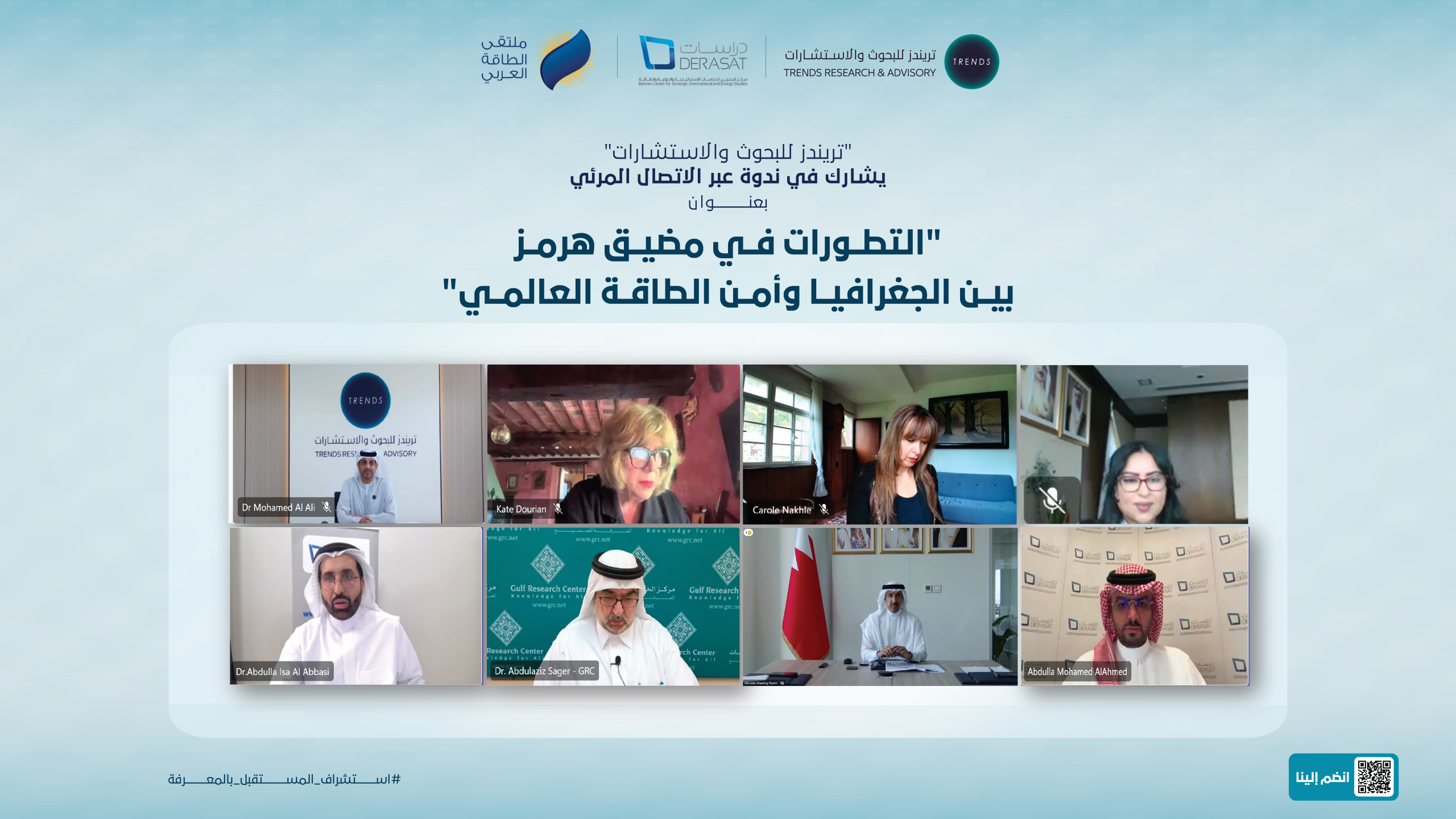
At Derasat Bahrain Seminar, TRENDS Presents Vision to Enhance Energy Security and Protect Maritime Routes The seminar explored the accelerating geopolitical implications for the stability of the global energy system.
17 Apr 2026
At Derasat Bahrain Seminar, TRENDS Presents Vision to Enhance Energy Security and Protect Maritime Routes The seminar explored the accelerating geopolitical implications for the stability of the global energy system.
17 Apr 2026

