#Experts and Economists:
- Diversifying international partnerships enhances African countries’ ability to negotiate within a more balanced and flexible global environment
- There is a need to invest in building economic resilience by developing more stable local and regional supply chains
- It is important to promote a more effective African role in international discussions on regional security and development
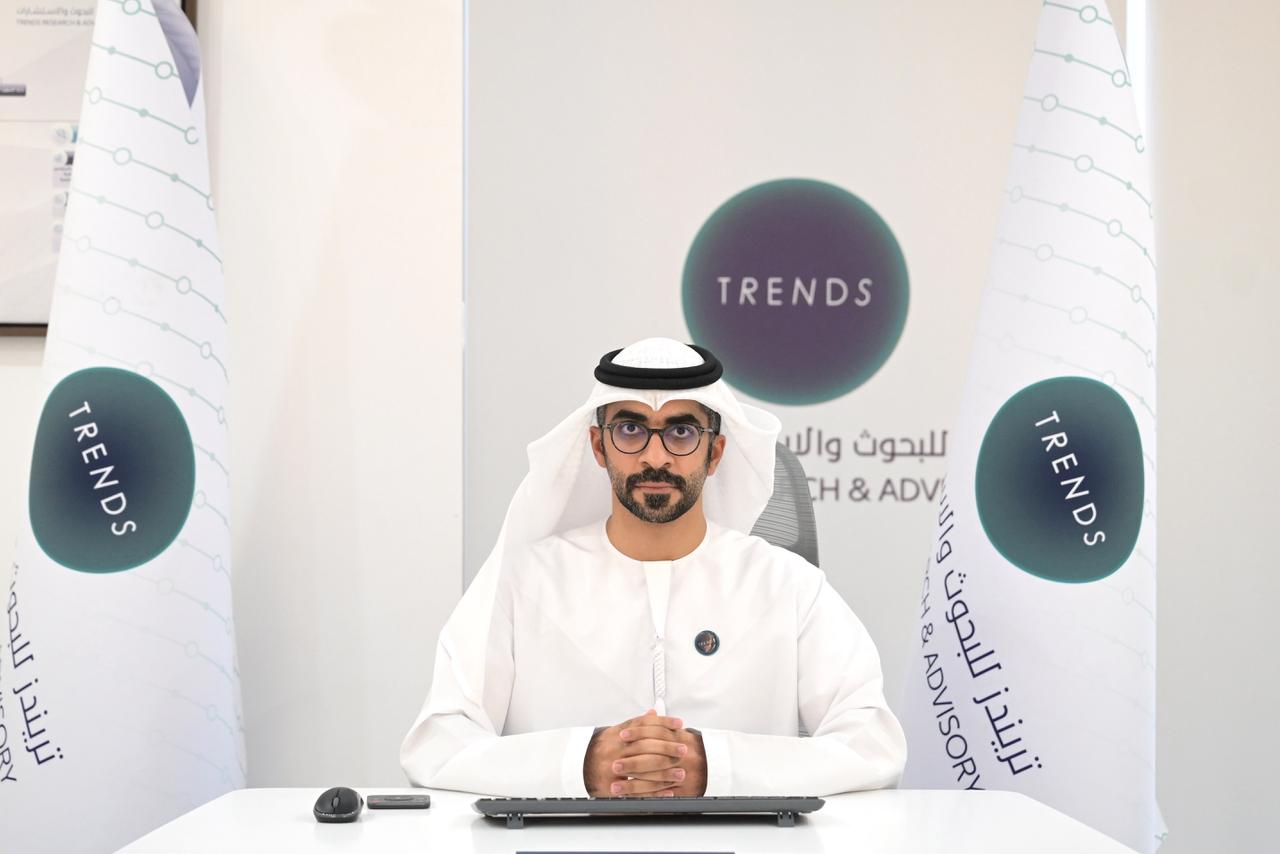
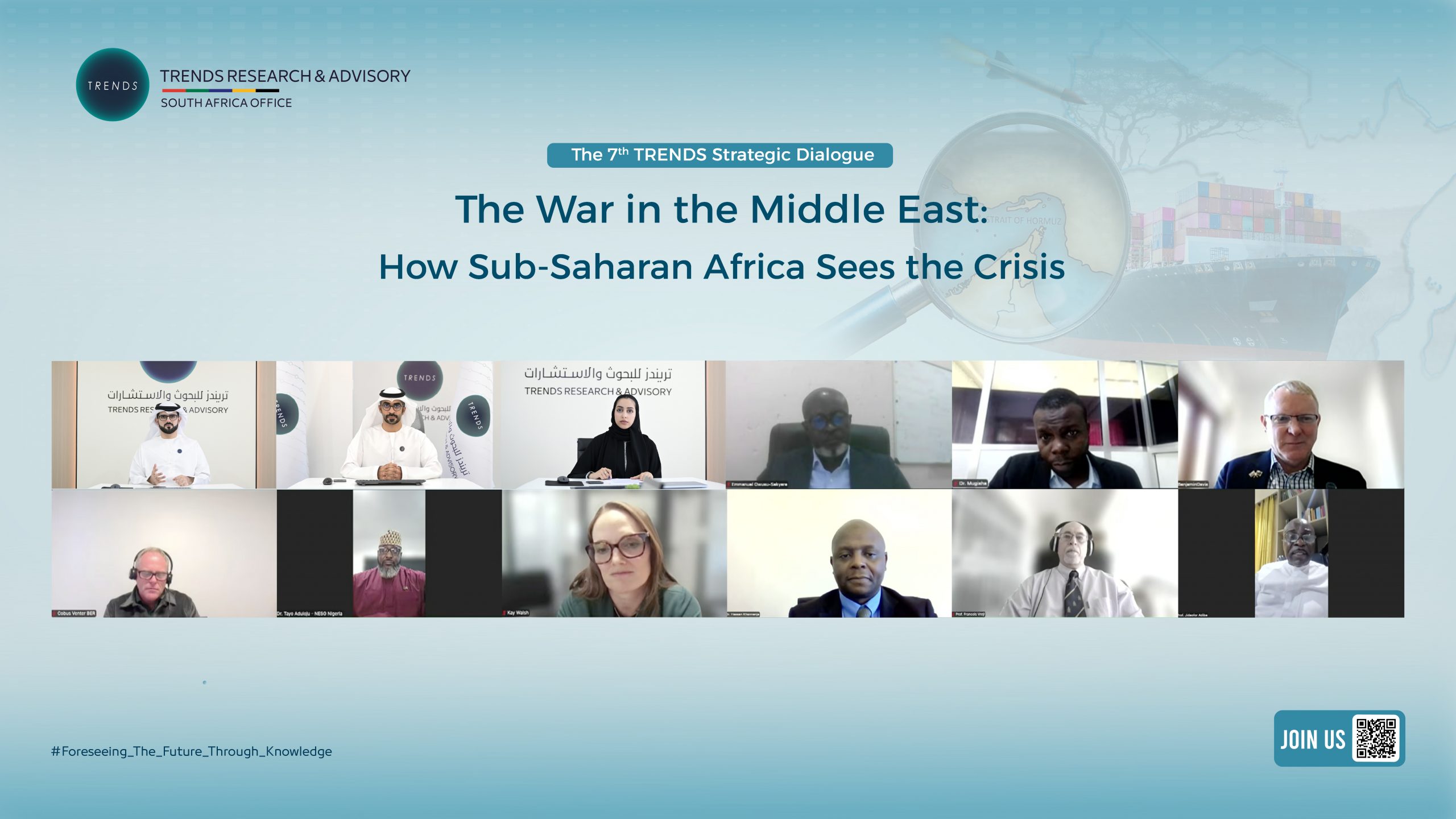
Participants in the Seventh Strategic Dialogue, organized by TRENDS Research & Advisory through its South Africa office, titled The War in the Middle East: How Sub-Saharan Africa Sees the Crisis, recommended strengthening regional cooperation within Africa as a central tool to enhance collective capacity to absorb external shocks and coordinate positions in international forums related to security and development.
They emphasized the need to adopt a proactive approach to managing geopolitical risks by integrating major regional transformations into economic and security planning policies in Sub-Saharan African countries, rather than treating them as emergency crises. They also stressed the importance of diversifying international partnerships to reduce reliance on single centers of influence and strengthen African countries’ ability to negotiate within a more balanced and flexible global environment.
They further emphasized the need to invest in economic resilience, particularly in the energy and food sectors, by developing more stable local and regional supply chains and reducing exposure to volatile external markets. In addition, they called for a more effective African role in international discussions on regional security to ensure that global decisions reflect development and economic justice rather than solely traditional power balances.
Africa: A New Strategic Actor
Commenting on the dialogue, Dr. Mohammed Al-Ali, CEO of TRENDS Trends Group, emphasized that the outcomes of the 7th Strategic Dialogue reflect a growing African awareness of the need to adopt proactive approaches to mitigate geopolitical risks. He noted that diversifying partnerships and enhancing regional integration constitute the fundamental pillars for enabling the continent to absorb external shocks, thereby ensuring the stability of sustainable development pathways amidst a volatile international environment.
He further highlighted the transformation of the continent’s role from being impacted by crises to becoming an actor seeking to reshape the international system through investment in economic resilience and the development of supply chains. Through such intellectual platforms, TRENDS continues to provide actionable insights that support policymakers in building balanced partnerships, ultimately strengthening Africa’s presence in global development issues.

International Security Balances
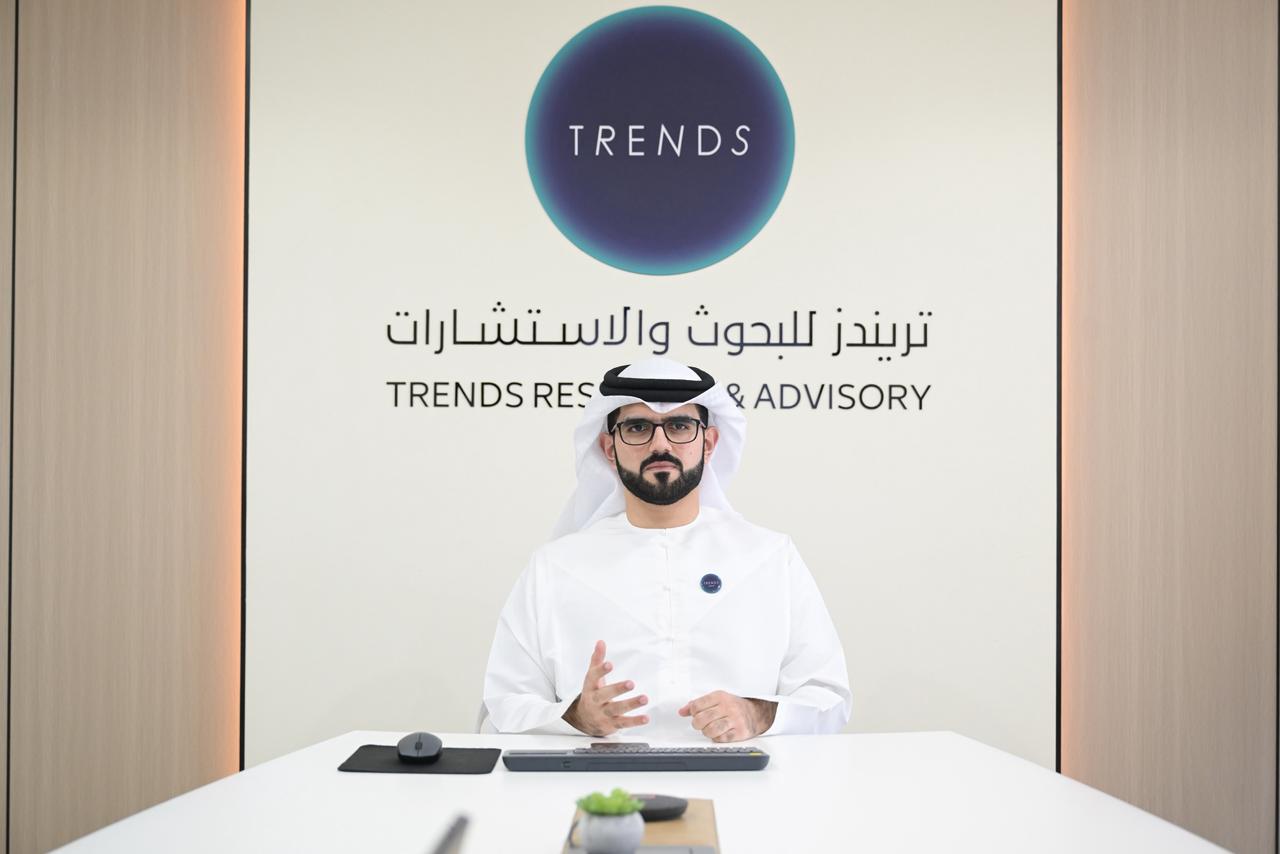
The dialogue brought together a distinguished group of experts, economic analysts, and researchers. It was opened by Abdulaziz Al Marzouqi, a researcher at TRENDS, who stated in his opening remarks that amid the rapid transformations taking place in the Middle East, the ongoing war associated with Iran stands out as one of the most complex regional crises, with deeply intertwined implications for geopolitics, international security balances, and global economic and energy chains.
He noted that the war has extended beyond the region, intersecting with major power calculations, concerns over regional stability, and the repercussions for global economic security. From the perspective of Sub-Saharan Africa, this crisis is not viewed as a geographically distant conflict, but rather as an event with direct implications for development pathways and human security, reflected in disruptions to commodity prices, fluctuations in energy supplies, and rising inflationary pressures.
Al Marzouqi explained that Sub-Saharan Africa’s reading of the crisis is driven more by developmental pragmatism than by direct political engagement, raising fundamental questions about how to protect growth trajectories and enhance the resilience of national economies in the face of recurring external shocks, particularly geopolitical ones.
Risks of Financial Crises
This was followed by the economic panel discussion, moderated by Ben Davis, Director of the TRENDS South Africa Office. The session began with remarks by Dr. Tayo Aduloju, CEO of the Nigerian Economic Summit Group (NESG), who stressed that African countries will not progress without discipline in the use of oil revenues. He noted that Africa is capable of undertaking rapid internal structural reforms, pointing out that Nigeria has undergone 13 months of structural changes in the energy sector, including the removal of subsidies and the operation of the Dangote refinery. However, the issue, he emphasized, lies not in revenue generation but in its management.
Aduloju added that 50% of low-income African countries are vulnerable to financial crisis risks and must work toward greater energy integration through gas and renewable energy sources. He also called for moving away from reactive, fragmented policy responses toward coordinated, clear strategic approaches.
Global Economic Slowdown
Cobus Venter, Senior Consulting Economist at the Bureau for Economic Research (BER) in South Africa, explained that South Africa’s economy is small, highly open, and resource-rich. However, in light of the war in the Middle East, economic models predict short-term price impacts during the second and third quarters of 2026, which are expected to fade thereafter. Global growth forecasts have been reduced from 2% to 1.2%, and prolonged conflict could push the global economy toward recession.
Kay Walsh, CEO of Nova Economics in South Africa, noted that 20% of South Africa’s primary energy supply comes from imported oil and gas. The broader impact of the war has been reflected in currency depreciation, which has increased the cost of all imported goods. She added that 60% of primary energy comes from domestic coal, making South Africa relatively fortunate from an energy security perspective.
Regarding other African markets, she explained that the impact varies depending on energy import structures, affecting domestic prices and currency depreciation levels. She expressed hope that the war would not be prolonged, suggesting that short-term measures could include reducing fuel levies, provided governments are not overly reliant on fuel-generated revenues.
Supply Chain Disruptions
Dr. Mugisha Rweyemamu of the Economic and Social Research Foundation (ESRF) stated that Tanzania currently relies on energy imports and that the Middle East conflict has led to rising energy prices, supply chain disruptions, increased risks to food systems, and exchange rate pressures.
He added that energy price volatility continues to impact the economy, alongside transportation and logistics shocks negatively. If the conflict is contained within a few months, growth may decline slightly, and inflation could be controlled. He stressed the need for Africa to rethink its logistics strategy, focusing on just-in-time delivery and developing port infrastructure.
Dr. Emmanuel Owusu-Sekyere, Director of Research, Policy and Programs at the Africa Center for Economic Transformation, noted that fuel prices have increased by between 10% and 35% in most African countries. Currency depreciation has exacerbated balance-of-payments issues, particularly due to the rising cost of foreign-denominated debt. He also highlighted that inflation reduces household purchasing power and warned that more countries may face debt distress due to the conflict, calling for urgent strategies to address global shocks.
Food Security Threats
The discussion then shifted to the international relations panel, moderated by Najla Al Midfa, a researcher at TRENDS. Professor Francois Vrey, a maritime and regional security specialist at the Security Institute for Governance and Leadership in Africa (SIGLA), explained that Indian Ocean flows are mainly affected at the Strait of Hormuz and possibly the Red Sea. He noted that an additional 30 ships per day are now passing via the Cape of Good Hope route, compared to the normal 60–80 vessels.
He stressed that food security threats in Africa remain latent and called for a strategic shift in viewing the Cape route as a primary global shipping route rather than merely a contingency option, given its relative security. He emphasized the need for secure ports and efficient shipping services.

Competition for Influence
Prof. Jideofor Adibe of Nasarawa State University in Nigeria highlighted the complexity of relationships between Middle Eastern conflict actors and African countries. He cited South Africa as an example of these complex ties, as it is a major trade partner for both the United States and Iran on the continent. He also warned of growing concerns about the diversion of counterterrorism resources toward Africa, citing Nigeria’s experience with the United States as an example of how this could unfold amid competition for influence.
The Bab el-Mandeb Front
Dr. Hassan Khannenje, Executive Director of the HORN International Institute for Strategic Studies in Kenya, stated that the Horn of Africa is particularly affected by the war due to its links with Gulf countries. These connections create economic shocks likely to increase social unrest. He warned that the Bab el-Mandeb Strait could become another front in the conflict, further worsening the economic situation.
He added that the war could fuel proxy conflicts in the region, which lacks the capacity to respond effectively. There is also increasing ideological convergence among extremist organizations exploiting the conflict, from Mozambique to North Africa. He stressed the need for African countries to develop energy reserve policies, bear the burden of managing conflicts, and adopt inward-looking strategies to achieve self-sufficiency.
Reframing Alliances
In the closing remarks, Hamdan Al Hamdani, a researcher at TRENDS, stated that the in-depth discussion of African perspectives on the Middle East war is highly significant for exploring post-war scenarios and reshaping regional and international alliances and understandings.
He added that the world is at a pivotal moment, reshaping the maps of influence and bilateral and multilateral relations, requiring a rethinking of the relationship between regional security and global stability, particularly in Sub-Saharan Africa.
He added that the interventions highlighted that this crisis cannot be reduced to its military, political, and strategic dimensions affecting its direct parties or regional surroundings; rather, it extends to encompass economic, humanitarian, and developmental impacts in distant regions. The effects of the war are also evident in disruptions to supply chains, rising energy and food costs, and the increasing vulnerability of developing economies to external shocks.