





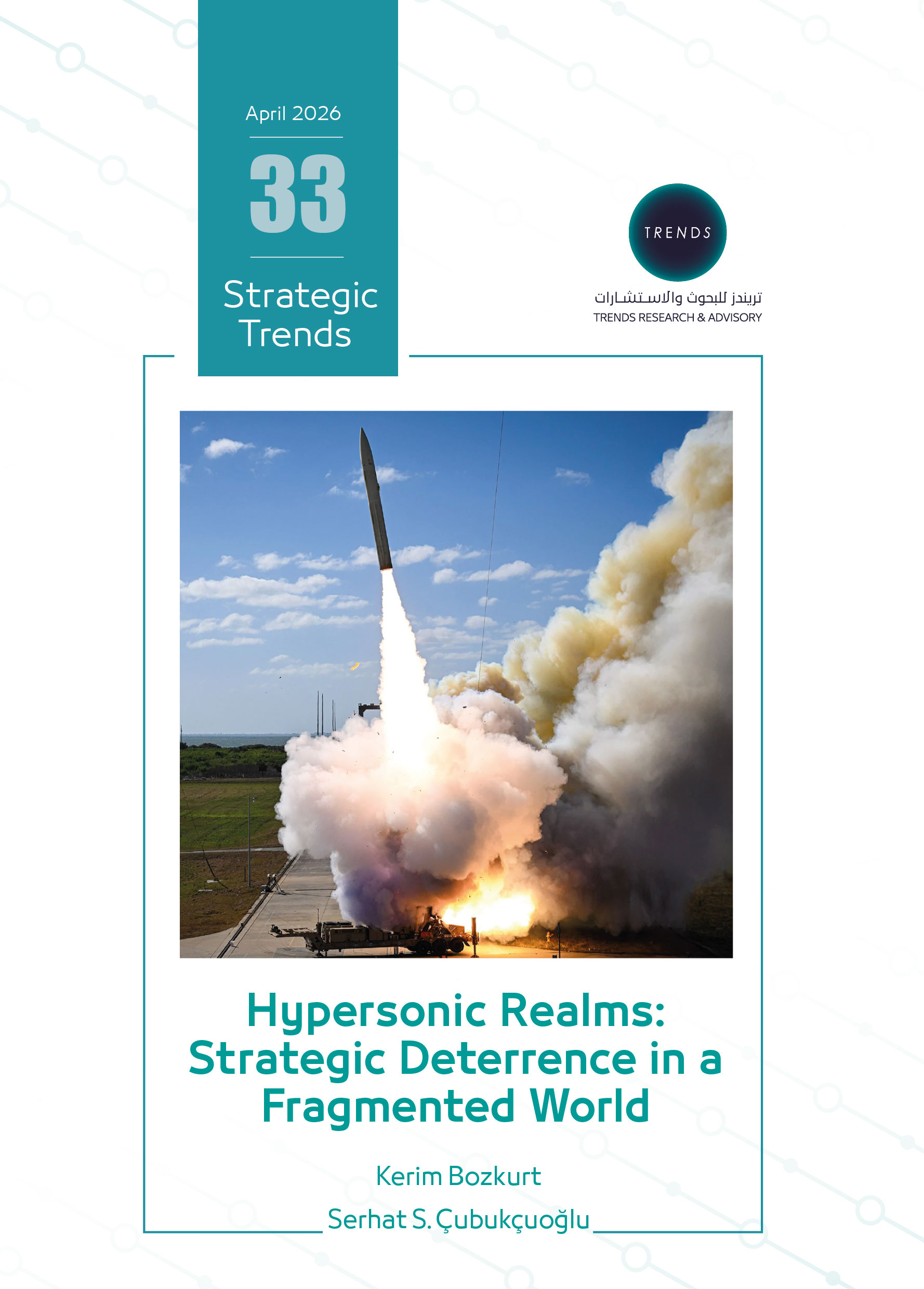
People typically associate “hypersonic” with anything that is reminiscent of science fiction, such as hyperspace or warp drive. As science fiction, this term sounds like a future military techno-thriller written by Tom Clancy if he were alive. The concept of a weapon capable of flying at more than five times the speed of sound within the Earth’s atmosphere while maintaining maneuverability to evade missile defense systems and to hit its intended target(s) with accuracy is more appropriate for the silver screen than for the battlefield. But in recent years, hypersonic weapons have become a reality and emerged almost as quickly as they are being developed. They have appeared in active conflict zones, from the skies over Ukraine to those above Israel, marking the outcome of a long-running, quiet—though hardly secret—arms race that dates back to the Cold War.
Modern combat operations are hybrid and decentralized across physical and digital domains,1 and hypersonic systems are uniquely suited to this evolving nature of warfare—defined increasingly by asymmetry, strategic ambiguity, and multi-domain operations. To military commanders, possession of the fastest missiles is as crucial in the 21st century as possession of the longest-range aircraft was in the 20th century. Just as airpower transformed battle scenes back then, the military utility of hypersonics has risen with the diffusion of asymmetric warfare, which, in essence, is the goal of a war: one side will inevitably want to dominate the other and make the balance asymmetric.2 As a form of smart power, hypersonics embolden low-profile actors, decrease the threshold of turning points in crises, and multiply the impact of kinetic power. Asymmetric force dynamics are prevalent in many theaters of operation, including those like Iran-Israel, Russia-Ukraine, and Pakistan-India. Hypersonic weapons allow weaker and medium-power states to circumvent the air superiority that has been the dominant limitation on their ability to attack high-value, heavily defended assets from a distance with speed and survivability.
