


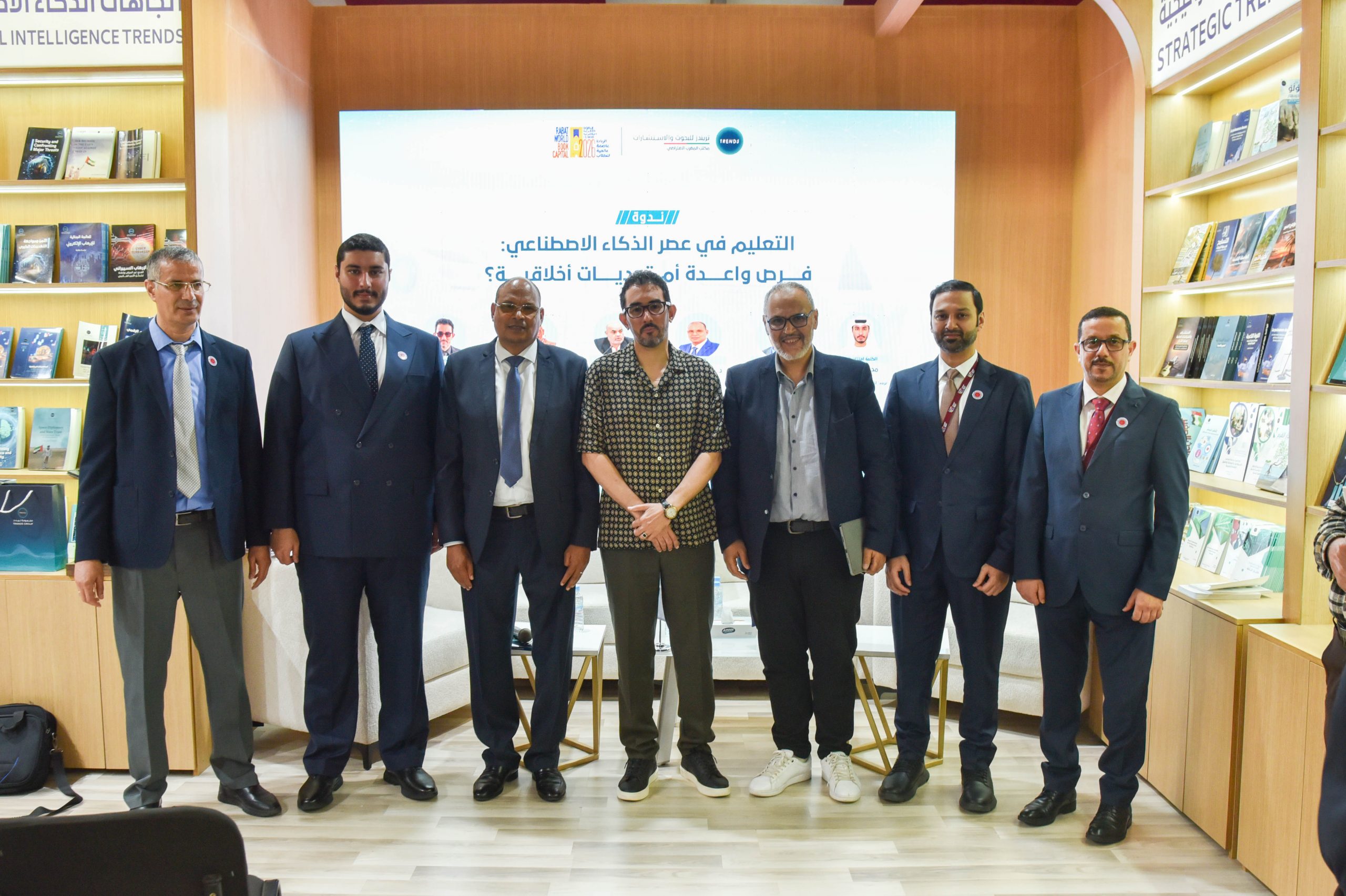
As part of the research and intellectual program accompanying its participation in the 2026 Rabat International Publishing and Book Fair, TRENDS Group, through its Morocco Virtual Office, organized a symposium titled Education in the Age of Artificial Intelligence: Promising Opportunities or Ethical Challenges?
The event brought together a select group of academics, experts, and researchers. It was held at the Group’s pavilion No. 36 in Hall B at the OLM Souissi venue in Rabat, the Moroccan capital.
Knowledge and Algorithms Revolution
In his opening remarks, Mohamed Al-Ahmed, a researcher at TRENDS Group, said that the world is entering a phase in which the knowledge revolution intersects with the algorithmic revolution, and in which the roles of teacher and learner are increasingly intertwined with the capabilities of intelligent machines. Artificial intelligence (AI) is no longer just a supporting technical tool, but has become an active force shaping curriculum design, personalizing learning, assessing performance, and even influencing patterns of thinking.
He noted that the real challenge is not the machine’s ability to learn, but humanity’s ability to redefine learning itself. Education is not just the transfer of knowledge; it is about building individuals, developing awareness, and shaping personalities capable of critical thinking, creativity, and decision-making.
He added that the future of education will not be determined by technology alone, but by the choices people make today. If AI is used wisely within a clear ethical and human framework, it can become one of humanity’s strongest allies in nurturing more aware, creative, and thoughtful generations.
The Risks of AI
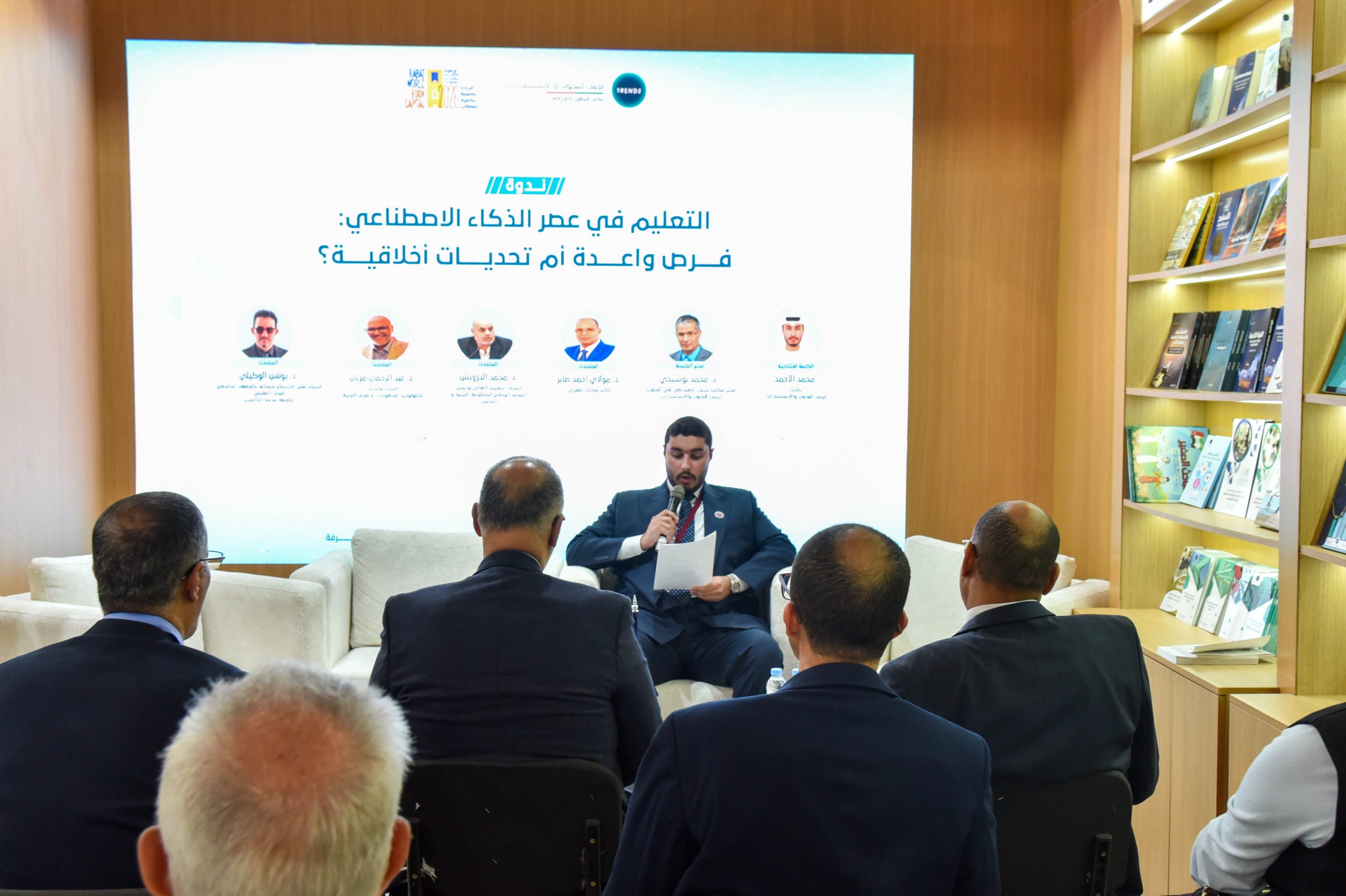
Opening the symposium, which was introduced by Dr. Mohamed Bouchikhi, Director of TRENDS Virtual Office in Morocco, Dr. Moulay Ahmed Saber, a Moroccan writer and researcher, stressed that the risks of AI lie in its reach across virtually every sector, from the economy and education to human relationships. This is evident in the widespread collective engagement with digital platforms and social media.
He pointed out that human knowledge is increasingly being integrated into AI applications, yet little attention is given to how the knowledge generated by AI itself interacts with human values. This comes at a time when risk indicators linked to digital applications are rising, raising ethical and value-based problems that must be addressed globally. He added that AI is now competing with teachers in education and training, posing a threat to their roles, alongside many other professions affected by the digital revolution. This calls for greater awareness of these real-world challenges.
Educational Interaction with Machines
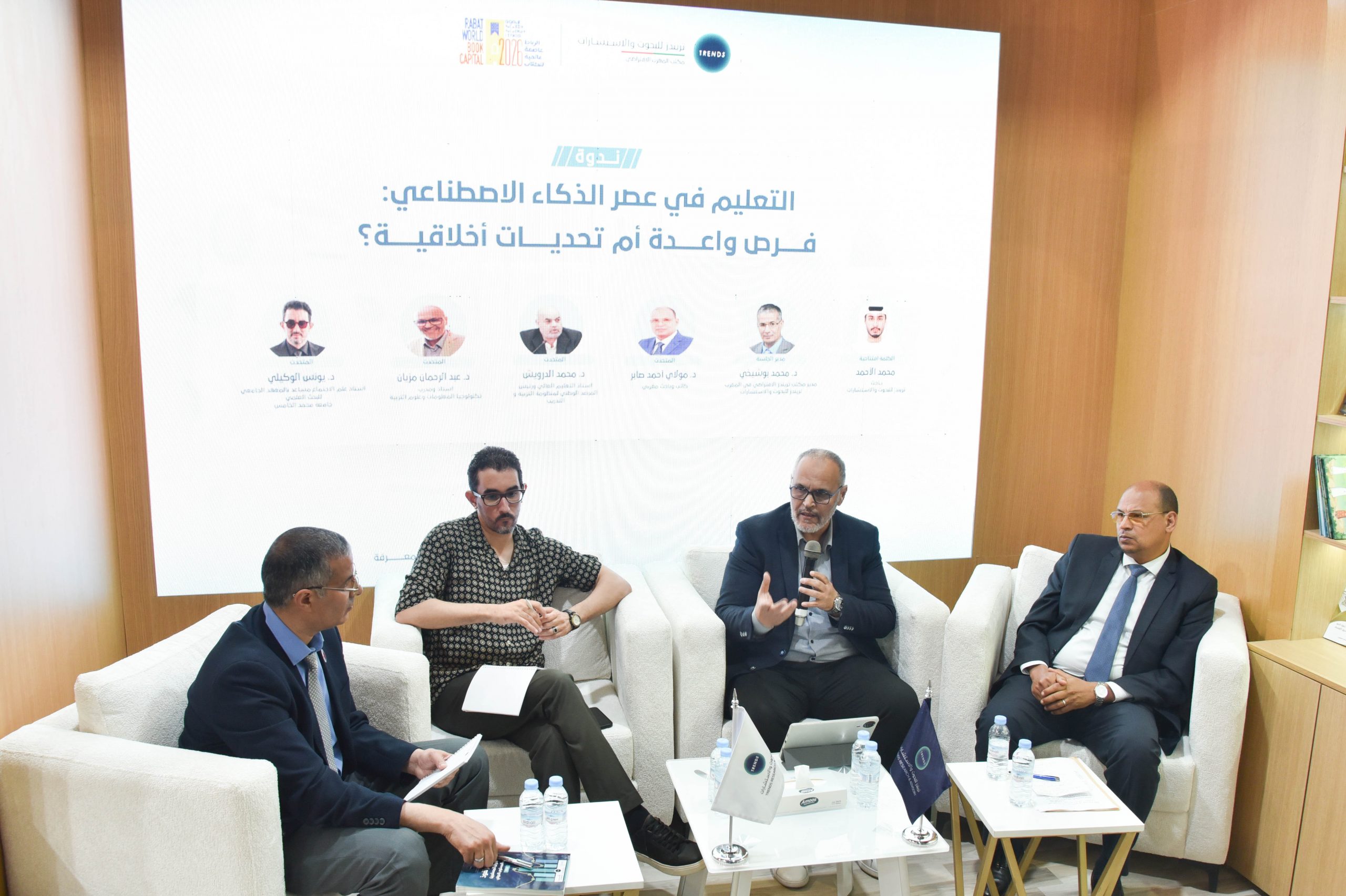
Dr. Younes Al-Wakili, Professor of Sociology and Anthropology at Mohammed V University in Rabat, explained that engaging with artificial intelligence in education is no longer theoretical; it is already a reality. He described several stages in educational interaction with machines and AI, including a phase of augmented intelligence, which involves thinking alongside machines with awareness and responsibility to deliver services across vital sectors, including research.
Dr. Al-Wakili added that there is another phase marked by significant risks, during which the dangers of AI are evident across the political, security, and economic fields. In some cases, it has become a tool in the hands of extremist groups, posing threats to institutions, states, and societies, which requires serious consideration of the risks associated with this technological shift.
Pivotal Transformations in Learning
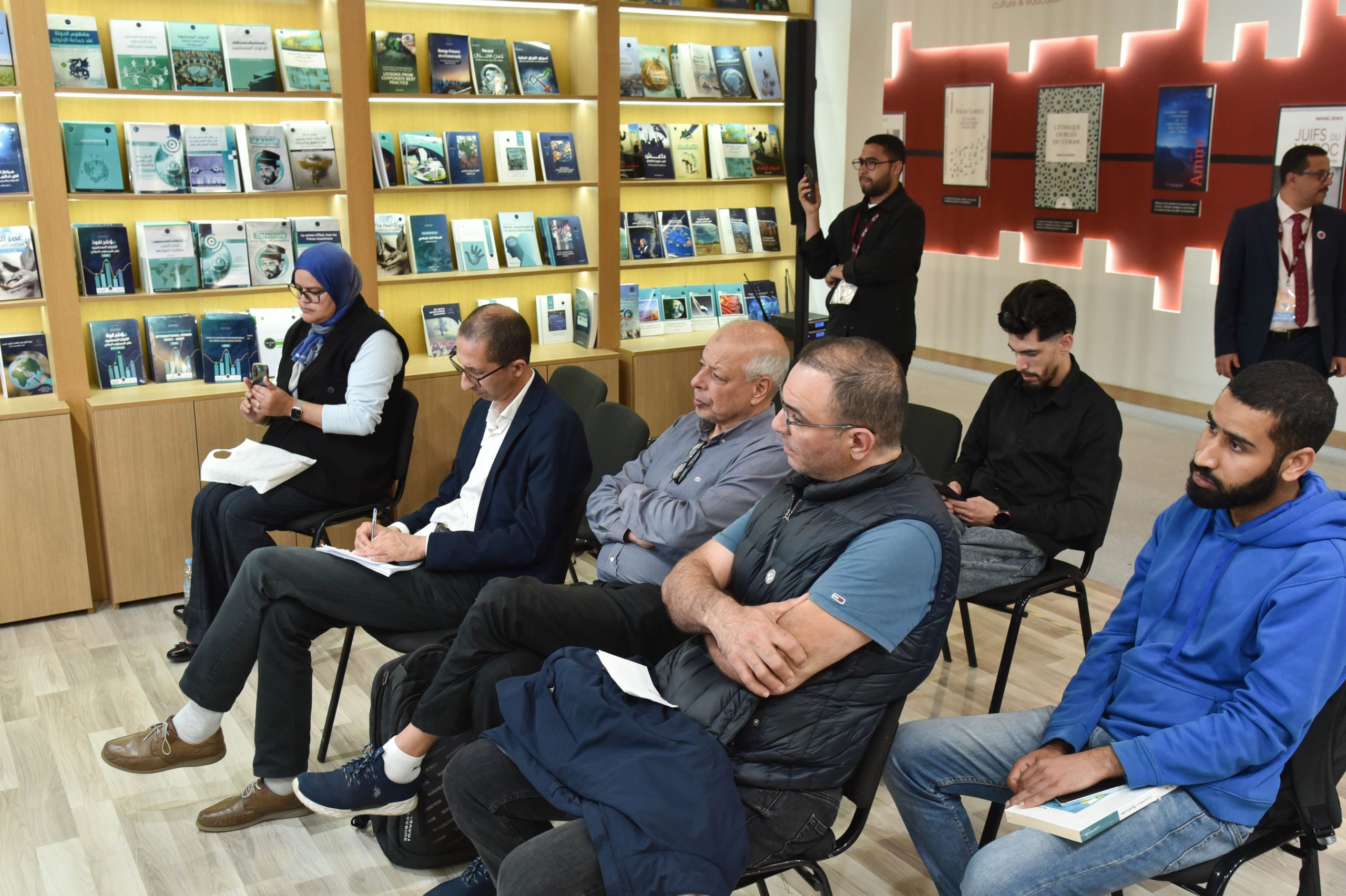
Dr. Abderrahman Mazuane, a researcher and trainer in information technology and education sciences, noted that engaging with AI in education remains essential today, especially as machine involvement continues to grow and AI increasingly provides answers to almost everything. He referred to several real-world examples, some of which were striking, including a student asking, “Why should I learn if AI can answer everything?”
Dr. Mazuane believes the AI revolution has brought about pivotal transformations in teaching and learning. Schools are no longer the sole source of knowledge, and AI is evolving rapidly, even as schools and teachers remain strong. He stressed that this strength will be one of the most important factors to be used wisely to address the challenges posed by the growing role of artificial intelligence in education.

