



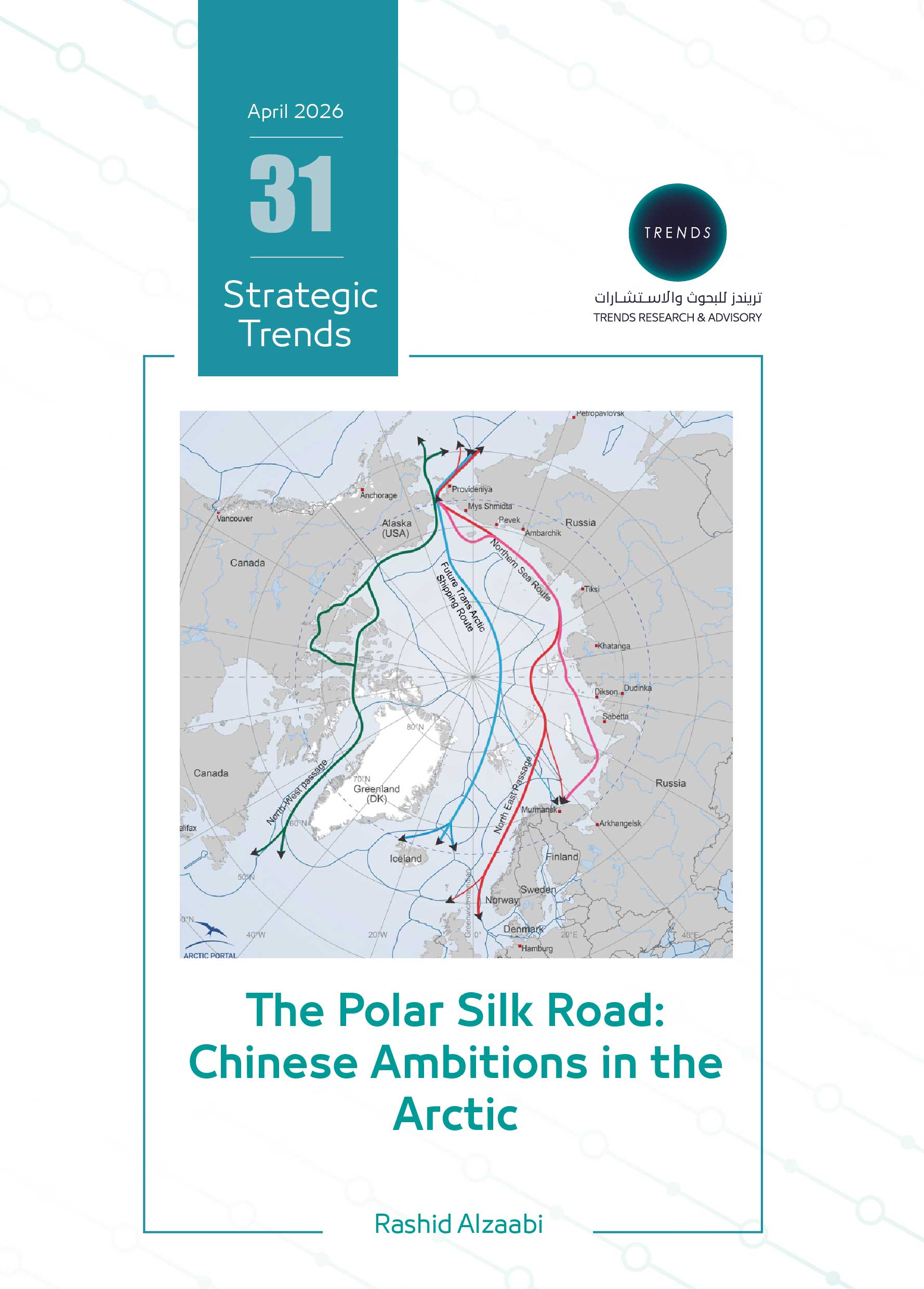
This study examines the strategic interests and ambitions of the People’s Republic of China in the Arctic, specifically the Polar Silk Road as one of the key ways of pursuing Chinese interests. The research focuses on China. It discusses the transition to Arctic Council membership, how scientific research, infrastructure development, and economic diplomacy have been integrated into a holistic Arctic policy. Although climate change has created new maritime routes and resources, China is positioning itself in the Arctic for long-term connectivity and strategic advantage, rather than on environmental urgency.
The discussion highlights the major policies adopted by China, including bilateral collaboration with Russia, participation in Arctic research projects, and direct investments in energy and maritime infrastructure. The establishment of Arctic routes under the Polar Silk Road has enhanced access to the global market, and joint industry projects, together with collaboration in maritime activities with Russia, have further consolidated Beijing’s operational presence in the region.
Nevertheless, the paper highlights how the West’s countermeasures question Chinese Near-Arctic legitimacy in non-Russian waters. The plan to increase Western icebreaking capacity through projects like the Icebreaker Collaboration Effort (ICE Pact) poses a direct challenge to the operational logic of the Chinese icebreaking fleet, such as the icebreaker ship Xue Long 2, decreasing its relative mobility and ability to leave the territorial waters of the Arctic. Other steps, such as limits on investments in Canada, Finland, and Denmark, reflect the Arctic states’ growing apprehension about the potential security consequences of Chinese involvement. The study concludes that, even though China has invested little in Russia, and many of the project proposals have not been realized, its increasing influence through scientific, commercial, and strategic platforms cannot be ignored.
