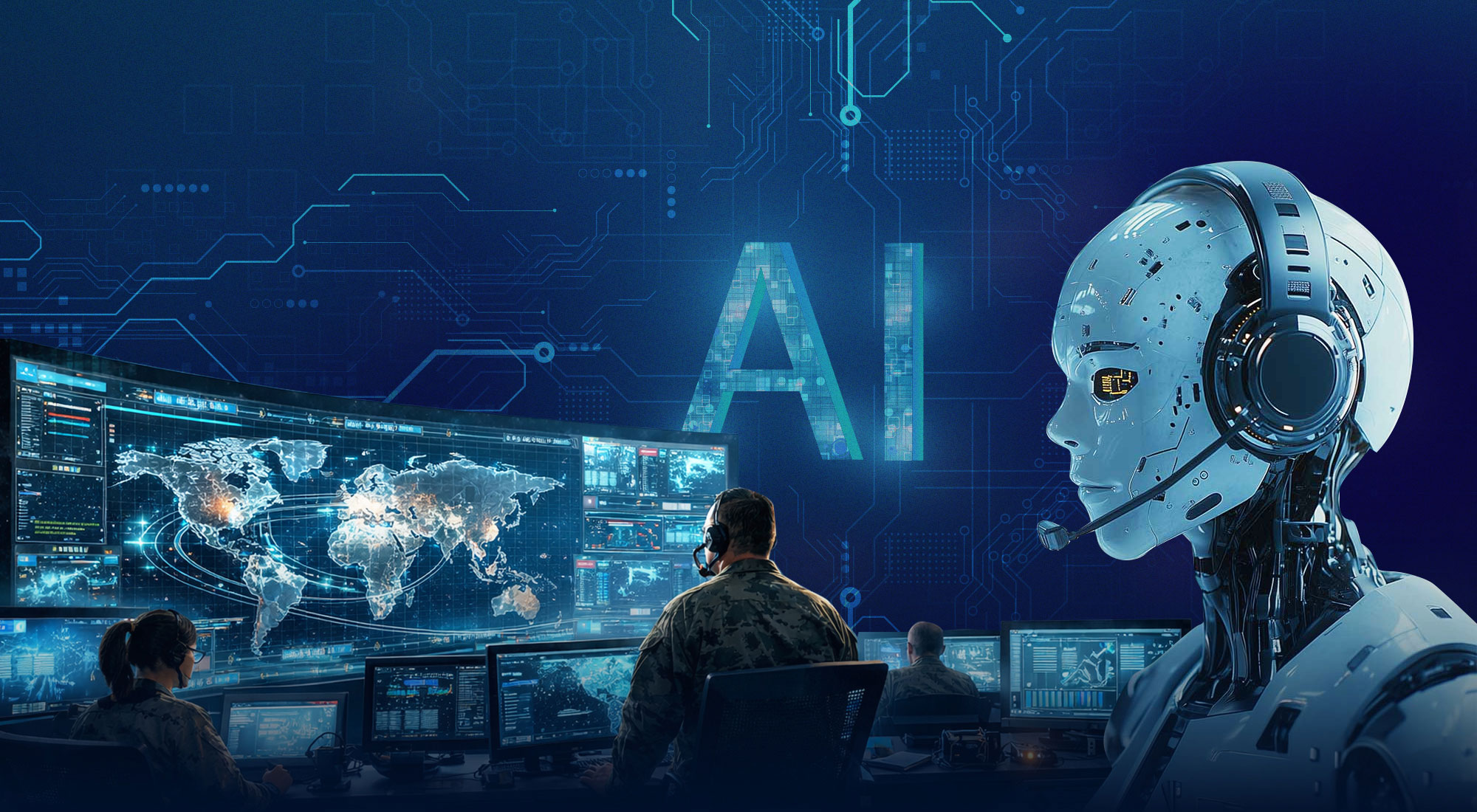


To hedge against uncertain futures and increase its performance, the defense sector is investing in anticipatory personnel capacity. This approach requires the adoption of AI in recruitment while promoting new governance forms, such as the AI-Public-Private Ecosystem (AI-PPE). AI and robotic industries collaborate with the public sector to modernise recruitment governance through expertise and persistence [1] [2] to define the course of action that ensures the credibility of defense ecosystems amid times of uncertainty [3].
This insight argues that while integrating AI into human resource practices within the defense sector is a strategic imperative to improve operational readiness and organizational resilience, at the same time, it entails challenges and suggests new avenues for research. The discussion begins with a first-person account of the author’s personal experience interviewing with “Raya,” an AI agent, for a Foresight Analyst position, followed by reflections on the impact of interviews with an AI recruiter, the need for modernizing defense hiring, and the complex role the AI-PPEs play in determining the future national security workforce.
AI confidential: beyond the résumé
In November 2025, I was interviewed by Raya, an AI recruiter, for the Foresight Analyst role at a US defense contractor. During the next ten minutes, I answered Raya’s detailed questions about my expertise, working skills, and ambitions relevant to the position. I was given the option to communicate in my native language, Italian, and all the other languages I had a good command of. During the interview, I sensed that Raya, like all other AI agents, “was acting on their own to generate real-time conversations and build on responses” to balance a rigid protocol with flexibility and contextual understanding.[4] This interaction gave me the impression that while Raya collected data in an oriented manner to delineate the best fit for the job position, at the same time, it was not well-versed in some relevant policy issues. This lack of knowledge questioned Raya’s recruiter’s ability “to evolve from a supplier of information to a supplier of both knowledge and ideas”[5] to support the recruitment process and provide the organization with the most suitable candidate.
Throughout my professional experience, hiring has been a human-driven process—recruiters scanning resumes, conducting interviews, and deliberating decisions. However, it seems that a robotic era of talent acquisition is approaching, and with it a new strategic era for defense human resources management. Forbes reports that a 2024 Gallup survey revealed that 93% of Chief Human Resource Officers (CHROs) have begun integrating AI tools and systems to improve business practices. This multidimensional application underscores AI’s transformative capability to redefine recruitment at every stage of the process, such as candidate interviewing and evaluation, into a machine-driven system.[6] This isn’t just automation—it’s an evolutionary change. AI seeks to manage the inefficiencies of bureaucratic hiring and replace them with a faster, entirely data-driven recruitment ecosystem, enabling organizations to scale hiring without increasing costs.[7] With these concerns in mind, the initial reflections after the interview briefly focus on individual and organizational governance factors, such as uncertainty, procedural justice, organizational attractiveness, and learning.
1. Uncertainty
Communicating with an AI recruiter changes the context, language, and trust in the interaction between the machine and the human candidate, often leading to a loss of confidence toward the hiring system.[8] As a result, the candidate might doubt—I did—the evaluation process and the criteria used by AI-based interview systems. Therefore, it is essential to consider that adopting an AI interview method influences applicants’ psychological experiences and performance, which in turn determine the candidate’s suitability for the job.[9] Thus, the AI recruiter is responsible for performing a helpful interview to explore the mental syntax of a candidate and how this is employed to get the desired outcome, being hired for the job. In this light, platforms such as Paradox.ai specialize in recruitment communication, using conversational AI to provide status updates automatically, while others, such as Leena AI, provide comprehensive employee support, enabling employees to ask questions in over 100 languages, forwarding complex concerns to the human recruiter.[10] These advancements highlight efforts by HR departments to strengthen the organizational culture in hiring by building trust.
2. Procedural justice
While the Aerospace and Defense sector is earning significant investment, with a GBP£15.4 million contract for an innovative crewless submarine, the industry is facing an ongoing talent shortage that could threaten growth because of issues of transparency, accountability, and authenticity.[11] Additionally, distrust can damage employee retention and restrict the organization’s ability to innovate and grow. How fair and unbiased can an AI recruiter be? Different applicants have varied needs and backgrounds, yet AI systems are often criticized for lacking empathy and attentive listening. This might become problematic. While human interviewers should feel confident during job interviews, for defense industry recruitment departments, the utilization of advanced AI technology is linked to organizational loyalty and a higher likelihood of completing the application process and securing successful hires who are treated fairly.
3. Organizational attractiveness
Procedural justice and organizational attractiveness benefit both parties: candidates gain employment opportunities, while organizations improve their employment strategies through AI technologies to marketize their employer brand.[12] To support this, defense organizations and industries seek to establish AI governance infrastructures that learn to coordinate authority and resources to enable AI applications to address important and strategic, operational, and tactical challenges. But governance implies investments and funding. In this light, the U.S. is likely “to increase for US$18.558 billion by 2029, up from US$4.956 billion in 2024.”[13] Similarly, the EU defense industry wants to boost its appeal, especially among young people. Launched in March 2024, the European Defense Industrial Strategy highlights the need to eliminate negative perceptions as key to attracting a diverse workforce. The European Commission, DG DEFIS, has commissioned RAND and Verian to conduct two surveys: one targeting students and young professionals to gauge perceptions, and another with industry workers to understand their experiences and what actions could make the sector more attractive.[14]
4. Organizational Learning
By operationalizing AI technologies into human resources management (HRM), organizations create opportunities for mutual learning between humans and AI and enhance the organizational learning process through investment in technological visions. Here, human-machine interactions act as agents of learning to revise recruitment processes, to enhance decision-making, and establish effective ways for humans and machines to work together,[15] resulting in organizational transformations. Furthermore, the combination of artificial intelligence systems with other emerging technologies and insights from various disciplines elevates the salience of managing human resources within the defense sector. As cognitive conflicts become increasingly complex, the capacity to synthesize knowledge across organizational levels and domains will determine not only operational effectiveness but also institutional resilience and long-term strategic stability.[16]
Modernizing the Intake: AI’s revolutionary role
The management of defense human resources is of sensitive importance for defense and security organizations, since its responsibilities involve “articulating the organization’s mission and understanding its operating environments, defining strategic priorities and objectives, and monitoring performance along with resource allocation.”[17] Therefore, the call to modernize defense recruitment is driven by: (a) the necessity to transform the defense workforce into an organization prepared for artificial intelligence, capable of deploying intelligent systems across various domains;[18] and (b) the changing character of modern conflict, which demands a transition from intuition-based decision-making to decision-making enabled by AI and machine learning. This requires redefining candidate profiles to invest in technical skills, mission understanding, and adaptability for hybrid roles that combine machine speed with human discernment capability.[19] The topic has gained importance in recent debates on Europe’s strategic autonomy and technological sovereignty, particularly regarding military AI in European security, “locating 10% of the €7.3 billion European Defence Fund (2021–2027) budget to data.”[20] Compared to other global powers, the EU invests significantly less in defense R&D—about “€14.4 billion annually versus the US’s €130 billion—but recent data shows rising R&T spending.”[21]
In this changing landscape, the integration of AI technologies enhances defense recruitment speed, efficiency, and consistency compared to the existing bureaucratic phlegmatism, slow acquisition processes, and lengthy hiring procedures.[22] Notably, Applicant Tracking Systems use Neuro Language Programming (NLP) to analyze resumes, and Generative AI to craft job descriptions.[23] Advanced assessments utilize AI for foresight analysis, evaluating candidate potential and suitability by examining performance data, recommending reskilling, thus adding to the organizational readiness. This increase in efficiency means that once a need is identified, the trajectory from candidate shortlisting to deployment is streamlined, reducing lead times and improving strategic capability.[24]
Despite significant investments in AI, most organizations struggle with performance. Only 25% of companies experimenting with AI have generated tangible value, and fewer than 5% have AI capabilities.[25] Access alone is insufficient for adoption when social barriers and organizational changes are needed to overcome them. Acknowledging these challenges is essential to developing viable solutions and maintaining strategic superiority. NATO’s Supreme Allied Commander emphasized this at the 2025 AI Summit, highlighting AI’s role in accelerating military decision-making,[26] considering that AI-powered influence operations have taken cognitive warfare to a new apex.
AI-Public-Private Ecosystems – the Engine of HR Modernization
The 2022 Strategic Concept of the Italian Chief of Defence states that personnel management must be careful and targeted, with a medium- to long-term vision, innovative models, and staff involvement. The Armed Forces should also expand collaboration with the defense industry to meet the challenges of modernization and transformation, which require the human capital to develop man-machine teaming.[27] The application of AI technologies into HR practices cannot be achieved by defense institutions alone; it requires a new system of recruitment governance, such as AI-Public Private Ecosystems (AI-PPEs). Such governance frames in the HRM sector leverage their AI R&D expertise, access to talent pool, and datasets.[28] Such examples are the mechanisms like the U.S. DoD’s use of Other Transaction Agreements (OTAs) and the Tradewinds Solutions Marketplace, which accelerate the procurement of AI solutions and enable expedited contracting suited to quick technological cycles.[29] From an institutional standpoint, the expectations are that AI-PPEs, as a form of anticipatory governance, would enable defense to sense and execute changes ahead of major threats.
Understanding how these AI-PPEs are governed and how they govern themselves internally is of crucial importance for defense recruitment. By prioritizing staff capabilities, leadership support, and cultural acceptance, and by promoting technical fluency and systems thinking within the defense workforce,[30] the AI-PPEs encourage the empowerment of future capability networks. These networks may become prevalent, especially in individualizing new roles in an increasingly secure environment spanning from intelligence and surveillance, cyber, disaster relief, and crisis management. As a result, new roles such as AI Disaster Managers, Predictive Analytics Specialists, Autonomous Systems Engineers, and AI Ethics Managers oversee AI integration across domains. In contrast, emerging roles such as Cognitive Electronic Warfare Analysts and Human-AI Teaming Designers emphasize the importance of hybrid skills for future success.[31]
Over 45% of defense institutions in developed countries have allocated investments for AI to improve HR functions and tasks.[32] Whereas the U.S. Department of Defense (DoD) uses machine learning to screen 78% of applications, Israel’s Unit 8200 employs AI and predictive analytics to enhance personnel knowledge management and operational readiness, and Japan’s Ministry of Defense adopts a careful perspective emphasizing transparency and human oversight, deploying AI primarily in cybersecurity, personnel education, and information processing.[33] [34] In a similar vein, the Five Eyes community observes that the U.S. Air Force’s (USAF) venture capital division, AFVentures, has funded Australian AI company Curious Thing to reimagine the USAF recruitment process.[35] Despite its evolutionary potential, the integration of AI into defense HR raises ethical issues.
Navigating Ethical Challenges
The adoption of AI in a national security recruitment context entails ethical issues mainly regarding the transparency, accountability, and cultural orientation of HR management. To counteract this, AI-PPEs’ governance infrastructure seeks to act at both national and international levels in establishing guardrails “for managing the risks associated with AI and deploying AI according to legal boundaries and social values.”[36] Such guardrails include the EU-AI Act (Art. 8-17), Korea’s Basic Act, and national government public algorithm inventories in Chile, France and the Netherlands Public Algorithms Inventory.[37] Future strategies and analyses should help governments decide where to prioritize AI investments and resources, balancing the benefits and risks of specific AI applications while plausibly introducing a harmonized international regulatory framework within recruitment departments in the military and defense sectors.
To address some of these challenges, the EU AI Act seeks to establish rigorous transparency, accountability, and interpretability standards. Though these standards’ purpose is to protect fundamental rights, they impose significant implementation problems. Notably, the Act exempts purely military, defense, or national security AI applications, regulating only dual-use systems with civilian applications.[38] Nevertheless, fusing civilian with military applications of the AI and excluding cases when novel technology is applied exclusively for military objectives reduces the normative and regulatory strength of the document.
Conclusion
AI-PPEs are apparently transforming defense recruitment from a slow, subjective process into an enterprise of innovative strategic capabilities. By engaging private sector technological expertise, AI-PPEs overcome government bureaucratic limits, access specialised talent, and provide advanced AI tools for workforce planning. Ultimately, AI-PPEs aim to create an agile, AI-enhanced defense personnel that enjoys a strategic advantage in the unpredictable global security environment. While AI adoption comes with hazards such as bias and accountability issues, strong ethical frameworks, transparency, and human oversight ensure alignment with national security values and priorities. Technology ethics do not exist in isolation; they are directly connected to organizations’ goals and strategic objectives. How, then, do AI-PPEs diffuse knowledge to link means, ways, and ends in defense while conducing to the norms of common good governance?
References
- Engelke, P., AI, Society, and Governance: An Introduction (Washington D.C.: Atlantic Council, 2020).
- Andonova Liliana, Governance Entrepreneurs: International Organizations and the Rise of Public-Private Partnerships. 1st edn. (Cambridge: Cambridge University Press, 2017): p .21
- Greenblott, J. M., O’Farrell, T., Olson, R., and Burchard, B., “Strategic Foresight in the Federal Government: A Survey of Methods, Resources and Institutional Arrangements,” World Futures Review 11, no. 3 (2018).; Flyverbom, M. and Garsten, C., “Anticipation and Organization: Seeing, knowing and governing futures,” Organization Theory 2 (2021): pp. 1-25.
- Dunn, J., “Welcome to Your Job Interview. Your Interviewer is A.I.,” The New York Times, July 7, 2025, https://www.nytimes.com/2025/07/07/technology/ai-job-interviews.html.
- Herkowitz, S., The Future of National Intelligence: How Emerging Technologies Reshape Intelligence Communities (London: Rowman & Littlefield, 2022): p. 90.
- Houter, K. D., “AI in the Workplace: Answering 3 Big Questions,” Gallup, October 8, 2024, https://www.gallup.com/workplace/651203/workplace-answering-big-questions.aspx.
- Ferrazzi, K., “The AI Recruitment Takeover: Redefining Hiring in The Digital Age,” Forbes, March 27, 2025, https://www.forbes.com/sites/keithferrazzi/2025/03/27/the-ai-recruitment-takeover-redefining-hiring-in-the-digital-age/.
- Gambino, A., and Liu, B., “Considering the context to build theory in HCI, HRI, and HMC: Explicating differences in processes of communication and socialization with social technologies.” Human-Machine Communication 4 (2022): 111–130, https://doi.org/10.30658/hmc.4.6.
- [*]Lu, B., Wei, L., Wu, M., and Luo, T., “Speech production under uncertainty: how do job applicants experience and communicate with an AI interviewer?,” Journal of Computer-Mediated Communication 28, no. 4 (2023): 1-12 https://doi.org/10.1093/jcmc/zmad028.
- AI-Powered Human Resource Management: Transforming Talent Acquisition, Development, and Organizational Performance. ReWise Publishers (2025).
- “Hiring challenges in Aerospace and Defence,” Guidant Global (2025), https://www.guidantglobal.com/news/hiring-challenges-in-aerospace-and-defence.; Fluker, L., Muravska, J., and Pyman, M., Due diligence and corruption risk in defence industry offset programmes, London: Transparency International, 2012.
- Ivanova, I., “Study looking at AI chatbots in 7,000 workplaces finds ‘no significant impact on earnings or recorded hours in any occupation,’” Fortune, May 18, 2025, https://fortune.com/2025/05/18/ai-chatbots-study-impact-earnings-hours-worked-any-occupation/
- Tarraf, D. C., Shelton, W., Parker, E., Alkire, B., Gehlhaus, D., Grana, J., James Ryseff, et al., The Department of Defense Posture for Artificial Intelligence, RAND, 2019,.; Research and Markets, Artificial Intelligence (AI) in Defense Industry: 2024 Research Report with Forecasts to 2029: Increasing Government Funding to Enhance and Improve Technological Applications Bolster Growth, November 13, 2024, Retrieved from Yahoo Finance: https://finance.yahoo.com/news/artificial-intelligence-ai-defense-industry-123900078.html?guccounter=1&guce_referrer=aHR0cHM6Ly93d3cuZ29vZ2xlLmNvbS8&guce_referrer_sig=AQAAALT6PMEBWeowVJKMlxe6bV1cwzBh-8VbwwCfpULW0Ay9DGAkPs0YRId6Rlar2vBi3MPff3w8G9dbCoavZOtX.
- European Commission-Defence Industry and Space, “Launch of the survey on European defence industry,” March 3, 2024, https://defence-industry-space.ec.europa.eu/launch-survey-european-defence-industry-2024-12-03_en
- Ransbotham, S., Khodabandeh, S., Kiron, D., Candelon, F., Chu, M., and LaFountain, B., Expanding AI’s Impact with Organizational Learning (Massachusetts: MIT Sloan, 2020).
- Cathey, C. Cognitive Warfare: Systems of Perception and Control (D&N Publishing, 2025): P. 70.
- Goldman, C. A., Winkler, J. D., & Thompson, N., Developing Strategic Plans for Defense Human Resource Management: Case Study of Planning in the Office of the Under Secretary of Defense for Personnel and Readiness, RAND, January 18, 2022, https://www.rand.org/pubs/research_reports/RRA1115-1.html.
- Tarraf, D. C., Shelton, W., Parker, E., Alkire, B., Gehlhaus, D., Grana, J., James Ryseff, et al., “The Department of Defense Posture for Artificial Intelligence,” RAND, 2019; VBeyond Corporation, “AI in Defense: Rethinking Talent and Readiness,” VBeyond Corporation, August 22, 2025, https://www.vbeyond.com/blog/ai-in-defense-rethinking-talent-and-readiness/.; Ministry of Defence, UK, Defence Artificial Intelligence Strategy,
- VBeyond Corporation, “AI in Defense: Rethinking Talent and Readiness,” VBeyond Corporation, August 22, 2025, https://www.vbeyond.com/blog/ai-in-defense-rethinking-talent-and-readiness/.
- European Commission-Directorate-General for Defence Industry and Space, “From AI to Quantum: How the European Defence Fund shapes the future of EU Defence Technologies,” December 15, 2025, https://defence-industry-space.ec.europa.eu/ai-quantum-how-european-defence-fund-shapes-future-eu-defence-technologies-2025-12-15_en.
- European Parliamentary Research Service, Briefing Defence and artificial intelligence, April 2025, pp. 4- 5
- Kivrak, O., “Using Artificial Intelligence in Recruitment Processes: Interviewer,” Journal of Management and Economics Research (2025): 161-176, https://doi.org/10.11611/yead.1638190.; European Parliamentary Research Service, Briefing Defence and artificial intelligence, April 2025.; Taylor, T., “Artificial Intelligence in Defence,” The Rusi Journal (2019): 72-81, https://doi.org/10.1080/03071847.2019.1694229.; Annunziata, M. B., Dynamic Talent Management Model: Establishing the Framework for the Exploitation of Artificial Intelligence in Strategic Human Resourcing (Quantico, Virginia: United States Marine Corps, 2019).
- Ferrazzi, K., “The AI Recruitment Takeover: Redefining Hiring in The Digital Age.”; Helbling, K., “How AI Is Quietly Rewriting the Rules of Defense Recruiting,” ClearanceJobs, November 26, 2025, https://news.clearancejobs.com/2025/11/26/how-ai-is-quietly-rewriting-the-rules-of-defense-recruiting/; Yu, A., “How AI is infiltrating the hiring process for recruiters and job seekers,” The Globe and Mail, June 17, 2025, https://www.theglobeandmail.com/business/article-how-ai-is-infiltrating-the-hiring-process-for-recruiters-and-job/#:~:text=Most%20companies%20now%20use%20artificial,their%20resume%20and%20stand%20out.; Byrom, R., “How organisations are leveraging AI for recruitment,” Harper McLeod LLP, March 18, 2025, https://www.harpermacleod.co.uk/insights/how-organisations-are-leveraging-ai-for-recruitment/.
- Helbling, K., “How AI Is Quietly Rewriting the Rules of Defense Recruiting,” ClearanceJobs, November 26, 2025, https://news.clearancejobs.com/2025/11/26/how-ai-is-quietly-rewriting-the-rules-of-defense-recruiting/.; Artificial Intelligence and the Defence Sector (Geneva: DACF, 2025); Curry, R. “Microsoft, Amazon among the companies shaping AI-enabled hiring policy,” CNBC, October 11, 2023, https://www.cnbc.com/2023/10/11/microsoft-amazon-among-the-companies-shaping-ai-enabled-hiring-policy.html.
- Michael S. Silver, K. D., Snyder, M. A., and Farnell, J. E., “Cognitive Warfare and Organizational Design: Leveraging AI to Reshape Military Decisionmaking,” National Defence University Press, January 9, 2026, https://ndupress.ndu.edu/Media/News/News-Article-View/Article/4368980/cognitive-warfare-and-organizational-design-leveraging-ai-to-reshape-military-d/.
- Stato Maggiore della Difesa, Concetto SCENARI FUTURI: tendenze ed implicazioni per la Sicurezza e la Difesa, Roma: SMD, 2021.
- Taylor, T., “Artificial Intelligence in Defence,” The Rusi Journal (2019): 72-81, https://doi.org/10.1080/03071847.2019.1694229.; Pengili, M., “The Strategic Importance of Public-Private Ecosystems in Defense Innovation and Organizational Knowledge,” TRENDS Research & Advisory, May 23, 2025, https://trendsresearch.org/insight/the-strategic-importance-of-public-private-ecosystems-in-defense-innovation-and-organizational-knowledge/.; Matthews, K. I., Agile AI Partnerships: A Public-Private FLEXible and SMART Framework for National Security and Competitive Innovation, Belfer Center, 2025.
- World Economic Forum, The Future of Jobs Report.,; Department of Defense, “Artificial Intelligence (AI) in Defense: A Roadmap for the Future of the Defense Industrial Base (DIB),”2025.
- VBeyond Corporation, “AI in Defense: Rethinking Talent and Readiness.”; Kivrak, O., “Using Artificial Intelligence in Recruitment Processes: Interviewer.”
- UNDP, Human Development Report- A matter of choice, People and possibilities in the age of AI, (2025).; NATO ACT, Strategic Foresight Analysis 2023, https://www.act.nato.int/wp-content/uploads/2024/05/SFA2023_rev2.pdf.
- Asmoro, R. D., “The role of artificial intelligence in transforming defense human resource management: Adaptive efforts toward global strategic dynamics,” International Journal of Multidisciplinary Trends 7, no. 6 (2025): 32-38, https://www.doi.org/10.22271/multi.2025.v7.i6a.703.
- “The IDF Is Training an AI Avatar to Screen New Recruits. What Could Go Wrong?,” Haaretz, December 31, 2024, https://www.haaretz.com/israel-news/2024-12-31/ty-article-magazine/israels-army-has-a-new-recruit-the-avatar-yuvi-she-has-an-important-job-to-fill/00000194-18ba-da22-affe-1bbe81120000., Retrieved January 24, 2026.; “Japan’s new defence budget focuses on AI and troop welfare,” DigWatch, August 30, 2024, https://dig.watch/updates/japans-new-defence-budget-focuses-on-ai-and-troop-welfare., Retrieved January 24, 2026.
- Layton, P., “Evolution Not Revolution: Defence AI in Australia,” In H. Borchert, T. Schütz, & J. Verbovszky, The Very Long Game: 25 Case Studies on the Global State of Defense AI (pp. 581-603). Cham: Springer, 2024, p.589.
- “High-level summary of the AI Act,” EU Intelligence Act, February 27, 2024, https://artificialintelligenceact.eu/high-level-summary./; EURES (European Employment Service), “How AI can improve the talent acquisition process,” September 12, 2024, https://eures.europa.eu/how-ai-can-improve-talent-acquisition-process-2024-09-12_en.
- OECD, Governing with Artificial Intelligence the State of Play and Way Forward in Core Government Functions, 2025.; Grigoriescu, A., “Blind Spots in AI Governance: Military AI and the EU’s Regulatory Oversight Gap,” European Student Think Tank, October 3, 2025, https://esthinktank.com/2025/10/03/blind-spots-in-ai-governance-military-ai-and-the-eus-regulatory-oversight-gap/.
- Grigoriescu, A., “Blind Spots in AI Governance: Military AI and the EU’s Regulatory Oversight Gap.”
[*] The views expressed in this publication are solely those of the author and do not reflect the views of the University of Leeds or those of TRENDS US.