


Over the last decade, India’s foreign policy has undergone major changes. One of the most significant changes has been the transformation of India’s relations with the MENA (Middle East and North Africa) region. For a very long time, India’s engagement with the region centered around its energy demands and the presence of a large Indian diaspora. Of late, however, one sees a shift in the dynamic wherein both the economic and political aspects of the relationship have undergone positive transformations. India signed a Free Trade Agreement (FTA) with Oman in December 2025 and with the UAE in 2022. Both agreements indicate the growing economic co-operation between India and MENA nations and a mutual desire to further diversify the relationship. India today boasts a sustained growth of 6-7 per cent[1] and is likely to become the world’s third-largest economy by 2028,[2] thus offering the MENA nations a large market.
Political Ties
From a political standpoint, India today shares excellent relations with all key players in the region, from the UAE to Saudi Arabia and Israel. This is reflected in the frequent high-level visits by political leaders from the region and India. For instance, Indian Prime Minister (PM) Narendra Modi has visited the UAE seven times since he became the PM in 2014, indicating the strength of the bilateral relationship. Similarly, he has paid visits to Saudi Arabia, Oman, and Qatar, among others. This acceleration of ties with the Gulf countries in the last decade or so has been one of the significant changes in India’s foreign policy outreach.
India also shed its hesitancy about developing ties with Israel in recent years. For much of India’s foreign policy formulations post-1947, it seemed more inclined to the Palestinian cause. This is easy to understand when one looks at the early years of India’s independence and the sentiment that was largely based on anti-colonialism and anti-imperialism. But as the Indian story grew over the last many decades, New Delhi’s growing relationship with Israel was also an indication of a confident and growth-oriented India. India and Israel today enjoy a robust partnership, with defense being a cornerstone of this relationship; today, Israel is India’s third-largest supplier of military equipment, with Russia taking the top spot.[3] However, it is important to note that India continues to support a two-state solution to the Palestine issue.
Credit in this aspect is also due to Indian foreign policymakers who have deftly balanced India’s ties with Israel and with other states in the Middle East. For India, this engagement is also a part of its own desire to be seen as a global player and hence the acronym, “Extended Neighborhood”. By including the Gulf nations as part of its neighborhood, India has indicated that it acknowledges the enormous benefits that both India and the MENA region can have from each other. Also, for many decades post-1947, India was more keenly invested in South Asia or its immediate neighbors, such as Nepal, Bangladesh and Bhutan, among others. Now with a growing economy and an increasingly large diaspora based in the Gulf, India’s priorities have shifted beyond the immediate neighborhood to the extended region.
Economics Ties
With the MENA region, India’s core strength lies in the economic field and the potential it offers for future growth and development. The GCC, comprising Saudi Arabia, the UAE, Qatar, Kuwait, Oman, and Bahrain, is India’s largest trading partner bloc, with bilateral trade reaching almost US$179 billion in 2024-25.[4] Further, as of 2024, GCC exports to India accounted for US$90 billion—representing 71% of the bloc’s total exports.[5]
During the visit of the UAE President H.H. Sheikh Mohamed bin Zayed Al Nahyan to India in January 2026, it was decided that India and the UAE will target doubling bilateral trade to US$200 billion within the next six years.[6] However, many people familiar with the matter point out that there is sometimes a mismatch between the desire by many Gulf countries to invest in India and India’s inability to provide them with the correct options to do so. This has led to slower investment in India by many of the Gulf countries, including Saudi Arabia. One course correction, then, would be for India to provide more concrete investment opportunities for nations in the Gulf where they feel encouraged to invest.
Japan offers an interesting example in this scenario. It has invested heavily in India, particularly in the North-East (NE) region of the country. It has also set an ambitious target of US$68 billion as its investment plans in India over the next decade, and ranks among the top five FDI investors in India currently. Japan has primarily focused on the infrastructure sector in the NE and has invested around US$2 billion in the region, building roads and highways.[7] For Japan, the NE region of India is an important part of its Free and Open Indo-Pacific vision, which aims to bring countries together so that trade routes in the Indo-Pacific remain open for all. Japan already has a major presence in Myanmar and Bangladesh, and by becoming a major investment player in the NE region, Japan is able to protect its strategic interest in the Indo-Pacific.
So, for Indian policymakers, the challenge is to identify such regions and projects where the MENA countries can invest but also tie into their core geopolitical interests. The large Indian diaspora that lives in the MENA region also sends remittances back home, which make for a significant chunk of the capital inflow. According to a Reserve Bank of India (RBI) report, remittances from the UAE alone amounted to US$15.40 billion in the financial year 2020-21, representing 18% of India’s total inward remittances. In 2023-24, the UAE became the second largest source of India’s remittances, increasing its share from 18% to 19.2%.[8]
Saudi Arabia is another country that has promised to invest heavily in India. Saudi Arabia wants to expand its investments in fast-growing economies as part of its Vision 2030 diversification strategy, and India is keen to attract this capital. Both nations also formed a high-level task force in 2024 to expedite Riyadh’s plan to invest US$100 billion in India.[9] The idea is to promote investment in areas like energy, infrastructure and pharmaceuticals. India is also negotiating a bilateral investment treaty with Saudi Arabia.
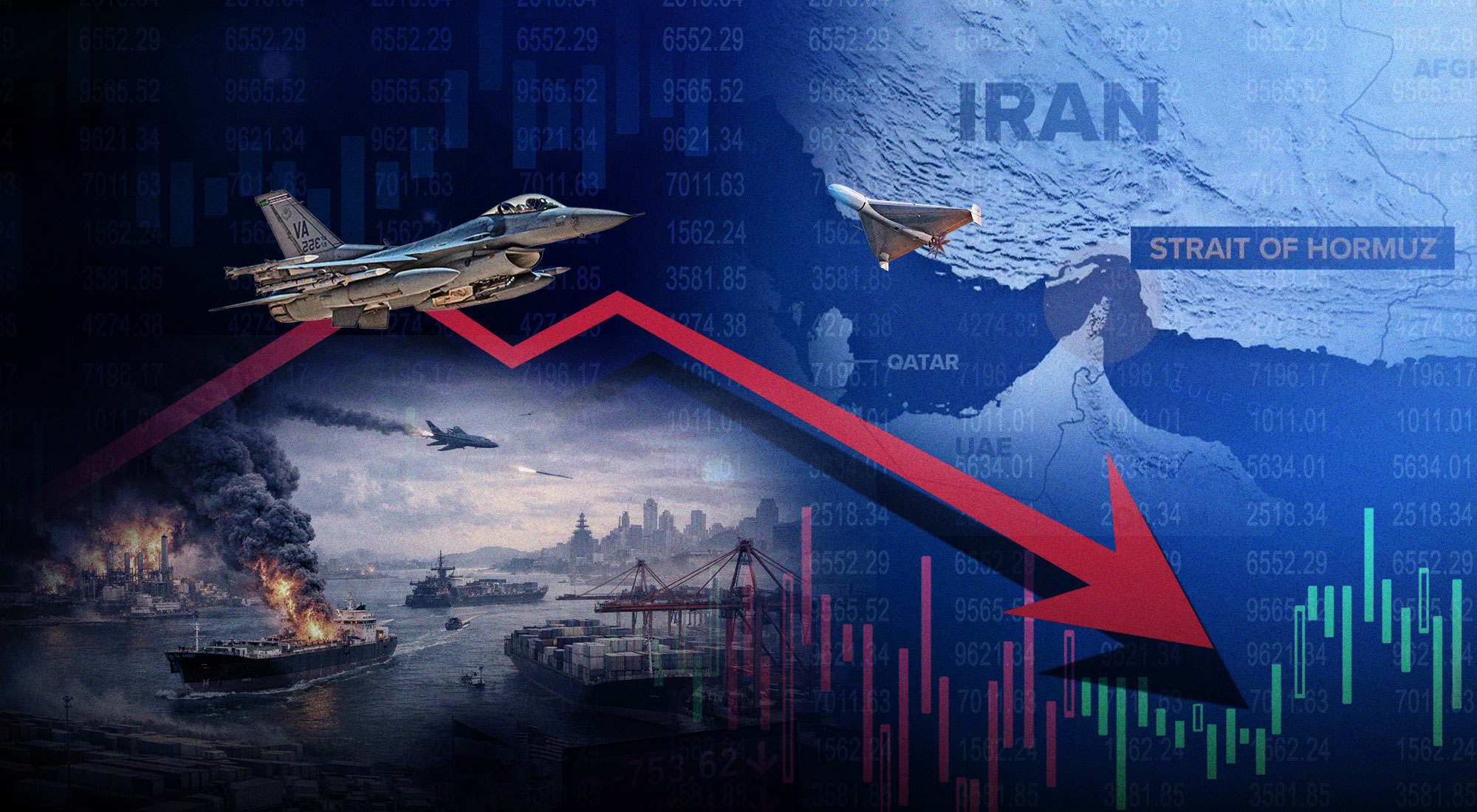
Of late, India has also strengthened its economic ties with Oman. The FTA signed in December 2025 has been a milestone in that direction, under which Oman will provide India duty-free access to 98% of its tariff lines, which covers 99% of what India exports to Oman.[10] For India, Oman also has strategic significance since it occupies a critical position along the Strait of Hormuz, a key transit route for global energy shipments. India-Oman bilateral trade today exceeds US$10 billion annually.
With Qatar, India is actively pursuing an FTA, and expectations are that it will be finalized by mid-2026. Qatar plays a pivotal role in India’s energy security, accounting for 40% of the country’s total natural gas imports. Another landmark agreement was signed in February 2024 between Qatar Energy and Petronet LNG Limited. Under this, Qatar will supply 7.5 million metric tonnes per annum of liquefied natural gas (LNG) to India from 2028 for 20 years.[11] So, in all, India and the MENA region today are already connected by strong economic ties. The next step would be to enhance this economic relationship.
With Iran, India has strong historical ties and longstanding trade links in agriculture, pharmaceuticals, tea and other commodities. According to international trade data, India’s exports to Iran were roughly US$1.24 billion in 2024.[12] However, trade has been constrained by sanctions and financing limitations, particularly around energy and banking channels. From a strategic viewpoint, the Chabahar port project remains central to India’s connectivity strategy, offering access to Afghanistan and Central Asia via a route that bypasses Pakistan. However, India’s Union Budget 2026-27 has made no allocation for the Chabahar port, which indicates a freeze in India’s activities in the port. Chabahar had received 4 billion INR (Indian Rupees) allocation in the previous fiscal.[13] Going ahead, India’s approach will likely balance strategic connectivity interests with sensitivity to broader geopolitical pressures.
India-Türkiye relations have been under geopolitical tensions of late, and that has found its way into the economic aspect also not warming up to its full potential. Türkiye is a moderate but diversified trade partner for India, with economic exchanges spanning motor vehicles, chemicals, textiles and machinery. Precise recent bilateral figures vary by source, but Türkiye typically ranks among India’s medium-sized trade partners. Both countries share an interest in defense manufacturing, tourism, and digital services. This bilateral relationship offers scope to deepen ties through expanded industrial cooperation and supply-chain linkages, but all that will depend on how the strategic part of the relationship unfolds going ahead.
In 2023-24, India-Jordan bilateral trade was valued at US$2.875 billion, with Indian exports to Jordan amounting to US$1.465 billion.[14] Key exports from India include fertilisers, pharmaceuticals, textiles and food products. It is also important to note here that Jordan’s market also serves as a gateway for re-exports to neighboring Levant markets.
There are ample opportunities for both India and Jordan to further cooperate in sectors such as healthcare services, renewable energy, education and skills development partnerships. Also, Jordan’s trade agreements with Western markets make it an attractive partner for Indian firms seeking broader access to the region.
As Syria undertakes plans to rebuild the country after decades of war, India has made a reach out, indicating that it wants to be a partner in the reconstruction of Syria.[15] Also, a stable Syria will ensure secure trade routes and energy corridors critical to India’s economy as New Delhi steps up its economic ties in the MENA region. But there remains much work to be done in the India-Syria ties and taking the economic relationship forward.
Talks have been ongoing since 2004[16] between India and the GCC countries to sign an FTA. In 2004, a Framework Agreement was signed between India and the GCC, which intended for further negotiations to take place, eventually leading to an FTA. Two rounds in 2006 and 2008 did take place, but since then, the momentum has slowed down.
India’s Commerce Minister Piyush Goyal, in a recent statement, was, however, optimistic about an India-GCC FTA.[17] On 5 February 2026, India and the GCC signed the terms of reference between the two parties, providing a fresh impetus to the FTA.[18] India, in the last few years, has shown a great desire to sign FTAs with a number of countries, and in January 2026, the ‘mother of all deals’, i.e., the India-EU FTA, was also inked. This is also significant, keeping in mind the changing world order and questions being raised over the future of institutions like the World Trade Organization (WTO). But indications are that the India-GCC FTA is something India is keen on, and one can expect a further round of negotiations later this year.
Strategic Initiatives
Adding to the economic heft of the India-MENA ties are two important strategic initiatives, IMEC and I2U2. India today, as one of the world’s fastest-growing economies, offers a huge market for Foreign Direct Investments (FDI). Strategic initiatives like the India-Middle East-Europe Economic Corridor (IMEC), which was announced in New Delhi on the sidelines of the G20 Summit in September 2023, indicate how India, the Middle East, and Europe today want to work together for greater connectivity and trade.
The critique here is that the project has been slow to take off. The terrorist attacks by Hamas on Israel in 2023, followed by some reluctance on the part of Saudi Arabia, and Europe’s preoccupation with adjusting to a fast-changing world, have all played a role in IMEC slowing down. It is understood from people familiar with the details that both India and the UAE have already completed substantial work with regard to the IMEC. However, it remains a challenge for India and MENA to get IMEC back on a priority level where work can begin in earnest.
Another strategic initiative has been the I2U2 grouping comprising India, Israel, the UAE and the United States. Right from its inception in 2022, the I2U2 thrust was economic rather than geopolitical. This grouping sought to integrate the Middle East with India and the United States in a rather ambitious approach. The war in Gaza has again slowed down the grouping and its activities.
The main areas of focus for the I2U2 grouping include food security, renewable energy, healthcare, water management, transportation, and emerging technologies. The UAE, as part of the I2U2 grouping, has made a commitment of US$2 billion to construct food parks in India.[19] The idea is that while India provides the land, the United States logistics, and Israel brings its agricultural technology to the table. This is an excellent example of the kind of economic possibilities that are possible within the grouping.
Future Areas of Co-operation
Nuclear energy, space and building infrastructure in other places like Africa are some of the areas of future co-operation between India and MENA. For instance, building railway networks in various African countries is something India and the MENA countries can jointly look at. India enjoys tremendous goodwill in the continent, and so do countries like the UAE. Again, both countries have excellent know-how of building railway infrastructure. The combined strengths of India and the UAE can then make this a great economic partnership, which will also benefit the African countries greatly.
Looking ahead, the move will be to diversify and invest in technologies of the future, like artificial intelligence (AI), which can be used in various fields, like healthcare, etc. As the world shifts toward a digital economy, another area of co-operation opens up. India has already digitized its economy, with people using less cash in their daily transactions and relying more on Apps like PayTm, etc. The downside of a growing digital economy is also growing concerns of data theft and online scams. Again, there is potential for work in these areas. Defense is another sector where India and the Gulf states can work together. Joint defense production is again an area of future collaboration.
Policy Recommendations
There are concrete steps that both India and the MENA region need to adhere to, so that this relationship can realize its full potential:
- The economic aspect is robust and growing because of the smoothness in the political space. Despite the changes one sees in the world order and instability in the system, it is imperative that India and MENA continue their healthy political ties. Only then can the economic benefits accrue.
- It is very important for India to identify more matches for the MENA countries to invest in. While many Gulf states have committed billions of dollars to invest in India, the opportunities in India have not been properly identified.
- Work under ambitious initiatives like IMEC and I2U2 should be given greater priority. The tensions in the Middle East have slowed down both initiatives, but if work is delayed further, these initiatives run the risk of remaining only on paper.
- India is today home to 18 per cent of the world’s population[20] but represents a mere 2.5 per cent of global trade. This mismatch is yet another opportunity for investors to tap India’s growing market.
.India is actively pursuing FTAs, and an India-EU FTA has been signed. That could also serve as a booster to many of the ambitious projects that link India, the Middle East and Europe together. That opportunity should be used as a catalyst to drive regions and economies closer.
Endnotes
[1] “India’s GDP Growth in FY 2026 to be 6.7 per cent, inflation 2.4 %: RBI,” The New Indian Express, February 6, 2026, https://www.newindianexpress.com/business/2025/Feb/07/indias-gdp-growth-in-fy26-to-be-67-per-cent-inflation-at-42-rbi.
[2] Sarwant Singh, “India’s economic juggernaut on way to becoming the 3rd largest economy,” Forbes, July 14, 20205, https://www.forbes.com/sites/sarwantsingh/2025/07/14/indias-economic-juggernaut-on-way-to-becoming-the-3rd-largest-economy/.
[3] Mayank Singh, “Russia remains top arms supplier to India; SIPRI report,” The New Indian Express, March 11, 2025, https://www.newindianexpress.com/nation/2025/Mar/11/russia-remains-top-arms-supplier-to-india-sipri-report.
[4] Sanstuti Nath, “Is Gulf the next big market for India? Mega trade deals with 6 nations in talks,” NDTV, February 6, 2026, https://www.ndtv.com/world-news/is-gulf-the-next-big-market-for-india-mega-trade-deal-with-6-nations-uae-qatar-kuwait-oman-bahrain-in-talks-10956357.
[5] “GCC eyes free trade agreement with India in 2025: Key developments at Kochi dialogue,” Investor State Dispute Settlement, January 17, 2025, http://isds.bilaterals.org/?gcc-eyes-free-trade-agreement-with&lang=en.
[6] Shivam Patel and Ahmed Eliman, “India, UAE sign $3 billion LNG deal, agree to boost trade and defense ties at leaders meeting,” Reuters, January 19, 2026, https://www.reuters.com/world/india/india-uae-agree-boost-trade-defence-ties-finalise-lng-deal-leaders-meeting-2026-01-19/.
[7] Rupakjyoti Borah, “Japan’s infrastructure investment in Northeast India,” The Diplomat, February 8, 2022, https://thediplomat.com/2022/02/japans-infrastructure-investment-in-northeast-india/.
[8] PTI, “Share of remittances to India from advance economies surpass that of Gulf: RBI bulletin,” The Economic Times, March 19, 2025, https://economictimes.indiatimes.com/news/economy/finance/share-of-remittances-to-india-from-advance-economies-surpasses-that-of-gulf-rbi-bulletin/articleshow/119216427.cms?from=mdr.
[9] Rezaul H. Laskar, “India, Saudi Arabia to speed up kingdom’s $100-billion investment plan,” Hindustan Times, September 11, 2023, https://www.hindustantimes.com/india-news/india-saudi-arabia-to-speed-up-kingdom-s-100-billion-investment-plan-101694444845438.html.
[10] TCA Sharad Raghavan, “India signs FTA with Oma, receives zero duty access to 99% of its exports,” The Hindu, December 18, 2025, https://www.thehindu.com/business/Economy/india-oman-free-trade-agreement/article70411281.ece.
[11] Logan Chochrane and Mudassar Ali Baigh, “India and Qatar at 50: A strategic partnership for a new era,” ORF, May 19, 20205, https://www.orfonline.org/expert-speak/india-and-qatar-at-50-a-strategic-partnership-for-a-new-era.
[12] Embassy of India, Tehran, Government of India, February 6, 2026, https://www.indianembassytehran.gov.in/eoithr_pages/NTQz.
[13] Kallol Bhattacharjee, “Union Budget 2026: India makes no fresh allocation for Chabahar Port in Budget as US increases pressure on Iran,” The Hindu, February 1, 2026, https://www.thehindu.com/business/budget/union-budget-2026-mea-gets-22118-crore/article70578114.ece.
[14] Embassy of India, Amman, Government of India, November 18, 2025, https://indembassy-amman.gov.in/Bilateral_Relations.html#:~:text=In%202023%2D24%20India%2DJordan%20bilateral%20trade,amounting%20to%20US%24%201%2C465%20million.
[15] Murali Krishnan, “Why is India reaching out to Syria’s new government?,” Deutsche Welle, July 2025, https://www.dw.com/en/why-is-india-reaching-out-to-syrias-new-government/a-73558454.
[16] Ministry of Commerce and Industry, Government of India, November 8, 2024, https://www.commerce.gov.in/international-trade/trade-agreements/indias-current-engagements-in-rtas/india-gulf-cooperation-council-gcc-free-trade-agreement-fta-negotations/.
[17] “India has finalised eight FTAs covering 37 developed countries: Commerce Minister Goyal,” The Economic Times, February 1, 2026, https://economictimes.indiatimes.com/news/economy/foreign-trade/india-has-finalised-eight-ftas-covering-37-developed-countries-commerce-minister-goyal/articleshow/127833754.cms?from=mdr.
[18] All India Radio, “India and Gulf Cooperation Council sign terms of reference for a Free Trade Agreement,” February 5, 2026, https://www.newsonair.gov.in/india-and-gulf-cooperation-council-sign-terms-of-reference-for-a-free-trade-agreement/.
[19] PTI, “I2U2 Summit, UAE to invest $2 billion to develop integrated food parks across India,” The Hindu, July 14, 2022, https://www.thehindu.com/news/national/i2u2-summit-uae-to-invest-2-billion-to-develop-integrated-food-parks-across-india/article65639247.ece.
[20] Dipankar Ghosal, “Helping India overcome its water woes,” World Bank, December 9, 2019, https://www.worldbank.org/en/news/feature/2019/12/09/solving-water-management-crisis-india.