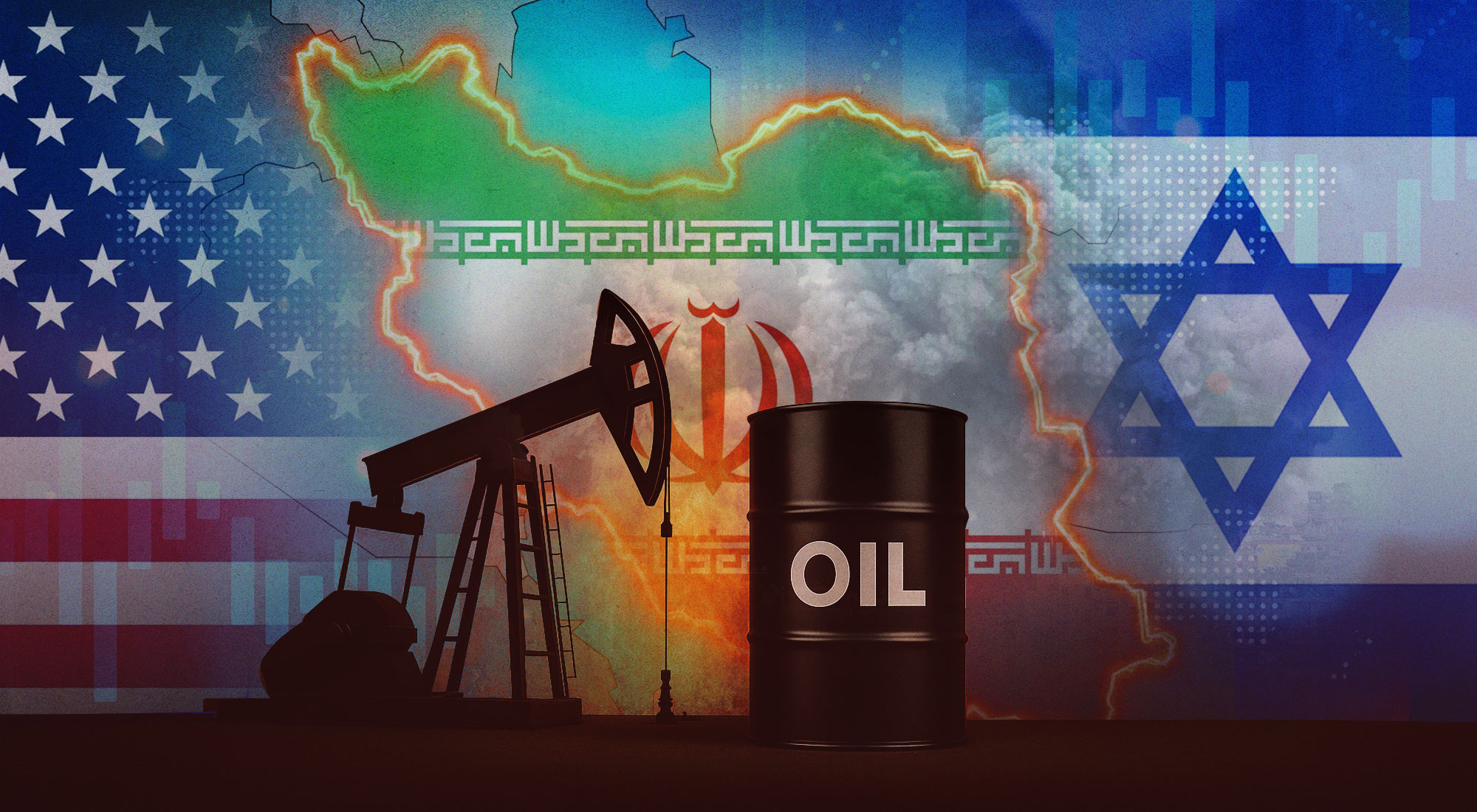



The start of U.S.-Israeli military operations in Iran on 28 February has had a significant regional and global impact. The consequences are not limited to the political, diplomatic or military spheres; they also affect the global economy.
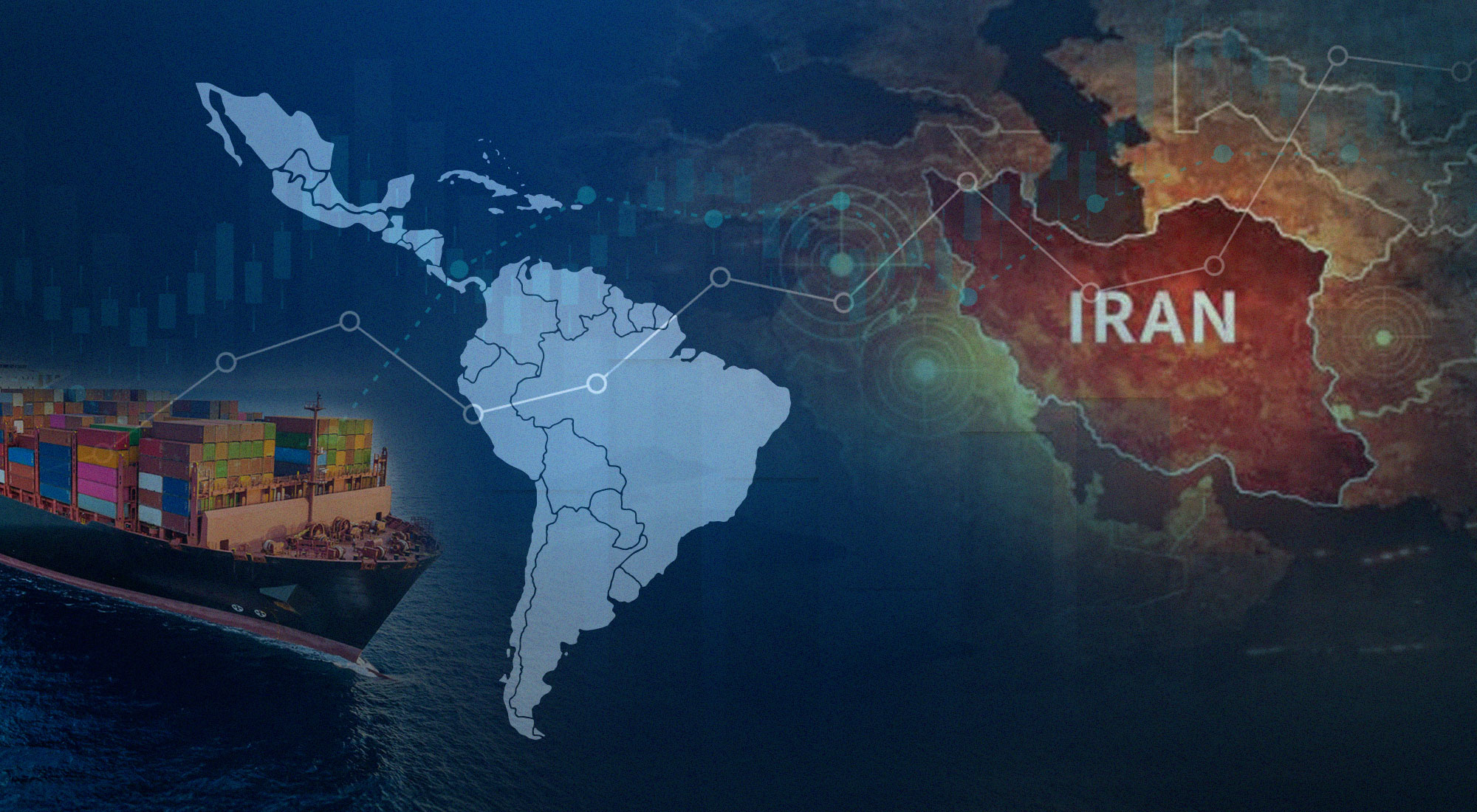
In this insight, we analyze the economic impact of this conflict on Latin America, considering its current links with the Arab Gulf region.
Military operations are not only taking place in Iran but also in more than a dozen other countries, particularly the Arab Gulf states that are being unjustly attacked by Tehran. Furthermore, Iran has effectively closed the Strait of Hormuz, one of the world’s most important international maritime trade routes.
International gas and oil prices are rising as a result of Iran’s attacks on critical infrastructure in the hydrocarbon sector of Arab Gulf countries beyond the strategic Strait of Hormuz. If such attacks continue to affect infrastructure, this could lead to shortages and further price increases.
Latin America is directly impacted by the economic consequences of the conflict in Iran in the following ways:
First, closure of the Strait of Hormuz would disrupt commercial logistics using this route, leading to increased freight and insurance costs and disruption to the logistics chains of all products transiting this area.
Second, the food security of Arab Gulf countries that purchase Latin American commodities could be affected, as these products may not reach those markets, or they may do so at a higher cost. It could also affect production levels and buyer markets in Latin American countries.
Third, if international oil and gas prices remain high over time, this would have an inflationary effect on Latin American economies (and many others, of course), impacting growth forecasts.
Fourth, this increase in international oil and gas prices could create opportunities for Latin American producers, particularly in Ecuador, Venezuela, Mexico, Brazil and Argentina. These producers could benefit from higher revenues or gain access to new markets that traditional producers cannot serve.
Fifth, a continuation of the conflict could affect the economies of Gulf countries, leading to two negative consequences for Latin America: a decrease in investment flows from Gulf countries to Latin America, or at least a slowdown in such flows due to changes in priorities.
Finally, lower growth in Latin America and insecurity in the Gulf could also limit investment projects by Latin American countries in the Gulf.
In the following sections, we will analyze these potential impacts and consider the likelihood of their happening.
Closure of the Strait of Hormuz
A significant proportion of the world’s oil, gas and gas derivatives pass through this sea route, making it a major international logistical chokepoint. However, oil is not the only commodity transported through the Strait. It also carries 33% of the products needed for fertilizer production, 32% of methanol, 6% of sugar and 4% of cereals and oilseeds, as well as many other goods.
In the worst-case scenario, the closure of this sea route would lead to a disruption in the supply of these goods, while in the best-case scenario, it would lead to a significant increase in costs and freight charges.
The situation could worsen further if the attacks by the Houthis in the Red Sea continue alongside the closure of the Strait of Hormuz. This would render the Arabian Peninsula almost inaccessible to international trade. The Iranian attack on the Omani port of Duqm, one of the most important ports on the peninsula and not located in the Arabian Gulf or the Red Sea, complicates this situation further.
A virtual halt to commercial operations to and from these ports would have serious consequences for all the sectors of the economy involved.
Food security
In terms of the production of primary products (commodities), such as soybeans, corn, wheat and vegetable oils, Latin America is one of the most important regions. The main producing countries, particularly Brazil and Argentina, have significant buyers in the Arab Gulf states. These countries, therefore, depend on Latin America for their food security.
A prolonged crisis would jeopardize these commercial operations, directly impacting the supply to the Gulf countries and resulting in a significant loss of revenue for Latin American countries from these sales. Although neither party would be directly responsible, both would be affected.
The United Arab Emirates could increase port operations in Fujairah but would not be able to match the capacity of Jebel Ali, through which around 90% of the country’s commodities currently enter. While the latter port is operating normally, albeit with higher security levels, the fact that it is a global trade hub in a region where military operations may take place is a cause for concern.
Saudi Arabia could increase its operations in Red Sea ports, but these would be vulnerable to Houthi attacks if they persist in their efforts to disrupt maritime traffic, as they have done in the past. Kuwait, Qatar and Bahrain, for their part, have far fewer options.
It is important to note that a closure of the Strait of Hormuz would also affect Iran, whose population is already experiencing a severe economic and social crisis that could be exacerbated by military and food shortages.
Disruptions in the markets of the Arab Gulf countries would have a very negative short-term economic impact on Latin American countries, given the importance of primary product exports to the economies of this region.
Another aspect of food security could also be affected. Thirty-five percent of global urea and 45 percent of sulfides—two essential elements for phosphate fertilizers—pass through the Strait of Hormuz. Significant percentages of ammonia also pass through this sea route, and ammonia is an essential component of nitrogen fertilizers. If the fertilizer industry is affected, new planting campaigns may also be impacted, reducing production levels and increasing risks to food security.
In this area, the closure of the Strait of Hormuz could affect food production (lower quantities and higher costs), sales (due to lower production and an inability to reach markets) and purchases (due to higher prices and reduced purchasing power). The entire chain would be affected.
Rising oil and gas prices: Inflationary effect
If the increases recorded in oil (Brent and WTI) or gas since the start of military operations continue over time, they will be passed on to all economic activities. In Latin America in particular, these increases would raise inflation and growth expectations, leading to economic problems that could cause social and political unrest.
It is of the utmost importance for Latin American countries to avoid this scenario, which has occurred before. An increase in oil prices would have an inflationary impact on all sectors of the economy, and in a scenario of prolonged conflict, no economies would emerge unscathed. In fact, this inflationary pressure is already a reality as futures contracts with significant increases begin to be traded.
As has happened in similar situations, such as the start of the war in Ukraine in 2022, increases in energy prices are expected to impact interest rates. Central banks will need to work to mitigate the consequences or support sectors of the economy.
Rising oil and gas prices: New opportunities?
Some in Latin American hydrocarbon-producing countries argue that the increase in the prices of these products, coupled with the Gulf region’s inability to serve its traditional markets, could present an opportunity for Latin American hydrocarbons.
This is a simplistic assumption that is unlikely to be realized in the short term. In order to develop this type of relationship, investment is needed not only in oil and gas fields but also in the entire logistics infrastructure and, above all, in increasing production capacity in the short term. None of this can be achieved overnight, nor is it possible to invest and then have idle capacity. Any new market for these products is the result of careful analysis, not urgency. In this sense, while some spot sales may be made, it is difficult to envisage a significant shift in energy ties in the short term.
Financial impact: Gulf investments in Latin America
The deepening conflict and its effect on the region’s slowing economy will certainly impact the financial systems of the countries in the region. This combination of negative effects will lead to a reallocation of resources and priorities. In this context, potential investments from investment funds, development aid funds, and companies in the Arab Gulf will certainly be delayed or cancelled.
The mining, hydrocarbon, defense, agriculture and biotechnology sectors will be the most affected. This will have a negative impact on the expansion and development plans of Latin American countries, further damaging their economies.
Financial impact: Latin American investments in the Gulf
While it is not yet possible to say that investments by Latin American countries are significant, it is a fact that Gulf countries have become a hub for the expansion of Latin American companies. Comprehensive Economic Partnership Agreements (CEPA) have recently been signed between the UAE and Chile and the UAE and Ecuador, and negotiations are ongoing for a similar agreement between MERCOSUR and the UAE. Investment promotion and protection agreements have also opened up possibilities for Latin American companies. However, all these plans could be halted if the conflict in the region continues, with negative consequences for all involved.
Conclusion
In concrete terms, we can confidently state that the impact of the conflict on the economy will essentially depend on its duration. The longer military operations continue, the greater the likelihood that the consequences outlined here will materialize.
Unfortunately, it is unlikely that Latin America will experience any positive effects of the conflict between Iran and other states in the international community. Despite the geographical distance, no one is exempt from the consequences of what is happening.
Iran’s strategy of attacking to make the conflict costly in economic, military, social, and political terms can be said to have a global reach.
In this situation, countries in the international community must not succumb to this type of unjustified pressure. Otherwise, it would set a dangerous precedent. For Latin American countries, this unfortunate situation could provide an opportunity to explore options that would allow them to avoid such pressures in the future.
It is an opportunity to build resilience by collaborating with other affected countries.