

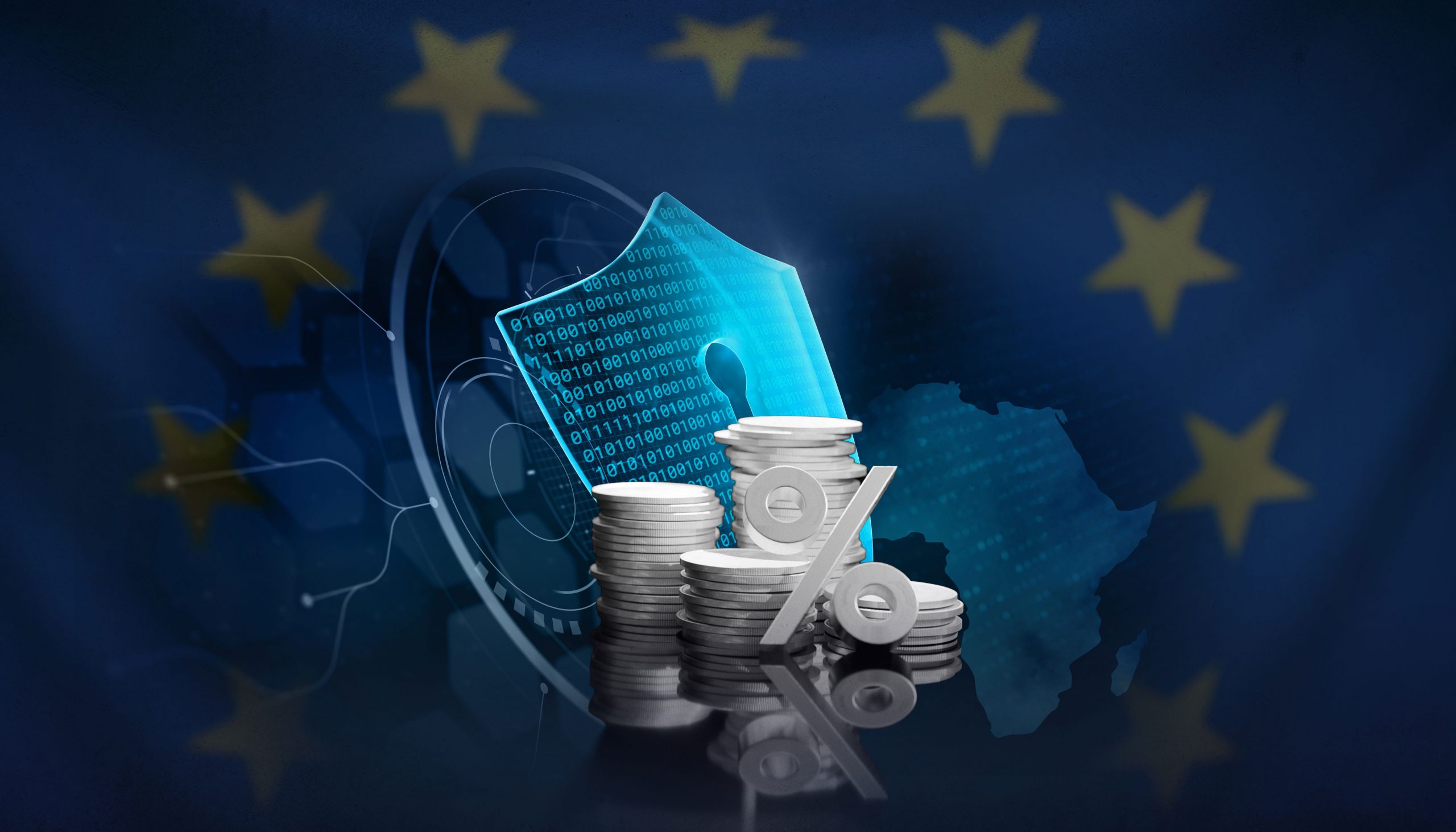

Economic security has emerged as a central concept in European policy debates over the past decade, but its prominence has accelerated sharply since the COVID-19 pandemic, Russia’s invasion of Ukraine, and the intensification of U.S.-China strategic rivalry. In response to growing concerns about supply-chain disruptions, technological dependencies, and geoeconomic coercion, the European Union formally articulated its Economic Security Strategy in 2023. The strategy reflects a broader shift in global economic governance away from the post-Cold War paradigm of deep liberalization toward a more guarded form of globalization, often described as de-risking rather than decoupling.[1], [2]
At its core, the EU’s Economic Security Strategy aims to protect the Union’s critical economic interests while maintaining an open and rules-based international economic system. It focuses on four main pillars: resilience of supply chains, protection of critical technologies, economic competitiveness, and partnerships with third countries. This approach acknowledges that economic interdependence can be both a source of prosperity and a vector of vulnerability, particularly in a world characterized by geopolitical rivalry and weaponized interdependence.[3]
The global implications of this strategy are substantial. As one of the world’s largest trading blocs and sources of foreign direct investment (FDI), the EU’s policy choices inevitably shape global trade patterns, investment flows, and development trajectories. Africa, in particular, occupies a strategic position in the EU’s economic security calculus due to its role as a supplier of critical raw materials, a growing consumer market, and a neighboring region with deep historical, economic, and political ties to Europe. At the same time, the effects of the EU’s strategy extend beyond Africa, influencing global value chains, multilateral institutions, and the balance between openness and protection in the world economy.
This insight analyzes the EU’s Economic Security Strategy through a global lens, with a particular focus on Africa. It asks three interrelated questions: What are the theoretical foundations of economic security as a policy framework? How does the EU’s strategy reshape economic relations with Africa and other regions? And what are the broader implications for global economic governance? The analysis combines academic perspectives with selected policy and media sources to provide a balanced and forward-looking assessment.
1. Theoretical Foundations: Economic Security and Geoeconomics
The concept of economic security occupies an ambiguous space between economics and geopolitics, reflecting both classical trade theory and more recent critiques of globalization. In traditional economic theory, particularly within neoclassical and liberal frameworks, openness, specialization, and comparative advantage are regarded as unambiguous sources of aggregate welfare gains. David Ricardo’s Principles of Political Economy and Taxation (1817)[4] articulated the classical theory of comparative advantage, showing that countries can benefit from trade by specializing in the production of goods for which they have lower opportunity costs, even if one country is more efficient in all goods produced. This framework underpins much of the post-World War II liberal trade paradigm, where economic interdependence is viewed as mutually beneficial and conducive to peace and prosperity.
Under this classical perspective, dependencies arising from trade are not inherently strategic liabilities but mechanisms for welfare improvement, as markets allocate resources to their most efficient uses. However, such models make strong assumptions (e.g., frictionless trade, factor immobility, and small open economies), and their prescriptions may not fully capture the strategic dimensions of contemporary global economic structures.
Recent contributions in international political economy challenge this benign view of interdependence, emphasizing that economic relationships can be instrumentalized for strategic purposes where asymmetric dependencies exist. Geoeconomics, the study of how economic instruments are used to pursue geopolitical objectives, argues that economic tools such as trade, investment, technology, finance, and supply chains can become vehicles for coercive state power.[5] Researchers have documented how global networks, once thought to promote cooperation, may instead create leverage for strategic coercion. For example, weaponized interdependence theory posits that states occupying central positions in global economic networks, such as financial messaging systems, supply chains, or technological platforms, can exploit these networks to exert coercive pressure on others through mechanisms like the panopticon and chokepoint effects.
From this perspective, economic security does not mean eliminating interdependence, but managing vulnerabilities arising from structural asymmetries in global networks. States may pursue policies to mitigate dependence on foreign suppliers of critical technologies or raw materials precisely because these dependencies can be exploited to influence political outcomes.[6]
Development economics and structuralist traditions add another analytical layer. The dependency theory critiques the assumption that integration into global markets automatically benefits developing economies, showing that peripheral economies often remain locked into low value-added activities and experience declining terms of trade relative to industrialized nations. This structural perspective emphasizes that economic integration can perpetuate inequalities and vulnerability to external shocks, particularly for commodity-exporting economies.[7]
More recent political economy work highlights the trade-offs states face between national sovereignty, democratic governance, and deep economic integration.[8] The author argues that maintaining all three simultaneously is impossible; states frequently must choose between protecting domestic autonomy and engaging deeply in global markets, a tension that lies at the heart of modern economic security debates.
Within this theoretical context, the European Union’s Economic Security Strategy can be interpreted as an attempt to recalibrate openness rather than abandon it. By emphasizing de-risking, reducing exposure to concentrated dependencies in critical raw materials, semiconductors, and emerging technologies, the EU aims to preserve the benefits of trade while mitigating strategic vulnerabilities. This approach seeks a balance between resilience and openness, distinguishing it from more traditional protectionist or decoupling strategies, while still acknowledging underlying tensions with liberal trade paradigms.
2. The EU’s Economic Security Strategy: Objectives and Instruments
The EU’s Economic Security Strategy is structured around a set of interrelated objectives that seek to reconcile resilience, competitiveness, and openness in an increasingly fragmented global economy. Rather than abandoning globalization, the strategy reflects a shift toward selective risk management, grounded in the recognition that certain forms of economic interdependence have become sources of strategic vulnerability.[9], [10] This approach aligns with a broader reorientation in global economic governance, where security considerations increasingly shape trade, investment, and industrial policy.[11], [12]
The first pillar focuses on identifying and mitigating strategic dependencies, particularly in sectors deemed critical for economic functioning, technological leadership, and the green transition. Policy documents and analytical work underline the EU’s exposure in areas such as rare earth elements, lithium, cobalt, pharmaceuticals, and advanced semiconductors, where supply chains are highly concentrated geographically and often dominated by a small number of suppliers.[13] These dependencies are viewed as problematic not only because of supply-chain fragility, as revealed during the COVID-19 pandemic, but also because of their potential exploitation in contexts of geopolitical tension[14], [15] In response, the strategy promotes a combination of supplier diversification, strategic stockpiling, demand reduction through efficiency, and, where economically and environmentally feasible, the development of domestic or regional production capacity. Importantly, EU institutions emphasize that these measures are intended as risk-mitigation and insurance mechanisms rather than steps toward economic autarky.[16], [17]
The second pillar concerns the protection of critical and emerging technologies, a domain where economic security and national security increasingly overlap. Instruments such as export controls, foreign direct investment screening, and restrictions on technology transfers have gained prominence, particularly in sectors related to semiconductors, artificial intelligence, quantum computing, and advanced manufacturing.[18], [19] From a policy perspective, these tools aim to prevent the leakage of sensitive technologies that could undermine Europe’s security or strategic autonomy. However, academic research and policy analysis caution that such measures may generate unintended consequences. Studies highlight the risk of fragmenting global innovation networks, increasing compliance costs for firms, and slowing technological diffusion, especially when controls are applied broadly or without coordination among major economies.[20], [21] These trade-offs illustrate the structural tension between security objectives and the EU’s long-standing commitment to open markets and multilateral governance.
The third pillar emphasizes competitiveness and industrial policy, marking a significant evolution in the EU’s economic governance framework. Legislative initiatives such as the Net-Zero Industry Act and the Critical Raw Materials Act aim to strengthen Europe’s industrial base in strategic sectors linked to decarbonization, digitalization, and technological sovereignty.[22], [23] These measures include simplified permitting procedures, targeted financial support, and regulatory coordination at the EU level. Policy observers note that this renewed emphasis on industrial policy reflects a broader global shift toward subsidy competition, particularly in response to U.S. initiatives under the Inflation Reduction Act and China’s long-standing state-led industrial strategies.[24], [25] While such policies may enhance Europe’s resilience and competitiveness, economists warn that they risk distorting global trade, weakening WTO disciplines, and exacerbating tensions between advanced and developing economies.[26], [27]
The final pillar underscores the importance of partnerships with third countries, recognizing that not all risks can, or should, be addressed through reshoring. Instead, the EU seeks to build trusted partnerships with countries that can provide reliable access to critical raw materials, energy, and intermediate goods, while supporting local value creation.[28], [29] Africa features prominently in this approach, especially given its central role in supplying minerals essential for renewable energy technologies and electric mobility.[30], [31] These objectives are closely linked to broader EU initiatives such as the Global Gateway, which aims to combine infrastructure investment with sustainable development goals. However, asymmetries in bargaining power, financing capacity, and regulatory influence may limit the developmental benefits for partner countries, raising concerns that such partnerships could primarily serve European economic security interests rather than fostering genuinely reciprocal development outcomes.[32], [33]
Taken together, these objectives and instruments illustrate that the EU’s Economic Security Strategy constitutes not a single policy tool but a reshaping of trade, industrial policy, investment screening, and external economic relations. Its global impact will depend critically on how these instruments are implemented, coordinated with international partners, and reconciled with the EU’s stated commitment to an open, rules-based international economic order.
3. Africa and the EU’s Economic Security Strategy
Africa occupies a structurally ambivalent position within the EU’s Economic Security Strategy. On the one hand, the continent is increasingly framed as a strategic partner essential to Europe’s green and digital transitions, particularly due to its endowment in critical raw materials such as cobalt, lithium, manganese, and rare earth elements. On the other hand, there is a risk that African economies are instrumentalized primarily as suppliers of raw materials, reproducing long-standing patterns of unequal integration into the global economy.
A large body of academic research on resource-based development highlights the structural risks associated with commodity dependence. The resource curse literature documents how reliance on primary commodity exports is associated with price volatility, weak industrial linkages, limited technological learning, and governance challenges.[34], [35] Subsequent work has refined this argument by emphasizing that the negative outcomes of resource dependence are not inevitable but are shaped by institutional quality, industrial policy, and the structure of global value chains.[36], [37] In this context, an EU economic security approach narrowly focused on securing access to critical minerals risks reinforcing Africa’s position in the low value-added segments of global supply chains.
From a global value chain perspective, Africa’s integration into mineral supply chains has historically been characterized by limited upgrading opportunities, with most processing, refining, and technology-intensive activities taking place outside the continent.[38], [39] If EU policies prioritize speed and reliability of supply over local value creation, they may inadvertently lock African economies into extractive roles, undermining long-term development prospects.
At the same time, the EU’s emphasis on diversification and resilience creates potential opportunities. Research suggests that periods of supply-chain reconfiguration can open windows for industrial upgrading if accompanied by targeted investment, infrastructure development, and skills transfer.[40] In this regard, EU initiatives linked to the Economic Security Strategy, such as the Global Gateway, could support the development of African processing, refining, and manufacturing capacities, particularly in energy-intensive sectors linked to the green transition. Crucially, development outcomes will depend on whether partnerships are structured around joint value creation, technology transfer, and learning, rather than extractive contractual arrangements.[41]
Trade policy constitutes another critical channel shaping Africa’s interaction with the EU’s economic security agenda. The EU’s evolving approach to trade agreements, including Economic Partnership Agreements, increasingly incorporates sustainability standards, labor norms, and supply-chain due diligence requirements. While the literature recognizes that such standards can improve social and environmental outcomes, it also highlights their potential to raise fixed compliance costs, disproportionately affecting small and medium-sized firms in developing economies.[42], [43] Without accompanying support for capacity building and regulatory adaptation, these measures risk becoming de facto barriers to market access.
4. Global Spillovers and Systemic Implications
Beyond Africa, the EU’s Economic Security Strategy contributes to broader transformations in the global political economy. The selective use of export controls, industrial subsidies, and investment screening reflects what scholars increasingly describe as the securitization of economic policy, whereby economic instruments are explicitly subordinated to strategic objectives.[44], [45] While individual measures may be justified on national or regional security grounds, their cumulative effect risks fragmenting global value chains and eroding the multilateral trade regime.
Academic studies warn that growing reliance on unilateral or plurilateral economic security measures weakens the effectiveness and legitimacy of institutions such as the World Trade Organization, particularly when exemptions are justified under broad national security clauses.[46], [47] This trend contributes to regulatory uncertainty and reduces predictability for firms operating across borders, with negative implications for investment and long-term growth.
From a macroeconomic perspective, policy-oriented research suggests that widespread adoption of industrial subsidies and localization requirements may result in efficiency losses, higher production costs, and slower global growth, especially when such policies are poorly coordinated across major economies.[48], [49] For multinational firms, the proliferation of economic security measures increases the complexity of location and sourcing decisions, reinforcing a shift toward just-in-case rather than just-in-time production models.
For developing economies, these dynamics create a more constrained external environment. While diversification away from single suppliers may open new opportunities, heightened conditionality and geopolitical alignment pressures may limit policy autonomy and reduce access to technology and finance.[50], [51]
5. Balancing Security, Openness, and Development
The central challenge of the EU’s Economic Security Strategy lies in balancing legitimate security concerns with the long-standing principles of openness and development. From an academic perspective, excessive emphasis on security risks undermines the gains from specialization, scale, and knowledge diffusion that underpin economic growth.[52] Conversely, insufficient attention to vulnerabilities can expose economies to coercion, supply disruptions, and systemic shocks.
Africa’s development trajectory will be shaped by how the EU operationalizes its partnership agenda. If economic security is leveraged as a framework for deeper cooperation, including technology transfer, skills development, and industrial upgrading, it could support more resilient and diversified growth paths. However, if it reinforces extractive relationships, asymmetric standards, and fragmented integration, it risks exacerbating existing inequalities and limiting Africa’s capacity to move up global value chains.
Therefore, reconciling economic security with development requires moving beyond access-based partnerships toward capability-building strategies, where African economies are treated not only as suppliers but as co-producers in emerging global industries.[53],[54] Whether the EU’s Economic Security Strategy contributes to such an outcome remains an open and consequential question.
Conclusion
The EU’s Economic Security Strategy represents a significant evolution in European economic policymaking, reflecting a global environment in which geopolitical rivalry, technological competition, and economic interdependence are increasingly intertwined. By explicitly framing trade, investment, and industrial policy through a security lens, the strategy signals a departure from the post-Cold War assumption that openness alone is sufficient to guarantee economic stability and political cooperation. Instead, it embodies a more conditional form of globalization, in which resilience and risk management occupy a central role.
The analysis in this insight suggests that the effects of this strategic reorientation will be highly uneven across regions and actors. For the European Union, the strategy may enhance resilience to external shocks, reduce exposure to concentrated dependencies, and strengthen bargaining power in an era of geoeconomic competition. Yet these gains come with trade-offs. If economic security instruments are applied expansively or without sufficient coordination, they risk contributing to the fragmentation of global value chains, weakening multilateral institutions, and increasing costs for firms and consumers alike.
For Africa, the implications are particularly consequential. The EU’s emphasis on critical raw materials and trusted partnerships positions African economies as central to Europe’s green and digital transitions. This creates both risks and opportunities. A narrowly security-driven approach, focused primarily on securing access to resources, could reinforce existing patterns of extractive integration and limit prospects for industrial upgrading. Conversely, a partnership model oriented toward value addition, technology transfer, and capability building could support more diversified and resilient development trajectories. The difference between these outcomes will depend less on rhetoric than on concrete policy choices regarding investment, trade conditionality, and institutional cooperation.
At the global level, the EU’s Economic Security Strategy contributes to a broader shift toward the securitization of economic policy. While this shift reflects legitimate concerns about vulnerability and coercion, it also challenges the foundations of the multilateral economic order. Preserving an open and rules-based system in this context will require restraint, transparency, and a renewed commitment to multilateral coordination, particularly in areas such as export controls, subsidies, and investment screening.
Ultimately, the success of the EU’s Economic Security Strategy should not be judged solely by its ability to protect European interests in the short term, but by its contribution to a more stable, inclusive, and sustainable global economy. Reconciling security with openness, and strategic autonomy with development, is a demanding task. Whether the EU can strike this balance will shape not only its relations with Africa, but also its role in an increasingly fragmented world economy.
[1] European Commission, “Joint communication to the European Parliament, the European Council and the Council on “European Economic Security Strategy,”” JOIN 2023/20/Final, 2023, https://eur-lex.europa.eu/legal-content/EN/TXT/?uri=celex:52023JC0020.
[2] Sparking Europe’s New Industrial Revolution: A Policy for Net Zero, Growth and Resilience (Bruegel, 2023), https://www.bruegel.org/system/files/2023-08/Bruegel%20Blueprint%2033%20080823%20web.pdf
[3] Henry Farrell and Abraham L. Newman, “Weaponized Interdependence: How Global Economic Networks Shape State Coercion,” International Security 44, no. 1 (2019): 42–79.
[4] David Ricardo, The first six chapters of the principles of political economy and taxation of David Ricardo, 1817 (Macmillan and Company, 1895).
[5] Robert D. Blackwill and Jennifer M. Harris, War by Other Means: Geoeconomics and Statecraft (Harvard University Press, 2016).
[6] How to de-risk: European economic security in a world of interdependence (Bruegel, 2024), https://www.bruegel.org/policy-brief/how-de-risk-european-economic-security-world-interdependence.
[7] Glory Makere, Dependency Theory: An Introduction Background.
[8] Dani Rodrik, “A New Trilemma Haunts the World Economy,” Project Syndicate, 2024.
[9] European Commission, “Joint communication to the European Parliament, the European Council and the Council on “European Economic Security Strategy.”
[10] Farrell and Newman, “Weaponized Interdependence: How Global Economic Networks Shape State Coercion.”
[11] Blackwill and Harris, War by Other Means: Geoeconomics and Statecraft.
[12] “Europe’s strategic choices 2024,” Chatham House, 2024, https://www.chathamhouse.org/events/all/special-event/europes-strategic-choices-2024.
[13] European Commission, “Critical Raw Materials Act,” 2024, https://single-market-economy.ec.europa.eu/sectors/raw-materials/areas-specific-interest/critical-raw-materials_en.
[14] OECD, Global value chains: Efficiency and risks in the context of COVID-19, 2021, https://www.oecd.org/en/publications/global-value-chains-efficiency-and-risks-in-the-context-of-covid-19_67c75fdc-en.html
[15] Kirsten Hund, Daniele La Porta, Thao Phuong Fabregas, Tim Laing, and John Drexhage, John Richard, Minerals for Climate Action: The Mineral Intensity of the Clean Energy Transition, World Bank, 2023.
[16] European Commission, “Joint communication to the European Parliament, the European Council and the Council on “European Economic Security Strategy.”
[17] “Europe’s strategic choices 2024.”
[18] European Commission, “Joint communication to the European Parliament, the European Council and the Council on “European Economic Security Strategy.”
[19] OECD, “Investment and national security,” 2025, https://www.oecd.org/en/topics/investment-and-national-security.html.
[20] Simon J. Evenett and Johannes Fritz, “Europe fettered: How foreign trade distortions hold back European exporters,” CEPR, December 12, 2027.
[21] Gene M. Grossman and Elhanan Helpman, “Identity Politics and Trade Policy,” Review of Economic Studies 88, no. 3 (2021): 1101-1126.
[22] European Commission, “Net-Zero Industry Act,” 2023, https://commission.europa.eu/topics/competitiveness/green-deal-industrial-plan/net-zero-industry-act_en.
[23] European Commission, “Critical Raw Materials Act.”
[24] “EU aid for EV Batteries Seeks to Stave Off Chinese Competition,” Bloomberg, December 3, 2024, https://www.bloomberg.com/news/articles/2024-12-03/eu-aid-for-ev-batteries-seeks-to-stave-off-chinese-competition.
[25] Anna Ilyina, Ceyla Pazarbasioglu, and Michele Ruta, “Industrial Policy is Back But the Bar to Get it Right is High,” IMF (Blog), April 12, 2024, https://www.imf.org/en/blogs/articles/2024/04/12/industrial-policy-is-back-but-the-bar-to-get-it-right-is-high.
[26] Simon Evenett, Adam Jakubik, Fernando Martín, and Michel Ruta, “The return of industrial policy in data,” The World Economy 47, no. 7 (2024): 2762-2788.
[27] Richard Baldwin, Giovanni Donato, and Camille Reverdy, “Identifying spillovers of trade agreements through impact assessments: a new database,” World Trade Review 23, no. 5 (2024): 573-588.
[28] European Commission, “Critical Raw Materials Act.”
[29] World Economic Forum, Translating Critical Raw Material Trade into Development Benefits, White Paper, 2024, https://www3.weforum.org/docs/WEF_Translating_Critical_Raw_Material_Demand_2024.pdf.
[30] IEA, “Critical Minerals Market Review 2023,” 2023, https://www.iea.org/reports/critical-minerals-market-review-2023.
[31] Hund, La Porta, Fabregas, Laing, and Drexhage, Minerals for Climate Action: The Mineral Intensity of the Clean Energy Transition.
[32] Dani Rodrik, The Globalization Paradox: Democracy and the Future of the World Economy (W.W. Norton & Company, 2011); The Globalization and Development Reader: Perspectives on Development and Global Change (2015): 417-439.
[33] UNCTAD, Trade and Development Report 2023, https://unctad.org/system/files/official-document/tdr2023_en.pdf.
[34] R.M. Auty, (Ed.), Resource Abundance and Economic Development (Oxford University Press, 2001).
[35] Jeffrey D. Sachs and Andrew M. Warner, “The curse of natural resources,” European Economic Review 45, nos. 4-6 (2001): 827-838.
[36] Macartan Humphreys, Jeffrey D. Sachs, and Joseph E. Stiglitz, J. E. (Eds.), Escaping the Resource Curse (Columbia University Press, 2007).
[37] Mike Morris, Raphael Kaplinsky, and David Kaplan, ““One thing leads to another”— Commodities, linkages and industrial development,” Resources Policy 37, no. 4 (2012): 408-416.
[38] Gary Gereffi, John Humphrey, and Timothy Sturgeon, “The governance of global value chains,” Review of International Political Economy 12, no. 1 (2005): 78-104.
[39] Raphael Kaplinsky, “Schumacher meets Schumpeter: Appropriate technology below the radar,” Research Policy 40, no. 2 (2011): 193-203.
[40] Lindsay Whitfield, Cornelia Staritz, and Mike Morris, “Global Value Chains, Industrial Policy and Economic Upgrading in Ethiopia’s Apparel Sector,” Development and Change 51, no. 4 (2020): 1018-1043.
[41] Dani Rodrik, Normalizing Industrial Policy, Working Paper No. 3. (Washington, DC: International Bank for Reconstruction and Development/The World Bank, 2008).
[42] UNCTAD, Trade and Development Report 2023.
[43] Ben Shepherd and Susan Stone, “Global Production Networks and Employment: A Developing Country Perspective,” OECD Trade Policy Papers, No. 154, 2013
[44] Baldwin, Donato, and Reverdy, “Identifying Spillovers of Trade Agreements through Impact Assessments: A New Database.”
[45] Farrell and Newman, “Weaponized Interdependence: How Global Economic Networks Shape State Coercion.”
[46] Bernard Hoekman and Douglas Nelson, “Rethinking international subsidy rules,” The World Economy 43, no. 12 (2020): 3104-3132.
[47] Chad P. Bown, “How COVID‐19 Medical Supply Shortages Led to Extraordinary Trade and Industrial Policy,” Asian Economic Policy Review 17, no. 1 (2022): 114-135.
[48] Evenett, Jakubik, Martín, and Ruta, “The return of industrial policy in data.”
[49] Anna Ilyina, Ceyla Pazarbasioglu, and Michele Ruta, “Industrial Policy is Back But the Bar to Get it Right is High.”
[50] Robert H. Wade, “The Developmental State: Dead or Alive?,” Development and Change 49, no. 2 (2018): 518-546.
[51] UNCTAD, Trade and Development Report 2023.
[52] Gene M. Grossman and Elhanan Helpman, “Globalization and Growth,” American Economic Review 105, no. 5 (2015): 100-104.
[53] Rodrik, Normalizing Industrial Policy.
[54] Ha-Joon Chang, “Industrial Policy: Can We Go Beyond an Unproductive Confrontation?,” In Annual World Bank Conference on Development Economics, Washington, DC: World Bank, 2011, pp. 83-109.