In the spring of 2025, as U.S.-brokered negotiations over Iran’s nuclear program collapsed, something else was quietly collapsing, too: the ability of ordinary people (and sometimes trained journalists) to tell what was real. Viral clips spread across X and Telegram within hours of each major escalation. Some showed genuine destruction. Others were fragments of older conflicts, spliced into fresh timelines. A few were entirely synthetic, indistinguishable to the untrained eye from authentic satellite imagery or field footage. The conflict in the Middle East has always been challenged through competing narratives, but the tools available to distort those narratives have reached a limit that demands serious, systematic attention.
This insight argues three things in sequence. First, that the U.S.-Israel-Iran conflict is, among other things, a war of narratives. Each principal has consistent, high-stakes incentives to shape how the conflict is perceived. Second, synthetic media and coordinated disinformation are now actively fogging public judgment, harming the evidentiary basis on which audiences, policymakers, and international institutions form views about what is actually happening. Third, that verification must become a habitual behavior before sharing, rather than an afterthought. It is not the exclusive responsibility of professional fact-checkers, but a discipline on how informed people consume and circulate conflict reporting. The verification crisis is consequential and addressable, but only if it is treated with the analytical seriousness it deserves.
A war of narratives: legitimacy, deterrence, and the struggle to define the conflict
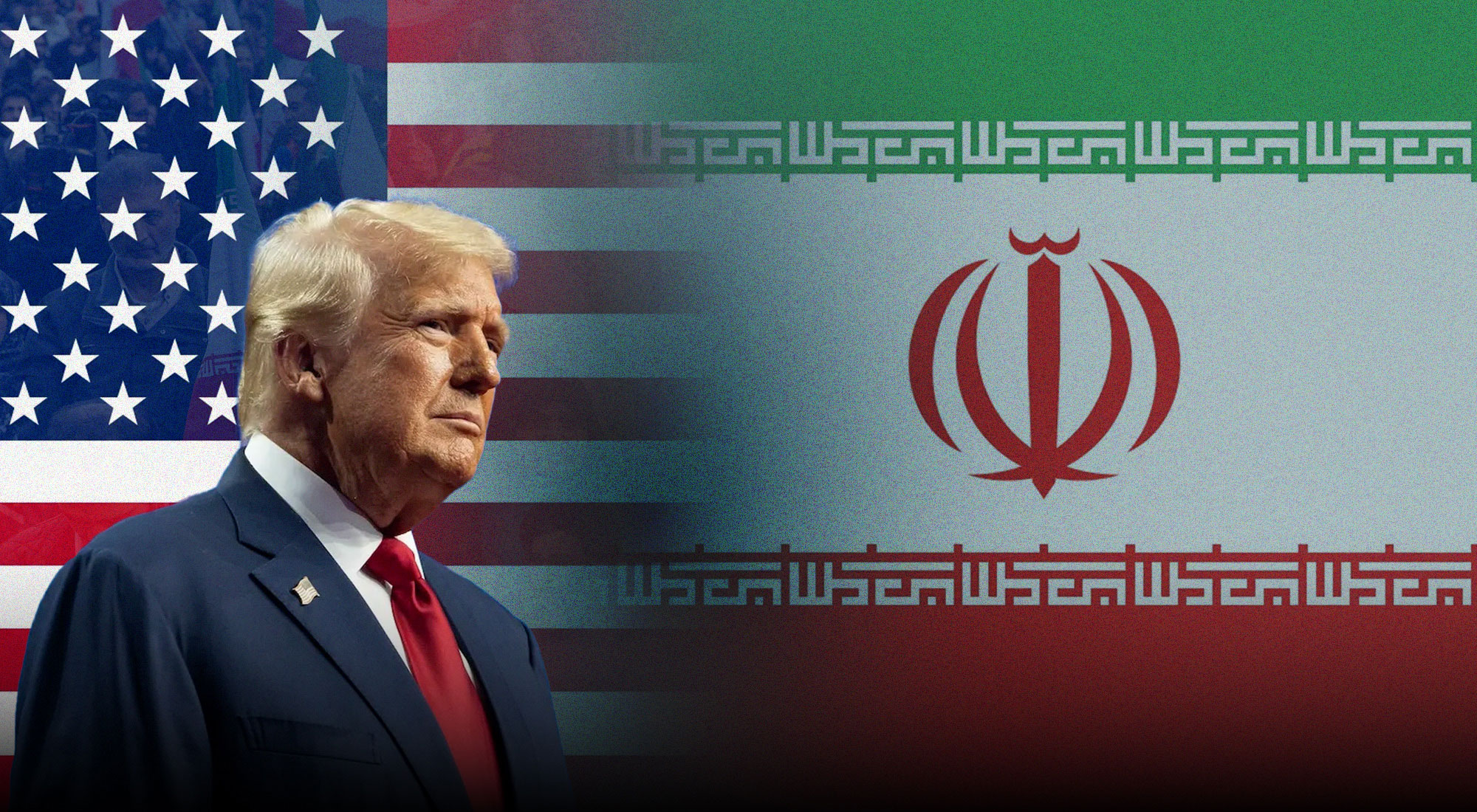
Every modern armed conflict involves a propaganda dimension, but the U.S.-Israel-Iran triangle is particularly packed with narrative competition because each party is trying to communicate to multiple, contradictory audiences at once. Israel must reassure its domestic public that military operations are both necessary and controlled and persuade Western governments that its operations are proportionate and legally defensible. Iran, for its part, must project strength and resistance to a domestic audience that has endured forty-five years of revolutionary messaging, while presenting itself internationally as the aggrieved party subjected to unlawful coercion and repeated acts of sabotage. The United States occupies the most uncomfortable narrative position of all: a superpower deeply allied with Israel, rhetorically committed to de-escalation, and acutely aware that its credibility across the broader Muslim world depends partly on how the conflict is framed.
The narrative prizes in this conflict are consequential. Strength and battlefield success lead to deterrence. The perception that military action will produce results discourages further escalation. Victimhood generates international sympathy and legal legitimacy, particularly before bodies like the UN Human Rights Council or the International Court of Justice. Claims of restraint are designed to neutralize accusations of disproportionality under international humanitarian law.[1] Narratives of existential threat, meanwhile, are used to justify extraordinary measures, whether that is Israeli pre-emptive strikes on Iranian nuclear facilities, or Iranian proxy operations that Tehran frames as defensive resistance.[2]
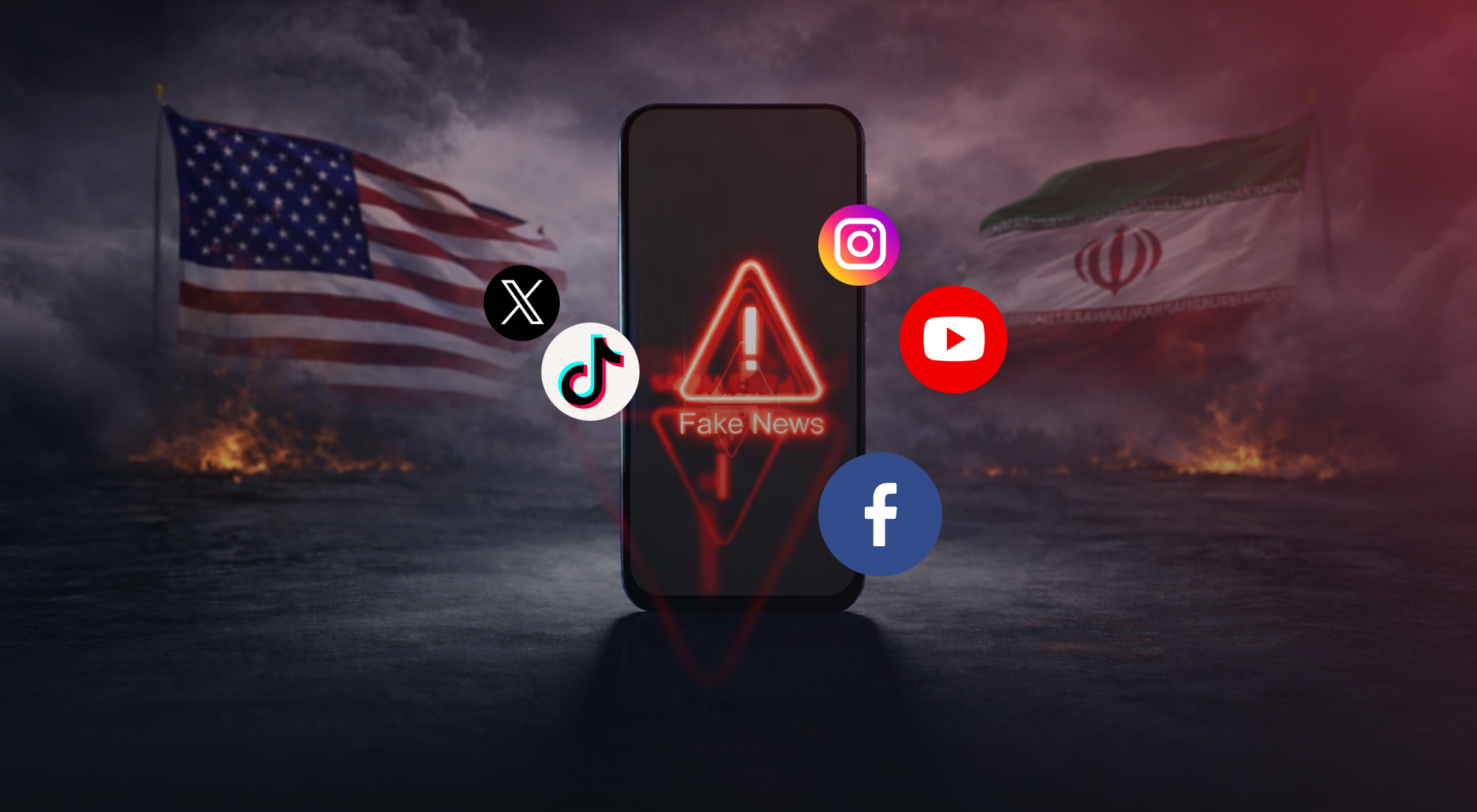
Narrative competitions have characterized the conflict for decades, but what is different today is that the infrastructures of representation through which they play out have been radically democratized. In earlier eras, state-controlled or state-adjacent media institutions set the frame: radio broadcasts, official press releases, carefully managed images. Today, a single Telegram channel with a hundred thousand subscribers can seed a misleading clip into global media ecosystems within minutes of a strike. The Iranian state broadcaster IRIB, Israeli military social media accounts, and the U.S. Department of Defense’s official communications now compete for narrative authority not just with each other but with anonymous accounts of unknown affiliation, AI-generated news sites, and loosely coordinated influence networks.[3] The playing field has expanded, the verification gap has widened, and the consequences for public understanding are severe.
In this high-stakes environment, each actor pursues specific strategic objectives through their messaging. Israel prioritizes the communication of proportionality and the inherent legitimacy of pre-emptive action while cultivating an image of Western solidarity. Conversely, Iran centers its messaging on the preservation of a resistance identity, the strategic highlighting of victim status, and the framing of sovereignty violations committed by its adversaries. The United States, seeking to balance its complex role, works to maintain its credibility as a broker, affirm the reliability of its alliances, and cultivate a narrative of regional restraint. These objectives are pursued through a set of standardized narrative mechanisms, including the effort to control the reporting of incidents in their initial hours, the strategic release of selectively timed satellite or drone footage, the careful management of casualty figures and damage assessments, and the pervasive framing of any escalation as a defensive or responsive measure rather than an initiation of hostilities.
None of this is to suggest moral equivalence between the parties, or to imply that all narratives are equally anchored in fact. The point is structural: in a conflict where narrative legitimacy translates directly into diplomatic leverage, military deterrence, and domestic political support, all parties have powerful incentives to massage, amplify, or distort the information environment to their advantage. That structural incentive is what makes the rise of synthetic media not merely a technological curiosity but a genuine strategic threat—because it hands all parties, and their unofficial proxies, tools of unprecedented deceptive power.
The fog machine: how synthetic media degrades collective judgment
The term “synthetic media” covers a spectrum of technically distinct but epistemically related phenomena: AI-generated images and video; voice cloning used to fabricate statements by public officials; digitally manipulated photographs that alter the apparent scale of damage; and algorithmically generated news articles designed to mimic legitimate outlets. In the context of the U.S.-Israel-Iran conflict, these tools have been deployed—or have appeared—in ways that range from crudely detectable to forensically sophisticated. What unites them is their common effect: they make it harder, sometimes much harder, for audiences to form accurate judgments about what is happening on the ground.
The most disruptive category may not be fully synthetic content but rather the deliberate recirculation of authentic footage stripped of its original context. During the escalations of late 2024 and early 2025, videos from the Syrian civil war, the 2006 Lebanon war, and even the 2019 Beirut port explosion were repackaged and shared with captions claiming to show recent Israeli strikes or Iranian retaliation.[4] The damage from this practice is deceitful because the underlying footage is real, but it simply does not depict what the caption claims. This hybrid deception of real imagery and false context is harder for platform moderation algorithms to catch and harder for audiences to challenge because the visual content itself is authentic.
This environment of deception is populated by various threats. Opponents now regularly use AI-generated images to fabricate scenes of strikes and damage, deepfake video technology is used to depict officials making false statements. Similarly, voice cloning allows for the creation of fabricated audio of military commanders, and recycled footage (such as old conflict clips reposted with new captions) continues to go viral. These tactics are further augmented by fake satellite imagery, which involves the manipulation of geospatial data, and AI-generated news sites that mimic legitimate outlets to broadcast biased or entirely false narratives.
Verified instances of AI-generated imagery in this conflict have been documented by the Atlantic Council’s Digital Forensic Research Lab (DFRLab). In one well-documented case from November 2024, an image depicting what appeared to be a devastated Iranian military base spread across multiple platforms before analysts identified markers of diffusion model generation (inconsistent shadow angles, physically impossible structural details, and metadata anomalies) inconsistent with the claimed capture date.[5] By the time corrections circulated, the original image had been shared hundreds of thousands of times and had been picked up, uncritically, by several regional news outlets. The correction received a fraction of that reach.
The damage accumulates in ways that are difficult to reverse. When audiences are repeatedly exposed to information environments where dramatic visual “evidence” may or may not be authentic, one of two dysfunctional adaptations tends to follow. The first is credulity; the tendency to accept vivid imagery at face value, particularly when it confirms existing beliefs about the conflict. The second, and more dangerous, is blanket skepticism; the conclusion that nothing can be trusted. This makes authoritative, verified reporting indistinguishable from manufactured content in the mind of some audiences. Both responses serve the interests of state and non-state actors who benefit from a confused, disoriented public.[6]
There is a strategic dimension to this confusion. Disinformation campaigns timed to critical decision moments (an election, a congressional hearing on military aid, a diplomatic back-channel negotiation) can significantly affect political outcomes by injecting false ideas into discussions. When policymakers or their staff are operating partly based on information that has been contaminated by synthetic media, the foundations of policy are compromised.
Verification as habit: what responsible engagement requires
The instinct among many consumers of conflict reporting is to treat verification as somebody else’s job, professional fact-checkers, platform trust-and-safety teams, or investigative journalists with access to forensic tools. That instinct is understandable but highly flawed. Platform moderation remains structurally inadequate: the volume of content generated in the first hours of any significant military escalation constantly overpowers the capacity of automated systems and human reviewers to assess it before it reaches wide audiences.[7] Professional fact-checking organizations such as Snopes, PolitiFact, and the AFP Fact Check unit do valuable work, but they have a limited capacity and are often hours behind the pace of viral spread. The responsibility to verify cannot be fully outsourced.
In terms of ordinary users, this means adapting a set of habitual behaviors consistently that significantly reduces the probability of mistakeably amplifying false or misleading content. These behaviors are well established in the media literacy literature and in the practical guidance produced by organizations including the First Draft coalition, the News Literacy Project, and the Reuters Institute for the Study of Journalism.[8]
Four-step verification habit before sharing conflict content:
Step 1: Pause – Resist the impulse to immediately share dramatic imagery.
Step 2: Source-check – Locate the original upload and assess account credibility.
Step 3: Cross-reference – Compare coverage across at least two credible, independent outlets.
Step 4: Context-scan – Check for signs of recycled footage, missing timestamps, or contradictory metadata.
The first and most critical habit is the deliberate pause. The urgency that viral conflict content creates (the sense that sharing immediately is a form of civic participation or solidarity) is exactly the psychological mechanism that disinformation campaigns exploit. Research shows that the speed of false content is one of the main reasons it spreads so widely. Corrections usually move more slowly, especially when the content is emotionally charged.[9] Simply waiting, even for twenty minutes, before sharing a dramatic clip gives the ecosystem time to begin its own correction process.
The second habit is source tracing. Most platforms now offer reverse image search functionality, and tools like Google Lens, TinEye, and InVID/WeVerify allow users to quickly assess whether an image or video clip has appeared previously in different contexts. This kind of basic background check takes, on average, under three minutes and eliminates a large fraction of the recycled-footage problem. The third habit is cross-referencing: if a claim or image appears in only one place, with a clear ideological stake in the conflict, that irregularity of coverage is itself diagnostic. Credible, significant events leave traces across multiple independent outlets.[10]
Finally, users should develop a working knowledge of the visual and structural markers of AI-generated content. These markers change as generative models improve, but as of early 2026, common indicators include: physiological inconsistencies in human figures (hands, teeth, and hairlines remain particularly problematic for current diffusion models); unnaturally uniform lighting across scenes that would realistically show variation; structural repetition in background elements; and metadata timestamps inconsistent with claimed context. Neither individual users nor institutions should treat these indicators as infallible, but they represent a significant improvement over uncritical acceptance of dramatic visual content at face value.
Clarity as a strategic value: why the verification crisis cannot be ignored
There is a temptation, in writing about synthetic media and disinformation, to frame the problem as primarily technical (better detection algorithms, improved platform policies, or more sophisticated forensic tooling). These things matter, and continued investment in them is warranted. But the deeper problem is social. In the current conflict environment in which the raw material of public judgment (the images, videos, and firsthand accounts through which people understand what war looks like) can no longer be treated as self-authenticating. That shift is not temporary. The generative tools that produce synthetic media will become cheaper, more capable, and more widely accessible regardless of how the current conflict resolves. The verification crisis, in other words, is not a crisis that ends when the shooting stops.
For policymakers, this has specific consequences. Intelligence assessments, congressional testimony, and allied consultations increasingly incorporate open-source material. But the same synthetic media ecosystem that confuses the public can, under conditions of time pressure and information saturation, also contaminate professional analytical environments. Institutions that have not yet developed formal protocols for verifying open-source imagery before it enters their analytical workflows are operating with an unacknowledged vulnerability.[11] This is an area where investment in training, tooling, and institutional process lags well behind the operational threat.
For researchers and analysts in the fields of misinformation studies, security policy, and Middle East affairs, the conflict offers a live laboratory of disinformation mechanics that deserves more systematic and timely documentation than it has yet received. The lag between events and rigorous academic analysis is, by the standards of a rapidly evolving information environment, unacceptably long. Journals, institutions, and funding bodies should consider mechanisms for accelerating the production and publication of conflict-adjacent media analysis in recognition that timely insight is itself a form of value.
And for everyday users, readers, sharers, and commenters, the argument is ultimately simple: the most important thing you can do when you encounter a dramatic image or video from an active conflict is to treat your own first reaction as a hypothesis rather than a conclusion. That visual may be real, it may be manipulated, or it may be entirely fabricated. You do not have to be an expert to slow down and apply a minimum of scrutiny before amplifying it. That pause, multiplied across millions of users, is not a small intervention. It is, in fact, one of the most meaningful contributions that an informed citizenry can make to the integrity of democratic deliberation in an age of synthetic media.
Conclusion
Solving these problems means treating verification as an operational standard rather than an afterthought. If platforms, researchers, and policymakers view the integrity of information from a public security lens, they can move past the current cycle of reactionary measures and build more resilient processes. Until institutions formalize these verification requirements and individuals treat information hygiene as a necessary civic skill, the deterioration of our shared information environment will likely continue. The challenge ahead is not about eliminating all false content; it’s about establishing reliable methods for verifying what we see and narrowing the space where manipulation can thrive.
[1] Schmitt, M. N. Will the centre hold? Countering the erosion of the principle of distinction on the digital battlefield. International Review of the Red Cross. (2023). Retrieved March 10, 2026, from https://www.cambridge.org/core/journals/international-review-of-the-red-cross/article/abs/will-the-centre-hold-countering-the-erosion-of-the-principle-of-distinction-on-the-digital-battlefield/264AA387FDB2065B359A16B66813EEB5.
[2] Eisenstadt, M. Deterrence and Escalation Dynamics with Iran: Insights from Four Decades of Conflict and a Twelve-Day War. The Washington Institute for Near East Policy. (2026). Retrieved March 11, 2026, from https://www.washingtoninstitute.org/policy-analysis/deterrence-and-escalation-dynamics-iran-insights-four-decades-conflict-and-twelve.
[3] Gleicher, N., Agranovich, D. Meta’s Adversarial Threat Report, Third Quarter 2024. Meta Transparency Center. (2024). Retrieved March 13, 2026, from https://transparency.meta.com/metasecurity/threat-reporting/.
[4] Associated Press. State actors are behind much of the visual misinformation that has spread since the start of the Iran war. AP News. (2026). Retrieved March 11, 2026, from https://abcnews.go.com/US/wireStory/state-actors-visual-misinformation-iran-war-130849781.
[5] Digital Forensic Research Lab. Analysis: five online takeaways from the ongoing Mideast conflict. Atlantic Council Digital Forensic Research Lab. (2024). Retrieved March 11, 2026, from https://dfrlab.org/2024/10/07/analysis-five-online-takeaways-from-the-ongoing-mideast-conflict/.
[6] Wardle, C., Derakhshan, H. Information disorder: Toward an interdisciplinary framework for research and policy making. Council of Europe. (2017). Retrieved March 13, 2026, from https://edoc.coe.int/en/media/7495-information-disorder-toward-an-interdisciplinary-framework-for-research-and-policy-making.html.
[7] Oversight Board. Board Calls for New Rules on Deceptive AI During Conflicts. Oversight Board. (2026). Retrieved March 10, 2026, from https://www.oversightboard.com/news/board-calls-for-new-rules-on-deceptive-ai-during-conflicts/.
[8] Reuters Institute for the Study of Journalism. Digital News Report 2025. University of Oxford. (2025). Retrieved March 10, 2026, from https://reutersinstitute.politics.ox.ac.uk/digital-news-report/2025.
[9] Vosoughi, S., Roy, D., Aral, S. The spread of true and false news online. Science. (2018). Retrieved March 10, 2026, from https://doi.org/10.1126/science.aap9559.
[10] Wardle, C. Understanding information disorder. First Draft. (2019). Retrieved March 11, 2026, from https://firstdraftnews.org/long-form-article/understanding-information-disorder/.
[11] Paul, C., Matthews, M. The Russian “Firehose of Falsehood” Propaganda Model: Why It Might Work and Options to Counter It. RAND Corporation. (2016). Retrieved March 13, 2026, from https://www.rand.org/pubs/perspectives/PE198.html.