

The Muslim Brotherhood’s relationship with the United States has been complex and evolving. During the Cold War, some U.S. officials briefly tolerated Islamist groups like the Muslim Brotherhood as potential bulwarks against Soviet influence in the Arab world, a short-sighted calculation that ignored the movement’s radical ideological foundations. After the 11 September 2001 attacks, there was intense scrutiny of alleged ideological and organizational links between the Brotherhood and terrorist groups with a long record of suicide bombings, rocket attacks, and targeted killings against civilians.
Calls to designate the Muslim Brotherhood itself as a terrorist organization gained serious traction in the 2010s. During President Trump’s first term (2017-2021), powerful regional allies (Egypt, Saudi Arabia, and the United Arab Emirates) pushed hard for the designation after branding the group a terrorist in the wake of the “Arab Spring.”[1] Those efforts were repeatedly blocked, not by lack of evidence, but by bureaucratic hurdles stemming from the Brotherhood’s deliberately opaque, decentralized structure, which it has skillfully used to evade accountability.
Congressional pressure persisted, culminating in 2025 legislation demanding that the State Department formally assess the Brotherhood for terrorist designation.[2] Despite the mounting body of evidence linking the group to extremism and financing of terrorism, the United States, prior to 2026, continued to spare the parent organization from a comprehensive terrorist label. Instead, Washington targeted only isolated individuals and charities caught funneling money to MB terror groups, allowing the broader network to operate with relative impunity.
This reluctance stood in stark contrast to the Brotherhood’s well-documented history of promoting an Islamist extremist supremacist ideology, exploiting democratic openings for power grabs (as seen during its disastrous 2012-2013 rule in Egypt under Mohamed Morsi), and maintaining close ties to designated terrorist entities, all while cultivating a false facade of moderation and civic engagement.
This insight examines the historical context, the specifics of these designations, the justifications provided, criticisms raised, and the broader implications. By drawing on official announcements, media reporting, and expert analysis, it aims to present a balanced and factual overview of this development.
Mechanisms of the 2026 Designations
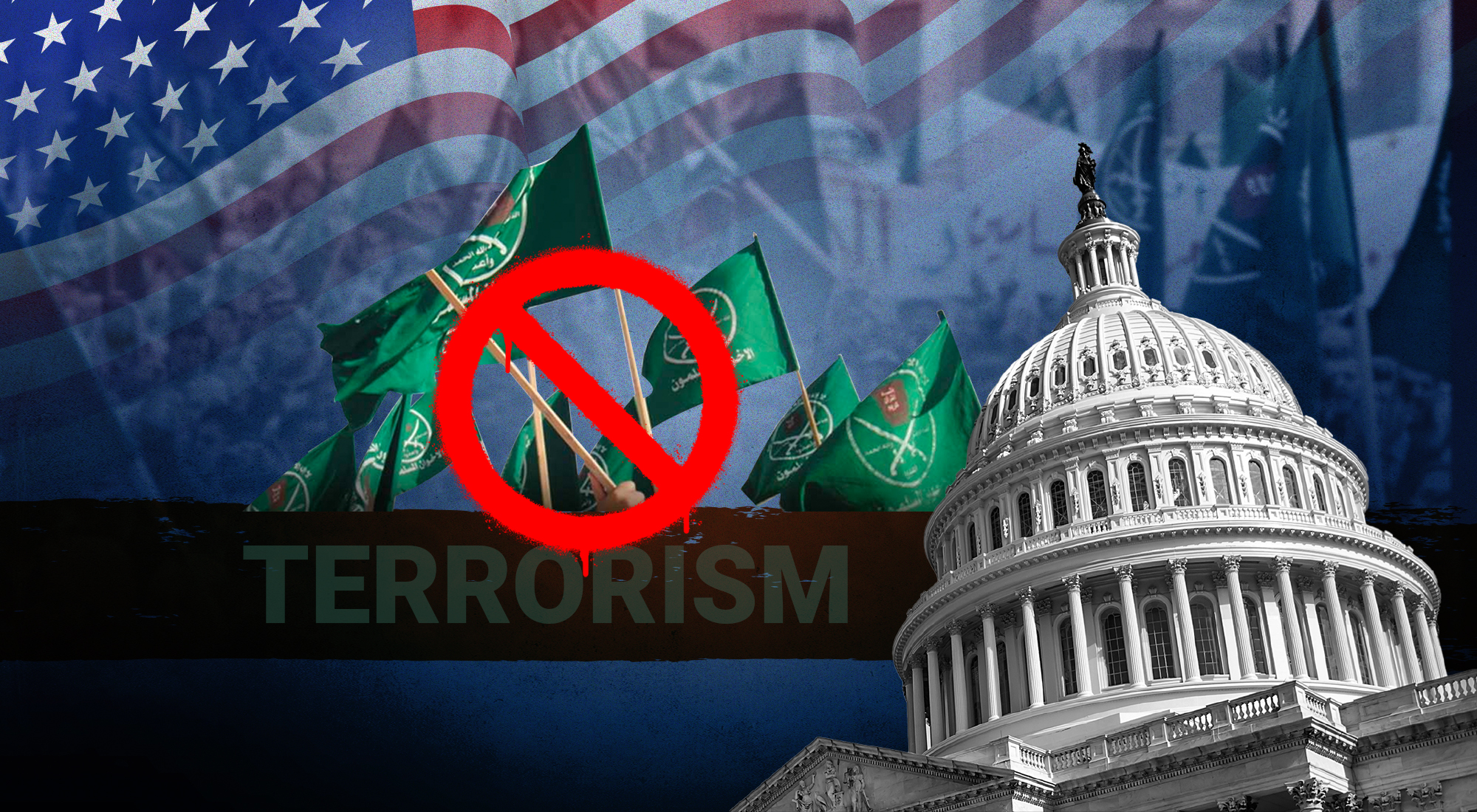
On 13 January 2026, the U.S. Departments of State and Treasury announced targeted terrorist designations against three Muslim Brotherhood chapters.[3] These actions were taken pursuant to an executive order signed in November 2025 that directed the administration to expand the use of counterterrorism authorities against Islamist networks deemed to pose national security risks.
The Lebanese Muslim Brotherhood, known as al-Jamaa al-Islamiya, was designated as both a Foreign Terrorist Organization and a Specially Designated Global Terrorist entity. Its leader, Muhammad Fawzi Taqqosh, was also individually designated.[4] Concurrently, the Egyptian and Jordanian branches were classified as Specially Designated Global Terrorist entities based on allegations of material support to terrorist groups in the Middle East.[5]
These designations resulted in the freezing of any assets subject to U.S. jurisdiction, prohibited U.S. persons from engaging in transactions with the designated entities, and imposed immigration restrictions. The timing of these actions coincided with heightened U.S. concern over regional security in the Middle East, particularly amid ongoing conflicts involving proxy militias. U.S. officials emphasized that the objective was to disrupt networks deemed to threaten American interests, allies, and citizens.
U.S. Justifications
The U.S. government justified the designations by citing evidence that the targeted branches provided material support to terrorist organizations.[6] In the case of the Egyptian and Jordanian branches, authorities alleged financial and logistical assistance to Hamas. The Lebanese branch was accused of coordinating with Hamas and Hezbollah, including involvement in armed operations through its militant wing.[7]
Officials argued that these chapters operated under the guise of political and social engagement while enabling militant activities that destabilize the region. These claims align with arguments advanced by proponents of designation, who have long asserted that the Brotherhood’s ideology and organizational ecosystem facilitate extremist movements, even where direct violence is not openly embraced.
Supporters of the move, particularly in Egypt, hailed the designations as a decisive step in countering extremism and safeguarding regional security. Public reactions in favor of the designations framed them as overdue recognition of the Brotherhood’s alleged role in enabling terrorism.
Counterarguments
These designations elicited predictable pushback from the group’s representatives and certain analysts, but these objections largely fail to withstand scrutiny when weighed against documented evidence of the Brotherhood’s longstanding support for terrorism and extremist ideology.
The Egyptian Muslim Brotherhood, through acting general guide Salah Abdel Haq, categorically rejected the designation as “unsupported by credible evidence” and attributed it to external pressures rather than objective U.S. interests.[8] Similarly, the Lebanese branch dismissed the move as a mere “political decision” lacking domestic legal impact, portraying itself as a licensed political movement. These denials ring hollow given the U.S. government’s explicit findings: the Egyptian and Jordanian branches were designated as Specially Designated Global Terrorists (SDGTs) for providing material support to Hamas, a U.S.-designated Foreign Terrorist Organization (FTO) since 1997, while the Lebanese chapter (al-Jamaa al-Islamiya) earned the more severe FTO status due to its coordination with Hamas and Hezbollah, including rocket attacks on U.S. regional allies via its armed wing, al-Fajr Forces.
Analysts critical of the designations have also argued that the Brotherhood’s decentralized structure makes it more difficult to establish unified terrorist intent or command responsibility, suggesting instead narrower sanctions on specific Hamas-funding networks. However, this overlooks the deliberate opacity of the Brotherhood’s organization, which experts from the Foundation for Defense of Democracies (FDD) describe as a strategic facade enabling it to maintain a “civic” appearance while channeling resources to violent terrorist offshoots.[9] The targeted chapter-based approach in the 2026 designations precisely addresses this fragmentation, focusing on entities that independently meet legal thresholds under Executive Order 13224 and Section 219 of the Immigration and Nationality Act, a criterion the U.S. has applied rigorously to avoid overbroad labels that could falter in court.
Further criticism questions why the designations did not extend to alleged Brotherhood-linked groups in Western countries, such as the Council on American-Islamic Relations (CAIR), despite state-level actions in Texas and Florida.[10] This selective focus is not a flaw but a strength: federal designations require concrete evidence of material support for terrorism, which has been established for the targeted Middle Eastern chapters through their direct ties to terror operations, including post-7 October 2023 escalations. Extending sanctions to U.S.-based entities would demand separate, evidence-based proceedings—precisely the methodical process the Trump administration has initiated rather than pursuing politically symbolic blanket measures.
From a policy standpoint, the criticisms largely recycle long-standing Brotherhood talking points that portray the group as a benign civic actor while downplaying its ideological extremism, historical incitement, and material links to designated terrorists. The U.S. designations represent a calibrated, evidence-driven response to these threats, advancing regional security without the pitfalls of an overly broad approach that previous administrations avoided. Far from politicizing counterterrorism, they fulfill a commitment to deprive destabilizing networks of resources, as affirmed by Secretary of State Marco Rubio and Treasury Secretary Scott Bessent.[11]
Implications
The 13 January 2026 designations carry substantial legal, political, and geopolitical implications. Financially, they isolate the targeted Muslim Brotherhood chapters from the international financial system, potentially constraining their operations. Politically, they reinforce U.S. alignment with states that oppose the Brotherhood and signal a more assertive posture toward Islamist terrorist movements amid regional instability. Thus, U.S. policy toward the Brotherhood remains targeted and incremental.
Future developments may include additional designations or expanded sanctions depending on evidentiary findings and political considerations.
Overall, the 2026 designations represent a calibrated escalation in U.S. policy. While grounded in allegations of terrorist support, they reflect enduring debates over the Muslim Brotherhood’s character as either a political movement or an enabler of extremism and terrorism, and over the effectiveness of designation-based strategies in promoting long-term regional stability.
[1] “Who Is behind the Effort to Declare the Muslim Brotherhood a Terrorist Organization,” Arab Center Washington DC, April 20, 2016, https://arabcenterdc.org/resource/who-is-behind-the-effort-to-declare-the-muslim-brotherhood-a-terrorist-organization/.
[2] U.S. Congress, “H.R.3883 – 119th Congress (2025-2026): Muslim Brotherhood Is a Terrorist Organization Act of 2025,” Congress.gov, 2025, https://www.congress.gov/bill/119th-congress/house-bill/3883.
[3] U.S. Department of State, “Terrorist Designations of Muslim Brotherhood Chapters,” January 13, 2026, https://www.state.gov/releases/office-of-the-spokesperson/2026/01/terrorist-designations-of-muslim-brotherhood-chapters.
[4] Ibid.
[5] Ibid.
[6] “US Designates Three Muslim Brotherhood Chapters as Global Terrorists,” Reuters, January 13, 2026, https://www.reuters.com/world/middle-east/us-designates-three-muslim-brotherhood-chapters-global-terrorists-2026-01-13/.
[7] Michael Jacobson and Matthew Levitt, “A More Effective Approach to Countering the Muslim Brotherhood,” The Washington Institute for Near East Policy, November 18, 2025, https://www.washingtoninstitute.org/policy-analysis/more-effective-approach-countering-muslim-brotherhood.
[8] Ali Harb, “US Labels Muslim Brotherhood in Egypt, Lebanon, Jordan as ‘Terrorists,’” Al Jazeera, January 13, 2026, https://www.aljazeera.com/news/2026/1/13/us-labels-muslim-brotherhood-orgs-in-egypt-lebanon-jordan-as-terrorist.
[9] Zac Jutcovich, “Policy Alert: New Report Sheds Light on Muslim Brotherhood Terror Ties,” FDD Action, November 11, 2025, https://www.fddaction.org/policy-alerts/2025/11/11/muslim-brotherhood-terrorist-designation/.
[10] Office of the Texas Governor | Greg Abbott, “Governor Abbott Designates Muslim Brotherhood, CAIR as Foreign Terrorist Organizations,” November 18, 2025, https://gov.texas.gov/news/post/governor-abbott-designates-muslim-brotherhood-cair-as-foreign-terrorist-organizations?
[11] Shaun Tandon, “US Takes Aim at Muslim Brotherhood in Arab World,” AL-Monitor, January 13, 2026, https://www.al-monitor.com/originals/2026/01/us-takes-aim-muslim-brotherhood-arab-world?