



- The panel warns against relying solely on security approaches and calls for a comprehensive intellectual and media confrontation.
- The organization is experiencing political decline but is repositioning itself by exploiting regional crises.
During a dialogue session organized by the TRENDS Research Council, experts, academics, and researchers affirmed that the Muslim Brotherhood is no longer merely a historical challenge but a central concern that shapes the present and future in a region witnessing intertwined crises and open conflicts. They emphasized that confronting this organization cannot be limited to security approaches alone but requires a comprehensive vision that integrates intellectual discourse, education, media, and public policy, while strengthening societal awareness and research as the first line of defense.
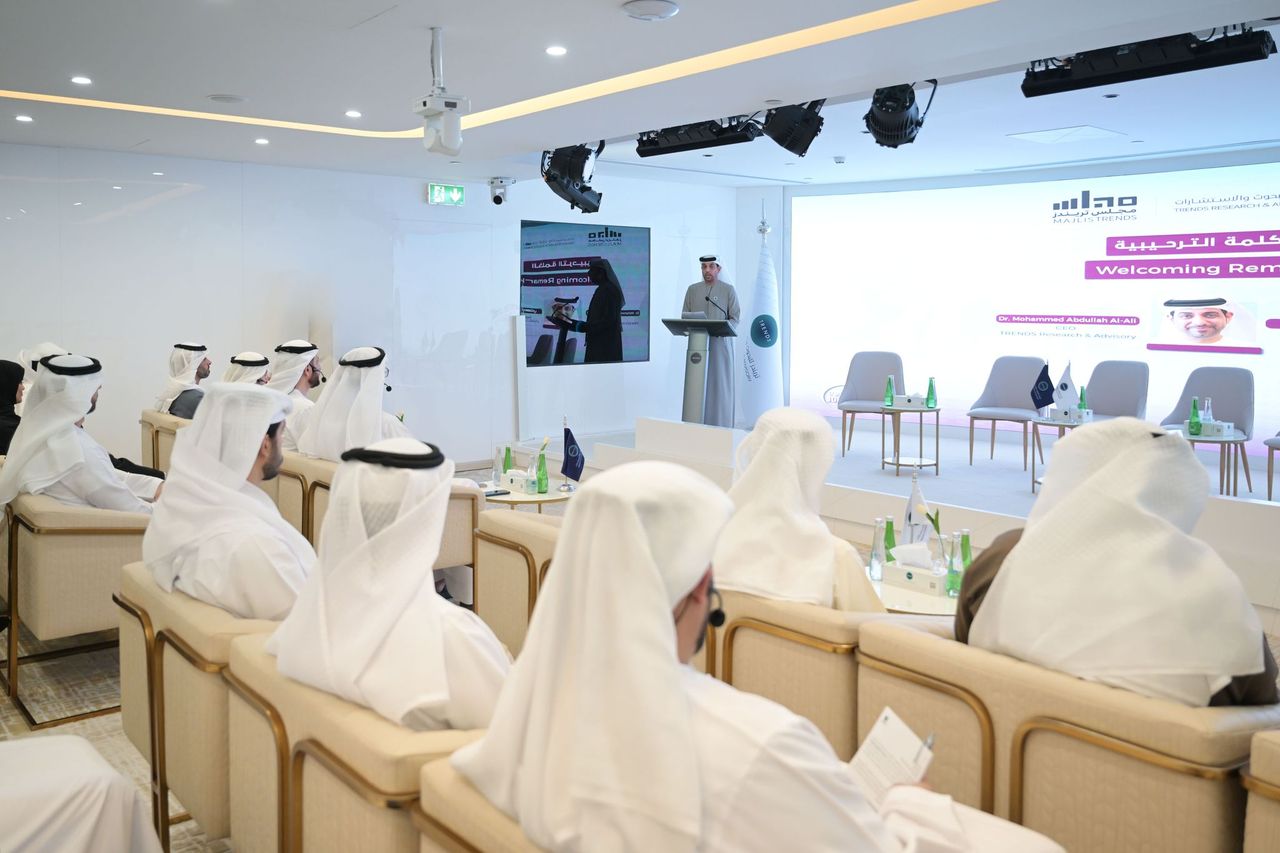
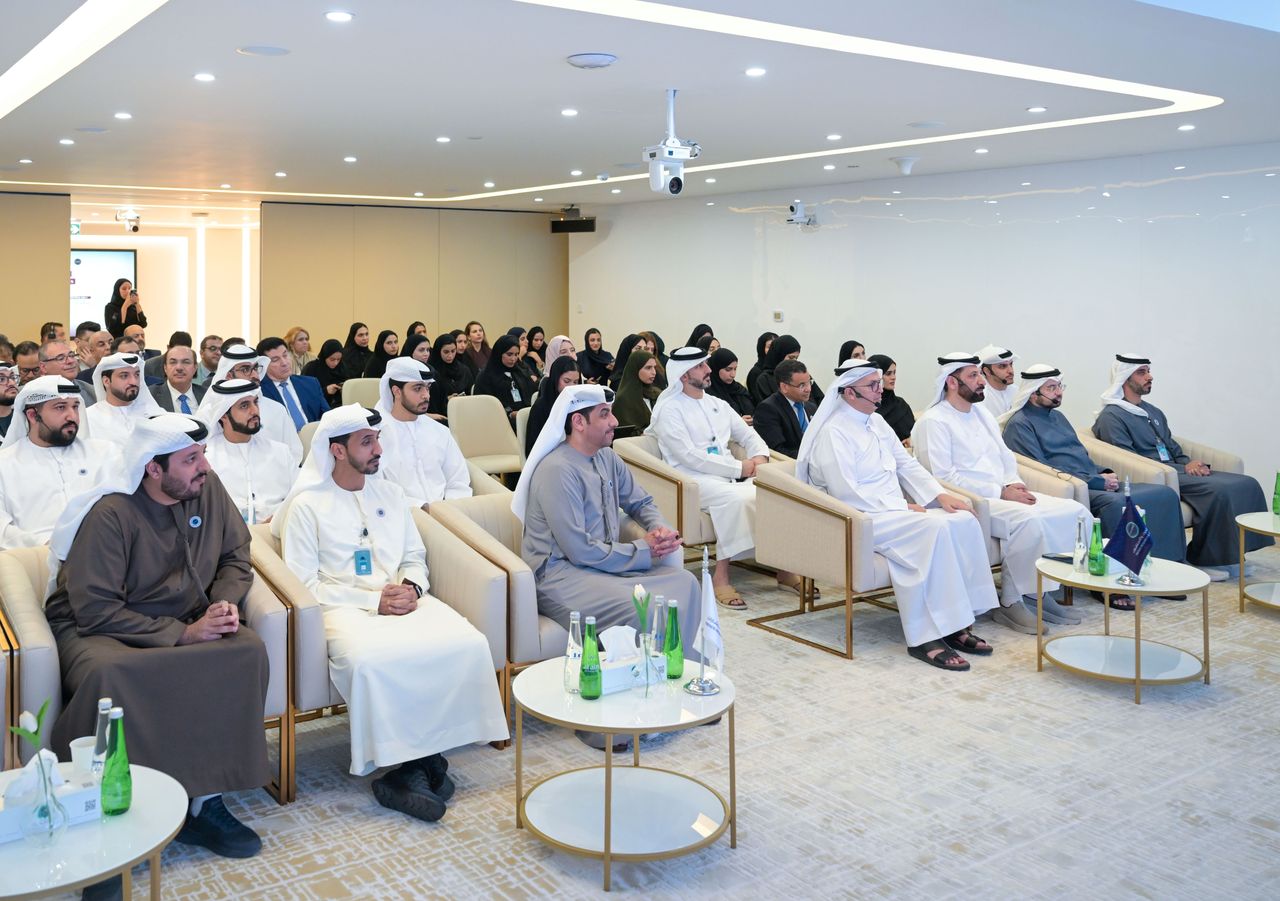
The discussions were held during a session – The Muslim Brotherhood in a Turbulent Regional Context: Present Transformations and Future Pathways – held yesterday at the beginning of the Council’s research activities.
A Transnational Organization
In his opening remarks, Dr. Mohammed Al-Ali, CEO of TRENDS Research & Advisory, stressed that the session was being held at a critical regional moment in which political, security, and intellectual dimensions are intertwined. He noted that the Muslim Brotherhood is among the most transnational actors capable of exploiting the regional turmoil.
Dr. Al-Ali explained that the past decade has demonstrated the organization’s continuous efforts to reinvent itself by exploiting crises, manipulating conflicts, and building networks of influence that transcend the nation-state. He warned against ideological mobilization rhetoric that threatens political stability, adding that the pressures the organization has faced in some countries do not signify its end. Instead, it retains the ability to adapt and reposition itself within changing regional contexts.
He pointed out that ongoing conflicts in the region – particularly in Sudan and Yemen – have presented new opportunities for the organization, despite the experience showing that alliances with it have led to further fragmentation and, in some cases, state collapse. He further emphasized that the session adopts a calm, analytical approach aimed at understanding current transformations and realistically anticipating future developments.
Session Topics
The session was led by researcher Abdulaziz Al Shehhi, Deputy Head of the Research Sector at TRENDS Research & Advisory, and focused on several key topics: the dynamics of the Muslim Brotherhood’s activity in the Levant; the role of the Yemeni Congregation for Reform (Al-Islah) in prolonging the Yemeni conflict; the American classification of the Muslim Brotherhood and its organizational and financial implications; and the transformations of the Brotherhood’s role in Sudan’s internal conflict.
The Levant: A Crisis of Identity and Loyalty
Intervening during the session – The Dynamics of the Muslim Brotherhood’s Activity in the Levant – H.E. Professor Dr. Muhammad Nuh al-Qudah, former Jordanian Minister of Awqaf and Associate Professor at Mohamed bin Zayed University for Humanities, affirmed that groups with transnational agendas suffer from a structural crisis in recognizing national identity.
He emphasized that subordinating decision-making to foreign powers undermines stability and hinders coexistence within the state. Prof. Al-Qudah pointed out that the group has used religious sentiment to gain influence, but today it is encountering a growing awareness that rejects the politicization of religion. He called for the application of the law to protect national identity and prevent intellectual and organizational infiltration.
Prof. Al-Qudah also touched on his experience dealing with the Muslim Brotherhood, explaining the evolving recruitment methods, particularly within universities and the Ministry of Youth. He noted the group’s reliance on exploiting religion to gain power and its attempts to control the media, education, and mosques, while exaggerating shortcomings and downplaying achievements to incite discontent.
He stressed that a purely security-based approach is insufficient to address the challenges posed by the organization, calling instead for an active and coordinated media, societal, and religious role. He also addressed the group’s stance toward the nation-state, advocating a balanced approach that combines patience with firmness, while underscoring the primacy of loyalty to the state and the preservation of its sovereignty.
The Yemeni Congregation for Reform (Al-Islah)
H.E. Dherar Belhoul Al Falasi, Founder and CEO of Al Majlis Arabia, asserted that the Yemeni Congregation for Reform (Al-Islah) has constituted a major obstacle to a military resolution and a political settlement in Yemen. He accused the organization of prioritizing the interests of its international network over the national interest.
He explained that the Congregation’s policies, driven by political manoeuvring and shifting alliances, have significantly prolonged the conflict. He also warned of the organization’s ideological infiltration into educational and military institutions, describing this phenomenon as a “ticking time bomb” that threatens the stability of Yemen and the wider region.
The U.S. Classification and Its Implications
Ayman Dean, a regional affairs advisor based in the United Kingdom, discussed the evolution of the American position toward the Muslim Brotherhood. He noted that U.S. perceptions of the organization gradually shifted following the September 11 attacks, leading to security-based classifications that significantly affected its organizational structures and financial networks. These measures resulted in the closure of bank accounts, a decline in donations, and the group’s pursuit of opportunistic alliances with leftist movements to achieve political gains.
Dean explained that the attention of U.S. administrations to the Muslim Brotherhood initially began with tours undertaken by its leaders at American universities, where they promoted the Afghan jihad. The group was subsequently exploited as a tool during the Cold War against the Soviet Union, before a belated recognition of its true nature and potential threat emerged. Following the events of September 11, the American perspective shifted once again, as the Brotherhood sought to present itself as a moderate and democratic movement, enabling it to penetrate American political and media circles. With the Oslo Accords, U.S. authorities became increasingly attentive to financial files linked to the Muslim Brotherhood and Hamas.
During this period, the group leveraged the post-9/11 environment to strengthen its presence through organizations such as the Council on American-Islamic Relations (CAIR) and the Islamic Society of North America (ISNA). This dynamic influenced aspects of the Obama administration’s policies during the so-called Arab Spring. Subsequently, in November 2025, a confidential order was reportedly issued designating branches of the Muslim Brotherhood in Egypt, Jordan, and Lebanon as terrorist organizations.
Sudan: A State Crisis, not a Power Conflict
Hamad Al Hosani, Director of the Political Islam Studies Department at TRENDS, explained that the war in Sudan reflects a structural crisis in state formation stemming from decades of politicizing religion and militarizing state institutions. He emphasized that the Muslim Brotherhood is seeking to exploit divisions within the military to reposition itself politically and deepen the war economy, thereby exacerbating violence and foreclosing any viable national horizon.
The session concluded that confronting the Muslim Brotherhood requires a comprehensive strategy that transcends purely security-based solutions. Such a strategy should be grounded in promoting a discourse of moderation, consolidating the concept of the nation-state, and protecting religion from political manipulation. Participants emphasized that scientific research and societal awareness constitute the foundational pillars for effectively countering extremist ideology.
