


Quantitative analysis of interactions on the X platform shows that approximately 53.28 percent of opinions oppose the U.S.-Israeli war on Iran, while 46.72 percent support it.
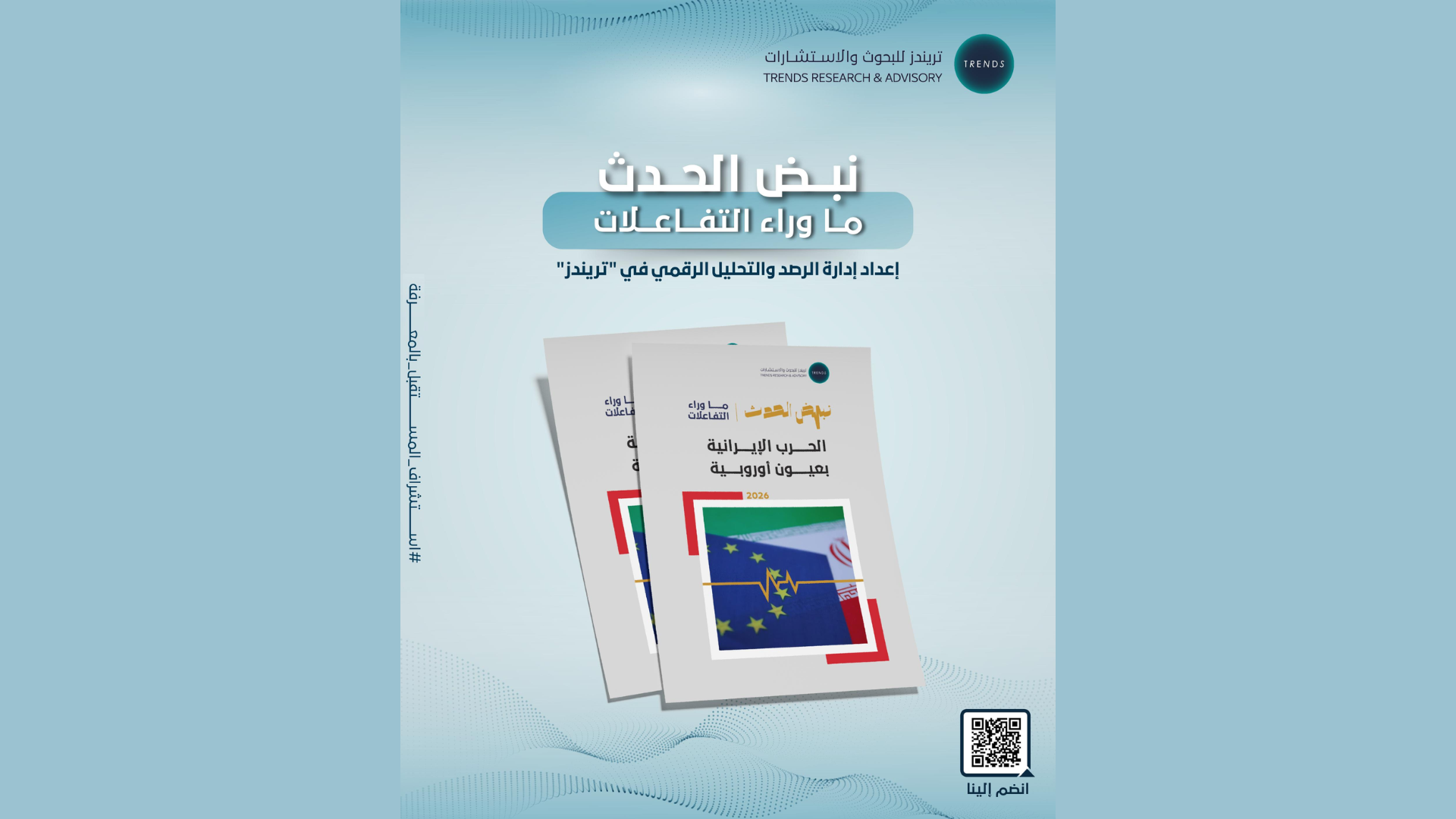
TRENDS Research & Advisory has released a new issue of its “Event Pulse” series, titled “The Iran War Through European Eyes,” shedding light on how European public opinion is responding to the evolving conflict. The report analyzes key narratives circulating on the X platform, alongside major assessments published by European think tanks and newspapers regarding the implications for the continent.
Prepared by the Digital Monitoring and Analysis Department at TRENDS Research & Advisory, the report provides an in-depth reading of the divided European sentiment toward the war. Quantitative analysis of interactions on the X platform shows that approximately 53.28 percent of opinions oppose the U.S.-Israeli war on Iran, while 46.72 percent support it, reflecting a clear divergence in public attitudes across Europe. The United Kingdom ranked first in engagement, followed by Spain, France, Germany, Italy, and Ireland.
On the qualitative level, the report identifies two main topics. The first opposes the war, describing it as illegitimate and warning of broader escalation and serious economic repercussions. The second supports it, viewing it as a necessary step to contain threats and prevent Iran from advancing its military capabilities, with some narratives calling for sustained pressure until the Iranian regime is weakened.
Economically, the report reviews estimates from European research institutions, warning that a prolonged conflict could lead to higher inflation and slower economic growth, driven by rising energy prices and supply chain disruptions. It notes that oil prices have increased by about 8 percent and gas prices in Europe by around 20 percent at the onset of escalation, amid heavy reliance on critical routes such as the Strait of Hormuz, through which roughly 20 million barrels of oil pass daily.
The report also highlights the direct impact of the conflict on energy-intensive European industries, such as steel and chemicals, which are facing mounting pressure from higher production and energy costs, as well as supply chain challenges and rising transportation and insurance costs.
It concludes that Europe is viewing the war primarily through an economic and strategic lens rather than a purely military one, with growing concern over ongoing disruptions in energy markets and their impact on the competitiveness of European economies. The division in public opinion reflects a delicate balance in European positions between supporting Western allies and attempting to contain the war’s repercussions.
The report emphasizes that the coming phase will likely see the continuation of this European balancing act, with increasing focus on safeguarding energy security and market stability. At the same time, monitoring public opinion trends and think tank analyses will remain a key tool for understanding the trajectory of Europe’s stance toward the conflict.
