


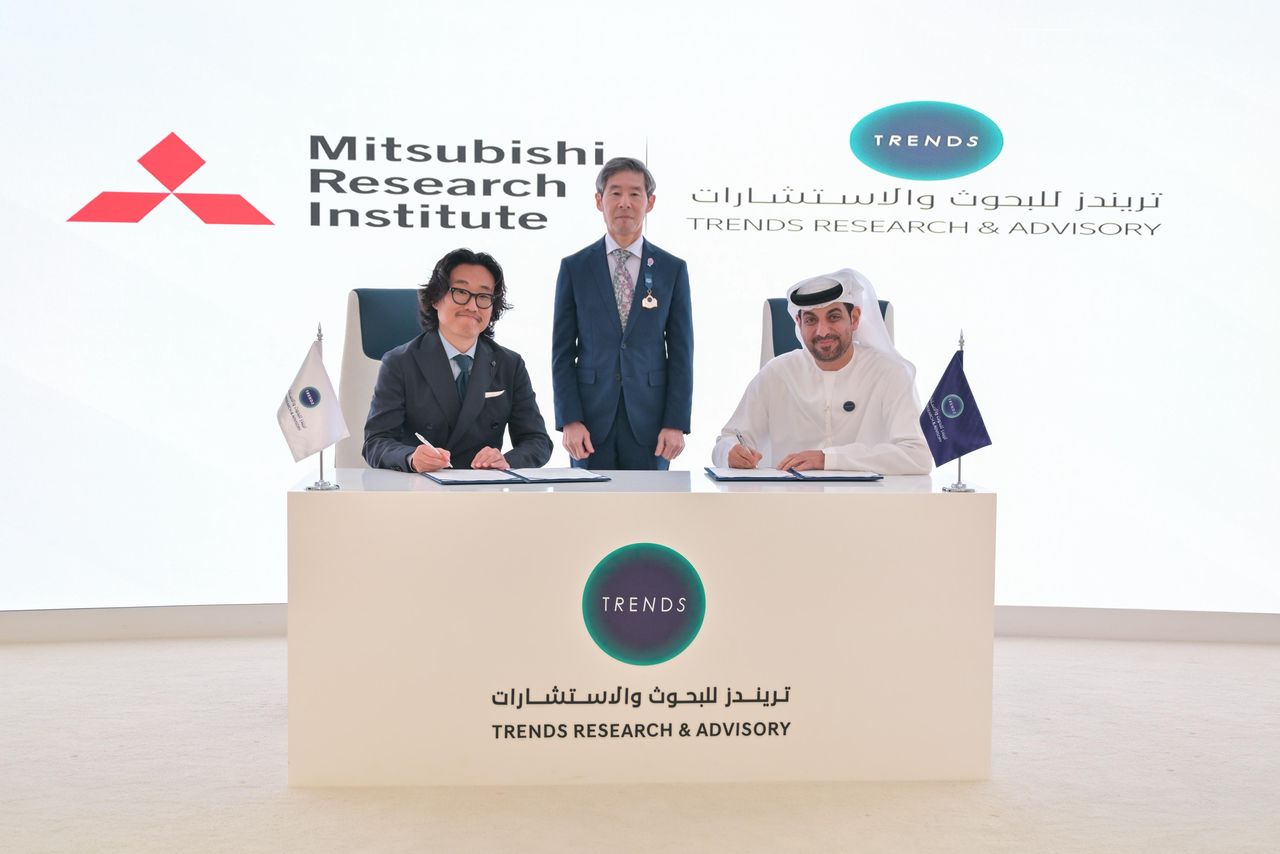
TRENDS Research & Advisory signed a memorandum of understanding (MoU) with the Mitsubishi Research Institute (MRI). The step represents a practical path toward building long-term research partnerships and developing cooperation in future studies, public policy, knowledge innovation, artificial intelligence, and its research applications.

The agreement was signed in the presence of H.E. Ken Okaniwa, Ambassador Extraordinary and Plenipotentiary of Japan to the UAE, by Dr. Mohammed Al-Ali, CEO of TRENDS Research & Advisory. It was signed on behalf of the Mitsubishi Research Institute by Mr. Akihiro, the institute’s General Manager in the Middle East office.
The MoU aims to expand areas of joint research cooperation, exchange experiences and knowledge, implement research studies and projects, particularly in artificial intelligence, data analysis, and future forecasting, and organize specialized conferences and workshops to support decision-makers and enhance mutual understanding of regional and international issues of common interest.

Dr. Al-Ali said that the signing of the MoU aligns within TRENDS’ vision, which aims to expand its international partnerships with leading global research institutions, stressing that cooperation with the Mitsubishi Research Institute is a qualitative addition to the research work pathway, especially in employing artificial intelligence in developing analytical studies and knowledge creation, and in a way that enhances the production of applied research with a practical impact.
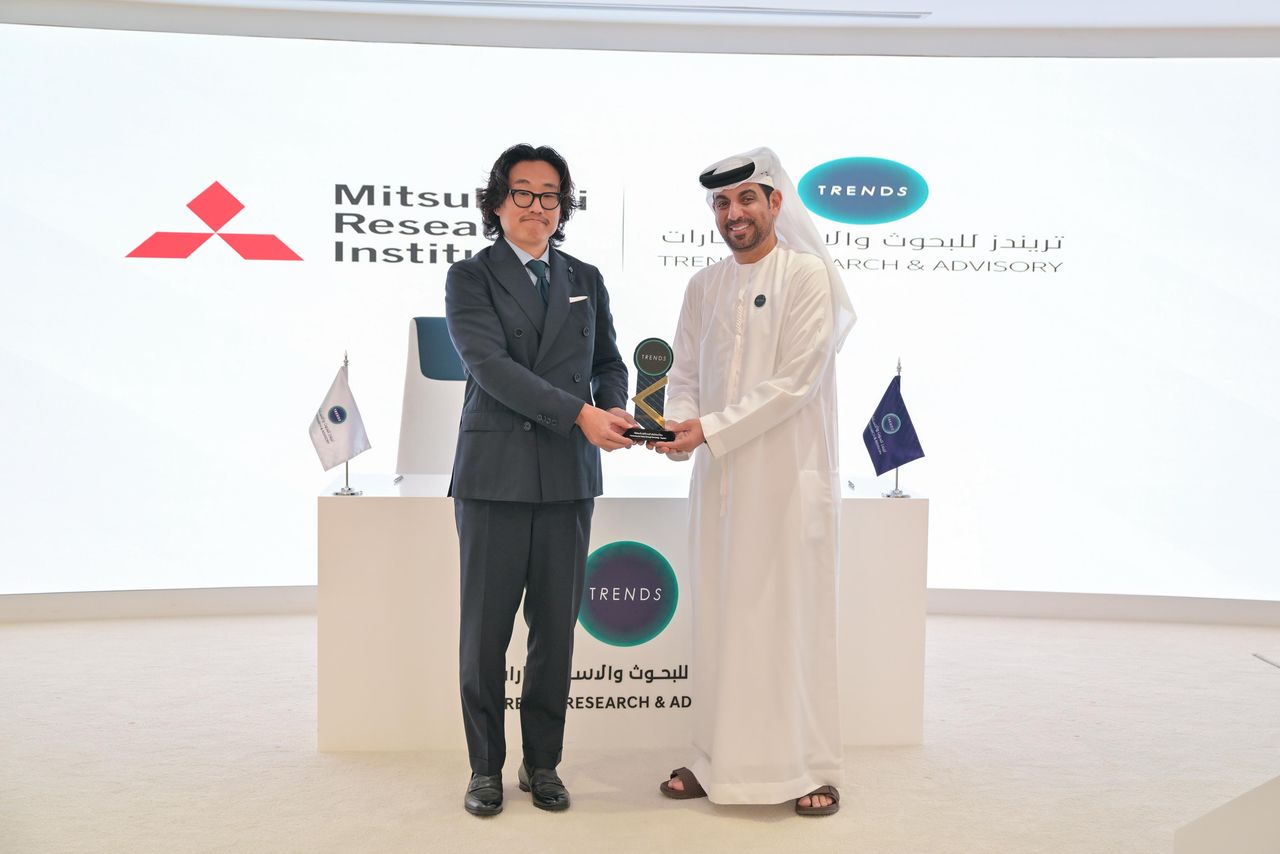
Mr. Akihiro Hirose emphasized that the Mitsubishi Research Institute attaches great importance to cooperation with leading think tanks in the Middle East region, noting that the partnership with TRENDS represents an effective platform for exchanging research experiences and developing cooperation in the fields of innovation, artificial intelligence, and future policy frameworks with regional and international dimensions.
This cooperation reflects the keenness of both sides to establish a sustainable research partnership and to build knowledge bridges through academic research and innovation, thereby contributing to development pathways and knowledge-based policymaking.
