


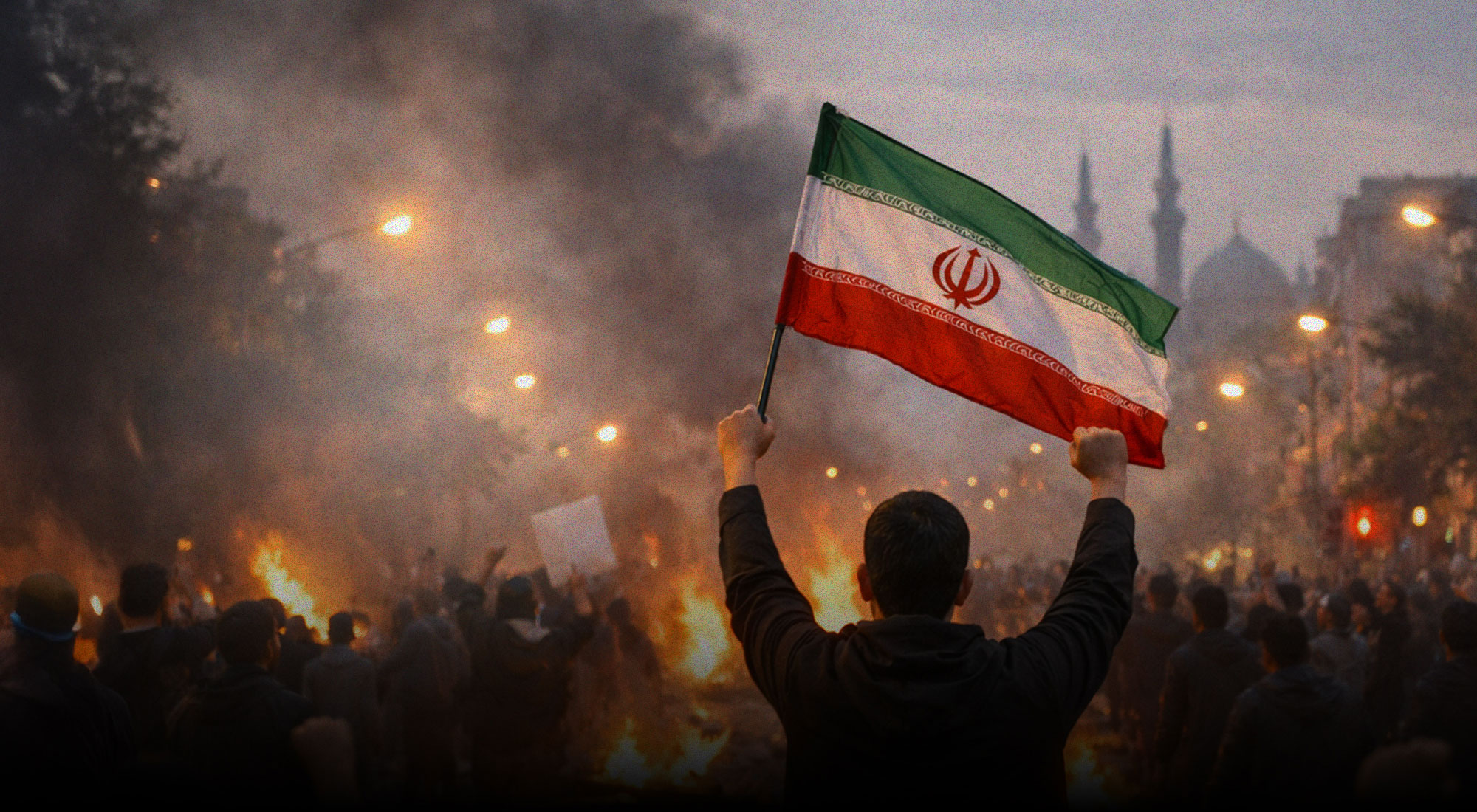
A TRENDS Research & Advisory study has examined the developments of widespread protests in Iran at the beginning of 2026, considering them one of the most sensitive phases since 1979, due to the intersection of internal crises with regional and international pressures. The study emphasized that the protests of December 2025 are not limited to economic demands but reflect a deeper crisis in the relationship between the state and society, as well as declining trust in institutions.
The study notes that the outbreak of protests through a strike by Tehran’s Grand Bazaar merchants represents a significant shift, given their traditional role as supporters of the system, reflecting the severity of economic pressures. The protests quickly expanded to more than 100 cities across 27 provinces, giving the movement a broad national character.
It also showed that the movement was marked by unprecedented social diversity, involving merchants, workers, students, and youth — particularly Generation Z — making it more difficult for authorities to contain it using traditional methods. The spread of protests in provinces with ethnic particularities further increased the security complexity.
The study observed a more hardline response by the authorities, including expanded security measures and restrictions on communications, alongside a rising human toll of deaths, injuries, and arrests, which deepened social resentment. Externally, it was assessed that escalation with Israel and the United States falls within the framework of pressure and deterrence, without reaching direct military intervention.
The study concluded with three possible scenarios: unlikely regime change; the continuation of the system in a state of structural weakness, the most likely; and direct external intervention, which is also unlikely. It concluded that Iran is undergoing a complex transitional phase in which stability remains possible but at an increasing cost, with potential repercussions extending beyond Iran into the region’s stability.
