


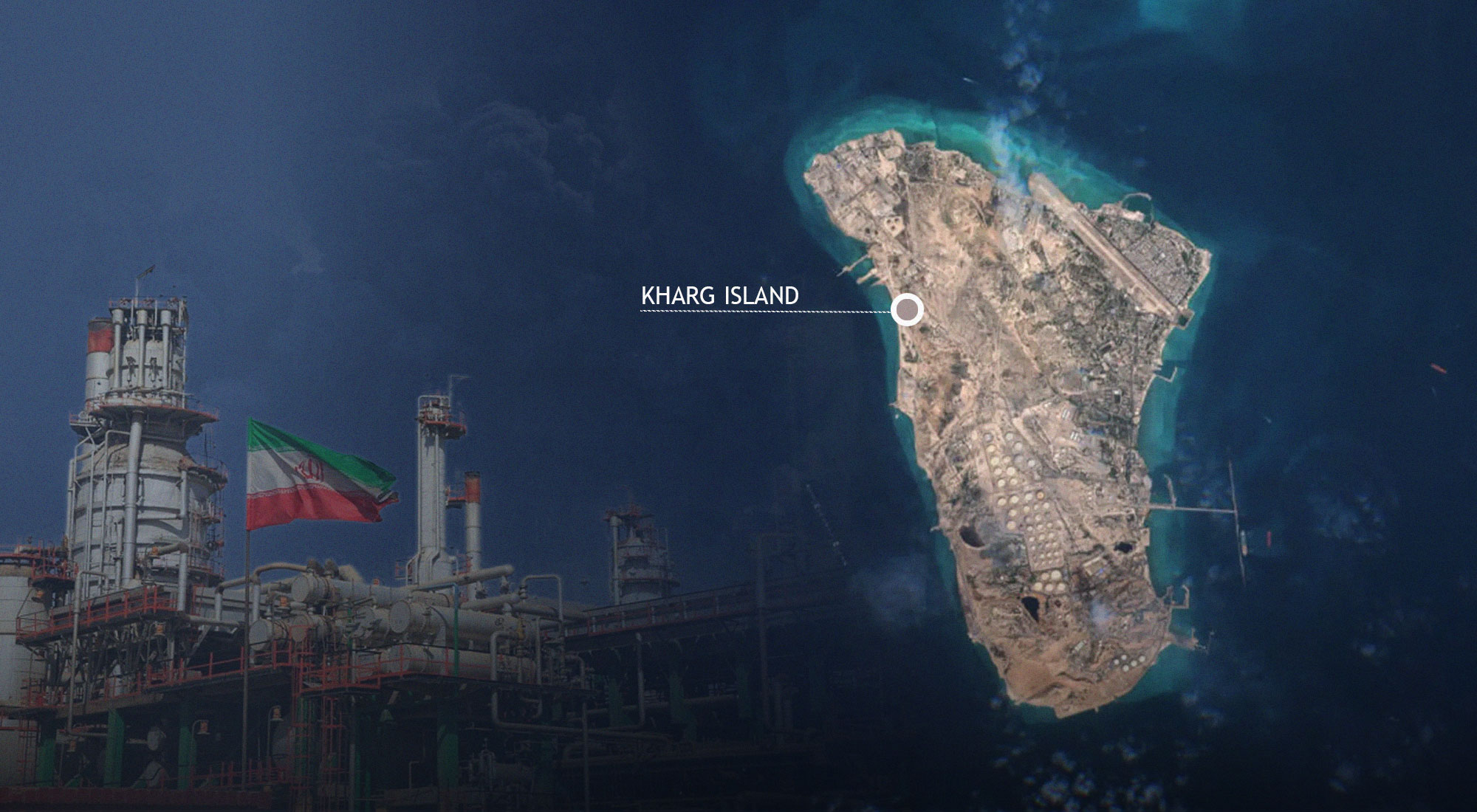

Kharg Island: From Offshore Platform to Geopolitical Asset
Strategic Studies Department
30 Mar 2026
Kharg Island is not just a small island in the northern Gulf. It is one of the most critical nodes in Iran’s energy infrastructure—and, by extension, a pillar of the country’s economic and political stability.
Iran is a major oil exporter, and a significant share of its crude exports flows through Kharg Island. The revenues generated there form the backbone of the Iranian economy and sustain the functioning of the state itself. For that reason, any attack on Kharg Island would not be seen merely as a regional military strike. It would be understood as a direct assault on Iran’s economic sovereignty and national stability.
Following numerous media reports about the possibility of taking control of the strategically important Iranian island, U.S. President Donald Trump recently stated that he is considering seizing Kharg Island, amid US troop deployments.
Against this backdrop, occasional discussions in Washington about seizing Kharg Island are particularly revealing. They suggest a possible shift from indirect military pressure and air operations toward the far riskier option of a ground intervention. Such a move would carry deeply intertwined military, political, and economic consequences.
From a strategic perspective, Kharg Island is an extremely sensitive target. While controlling it could offer the United States significant economic leverage over Iran, it would also expose American forces to direct retaliation and almost certainly expand the conflict into a much wider war.
Politically, this option highlights a contradiction for President Donald Trump. A ground operation on Kharg Island would effectively amount to launching a new war—directly clashing with his long-standing rhetoric against prolonged military entanglements. The domestic and international political costs would be substantial.
Economically, the risks are even broader. Any escalation involving Kharg Island would raise the possibility of disruptions in the Strait of Hormuz and sharp increases in global oil prices. Energy, in this scenario, becomes the epicenter of the conflict. Military decisions would no longer be confined to battlefield calculations; they would be inseparable from global economic stability and market reactions.
Analytically, Kharg Island appears to be a powerful pressure point—but not a realistic site for long-term occupation. The idea of seizing it reflects an attempt to strike at Iran’s most valuable economic asset and impose energy-based deterrence. Yet the military and political costs of a ground operation would likely outweigh any strategic gains, dramatically widening the scope of the conflict.
Iran, for its part, would almost certainly respond through indirect means—expanding confrontation around oil interests, shipping lanes, and navigation in the Strait of Hormuz rather than engaging in direct conventional warfare. This dynamic turns Kharg Island into a zone of mutual self-deterrence rather than a decisive battlefield.
Any escalation involving the island would quickly reverberate across the Gulf and global energy markets, increasing the risk of international economic instability. What begins as a limited military crisis would rapidly evolve into a geopolitical and energy shock with worldwide consequences.
In conclusion, Kharg Island stands at the center of the conflict as both an economic lifeline and a strategic pressure point. Threatening or occupying it directly affects Iran’s oil exports and, by extension, the regional balance of power. The United States may use the threat of control as a deterrent or a calculated escalation tool, while Iran will seek to raise the costs through indirect retaliation and regional expansion of the conflict. A full-scale war remains unlikely. Instead, the more probable outcome is a prolonged period of tension with far-reaching implications for Gulf security and global energy stability—where energy itself becomes the primary instrument of warfare, not just a military objective.
