I. Introduction
On 28 February 2026, the United States and Israel launched coordinated strikes against Iran under the operational designation Operation Epic Fury, targeting nuclear infrastructure, ballistic missile facilities, air defense networks, naval assets, and national command authority across twenty-four of Iran’s thirty-one provinces.[1] Within hours, Supreme Leader Ayatollah Ali Khamenei was killed at his compound in Tehran, along with his chief security adviser and the IRGC commander-in-chief.[2] Iran’s campaign, designated Operation True Promise 4, commenced within hours of the opening strikes, extending across nine countries and targeting U.S. military installations, Israeli territory, and Gulf states simultaneously.[3]
The conflict brought into focus a structural problem that existed before it and will persist beyond it. A non-belligerent state took affirmative steps to remain outside the conflict and pursued institutional protection in good faith. It nonetheless found its civilian infrastructure subjected to sustained missile and drone attacks. The Security Council could not act. The gap between what the law required and what institutions could deliver was not an exception. It was a feature of the order. That gap, and what it reveals about the condition of states caught in conflicts not of their making, is what this analysis examines.
II. The UAE’s Position in the Conflict
From its outset, the UAE’s position in this conflict was unambiguous. Its Ministry of Foreign Affairs explicitly condemned the initiating strikes and called for a diplomatic resolution.[4] Senior UAE officials stated publicly and privately that the country had not supported the choice of war and had actively sought to prevent escalation. Minister of State for International Cooperation H.E. Reem Al Hashimy articulated the UAE’s stance directly: “We do not seek to expand the circle of confrontation, and we do not believe that military solutions create permanent stability.”[5] Dr. Anwar Gargash, Diplomatic Adviser to the UAE President H.H. Sheikh Mohamed bin Zayed Al Nahyan, confirmed that the UAE had “publicly and privately pushed for a diplomatic resolution,” framing the country’s position not as passivity but as commitment to dialogue.[6]
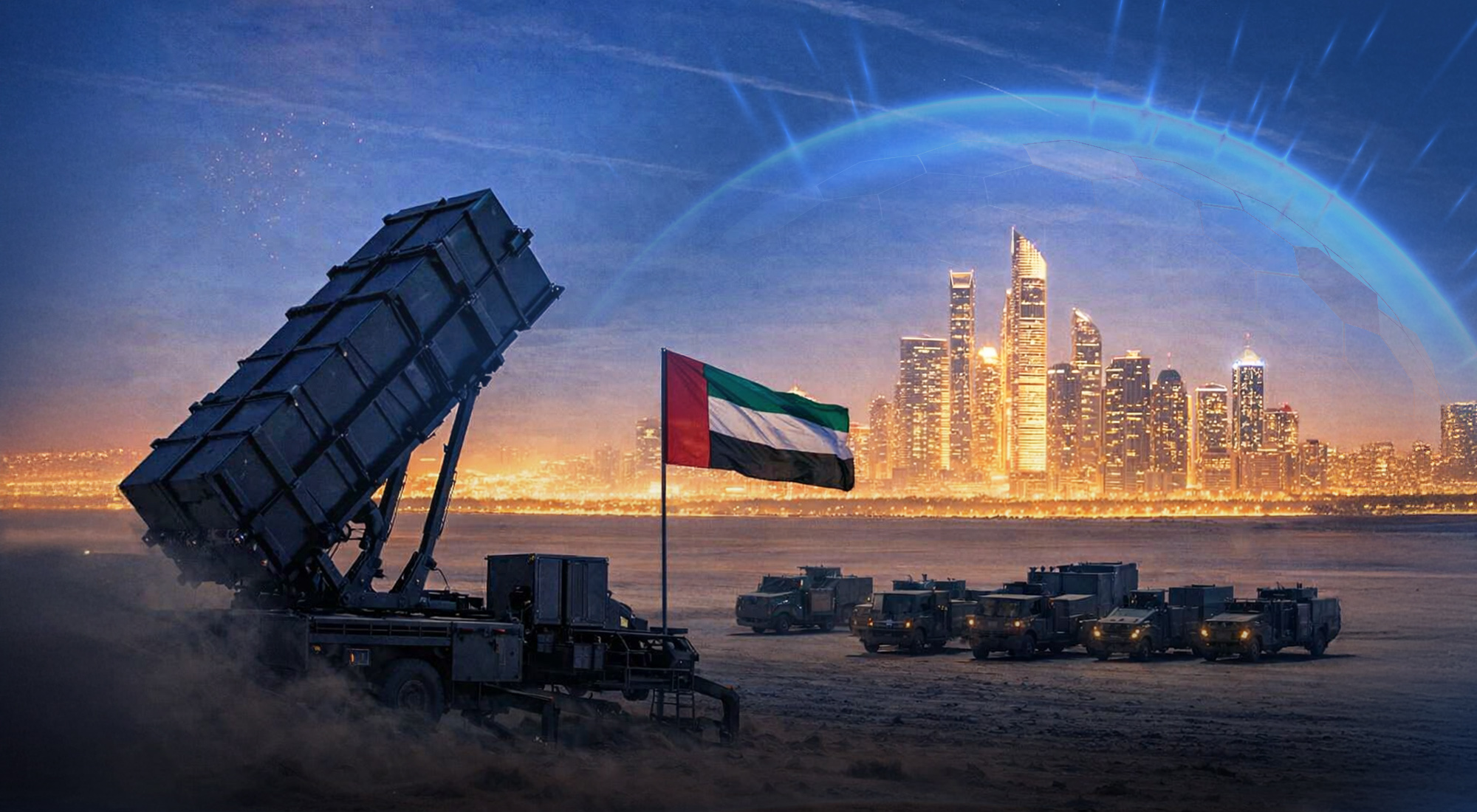
Notwithstanding this posture, the UAE emerged as the single largest non-Israeli recipient of Iranian fire. Between 28 February and 4 March 2026, Iranian strikes directed 189 ballistic missiles, 8 cruise missiles, and 941 drones at Emirati territory, with 137 ballistic missiles launched on the first day alone.[7] By 25 March, cumulative figures stood at 357 ballistic missiles, 15 cruise missiles, and 1,815 drones. These strikes killed 3 members of the UAE Armed Forces and 6 civilians and injured 166 others across more than 29 nationalities.[8] The UAE’s air and missile defense architecture achieved interception rates consistently exceeding 90 percent, a reflection of the investment the country had made in its own protection in the absence of any collective mechanism capable of providing it.[9]
What the international community produced in response to the conduct directed at the UAE was, initially, a declaratory condemnation. The UN Secretary-General called on all parties to respect international humanitarian law. The GCC characterized the attacks as a grave breach of international humanitarian law. The E3 condemned them as indiscriminate and disproportionate. The UAE Ministry of Foreign Affairs described them as a flagrant violation of national sovereignty and international law.[10] On 11 March, the Security Council adopted Resolution 2817, condemning Iran’s attacks on GCC states and Jordan in the strongest terms and demanding their immediate cessation, passing 13 to zero with Russia and China abstaining. On 25 March, the UN Human Rights Council adopted a further resolution by consensus, during an emergency session of its 61st session, condemning the attacks, demanding compensation, and calling on Iran to comply with its international obligations.[11] These resolutions and statements carried legal and political authority. They did not, however, activate any enforcement mechanism. Iran’s campaign continued after both resolutions were adopted. The condemnation was real; the protection it delivered was not.
III. Legal Framework: Clear, Settled, and Applicable
International humanitarian law already answers the legal question this conflict raises. The principle of distinction, which obliges parties to an armed conflict to direct operations only against military objectives and to spare civilian objects, is one of the cardinal principles of customary international law, characterized as such by the International Court of Justice in its 1996 Advisory Opinion and codified in Article 48 of Additional Protocol I to the Geneva Conventions.[12] Article 52(2) defines military objectives exclusively as objects which by their nature, location, purpose, or use make an effective contribution to military action and whose destruction offers a definite military advantage. Article 52(3) establishes a presumption in favor of civilian status in case doubt exists.[13] The ICRC’s 2005 Customary IHL Study confirmed these rules as binding on all states through Rules 7, 8, and 10, including states not party to AP I.[14]
The UAE is a party to Additional Protocol I, having acceded in 1983. Iran signed Additional Protocol I in 1977 but is not a party to it; however, many of the relevant rules discussed here also reflect customary international humanitarian law.[15] The conflict initiated on 28 February 2026 constitutes an international armed conflict within the meaning of common Article 2 of the Geneva Conventions, engaging the full body of AP I obligations. The civilian infrastructure of the UAE, comprising its international airports, its principal commercial port, its financial and digital infrastructure, and its residential districts, is protected by these obligations without qualification. The legal framework relevant to the conduct directed at the UAE is not contested, not ambiguous, and not in need of further development. It is settled.
Condemnation from the UN Secretary-General, the GCC, the E3, and the UAE government has already applied that framework to the conduct at issue. The law’s adequacy is the starting premise of the analysis that follows, not its conclusion. The question it addresses is a different and harder one: given that the legal framework applicable to the UAE’s situation was clear and applicable, why did it not function as effective protection, and what does that gap between legal norm and institutional reality reveal about the condition of the international order as it currently stands?
IV. The UAE’s Standing and Why the Gap Matters
Beyond the UAE’s bilateral relationship with the conflict parties, the protection gap exposed by the 2026 conflict carries wider significance. It derives from the UAE’s standing as a regional economic and diplomatic power whose institutions and infrastructure perform functions in trade, finance, aviation connectivity, and diplomatic moderation that the wider Gulf and global economy have come to depend upon, and whose stability is therefore a matter of consequence for the regional order as a whole.
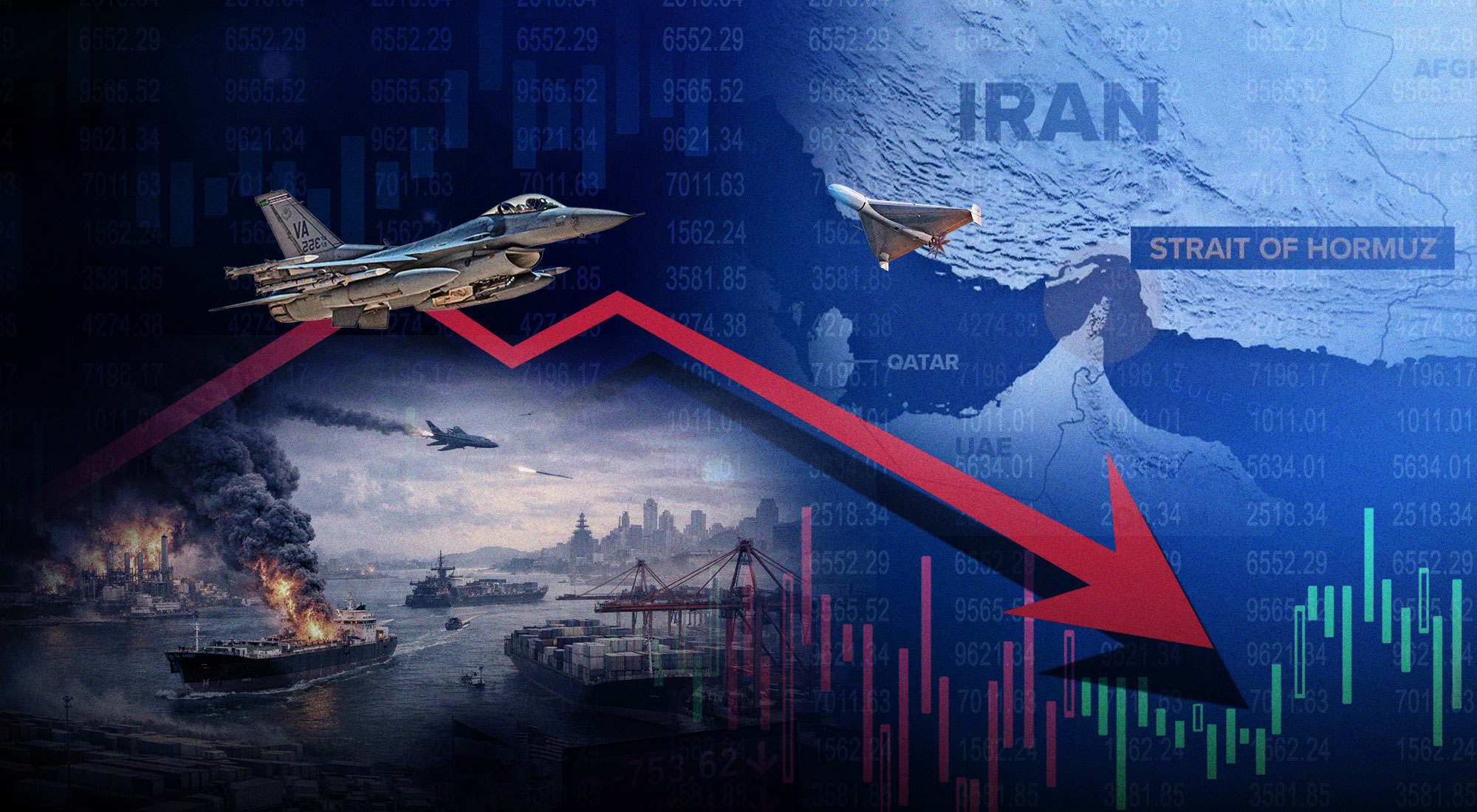
Structural, not incidental—that is the character of the UAE’s position in the regional order. The Dubai International Financial Centre anchors a regional financial system through which capital flows across markets from South Asia to East Africa. Dubai International Airport, the world’s busiest international aviation hub, connects 108 airlines across 291 destinations, functioning as the primary corridor through which South Asia, Africa, and Europe meet. Jebel Ali Port is the Middle East’s principal commercial container facility and the operational backbone of a re-export network that serves markets well beyond the Gulf.[16] These are not attributes of economic performance. They are structural functions, namely capital intermediation, aviation connectivity, and trade facilitation, that the regional order has organized itself around and that other states and markets depend upon in their daily operation. Iran moved to restrict navigation through the Strait of Hormuz, through which approximately 20 percent of global oil supply passes.[17] The economic consequences extended well beyond the region. Instability in the Gulf, as the closure made clear, carries costs that the wider international order bears directly.
Diplomacy reinforces this structural significance. It has served as a moderating actor across successive regional escalation cycles, aiding normalization frameworks, maintaining lines of communication across competing alignments, and sustaining multilateral engagement during periods when others have withdrawn. The Abraham Accords, the UAE’s sustained engagement with both Western partners and regional neighbors during the conflicts of the preceding decade, and its consistent advocacy for diplomatic resolution in the present conflict are expressions of a deliberate and consequential regional role, one that is actively constructed and not passively assumed.[18]
It is precisely this standing that makes the protection gap the 2026 conflict exposes analytically significant beyond the current case. When a non-belligerent state of this character, one that took affirmative steps to remain outside a conflict, that performs functions the regional order depends upon, and that engaged institutional recourse in good faith, finds itself without effective protection under a legal framework whose applicability is not in question, the implications spread beyond its bilateral relationship with any single actor. They bear on the credibility of the international legal order as a framework that regional economic and diplomatic powers can rely upon when conflicts not of their making reach their civilian territory.
V. When Clear Law Does Not Deliver Protection
Clear law and available institutional protection are not the same thing. That distance is not an anomaly. It is a structural condition of the international order. The 2026 conflict exposed it with unusual precision but did not create it. What requires examination is the architecture through which settled law is given operational effect, and the conditions under which that architecture becomes unavailable.
Primary responsibility for responding to threats of this character falls to the United Nations Security Council. The Council convened an emergency session on 28 February 2026 and produced no resolution. It issued no binding directive.[19] The reason is structural. When major powers are directly implicated in hostilities, the Council’s veto architecture renders decisive collective action effectively beyond reach. This is not a novel condition. In 2024, prior to the present conflict, the Council had already adopted the fewest resolutions since 1991. Draft resolutions failing due to veto had reached their highest point since 1986.[20] This constraint operates symmetrically. The same architecture that prevented binding Council action regarding the conduct directed at the UAE equally prevented binding action regarding the strikes that preceded Iran’s campaign. The Council’s paralysis is an institutional condition. It does not advantage any single party.
Within this paralysis, the UAE’s position is particular. The primary belligerents entered the conflict as parties. Their protection under IHL operates through the reciprocal obligations of armed conflict. The UAE occupied a different position entirely. It was a non-belligerent third state. Its civilian infrastructure became subject to conduct raising IHL questions. None of the institutional responses contemplated by the legal framework was available to it.[21] It had no combatant status to invoke. Nor a combined defense mechanism that activated automatically. The legal protection was clear. The institutional architecture capable of giving it effect was not in place.
Several instruments exist to address the Council’s accountability deficit. The ACT Group’s Code of Conduct has been endorsed by 121 member states. General Assembly Resolution 76/262 requires a formal debate when a veto is cast. The Uniting for Peace provision of Resolution 377(V) provides an emergency pathway through the General Assembly. The September 2024 Pact for the Future committed member states to further reform.[22] Each reflects genuine effort. None creates legally binding constraints. The University of Toronto’s International Human Rights Program has identified the common limitation: the international order’s insistence on state sovereignty structurally resists binding obligations on permanent members regarding their own Council conduct.[23] None of these instruments addresses the specific position of non-belligerent states subjected to conduct raising IHL questions in conflicts between others. That is precisely the gap the UAE’s situation exemplifies.
What the present conflict reveals is not a failure of the law. The law was adequate, applicable, and widely affirmed. The failure is one of translation. On one side stands a legal norm of unquestioned authority. On the other stands an institutional architecture that, under the conditions produced by a major-power conflict, could not convert that authority into protection. H.E. Al Hashimy’s appeal on 4 March for the Security Council to assume its responsibility gave institutional expression to a faith the order’s own structure could not honor.[24] The gap between what the law says and what the institution can deliver is the central condition the 2026 conflict has brought into focus.
VI. What the Gap Reveals
What the 2026 conflict has produced, in the UAE’s experience, is an unusually clear illustration of a structural problem in the international legal order that predates this conflict and will outlast it. The problem is not that the law is inadequate. The Geneva Conventions, Additional Protocol I, and the body of customary international humanitarian law provide a framework of protection for non-belligerent civilian infrastructure that is settled, authoritative, and, in the present case, unambiguously applicable.[25] The UN Secretary-General, the GCC, the E3, and the UAE government all affirmed this publicly.
Definite legal protection and effective institutional protection are different things, and the conditions produced by a major-power conflict systematically widen the gap between them. When the Security Council’s veto architecture renders collective action structurally unavailable, a non-belligerent state with definite legal rights finds itself dependent on self-protection and diplomatic appeal rather than on the institutional mechanisms the legal framework presupposes. The UAE’s investment in its own air and missile defense systems and its sustained diplomatic involvement throughout the conflict were expressions of a rational response to a structural condition. They are not substitutes for institutional protection, but rather indispensable complements to its absence.
The significance increases when the state in question is a regional economic and diplomatic power whose civilian infrastructure performs functions that the wider order depends upon. The protection gap in such cases is not simply a bilateral matter between a targeted state and the party whose conduct raised IHL questions. It is a question about the reliability of the international legal order as a framework that states of regional consequence can depend upon when conflicts not of their making reach their territory. A legal order whose protection functions only when institutional conditions are favorable is one whose credibility is conditioned on precisely the circumstances in which it is least likely to be tested.
Structural conditions of this kind are deep, well-documented, and resistant to rapid reform. No remedy is proposed here. What produced the protection gap predates this conflict and will not be resolved within it. What the case does provide is a precise and empirically grounded characterization of the gap itself, one that illustrates with unusual clarity what existing frameworks can and cannot deliver to non-belligerent states caught in others’ conflicts. Addressing that gap, through what instruments and with what prioritization of non-belligerent states of regional standing, is a question the events of early 2026 have placed on the agenda with a clarity that prior conflicts had raised but not resolved. It merits sustained analytical and policy attention well beyond the conclusion of the present hostilities.
VII. Conclusion
What the 2026 conflict has shown is not that international humanitarian law is inadequate. The legal framework that applies to non-belligerent civilian infrastructure is settled, well-established, and in the present case clearly applicable. The problem lies elsewhere. It lies in the gap between what the law requires and what institutions can deliver when a major-power conflict places enforcement beyond reach.
That gap is not new, and it is unlikely to be closed within this conflict. It existed long before the first strike on 28 February. What the UAE’s experience adds is a clear and grounded account of what that gap means in practice for a state that performed functions the wider order depends upon, took deliberate steps to remain outside a conflict not of its making, and found that legal clarity did not produce institutional protection.
How the international community responds to that gap is a question these events have placed on the agenda. How it addresses the particular exposure of non-belligerent states of regional standing is part of that same question. Neither is new. Both deserve sustained attention well beyond the end of the present hostilities.
References
[1] “Operation Epic Fury and the Remnants of Iran’s Nuclear Program” Center for Strategic and International Studies, February 28, 2026, https://www.csis.org/analysis/operation-epic-fury-and-remnants-irans-nuclear-program.
[2] Jonathan Landay, Phil Stewart, Gram Slattery, and Parisa Hafezi, “Israel, US Launched Strikes as Iranian Leader Met with Inner Circle, Sources Say,” Reuters, March 1, 2026, https://www.reuters.com/world/middle-east/israel-us-launched-strikes-iranian-leader-met-with-inner-circle-sources-say-2026-03-01/.
[3] “Escalation in the Middle East: Tracking Operation Epic Fury,” Flashpoint, March 5, 2026, https://flashpoint.io/blog/escalation-in-the-middle-east-operation-epic-fury/; “Operations Epic Fury and Roaring Lion: 3/1/26 Update 1,” JINSA, March 1, 2026, https://jinsa.org/jinsa_report/operations-epic-fury-and-roaring-lion-3-1-26-update/.
[4] United Arab Emirates Ministry of Foreign Affairs, “UAE Announces Closure of Embassy in Tehran and Withdrawal of Ambassador and Diplomatic Mission, Condemns Iranian Missile Attacks,” March 1, 2026, https://www.mofa.gov.ae/en/mediahub/news/2026/3/1/uae-iran/.
[5] Vanessa Ghanem, “‘Our Stance Remains Measured’: UAE Rejects Military Solution with Iran and Urges UN Action,” The National, March 3, 2026, https://www.thenationalnews.com/news/uae/2026/03/03/our-stance-remains-measured-uae-rejects-military-solution-with-iran-and-urges-un-action/.
[6] Fatima Al Mahmoud, “‘Your War Is Not with Your Neighbours,’ UAE’s Gargash Tells Iran,” The National, February 28, 2026, https://www.thenationalnews.com/news/uae/2026/02/28/irans-strikes-on-gulf-could-lead-to-long-term-hostility-says-uaes-gargash/.
[7] “UAE Government Reviews Latest Developments during Media Briefing,” Emirates News Agency-Wam, March 3, 2026, https://www.wam.ae/en/article/bz0nl53-uae-government-reviews-latest-developments-during; “UAE Air Defences Intercept 3 Ballistic Missiles, 129 Drones,” Emirates News Agency-Wam, March 4, 2026, https://www.wam.ae/en/article/bz190ft-uae-air-defences-intercept-ballistic-missiles-129.
[8] “UAE Air Defences Engage Nine UAVs,” Emirates News Agency-Wam, March 25, 2026, https://www.wam.ae/en/article/bzdr3tb-uae-air-defences-engage-nine-uavs.
[9] “UAE Government Reviews Latest Developments during Media Briefing.”
[10] United Nations Secretary-General, “Remarks to the Security Council on the Middle East,” February 28, 2026, https://www.un.org/sg/en/content/sg/statements/2026-02-28/secretary-generals-remarks-the-security-council-meeting-the-situation-the-middle-east-delivered; Gulf Cooperation Council, “50th Extraordinary Ministerial Council Statement,” March 1, 2026, https://www.gcc-sg.org/en/MediaCenter/News/Pages/news2026-3-1-2.aspx; Prime Minister’s Office, “Joint E3 Leaders’ Statement on Iran,” GOV.UK, March 1, 2026, https://www.gov.uk/government/news/joint-e3-leaders-statement-on-iran-1-march-2026; United Arab Emirates Ministry of Foreign Affairs, “UAE Announces Closure of Embassy in Tehran and Withdrawal of Ambassador and Diplomatic Mission, Condemns Iranian Missile Attacks.”
[11] United Nations Security Council, Resolution 2817 (2026), UN Doc S/RES/2817, March 11, 2026, https://press.un.org/en/2026/sc16315.doc.htm; United Nations Human Rights Council, Resolution on the Effects of the Recent Military Aggression Launched by Iran, 44th Meeting of the 61st Session (25 March 2026), see OHCHR, “Human Rights Council to Hold Urgent Debate on 25 March on Recent Military Aggression by Iran against Gulf States, Jordan,” https://www.ohchr.org/en/press-releases/2026/03/human-rights-council-hold-urgent-debate-25-march-recent-military-aggression; UAE Ministry of Foreign Affairs, “Human Rights Council Adopts Consensus UN Resolution Condemning Iranian Attacks,” March 25, 2026, https://www.mofa.gov.ae/en/MediaHub/News/2026/3/25/Human-Rights-Council-Iran.
[12] Legality of the Threat or Use of Nuclear Weapons (Advisory Opinion) [1996] ICJ Rep 226, para 79; Protocol Additional to the Geneva Conventions of 12 August 1949, and relating to the Protection of Victims of International Armed Conflicts (Additional Protocol I), 8 June 1977, 1125, UNTS 3, art. 48.
[13] Additional Protocol I, Ibid., arts. 52(2)–(3).
[14] International Committee of the Red Cross, Customary International Humanitarian Law, vol 1, ed Jean-Marie Henckaerts and Louise Doswald-Beck (Cambridge University Press, 2005) rules 7, 8 and 10.
[15] International Committee of the Red Cross, “State Parties to Additional Protocol I,” https://ihl-databases.icrc.org/en/ihl-treaties/api-1977/state-parties; ICRC, Customary International Humanitarian Law, rules 7, 8 and 10.
[16] Frédéric Schneider, “The Costs of the Iran Conflict for the Gulf,” Middle East Council on Global Affairs, March 8, 2026, https://mecouncil.org/blog_posts/the-costs-of-the-iran-conflict-for-the-gulf/; Dubai Airports, “DXB Sets Global Benchmark as Record Traffic Become the Norm,” February 11, 2026, https://media.dubaiairports.ae/dxb-sets-global-benchmark-as-record-traffic-become-the-norm/; DP World, “Jebel Ali Port | Port Operations,” https://www.dpworld.com/en/ports-terminals/uae/jebel-ali-port.
[17] UK Maritime Trade Operations, Advisory Note 002, March 1, 2026, https://www.ukmto.org/-/media/ukmto/products/update-002—001—jmic-advisory-note-28_feb_2026_final.pdf.
[18] United Arab Emirates Ministry of Foreign Affairs, “Foreign Policy,” https://www.mofa.gov.ae/en/Missions/Paris/The-UAE/Foreign-Policy; “UAE a Pivotal Mediator in Preventing War in the Region,” Gulf News, June 25, 2025, https://gulfnews.com/opinion/op-eds/uae-a-pivotal-mediator-in-preventing-war-in-the-region-1.500176355; Al Mahmoud, “‘Your War Is Not with Your Neighbours,’ UAE’s Gargash Tells Iran.”
[19] United Nations Security Council, “Iran Strikes Could Trigger Wider Conflict in Middle East, Secretary-General Warns, as Security Council Speakers Call for Urgent Restraint, De-Escalation,” February 28, 2026, https://press.un.org/en/2026/sc16307.doc.htm.
[20] Global Centre for the Responsibility to Protect, “2025 NGO Statement Ahead of the Open Debate on Protection of Civilians,” May 13, 2025, https://www.globalr2p.org/publications/2025-ngo-statement-ahead-of-the-open-debate-on-protection-of-civilians/; Security Council Report, “In Hindsight: The Security Council in 2024 and Looking Ahead to 2025,” December 30, 2024, https://www.securitycouncilreport.org/monthly-forecast/2025-01/in-hindsight-the-security-council-in-2024-and-looking-ahead-to-2025.php.
[21] Additional Protocol I, arts. 48 and 52(2)–(3); ICRC, Customary International Humanitarian Law, rules 7, 8 and 10; “UAE Government Reviews Latest Developments during Media Briefing.” No collective defense mechanism applicable to the UAE’s non-belligerent status was activated during the conflict period reviewed.
[22] Security Council Report, “In Hindsight: The Security Council in 2024 and Looking Ahead to 2025.”; UN General Assembly Resolution 76/262, UN Doc A/RES/76/262 (26 April 2022); UN General Assembly Resolution 377(V), UN Doc A/RES/377(V) (3 November 1950); UN General Assembly Resolution 79/1, UN Doc A/RES/79/1 (2024).
[23] “Examining the United Nations Security Council’s Veto Powers in the Context of Human Rights Violations,” International Human Rights Program, University of Toronto, https://ihrp.law.utoronto.ca/examining-united-nations-security-councils-veto-powers-context-human-rights-violations.
[24] Ghanem, “‘Our Stance Remains Measured’: UAE Rejects Military Solution with Iran and Urges UN Action.”
[25] Protocol Additional to the Geneva Conventions of 12 August 1949, and relating to the Protection of Victims of International Armed Conflicts (Additional Protocol I), 8 June 1977, 1125 UNTS 3, arts. 48 and 52(2)–(3); Geneva Conventions of 12 August 1949, common art. 2; Jean-Marie Henckaerts and Louise Doswald-Beck (eds), Customary International Humanitarian Law, vol 1 (ICRC/Cambridge University Press 2005) rules 7, 8 and 10; Legality of the Threat or Use of Nuclear Weapons (Advisory Opinion) [1996] ICJ Rep 226, para 79.