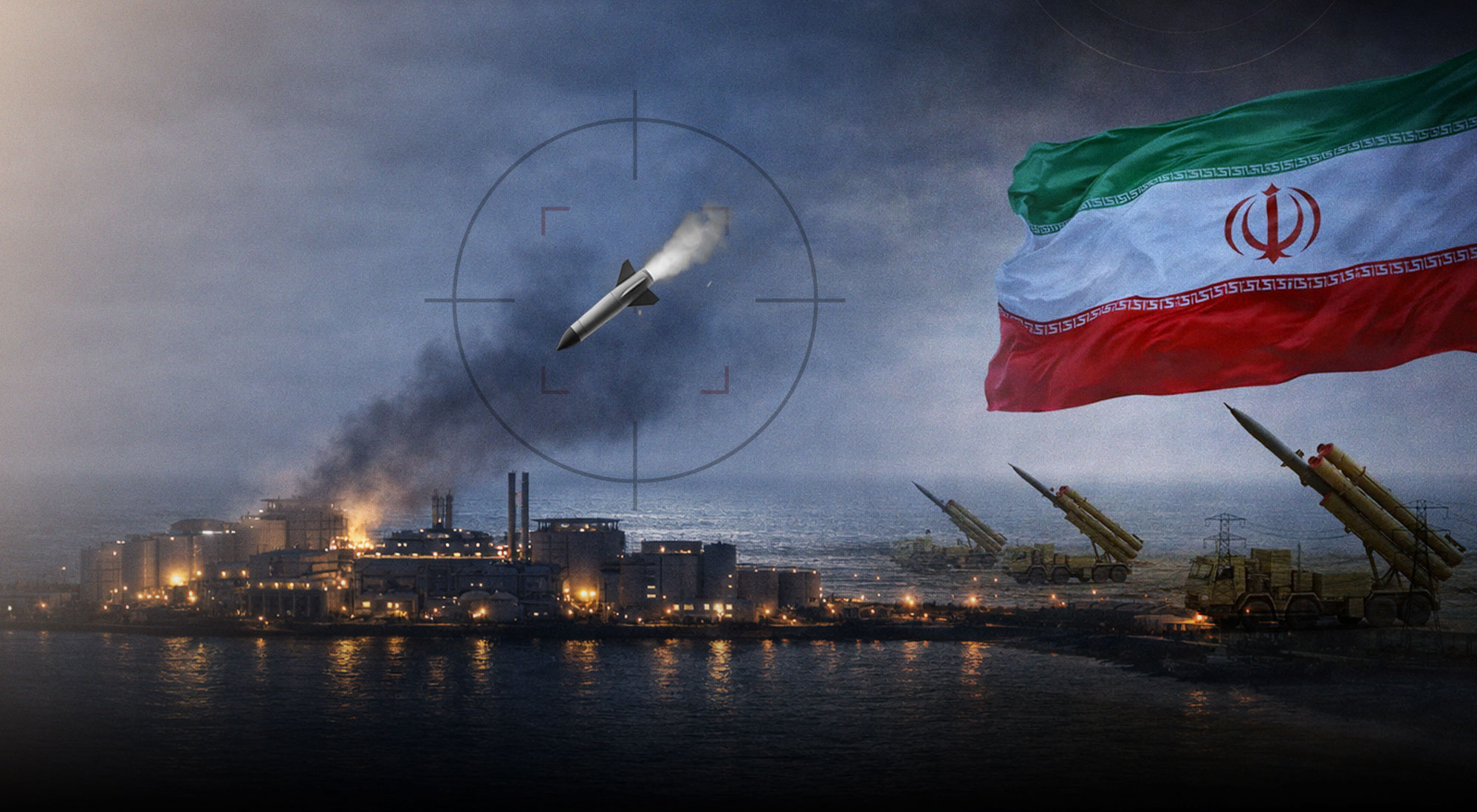
This study examines the Islamic Republic of Iran’s systematic targeting of civilian populations and civilian infrastructure as a deliberate instrument of state policy, rather than an incidental consequence of military operations. Drawing on evidence from the February–March 2026 Iranian strikes on the United Arab Emirates and the broader Gulf Cooperation Council (GCC) states, the Iran-Iraq War’s “War of the Cities” (1984–1988), the Tanker War, and decades of proxy warfare conducted through Hezbollah, the Houthis, and Iraqi militias, this study argues that civilian targeting is rooted in the Islamic Revolutionary Guard Corps’ (IRGC) military doctrine and its evolution into an offensive posture that weaponizes civilian suffering to achieve political coercion.
The study traces the institutional, ideological, and strategic origins of this doctrine, evaluates its manifestation across multiple conflicts and theatres of operation, and assesses its implications under international humanitarian law (IHL). It concludes with policy recommendations for Gulf states, the international community, and institutions of global governance seeking to establish accountability and deter future violations.
1. Introduction
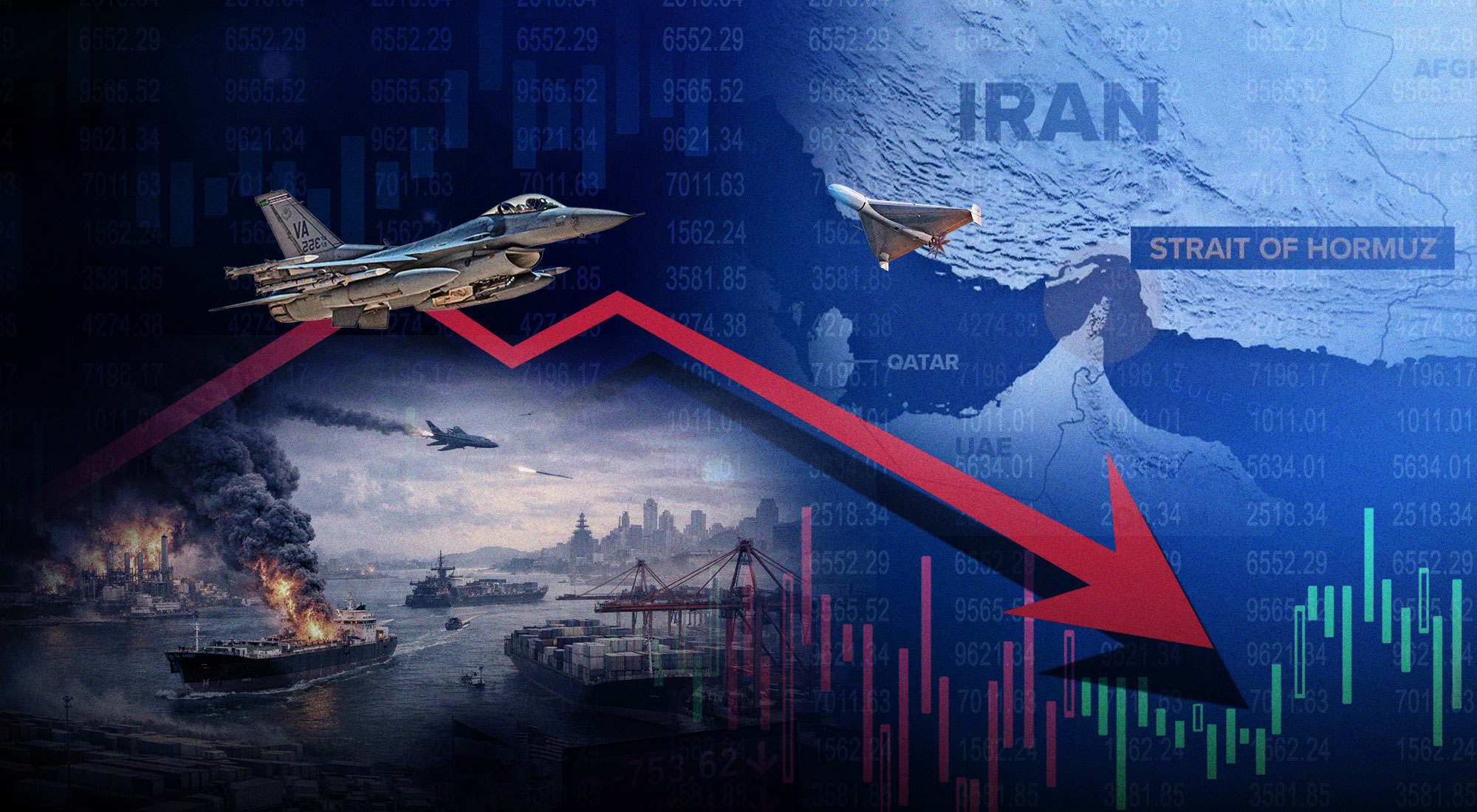
On 28 February 2026, the Islamic Republic of Iran launched an unprecedented barrage of ballistic missiles, cruise missiles, and unmanned aerial vehicles against the United Arab Emirates, Bahrain, Kuwait, Qatar, Saudi Arabia, Oman, and Jordan. The strikes came in retaliation for coordinated Israeli-American air operations against Iranian military and leadership targets. Within the first two weeks of the conflict, the UAE alone reported interceptions of over 268 ballistic missiles, 15 cruise missiles, and 1,514 drones, with six fatalities and 131 injuries among civilians of more than a dozen nationalities (UAE Ministry of Defence, 2026; CNBC, 2026).[1]
What distinguished Iran’s response was not merely its scale but its targeting calculus. Despite Tehran’s public claims that its strikes were limited to American military installations in the Gulf, the empirical record reveals a starkly different reality. Iranian munitions struck or targeted Dubai International Airport, Abu Dhabi’s Zayed International Airport, the Fairmont Hotel on Palm Jumeirah, the Burj Al Arab, Jebel Ali Port—the Middle East’s busiest—the Dubai International Financial Centre, residential buildings in Abu Dhabi and Sharjah, an Amazon Web Services data center, and ADNOC’s Ruwais refinery (Atlantic Council, 2026; Fortune, 2026; Janes Defence, 2026).[2] Iran subsequently issued evacuation warnings for three major UAE ports and announced its intention to target banks and financial institutions across the region (Fortune, 2026; Military.com, 2026).[3]
This study contends that Iran’s targeting of civilian lives and civilian infrastructure in 2026 is not an aberration but the logical culmination of a doctrinal trajectory embedded in the Islamic Republic’s strategic culture since its founding. The deliberate infliction of civilian suffering as a tool of political coercion—what this study terms the “doctrine of disruption”—has deep roots in the IRGC’s forward defense posture, Iran’s experience during the Iran-Iraq War, and the operational patterns of its regional proxies. By tracing this doctrinal throughline across four decades of conflict, the study aims to demonstrate that civilian targeting is not collateral damage in Iranian military operations; it is the strategy itself.
2. Theoretical Framework: Coercive Civilian Targeting as Strategic Doctrine
The deliberate targeting of civilians in armed conflict has been extensively theorized in the strategic studies literature. Pape (1996) distinguishes between punishment strategies, which aim to inflict sufficient pain on a civilian population to compel its government to capitulate, and denial strategies, which seek to defeat an adversary’s military forces directly.[4] Downes (2008) further demonstrates that states are most likely to target civilians when they face protracted wars of attrition or when they perceive conventional military victory as unlikely—conditions that have characterized Iran’s strategic posture in nearly every conflict it has engaged in since 1980.[5]
Snyder’s (1984) theory of offensive bias in military doctrine provides additional explanatory power. Snyder argues that offensive bias is exacerbated when civilian control over the military is weak and when offensive doctrine serves as a weapon in civil-military disputes over domestic politics.[6] As the Middle East Institute’s analysis of Iran’s military doctrine observes, the IRGC’s adoption of an offensive forward defense posture represents “a case par excellence for Snyder’s assertion” (Guzansky and Berti, 2020).[7] The IRGC’s institutional dominance over the regular military (Artesh), its monopoly over ballistic missile forces and the Quds Force, and its political embeddedness within the revolutionary state create structural conditions in which offensive, civilian-targeting doctrines flourish with minimal restraint.
This study builds on these theoretical foundations to argue that Iran’s civilian targeting constitutes a distinct strategic doctrine—one that transcends individual conflicts and operates as a consistent feature of Iranian statecraft. The “doctrine of disruption,” as conceptualized here, encompasses three interconnected elements: (1) the direct targeting of civilian populations and civilian infrastructure to impose economic and psychological costs on adversaries; (2) the delegation of civilian targeting to proxy forces to maintain plausible deniability; and (3) the weaponization of civilian economic systems—including energy infrastructure, financial centers, and transportation networks—as instruments of strategic coercion.
3. Historical Foundations: The War of the Cities and the Tanker War (1984–1988)
The doctrinal origins of Iran’s civilian targeting strategy can be traced to the Iran-Iraq War (1980–1988), the formative conflict that shaped the IRGC’s institutional identity and strategic worldview. The “War of the Cities,” which began in earnest in 1984, saw both Iraq and Iran launch systematic missile and air attacks against each other’s urban centers. Iraq fired 533 ballistic missiles against 27 Iranian cities, killing 2,312 civilians and injuring 11,625. Tehran alone was struck by 118 Al-Hussein missiles over 52 days, killing 422 civilians and injuring 1,579—an average of approximately five deaths per missile strike (Khodadadizadeh et al., 2012; Eisenstadt, 2016).[8]
Iran’s retaliatory strikes against Baghdad and other Iraqi cities, while inflicting fewer casualties due to its smaller missile arsenal, were explicitly aimed at civilian populations. Iran acquired Scud missiles from Libya and launched them against Baghdad in deliberate retaliation for Iraqi strikes on Iranian cities. As the Oxford case study on the Iran-Iraq War observes, “each side clearly hoped to spread terror in the civilian population of the enemy and used highly inaccurate ballistic missiles and other weapons that were sure to inflict considerable collateral damage” (Mahnken, 2019).[9] This was qualitatively different from later precision-guided campaigns; it was indiscriminate by design.
The Tanker War (1984–1988) further institutionalized civilian-adjacent targeting as state practice. Iran employed aircraft, speedboats, sea mines, and land-based anti-ship cruise missiles to attack civilian tanker shipping in the Arabian Gulf. Lloyd’s of London estimated that the tanker war damaged 546 commercial vessels and killed approximately 430 civilian sailors (USIP Iran Primer, 2016).[10] The IRGC Navy’s asymmetric doctrine, developed in the aftermath of Operation Praying Mantis (1988), explicitly incorporated attacks on civilian maritime commerce as a lever of strategic coercion—a doctrine that would find direct echoes in the Houthi attacks on Red Sea shipping four decades later and in Iran’s 2026 disruption of the Strait of Hormuz.
Crucially, the Iran-Iraq War’s legacy was not one of restraint learned through suffering. Rather, the IRGC drew the lesson that its inability to deter Iraqi strikes on Iranian cities stemmed from an insufficient missile arsenal—not from the immorality of targeting civilians. The Islamic Republic’s post-war ballistic missile program was designed explicitly to ensure that Iran would never again lack the capacity to hold adversary civilian populations at risk. As Iran’s then-Defense Minister Ali Shamkhani stated at the test firing of the Shahab-3 in 1998: “We have prepared ourselves to absorb the first strike so that it inflicts the least damage on us” (Eisenstadt, 2016)[11]—a formulation that implied the capacity for devastating retaliation against civilian centers.
4. The IRGC’s Forward Defense Doctrine: From Deterrence to Offense
Iran’s “forward defense” (defa-e pishro) doctrine represents the strategic framework through which civilian targeting has been institutionalized and projected beyond Iran’s borders. Since the 2011 Arab Spring, the IRGC has progressively shifted from a defensive/deterrent posture to an offensive one characterized by hybrid warfare and the pre-positioning of strike capabilities across the Middle East (Guzansky and Berti, 2020; GCSP, 2021).[12]
The doctrine’s core logic, articulated by Supreme Leader Ali Khamenei in 2019, is explicit: “We must not limit ourselves within our own borders. It is our duty to recognize and confront threats that lie beyond our walls” (IRAM Centre, 2024).[13] IRGC Commander-in-Chief Major General Hossein Salami has elaborated the operational implications: “Our doctrines are defensive at the level of grand strategy, but our strategies and tactics are offensive” (Middle East Institute, 2020).[14] Brigadier General Mohammed Pakpour, commanding the IRGC Ground Force, confirmed in 2019 that a “deep-attack doctrine” was already being practiced (Guzansky and Berti, 2020).[15]
Within this framework, the targeting of civilian infrastructure serves multiple doctrinal functions. First, it enables strategic coercion by imposing economic costs that exceed an adversary’s threshold for tolerating conflict. The IRGC’s doctrinal texts emphasize the importance of identifying “the weak points and vulnerabilities of the adversaries” and “taking measures to hit their interests, as well as their military and economic facilities” (GCSP, 2021).[16] Second, it serves as asymmetric compensation for Iran’s conventional military inferiority—striking at the economic foundations of wealthier adversaries when direct military confrontation is unwinnable. Third, it generates global media attention and international pressure for conflict termination, leveraging the visibility of attacks on globally recognizable targets such as Dubai’s skyline and the Strait of Hormuz.
The institutional structure of the IRGC facilitates this targeting doctrine. Unlike conventional militaries with professional officer corps trained in the laws of armed conflict, the IRGC’s organizational culture is rooted in revolutionary ideology, asymmetric warfare, and the cultivation of proxy networks. Its monopoly over Iran’s ballistic missile forces, the Quds Force, and the Basij militia creates a self-reinforcing system in which offensive, civilian-targeting capabilities are developed, deployed, and proliferated with minimal institutional checks (Rasanah IIIS, 2022; New America Foundation, 2021).[17]
5. Proxy Warfare and the Delegation of Civilian Targeting
A defining feature of Iran’s doctrine of disruption is the delegation of civilian targeting to non-state proxies. This serves the dual function of extending Iran’s strategic reach while maintaining plausible deniability. The IRGC’s Quds Force has cultivated, armed, trained, and in many cases operationally directed a network of militant organizations whose modus operandi consistently includes the targeting of civilian populations (AJC, 2025; RAND Corporation, 2019).[18]
5.1 Hezbollah in Lebanon
Hezbollah represents the paradigmatic expression of Iran’s forward defense through proxy civilian targeting. The IRGC’s Quds Force did not merely arm Hezbollah; it ideologically indoctrinated the organization, selected and groomed its leaders—including Hassan Nasrallah and military planner Imad Mughniyeh—and embedded it as a platform for exerting military pressure on Israel (JSTOR/New America, 2021).[19] Hezbollah’s arsenal of over 150,000 rockets and missiles, the vast majority designed for area bombardment of Israeli population centers rather than precision strikes against military targets, represents the materialization of Iran’s civilian targeting doctrine in proxy form.
During the 2006 Lebanon War, Hezbollah fired approximately 4,000 rockets into northern Israel, killing 44 Israeli civilians and displacing hundreds of thousands. The rockets were unguided Katyushas aimed at population centers—a pattern that replicated Iran’s own targeting logic from the War of the Cities. In 2026, following the Israeli-American strikes on Iran, Hezbollah launched renewed rocket attacks against Israel, demonstrating the enduring integration of proxy civilian targeting within Iran’s strategic response architecture (Foreign Policy, 2026; Al Jazeera, 2026).[20]
5.2 The Houthis in Yemen
The Houthi movement (Ansar Allah) represents a newer but increasingly consequential node in Iran’s proxy network for civilian targeting. Since 2015, the Houthis have conducted sustained drone and missile attacks against Saudi civilian infrastructure, including Riyadh’s King Khalid International Airport, Saudi Aramco’s Abqaiq and Khurais oil processing facilities, and civilian areas in Jazan and Najran provinces. The January 2022 Houthi attacks on Abu Dhabi—which targeted the civilian airport and an ADNOC fuel depot, killing three workers—represented a direct extension of this targeting logic to the UAE (Atlantic Council, 2026).[21]
The Houthi attacks on Red Sea shipping beginning in late 2023 further demonstrated the doctrine’s maritime dimension. Using Iranian-supplied anti-ship missiles and drones, the Houthis attacked civilian merchant vessels in international waters, disrupting global supply chains and imposing billions of dollars in economic costs on countries with no direct involvement in the conflicts cited as justification. As the Brookings Institution’s analysis notes, the Houthis’ attacks were “largely driven by their own domestic imperatives and regional ambitions,” [but] the weapons, training, and doctrinal templates were Iranian in origin (Brookings Institution, 2024).[22] The Stockton Center for International Law’s analysis further establishes the legal framework for attributing responsibility to Iran for the Houthis’ attacks on civilian merchant ships under the International Law Commission’s Articles on State Responsibility (US Naval War College, 2025).[23]
5.3 Iraqi Militias and the Popular Mobilization Forces
Iran-backed militias in Iraq, operating under the umbrella of the Popular Mobilization Forces (PMF or Hashd al-Shaabi), have engaged in sustained attacks on civilian and dual-use targets. Following the 2026 strikes on Iran, Iraqi militia groups expressed readiness to “defend Iran” and described the undertaking as “holy” (Foreign Policy, 2026).[24] The PMF’s integration into the Iraqi state while maintaining operational ties to the IRGC creates a particularly insidious form of delegated civilian targeting: one that enjoys the institutional cover of state legitimacy while serving Iranian strategic interests.
6. The 2026 Iranian Strikes on the UAE and GCC States: A Case Study
The February–March 2026 Iranian strikes on the Gulf states represent the most comprehensive direct application of the doctrine of disruption by the Iranian state itself, as distinct from its proxies. The scale, targeting patterns, and declared intent of these strikes provide a definitive empirical case for the argument that civilian targeting constitutes Iranian state policy.
6.1 Scale and Scope of Attacks on Civilian Targets
Iran launched over 1,000 weapons at the UAE in the first week of the conflict alone, including 186 ballistic missiles, 812 unmanned aerial vehicles, and 8 cruise missiles (Janes Defence, 2026).[25] Despite Iran’s assertion that its attacks targeted only American military installations, the empirical record reveals systematic targeting of civilian infrastructure. Airports in both Dubai and Abu Dhabi were struck. Residential buildings, hotels—including the Fairmont on Palm Jumeirah, the Burj Al Arab, Jebel Ali Port, and the Dubai International Financial Centre were all targeted (CNBC, 2026; Atlantic Council, 2026).[26]
The targeting pattern extended beyond the UAE. In Bahrain, residential buildings in Manama were hit. Kuwait International Airport was attacked. Qatar sustained injuries to 16 people. Saudi Arabia reported strikes on Riyadh and its Eastern Province. Oman—a country that had served as a mediator between Iran and the United States and maintained a policy of “friend to all, enemy to none”—was also attacked, shattering the presumption that diplomatic engagement could provide immunity from Iranian aggression (Al Jazeera, 2026; Atlantic Council, 2026).[27]
6.2 Economic Warfare as Civilian Targeting
Iran’s 2026 campaign introduced a new dimension to its doctrine of disruption: the explicit and declared targeting of civilian economic infrastructure as a category of warfare. Iran’s joint military command announced that it would begin targeting banks and financial institutions across the Middle East. Two consecutive strikes targeted Dubai’s International Financial Centre. Iran issued evacuation warnings for three major UAE ports—including Jebel Ali, the region’s busiest—openly threatening non-U.S. assets for the first time (Military.com, 2026; Fortune, 2026).[28] An Amazon Web Services data center was struck, disrupting cloud services. ADNOC’s Ruwais refinery, the largest in the Middle East, was shut as a precaution after a drone strike caused a fire (CNBC, 2026).[29]
The Strait of Hormuz was effectively blockaded, with 150 freight ships—including many oil tankers—stalled. The economic impact was immediate and global: Brent crude prices surged over 20 percent within days, and the International Energy Agency requested member states release 400 million barrels of emergency oil stocks—the largest collective release in history (Al Jazeera, 2026; Military.com, 2026).[30] A UAE government minister described the impact as extending to “global food security and food supplies” and affecting “bills in grocery stores, bills in petrol stations, and the price of food” worldwide (Euronews, 2026).[31]
This economic targeting was not incidental. It was the strategy. As analysts at the Middle East Institute observed, Dubai’s global reputation as a hub for tourism, finance, technology, and logistics made it the ideal target for Iran’s coercive logic: “Striking that model sends a message. Iran wants to damage Dubai’s reputation as a safe global hub, which, for Tehran, carries far greater strategic weight” than military targets (Breaking Defense, 2026).[32] Monocle’s analysis concurred: “The objective appears to go beyond battlefield retaliation. It is also about creating disruption in one of the world’s most visible economic hubs” (Monocle, 2026).[33]
6.3 The Cosmopolitan Casualties: Who Bore the Human Cost
A particularly revealing dimension of Iran’s 2026 strikes concerns the identity of the victims. As of 10 March 2026, the UAE reported six fatalities and 141 injuries. The civilians killed were foreign nationals from Pakistan, Nepal, and Bangladesh. Those injured included nationals of Egypt, Ethiopia, the Philippines, India, Sri Lanka, Azerbaijan, Yemen, Uganda, Eritrea, Lebanon, Afghanistan, and Iran itself (UAE Ministry of Defence, 2026).[34]
This casualty profile exposes a fundamental contradiction in the Islamic Republic’s ideological self-presentation. A regime that claims to champion the Muslim ummah and the oppressed peoples of the developing world was, in practice, killing and wounding Muslim workers from some of the poorest countries on earth. The expatriate laborers, service workers, and professionals who constitute the majority of the UAE’s population—and who bore the brunt of Iranian munitions—were not parties to any geopolitical contest. Their deaths and injuries were the foreseeable consequence of a targeting doctrine that treats civilian suffering as an acceptable instrument of strategic coercion.
7. Legal Analysis: Iran’s Violations of International Humanitarian Law
Iran’s targeting of civilian lives and infrastructure in 2026 constitutes violations of multiple provisions of international humanitarian law. The principle of distinction, enshrined in Article 48 of Additional Protocol I to the Geneva Conventions, requires parties to an armed conflict to distinguish at all times between the civilian population and combatants and between civilian objects and military objectives. The principle of proportionality, codified in Article 51(5)(b), prohibits attacks that may be expected to cause incidental loss of civilian life, which would be excessive in relation to the concrete and direct military advantage anticipated.
The pattern of Iranian targeting in 2026—airports, hotels, residential buildings, financial centers, ports, data centers, and oil refineries—demonstrates systematic disregard for both principles. Even where Iran could argue that certain dual-use facilities (such as airports with adjacent military operations) constituted legitimate military objectives, the breadth and indiscriminate character of the targeting campaign negates any claim of proportionality.
UN Security Council Resolution 2817, adopted with the co-sponsorship of 135 countries, condemned Iran’s attacks “in the strongest terms” as “a breach of international law as well as a serious threat to international peace and security” and affirmed the right of self-defense under Article 51 of the United Nations Charter (UAE Ministry of Foreign Affairs, 2026).[35] The resolution demanded that Iran “immediately and unconditionally cease any provocations or threats to neighbouring states, including through the use of proxies.”
The legal implications extend to state responsibility for proxy actions. The International Law Commission’s Articles on State Responsibility (ARSIWA), particularly Article 8 regarding conduct directed or controlled by a state, provide a framework for attributing to Iran the civilian-targeting conduct of its proxies. The Stockton Center for International Law at the U.S. Naval War College has assessed that Iran’s direction and control over proxy operations—particularly those of Hezbollah and, to a significant extent, the Houthis—may meet the threshold for state responsibility under international law (US Naval War College, 2025).[36]
8. Policy Implications and Recommendations
The doctrinal character of Iran’s civilian targeting necessitates a correspondingly systematic policy response. The following recommendations address multiple levels of governance and strategic action.
First, Gulf states should invest in a comprehensive evidentiary documentation program for Iranian attacks on civilian targets. Following the model established by the Commission for International Justice and Accountability (CIJA) in Syria, a dedicated Gulf mechanism should catalogue every strike on civilian infrastructure, preserve forensic evidence of munition types and origins, and document civilian casualties with the rigor required for future international legal proceedings. The UAE’s existing practice of publishing detailed interception statistics provides a foundation upon which to build.
Second, the international community should pursue accountability through existing and new legal mechanisms. This includes referral of Iran’s conduct to the International Criminal Court, the establishment of a UN-mandated investigation mechanism analogous to the International, Impartial and Independent Mechanism (IIIM) created for Syria, and the invocation of state responsibility proceedings before the International Court of Justice. Iran’s liability for all injury and damage caused by its unlawful armed attacks, as affirmed by Resolution 2817, should be pursued through formal reparations claims.
Third, sanctions enforcement must be recalibrated to target the financial networks that underwrite Iran’s civilian-targeting capabilities. The UAE’s consideration of freezing Iranian assets held in Dubai—estimated at billions of dollars—represents a necessary step in dismantling the financial architecture that has allowed the Iranian regime to fund its missile and drone programs while exploiting the Gulf’s open economic systems (CNBC, 2026; Wall Street Journal, 2026).[37]
Fourth, integrated air and missile defence cooperation among GCC states must be accelerated. The 2026 strikes demonstrated that while Gulf air defences were largely effective against ballistic missiles, drones proved significantly harder to intercept—a vulnerability that Iran will continue to exploit (Breaking Defense, 2026; Janes Defence, 2026).[38] Regional cooperation on early warning systems, drone detection capabilities, and layered defense architectures should be treated as an existential priority.
Fifth, the normative framework governing armed conflict must be reinforced to address the specific challenges posed by state-sponsored civilian targeting through proxy networks. International humanitarian law was not designed for a strategic environment in which a state can maintain decades-long proxy warfare campaigns against civilian populations across multiple countries while claiming non-involvement. New frameworks for attribution, accountability, and deterrence are urgently needed.
9. Conclusion
The Islamic Republic of Iran’s targeting of civilian lives and civilian infrastructure is not an incidental feature of its military operations. It is a deliberate, doctrinally grounded, and institutionally embedded strategy that has been refined over four decades of conflict—from the War of the Cities and the Tanker War, through the proxy campaigns of Hezbollah and the Houthis, to the unprecedented direct strikes on the Gulf states in 2026.
The doctrine of disruption, as this study has termed it, serves the Iranian state’s strategic logic precisely because it targets what adversaries value most: the safety of their citizens, the functioning of their economies, and the stability upon which their prosperity depends. For the UAE, a nation that has spent decades building its reputation as a global crossroads for business, finance, and tourism, this doctrine poses an existential challenge. For the international community, it represents a fundamental test of whether the norms of international humanitarian law retain meaning when a state makes civilian suffering the centrepiece of its military strategy.
The evidence presented in this study demonstrates that the international community can no longer afford to treat Iranian attacks on civilian populations as isolated incidents or unfortunate by-products of geopolitical competition. They are the strategy. Recognizing this reality is the essential first step toward constructing the legal, institutional, and military frameworks necessary to deter, defend against, and hold accountable a state that has made the targeting of civilian lives and infrastructure the cornerstone of its national security doctrine.
[1] UAE Ministry of Defence. (2026, 3–12 March). Press briefings and interception statistics. Abu Dhabi. CNBC. (2026a, 6 March). “UAE Mulls Freezing Iranian Assets as Middle East Conflict Escalates.” CNBC. https://www.cnbc.com/2026/03/06/uae-mulls-freezing-iranian-assets/; CNBC. (2026b, 15 March). “Why the United Arab Emirates Is a Target for Iran’s Aggression.” https://www.cnbc.com/2026/03/15/iran-us-war-uae-target-aggression.html.
[2] Atlantic Council. (2026, March). “The Gulf That Emerges from the Iran War Will Be Very Different.” https://www.atlanticcouncil.org/dispatches/the-gulf-that-emerges-from-the-iran-war-will-be-very-different/ Fortune. (2026, 14 March). “Iran Openly Threatens Neighbor’s Non-US Assets for First Time, Telling UAE Ports to Evacuate.” https://fortune.com/2026/03/14/iran-threat-uae-ports-evacuation-orders-kharg-island-strike/ Janes Defence. (2026, 3 March). “Iran Conflict 2026: UAE Reports More Than 1,000 Iranian Attacks.” https://www.janes.com/osint-insights/defence-news/air/iran-conflict-2026-uae-reports-more-than-1000-iranian-attacks.
[3] Fortune. (2026, 14 March). “Iran Openly Threatens Neighbor’s Non-US Assets for First Time, Telling UAE Ports to Evacuate.” https://fortune.com/2026/03/14/iran-threat-uae-ports-evacuation-orders-kharg-island-strike/ Military.com. (2026, 11 March). “Iran Targets Commercial Ships, Dubai Airport and Oil Facilities as Concerns Grow Over Global Energy.” Military.com/Associated Press. https://www.military.com/daily-news/2026/03/11/iran-targets-commercial-ships-dubai-airport-and-oil-facilities.
[4] Pape, R.A. (1996). Bombing to Win: Air Power and Coercion in War. Ithaca, NY: Cornell University Press.
[5] Downes, A.B. (2008). Targeting Civilians in War. Ithaca, NY: Cornell University Press.
[6] Snyder, J. (1984). The Ideology of the Offensive: Military Decision Making and the Disasters of 1914. Ithaca, NY: Cornell University Press.
[7] Guzansky, Y. and Berti, B. (2020). “Upgrading Iran’s Military Doctrine: An Offensive ‘Forward Defense.'” Middle East Institute. https://www.mei.edu/publications/upgrading-irans-military-doctrine-offensive-forward-defense.
[8] Khodadadizadeh, A., et al. (2012). “Civilian Casualties of Iraqi Ballistic Missile Attack to Tehran, Capital of Iran.” Chinese Journal of Traumatology, 15(3), pp. 159–163. PMID: 22663911. Eisenstadt, M. (2016). “Iran’s Military Doctrine.” The Iran Primer, United States Institute of Peace. https://iranprimer.usip.org/resource/irans-military-doctrine.
[9] Mahnken, T.G. (2019). “Case Study: The Iran–Iraq War.” In Baylis, J., Wirtz, J.J., and Gray, C.S. (eds.), Strategy in the Contemporary World, 7th Edition. Oxford: Oxford University Press.
[10] Eisenstadt, M. (2016). “Iran’s Military Doctrine.” The Iran Primer, United States Institute of Peace. https://iranprimer.usip.org/resource/irans-military-doctrine.
[11] Eisenstadt, M. (2016). “Iran’s Military Doctrine.” The Iran Primer, United States Institute of Peace. https://iranprimer.usip.org/resource/irans-military-doctrine.
[12] Guzansky, Y. and Berti, B. (2020). “Upgrading Iran’s Military Doctrine: An Offensive ‘Forward Defense.'” Middle East Institute. https://www.mei.edu/publications/upgrading-irans-military-doctrine-offensive-forward-defense. GCSP (Geneva Centre for Security Policy). (2021). “The Concept of ‘Forward Defence’: How Has the Syrian Crisis Shaped Iranian Military Strategy?” https://dam.gcsp.ch/files/doc/iran-forward-defence-strategy-en.
[13] IRAM Centre (Centre for Iranian Studies in Ankara). (2024). “Iran’s Forward Defense Doctrine and the Evolution of Its ‘Long Arm Strategy.'” https://iramcenter.org/en/irans-forward-defense-doctrine-and-the-evolution-of-its-long-arm-strategy_en-2600.
[14] Guzansky, Y. and Berti, B. (2020). “Upgrading Iran’s Military Doctrine: An Offensive ‘Forward Defense.'” Middle East Institute. https://www.mei.edu/publications/upgrading-irans-military-doctrine-offensive-forward-defense.
[15] Guzansky, Y. and Berti, B. (2020). “Upgrading Iran’s Military Doctrine: An Offensive ‘Forward Defense.'” Middle East Institute. https://www.mei.edu/publications/upgrading-irans-military-doctrine-offensive-forward-defense.
[16] GCSP (Geneva Centre for Security Policy). (2021). “The Concept of ‘Forward Defence’: How Has the Syrian Crisis Shaped Iranian Military Strategy?” https://dam.gcsp.ch/files/doc/iran-forward-defence-strategy-en.
[17] Rasanah (International Institute for Iranian Studies). (2022). “Iran’s ‘Forward Defense’ Doctrine: Missile and Space Programs.” https://rasanah-iiis.org/english/centre-for-researches-and-studies/irans-forward-defense-doctrine-missile-and-space-programs/. New America Foundation. (2021). “Whither the IRGC of the 2020s? Is Iran’s Proxy Warfare Strategy of Forward Defense Sustainable?” New America Future Security Report.
[18] AJC (American Jewish Committee). (2025). “Hezbollah, Hamas, and More: Iran’s Terror Network Around the Globe.” https://www.ajc.org/news/hezbollah-hamas-and-more-irans-terror-network-around-the-globe. Johnston, T., Lane, M., Casey, A., Williams, H.J., et al. (2019). Could the Houthis Be the Next Hizballah? Iranian Proxy Development in Yemen and the Future of the Houthi Movement. RAND Corporation, RR-2551-OSD.
[19] New America Foundation. (2021). “Whither the IRGC of the 2020s? Is Iran’s Proxy Warfare Strategy of Forward Defense Sustainable?” New America Future Security Report.
[20] Foreign Policy. (2026, 2 March). “Iran’s Proxies in Lebanon, Iraq, and Yemen Are Out for Themselves for Now.” https://foreignpolicy.com/2026/03/02/iran-war-hezbollah-lebabon-houthis-yemen-iraq-proxies/. Al Jazeera. (2026a, 28 February). “Multiple Arab States That Host US Assets Targeted in Iran Retaliation.” https://www.aljazeera.com/news/2026/2/28/multiple-gulf-arab-states-that-host-us-assets-targeted-in-iran-retaliation.
[21] Atlantic Council. (2026, March). “The Gulf That Emerges from the Iran War Will Be Very Different.” https://www.atlanticcouncil.org/dispatches/the-gulf-that-emerges-from-the-iran-war-will-be-very-different/.
[22] Brookings Institution. (2024, September). “The Danger of Calling the Houthis an Iranian Proxy.” https://www.brookings.edu/articles/the-danger-of-calling-the-houthis-an-iranian-proxy/.
[23] US Naval War College, Stockton Centre for International Law. (2025). “Iran’s Proxy Networks and State Responsibility Under International Law.” International Law Studies, 102.
[24] Foreign Policy. (2026, 2 March). “Iran’s Proxies in Lebanon, Iraq, and Yemen Are Out for Themselves for Now.” https://foreignpolicy.com/2026/03/02/iran-war-hezbollah-lebabon-houthis-yemen-iraq-proxies/.
[25] Janes Defence. (2026, 3 March). “Iran Conflict 2026: UAE Reports More Than 1,000 Iranian Attacks.” https://www.janes.com/osint-insights/defence-news/air/iran-conflict-2026-uae-reports-more-than-1000-iranian-attacks.
[26] CNBC. (2026a, 6 March). “UAE Mulls Freezing Iranian Assets as Middle East Conflict Escalates.” https://www.cnbc.com/2026/03/06/uae-mulls-freezing-iranian-assets/; CNBC. (2026b, 15 March). “Why the United Arab Emirates Is a Target for Iran’s Aggression.” https://www.cnbc.com/2026/03/15/iran-us-war-uae-target-aggression.html. Atlantic Council. (2026, March). “The Gulf That Emerges from the Iran War Will Be Very Different.” https://www.atlanticcouncil.org/dispatches/the-gulf-that-emerges-from-the-iran-war-will-be-very-different/.
[27] Al Jazeera. (2026a, 28 February). “Multiple Arab States That Host US Assets Targeted in Iran Retaliation.” https://www.aljazeera.com/news/2026/2/28/multiple-gulf-arab-states-that-host-us-assets-targeted-in-iran-retaliation. Atlantic Council. (2026, March). “The Gulf That Emerges from the Iran War Will Be Very Different.” https://www.atlanticcouncil.org/dispatches/the-gulf-that-emerges-from-the-iran-war-will-be-very-different/.
[28] Military.com. (2026, 11 March). “Iran Targets Commercial Ships, Dubai Airport and Oil Facilities as Concerns Grow Over Global Energy.” Military.com/Associated Press. https://www.military.com/daily-news/2026/03/11/iran-targets-commercial-ships-dubai-airport-and-oil-facilities. Fortune. (2026, 14 March). “Iran Openly Threatens Neighbor’s Non-US Assets for First Time, Telling UAE Ports to Evacuate.” https://fortune.com/2026/03/14/iran-threat-uae-ports-evacuation-orders-kharg-island-strike/.
[29] CNBC. (2026a, 6 March). “UAE Mulls Freezing Iranian Assets as Middle East Conflict Escalates.” https://www.cnbc.com/2026/03/06/uae-mulls-freezing-iranian-assets/.; CNBC. (2026b, 15 March). “Why the United Arab Emirates Is a Target for Iran’s Aggression.” https://www.cnbc.com/2026/03/15/iran-us-war-uae-target-aggression.html.
[30] Al Jazeera. (2026a, 28 February). “Multiple Arab States That Host US Assets Targeted in Iran Retaliation.” https://www.aljazeera.com/news/2026/2/28/multiple-gulf-arab-states-that-host-us-assets-targeted-in-iran-retaliation. Military.com. (2026, 11 March). “Iran Targets Commercial Ships, Dubai Airport and Oil Facilities as Concerns Grow Over Global Energy.” Military.com/Associated Press. https://www.military.com/daily-news/2026/03/11/iran-targets-commercial-ships-dubai-airport-and-oil-facilities.
[31] Euronews. (2026, 15 March). “UAE Can Withstand War Shock and Will Oppose Iran’s ‘Nihilism,’ Minister Tells Euronews.” https://www.euronews.com/2026/03/15/uae-can-withstand-war-shock-and-will-oppose-irans-nihilism-minister-tells-euronews.
[32] Breaking Defense. (2026, 13 March). “UAE Fights Off Outsized Share of Iranian Attacks, Pulls Back on Sharing Interception Rates.” https://breakingdefense.com/2026/03/uae-fights-off-outsized-share-of-iranian-attacks/.
[33] Monocle. (2026, 12 March). “Why Does Iran Target the UAE More Than the Rest of the Gulf States?” https://monocle.com/affairs/why-is-iran-bombing-uae/.
[34] UAE Ministry of Defence. (2026, 3–12 March). Press briefings and interception statistics. Abu Dhabi.
[35] UAE Ministry of Foreign Affairs. (2026, 11 March). “UAE Welcomes UN Security Council Adoption of Resolution Condemning Iran’s Attacks in the Strongest Terms.” Official Statement. https://www.mofa.gov.ae/en/MediaHub/News/2026/3/12/uae-un.
[36] US Naval War College, Stockton Centre for International Law. (2025). “Iran’s Proxy Networks and State Responsibility Under International Law.” International Law Studies, 102.
[37] CNBC. (2026a, 6 March). “UAE Mulls Freezing Iranian Assets as Middle East Conflict Escalates.” https://www.cnbc.com/2026/03/06/uae-mulls-freezing-iranian-assets/; CNBC. (2026b, 15 March). “Why the United Arab Emirates Is a Target for Iran’s Aggression.” https://www.cnbc.com/2026/03/15/iran-us-war-uae-target-aggression.html. CNBC. (2026a, 6 March). “UAE Mulls Freezing Iranian Assets as Middle East Conflict Escalates.” https://www.cnbc.com/2026/03/06/uae-mulls-freezing-iranian-assets/.
[38] Breaking Defense. (2026, 13 March). “UAE Fights Off Outsized Share of Iranian Attacks, Pulls Back on Sharing Interception Rates.” https://breakingdefense.com/2026/03/uae-fights-off-outsized-share-of-iranian-attacks/. Janes Defence. (2026, 3 March). “Iran Conflict 2026: UAE Reports More Than 1,000 Iranian Attacks.” https://www.janes.com/osint-insights/defence-news/air/iran-conflict-2026-uae-reports-more-than-1000-iranian-attacks.