


The global political, economic, and strategic landscape is undergoing transformations at an unprecedented pace. Understanding these changes and analyzing them from a forward-looking perspective is essential for defining the contours of the international and regional future and assessing their impact on security and economic development. The importance of these transformations is growing amid the geopolitical and economic competition occurring worldwide, alongside shifts in the nature of warfare and international security. This environment requires governments and institutions to enhance their capacity to adapt and anticipate the future in contexts marked by instability and uncertainty.
This report examines political, economic, and strategic outlooks, focusing on the impact of regional conflicts on international security and analyzing geopolitical shifts that will affect the global balance of power. It also reviews the role of modern technologies in reshaping the global economy and military trends in light of future challenges. Additionally, the report addresses a critical issue related to extremism and terrorism by exploring the future of terrorist organizations and extremist groups, as well as the rise of cross-border criminal activities. It discusses how these organizations may affect regional and international security and offers analysis on ways to confront these challenges through international coordination. Through this analysis, the report aims to provide strategic insights that help in understanding the complex threats countries are likely to face in 2026.
I. Political and Geostrategic Developments
The year 2026 can be described as a ‘year of delayed political impact,’ as the real effects of decisions and policies made in previous years begin to clearly emerge at both global and domestic levels. Rather than reflecting new decisions, this phase reveals the cumulative outcomes of trade, financial, geopolitical, and technological policies that have contributed to reshaping the structure of the international system.
1. Political Outlook
The global political outlook in 2026 is shaped by the interaction of persistent geopolitical tensions, shifting alliance structures, and accelerating technological competition. Rather than reflecting isolated developments, these dynamics are interconnected and mutually reinforcing, influencing how states assess risk, pursue strategic advantage, and manage economic and security dependencies. The following variables highlight the key political drivers expected to define the international landscape over the coming period, with implications for global stability, conflict dynamics, and economic resilience.
- Global Political Variables: Geopolitical tensions continue to be a major source of concern and uncertainty in the global landscape, driven by U.S.-China competition, Russian pressure on Europe, and the potential for conflict escalation in multiple regions, such as the Middle East. Artificial intelligence has also become a central element in this geopolitical struggle, evolving from a purely economic tool to a strategic instrument used to expand influence in various regions. Gulf countries, particularly the UAE, Qatar, and Saudi Arabia, have entered this race vigorously through substantial investments in technology sectors, renewable energy, and the attraction of specialized talent. As a result, these countries are playing an increasingly important role in shaping global economic and geopolitical balances.
- Reshaping international alliances: As the United States enters a new phase under the second Trump administration, it seeks to reshape its economic and security alliances. This will place pressure on traditional alliances and lead to a rearrangement of the global geopolitical system. Such dynamics may create a state of ‘geopolitical brinkmanship,’ increasing the likelihood of conflict escalation among major powers, particularly in regions such as the South China Sea and Eastern Europe, where speculation is growing about Russia’s role and the future of the war in Ukraine. These shifts could also trigger unprecedented volatility in commodity prices, which may have ripple effects on global economies, especially those that rely heavily on energy or trade.
- The future of the war in Ukraine: The war in Ukraine, as one dimension of broader great-power rivalry, will remain a decisive factor in determining the course of global politics in the coming years. Projections suggest that the war may continue despite U.S. efforts to achieve a peace settlement. The most optimistic scenario points to a “weak agreement” that ends the active kinetic phase of fighting and brings a partial conclusion to the conflict while leaving behind low-level political and military frictions. However, the more likely outcome is a non-linear trajectory in which the war could persist for many years or evolve into a more complex conflict combining conventional military operations with hybrid tactics (such as cyberattacks and information wars).
- Risks of political missteps: The rapid pace of political and economic changes increases the risk of policy missteps. In a fast-changing environment, it becomes harder to predict the global consequences of political decisions. Poorly calculated choices in trade policy or a shift toward protectionism at the expense of international cooperation could lead to deep crises. In addition, international alliances face the risk of fragmentation, potentially resulting in new conflicts or renewed tensions that could lead to proxy wars in regions such as the Middle East or North Africa. Economic policy will be at the center of these changes, as volatile policies may cause severe disruptions in global markets, intensifying challenges for developing countries and weakening the global economy’s ability to withstand crises.
- Technology and Trade: Artificial intelligence technologies and unmanned systems are emerging as key elements shaping the future geopolitical landscape. These technologies will play a central role in redistributing economic and political power among countries. Nations such as the United States and China will seek dominance in this field, viewing it as a decisive factor in global influence. At the same time, many developing countries will need to accelerate digital transformation to secure their position in the emerging world order. In international trade, protectionist policies are expected to continue rising, as major powers seek to strengthen economic sovereignty by reducing reliance on global supply chains. This trend is likely to have a significant impact on economies that depend heavily on free trade.[1]
2. Internal Political Variables and Their Impact on the International System
Domestic political variables in many countries significantly affect global dynamics, as internal policies influence the international geopolitical landscape. At the start of 2026, political trends in some major countries shift, signaling changes in their strategies and behavior on the global stage:
- United States: The political environment in the United States is undergoing significant transformations, with deepening internal divisions driven by ongoing partisan tensions. The 2026 midterm elections may alter the balance of political power, potentially limiting serious efforts to pursue major domestic reforms or policy shifts. At the same time, growing challenges within Congress, shaped by complex political balances, are constraining the ability to make decisive strategic decisions on foreign and security policy. These internal pressures may weaken the United States’ capacity to play a leading international role, particularly as nationalist and populist sentiments rise at home, prompting a reevaluation of its role in the international system.
- Germany: Germany is leading Europe through a transitional phase marked by significant domestic political challenges. As the government increases spending on defense and infrastructure, the ruling party is facing growing internal pressure. Public opinion is divided over the level of investment required to support these expansions, particularly amid economic difficulties affecting certain sectors. These internal tensions may limit the government’s ability to make decisive decisions regarding active participation in Europe’s geopolitical shifts. Additionally, the rise of far-right movements in parts of Germany adds further complexity to domestic politics and influences foreign policy choices.
- Japan: Japan is also undergoing a period of internal transition, particularly in its defense and technology policies. Support is growing for nationalist policies that emphasize strengthening technological and intelligence capabilities, especially in artificial intelligence and defense. This shift reflects domestic concerns over external threats, notably from China and North Korea. At the same time, political tensions are rising due to internal debates over how best to address these challenges amid increasing military and political competition in the region. The power struggle between liberal and right-leaning political forces further complicates decision-making on how to direct national strategy toward positive outcomes at the international level.
- China: China’s political system is undergoing significant shifts related to tighter internal control over the economy and technology, as well as increasing social challenges. The Chinese Communist Party faces rising pressure from issues such as an aging population and economic inequality, prompting the leadership to consider more inward-looking policies or cautious alignment with international powers. At the same time, China is strengthening its military and defense capabilities while investing heavily in digital infrastructure and technological innovation to reduce dependence on external actors. These internal dynamics directly affect China’s foreign policy, particularly its relations with Western countries and its neighbors in Asia.
- India: India, a rising political power on the global stage, is experiencing notable domestic transformations. Prime Minister Narendra Modi’s government faces criticism over its economic and social policies, leading to increasing tensions among the country’s political forces. As the influence of religious and ethnic parties grows, India faces challenges in maintaining internal balance, which, in turn, affects its ability to shape geopolitical dynamics in South Asia. These pressures may lead to internal divisions that hinder India’s effective engagement in building new international alliances.
- Russia: The Russian government is facing increasing internal pressures due to international sanctions and the ongoing war in Ukraine, which are clearly reflected in Moscow’s foreign policy. Despite the negative economic impacts of these pressures, Russia seeks to strengthen its military capabilities and achieve greater influence in surrounding regions, including Ukraine and the Middle East. In this context, the Russian political system faces serious challenges related to internal stability.
3. The Structure of the International System in 2026 and Shifts in the Global Balance of Power
The structure of the international system is undergoing profound transformations, marked by geopolitical and economic realignments shaped by instability and conflict. Major powers are moving away from traditional patterns of stability, as the United States seeks to adjust the global balance of power by reshaping economic and security relations. The result is an international environment with unclear characteristics, neither returning to a stable unipolar order as in the past nor fully evolving into a coherent multipolar system.
Despite these significant changes, the international system remains unstable. Fragmentation and competition among major powers are increasing, while traditional alliances are clearly weakening. Under continued U.S. political pressure, characterized by selective negotiation and constant demands, these alliances have become more fragile and less sustainable. These shifts extend beyond bilateral relations and contribute to the growing difficulty of reaching collective solutions to global crises, further complicating international coordination.
Politically, the logic of preventive diplomacy is giving way to brinkmanship, with a growing reliance on calculated escalation and pressure on rival actors rather than the pursuit of lasting negotiated solutions. This approach not only deepens divisions but also increases the risk of unintended conflict and friction among major powers. At the same time, major conflicts are increasingly managed through weak, temporary settlements that aim to freeze disputes rather than resolve them at their roots, reflecting structural fragility and ongoing instability.
Despite these challenges and rapid shifts, the international system in 2026 appears to be on a continuous transitional path, where multipolarity is emerging in an uneven and fragile manner. The features of a multipolar order are still taking shape slowly, while narrow national interests dominate global policymaking, driving a steady rise in political and economic risks. This landscape suggests that the international system has yet to achieve balance or stability and remains in a phase of experimentation and rivalry among major powers as they seek to rearrange their priorities in response to complex and constantly evolving challenges.
II. Economic Developments and Outlook
As 2026 approaches, focus is shifting to the direction of the global economy amid an international environment marked by uncertainty and the overlap of geopolitical crises with rapid economic and technological changes. Forecasts from international institutions, along with trends in energy and natural resource markets, provide key indicators for understanding future economic paths.
1. Global and Regional Economic Outlook for 2026
Over the past year, the global economy has shown greater resilience than expected, despite strong pressures from trade shocks and widespread uncertainty associated with worsening geopolitical challenges. This resilience is reflected in the latest World Economic Outlook report,[2] in which the IMF’s updated projections highlight the following trends:
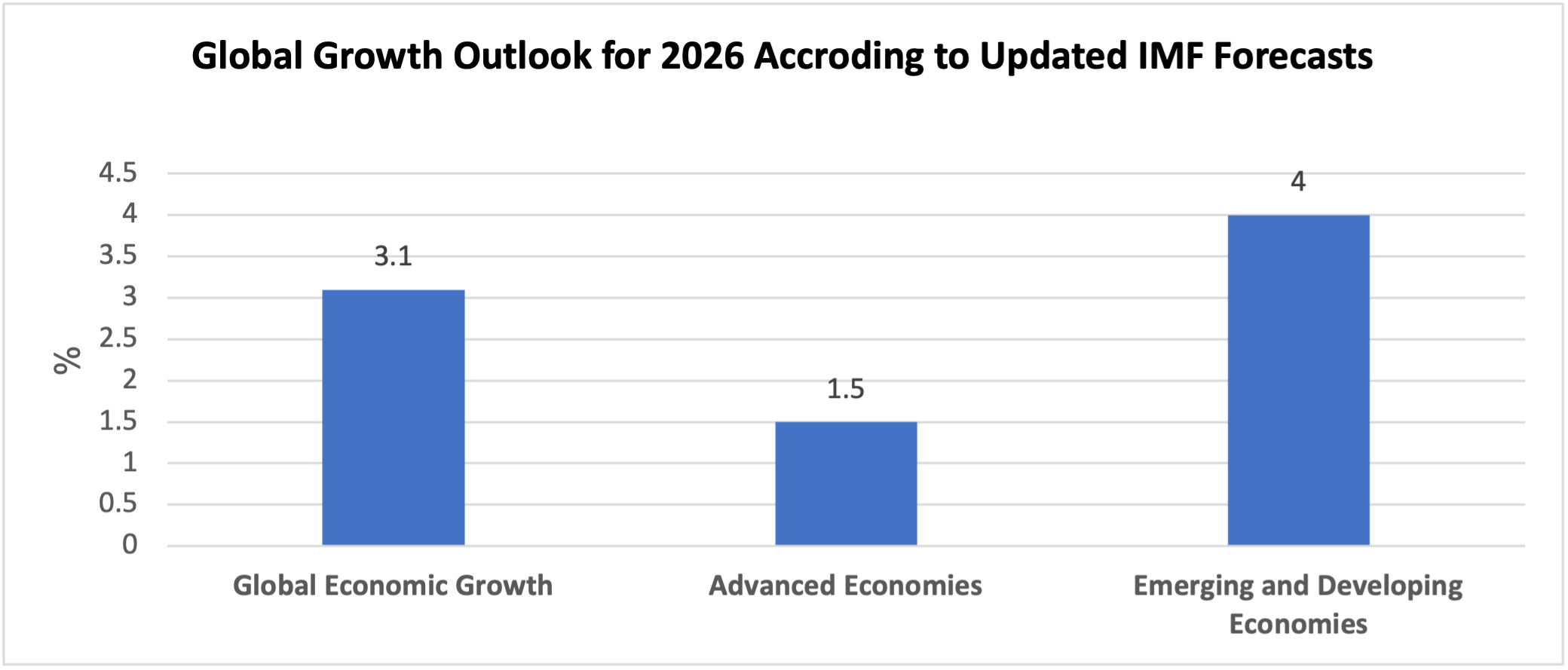
- Global growth is expected to reach 3.2% in 2025, with a projected slowdown to around 3.1% in 2026.
- At the regional level, the IMF also expects advanced economies to grow by about 1.5%, while emerging and developing economies are projected to grow by slightly more than 4%.
- Among advanced economies,[3] the IMF expects growth in the United States to slow to 2% in 2025. Growth in the eurozone is projected to rise to 1.2%, while Japan’s economy is expected to strengthen, with output increasing by 1.1%.
- In China, IMF forecasts indicate that growth will slow to 4.8% in 2025. With weak domestic demand and the possibility of continued deterioration in trade relations with the United States, growth is expected to decline further in 2026, reaching about 4.2%.
- In the Middle East,[4] the IMF has revised its outlook, projecting growth in the Middle East and North Africa to recover to 3.3% in 2025, up from 2.6% forecast in May. However, risks to the region remain despite a relative easing of geopolitical tensions.
A closer look at these forecasts highlights clear differences in growth performance across regions. The World Trade Organization expects global trade growth to slow in 2026, even as the global economy remains resilient. Morgan Stanley also projects global growth to slow to 3.2% in 2026, with a notable decline in the U.S. economy to 1.8%, affecting Europe, Japan, and China.[5] In Europe, moderate growth of about 1.1% is expected, while China’s growth is projected to reach around 5% in 2026 before declining to 4.2%, according to World Bank estimates, due to weaker exports and reduced fiscal stimulus.
2. Developments in Energy and Natural Resource Markets
Geopolitical uncertainty has caused volatility in energy markets over the past year, and this trend is expected to continue into 2026. According to forecasts by the U.S. Energy Information Administration, global oil inventories are anticipated to keep rising, putting downward pressure on prices. As a result, Brent crude is projected to average around $55 per barrel in the first quarter and remain at that level throughout the year. In contrast, spot natural gas prices are expected to rise to about $4.30 per million British thermal units, driven by milder weather conditions at the start of 2026.
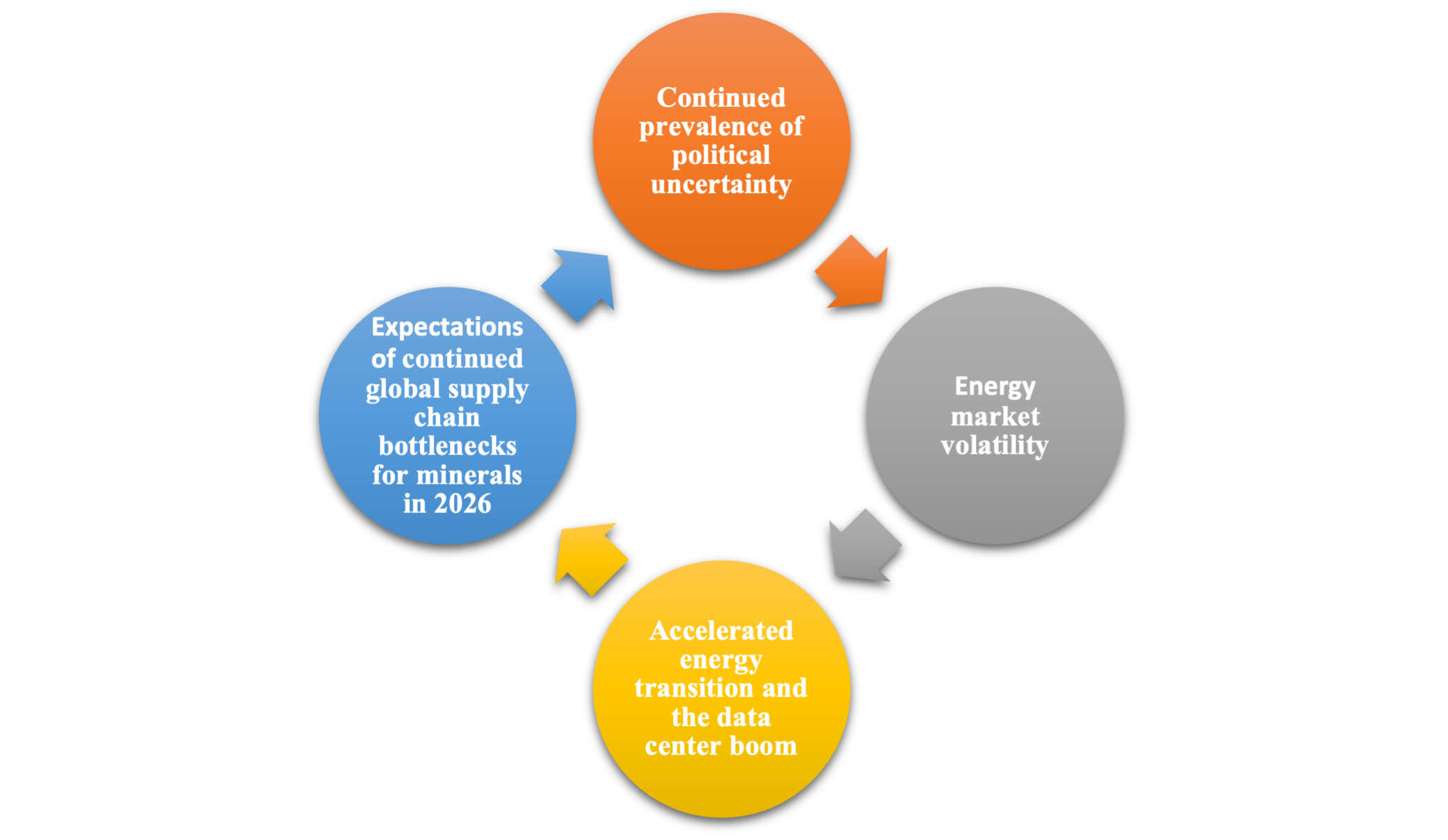
The global energy transition is expected to gain strong momentum in 2026, as solar and wind power have surpassed growth in global electricity demand for the first time, indicating that clean energy is now driving the global energy system. Attention is increasingly focused on improving energy storage and addressing grid bottlenecks through the integration of renewable sources. At the same time, rising demand for critical minerals is placing significant pressure on supply chains, particularly for copper, where a potential structural shortage is emerging. Despite diversification efforts, China remains dominant in supply amid expanding data center investments, weak mining investment, and political interventions that continue to influence markets.[6]
3. How Will Technology and AI Boom Affect Global Growth?
The surge in technology sector investments, including data centers and generative artificial intelligence, indicates a dual impact on the global economy. On one hand, these investments have created bottlenecks in the supply chains of critical minerals. On the other hand, the positive effects appear more significant. Rapid adoption of AI, despite being concentrated in certain regions, is expected to support global economic growth averaging about 2.7% through 2027, with AI investment projected to reach around $500 billion in 2026. The United States is set to experience its largest capital spending cycle since the 1990s, with AI-related capital expenditure contributing about 1% to economic growth in 2025.[7] However, the sustainability of these gains depends on avoiding an investment bubble, as slower adoption, rising costs, supply chain constraints, and weak depreciation accounting could pose risks to global financial stability.
4. Potential Economic Challenges
Despite some optimism surrounding global growth prospects in 2026, this optimism is tempered by a slower growth pace than in previous decades. Current growth rates, including optimistic projections, remain below those seen in the early 2000s and even the following decade. This slowdown is reinforced by overlapping geoeconomic challenges across regions, affecting markets and resources.
Looking ahead to 2026, five key challenges and risks are expected to affect global economic recovery:
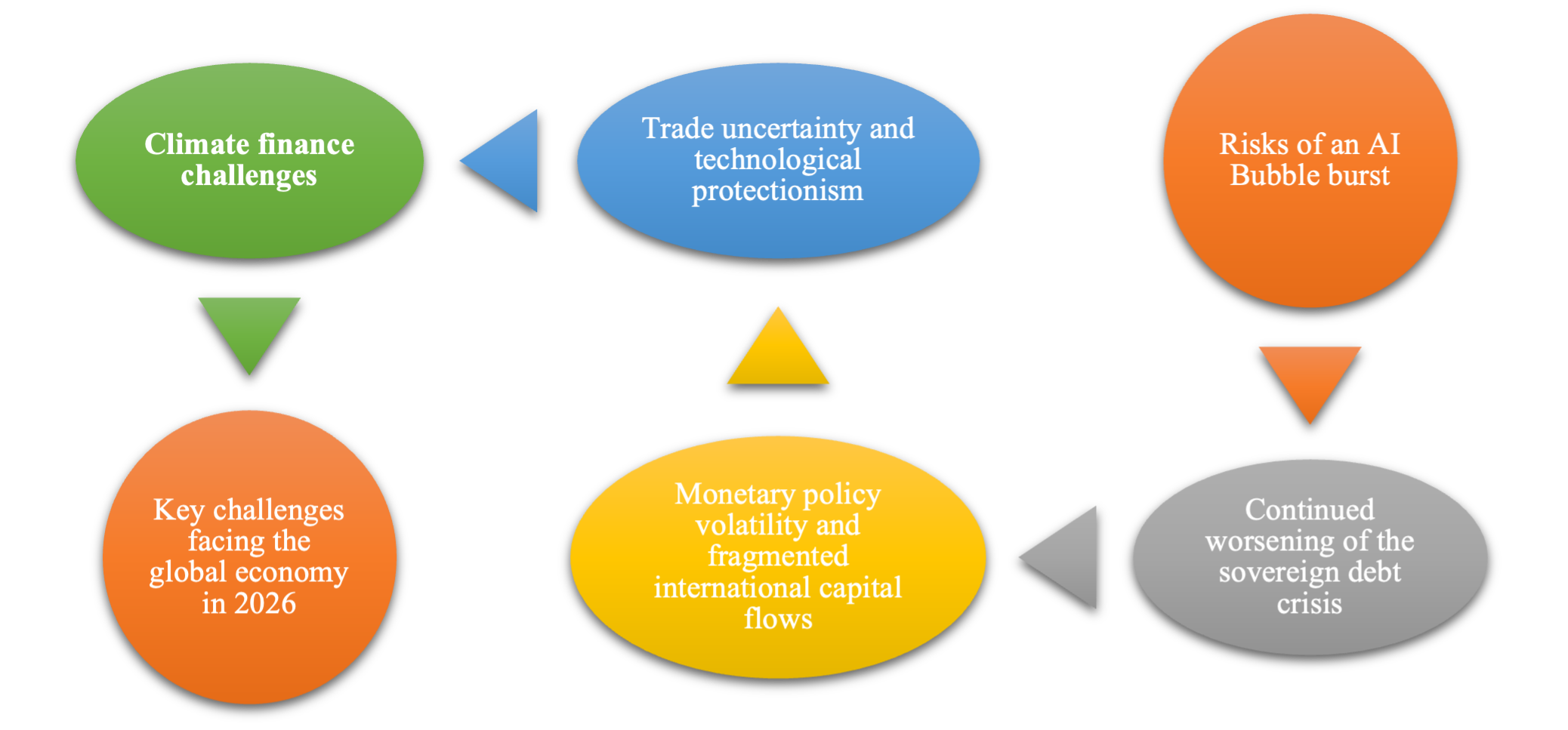
- Risks of an AI bubble burst: The inflation of technology and AI assets, combined with $360 billion spent on data centers in 2025 and the short lifespan of chips, raises concerns about a potential bubble. A burst could push technology stocks down by up to 40% in 2026, making this the most significant risk in the coming year.[8]
- Continued worsening of the sovereign debt crisis: The world is facing an unprecedented sovereign debt crisis that constrains development and puts pressure on public budgets. Around 3.4 billion people live in countries that spend more on debt interest than on health and education. Without effective policies, debt levels will continue to rise in 2026, including in advanced economies, increasing vulnerability in emerging and developing countries and affecting global financial performance.[9]
- Monetary policy volatility and fragmented international capital flows: Monetary policy volatility is expected to persist in 2026 following global monetary easing in 2025. Risks include sudden price shocks or the spillover of inflation across economies. This leads to the fragmentation of global capital flows, as hedge funds seek safe havens amid a high-risk and economically uncertain financing environment.
- Trade uncertainty, sanctions, and technological protectionism: The global economy experienced a major trade shock in 2025 due to Trump’s tariffs, whose delayed repercussions continue to affect European and Chinese economies. In 2026, trade across the Atlantic and the Pacific and Indian Oceans is expected to weaken further. Additionally, U.S. technological protectionism against China and sanctions on Russia and Venezuela will continue to create trade and investment bottlenecks, undermining global growth prospects.
- Climate finance challenges: UN efforts to advance climate action face serious challenges, despite commitments totaling $1.3 trillion for developing countries made at the 2025 climate summit in Brazil. The main problem lies in the weak commitment from major industrialized and high-emitting countries compared to the most affected and heavily indebted developing countries. This imbalance creates a financing challenge that threatens the achievement of the Paris goals and limits global economic growth and sustainability in 2026.
III. Military Developments and Their Outlook in 2026
Since 2022, the world has witnessed an unprecedented dynamic in the military field, marked by a rise in defense spending, deeper cooperation among countries, a technological revolution in combat systems, and complex future conflict scenarios. The year 2026 can be considered a turning point in assessing the impact of these trends, as strategic, economic, and technological factors intersect to reshape the concepts of military power and national defense in the 21st century.
1. Defense Spending Trends
- Global spending continues to rise: Data from the Stockholm International Peace Research Institute (SIPRI) show that world military spending rose to about $2.7 trillion in 2024, the highest level since the end of the Cold War, as more than 100 countries increased their defense budgets. Military spending as a share of global GDP also rose to around 2.5%, reflecting a growing reliance on military capabilities as a national security priority.[10]
This rise highlights a broad expansion of defense investment across both major powers and smaller countries. Leading powers such as the United States and China are prioritizing comprehensive technological modernization, while countries in the region are working to enhance their readiness in light of regional tensions. This trend is expected to continue in 2026, with a larger share of spending directed toward advanced defense technologies (artificial intelligence, unmanned systems, and electronic defenses).
- Regional composition of defense spending: Statistics show that Europe, the Middle East, and Asia are among the regions driving the global increase in defense spending. In 2024, Europe recorded a rise of about 17% in total defense expenditures—a direct result of the war in Ukraine and simultaneous tensions along the continent’s borders.[11]
In the Middle East, some countries, such as Israel, have sharply increased defense spending, driven by conflicts in the region, particularly the devastating war on Gaza. Other countries have pursued gradual increases in their military budgets with the aim of modernizing and upgrading their military equipment.[12]
- Qualitative shifts in defense budgets: In 2025–2026, a growing number of countries are moving to raise defense spending above the traditional limit of 2% of GDP, as part of a reassessment of their security priorities. For example, Germany has proposed increasing NATO’s defense spending target to 5% of GDP to strengthen collective capabilities.[13]
2. Trends in International Military Cooperation
- Deepening traditional alliances: In 2026, traditional defense alliances (such as NATO and US-Asian partnerships) are expected to expand further to strengthen deterrence and operational coordination. Recent years have demonstrated how alliances can enhance levels of integration in training, intelligence sharing, and the coordination of logistical efforts and defensive strategies.
Geopolitical developments, including the war in Ukraine, have reinforced NATO members’ commitments to increasing defense spending and supporting additional security partners, making frameworks for military cooperation deeper and more complex in 2026.
- New partnerships and cross-sector technological cooperation: Alongside traditional alliances, new technology partnerships are emerging to integrate defense industries and invest in joint research. In the Asia–Pacific region, reports by the Institute for Strategic Studies have highlighted increased cooperation among regional states in arms procurement and defense research, despite escalating security tensions.[14] This trend suggests that military cooperation in 2026 will not be limited to collective defense but will increasingly encompass shared supply chains, joint development projects, and the exchange of research and strategic capabilities.
3. The Revolution in Military Affairs: Technology and Strategy
- Accelerated adoption of AI: One of the most prominent trends in 2026 is the integration of AI into military operations. Academic research indicates that AI is increasingly used to enhance tactical communications networks, improve forecasting of weather and ground conditions, and automate cyber defense systems. Whether in facilitating information exchange among multiple units or supporting real-time combat decision-making, AI is set to become a cornerstone of modern military operations.
- Enhancing unmanned capabilities and intelligent networked systems: The development of UAVs and unmanned combat systems is advancing rapidly. These platforms are now capable of conducting reconnaissance and strike missions either autonomously or in coordination with manned units, as well as supporting complex logistical operations.[15] This trend is driving a seamless integration between human and machine systems, redefining military performance and raising profound questions about ethical responsibility and command and control in automated warfare.
- Innovations in cryptography and quantum computing: According to recent research, quantum technologies are emerging as a new geopolitical factor with the potential to affect communications security and military computing in the near future. Although these technologies are still at varying stages of development, they are expected to create a new arena for both competition and international cooperation in the coming years.
4. Anticipated Military Challenges in Future Conflicts
- Shift toward hybrid conflicts: Threats in 2026 will no longer be confined to conventional warfare alone. Instead, they are expected to manifest as hybrid operations that combine cyber warfare, information warfare, and economic pressure as parallel instruments of conflict. These challenges require states to restructure their forces and develop multi-layered defense systems capable of responding to unpredictable threats.
- Managing the risk of unintended escalation: As reliance on automation and AI increases, so does the risk of errors or unintended activation of combat operations. This makes it essential to establish precise control protocols and robust risk-analysis mechanisms. Addressing these challenges will require strengthening international communication channels and crisis-management frameworks to reduce the likelihood of unintended escalation that could trigger large-scale crises.
- Social and economic pressures: Heavy investment in military capabilities may come at the expense of social and economic commitments such as education, healthcare, and human development. Policymakers will need to strike a balance between national security imperatives and economic well-being to avoid domestic instability stemming from prolonged military tensions.[16]
5. Anticipating Future Policies:
In the near future, states will need to develop legal and ethical frameworks to regulate the military use of technologies such as AI and unmanned systems. These frameworks should address issues of accountability and transparency, as well as the attribution of responsibility in combat decision-making. It will be essential to ensure that intelligent systems do not violate ethical standards and are used in a manner consistent with humane values, with clear mechanisms for determining responsibility when errors arise from technology-driven decisions.
In the face of cross-border challenges, such as cyberattacks and advancements in defense, international cooperation will be critical. States must work together through international institutions to exchange information and coordinate effective responses to escalating threats. Coordination in areas such as cybersecurity and the protection of outer space will be particularly vital to maintaining global security and stability.
Future military crises will also require a high degree of strategic coordination among states. Through joint training, exercises, and the exchange of expertise, countries will be better positioned to enhance their readiness for future challenges. In addition, new international treaties will be necessary to ensure the ethical and lawful use of advanced military technologies, thereby strengthening collective security and reducing associated risks.
IV. The Future of Political Islam in 2026
As political and economic conditions continue to evolve across the Arab and Islamic worlds, political Islam is expected to undergo significant transformations in 2026. Mounting internal and external pressures are likely to further constrain its ability to shape national and regional policies, reinforcing trends of decline and contraction.
1. Al-Qaeda
Al-Qaeda emerged in the late 1980s in Afghanistan as a transnational terrorist network and, by 1998, had evolved into a decentralized global entity comprising multiple jihadist branches that adhere to Salafi-jihadist ideology, primarily focused on confronting the United States and its allies.[17] Despite sustained security pressure and counterterrorism measures, the organization has remained capable of repositioning itself and, by 2025, continued to function as an overarching ideological umbrella for its various affiliates.
Among the most prominent of these affiliates is Jama’at Nusrat al-Islam wal-Muslimin (JNIM), established in March 2017 and operating across the Sahel region.[18] The group has come close to exerting control over the Malian capital, Bamako, raising the prospect that Mali could become the first state effectively governed by an entity designated as a terrorist organization by the United States.[19] JNIM has undergone a significant strategic shift, moving from guerrilla warfare toward asserting control over urban areas and pursuing a more comprehensive political project. In 2026, it is expected to continue expanding its influence southward toward the Gulf of Guinea states.
Al-Shabaab in Somalia, founded in 2004 as the military wing of the Islamic Courts Union[20] and formally pledging allegiance to Al-Qaeda in 2010, retains substantial financial capacity, estimated at between USD 100 and 200 million annually.[21] In 2025, the group expanded its cooperation with the Houthis in Yemen, including access to advanced weaponry and UAVs. In 2026, it is likely to further escalate its terrorist operations while enhancing its operational capabilities, including increased use of armed UAVs.
Al-Qaeda in the Arabian Peninsula (AQAP), established in January 2009,[22] carried out more than 30 attacks in 2025 using short-range UAVs and light weapons.[23] Looking ahead to 2026, the group is expected to intensify its activities and deepen coordination with the Houthis, a development that could exacerbate internal instability in Yemen and extend its impact on the security of the Red Sea.
2. ISIS
The Islamic State (ISIS) emerged from a split with Al-Qaeda and, in June 2014, proclaimed the establishment of the so-called Islamic Caliphate.[24] Although its power later declined as a result of international counterterrorism efforts, several of its affiliates continue to wield significant influence.
In the African Sahel, some factions broke away from Al-Mourabitoun (an Al-Qaeda affiliate) in 2015 and pledged allegiance to ISIS. These factions were formally recognized as an official branch in 2022. By 2025, the region had become the most heavily affected by terrorist activity, with the group fielding between 2,000 and 3,000 fighters. In 2026, ISIS is expected to expand its sphere of influence in Mali and northwestern Nigeria while strengthening its logistical network.
ISIS–West Africa was formed in 2015 when Boko Haram pledged allegiance to ISIS and adopted the name ISIS–West Africa. By 2025, it had taken control of parts of Burkina Faso, Cameroon, Chad, Mali, Niger, and northern Nigeria. The group has sought to win over local populations by providing protection and limited social support. In 2026, it is likely to maintain a similar operational tempo while consolidating its control over the areas it already holds.
In Central Africa, the Allied Democratic Forces (ADF) in the Democratic Republic of the Congo pledged allegiance to ISIS in 2019, becoming the Islamic State Central Africa Province.[25] During the first half of 2025, the group carried out more than 100 attacks, including an assault on a Catholic church in the city of Komanda on July 27 that killed approximately 40 people. In 2026, continued geographic and operational expansion is expected, alongside efforts to create linkages between its various areas of influence.[26]
ISIS-Somalia, which split from Al-Shabaab and pledged allegiance to Abu Bakr Al-Baghdadi in October 2015,[27] strengthened its presence in 2025 due to an influx of foreign fighters and an expanding financial role. In 2026, the group is likely to continue developing its capacity to plan external operations while sustaining its activities inside Somalia.
ISIS-Khorasan (Afghanistan), established in 2015,[28] experienced a period of relative calm during the first half of 2025, limited largely to routine attacks such as a bus bombing and a suicide attack at Darul Ulum and Sardar Mohammad Daud Khan Military Hospital. In 2026, the group is expected to intensify its recruitment and mobilization efforts, particularly among disgruntled Taliban elements and Afghans who have found themselves marginalized within the new political order.
3. The Muslim Brotherhood
In 2025, the Muslim Brotherhood is facing a phase of existential challenges that threaten its continuity and further diminish its role on the political stage, both domestically and internationally.
Internally:
The Muslim Brotherhood is currently experiencing deep internal divisions and conflicts. First, there are ongoing disputes over who should assume the position of Acting General Guide, with tensions escalating among three main internal factions: the Istanbul front, the London front, and the Change Front. These divisions also extend to competition among international group bodies for control of the group’s institutions in Europe.
In addition, the group is grappling with generational tensions and an internal crisis of trust. Contradictions have emerged in discourse, directions, and objectives, along with disagreements over strategy between a traditional faction that clings to long-established principles and voices advocating for change. These conflicts have been exacerbated by poor financial management and repeated political failures, leading to declining organizational commitment among many members who feel their rights have been neglected or compromised.
Alongside these internal struggles, the group’s ability to influence public opinion has sharply declined. It has failed to mobilize street protests, its incitement campaigns against Egyptian embassies abroad have fallen flat, and it has been unable to open new political channels, as it once did in situations such as Syria.
Although the group-affiliated Hasm movement released a video showing military training and declared its readiness to revive armed action, the Istanbul front disavowed it, the Change Front praised it, and the London front remained silent, highlighting the deep divergence among the group’s internal factions.
On the media front, the group has suffered a significant collapse of its platforms. Following the closure of several key media outlets, the remaining platforms have largely devolved into vehicles for insults and incitement, significantly reducing their impact on public opinion.
Internationally:
Internationally, the Muslim Brotherhood is facing multiple financial scandals. Investigations have revealed the embezzlement of funds intended for donations to Gaza, as well as allocations meant for schools in Sweden. There are also financial suspicions linked to an Islamic center in Dublin, further compounding the group’s financial crises and reputational damage.
Political concerns are mounting in Europe and North America regarding the group’s activities. Government reports and political warnings have indicated growing awareness of the risks posed by the group and its influence in these regions, prompting calls for investigations into its activities in countries such as Belgium, Canada, Sweden, and Ireland.
At the same time, the group is under increasing external pressure amid investigations into its penetration of European societies. For example, the French government has issued a report on the group’s activities within French society and has taken measures against it. Similar pressures are evident in countries such as Sweden, the Netherlands, and the United States.
Finally, decisions have been made in several countries to ban the group or designate it as a terrorist organization, including Jordan and Kenya. In addition, U.S. President Donald Trump issued an executive order designating branches of the group in Lebanon, Egypt, and Jordan as terrorist organizations. In the United States, a bill has also been introduced in the House Foreign Affairs Committee calling for a comprehensive ban on the Muslim Brotherhood.
Outlook for 2026
Persistence of internal crises within the Egyptian group amid deepening organizational and ideological fractures: In 2026, the internal crises afflicting the Muslim Brotherhood in Egypt are expected to persist without a decisive resolution. These crises have deepened due to sharp divisions among leadership figures and across different segments of the group, leading to visible fragmentation within its organizational structure. The conflicts encompass significant ideological contradictions between the older generation, which remains committed to the group’s traditional principles, and a younger generation calling for change and reform. The ideological crisis is further compounded by disagreements over how to interpret and apply the ideas of Hassan Al-Banna and adapt them to contemporary contexts. In parallel, the group has suffered a marked decline in popular support in Egypt and in some other countries, further reducing the prospects for overcoming its organizational challenges.
The U.S. administration’s effort to ban specific Brotherhood branches and figures without banning the group as a whole: Internationally, the U.S. administration is expected in 2026 to take additional steps to curb the influence of the Muslim Brotherhood by designating certain branches and political figures affiliated with it in specific countries. However, a comprehensive ban on the group as a whole in the United States remains unlikely due to legal complexities and, potentially, Washington’s reluctance to place its allies—some of whom continue to maintain varying degrees of engagement with the group, such as Turkey—in a difficult position. These measures fall within a broader effort to constrain the group’s political influence, particularly in light of statements and reports pointing to the involvement of some branches in controversial activities, including questionable fundraising practices or support for armed actions. At the same time, the group is likely to remain part of the political landscape in countries that do not classify it as a terrorist organization, relying on flexible strategies that emphasize political engagement through social or political fronts.
The decline of Islamism marks the beginning of a new phase in which the Arab nation-state reasserts itself as the primary, legitimate, and effective framework for governing society: At a broader level, 2026 may mark a turning point in the trajectory of Islamist movements in the Arab world, signaling the gradual decline of Islamism. As the influence of groups such as the Muslim Brotherhood and similar movements continues to recede, the region is expected to witness a renewed emphasis on the Arab nation-state as a legitimate and effective framework for governing society. This phase is likely to be characterized by efforts in many Arab countries to reconstruct political and social identities on national or civic foundations, away from the strong pull of Islamist ideologies. The shift is closely linked to a growing focus on the state as the primary guarantor of national cohesion and social and economic development, reflecting the diminishing role of Islamist movements that once aspired to reshape societies under the banner of sharia or Islamic ideologies.
4. Local Terrorist Groups
Several local groups are expected to maintain or intensify their activity despite sustained security pressure. Boko Haram, which has been affiliated with Al-Qaeda since 2012, experienced internal fighting in February 2025 between its own factions and the Islamic State–West Africa Province (ISWAP),[29] resulting in the killing of its leader in an airstrike. The group is expected to continue carrying out sporadic attacks in 2026 amid ongoing internal rivalries.
Tehrik-e-Taliban Pakistan (TTP), formed in 2007 and designated a terrorist organization in 2011,[30] carried out a series of attacks in October 2025 in border regions and reportedly acquired counter-UAV weapons. Periodic clashes are likely to continue in 2026 against the backdrop of persistent tensions between Pakistan and Afghanistan.
The Nigerian Mahmuda group, which split from Boko Haram in late 2024 and maintains links with Jama’at Nusrat al-Islam wal-Muslimin (JNIM), launched attacks against the Nigerian army in 2025 that resulted in the deaths of 20 soldiers. Its activity is likely to persist in 2026, driven by ongoing state fragility and the group’s entrenched social presence.
In Sudan, Ansar Al-Muslimeen (Ansaru), which broke away from Ahl Al-Sunnah Lil-Da‘wa Wal-Jihad in 2012, weakened significantly following the arrest of its leadership in 2025. Its operational tempo is expected to decline in 2026, although isolated cells may still carry out sporadic attacks.
Finally, the Lakurawa group, which emerged in November 2024 and threatened local stability, was designated a terrorist organization by Nigeria’s Federal High Court in Abuja.[31] Its activity is likely to continue in 2026 within the broader context of unresolved local crises.
Conclusion
The year 2026 is marked by a complex global landscape shaped by rapid change, strategic realignments, and economic transformation amid intensifying geopolitical competition and persistent regional tensions. Strategic analysis points to a reconfiguration of international alliances and a redistribution of influence, as the United States continues to recalibrate its economic and security relationships, U.S.–China competition deepens, and the Indo-Pacific emerges as a central arena for strategic and technological rivalry. Ongoing regional conflicts, most notably the war in Ukraine, are reinforcing a fragile peace and heightened security instability, with direct repercussions for the global economy.
Economically, global growth is projected at around 3.1%, with a clear divergence between advanced economies (approximately 1.5%) and emerging markets (over 4%). Energy and natural resource markets are expected to remain volatile due to geopolitical uncertainty, while clean energy continues to gain prominence as a driver of global growth. Investment in technology and generative AI stands out as a key engine of expansion, despite risks linked to supply chain disruptions, rising costs of critical minerals, and the potential formation of investment bubbles that could unsettle markets.
On the military front, the world is witnessing a fundamental shift in the concept of power, reflected in rising global defense spending and a growing emphasis on AI, unmanned systems, and cyber defenses. Traditional alliances are expanding alongside deeper technological cooperation among states to strengthen defense industries and conduct joint research. Innovations in UAVs and quantum computing are reshaping military operations while introducing new ethical and regulatory challenges.
In the security domain, terrorist organizations and political Islam, most notably ISIS and Al-Qaeda, continue to recalibrate their influence, even as local groups face organizational strains and fluctuating security pressures. At the same time, cybersecurity is advancing rapidly, driven by increased reliance on AI, zero-trust models, and post-quantum cryptography to enhance prevention capabilities and protect critical infrastructure. This makes digital security an integral component of national and strategic security.
[1] Economist Intelligence Unit, “Global Outlook: Looking Ahead to 2026,” EIU Blog, accessed December 19, 2025, https://www.eiu.com/n/blogs/global-outlook-looking-ahead-to-2026/.
[2] International Monetary Fund, World Economic Outlook, October 2025, https://www.imf.org/en/Publications/WEO/Issues/2025/10/14/world-economic-outlook-october-2025.
[3] New York Times, “IMF Report Warns of Trade and Inflation Risks to the Global Economy,” October 14, 2025, https://www.nytimes.com/2025/10/14/business/imf-report-economy-trade-inflation.html.
[4] Reuters, “IMF Says Risks to Middle East Outlook Tilted to the Downside Amid Global Uncertainty,” October 21, 2025, https://www.reuters.com/world/asia-pacific/imf-says-risks-middle-east-outlook-tilted-downside-global-uncertainty-2025-10-21/.
[5] Morgan Stanley, “Global Economic Outlook 2026,” https://www.morganstanley.com/insights/articles/global-economic-outlook-2026.
[6] BloombergNEF, “Supply Chains Struggle as Energy Transition Drives Surging Demand for Metals,” https://about.bnef.com/insights/commodities/supply-chains-struggle-as-energy-transition-drives-surging-demand-for-metals-bloombergnef-finds/.
[7] Barclays Investment Bank, “U.S. Dollar and the AI Capex Cycle,” https://www.ib.barclays/our-insights/barclays-brief/us-dollar-ai-capex-cycle.html.
[8] Atlantic Council, “Yes, Tech Stocks Have Taken a Hit—but the Real Danger Lies Elsewhere,” https://www.atlanticcouncil.org/blogs/econographics/yes-tech-stocks-have-taken-a-hit-but-the-real-danger-lies-elsewhere/.
[9] Techloy, “The World Is $111 Trillion in Government Debt: Who Do We Owe?” https://www.techloy.com/the-world-is-111-trillion-in-government-debt-who-do-we-owe-2/.
[10] Stockholm International Peace Research Institute (SIPRI), “Unprecedented Rise in Global Military Expenditure: European and Middle East Spending Surges,” April 28, 2025, https://shorturl.at/9QTcA.
[11] Ibid.
[12] Mohammed Farhan, “Global Arms Race: The Middle East’s Share Reaches $243 Billion,” Deutsche Welle, citing AFP and DPA, April 28, 2025, https://shorturl.at/k6mKa (in Arabic).
[13] Reuters, “Germany Says It Supports Trump’s Call to Raise NATO Defense Spending Target,” May 15, 2025, https://shorturl.at/59xHL (in Arabic).
[14] Ibid.
[15] Dan McEvoy, “The Rise of the Drones,” MoneyWeek, September 25, 2025, https://shorturl.at/bFur5.
[16] Mohammed Farhan, “Global Arms Race: The Middle East’s Share Reaches $243 Billion,” Deutsche Welle, citing AFP and DPA, April 28, 2025, https://shorturl.at/k6mKa (in Arabic).
[17] United Nations, “Al-Qaida,” https://tinyurl.com/29hmyblz.
[18] U.S. Department of State, Rewards for Justice Program, “Jama’at Nusrat al-Islam wal-Muslimin,” https://tinyurl.com/2mxel6md (in Arabic).
[19] Al Arabiya, “Al-Qaida Approaches Control of Its First African Capital,” October 30, 2025, https://2cm.es/1g2iK (in Arabic).
[20] Walid Abdulrahman, “Somalia’s Al-Shabaab Courts Al-Qaida with a Eulogy Anthem for Bin Laden,” Asharq Al-Awsat, October 12, 2017, https://tinyurl.com/2xuhkjkp (in Arabic).
[21] Future for Advanced Research and Studies, “Al-Shabaab and the Risks of Reshaping the Map of International Terrorism,” July 15, 2025, https://2cm.es/1kVdD. (in Arabic).
[22] National Counterterrorism Center, “Al-Qa’ida in the Arabian Peninsula (AQAP),” https://tinyurl.com/2degh8q5.
[23] Al Arabiya, “Yemen: Five Soldiers Killed in an Al-Qaida Attack in Abyan,” October 21, 2025, https://2cm.es/1kVdV (in Arabic).
[24] National Counterterrorism Center, “Islamic State of Iraq and the Levant (ISIL),” https://tinyurl.com/2c9at74n.
[25] TRENDS Research & Advisory, “Back to the Roots: Why Is ISIS Targeting Uganda?” December 11, 2024, https://2cm.es/1g2j (in Arabic).
[26] Jamestown Perspectives, “A Briefer on Islamic State’s Activities Throughout Africa,” October 9, 2025, https://2cm.es/1g2jM.
[27] Emirates Policy Center, “The Expansion of ISIS in Puntland: A New Round of ‘Jihadist’ Infighting in Somalia,” May 22, 2024, https://tinyurl.com/24e5bk7v (in Arabic).
[28] National Counterterrorism Center, “ISIS-Khorasan (ISIS-K),” https://tinyurl.com/227zt5pd.
[29] Ahmed Amal, “Divisions and Conflicts Among Boko Haram Branches in the African Sahel,” Future for Advanced Research and Studies, March 25, 2025, https://tinyurl.com/2aldbrwh (in Arabic).
[30] United Nations, “Tehrik-e Taliban Pakistan (TTP),” https://tinyurl.com/24vjagjw.
[31] Paul Dada, “Court Proscribes Lakurawa, Others,” PM News Nigeria, January 24, 2025, https://tinyurl.com/23dehaph.