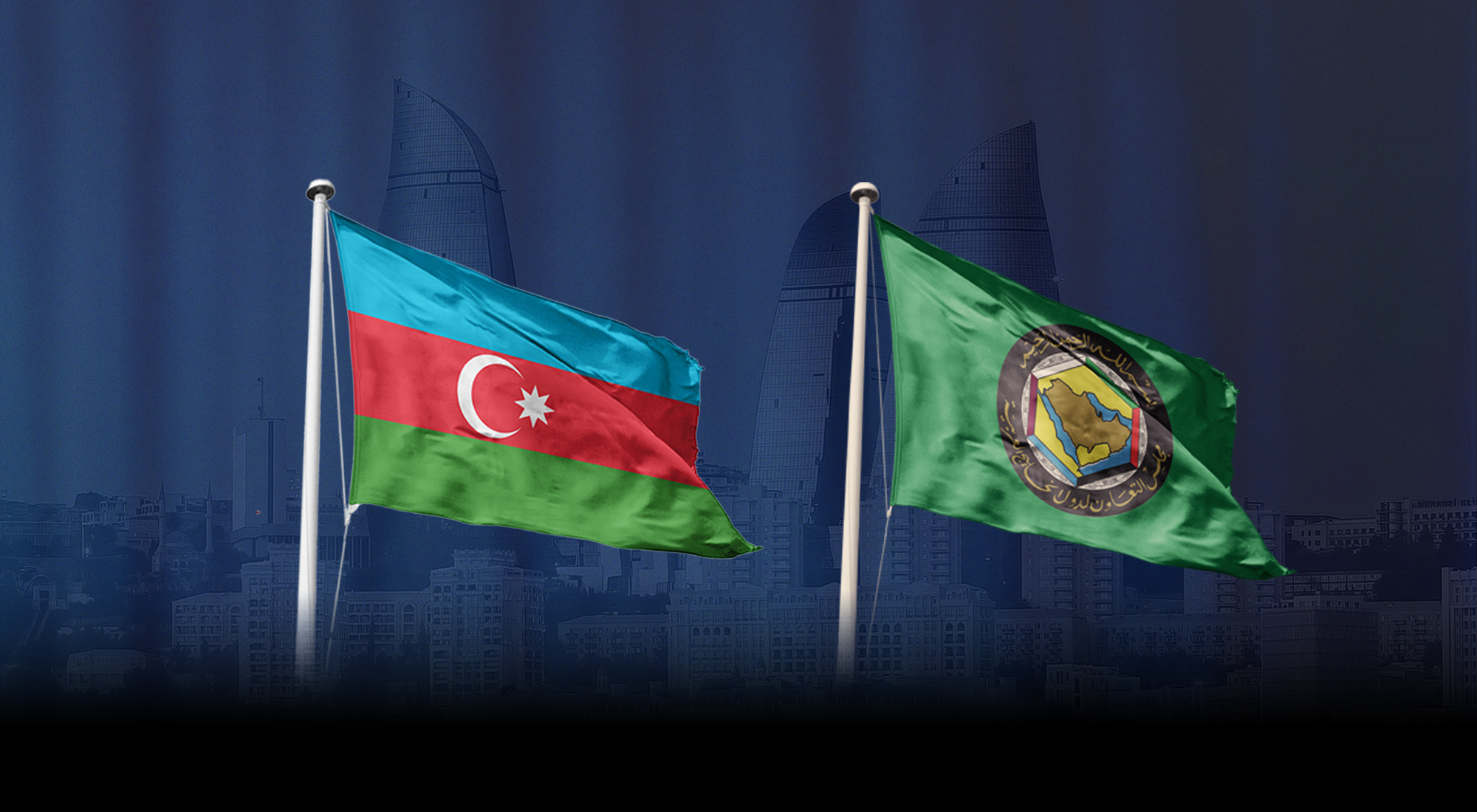



Relations between Azerbaijan and the Arab Gulf countries have developed remarkably in recent years. In the economic sphere, bilateral trade and investments in the hydrocarbon, renewable energy, and infrastructure sectors have increased significantly. The UAE’s diplomatic mediation, for example, played a key role in facilitating significant progress toward a peace agreement between Azerbaijan and Armenia at a meeting held in Abu Dhabi.
The economic, logistical, and diplomatic ties reflect the long-standing links between the two regions, which were more affected by years of Russian and Soviet influence than by the will of the parties involved. These are societies that share the same religious tradition. The links, even those of a transactional nature, are evolving into strategic partnerships with the potential to alter the geopolitical landscape of the South Caucasus and the Gulf regions. These are no longer isolated projects, but rather opportunities for integration into the international system.
In a changing international context, the perception of Azerbaijan and the Arab Gulf states—particularly the UAE and Saudi Arabia—as middle powers has brought these countries closer together. They are now looking for non-asymmetrical, mutually beneficial relationships, moving away from one-dimensional international integration strategies based on developing ties with major powers.
Presidential diplomacy (or royal diplomacy in Saudi Arabia’s case) has played a central role in this strategy, allowing heads of state to establish direct links and generate bonds of trust that have subsequently permeated all areas. This insight analyzes the current state of relations between Azerbaijan and the Arab Gulf countries to understand their bilateral and regional impact on the South Caucasus and the Gulf region.
Bilateral and multilateral relations
Arab Gulf countries specifically refer to member states of the Gulf Cooperation Council (GCC): Saudi Arabia, Bahrain, the United Arab Emirates, Kuwait, Oman and Qatar. The development of Azerbaijan’s bilateral relations with these states has been as follows:
Saudi Arabia was one of the first countries in the world to recognize Azerbaijan’s independence, which was declared on 30 December 1991, and to establish diplomatic relations in February 1992.[1] The Azerbaijani embassy in Riyadh opened in April 1994, followed by the Saudi Arabian embassy in Baku in June 1999.[2] Azerbaijan and Bahrain established diplomatic relations in November 1996,[3] with the Azerbaijani embassy in Saudi Arabia handling relations with Bahrain concurrently, and the Bahraini embassy in Türkiye handling relations with Azerbaijan concurrently.[4] The UAE recognized Azerbaijan’s independence on 26 December 1991, establishing diplomatic relations the following year.[5] The Azerbaijani embassy in Abu Dhabi opened in April 1997,[6] followed by the UAE embassy in Baku in 2011.[7] Until then, the UAE embassy in Ankara had concurrent jurisdiction over the territory of the Republic of Azerbaijan.
Diplomatic relations between Kuwait and Azerbaijan were established in October 1994.[8] The Azerbaijani embassy in Kuwait was established in 2004, followed by the Kuwaiti embassy in Azerbaijan in 2006.[9] The Sultanate of Oman recognized the independence of Azerbaijan on 30 December 1991, and diplomatic relations were established in July 1992.[10] Since October 2009, the Azerbaijani embassy in Saudi Arabia has been responsible for relations with Oman, while the Omani embassy in Ankara has been responsible for relations with Azerbaijan.[11] However, during Azerbaijan’s Minister of Foreign Affairs Jeyhun Bayramov’s visit to Muscat in October 2025, it was reported that the issue of opening an Azerbaijani embassy in Oman is being considered.[12] Diplomatic relations between Qatar and Azerbaijan were established in September 1994.[13] In 2007, embassies were opened in Baku and Doha, respectively.[14]
There are now full diplomatic relations at the bilateral level, with four Azerbaijani embassies in Arab Gulf countries (Saudi Arabia, the UAE, Qatar, and Kuwait), and resident embassies of these four states in Baku. This indicates the development and importance of these ties. We must also consider the numerous high-level visits by heads of state, foreign ministers, and heads of parliaments that have taken place throughout these thirty-plus years of diplomatic relations.
Likewise, the GCC has had a partnership with Azerbaijan since 2010.[15] Indeed, during the visit of the GCC Secretary-General, Jassim Mohammed Al-Budaiwi, to Baku in November 2023, the “Joint Action Plan for GCC-Azerbaijan Relations for the Period 2024-2028” was signed.[16] This plan aims to establish and coordinate cooperation in various areas: economic, financial, political, social, and cultural. A comprehensive general guide for relations has already begun to be implemented, and follow-up meetings have been held to update the plan.
As a sign of the commitment to institutionalizing relations, particularly economic ones, the GCC and Azerbaijan have organized an Economic Forum, with the first taking place in Baku in 2017,[17] followed by the second in September 2024.[18] Trade and financial ties, particularly investment flows, are areas to which all parties attach great importance. Beyond the GCC, multilateral relations are also developing within the framework of organizations such as the United Nations, the Non-Aligned Movement, the Organization of Islamic Cooperation, and OPEC+.[19]
The GCC countries support full stabilization in the Caucasus region as demonstrated by their relations in the political sphere.[20] In July 2025, for example, the UAE organized a high-level meeting between leaders of Azerbaijan and Armenia—President Ilham Aliyev and Armenian Prime Minister Nikol Pashinyan—with the aim of achieving a comprehensive peace treaty between the two states.[21] This Emirati policy builds on the efforts of other Arab Gulf states to establish themselves as reliable mediators in various international conflicts.[22]
The UAE’s ties with Azerbaijan, in particular, were confirmed by the signing of a Comprehensive Strategic Partnership during the UAE President’s visit to Azerbaijan in September 2025.[23] Although relations between the GCC countries and Azerbaijan did not develop significantly during the last two decades of the 20th century, this has changed in the following years, especially in the last five. This exponential increase in relations can be explained by the foreign policies of those directly involved, as well as structural factors in the regional and international context.
Firstly, the end of the conflict between Armenia and Azerbaijan, coupled with the commencement of hostilities between Russia and Ukraine, has elevated the significance of the South Caucasus, particularly Azerbaijan, in the eyes of decision-makers within the GCC countries. Cessation of hostilities between Azerbaijan and Armenia has established a new framework of stability for the region, which is essential for any long-term investment. Conversely, the instability resulting from the war between Ukraine and Russia has made logistics and trade routes in the Caucasus region—most of which are centered on Azerbaijan—more appealing to public and private actors in the GCC, who constantly seek opportunities.
Against this geopolitical backdrop, the foreign policies of Azerbaijan and the GCC countries have converged around shared interests. Both are engaged in processes of modernization and economic diversification, with the development of non-oil sectors (including clean energy) and the search for new international partners being key. Thus, the geopolitical context and national projects have created a favorable framework for developing relations between Azerbaijan and the GCC countries, both bilaterally and multilaterally.
Economic relations: trade and investment
Trade between Azerbaijan and the GCC countries has grown steadily in recent years.[24] It increased from US$1.028 billion in 2022[25] to US$2.242 billion in 2024,[26] representing a growth of over 100% in just three years. Almost 90% of this value corresponds to exports from GCC countries to Azerbaijan, primarily machinery and vehicles. Azerbaijan’s main trading partner in the GCC is the UAE,[27] and it is estimated that the Comprehensive Strategic Partnership[28] will further boost trade, with 95% of products set to see significant tariff reductions or complete elimination.
However, the focus is not only on trade; investments between these countries also play a significant role. Investments require two inputs: firstly, a legal structure that can provide predictability and security; and secondly, political and economic stability to reduce medium-term risks. Both Azerbaijan and the GCC countries fulfill these two conditions, allowing public and private actors to seek to take advantage of existing opportunities.
One of the most interesting aspects of investments is that they are two-way, i.e., Azerbaijan invests in the Gulf countries, and the Gulf countries invest in Azerbaijan. These investments are made in hydrocarbon, renewable energy, and other technological sectors. At the 1st GCC-Azerbaijan Economic Forum in 2017,[29] it was estimated that GCC countries had invested US$1.3 billion in Azerbaijan and Azerbaijan had invested US$300 million in GCC countries.
For example, in the hydrocarbon sector, Abu Dhabi National Oil Company (ADNOC) acquired a 30% stake in the Absheron gas field in the Caspian Sea in August 2023, alongside the State Oil Company of Azerbaijan (SOCAR) and TotalEnergies, each of which holds a 30% stake. Meanwhile, Dragon Oil, a subsidiary of the Emirates National Oil Company (ENOC), signed an agreement with SOCAR to create a framework for cooperation in upstream and downstream activities.[30]
While these instances might suggest that everything revolves around oil and gas, that is not the case. For example, in December 2023, sovereign wealth funds from the UAE (ADQ) and Azerbaijan (Azerbaijan Investment Holding) agreed to set up a £1 billion fund to develop projects of mutual interest,[31] particularly in the non-oil sector. A similar agreement was reached in October 2025, when investment funds from Oman (Oman Investment Authority-OIA) and Azerbaijan Investment Holding set up a US$200 million joint fund[32] to finance projects in renewable energy, food, and logistics in both countries. Then, in December 2025, the executive director of the State Oil Fund of Azerbaijan (SOFAZ) visited Bahrain and Kuwait to discuss potential investments in these countries.[33] Sovereign wealth funds have become key players in today’s financial world. As state institutions, they combine their vast resources with explicit political support. The political decision to strengthen ties between Azerbaijan and the GCC countries has resulted in these funds becoming the ideal means of achieving cooperation while also allowing them to take advantage of opportunities for financial gains, develop strategic sectors, and diversify their economies.
As in the commercial sphere, the UAE has become the main investor in Azerbaijan from the Gulf Arab countries.[34] Notably, investments are made in technology-intensive sectors, which align with the development and economic diversification plans of both states. The energy transition, i.e., the development of sustainable energy sources, is a priority for all these states. Azerbaijan’s target is to generate 30% from renewable sources by 2030.
In November 2023, the UAE hosted COP28, the 28th Conference of the Parties to the United Nations Framework Convention on Climate Change (UNFCCC). COP29 was held in Baku the following year, in November 2024. These events are not just symbolic; they demonstrate the commitment of countries that owe their wealth to the hydrocarbon sector to moving toward an energy transition.
Beyond the visibility of these international events, clean energy projects between Azerbaijan and the GCC countries have already begun. In early 2020, the Azerbaijani Ministry of Energy and the Emirati clean energy company Masdar signed an agreement to develop renewable energy projects. Despite the subsequent onset of the global pandemic, these projects have begun to materialize, with Masdar estimated to have invested around US$870 million in Azerbaijan over the past five years.
In March 2022, an agreement was signed to build the 230 MW Qaradagh[35] solar power plant. The first part of the plant was inaugurated in October 2023,[36] representing an investment of US$262 million. In January 2023, Masdar signed an agreement with SOCAR to develop onshore and offshore wind and hydrogen energy projects in the Caspian Sea, as well as continuing to develop solar power plants. These projects will generate a total of 4 GW of energy from renewable sources. In November 2024, US$600 million of investment was secured for the construction of two solar power plants: one with a capacity of 445 MW in Bilasuvar and another with a capacity of 315 MW in Neftchala. The projects are expected to be completed in early 2027. In January 2022, the Saudi company ACWA Power signed an agreement to construct a 240 MW wind power plant called Khizi-Absheron, which began operating toward the end of 2025.[37]
Foreign investment by GCC countries in Azerbaijan also includes studies and negotiations in logistics (DP World, Etihad, and Emirates), artificial intelligence (G42, AI71 and Alef Education), and agriculture (Al Dahra) sectors. The ties between Azerbaijan and the GCC countries extend to other areas of great economic importance, one of which is tourism. It is estimated that around 100,000 Saudi citizens visited Azerbaijan in 2022.[38] In 2023, around 41,000 Emirati citizens visited Azerbaijan.[39] This growth has been driven by visa exemption schemes and direct flights between Baku and the major Gulf capitals. Overall, the Azerbaijan-GCC relationship has developed multidimensionally, in commercial, financial, political, social, and cultural terms, both bilaterally and multilaterally.
Links between middle powers
Relations between Azerbaijan and the GCC countries should not be explained solely on the basis of cultural factors, such as both countries having predominantly Muslim populations. This common ground requires concrete political decisions that reflect the interests and values of those involved. Neither can it be explained solely in terms of transactions or the pursuit of economic benefits from existing investment opportunities. It is not a blind pursuit of profit without any further consideration. The desire of states such as Azerbaijan, Saudi Arabia, the UAE, and Qatar to act as middle powers in a competitive and conflict-ridden international system plays a very important, perhaps even an essential, role in developing these links.
The search for partners with relative symmetry is a foreign policy objective of all these countries.[40] As middle powers, they believe that developing a network of multi-vector relationships with partners that are perceived as being of similar strategic stature is best achieved through bilateral and multilateral engagement. This approach leaves no room for unilateral impositions or conditions but rather creates space for dialogue and negotiation. Furthermore, the favorable geopolitical context for Azerbaijan and the GCC countries encourages the development of relations between these actors.
Firstly, the role of Türkiye must be considered,[41] due to its importance in Azerbaijani foreign policy and its regional presence, including the Gulf. The improvement in relations between Ankara and Abu Dhabi, as evidenced by the signing of a Comprehensive Economic Partnership Agreement (CEPA) in 2023,[42] presents significant opportunities for the UAE within the Turkish economy and the economies of Turkic countries, fostering a cooperative rather than competitive framework with Ankara.
Azerbaijan has benefited from the strong ties between Türkiye and the UAE, maintaining excellent relations with both countries. This way, Baku strengthens its relations with both countries without it being perceived as a zero-sum game but rather as a win-win situation where everyone benefits. This pattern has occurred not only between Türkiye, Azerbaijan, and the UAE but also between Türkiye, Azerbaijan and Qatar.
In August 2025, Azerbaijan began supplying 1.2 billion cubic meters (bcm) of gas annually to Syria[43] from the BP-operated Shah Deniz gas field in the Caspian Sea through the pipeline connecting Azerbaijan to Türkiye, which extends into Syrian territory via the Turkish city of Kilis. Supported by Qatar, the project will play a major role in Syria’s reconstruction process, providing a reliable and stable energy supply essential for developing its economy after more than a decade of war. By supplying energy to 14 countries, Azerbaijan has become an essential part of regional energy security, and the geopolitical scenario of reduced tensions and cooperation between Türkiye and the GCC countries is clearly beneficial to Baku.
Furthermore, Azerbaijan’s hydrocarbon resources and network of oil and gas pipelines effectively contribute to regional stability.[44] Baku’s foreign policy in this area continues to follow the logic of Heydar Aliyev’s “contract of the century” from the 1990s: the more parties that benefit, without any losers or excluded parties, the more stable the system will be, as everyone will be among the winners or beneficiaries.
Another element that helps to explain the virtuous circle taking place between Azerbaijan and the GCC countries is the development of multimodal transport corridors at the regional level. Strengthening ties with Azerbaijan would allow GCC countries to benefit from the International North-South Transport Corridor (INSTC)[45] and the country’s strategic location on the Trans-Caspian International Transport Route (TCITR), also known as the Middle Corridor.[46]
Azerbaijan’s importance has increased comparatively as all the projects passing through its territory under the INSTC have been completed, moving from ideas to reality. Over a decade ago, when Russia and Iran were the main drivers of this project, the geopolitical context was different. Today, these two states have fewer resources to allocate to the project, while other states, such as Azerbaijan, have more resources, and the need for north-south links continues. The Middle Corridor, whose operations are developing day by day, has two key assets: explicit support from China and European countries at both ends of the corridor. Furthermore, it avoids the instability of southern Russia, providing predictability. Azerbaijan’s geopolitical position and its involvement in these two projects make it an attractive partner for GCC countries seeking to expand commercially and invest in logistics.
The same logic underlies the support that GCC countries have provided for other projects, such as the “Development Route” between Iraq and Türkiye.[47] The United States’ Trump Route for International Peace and Prosperity (TRIPP) initiative does not oppose these multimodal projects but rather complements them by including new partners who will also benefit from being part of this logistics network.
Thus, while the hydrocarbon sector remains relevant, investments in renewable energies and the development of multimodal transport corridors create new opportunities that benefit from the regional geopolitical context, reflecting development plans and priorities of the countries involved. It is a true alignment of the planets.
Conclusion
The development of relations between Azerbaijan and the GCC countries is one of the most important aspects of the foreign policy frameworks of the parties involved. The Azerbaijan-GCC axis is extremely positive, as it benefits all parties without explicitly excluding other regional actors.
Azerbaijan’s relations with each of the six GCC members have distinctive characteristics and vary in depth. It is clear, however, that the UAE is the main partner, both commercially and in terms of investment, followed by Saudi Arabia, with the other four Arab Gulf countries (Qatar,[48] Kuwait,[49] Oman,[50] and Bahrain[51]) having a smaller presence. Azerbaijan and the GCC relations are advantageous not only for Türkiye but also for European countries, the United States, India, and China. All these countries benefit from the development of Azerbaijani-Arab relations for various reasons.
Even though Russia and Iran may view Türkiye’s more prominent role in the Caucasus with suspicion, as may financially powerful regional actors such as the UAE and Saudi Arabia, or even extra-regional powers, the truth is that they cannot oppose these developments. Internal and external problems have limited their ability to implement disruptive policies. Clearly, regardless of what Moscow or Tehran may want, a Caucasus with reduced Russian and Iranian influence aligns with the interests of Washington, Brussels, and even Beijing, as well as Ankara. The Azerbaijan-GCC axis is set to deepen, and this trend will have a positive impact on all parties.
[1] Embassy of the Republic of Azerbaijan to the Kingdom of Saudi Arabia, “Azerbaijan-Saudi relations,” https://riyadh.mfa.gov.az/en/category/azerbaijan-saudi-relations.
[2] Ibid.
[3] Republic of Azerbaijan Ministry of Foreign Affairs, “The Kingdom of Bahrain,” https://mfa.gov.az/en/news/bahrain.
[4] Republic of Azerbaijan Ministry of Foreign Affairs, “Diplomatic List,” https://web.archive.org/web/20160303185126/http://www.mfa.gov.az/files/file/Diplist__2015.pdf.
[5] Consulate General of the Republic of Azerbaijan in Dubai, “About Bilateral Relations,” https://dubai.mfa.gov.az/en/category/about-bilateral-relations.
[6] Ibid.
[7] UAE Ministry of Foreign Affairs, “The Republic of Azerbaijan – UAE Relationships, Bilateral Relations,” https://www.mofa.gov.ae/en/Missions/Baku/UAE-Relationships/Bilateral-Relations.
[8] Republic of Azerbaijan Ministry of Foreign Affairs, “The State of Kuwait,” https://mfa.gov.az/en/category/asia-and-oceania/the-state-of-kuwait.
[9] Embassy of the Republic of Azerbaijan in Kuwait, “Bilateral Relations,” https://kuwait.mfa.gov.az/en/content/3/bilateral-relations.
[10] Embassy of the Republic of Azerbaijan to the Kingdom of Saudi Arabia, “Azerbaijan-Oman relations,” https://riyadh.mfa.gov.az/en/category/azerbaijan-oman-relations.
[11] Republic of Azerbaijan Ministry of Foreign Affairs, “The Sultanate of Oman,” https://mfa.gov.az/en/category/asiya-ve-okeaniya/oman.
[12] “Azerbaiyán y Omán debaten cuestiones de cooperación,” Azertac, October 29, 2025, https://azertag.az/es/xeber/azerbaiyn_y_omn_debaten_cuestiones_de_cooperacion-3830467.
[13] Republic of Azerbaijan Ministry of Foreign Affairs, “The State of Qatar,” https://mfa.gov.az/en/category/asia-and-oceania/the-state-of-qatar.
[14] Azərbaycan Respublikasının Qətər Dövlətindəki Səfirliyi, “İKİTƏRƏFLİ MÜNASİBƏTLƏR,” https://doha.mfa.gov.az/az/content/3/bilateral-relations.
[15] Republic of Azerbaijan Ministry of Foreign Affairs, “Relations between Azerbaijan and the Gulf Cooperation Council (GCC),” https://mfa.gov.az/en/category/regional-organisations/relations-between-azerbaijan-and-the-gulf-cooperation-council-gcc.
[16] “GCC, Azerbaijan adopt Joint Action Plan for 2024-2028,” Saudi Press Agency, November 25, 2023, https://www.spa.gov.sa/en/N2003414.
[17] “Baku hosts 2nd Azerbaijan-GCC Economic Forum,” Azertac, September 26, 2024, https://azertag.az/en/xeber/baku_hosts_2nd_azerbaijan_gcc_economic_forum-3199410.
[18] “Ministry of Economy of the Republic of Azerbaijan, “2nd Azerbaijan-Gulf Cooperation Council economic forum held,” September 26, 2024, https://economy.gov.az/en/post/2265/2-ci-azerbaycan-korfez-emekdasliq-surasi-iqtisadi-forumu-kecirilib.
[19] Saudi Arabia, the United Arab Emirates and Kuwait are members of OPEC, while Azerbaijan, Bahrain and Oman are members of OPEC+. Source: EIA, “What is OPEC+ and how is it different from OPEC?,” May 9, 2023, https://www.eia.gov/todayinenergy/detail.php?id=56420.
[20] “Abu Dhabi Summit Reignites Progress on Zangezur Corridor,” Jamestown, July 23, 2025, https://jamestown.org/abu-dhabi-summit-reignites-progress-on-zangezur-corridor/.
[21] “The UAE and Bridging the Gap in the South Caucasus,” EPC, July 23, 2025, https://epc.ae/en/details/brief/the-uae-and-bridging-the-gap-in-the-south-caucasus.
[22] https://cari.org.ar/views/releases/detail/?article_id=783.
[23] “Emiratos y Azerbaiyán anuncian una Asociación Estratégica Integral y firman varios memorandos de entendimiento,” Wam, September 16, 2025, https://www.wam.ae/es/article/15ruxoi-emiratos-azerbaiy%C3%A1n-anuncian-una-asociaci%C3%B3n.
[24] https://gccstat.net/en/statistic/publications/trade-exchange-between-the-gcc-and-greece-2.
[25] https://gccstat.net/images/gccstat/docman/publications/Azerbaijan.pdf.
[26] https://gccstat.net/images/gccstat/docman/publications/Azerbaijan_2.pdf.
[27] “UAE accounts for 50% of Azerbaijan’s trade with Gulf states: Minister of Foreign Trade,” Global Times, July 11, 2025, https://www.globaltimes.cn/page/202507/1338126.shtml.
[28] “Presidente Ilham Aliyev y el Presidente Sheikh Mohamed bin Zayed Al Nahyan celebran reunión ampliada,” Azertac, September 16, 2025, https://azertag.az/es/xeber/presidente_ilham_aliyev_y_el_presidente_sheikh_mohamed_bin_zayed_al_nahyan_celebran_reunion_ampliada-3747039.
[29] Mohammed Alrmizan, “Azerbaijan and Saudi Arabia: Bilateral Opportunities in a Changing Middle East,” King Faisal Center for Research and Islamic Studies, September 2019, https://kfcris.com/pdf/91ba14ab13aea57468aee2d0cd58c0bd5d89e0ee3e6cf.pdf.
[30] “Dragon Oil signs MoU with SOCAR to explore new energy opportunities,” Oil & Gas Middle East, November 4, 2025, https://www.oilandgasmiddleeast.com/news/dragon-oil-socar-mou.
[31] “ADQ and Azerbaijan Investment Holding form joint investment platform,” ADQ, December 15, 2023, https://www.adq.ae/newsroom/adq-and-azerbaijan-investment-holding-form-joint-investment-platform/.
[32] “Oman and Azerbaijan launch $200m investment fund,” Arabian Gulf Business Insight, October 10, 2025, https://www.agbi.com/economy/2025/10/oman-and-azerbaijan-launch-200m-investment-fund/.
[33] “La delegación del SOFAZ realizó una visita de trabajo a Bahréin y Kuwait,” Azertac, December 4, 2025, https://azertag.az/es/xeber/la_delegacion_del_sofaz_realizo_una_visita_de_trabajo_a_bahrein_y_kuwait-3896603.
[34] Lala Khalilzade, “The UAE and Azerbaijan: A strategic partnership towards the future,” Al Ain News (Arabic), September 29, 2025, https://al-ain.com/article/uae-azerbaijan-strategic-partnership-future.
[35] Masdar, “Garadagh (Area 60) Solar Photovoltaic Power Plant,” https://masdar.ae/en/renewables/our-projects/garadagh-area-60-solar-photovoltaic-power-plant.
[36] Azerbaijan Renewable Agency Under the Ministry of Energy of the Republic of Azerbaijan, “230 MW Garadagh Solar Power Plant,” https://area.gov.az/en/page/layiheler/cari-layiheler/230-mvt-gunes-elektrik-stansiyasi.
[37] ACWA Power, “KHIZI-ABSHERON WIND IPP,” https://acwapower.com/en/projects/khizi-absheron-wind-ipp/.
[38] Emil Avdaliani, “Growing Gulf Footprint in the South Caucasus,” Arab Gulf States Institute, September 12, 2024, https://agsi.org/analysis/growing-gulf-footprint-in-the-south-caucasus/.
[39] “Azerbaijan showcases tourism potential in Dubai – PHOTO,” News.AZ, May 9, 2024, https://news.az/news/-azerbaijan-showcases-tourism-potential-in-dubai–photo–
[40] Emil Avdaliani, “The burgeoning Gulf Arab footprint in the South Caucasus,” Amwaj.media, March 21, 2025, https://amwaj.media/en/article/the-burgeoning-gulf-arab-footprint-in-the-south-caucasus.
[41] Sinem Cengiz, “The growing Turkey-UAE partnership in the South Caucasus,” Amwaj.media, August 8, 2025, https://amwaj.media/en/article/the-gist-of-turkey-uae-camaraderie-in-the-south-caucasus.
[42] Ibid.
[43] Ahmed Sharawi and Natalie Ecanow, “Qatar Is Powering Syria,” Foundation for Defense of Democracies, August 5, 2025, https://www.fdd.org/analysis/2025/08/05/qatar-is-powering-syria/.
[44] Ogul Tuna, “Unexplored Potential in Azerbaijan-Gulf Relations,” Arab Gulf States Institute, March 15, 2022, https://agsi.org/analysis/unexplored-potential-in-azerbaijan-gulf-relations/.
[45] “International North-South Transport Corridor (INSTC),” Asia Regional Integration Center, https://aric.adb.org/initiative/international-north-south-transport-corridor.
[46] Middle Corridor, Trans-Caspian International Transport Route, https://middlecorridor.com/en/.
[47] Bilgay Duman and Mehmet Alaca, “Basra-Turkey “Dry Canal” Project: Ambitious Vision or Pipe Dream?,” Arab Gulf States Institute, February 22, 2023, https://agsi.org/analysis/basra-turkey-dry-canal-project-ambitious-vision-or-pipe-dream/.
[48] For a summary of these relations, see Republic of Azerbaijan Ministry of Foreign Affairs, “The State of Qatar,” https://mfa.gov.az/en/category/asia-and-oceania/the-state-of-qatar; Azərbaycan Respublikasının Qətər Dövlətindəki Səfirliyi, “İKİTƏRƏFLİ MÜNASİBƏTLƏR,” https://doha.mfa.gov.az/az/content/3/bilateral-relations.
[49] For a summary of these relations, see Embassy of the Republic of Azerbaijan in Kuwait, “Bilateral Relations,” https://kuwait.mfa.gov.az/en/content/3/bilateral-relations.
[50] For a summary of these relations, see Republic of Azerbaijan Ministry of Foreign Affairs, “The Sultanate of Oman,” https://mfa.gov.az/en/category/asiya-ve-okeaniya/oman.
[51] For a summary of these relations, see Republic of Azerbaijan Ministry of Foreign Affairs, “The Kingdom of Bahrain,” https://mfa.gov.az/en/news/bahrain.