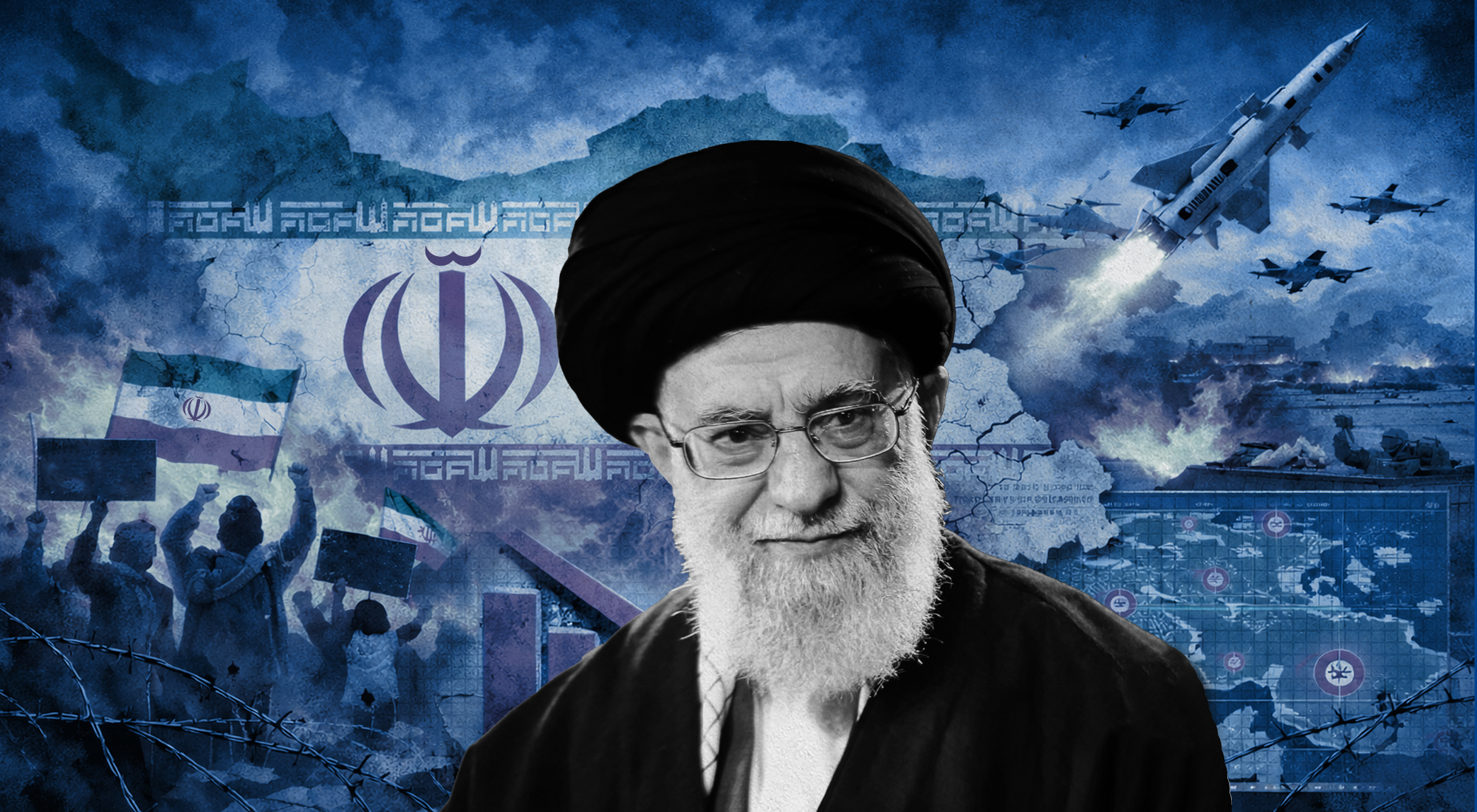


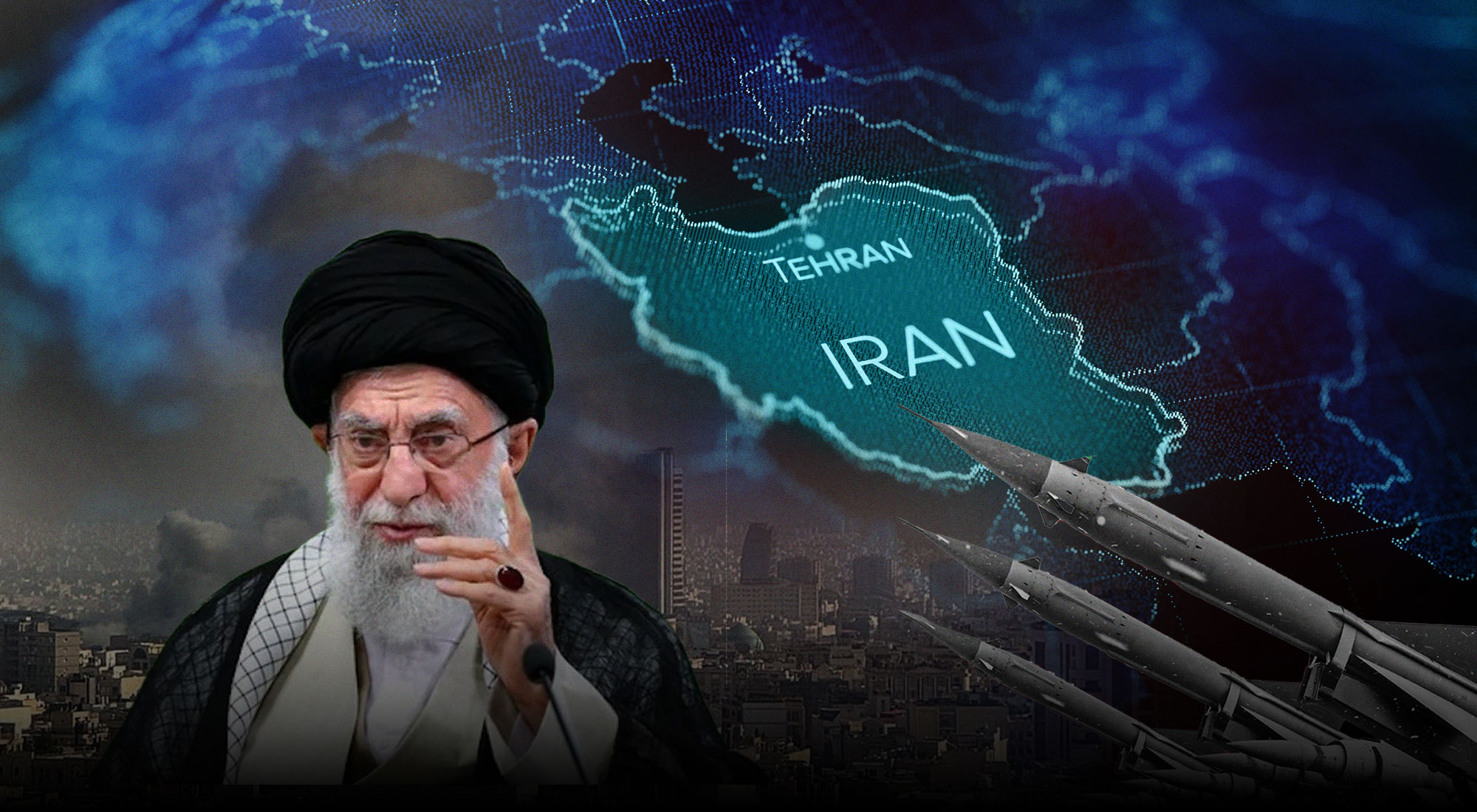




The death of Iran’s Supreme Leader Ali Khamenei would constitute a second foundational moment in the history of the Islamic Republic’s clerical rule—not merely because of the event itself, but because of what it reveals about the nature and deep structure of the regime. The position of the Supreme Leader cannot be reduced to that of a senior political office; rather, it represents the nexus at which religious legitimacy, political authority, and security-military dominance converge. It is the institution that sustains the equilibrium of the ruling triangle: the religious establishment, the bureaucratic state, and the Islamic Revolutionary Guard Corps as the regime’s ideological and military arm.
Accordingly, the absence of the Supreme Leader at a time of open war and accumulated economic pressures would signify far more than a personal transition in leadership. It would subject the entire architecture of the system to a structural test—one that transcends constitutional procedure and raises fundamental questions about cohesion and the regime’s capacity to reproduce its legitimacy.
In this context, succession cannot be treated as a merely technical constitutional process confined to the deliberations of the Assembly of Experts. Rather, it constitutes a revealing moment in the balance of power within Iran’s deep state. The Supreme Leader is not simply the head of the system; he is the guarantor of its delicate internal equilibrium, the ultimate arbiter among its competing centers of authority, and the symbolic source that imbues political decision-making with religious legitimacy.
His absence, in a region marked by geopolitical volatility and an economy burdened by sanctions and war, raises questions that extend beyond “Who will succeed him?” to more profound inquiries: How will the center of gravity within the system be redefined? Can the regime continue to generate a stable formula of continuity?
This study seeks to explore the future of the Iranian political order in the post-Khamenei era by examining a range of possible scenarios, from managed continuity and the expansion of security dominance to temporary collective leadership arrangements and, ultimately, the prospects of gradual erosion or systemic collapse. This forward-looking analysis adopts a structural approach that views the moment of absence as a test of the Islamic Republic’s capacity to reproduce itself under compound pressure: external war, economic fragility, and challenges related to legitimacy and representation.
Thus, the study proceeds neither from an assumption of inevitable collapse nor from a presumption of automatic continuity. Instead, it offers a dynamic reading of internal power balances and external pressures in order to understand the potential trajectories Iran may follow at one of the most sensitive junctures in its post-1979 history.
The Scenario of Managed Continuity
Within this framework, the scenario of managed continuity emerges as the outcome most consistent with the regime’s logic of survival. It rests on the assumption that the ruling elite, religious, political, and security in composition, fully recognizes the dangers inherent in a leadership vacuum during wartime and will therefore prioritize institutional stability over internal rivalries. Under this scenario, a swift and orderly transition mechanism would be activated: a temporary council overseeing the interim period, followed by a decisive process within the Assembly of Experts to appoint a new Supreme Leader, all while preserving the core structure of Wilayat al Faqih and maintaining the fundamental distribution of powers and the ideological character of the system.
Should this transition materialize, it would not amount to a mere literal compliance with constitutional provisions. Rather, it would constitute a dense political process aimed at reproducing existing balances of power. The objective would extend beyond filling the vacancy; it would involve reassuring domestic constituencies and signaling externally that the center of decision-making remains unified and intact. The selection would thus likely favor a figure capable of safeguarding the established architecture of authority, even if lacking the symbolic weight that Khamenei accumulated over decades. The wager, in this case, would not rest on individual charisma but on the resilience of the institutional network surrounding and sustaining the office.
Several indicators lend plausibility to this scenario. First, indications of preparatory discussions within the religious and political elite suggest that a post-Khamenei phase has not been absent from the regime’s strategic calculations. Second, the continued functioning of state institutions without visible large-scale fractures reflects a degree of cohesion within the bureaucratic and security apparatus, particularly in the management of compounded crises. Third, the regime’s historical record, its ability to absorb major shocks from the Iran-Iraq War to successive waves of sanctions and internal unrest, demonstrates a pattern of institutional endurance without systemic collapse. Moreover, the existence of the Assembly of Experts as a constitutionally mandated body provides a formalized mechanism for succession, even if substantive deliberations remain shaped by intricate political bargaining.
This trajectory, however, is not immune to strain. The ongoing war and its economic toll could accelerate tensions within the elite, particularly if military and financial exhaustion intensify. Divisions within the Assembly of Experts between a hardline conservative current and a more pragmatic faction could complicate the selection process and transform it into a contest over the regime’s future direction. Additionally, the difficulty of producing a successor endowed with comparable religious and symbolic authority may weaken the central gravitas of the office, increasing the new leadership’s reliance on security institutions to compensate for diminished legitimacy. In a climate of regional escalation, the risk of targeting the incoming leadership further amplifies short-term fragility.
Accordingly, the probability of managed continuity may be assessed as moderate to high in the near term, provided that elite cohesion endures and the war does not devolve into comprehensive attrition capable of destabilizing internal balances. Historically, the Iranian system has demonstrated a considerable capacity for self-reproduction through intertwined institutional and security mechanisms. Yet this capacity remains contingent upon the limits of external pressure and the degree of discipline maintained within the regime’s inner circle. In this sense, the post-Khamenei moment tests not merely the identity of a successor, but the Islamic Republic’s broader ability to transform shock into an opportunity to recalibrate and reaffirm its authoritarian architecture within a highly fluid regional environment.
The Scenario of Expanding IRGC Authority or a Shift Toward Security-Military Dominance
The scenario of expanding the role of the Islamic Revolutionary Guard Corps, or a broader shift toward security military dominance, assumes that the death of the Supreme Leader would not merely open the question of succession but would fundamentally reorder the balance of power within the regime in favor of its most cohesive, disciplined, and operationally capable institution in times of crisis: the Islamic Revolutionary Guard Corps (IRGC). For decades, the IRGC has ceased to function solely as an ideological military arm. It has evolved into a central actor at the intersection of security, economic influence, and regional strategy, positioning itself as a decisive stakeholder in any leadership transition unfolding under the pressures of war.
This scenario rests on the premise that the vacuum created by the Leader’s absence, particularly amid external escalation and economic attrition, would strengthen a security-first logic at the expense of the traditional equilibrium between religious authority and institutional governance. In such a context, IRGC influence may not manifest as an overt coup or constitutional rupture. Rather, it would likely take the form of decisive weight within the succession process itself: endorsing a candidate closely aligned with its networks or steering the system toward a leadership configuration more structurally dependent on security-military counsel in strategic decision-making. The constitutional façade may remain intact, yet the effective center of gravity would gradually shift toward the security establishment, rendering the new Supreme Leader closer to a legitimizing canopy for an increasingly security-supervised order.
Several structural factors reinforce the plausibility of this trajectory. First is the IRGC’s substantial military and economic footprint within the state. Its control over strategic sectors and its cross-institutional networks grant it indirect leverage at moments of elite redistribution. Second is its accumulated expertise in managing complex regional and military portfolios, which, under conditions of emergency, enhances its claim to strategic stewardship. Third, an environment defined by external war naturally elevates security imperatives above theological deliberation, thereby normalizing an expanded role for the IRGC under the banner of national preservation and regime survival.
Yet this path is not without constraints. Despite the partial militarization of certain state functions, the Islamic Republic remains formally structured around a delicate balance between clerical authority and security institutions. The overt militarization of the highest religious office, or even the perception thereof, could provoke unease within the religious establishment and weaken the symbolic foundations of Wilayat al Faqih. Moreover, segments of the political elite may resist the overt concentration of power within a single institution, fearing the erosion of established mechanisms of intra-elite power sharing. Internationally, any transition interpreted as a soft coup could intensify external pressure and complicate the regime’s strategic environment.
Accordingly, the probability of a security-military dominance scenario may be assessed as moderate under ordinary conditions, though it would rise significantly if the war were prolonged or external threats assumed an existential character. The deeper the logic of emergency governance takes root, the stronger the impulse to centralize authority in the hands of the institution most capable of decisive action. The critical question, however, remains whether the IRGC would confine itself to the role of decisive guarantor within the existing architecture or whether it would press for a substantive reconfiguration of power that would render the Islamic Republic closer to a security state draped in religious legitimacy rather than a religious system supported by security power.
The Scenario of Temporary Collective Leadership
The scenario of temporary collective leadership assumes that the shock produced by the absence of the Supreme Leader, particularly amid open warfare and compounded pressures, could prompt the ruling elite to favor a delayed and carefully managed transition over a rapid and potentially destabilizing decision. In this view, the primary objective would not be the immediate appointment of a successor, but rather the containment of the moment and the reduction of the security and political costs associated with a choice that could quickly become a focal point of targeting in an environment marked by assassinations and regional escalation. Accordingly, governance would be conducted through provisional arrangements, possibly in the form of a leadership council or a flexible collective framework in which authority is functionally distributed until a broader elite consensus crystallizes.
From a functional standpoint, such a model offers several tactical advantages. It reduces the risk of presenting a clearly identifiable new head of authority to adversaries and grants security institutions greater latitude to recalibrate priorities without the symbolic pressures that accompany the elevation of a new Supreme Leader. It also allows internal tensions within the decision-making circle to be absorbed by postponing direct confrontation over the identity of the successor and the regime’s strategic direction. Given the delicate balance among the religious establishment, the executive apparatus, and the Revolutionary Guard, temporary collective leadership may be perceived as a mechanism for buying time while alliances are renegotiated and the positions of key actors are tested.
The plausibility of this scenario rests on several indicators. Reports of internal transitional deliberations and the possibility of a provisional council suggest that collective management is not foreign to the regime’s strategic calculations. Moreover, in an environment characterized by direct targeting and heightened insecurity, delay may appear rational, particularly if the swift appointment of a new leader would be interpreted as an abrupt repositioning of authority. Additionally, certain factions may view such an arrangement as an opportunity to recalibrate their standing within the elite structure and strengthen their bargaining position before a definitive settlement is reached.
Nevertheless, this trajectory carries inherent structural risks. Collective leadership, by its nature, is less conducive to producing decisive action in wartime conditions that demand rapid response and coherent messaging. A temporary council could evolve from a transitional mechanism into an arena of competition among power centers, especially in the absence of a unifying authority capable of arbitration. Externally, the lack of a clearly defined leadership figure may be interpreted as disorientation or weakness, potentially undermining the regime’s ability to project credible deterrence.
Accordingly, the likelihood of temporary collective leadership may be assessed as moderate insofar as it represents a short transitional phase rather than a durable governing formula. Given the ideological foundations of the Islamic Republic, which rest upon the centrality of the Supreme Leader, a sustained shift toward collective institutional leadership would require a profound revision of the regime’s political philosophy. For this reason, the scenario appears more plausibly as a shock absorption mechanism and transitional management strategy than as a lasting redefinition of the Islamic Republic’s governing architecture.
The Scenario of Gradual Collapse or Structural Erosion
The scenario of gradual collapse or structural erosion assumes that the absence of the Supreme Leader, in the context of war and deep economic strain, would not produce an immediate downfall of the regime but rather initiate a slow process of internal attrition. By virtue of its security institutional character, the Islamic Republic is not a fragile system in the classical sense that collapses with a single shock. It is a layered and complex structure that has accumulated decades of experience in crisis management. Yet this accumulated resilience, under mounting pressure, may function less as a guarantee of durability than as a mechanism for postponing a deeper crisis, one that unfolds through incremental fractures rather than sudden rupture.
Under this scenario, the center of power weakens gradually through the interaction of three reinforcing dynamics: military attrition resulting from prolonged conflict, escalating economic costs, and the erosion of political and symbolic legitimacy. The breakdown does not occur in a single dramatic moment. Instead, fissures accumulate within the ruling elite, and disagreements emerge over the management of the transition and the future trajectory of the regime. In the absence of a unifying figure endowed with comparable religious and political authority, the office of the Supreme Leader may lose some of its capacity to function as the ultimate arbiter among competing power centers. Such a development does not imply immediate fragmentation but generates institutional ambiguity, rendering decisions more contested and settlements more provisional.
Advocates of this interpretation argue that security-oriented regimes can withstand shocks for extended periods, yet often emerge from them structurally weakened. The costs of war, particularly if prolonged, extend beyond the battlefield into public finances, labor markets, and standards of living. Should these pressures coincide with acute economic contraction or a marked decline in purchasing power, renewed waves of protest could emerge, whether episodic or widespread. Pressure would then operate on two levels: from above, through elite competition over authority and redistribution of influence; and from below, through a fatigued society seeking an alternative economic and political horizon.
Prewar indicators lend weight to this trajectory. Years of accumulated economic crises and long-term sanctions have already weakened productive capacity and strained middle and lower social strata. Tensions among elite factions over the identity of the successor or the direction of foreign policy could further deepen internal divisions. If living conditions deteriorate significantly, popular pressure may evolve into a multiplier of fragility, particularly in densely populated urban centers.
Nevertheless, the gradual erosion scenario encounters significant countervailing forces. Security institutions possess extensive experience in control and containment, supported by organizational and intelligence capacities capable of preventing fragmented unrest from coalescing into a unified movement. The absence of a cohesive opposition capable of articulating and implementing a credible alternative further reduces the likelihood that social discontent would translate into an organized political transition. Moreover, the regime may succeed in mobilizing segments of society around a narrative of external threat, temporarily reinforcing national cohesion even amid economic hardship.
Accordingly, the probability of immediate collapse remains low in the near term, given the state’s institutional and coercive capacities. However, the likelihood of structural erosion rises to a moderate level over the medium term if the war persists, economic attrition intensifies, and elite divisions become entrenched. The principal risk lies not in sudden implosion but in a gradual transformation into a system that is less cohesive, more reliant on coercion, and less capable of generating renewed legitimacy. In such a context, erosion becomes a prolonged process of internal reconfiguration rather than a singular event of regime overthrow.
The Scenario of Comprehensive Collapse or Rapid Systemic Disintegration
The scenario of comprehensive collapse, or rapid systemic disintegration, posits that the death of the Supreme Leader, occurring amid open warfare and acute economic pressure, could constitute a shock that exceeds the Islamic Republic’s capacity for absorption and equilibrium management. Unlike scenarios of gradual erosion or security repositioning, this perspective rests on the convergence of crises at a single critical juncture: an unmanaged leadership vacuum, deep elite fragmentation, and a broad social eruption that surpasses conventional instruments of control. In such circumstances, the central question would no longer concern the mechanics of succession but rather the cohesion of the decision-making center itself.
Within this framework, the regime would fail to orchestrate an orderly transition. Divisions within the Assembly of Experts would intensify, and latent contradictions among the religious establishment, the presidency, and the security apparatus, including the Revolutionary Guard, would surface publicly. In the absence of a unifying figure endowed with symbolic authority capable of regulating internal competition, muted rivalry could evolve into an overt struggle over the regime’s future direction: whether to reaffirm Wilayat al Faqih in a more rigid form, to redistribute authority within the system, or to undertake deeper structural revisions. Should such debates migrate from closed deliberative spaces into the public arena, the perceived coherence of the state could weaken, emboldening societal actors to test the limits of authority.
Simultaneously, intensifying economic pressure could aggravate instability. Currency depreciation, supply chain disruptions, shortages of essential goods, and the erosion of purchasing power would heighten public grievances. In such an environment, protests could expand from socioeconomic demands to direct questioning of the regime’s legitimacy following the loss of a long-standing symbolic anchor. If unrest were to spread beyond major urban centers into peripheral regions and industrial zones, security forces might confront a wave of mobilization more difficult to contain through traditional methods, particularly if compounded by institutional fatigue resulting from prolonged conflict.
Collapse could unfold along one of two interconnected pathways. The first involves gradual internal fragmentation that rapidly crystallizes into institutional breakdown, characterized by the erosion of unified decision-making and the disruption of command chains. The second entails a sudden transition triggered by defections within segments of the security apparatus or by the refusal of certain units to execute large-scale repression, thereby opening space for the reconstitution of authority beyond the existing framework. In either trajectory, the state’s core would become contested, not merely its policies.
Indicators that might support this scenario include the inability of the elite to agree promptly on a clear transition mechanism, the emergence of overt divisions among key power centers, escalating protests that overwhelm established containment strategies, and a broad economic collapse resulting from war and sanctions. Moreover, a sustained loss of external deterrence capacity could be interpreted domestically as evidence of leadership weakness, further deepening crises of confidence.
Yet the probability of this trajectory is constrained by substantial countervailing forces. The regime possesses a dense and entrenched security infrastructure and extensive experience in fragmenting protest movements before they coalesce into unified opposition. The potential mobilization of nationalist sentiment in response to external threats could temporarily reinforce cohesion, even among economically dissatisfied constituencies. Furthermore, the absence of a structured and widely recognized political alternative capable of assuming power swiftly reduces the likelihood that turbulence would translate into a stable transition.
Accordingly, the likelihood of comprehensive collapse remains low in the short term, given the regime’s capacity for control and rapid recalibration of power centers. However, this probability could rise significantly if three simultaneous conditions were to converge: prolonged war generating clear military attrition, extensive economic breakdown affecting the social fabric at depth, and explicit fragmentation within the security establishment that undermines unified command, accompanied by coordinated opposition forces inside and outside the country capable of articulating a credible alternative at both domestic and international levels. At the intersection of these conditions, the regime would confront not merely a crisis of transition management but a crisis of survival, wherein shock ceases to be a political episode and becomes a moment of forced re-founding, either of the system itself or of what follows it.
Conclusion
In sum, the future of Iran cannot be reduced to a rigid binary between continuity and collapse. Rather, the landscape appears as a broad spectrum of possibilities ranging from managed continuity to full systemic disintegration. A regime constructed upon a delicate architecture that fuses religious legitimacy, political authority, and security control now confronts, in the absence of the Supreme Leader, a test that extends far beyond the selection of a successor. It is, at its core, a test of structural equilibrium under compound pressure, where war, economic strain, and a crisis of legitimacy intersect simultaneously.
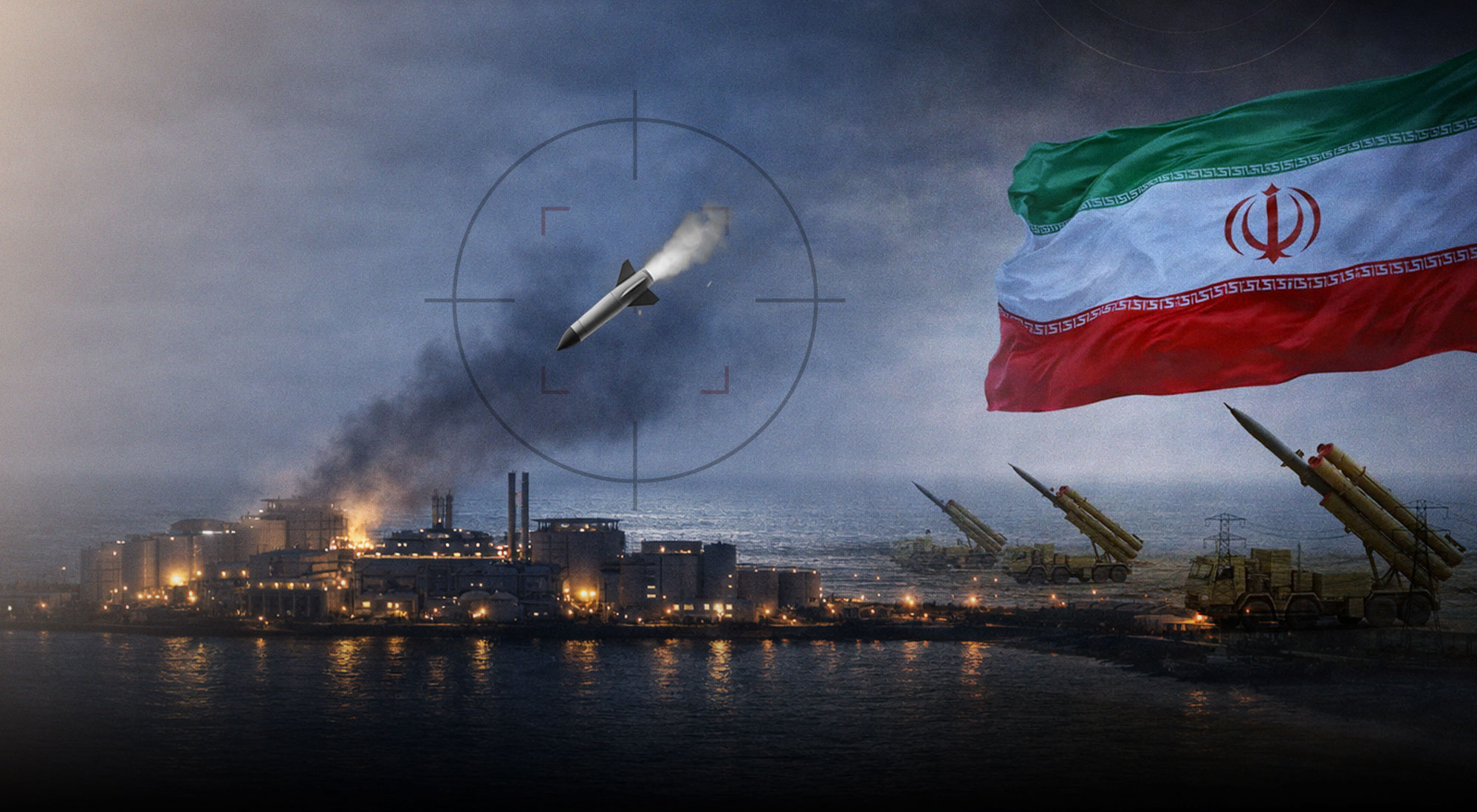
Objectively, short-term projections may incline toward a hybrid formula combining institutional continuity with an expanded security role, given the state’s experience in crisis management and the resilience of its coercive apparatus. Yet a more critical analytical reading, particularly in light of recent escalatory developments, may point toward a less stable trajectory. The targeting of civilian sites in neighboring states, with the attendant political, moral, and regional costs, alongside the decision to close the Strait of Hormuz, a move that directly challenges the global economic system and international energy security, signals a shift from calibrated risk management to high-stakes strategic brinkmanship. When a state resorts to escalation at such a level, it often reflects narrowing strategic options rather than surplus strength.
The closure of a maritime chokepoint vital to global commerce is not merely a tactical maneuver; it constitutes a declaratory willingness to absorb confrontation with major powers. In this context, it is difficult to imagine that the United States, having become directly and indirectly engaged in the escalation cycle, would accept a simple restoration of the status quo without a significant recalibration of deterrence. From this perspective, the objective may extend beyond containing Iranian behavior to pushing the regime toward a threshold of exhaustion that undermines its capacity for self-reproduction in its previous form.
To suggest that the regime is entering its final phase does not imply the inevitability of immediate collapse. Rather, it indicates the onset of a period in which indicators of structural erosion may accelerate. When external overreach converges with acute internal economic strain and the absence of a unifying authority capable of regulating elite dynamics, the probability of accelerated destabilization increases. Any overt fragmentation within the security establishment under such conditions could transform a manageable crisis into a moment of systemic rupture.
Nevertheless, these trajectories remain non-linear and potentially overlapping. A period of heightened securitization and apparent continuity may precede deeper fractures if attrition persists. Intensified coercion may secure temporary stability, yet simultaneously exacerbate international isolation and widen the gap between state and society. Thus, the assessment that the regime is approaching a decisive inflection point rests not on a single dramatic event but on a cumulative reading of escalation, exhaustion, and strategic overextension.
Ultimately, the fate of the clerical order will be determined at the intersection of three decisive variables: the cohesion of the ruling elite under unprecedented strain, the resilience of the economy amid sanctions and military escalation, and the willingness of international powers, foremost among them the United States, to permit the regime’s re-stabilization after the crossing of major strategic thresholds. Should these variables converge against the system’s capacity for endurance, the current crisis may cease to be a test of adaptive reproduction and instead become a historical rupture capable of fundamentally reshaping Iran’s political landscape.
References
- Miranda Jeyaretnam and Chad de Guzman, “After Khamenei, Who Could Lead Iran Next?,” Time, March 2, 2026, https://time.com/7382040/iran-ayatollah-ali-khamenei-successor-next-supreme-leader/?utm_source=chatgpt.com.
- “Who could succeed Ayatollah Ali Khamenei to lead Iran?,” Al Jazeera, March 1, 2026, https://www.aljazeera.net/news/2026/3/1/who-could-succeed-ayatollah-ali-khamenei-to-lead-iran.
- “Iran’s regime scrambles to survive after Ali Khamenei’s death,” Le Monde, March 2, 2026, https://www.lemonde.fr/en/international/article/2026/03/02/iran-s-regime-scrambles-to-survive-after-ali-khamenei-s-death_6751012_4.html.
- “Temporary leadership put in place as Iran succession plans unclear,” The Washington Post, March 1, 2026, https://www.washingtonpost.com/world/2026/03/01/trump-iran-israel-khamenei-strikes-live-updates/.
- “Who Could Lead Iran After the Death of the Supreme Leader?,” CNN Arabic, March 1, 2026, https://arabic.cnn.com/middle-east/article/2026/03/01/who-could-lead-iran-after-death-of-the-supreme-leader.
- “After Khamenei: What Iran, and the World, Face Next,” Time, March 2, 2026, https://time.com/7381954/iran-ayatollah-khamenei-trump-israel/.
- “Benign transition or bloody civil war: what next for Iran after the bombing?,” The Guardian, March 3, 2026, https://www.theguardian.com/world/2026/mar/03/what-next-for-iran-after-the-bombing-four-scenarios.
- “After Khamenei: Planning for Iran’s Leadership Transition,” Council on Foreign Relations, March 2026, https://www.cfr.org/reports/leadership-transition-in-iran.
- “Iran’s Supreme Leader Ayatollah Ali Khamenei is dead at 86,” AP News, March 2026, https://apnews.com/article/5b13b69b708c4ed38e8f95f5fb41a597.
- “Iran After Khamenei: Succession and Power Dynamics,” Reuters, March 2026, https://www.reuters.com/world/middle-east/iran-after-khamenei-succession-power-dynamics-2026-03-01/.
- “Iran after Khamenei: What happens next?,” Deutsche Welle (DW), March 1–3, 2026, https://www.dw.com/en/khameneis-death-never-thought-i-would-see-this-day/a-76175776.
- “How succession works in Iran and who will be the country’s next supreme leader,” Arab News, March 1, 2026, https://www.arabnews.com/node/2634852/middle-east.
- “Iran after Khamenei: Who leads and what’s next?,” Gulf News, March 1, 2026, https://gulfnews.com/world/mena/after-khamenei-who-leads-iran-and-whats-next-the-country-enters-a-critical-transition-1.500459584.
- “Iran after Khamenei: What’s next for Iran?,” CGTN, March 1, 2026, https://news.cgtn.com/news/2026-03-01/After-Khamenei-s-death-what-s-next-for-Iran–1L9KqfxX35C/p.html.