


1. Introduction: From Forecast to Reality
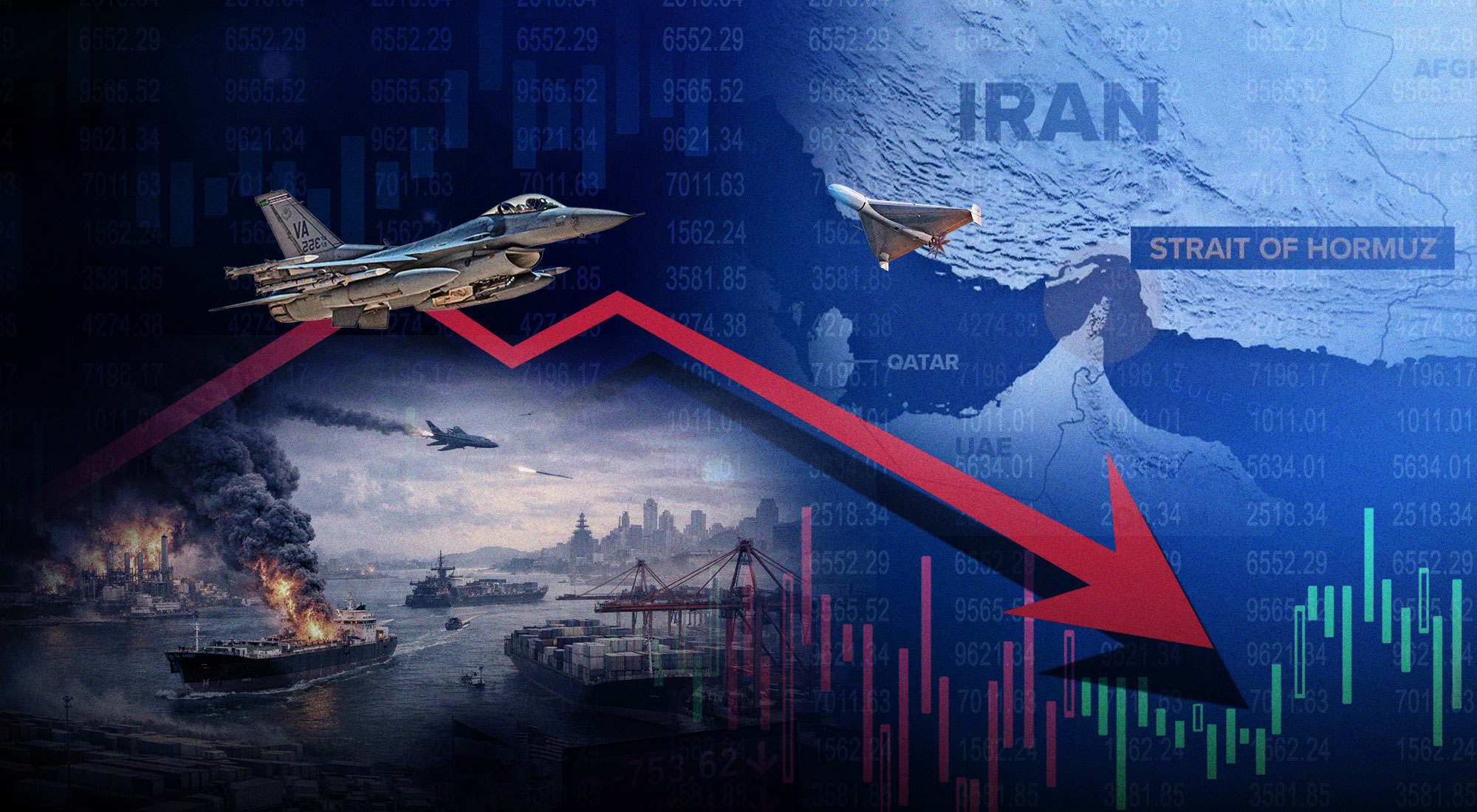
On 28 February 2026, the United States and Israel launched the joint military operation “Operation Epic Fury” against Iran, turning the system-shock scenario warned of in this report into reality. The death of Iran’s Supreme Leader Ali Khamenei, Iran’s full-scale retaliatory attacks, and the de facto closure of the Strait of Hormuz simultaneously hit global energy markets, maritime logistics, and financial markets.
The Executive Director of the International Energy Agency (IEA) described the crisis as “the most serious global energy security crisis in history.” Based on actual data and market reactions accumulated over roughly a month since the outbreak of the conflict, this report fully updates the original analysis and adds a broad assessment of the economic effects on East and Southeast Asia as well as the diplomatic responses from the region.
2. Shock to the Energy Market: Actual Data
2-1. Oil Price Trends
After the outbreak of hostilities, the global oil market experienced a steep but staged rise. Initially, the market remained relatively calm compared with the actual risk of supply disruptions. Brent crude rose only about 18% (+$12.93) in the first week of March compared with 27 February 2026, the last trading day before the conflict. However, attacks on Saudi Arabia’s Ras Tanura terminal, Kuwaiti oil facilities, and fuel storage sites in Tehran rapidly shortened what had been a brief “market grace period.”
| Point in Time | Brent Crude (per barrel) | Change vs. Prior Day | Main Driver |
| Before the conflict (Feb. 27) | $65–68 | – | Baseline |
| Immediately after outbreak (Mar. 2) | $80–82 | +10–13% | Initial shock, Hormuz threat |
| Week 2 (as of Mar. 10) | Above $110 | +39% | Supply disruption materializes, Qatar force majeure |
| Week 3 (as of Mar. 16) | $119 (intraday) | Further spike | Strike on Saudi facilities, fears of prolonged conflict |
| Worst-case outlook | Above $150 | – | Capital Economics projection if conflict persists |
Goldman Sachs estimated that traders were demanding an additional risk premium of roughly $14 per barrel compared with pre-war conditions. That figure broadly aligns with a scenario in which the Strait of Hormuz is fully blocked for four weeks. J.P. Morgan projected that if Brent remains at elevated levels through the year, global GDP growth in the first half of 2026 could decline by 0.6 percentage points on an annualized basis.
2-2. Shock to the LNG Market
Alongside oil, the liquefied natural gas (LNG) market has suffered one of the most severe shocks in this conflict. Qatar, which accounts for around 20% of global LNG trade, declared force majeure after Iranian drone attacks damaged the key Ras Laffan complex.
Key figure: On 4 March, the Asian spot LNG price rose to $25.40 per MMBtu, its highest level in three years. After Iran’s renewed attacks on 18 March, Asian spot LNG prices surged by an additional 140% or more.
According to Columbia University’s Center on Global Energy Policy (CGEP), approximately 110 bcm of annual net LNG exports passing through the Strait of Hormuz have been halted since 28 February. That is equivalent to roughly 19% of global LNG trade in 2025. Europe’s TTF gas futures benchmark jumped 59% after the conflict began, moving above €60 per MWh.
2-3. Maritime Insurance and Logistics Costs
As the Strait of Hormuz has been classified as a high-risk area, maritime insurance costs have risen sharply. The war-risk premium alone is estimated to add $5 to $15 per barrel in additional cost. With major energy firms—including QatarEnergy, BAPCO, and Kuwait Petroleum Corporation (KPC)—declaring force majeure, shipping companies have been unable to avoid major cost increases stemming from rerouted voyages.
According to Reuters, war-risk insurance premiums rose sharply within days of the conflict’s outbreak. As vessel traffic declined, congestion intensified, while detours increased sailing distances and fuel costs, creating a vicious cycle.
| Item | Before the conflict | Post-conflict change | Notes |
| Brent crude | $65–68/bbl | +$50 or more at peak | Intraday high of $119 in March |
| Asian spot LNG | ~$10/MMBtu | +$15 or more ($25.40) | After Qatar’s force majeure declaration |
| European TTF gas | ~€38/MWh | +59% (€60+) | Winter 2025–26 storage around 30% |
| Maritime war-risk premium | Baseline | +$5–15 per barrel | Reuters analysis |
| Middle Eastern granular urea | Baseline | +34% | Pressure on food supply chains |
| Aluminum price | Baseline | Highest in 4 years | Middle East accounts for 7% of global production |
3. Global Inflation Transmission Channels
The surge in energy prices amplifies inflationary pressure across the economy. Morgan Stanley estimates that a 10% rise in oil prices adds roughly 0.35 percentage points to consumer inflation over the following three months. In a situation like the present one—where oil prices have jumped by 50% to 100%—the spillover effects are likely to be much broader.
Food supply chains are especially vulnerable. The Middle East is a key hub for global urea fertilizer production, and futures prices for Middle Eastern granular urea have risen 34% during the conflict. The Food Policy Institute in the United Kingdom warned that disruptions in fuel and fertilizer markets would place lasting upward pressure on food prices. At the same time, roughly two-thirds of global bromine production, concentrated in Israel and Jordan, faces disruption, raising concerns for semiconductor manufacturing processes.
Analytical outlook: Capital Economics projects that if the conflict lasts longer than three months, average Brent prices over the next six months could reach $150 per barrel. Under that scenario, global inflation could rise above 4% in the euro area, above 3% in the United States, and above 2.5% in Japan.
Former U.S. Treasury Secretary Janet Yellen warned that the Iran crisis would further constrain the Federal Reserve’s ability to cut interest rates. With U.S. consumer inflation already at 2.4%, above the Fed’s 2% target, the combination of Trump administration tariffs and surging energy prices is making monetary policy management extremely difficult.
4. Economic Shock to East and Southeast Asia
4-1. Energy Dependence: Structural Vulnerability
East and Southeast Asian countries are among the biggest victims of this conflict. Their structural dependence on Middle Eastern oil and LNG is extremely high, so a closure of the Strait of Hormuz translates almost immediately into real supply disruptions. According to the World Economic Forum (WEF), South Korea, Japan, China, and India together import about 75% of crude oil exports and 59% of LNG exports passing through the Strait of Hormuz.
| Country | Dependence on Middle Eastern oil | Share routed via Hormuz | LNG-specific vulnerability |
| Japan | About 90% | 93% | Major importer of LNG from Qatar and the UAE |
| South Korea | About 70% | More than 95% | Qatar and the UAE account for more than 14% of LNG imports |
| China | About 50% | About 50% | Can substitute some Russian imports; commercial stocks provide partial buffer |
| India | About 60% | High | Limited reserves; dependent on Middle Eastern heavy crude |
| Singapore | High | High | Concentrated dependence on Qatari LNG |
| Thailand | High | High | Second-largest importer of Middle Eastern crude in Southeast Asia |
| Philippines & Indonesia | 60–95% | High | Severe impact on vulnerable households |
4-2. South Korea: A Compound Economic Shock
South Korea is one of the countries experiencing the most immediate and severe economic shock from the conflict. On 4 March, the KOSPI fell 12.1% in a single day to close at 5,093.54, while the KOSDAQ plunged 14%, triggering a circuit breaker. This was the sharpest one-day decline since the 2008 financial crisis. Samsung Electronics fell 11.7% and SK Hynix dropped 9.6%.
South Korea imports around 70% of its crude oil from the Middle East, most of it via the Strait of Hormuz. Qatar and the UAE account for more than 14% of the country’s LNG imports. To address war-related market volatility, the government activated a market stabilization program worth around KRW 100 trillion (about USD 68 billion). The Korean semiconductor industry has also expressed concern about component shortages stemming from disruptions to Qatari helium supplies, which account for roughly one-third of global helium output.
South Korea’s dual security burden: Beyond the energy shock, anxiety has also grown over the possibility that the Trump administration could redeploy THAAD assets stationed in South Korea to the Middle East. Such a move could create a gap in U.S. military capabilities on the Korean Peninsula and weaken deterrence against North Korea, making it an additional compound risk factor.
BMI, under Fitch Solutions, estimates that the conflict could add 7 to 27 basis points to headline consumer inflation across Asia, with the largest impact expected in Thailand, South Korea, and Singapore, where energy carries a heavy weight in consumption baskets.
4-3. Japan: Strategic Stockpiles and Structural Challenges
Japan’s structural vulnerability is acute, with approximately 90% dependence on Middle Eastern oil and 93% of imports routed through the Strait of Hormuz. Even so, on 16 March, shortly after the outbreak of conflict, the government decided to release 80 million barrels from the national petroleum reserve—equivalent to about 45 days of domestic demand. Japan holds a total of 470 million barrels, or roughly 254 days of reserves, giving it one of the world’s strongest short-term buffers.
Nevertheless, according to an Asahi Shimbun public opinion survey, 90% of respondents said they were concerned about the conflict’s impact on the Japanese economy. Net foreign selling reached its largest level in five months, and the yen weakened to its lowest level in about 20 months, prompting Finance Minister Satsuki Katayama to mention possible market intervention. The Japanese government has also reopened political debate over accelerating the expansion of nuclear power in response to the crisis.
4-4. China: A Strategic Reconfiguration of Energy Security
China is in a better position to cushion the short-term shock by drawing on commercial and strategic petroleum reserves, but the conflict adds further downside pressure to an already weakening 2026 growth outlook. According to Columbia University’s CGEP, damage to QatarEnergy’s Ras Laffan facilities triggered force majeure declarations affecting LNG supply contracts with Chinese buyers.
In response, Chinese state-owned energy firms have resumed purchases of seaborne Russian crude, while the Power of Siberia 1 pipeline is reportedly operating above designed capacity. The crisis may deepen China’s energy dependence on Russia, creating a dilemma that runs counter to Beijing’s long-standing diversification strategy.
4-5. Southeast Asia: Double Pressure on Export Economies
Major Southeast Asian countries—including the Philippines, Thailand, Malaysia, and Brunei—depend on imports for 60% to 95% of their oil needs and thus face direct energy shocks from the conflict. The Asian Development Bank (ADB) projects that growth in developing Asia and the Pacific could be reduced by as much as 1.3 percentage points.
In Thailand, the SET index plunged 8% in the early phase of the conflict, triggering a circuit breaker. Economists warned that if the conflict lasts more than three months, weaker exports and deteriorating tourism could cut economic growth by half. A survey by Malaysia’s export promotion agency MATRADE found that about 64% of Malaysian firms expect to be affected by shipping delays, surging freight and insurance costs, and higher raw-material prices.
In semiconductor supply chains, Southeast Asian countries seeking to expand their semiconductor industries—including the Philippines, Thailand, Malaysia, and Singapore—face a dual burden from helium supply disruptions and a sharp rise in air-freight costs. Higher air-freight costs constrain the transport of high-value goods such as pharmaceuticals and semiconductors by limiting aircraft operating range and route options.
5. Financial Market Shock and the Monetary Policy Dilemma
Global financial markets reacted immediately after the conflict broke out. Gold rose above $5,400 per ounce, reflecting a flight to safety. Aluminum hit its highest level in four years, and United Airlines shares fell 6%. Japan’s Nikkei 225 dropped 3.9%, while Taiwan’s TAIEX fell 4.4%.
From a monetary policy perspective, central banks across Asia face difficult choices. Countries highly dependent on imported energy are simultaneously confronting weaker current accounts and currency depreciation pressure, leaving policymakers caught between raising rates and defending growth. Nomura projected that Malaysia (as a relative beneficiary due to energy exports), Australia, and Singapore could tighten rates. Bank Indonesia signaled the possibility of market intervention to stabilize the rupiah, while Singapore’s MAS has begun assessing the conflict’s implications.
6. Diplomatic Responses and Scenarios in East and Southeast Asia
6-1. ASEAN’s Diplomatic Response
Just five days after the conflict began, on 4 March, ASEAN foreign ministers issued a joint statement calling for an immediate ceasefire. By explicitly stating that the United States and Israel had started the war, the statement avoided endorsing the Trump administration’s rationale for military action and emphasized that Oman-led mediation efforts had already been underway.
Under the Philippines’ chairmanship, ASEAN foreign ministers convened again by video conference on 13 March and called for all sides to “avoid further escalation and resolve differences through diplomacy and dialogue.” ASEAN economic ministers, in a separate meeting, warned that soaring oil prices were already harming member economies and that a prolonged conflict could create a “persistent economic security challenge.”
At the national level, Indonesian President Prabowo Subianto signaled a willingness to visit Tehran and mediate within hours of the conflict’s outbreak, while Malaysian Prime Minister Anwar Ibrahim strongly condemned the assassination of Khamenei. Singapore and Vietnam, by contrast, adopted more balanced positions centered on respect for international law and peaceful resolution. Thailand and the Philippines prioritized the safety of their nationals in the Middle East (about 110,000 Thais and 2.2 million Filipinos).
6-2. Responses of Major East Asian Countries
Japanese Prime Minister Sanae Takaichi expressed “serious concern” and called for de-escalation, but refrained from explicitly supporting the U.S.-Israeli airstrikes on Iran. This clearly illustrates Japan’s dilemma as both a U.S. ally and a country whose Middle Eastern energy dependence reaches 90%. South Korea faces a similar dilemma, compounded by the additional security variable of possible THAAD redeployment to the Middle East.
Chinese Foreign Minister Wang Yi held a series of phone calls with the foreign ministers of Russia, Iran, Oman, France, Israel, Saudi Arabia, and the UAE, stressing the need to uphold the UN Charter, halt the use of force, and return to dialogue. Because the crisis directly threatens China’s energy flows through the Strait of Hormuz, Beijing has taken one of the most active diplomatic positions in favor of a negotiated solution.
6-3. Scenario Analysis Going Forward
| Scenario | Conditions | Oil price outlook | Impact on Asian economies |
| Short war (1–4 weeks) | Early Iranian capitulation or ceasefire agreement | Possible return to around $65 | Temporary shock, quick recovery |
| Medium-term conflict (1–3 months) | Sporadic fighting continues, partial reopening of the Strait | $100–130/bbl | Growth down by up to 1.3pp, inflation rises |
| Prolonged conflict (3+ months) | Stalemate, continued Iranian asymmetric tactics | Above $150 | Stagflation, possible external debt stress in some countries |
| Regional escalation (full Gulf war) | Major strikes on Saudi Arabia/UAE, expansion into broader regional war | Unprecedented levels | Asian recession, multi-year supply-chain breakdown |
The Middle East Council emphasizes that this crisis should serve as a warning to Asian countries. If Asian states want stable energy supplies, they will need to play a more active role in the management and mediation of Middle Eastern conflicts. So far, however, East Asian governments have focused more on protecting their nationals and minimizing economic damage than on exerting diplomatic influence.
7. Structural Vulnerabilities of Globalization and Long-Term Lessons
This crisis once again lays bare the structural fragility of the globalization system built over decades. The WEF argues that the conflict demonstrates how battlefield shocks harden into geoeconomic shocks. Rising insurance costs, delayed investment decisions, rerouted supply chains, and eroding confidence in Gulf stability are all interacting simultaneously.
Historically, major energy shocks have often catalyzed structural transformation. The 1973 oil shock accelerated nuclear expansion in France, while the 1979 Iranian Revolution drove Japan toward aggressive energy-efficiency policies. Today’s crisis exposes both Asia’s dependence on imported oil and LNG and the vulnerability of fertilizer supply chains, potentially becoming a powerful catalyst for energy diversification, expanded stockpiles, and faster renewable-energy transition. Yet structural change takes years, and that remains a hard constraint.
8. Conclusion: Diplomacy Is the Key Variable
The U.S.-Israel-Iran conflict has moved beyond a forecast scenario and become a real crisis in the global energy system. Brent reaching $119 per barrel, Asian spot LNG prices climbing to record levels, and South Korea’s stock market recording its worst single trading day since 2008 all symbolically demonstrate the severity of the shock.
The direction of the global economy now depends on three factors. First is the duration of the military confrontation. If the conflict ends within four weeks, energy prices could stabilize quickly; if it continues for more than three months, stagflationary pressure will likely intensify, especially across Asia. Second is the speed with which the Strait of Hormuz and Qatar’s LNG production facilities are restored. After Iran’s renewed attack on 18 March, the Ras Laffan complex reportedly lost 17% of its production capacity, and some analyses suggest that full recovery could take years. Third is the diplomatic mediation role of East Asian and Gulf countries.
Southeast Asia, led by ASEAN, together with China, is seeking to activate emergency UN Security Council discussions and Omani mediation channels, but their leverage over the United States and Israel remains limited. The crisis once again confirms that the Strait of Hormuz is not simply a regional chokepoint, but a pressure point for the entire global economic order. Only a rapid diplomatic resolution can prevent this shock from hardening into a deeper structural crisis for the global economy.
Disclaimer and Sources
This report was prepared on the basis of publicly available materials published between February and April 2026, including sources from Goldman Sachs, J.P. Morgan, Columbia University CGEP, the World Economic Forum (WEF), CSIS, the Asian Development Bank (ADB), Al Jazeera, Reuters, CNBC, Deloitte, the Middle East Council, The Diplomat, Asialink (University of Melbourne), and the Wikipedia article “Economic impact of the 2026 Iran war.” This report is intended for analysis and information purposes only and does not constitute investment or policy advice.