



Under Donald Trump’s second presidential term, the relations between Russia and India have undergone a major test as New Delhi is increasingly pressured by Washington to take sides in the Russia-West rivalry and lessen its dependence on the import of Russian oil. The goal is to weaken Moscow’s military might, which, as seen by the United States, is buttressed with Indian money.
Though tactically, India might concede to the United States on some points, in the longer run, Washington’s pressure is unlikely to drive a wedge between Russia and India. Instead, a continuation of traditionally close cooperation in the military as well as economic spheres is expected. As ardent adherents of the pursuit of multi-aligned foreign policy, Moscow and New Delhi will push for maintaining freedom of maneuver in foreign relations. Both will avoid making brusque moves, which otherwise would imply them siding against each other. Strategic autonomy will remain at the core of their relations, backed up by the belief in the need to work toward a multipolar world order, regarded by Moscow and New Delhi as a more just version of the global system.
Roots of India-Russia Alignment
The bond that exists between India and Russia is rooted in the history of their close military and economic cooperation during the Cold War. Political views too were aligned back then, as India viewed the Soviets as a counterbalance to Western influence. Not much has changed since the 1990s. Russia continues to be seen by India as a key component in the country’s multi-vector foreign policy.[1]
For its part, Russia considers India as a key player in the developing multipolar world order, a gateway for Russian businesses to engage the nations of South Asia and the wider Indian Ocean. After the collapse of the Soviet Union and the humbling of Russia’s power in the 1990s, Moscow was looking at India as a natural partner in their pursuit of a more just and polycentric world. No wonder then that Russia initiated a Moscow-Beijing-New Delhi format in an effort to develop it into something bigger and meaningful to resist America’s unipolar moment.[2] Therefore, both countries support the development of such multilateral organizations as the BRICS+ and the Shanghai Cooperation Organization, which, in their view, represent the majority of the global population and economic activity.
India presents itself (much as Russia does) as a distinct civilization and therefore a separate geopolitical pole that does not need to be fully aligned with any other major actor. This civilizational bond matters, as it places the two countries in the same league of powers. It also means that both countries view liberal internationalism—for decades a dominant foreign policy outlook in the United States—with animosity, as it negates the idea of spheres of influence. The civilization-state idea, on the contrary, is all about spheres of influence: Russia in the former Soviet space, while India in South Asia and parts of the Indian Ocean.
For New Delhi, ties with Russia serve specific economic, military and often geopolitical purposes. The relationship is economically beneficial to India, and the Russian card is a powerful tool in the hands of Indian policymakers as a counter to Western and, at times, even Chinese ambitions. That being said, New Delhi does not seek a full alliance with Russia, as it would constrain India’s room for maneuver in foreign affairs. Alliances bear hard responsibilities, and for bigger actors, they are often uncomfortable. For instance, in a potential conflict between India and its arch-adversary, Pakistan, Russia will be very unwilling to side with any actor. A similar posture is visible in India’s approach to Russia and its neighbors.
Continuing Alignment Amid the War in Ukraine
Yet since the war in Ukraine began, India’s traditional calculus began to change. Russia’s foreign policy heavily tilted toward China while the relations between New Delhi and Beijing remained tense. Suddenly, India’s traditional approach, rooted in maintaining its strategic autonomy, underwent tremendous stress. With the growing Moscow-Beijing alignment, New Delhi seemed to have to make a radical shift in its foreign policy in favor of the West. It required major energy and agility on the part of the Indian political establishment to extricate itself from this difficult geopolitical situation. In the end, New Delhi chose to stick to the same foreign policy course: constant balancing, even in light of Russia’s tilt to China, with the hope that the war in Ukraine would end soon.
For India, maintaining neutrality in the Ukraine war morally was relatively easy as New Delhi considers the conflict to be geographically distant and less consequential in terms of immediate geopolitical impact than, for instance, what happens in Pakistan and Afghanistan. Moreover, New Delhi also harbors less empathy for Ukraine out of pure geopolitical calculation: Kyiv has long maintained close military and political relations with Islamabad, and in simple economic terms, Russia is far more important.
Beyond the challenges, the war in Ukraine, in many ways, positively served India. It pushed Russia to actively look southward to Asia and the Middle East in order to limit dependence on Western markets. With the reorientation of Russia’s economy to the Global South, trade between Russia and India grew exponentially. Traditionally, Russian-Indian economic ties were based on three key aspects: military-technical cooperation, nuclear energy, and space exploration.[3] Yet, the total trade level had barely surpassed the $12 billion mark before the war in Ukraine. Since 2022, however, bilateral commerce has grown to a whopping $65 billion in just two years.[4] India’s interest in cheap Russian oil was a key driver behind the growth. Moscow and New Delhi also dangle with the idea of a free trade agreement between India and the Eurasian Economic Union (EAEU). Given that the Moscow-led grouping has already signed such agreements with Iran and aims to reach similar treaties with Southeast Asian states (among which is Indonesia), India-Russia relations could develop in the same way.
Russia and India also cooperate in other areas. In 2023, a Russian-Indian consortium made up of Transmashholding and Rail Vikas Nigam Ltd. won a contract worth $1.7 billion for the production, supply, and maintenance of 120 Vande Bharat Express high-speed trains to India.[5] There are also examples of joint Indian-Russian ventures in oil and gas exploration featuring Russian giants such as Rosneft and Gazprom. In the pharmaceutical sphere, India’s Dr. Reddy’s Laboratories and Sun Pharmaceutical Industries Ltd. have successfully operated with their Russian counterparts.[6] Relatedly, deeper economic engagement was discussed during Indian Prime Minister Narendra Modi’s two visits to Russia in 2024, boosting cooperation in sectors such as defense, energy, trade, and most notably connectivity.[7]
The latter point is particularly important as both countries are indeed invested in the cooperation on trans-Eurasian connectivity, especially the expansion of the International North-South Transport Corridor (INSTC), which connects Russia to Iran’s southern ports and extends further to India. Since 2022, the INSTC has become a critical supply route for Russia’s military industry and other sectors of its economy. Running through both sides of the Caspian waters and the sea itself, the corridor has always been popular throughout the centuries, linking the Eurasian steppes with the Middle East and South Asia. Indeed, it was through this geographic corridor that Russia and Iran traded from the 16th century onward when Russian merchants sought a connection with India, and Indian merchants established a web of merchant colonies of various sizes in Russian and Iranian cities to build a north-south human connectivity.
Given the geographic distance from Russia to India, the development of the INSTC is an important geopolitical move, which will allow the two countries to enjoy an uninterrupted land connection. Both sides have already made some progress to that end. For instance, in October, a train of sixty-two twenty-foot containers (up from 32 units) was sent from Russia to Iran’s Bandar Abbas Port via the eastern branch of the INSTC before being transported to Mundra, India. Chelyabinsk to Mumbai may be reached in about 30 days, proving it could be quicker than other routes.[8] Another important route that India is interested in goes through the Arctic and mostly along Russia’s shoreline. India has long expressed ambitions to play a more active role along the Northern Sea Route (NSR) and in the research of the Arctic region overall, where other non-regional actors such as China and Japan have upped their engagement to gain access to still untapped resources. Indeed, in India’s view, China’s interest in the development of the NSR could pave the way for this route to play an alternative to passage through the Malacca Strait, still considered a major geopolitical dilemma for the Chinese economy. Beijing’s minimizing trade via Southeast Asia would deprive India of its key tool for pressuring China when it comes to their competition in the Indian Ocean.
India is beginning to play a role that is highly appreciated by the Russian side: provider of various high-tech products—either Western ones or its own, based on Western prototypes—which gives Russian manufacturers much-needed replacements for Western high-tech imports. For Russia, this aspect is of increasingly greater importance as well. Imports from India will allow the Russian economy to avoid dependence on China in the technological sphere, so much feared by Russian policymakers, as it would constitute a major tool for Beijing in future negotiations.
Russia and India also find common interests in several strategic regions. In Central Asia, both are interested in promoting security and economic initiatives, which would minimize terrorism and radicalism threats. New Delhi and Moscow also seek developments of north-south connectivity spanning Central Asia and Afghanistan. One of the INSTC’s branches passes through Central Asia, and there seems to be increasing enthusiasm from Turkmenistan, Uzbekistan and Kazakhstan to expand their engagement within the corridor. Reaching Central Asia and Afghanistan has been one of India’s core interests, and because of enmity with Pakistan, Indian shippers have to find circuitous ways to access Kazakhstan and Uzbekistan, Central Asia’s two biggest economies. One of the routes to do so is through Iran and its port of Chabahar, where India has made massive investments. And here too, New Delhi’s interests coincide with Russia’s core objectives of integrating Afghanistan into a wider regional framework of cooperation through connectivity and trade.
Relatedly, both India and Russia are interested in a stable Iran and are particularly worried about the direct military pressure the United States and Israel have exerted on the Islamic Republic. The weakening of the Islamic Republic will therefore strip Russia and India of a critical overland link. New Delhi’s and Moscow’s interests also dovetail on some other important issues in the Middle East. Both view negatively the United States’ continued dominant position in the region and fear that instability there could have a cascading effect on the threat of terrorism.
Moscow’s and India’s interests also align when it comes to keeping the existing energy supply chains safe. For instance, New Delhi’s goal is to expand relations with the Arabian Gulf countries, which serve as India’s key oil and gas suppliers. New Delhi is therefore keen to see an uninterrupted flow of gas and oil, and it is here where its interests largely coincide with Russia’s, which, being among the world’s largest energy exporters, is interested in keeping energy prices stable.
Differences
Yet, the relations between Russia and India are not without disagreements. For instance, the war in Ukraine also brought India much discomfort. Since the Western sanctions targeted Russia, India has been increasingly hesitant to make major investments in the Russian economy, and New Delhi is constantly coming under intense pressure from Western countries. Moreover, some of the major Indian multinational corporations have left Russia since 2022. To this should be added other irritants, such as a slowdown of bilateral military-industrial cooperation over the past years. Imports of Russian military high-tech to India decreased amid the latter’s efforts to boost domestic military production. If by early 2024, around 40 percent of India’s weaponry came from Russia, the number is expected to drop in the coming years.
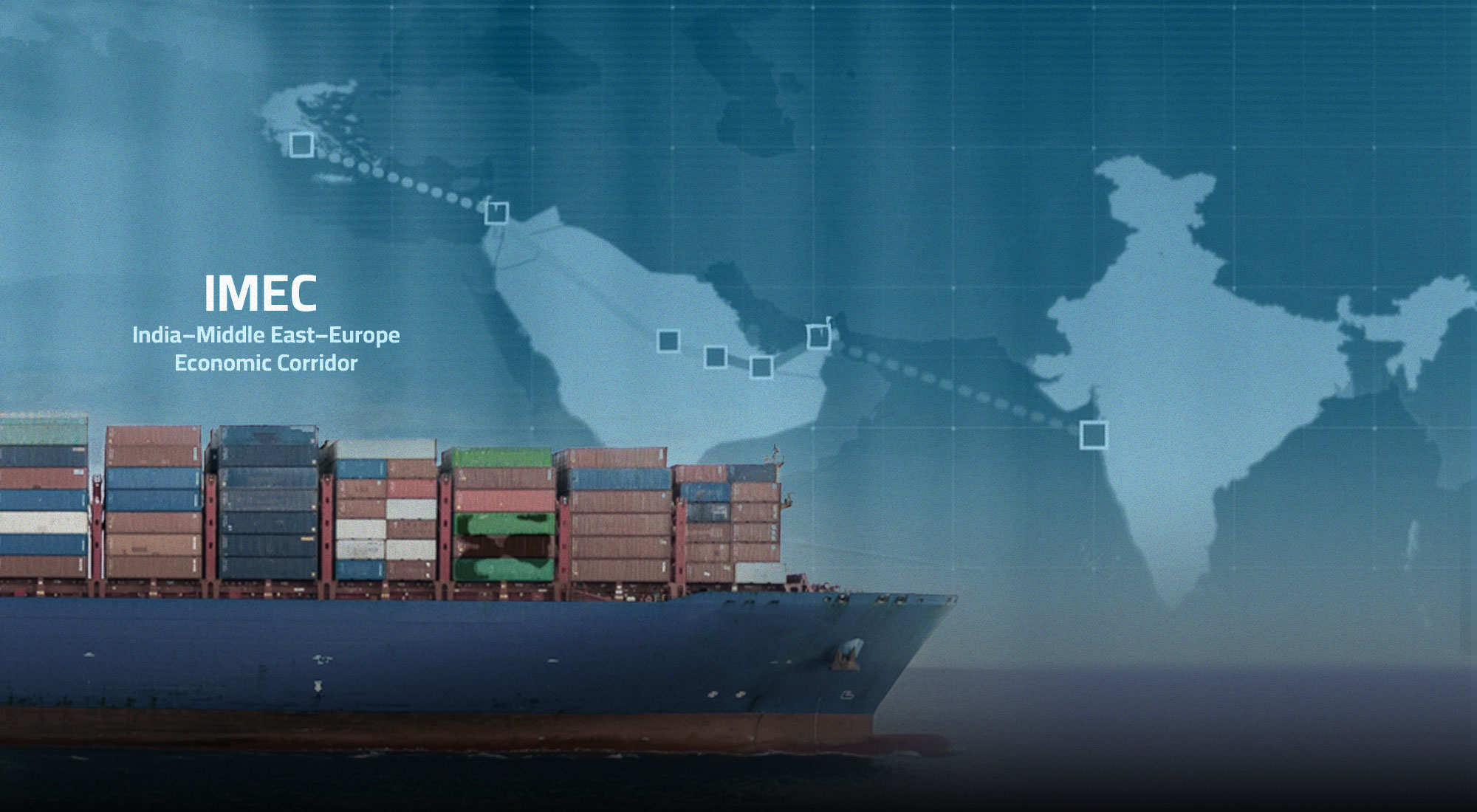
Moscow is also worried about India’s alignment with some of the U.S.’s multilateral initiatives, among which is the QUAD, often regarded as a containment tool promoted by Western countries. And even in the Middle East itself, Russia’s and India’s interests might diverge when it comes to connectivity. For instance, the development of IMEC (a massive corridor from India to Europe), though far from Russian borders, nevertheless decreases Moscow’s leverage over India.
The Indian side is also worried about Russia’s expanding ties with Pakistan in the military and political realms. Among other minor irritants might be the fact that Russia’s ally, Armenia, has now turned into the biggest buyer of Indian military hardware.[9] Given Armenia’s traditional dependence on Russian arms since the early 1990s (around 90 percent of the country’s purchases came from Russia till 2022), the volte-face in Yerevan’s external military partnerships could impact Moscow’s position in the South Caucasus.
Geopolitical Projections
Despite the irritants, those are not consequential enough to break the New Delhi-Moscow alignment. The bond between India and Russia is based on a shared understanding when it comes to opposing the U.S.’s pursuit of domination, faltering global multilateralism, challenges that global supply chains are increasingly facing, as well as security threats in Central Asia and the Middle East. This means that the U.S. is very unlikely to break the link between India and Russia.
Surely, some maneuvering might be expected from the Indian side through scaling down or entirely stopping the import of cheap Russian oil. India might also openly align with the U.S. when it comes to Washington’s regional initiatives in the Middle East and the Indian Ocean. Yet, core military-industrial and economic ties between Russia and India will remain unchanged. India will keep striking a delicate balance between its hope that the war in Ukraine ends soon and the continuation of expansive economic relations with Russia. Indeed, the Russian president visited New Delhi in December, which highlighted the persisting importance of bilateral ties.[10] In other words, New Delhi will maintain a neutral-to-pro-Russian position when it comes to what happens in Ukraine—a stance well reflected in how India has many times abstained from condemning Russia’s actions in Ukraine in the UN General Assembly resolutions.
Emil Avdaliani is a professor of international relations at the European University in Tbilisi, Georgia, and a scholar of Silk Roads. He can be reached on Twitter/X at @emilavdaliani.
[1] Tina Dolbaia, Vasabjit Banerjee, and Amanda Southfield, “Guns and Oil: Continuity and Change in Russia-India Relations,” CSIS, August 22, 2025, https://www.csis.org/analysis/guns-and-oil-continuity-and-change-russia-india-relations.
[2] Stephen Blank, “Primakov’s Russia/India/China triangle nears realization,” Jamestown, April 22, 2025, https://jamestown.org/program/primakovs-russiaindiachina-triangle-nears-realization/.
[3] “Новая повестка российско-индийских отношений,” RIAC, July 6, 2025, https://russiancouncil.ru/analytics-and-comments/analytics/novaya-povestka-rossiysko-indiyskikh-otnosheniy/.
[4] “India-Russia trade hits USD 66bn in 2024; target of USD 100bn by 2030 on track: Russian envoy”, November 24, 2024, The Economic Times, https://economictimes.indiatimes.com/news/economy/foreign-trade/india-russia-trade-hits-usd-66bn-in-2024-target-of-usd-100bn-by-2030-on-track-russian-envoy/articleshow/115734758.cms?from=mdr.
[5] “Transmashholding, Rail Vikas Nigam Ltd sign agreement to supply trains for Indian railways,” Interfax, July 25, 2023, https://interfax.com/newsroom/top-stories/92945/.
[6] “Manufacturing pharmaceuticals in Russia: the silver bullet India is looking for?,” Sberbank, August 23, 2024, https://sberbank.co.in/media/publications/manufacturing-pharmaceuticals-in-russia-the-silver-bullet-india-is-looking-for.
[7] “PM Modi’s 2nd Visit To Russia This Year, To Attend BRICS Summit Next Week,” NDTV, October 18, 2024, https://www.ndtv.com/india-news/pm-narendra-modis-2nd-visit-to-russia-this-year-to-attend-brics-summit-next-week-6817358.
[8] “Russia Sends Direct Freight Train To India,” Russia’s Pivot to Asia, November 3, 2025, https://russiaspivottoasia.com/russia-sends-direct-freight-train-to-india/#:~:text=The%20train%2C%20consisting%20of%2062%20twenty%2Dfoot%20containers,5%20days%20faster%20than%20previous%20transport%20routes.
[9] “Armenia finalising multi-billion defence deal with India,” OC-Media, October 31, 2025, https://oc-media.org/armenia-finalising-multi-billion-defence-deal-with-india/.
[10] “Kremlin says active preparations underway for Putin visit to India,” Reuters, November 10, 2025, https://www.reuters.com/world/india/kremlin-says-active-preparations-underway-putin-visit-india-2025-11-10/.