


Since World War II, the transatlantic alliance has been a cornerstone of Western security, economic cooperation, and liberal democratic norms. NATO, multilateral trade agreements, and diplomatic coordination have provided a stable framework for U.S.-European cooperation, underpinning nearly eight decades of international order.
However, the election of Donald J. Trump and the rise of “America First” nationalism have fundamentally reshaped this landscape. Trump’s foreign policy does not merely represent tactical deviations from previous administrations; it signals a strategic shift in how the United States perceives Europe—from a partner in shared security to a negotiable, transactional arena. Max Bergmann (2025) frames this as a collision course between the United States and Europe, where every issue—NATO, Ukraine, Greenland, trade, technology, and climate—becomes a potential flashpoint.[1]
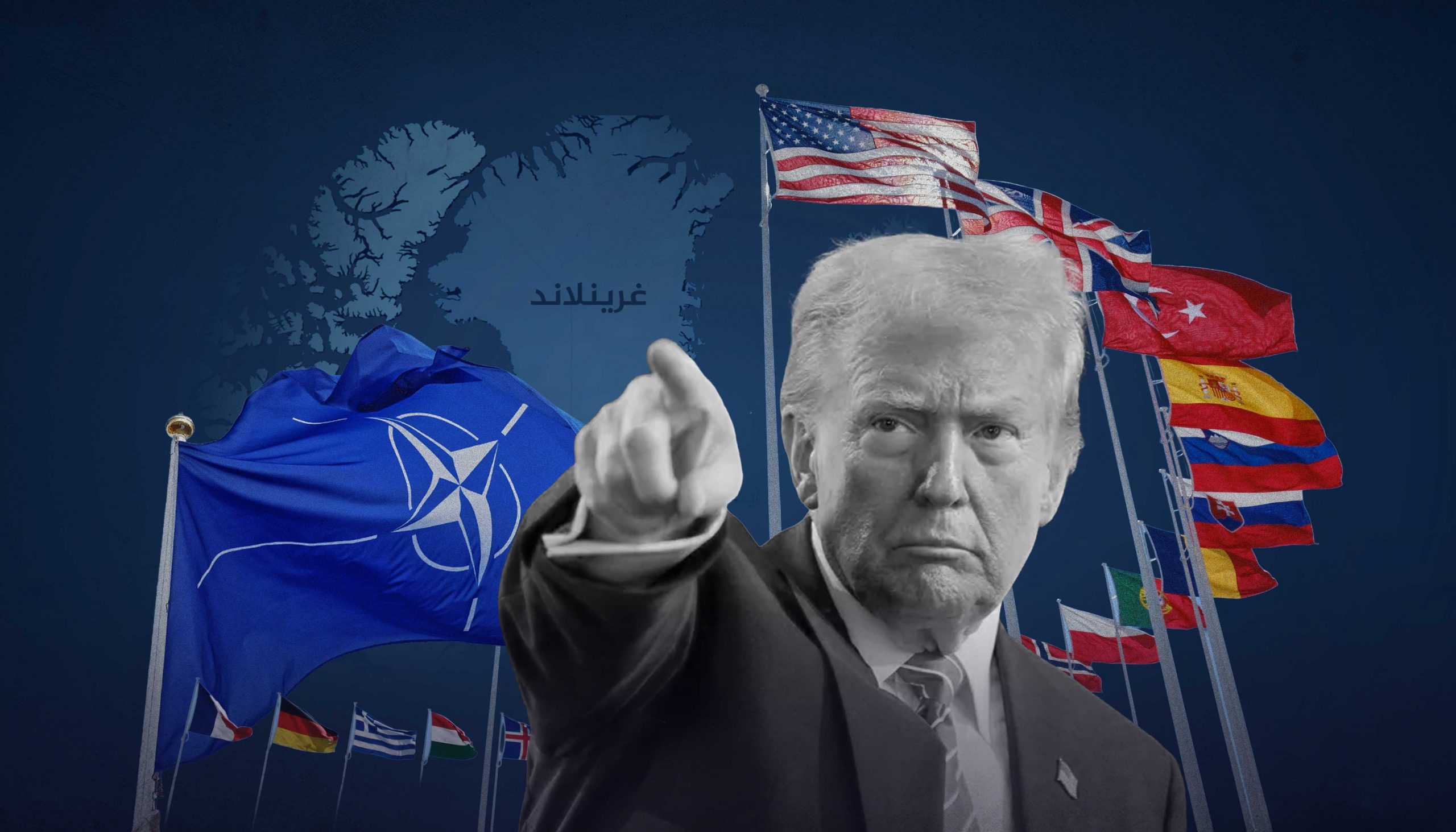
The Greenland crisis provides a striking case study. President Trump’s public pursuit of Greenland for the United States, coupled with punitive tariff threats on NATO allies participating in joint exercises, triggered unprecedented European backlash and discussions about closing or reclaiming U.S. military bases in Europe. At the same time, experts argue that diplomacy, congressional checks, and European deterrence can avert catastrophe and even strengthen Arctic security. This episode crystallizes the multidimensional risks facing the transatlantic alliance: strategic, economic, and political.
This insight examines these challenges, with particular focus on Greenland and Arctic geopolitics; NATO and European defense; the war in Ukraine; U.S.-EU trade and technology conflicts; climate and energy policy; and global strategic realignment with China and Russia. It situates these flashpoints in the broader structural tensions highlighted by Bergmann: the erosion of U.S. bipartisan support for Europe, growing European vulnerability, and the Trump administration’s transactional, unilateralist approach.
I. Structural Shifts in the Transatlantic Alliance
Historically, Europe relied heavily on the United States as a security guarantor. Since the founding of NATO in 1949, the U.S. has provided forward-deployed troops, nuclear deterrence, and intelligence sharing, allowing European states to prioritize post-war reconstruction, economic integration, and multilateral diplomacy. U.S. leadership in the transatlantic alliance underpinned decades of relative stability, providing a credible security umbrella that fostered the European Union’s expansion and NATO’s enlargement to former Eastern Bloc states.[2]
Under the Trump administration, however, this traditional relationship has been instrumentalized in unprecedented ways. Europe’s security, once treated as a shared responsibility, has increasingly been leveraged as a bargaining chip for U.S. political and economic objectives. For example, Trump repeatedly demanded that NATO allies raise defense spending well above the agreed 2% of GDP, framing non-compliance as a threat to U.S. commitment, while linking military cooperation to trade negotiations and tariff concessions.[3] Similarly, the Greenland dispute demonstrated the transactional framing of U.S. security policy, where allied territory could become part of a negotiation over tariffs and strategic concessions.[4]
Three elements illustrate the structural shift:
- Erosion of bipartisan U.S. consensus on Europe: Unlike previous administrations that maintained broad bipartisan support for NATO, Trump treated the alliance instrumentally, emphasizing economic leverage and unilateral action.
- Divergent threat perceptions: Europe prioritizes Russian aggression, multilateral stability, and climate security, whereas Trump emphasized an Asia-first strategy, competition with China, and transactional gains for the U.S.
- Erosion of trust: Repeated threats—tariffs, public pressure campaigns, and territorial ambitions like Greenland—have undermined confidence in U.S. security commitments, compelling Europe to consider strategic autonomy.
This realignment has prompted Europe to explore independent defense initiatives, increased EU-NATO coordination, and a cautious recalibration of transatlantic expectations, marking a fundamental shift in alliance dynamics.
II. Greenland and Arctic Geopolitics: A Flashpoint
In January 2026, the Trump administration’s pursuit of Greenland as a potential U.S. territory sparked unprecedented transatlantic tensions. Through social media, President Trump announced punitive tariffs on eight NATO allies participating in joint military exercises in Greenland, ranging from 10% immediately to 25% by June. The targeted countries included Denmark, Norway, Sweden, France, Germany, the UK, the Netherlands, and Finland. Trump framed Greenland as critical for the U.S. “Golden Dome” next-generation missile defense system and argued that China and Russia sought a strategic advantage if the U.S. did not assert control.[5]
The European response was swift and unified. French President Emmanuel Macron called the tariffs “unacceptable,” UK Prime Minister Keir Starmer decried them as “completely wrong,” and German leaders emphasized the danger to NATO cohesion (Politico Europe, 2026). Bernd Lange, chair of the European Parliament’s trade committee, proposed activating the EU Trade Defense Instrument (ACI), potentially restricting U.S. investments, services, procurement, and arms sales. Halting U.S. weapons purchases—over $76 billion in 2024—was also debated.[6]
European policymakers even considered closing or reclaiming U.S. military bases, jeopardizing nearly half of America’s forward-deployed intelligence and operational capacity in Europe. Retired U.S. European Command Chief Ben Hodges warned that losing these bases would be a “fatal blow” to U.S. strategic posture across Europe, the Middle East, and Africa (Reuters, 2026).
The Greenland crisis highlights structural vulnerability in NATO: internal disputes over territory, economics, or security priorities can fracture alliances designed to maintain collective defense. Scholars argue that such flashpoints may accelerate European strategic autonomy and redefine U.S.-Europe defense relations.
III. Diplomatic and Congressional Counterweights
Despite the escalating tensions over Greenland, the crisis does not inevitably signal disaster for the transatlantic alliance. According to Ambassador Daniel Fried (2026), three complementary mechanisms have emerged that could mitigate the conflict while preserving NATO unity.[7] First, diplomatic engagement through high-level working groups provides a structured avenue for compromise. Following the 14 January 2026, US-Danish-Greenlander meeting in Washington, officials established a working group tasked with reconciling U.S. security objectives with Danish and Greenlandic sovereignty.[8] Among potential outcomes are reaffirmation or renegotiation of the 1951 Defense of Greenland Agreement, which grants the United States extensive basing rights without challenging Denmark’s sovereignty. The working group could also explore arrangements for an independent Greenland to participate in NATO security frameworks, similar to Iceland, ensuring Arctic defense capabilities while maintaining local autonomy.[9]
Second, U.S. congressional oversight acts as a critical counterweight to unilateral executive action. Bipartisan bills in both the House and Senate would prohibit military operations against Denmark or NATO allies defending Greenland. Public opinion strongly disfavors annexation: only 17% of Americans support a purchase, while a mere 4% back the use of force.[10] This political constraint reinforces the rule of law and provides a structural check on extreme actions by the administration, limiting the potential for a destabilizing military confrontation.
Third, deterrence through European military presence plays a complementary role. Denmark, along with Germany, Sweden, France, the UK, and other NATO allies, has increased troop deployments and conducted exercises in Greenland, signaling credible opposition to unilateral U.S. action.[11] While these forces are not comparable to the U.S. military’s capabilities, they complicate rapid occupation or coercion, demonstrating alliance cohesion and operational deterrence. Together, these diplomatic, legislative, and military counterweights may provide the space for a constructive, negotiated resolution. Such an outcome could preserve NATO’s integrity, enhance Arctic security, and allow the Trump administration to claim a symbolic “win” without resorting to conflict, underscoring the resilience of transatlantic mechanisms even under extreme political pressures.
IV. NATO and European Defense: Burden-Shifting and Strategic Autonomy
Trump’s repeated emphasis on European defense spending, combined with threats over Greenland and punitive tariffs on NATO allies, has highlighted a long-standing burden-shifting dynamic within the transatlantic alliance. European states have historically relied on the United States not only for military protection but also for intelligence-sharing, rapid deployment, and technological support. By publicly criticizing allies for failing to meet or exceed the 2% GDP defense benchmark and linking compliance to broader economic and territorial disputes, the Trump administration has instrumentalized NATO membership, signaling that U.S. security guarantees are contingent on immediate transactional benefits.[12] The Greenland dispute illustrates this dynamic vividly: European deployments and exercises in the Arctic are now subjected to potential U.S. tariffs, creating uncertainty about alliance cohesion and trust in mutual defense commitments.
While these pressures may destabilize NATO in the short term, they could ultimately serve as a catalyst for European strategic autonomy. The European Union, facing both internal trust deficits and escalating geopolitical threats—particularly in light of Russia’s aggression in Ukraine—may accelerate investment in indigenous capabilities, including air and missile defense, cyber operations, and rapid-response forces.[13] Forward U.S. bases, long a cornerstone of transatlantic security, are now increasingly seen as leverage points rather than guaranteed protections, prompting discussions about European-controlled deployments and enhanced regional command structures. For instance, Germany, France, and Nordic states have begun evaluating joint Arctic security frameworks that would operate independently of U.S. directives while still participating in NATO operations, signaling a shift toward more autonomous decision-making.
Yet in the near term, unilateral U.S. actions exacerbate political instability and alliance risk. The Greenland tariff threats coincided with ongoing NATO support for Ukraine, demonstrating how internal disputes can distract from urgent operational priorities.[14] European capitals are now forced to balance deterrence against Russia with the need to signal cohesion to the United States, all while negotiating potential Arctic basing arrangements and countering economic coercion. Analysts warn that these overlapping pressures could produce cascading effects, including delayed force modernization, fragmented command structures, and diminished interoperability, highlighting how transactional diplomacy and domestic U.S. political objectives can destabilize multilateral security frameworks.
In sum, the Greenland dispute and broader U.S. pressure on defense spending have revealed structural vulnerabilities within NATO. While these pressures threaten immediate cohesion, they may also accelerate European self-reliance and strategic planning, potentially reshaping the balance of responsibility, governance, and operational autonomy within the transatlantic alliance over the coming decade. How Europe navigates this dual challenge—maintaining alliance commitments while pursuing autonomy—will be a defining feature of NATO’s resilience and relevance in the post-Trump era.
V. Ukraine and European Security
The ongoing war in Ukraine remains the ultimate litmus test for transatlantic unity. European states, initially in strong coordination with the United States, have provided extensive military, financial, and humanitarian support to Kyiv, demonstrating NATO’s enduring value as a collective security framework. However, the Trump administration’s transactional approach to alliances—including Greenland annexation threats, tariff pressures, and demands for increased European defense spending—has shifted significant responsibility and costs onto Europe, straining trust at a critical moment for European security. These actions risk distracting European states from the primary security challenge on the continent: deterring Russian expansion and stabilizing the Eastern flank.
Max Bergmann warns of a “Yalta II” scenario, in which U.S.-Russia negotiations could proceed independently of European strategic preferences, potentially conceding outcomes in Eastern Europe without consulting allies. Recent developments reinforce this concern: as Greenland became a flashpoint, European leaders—including Macron, Starmer, and German officials—voiced sharp criticism of U.S. unilateralism, signaling that Europeans may increasingly insist on being equal partners in security decisions rather than passive beneficiaries.[15] This divergence of priorities illustrates how domestic U.S. political agendas and personal ambitions can inadvertently undermine NATO’s operational coherence.
Daniel Fried also emphasizes that maintaining NATO cohesion while supporting Ukraine requires careful management of intra-alliance disputes. If the Greenland conflict or tariff threats are mismanaged, they could distract both the U.S. and European partners from deterring Russian aggression, indirectly benefiting Moscow. European capitals are acutely aware that a distracted or fragmented NATO would embolden Russia, particularly in contested regions such as Eastern Ukraine, the Donbas, and the Black Sea corridor. The recent increase in Russian reconnaissance flights over the Baltic and Arctic regions underscores the urgency for a united NATO front, highlighting the potential consequences of alliance disunity.
Recent reports indicate that some European NATO members are exploring complementary defense mechanisms independent of U.S. unilateral influence. Germany, Sweden, and France have accelerated plans to deploy additional forces to the Baltic, North Sea, and Arctic territories, reinforcing deterrence against Russian aggression while signaling readiness to act autonomously if U.S. policies prove destabilizing.[16] Such initiatives, while reinforcing European security, also illustrate the growing urgency for Europe to assume a larger role in regional strategy, particularly as U.S. domestic politics and transactional foreign policy approaches complicate traditional transatlantic coordination.
In sum, the Ukraine war underscores both the indispensable role of NATO and the fragility of the alliance under transactional U.S. leadership. While Europe continues to support Kyiv militarily and economically, Greenland and other intra-alliance disputes highlight the need for sustained diplomatic engagement, strategic autonomy, and mutual trust. Failure to reconcile these tensions risks creating operational gaps in deterrence and a perception of vulnerability that adversaries like Russia could exploit. Consequently, managing intra-alliance friction has become as critical to European security as the direct military challenge posed by Russia.
VI. Trade, Tariffs, and Economic Friction
The Greenland tariffs announced by the Trump administration in January 2026 represent the latest escalation in a series of U.S.-EU economic confrontations. These tariffs, which initially imposed 10% on eight NATO allies and threatened to rise to 25% by mid-year, come on top of existing trade measures, including 10-15% levies on steel and aluminum implemented in previous years.[17] The Trump administration framed these measures as coercive tools to secure strategic leverage over NATO allies, signaling that economic compliance and territorial concessions were intertwined with alliance obligations.
Europe’s response has been swift and coordinated. The European Union has considered activating the Trade Defense Instrument (ACI), which allows restrictions on U.S. services, investments, and procurement, including potentially halting the purchase of U.S. defense equipment worth over $76 billion in 2024.[18] French, German, and Nordic officials have highlighted that economic retaliation is not merely punitive but a necessary mechanism to uphold sovereignty and maintain credible deterrence in the alliance. Discussions about invoking ACI and limiting defense procurement demonstrate how trade instruments have become integral to broader geopolitical and security strategies rather than standalone commercial disputes.
Bergmann stresses that these economic conflicts cannot be treated as isolated frictions; they intersect with security, technology, and climate policy, creating compound pressures on NATO cohesion and transatlantic trust.[19] For instance, tariffs complicate defense logistics, disrupt joint procurement programs, and strain technological collaboration in AI and digital infrastructure. Furthermore, they risk diverting political attention from urgent security priorities, such as Russian aggression in Ukraine and Arctic deterrence. In this sense, trade disputes have become strategic levers, shaping not only economic outcomes but also alliance solidarity and long-term transatlantic stability.
VII. Technology, Climate, and Global Governance
The transatlantic divide has extended beyond traditional security and trade disputes into the domains of technology and climate policy, where Europe and the U.S. under Trump have increasingly pursued divergent paths. Europe’s digital sovereignty initiatives—including the Digital Markets Act (DMA) and the Digital Services Act (DSA)—aim to regulate U.S.-based technology giants, enforce data privacy, and promote fair competition, positioning the EU as a regulatory superpower.[20] Meanwhile, the Trump administration’s antagonistic posture toward multilateral governance and its hostility toward climate commitments, including withdrawal from aspects of the Paris Agreement, contrast sharply with Europe’s proactive climate agenda. Measures such as the EU Carbon Border Adjustment Mechanism (CBAM), which imposes tariffs on imported carbon-intensive goods, directly intersect with U.S. trade interests, intensifying economic and diplomatic friction.[21]
The Greenland dispute exemplifies how these policy domains are now interlinked. European leaders perceive U.S. unilateral actions—both in tariffs and territorial ambitions—as symptomatic of broader disregard for multilateral norms and governance frameworks. Bergmann notes that such divergences reinforce European incentives to pursue strategic autonomy, fostering independent technology standards, climate policies, and defense capabilities. The Arctic, for example, is not only a security flashpoint but also a critical theater for climate monitoring and renewable energy infrastructure; European investments in Greenlandic and Nordic green technology initiatives signal both economic and strategic hedging.
If Europe continues to integrate climate, technology, and defense agendas, the continent could emerge as a more cohesive, innovation-driven actor capable of shaping global governance independently of U.S. unilateralism. In practical terms, this includes reinforcing European digital regulations, advancing green industrial projects, and coordinating defense and climate policy within NATO frameworks to offset potential U.S. disruption. Consequently, transatlantic differences over Greenland, tariffs, and multilateralism are not isolated events but part of a broader structural recalibration that challenges the traditional post-World War II order and tests Europe’s capacity for self-directed global leadership.
VIII. China and Russia: Exploiting Transatlantic Divisions
The Greenland crisis and other Trump-era policies have created openings for both China and Russia to exploit divisions within the transatlantic alliance. Former Estonian Prime Minister Kaja Kallas observed in January 2026 that Beijing and Moscow “are probably celebrating right now,” capitalizing on visible fissures between the United States and its European partners.[22] By leveraging territorial disputes, economic coercion, and trade tensions, adversaries are able to test NATO cohesion, undermine alliance credibility, and advance strategic objectives in regions critical to global security. Russia, for instance, has intensified military posturing in the Baltic, Black Sea, and Arctic corridors, seeking to exploit any perceived hesitancy among NATO members. Meanwhile, China is expanding its Arctic infrastructure initiatives and resource investments, benefiting from reduced coordinated resistance and intra-alliance distraction.
Adversaries deliberately exploit both territorial disputes—such as the situation in Greenland—and economic disagreements, including tariffs and trade retaliation, to weaken Western cohesion. These tactics underscore the interconnectedness of economic, territorial, and security issues in contemporary geopolitics. Greenland, strategically positioned between North America and Europe and rich in resources, has become a flashpoint that amplifies transatlantic vulnerabilities while providing adversaries with leverage to influence regional dynamics.
Nevertheless, these strategic advantages for China and Russia are not immutable. By engaging proactively with Denmark and other NATO allies, the United States can strengthen Arctic deterrence, ensuring that Greenland’s infrastructure, airspace, and defense capabilities remain integrated into NATO frameworks. Coordinated diplomatic, military, and economic actions can limit adversarial influence, demonstrating that transatlantic divisions, while significant, can be managed to maintain strategic balance. The Greenland crisis, therefore, serves both as a warning of vulnerability and an opportunity for the U.S. and Europe to recalibrate cooperative Arctic strategy, reinforcing alliance resilience while denying potential gains to China and Russia.
IX. Pathways to a Resolution
The Greenland crisis, while exposing vulnerabilities in NATO and transatlantic relations, also presents a framework for constructive resolution through coordinated diplomacy, legislative oversight, and alliance deterrence. One viable pathway is for the United States to reaffirm or renegotiate the 1951 Defense of Greenland Agreement, which grants extensive basing rights without challenging Danish sovereignty. Such a measure would preserve U.S. strategic access to the Arctic for missile defense and intelligence operations while demonstrating respect for allied governance, mitigating the destabilizing effects of unilateral U.S. rhetoric.
Another approach addresses Greenland’s potential push for independence. If Greenland were to achieve greater autonomy or full independence, arrangements could be made for NATO membership or a Compact of Free Association, similar to U.S. agreements with Pacific Island states. This would secure regional defense obligations, integrate Greenlandic security within the broader NATO framework, and ensure the island’s strategic infrastructure contributes to transatlantic stability. Such mechanisms would balance self-determination with alliance security imperatives, preventing a vacuum that adversaries like Russia and China could exploit.
In parallel, increased European participation in Arctic exercises offers a means for the Trump administration to claim both a symbolic and substantive achievement without resorting to coercive measures or military confrontation. Denmark, Germany, Sweden, and France have already augmented troop deployments and joint exercises in the Arctic, which not only bolster deterrence but also demonstrate alliance cohesion in a contested region.
Such a resolution would allow NATO to emerge intact and potentially stronger, with improved operational capacity in the Arctic and reinforced mechanisms for managing intra-alliance disputes. The Greenland crisis illustrates that while transactional disputes and unilateral pressures create immediate instability, careful diplomacy, legislative checks, and cooperative military planning can restore trust, maintain deterrence, and enhance the long-term resilience of the transatlantic alliance.
Conclusion
The Greenland dispute crystallizes the multidimensional risks now confronting the transatlantic alliance. Tariff threats, territorial ambitions, and unilateral policies have exposed structural vulnerabilities within NATO, raising serious questions about U.S. reliability, the cohesion of collective defense mechanisms, and the urgency with which Europe must pursue greater strategic autonomy. Territorial disputes, economic coercion, and divergent threat perceptions have intensified internal frictions, showing that alliances built over decades are not immune to transactional pressures or domestic political agendas.
At the same time, the crisis demonstrates that these pressures are not predetermined in their consequences. Through coordinated diplomacy, checks on unilateral executive actions, and measured European deterrence, the alliance can reaffirm existing defense commitments, integrate potential Greenlandic autonomy within NATO frameworks, and maintain a U.S. strategic presence in the Arctic without provoking confrontation. Such strategies would also limit the opportunities available to adversaries who seek to exploit cracks in alliance cohesion.
The recent era underscores that transatlantic fractures, though real and consequential, are manageable with foresight and collective action. Europe’s growing capacity for strategic autonomy, combined with sustained U.S.-European collaboration, offers a pathway for a resilient alliance. The challenge going forward is to balance immediate operational imperatives—deterring aggression, supporting allies, and securing key regions—with long-term cohesion. Successfully navigating this dual imperative will define NATO’s durability and the transatlantic partnership in the coming decade, ensuring that Europe assumes greater responsibility for its own defense while the United States continues to play a stabilizing, negotiated role.
[1] Max Bergmann, “The Transatlantic Alliance in the Age of Trump: The Coming Collisions,” (report, Center for Strategic and International Studies, Washington, DC, February 14, 2025), https://www.csis.org/analysis/transatlantic-alliance-age-trump-coming-collisions.
[2] U.S. Department of State, Office of the Historian, North Atlantic Treaty Organization (NATO), 1949, Milestones in the History of U.S. Foreign Relations, https://history.state.gov/milestones/1945-1952/nato.
[3] WON Sunwoo and Kim Eun‑joong, “80‑Year Transatlantic Alliance Teeters as Greenland Dispute Sparks NATO Collapse,” The Chosun Daily (English), January 19, 2026, https://www.chosun.com/english/world-en/2026/01/19/FJDNVRDW2NCHVHA3KVOFXX3E2Q/.
[4] Christian Schulz, “Trump’s Greenland tariffs: A step too far?,” Allianz Global Investors, January 19, 2026, https://www.allianzgi.com/en/insights/outlook-and-commentary/trumps-greenland-tariffs.
[5] “Trump announces new tariffs over Greenland — how have EU allies responded?,” Al Jazeera, January 18, 2026, https://www.aljazeera.com/news/2026/1/18/trump-announces-new-tariffs-over-greenland-how-have-eu-allies-responded.
[6] Tim Ross and Victor Jack, “Time to Dump Trump? Europeans Whisper Last-Resort Options to Save Greenland,” Politico, January 15, 2026, https://www.politico.eu/article/donald-trump-europe-greenland-threat-military-defense-allies/.
[7] Daniel Fried, “The US and NATO Can Avoid Catastrophe over Greenland and Emerge Stronger. Here’s How,” Atlantic Council, January 17, 2026, https://www.atlanticcouncil.org/.
[8] Anton Troianovski, Zolan Kanno‑Youngs, and Michael D. Shear, “White House Meeting with Denmark and Greenland Ends with Fundamental Disagreement,” The New York Times, January 15, 2026, https://www.nytimes.com/2026/01/15/us/politics/white-house-greenland-meeting.html.
[9] Daniel Fried, “The US and NATO Can Avoid Catastrophe Over Greenland and Emerge Stronger. Here’s How,” Atlantic Council, January 17, 2026: https://www.atlanticcouncil.org/dispatches/the-us-and-nato-can-avoid-catastrophe-over-greenland-and-emerge-stronger-heres-how/.
[10] Jason Lange, “Just One in Five Americans Support Trump’s Efforts to Acquire Greenland, Reuters/Ipsos Poll Finds,” Reuters, January 14, 2026, https://www.reuters.com/world/europe/just-one-five-americans-support-trumps-efforts-acquire-greenland-reutersipsos-2026-01-14/.
[11] Greg Norman‑Diamond and Gillian Turner, “Troops from Europe Deploy to Greenland in Rapid 2‑Day Mission as Trump Eyes US Takeover: Germany Sends 13 Personnel, France Deploys 15 Mountain Specialists to Bolster Territory’s Defenses,” Fox News, January 15, 2026, https://www.foxnews.com/world/troops-from-europe-deploy-greenland-rapid-2-day-mission-trump-eyes-us-takeover.
[12] Anthony Reuben, “Why Trump Is Targeting Spain over NATO Spending,” BBC News, June 24, 2025, https://www.bbc.com/news/articles/ckg3082d3ero.
[13] Veronica Anghel and Giuseppe Spatafora, “Global Risks to the EU in 2026: What Are the Main Conflict Threats for Europe?,” European Union Institute for Security Studies (EUISS), January 20, 2026, https://www.iss.europa.eu/publications/commentary/global-risks-eu-2026-what-are-main-conflict-threats-europe.
[14] Tim Ross, “Donald Trump’s Greenland Tariff Threats, Tensions Push Europe Allies Toward ‘Divorcing’ America,” Politico, January 19, 202,: https://www.politico.eu/article/donald-trump-greenland-tariff-threats-tensions-push-europe-allies-toward-divorcing-america-transatlantic-power/
[15] Bergmann, “The Transatlantic Alliance in the Age of Trump: The Coming Collisions.”
[16] “Germany weighs deploying Eurofighters, naval vessels to Greenland in NATO Arctic security push,” TRT World, January 16, 2026, https://www.trtworld.com/article/150160cec84b.
[17] Auzinea Bacon, “Trump Has Tariffs. Europe Has a ‘Trade Bazooka.’ This Greenland Standoff Could Get Ugly, Fast,” CNN, updated January 19, 2026, https://edition.cnn.com/2026/01/18/business/europe-greenland-trump-tariffs-trade.
[18] Holly Ellyatt, “Europe Weighs Using Trade ‘Bazooka’ against the U.S. as Greenland Crisis Deepens,” CNBC, published January 19, 2026, https://www.cnbc.com/2026/01/19/europe-retaliatory-tariffs-aci-greenland-trump-threat-us.html.
[19] Frederick Kempe, “At Davos, Trump’s 19th-century instincts will collide with 21st-century uncertainty,” Atlantic Council, January 20, 2026, https://www.atlanticcouncil.org/content-series/inflection-points/at-davos-trumps-19th-century-instincts-will-collide-with-21st-century-uncertainty/?utm_source=chatgpt.com.
[20] Frances Burwell and Kenneth Propp, “Digital Sovereignty: Europe’s Declaration of Independence?,” Atlantic Council, January 14, 2026, https://www.atlanticcouncil.org/in-depth-research-reports/report/digital-sovereignty-europes-declaration-of-independence/.
[21] “The EU’s Carbon Border Adjustment Mechanism,” IISS, vol. 30, no. 17, July 2024, https://www.iiss.org/publications/strategic-comments/2024/07/the-eus-carbon-border-adjustment-mechanism/.
[22] Reuters, “China, Russia Benefit from Trump’s Greenland Tariff Threat, Says EU,” The Economic Times, January 18, 2026, https://economictimes.indiatimes.com/news/international/world-news/china-russia-benefit-from-trumps-greenland-tariff-threat-says-eu/articleshow/126635291.cms.