
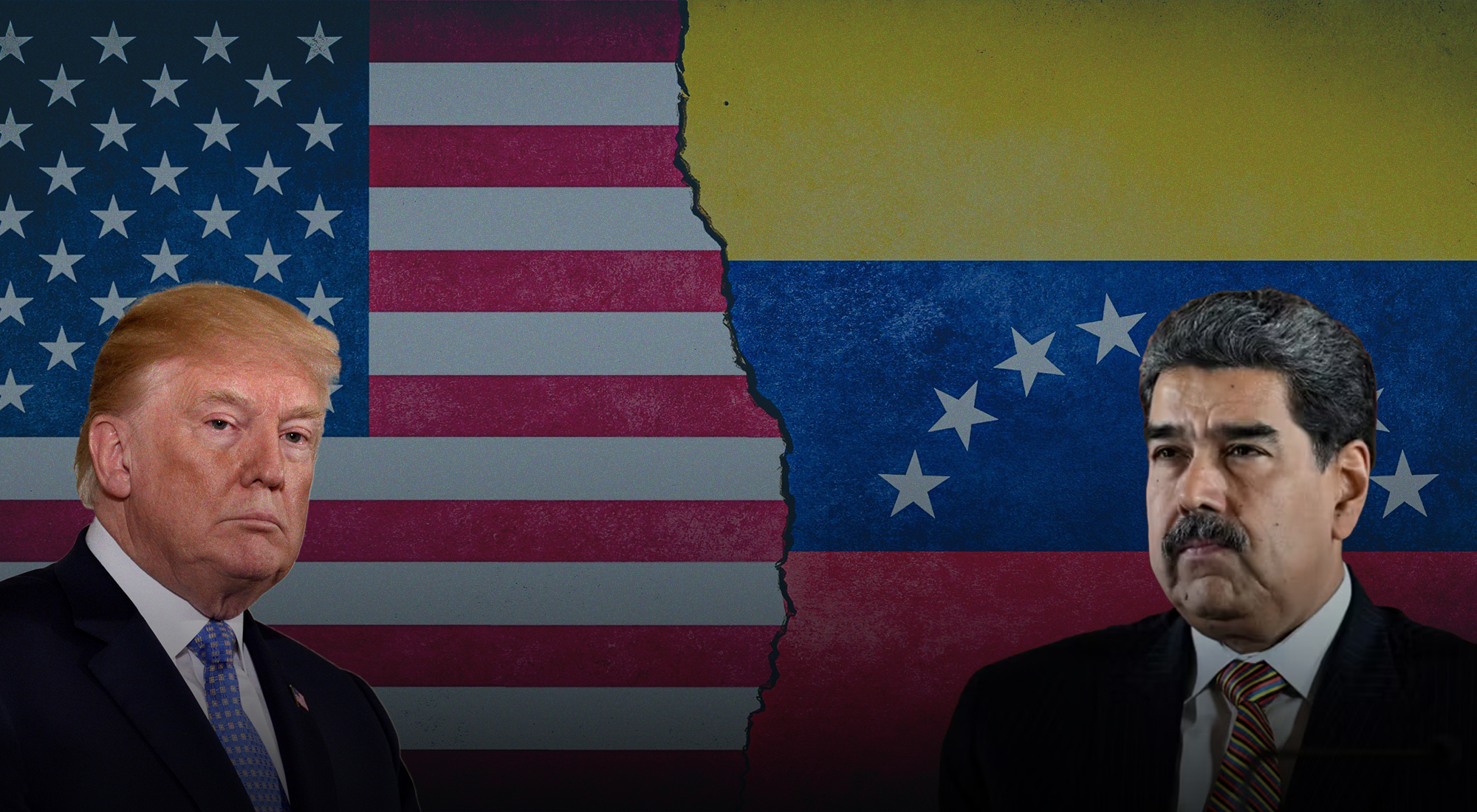
Following several months of tension between the United States and Venezuela, American forces bombed military targets in the Venezuelan capital, Caracas, in the early hours of Saturday, 3 January 2026, and captured President Nicolás Maduro and his wife, Cilia Flores.
U.S. President Donald Trump announced Maduro’s capture via the Truth Social network. It has been reported that Maduro is in U.S. territory awaiting trial for drug trafficking and terrorism offenses. U.S. Attorney General Pamela Bondi has reported that Maduro and his wife have been charged by the Southern District of New York with “narco-terrorism conspiracy, cocaine importation conspiracy, possession of machine guns and destructive devices, and conspiracy to possess machine guns and destructive devices against the United States”. Based on this, it is estimated that the Venezuelan President and his wife will be tried and possibly convicted in the United States on these charges and serve their sentences there.
This is the result of an escalating campaign by the U.S. President against Nicolás Maduro, ranging from offering a reward for his capture on drug trafficking charges to designating the so-called Cartel of the Suns as a terrorist group and linking it directly to Maduro. Other significant decisions in this context include rejecting the results of Venezuela’s 2024 presidential elections during the Biden administration, deploying military forces in the Caribbean and sinking several vessels allegedly transporting drugs to the United States. Since August 2025, President Trump has authorized attacks against drug trafficking organizations designated as terrorist organizations. It is estimated that some 35 vessels were attacked by U.S. forces in the Caribbean Sea in the second half of 2025.
U.S. foreign policy toward Venezuela
This tension between Washington and Caracas was one of the hallmarks of U.S. foreign policy toward Latin America during Donald Trump’s second term in office. Firstly, it should be noted that this is nothing new. For Washington, Maduro is illegitimate. In fact, Washington recognizes Edmundo González Urrutia as the legitimate president of Venezuela, as he is widely considered to have won the July 2024 presidential elections.
What is notable about U.S. policy is the prominence given to this issue in its foreign agenda. There are several reasons for this: firstly, Venezuela’s geopolitical situation and resources; secondly, the U.S. decision-making system; and thirdly, the international context.
Venezuela has maintained a very close alliance with Cuba since the time of Hugo Chávez, and the Caracas-Havana axis has only grown stronger. Without Venezuelan support, there is no doubt that Cuba’s economy would be unsustainable. This support comes in the form of Venezuelan oil shipments to Cuba, enabling the island to maintain a minimal energy supply. Sanctions imposed by the United States on Venezuela in this area have also impacted Cuba.
Despite declines in production, limitations in refining capacity and low investment due to its political situation, we must remember that Venezuela is the country with the largest oil reserves in the world. This strategic asset must not be overlooked when considering the country’s importance. Conversely, the animosity between the United States and Venezuela has led Caracas to strengthen its ties with countries such as Russia, China, and Iran. Just hours before the start of military operations, Maduro received Qiu Xiaoqi, China’s special envoy. International sanctions imposed on Venezuela, Russia and Iran have led to these countries’ so-called “ghost fleets” cooperating in transporting their oil exports to buyers, thereby circumventing the sanctions imposed on them.
From the United States’ point of view, therefore, Venezuela’s relations with Cuba, China, Russia and Iran are unacceptable in the so-called “Western Hemisphere”. Caracas is seen as a country that serves the United States’ main opponents.
One factor to consider is the significant role played by Cuba and Venezuela for key officials in the current U.S. administration, many of whom are from Miami, where the Cuban and Venezuelan diaspora communities are highly influential. The most notable example is Secretary of State Marco Rubio, who is the son of Cuban immigrants. Strict policies against Cuba and Venezuela help to bolster the political careers of those who implement them.
What has happened in Venezuela, despite how reactive it may seem, is part of a policy outlined in the recently published U.S. National Security Strategy (December 2025). The document states that the United States “will reassert and enforce the Monroe Doctrine to restore American preeminence in the Western Hemisphere” and that “the United States must be preeminent in the Western Hemisphere as a condition of our security and prosperity”.
Venezuela embodies all the risks that the United States perceives as a threat: drug trafficking, money laundering, and alliances with Cuba, China, Russia and Iran. Moreover, from President Trump’s perspective, it serves as a tangible reminder of an opposition regime that Washington cannot accept in its undisputed sphere of influence.
In this regard, the increase in pressure from the United States on Venezuela since mid-2025 has jeopardized the country’s credibility. If no real, substantial or significant change was brought about in a region that the United States considers a priority, how could it convince potential allies and opposing states of its true capabilities beyond empty rhetoric and warmongering? Moving toward concrete changes appeared to be a political necessity. There was no room for retreat or backtracking.
Reactions around the world
Latin American countries saw elements of the United States’ actions as similar to those of December 1989 and January 1990, when U.S. forces entered Panamanian territory and kidnapped its president, Manuel Noriega. He was taken to the United States, tried, and convicted of drug trafficking.
However, beyond that, there is no common position. Looking at the reactions of the three G-20 countries in the region, Argentine President Javier Milei celebrated Maduro’s fall.[1] This was followed hours later by a statement of support for the United States from the Ministry of Foreign Affairs.[2] In contrast, Mexico[3] and Brazilian President Lula da Silva[4] have condemned the U.S. military action.
Chilean President Gabriel Boric has emphasized the importance of adhering to international law and condemned the actions of the United States.[5] It should be noted that President Boric will leave office in March, after which he will be succeeded by José Antonio Kast, who has supported the U.S. actions.[6] Meanwhile, Paraguay has followed the U.S. lead in classifying Maduro as a “narco-terrorist” and “leader of the Cartel of the Suns”, while also calling for a democratic and orderly transition.[7] The Bolivian Ministry of Foreign Affairs has expressed similar sentiments.[8] Clearly, there is no common position among the countries of the region.
Other countries have also expressed their views: as expected, Russia has condemned the U.S. actions,[9] as have Iran[10] and China.[11] Cuba was the first Latin American government to take a stand in favor of Maduro,[12] followed by Colombia. It is important to note that Colombia’s president, Gustavo Petro, has a tense relationship with the United States, and Bogotá is concerned about a potential influx of Venezuelan refugees.
As for international organizations, the Secretary-General of the United Nations (UN), António Guterres, has expressed alarm at the military action and called for respect for international law.[13] The European Union (EU), for its part, has adopted a measured stance. European Commission President Ursula von der Leyen has emphasized the need for a democratic solution that adheres to international law and the United Nations Charter.[14] Kaja Kallas, the Vice-President of the European Commission and High Representative of the Union for Foreign Affairs and Security Policy, pointed out that although the EU does not recognize Maduro’s legitimacy, it is calling for a peaceful transition based on international law and the UN Charter.[15]
The reactions so far are predictable, with no surprises in terms of support or condemnation. However, we believe that an essential distinction must be made. One thing is the clear and manifest illegitimacy of Maduro’s government and the persecution it has carried out against the Venezuelan opposition for years, and the persecution of dissidents. Another is the erosion of the rule of law in the country and the reprehensible illegal activities, including drug trafficking, that permeate much of the Venezuelan administration, including the armed forces and security forces. The democratization efforts attempted by political parties and social forces within the Venezuelan legal and constitutional system are also commendable. All of this suggests that most Venezuelans would benefit from a change of regime.
Implications for the world order
However, we must also consider the risks that the U.S. actions pose to the international order. Beyond justifications derived from Maduro’s illegal acts or Washington’s geopolitical considerations, clearly, this is a unilateral and extraterritorial application of U.S. law without the involvement of any regional or international organization. The absence of the Organization of American States (OAS) and the UN is not surprising, given their growing irrelevance in this and many other conflicts. Rather, it is a sign of the global trend toward unilateral, non-institutionalized action. We live in a world with fewer rules, including those established by the powers themselves after World War II. This is clearly reflected in the fact that the OAS and UN headquarters are in Washington and New York, respectively.
The great powers, in this case the United States, are not bound by the rules of the order they established; rather, they pursue their interests in a crude manner. Classical realism in its purest form. Beyond the limited sympathy that Maduro may generate, or the illegal acts he may have committed, the United States’ disregard for international law is disturbing. While we may desire an end to Maduro and his regime today, a world without rules or relevant multilateral organizations is not reassuring, particularly for smaller states. Without placing undue emphasis on the actions of the United States, it is important to acknowledge the inability of regional and global organizations to solve urgent issues. There are too many grandiose statements, officials and bureaucracies, and not enough solutions. It is the discrediting of these organizations that fuels unilateral options.
The future of Venezuela
The most urgent consideration is the future of Venezuela. There are several possible courses of action: First, we can assume that the main officials of the current Venezuelan government—starting with Vice-President Delcy Rodríguez, who holds little real power—will not accept a change of regime. Those who do hold power—such as Interior Minister Diosdado Cabello, Defense Minister Vladimir Padrino López, and the leaders of the armed and security forces—will also continue to exercise power despite Maduro’s departure. It is difficult to imagine that they have not taken note of the United States’ show of force, whereby military personnel were able to enter the heart of Venezuelan power with impunity and speed. They are also aware that opposition to Maduro has grown in all sectors of Venezuelan society over the years and that the United States’ actions will only further embolden these groups in the face of the Venezuelan regime’s inability to protect even its own president.
Secondly, we can envisage Edmundo González Urrutia assuming office. He is recognized by the United States as the winner of the 2024 Venezuelan presidential elections, as indicated by opposition leader and recent Nobel Peace Prize winner María Corina Machado.[16] However, the growing central role of the Venezuelan armed forces in the country, effectively a militarization of power, adds further elements of uncertainty. While professional members of the armed forces understand the technical impossibility of opposing the United States militarily, there are multiple militarized groups that enjoy clear clientelist benefits behind a pro-Chávez ideology. If Maduro were to lose power, these groups would be left on the losing side and would be capable of generating varying degrees of internal instability.
One thing that is clear is that external actors, particularly the United States, will play a central role. Since September, Mexico, Brazil and Colombia have all offered to mediate between the United States and Maduro. These offers were rejected, and there is no indication that they will be accepted now, especially given Washington’s current position of strength.
Way forward
A negotiated solution in Venezuela is likely to be overseen by Trump and U.S. military forces, even on Venezuelan ground. That could be Venezuela’s future. Other questions that arise concern the future of Venezuela’s oil wealth. A post-Muammar Gaddafi scenario could play out, where everything is renegotiated from scratch, a new beginning.
President Trump has indicated that American companies will regain what they lost when they were expelled from the country and their wealth was confiscated. He has also said that the oil infrastructure will be rebuilt. We should also consider China’s loans to Venezuela totaling around US$6 billion, as well as the defense agreements made by Maduro’s government with Russia and Iran. Venezuela’s internal reorganization will have implications for many external actors. Some will lose out and some will benefit from Maduro’s downfall.
Clearly, the United States is the greatest organizer of the region. It remains to be seen whether this new order will increase the prestige and credibility of the United States and provide more stability to the region and the rules of the international system.
[1] https://x.com/JMilei/status/2007385057275805729.
[2] https://x.com/pabloquirno/status/2007447942693638378.
[3] https://www.gob.mx/sre/prensa/mexico-condena-intervencion-militar-en-venezuela?state=published.
[4] https://x.com/LulaOficial/status/2007436536590012845.
[5] https://x.com/GabrielBoric/status/2007408703922696253.
[6] https://x.com/joseantoniokast/status/2007456165547102659.
[7] https://x.com/mreparaguay/status/2007442423534719091.
[8] https://x.com/MRE_Bolivia/status/2007432305866952925.
[9] https://x.com/mae_rusia/status/2007400412018815223.
[10] https://x.com/IRIMFA_EN/status/2007405391118770338.
[11] https://x.com/MFA_China/status/2007460580089868702.
[12] https://www.bbc.com/mundo/articles/c62w4747yk7o.
[13] https://www.un.org/sg/en/content/sg/2026-01-03.
[14] https://x.com/vonderleyen/status/2007440364135674172.
[15] https://x.com/kajakallas/status/2007405051896123707.
[16] https://x.com/MariaCorinaYA/status/2007473689583829046.