



Expert at a TRENDS panel says such designations result in restricted funding and the dismantling of organizational structures.
A panel discussion organized by the TRENDS Research & Advisory’s Research Council has affirmed that designating extremist organizations on terrorism lists is one of the most critical legal and political tools to curb terrorism and dry up its sources. Such designations result in restricting funding, dismantling organizational structures, and strengthening international coordination in confronting violent extremism.
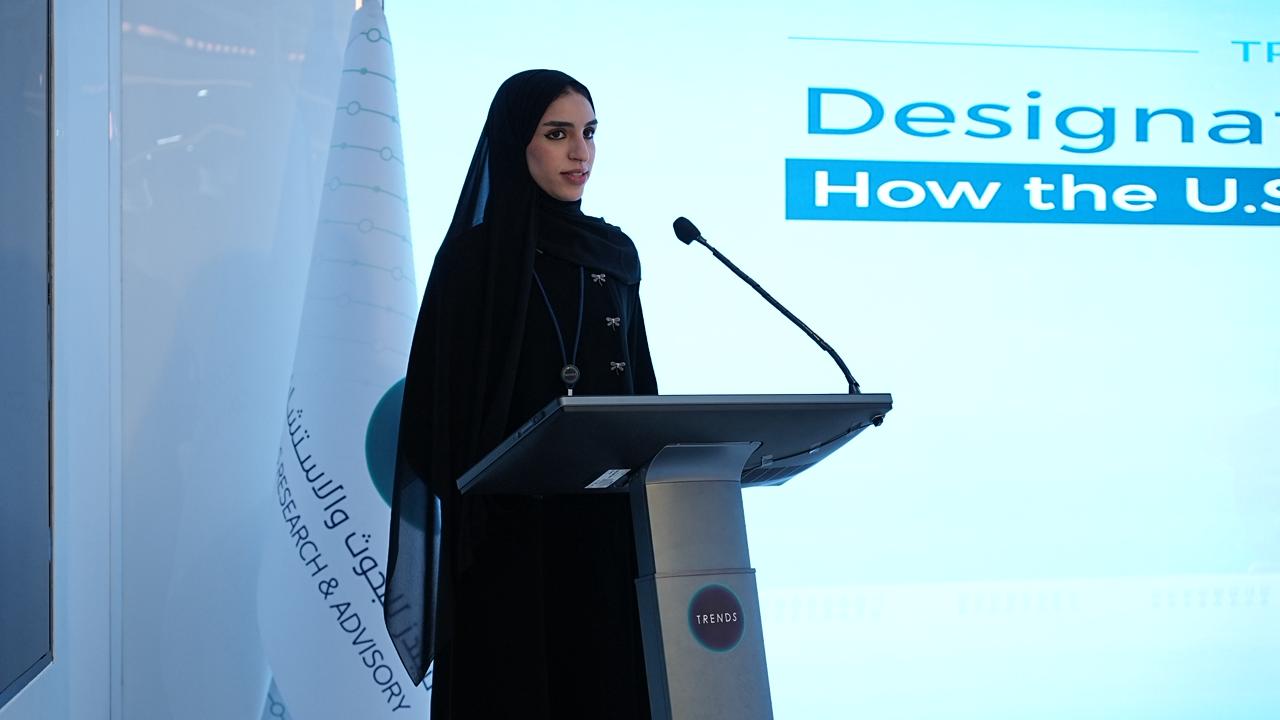
The remarks were made during the discussion session — Designating the Muslim Brotherhood: How the U.S. Decision Will Reshape the Group’s Future — organized by TRENDS at its headquarters in Abu Dhabi on Wednesday.
The keynote speaker, Dr. Sterling Jensen, an Associate Professor at Mohamed bin Zayed University for Humanities and a counterterrorism expert, stated that the United States’ reluctance to designate the Muslim Brotherhood in its entirety as a terrorist organization “in one stroke” is due to complex legal and constitutional constraints. He noted that Washington has adopted a pragmatic approach by designating only those wings for which extremism can be readily proven at present, thereby ensuring the decision’s effectiveness and resilience before U.S. courts.
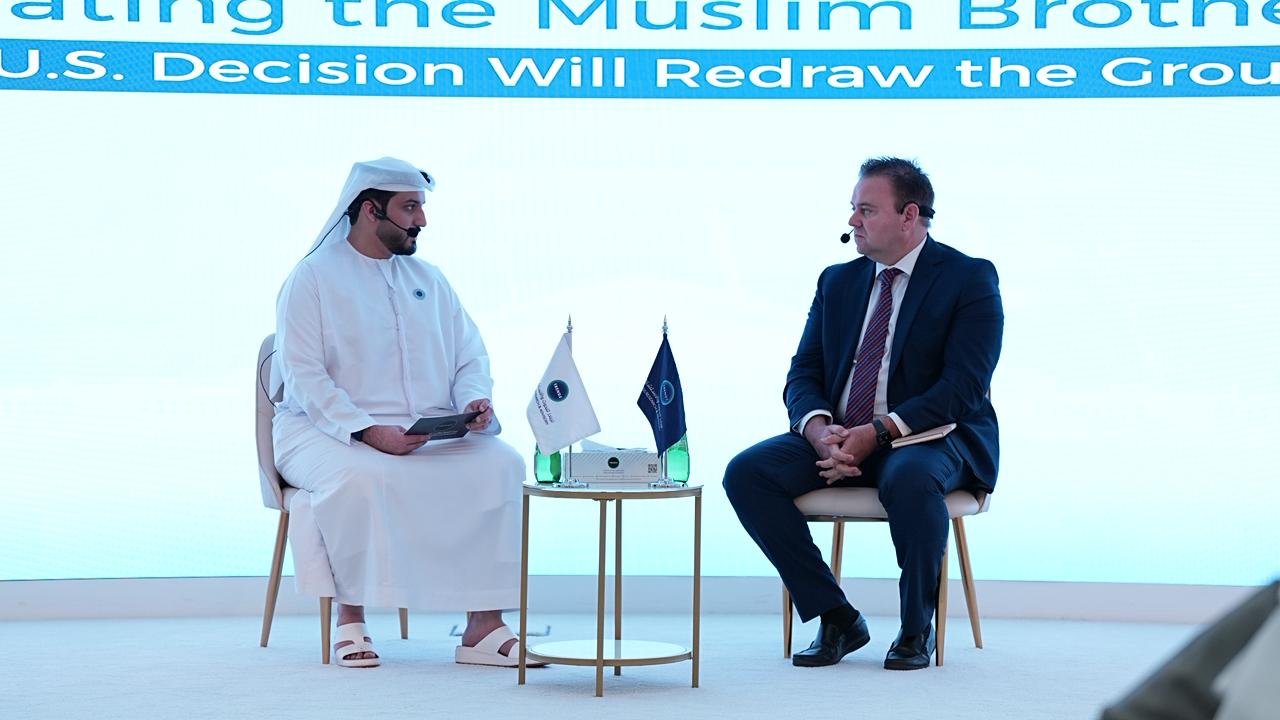
Dr. Jensen explained that the U.S. legal system requires direct and specific evidence to place any entity on terrorism designation lists, noting that the core challenge lies in distinguishing between the parent organization and its branches, which may operate under civil or legal frameworks in allied countries or even within the United States.
He added that Washington has opted for a gradual approach, targeting branches and wings whose direct involvement in violence can be conclusively established, to avoid legal challenges that could weaken comprehensive designations. He emphasized that this approach seeks to achieve maximum impact while preserving constitutional safeguards.
The session also addressed whether a return of the Democratic Party to power in the United States could lead to a change in this approach. The discussion indicated that differences between Republican and Democratic administrations typically center on political rhetoric and implementation tools, rather than on the legal foundations governing designation decisions.
Participants stressed that constitutional constraints and judicial requirements remain the decisive factors, compelling any administration — regardless of partisan affiliation — to adopt a cautious and incremental approach when dealing with the designation of transnational groups such as the Muslim Brotherhood.

The session emphasized that the short-term impact of such designations tends to be symbolic, sending a clear political message to the group and its allies, while the real effects begin to emerge over the medium and long term through the undermining of financial and organizational networks and the prevention of the group from repositioning itself under new names.
The discussion also underscored the international dimension of this trajectory, noting that the adoption of the same U.S. approach by other countries could trigger a “domino effect,” cumulatively intensifying international pressure that accelerates the group’s decline as a transnational actor.
The session concluded by emphasizing that the effectiveness of designating extremist organizations depends on the international community’s ability to close legal loopholes exploited by such groups, as well as on the level of coordination between the United States and its allies within a comprehensive and sustainable counterterrorism strategy.

