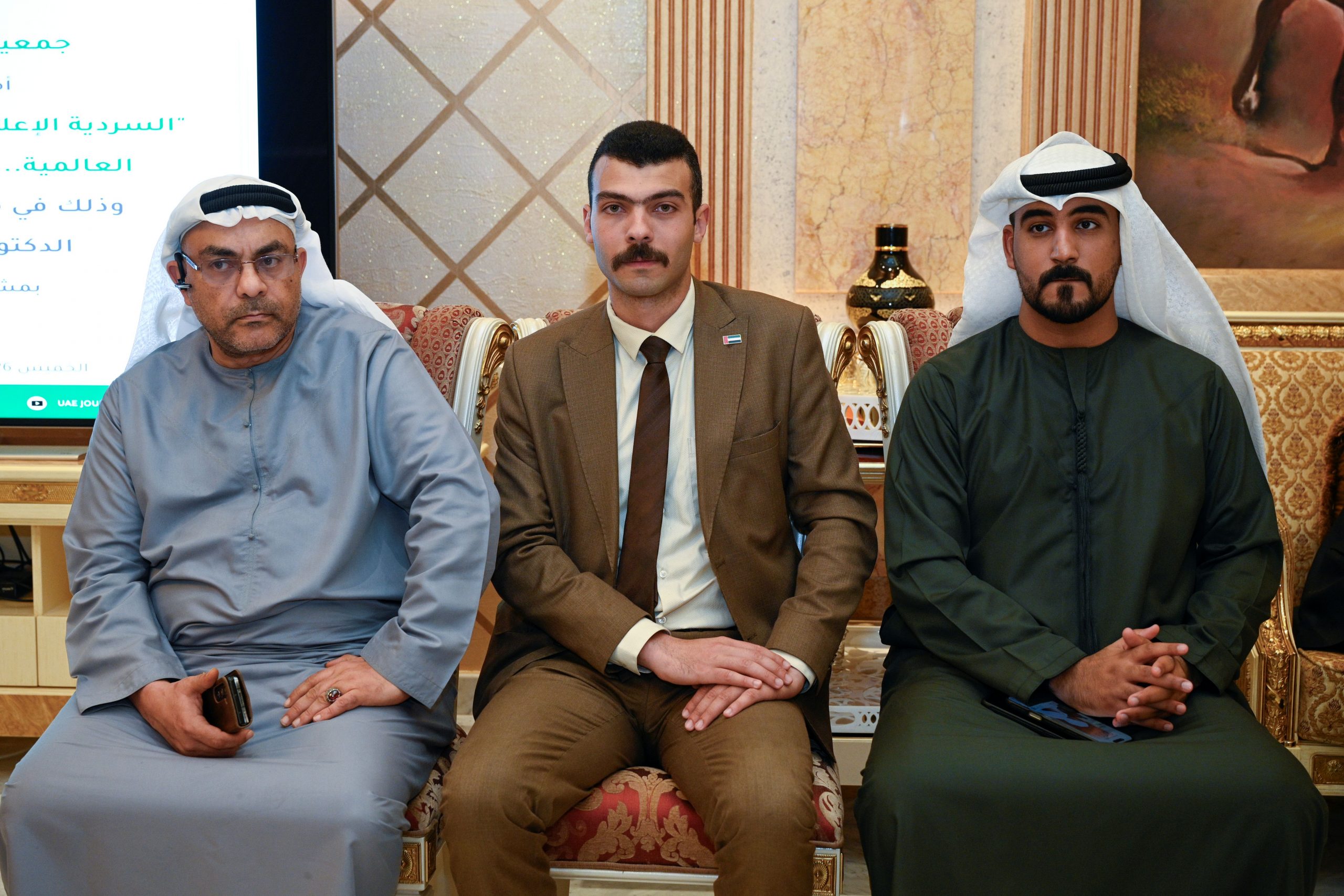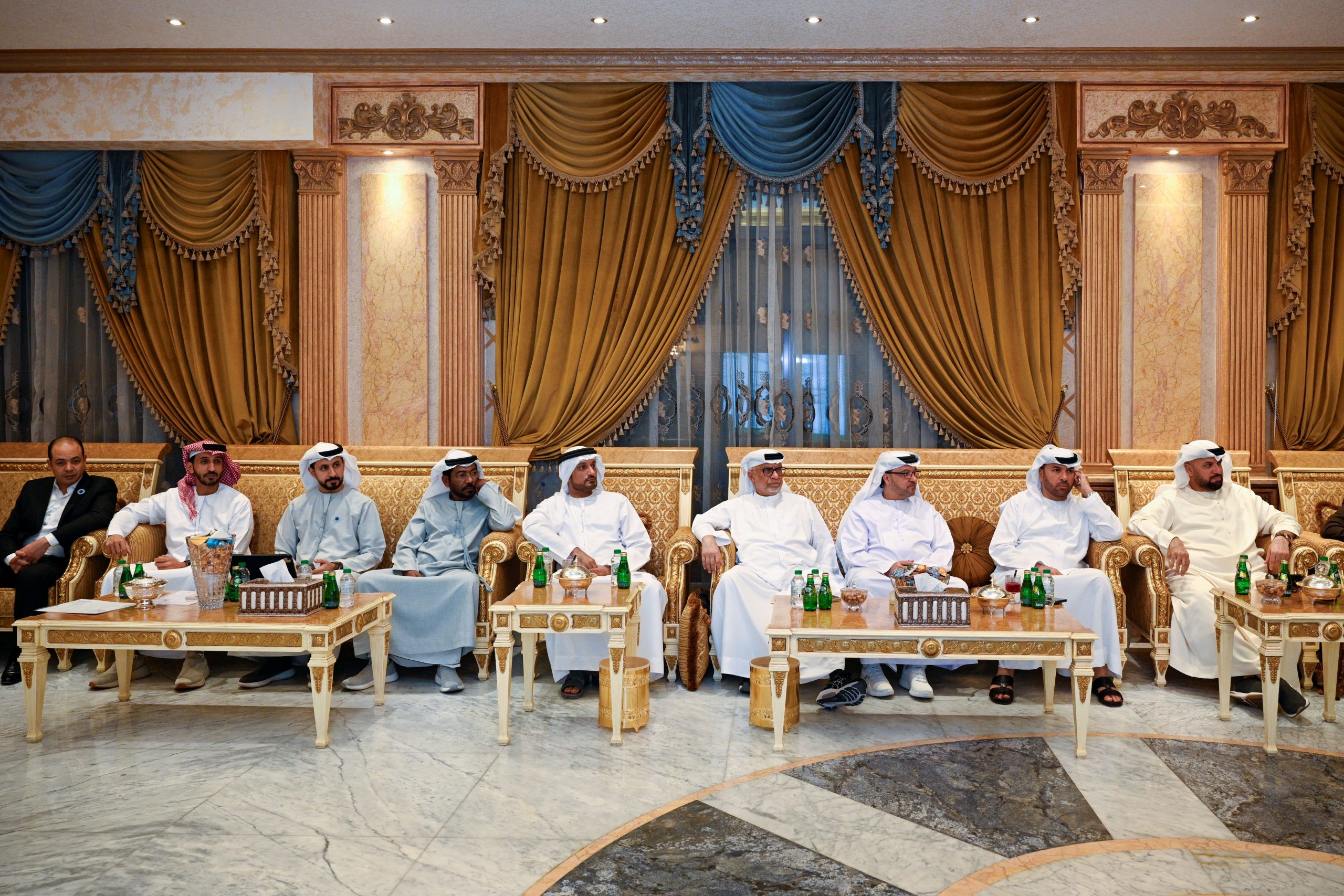
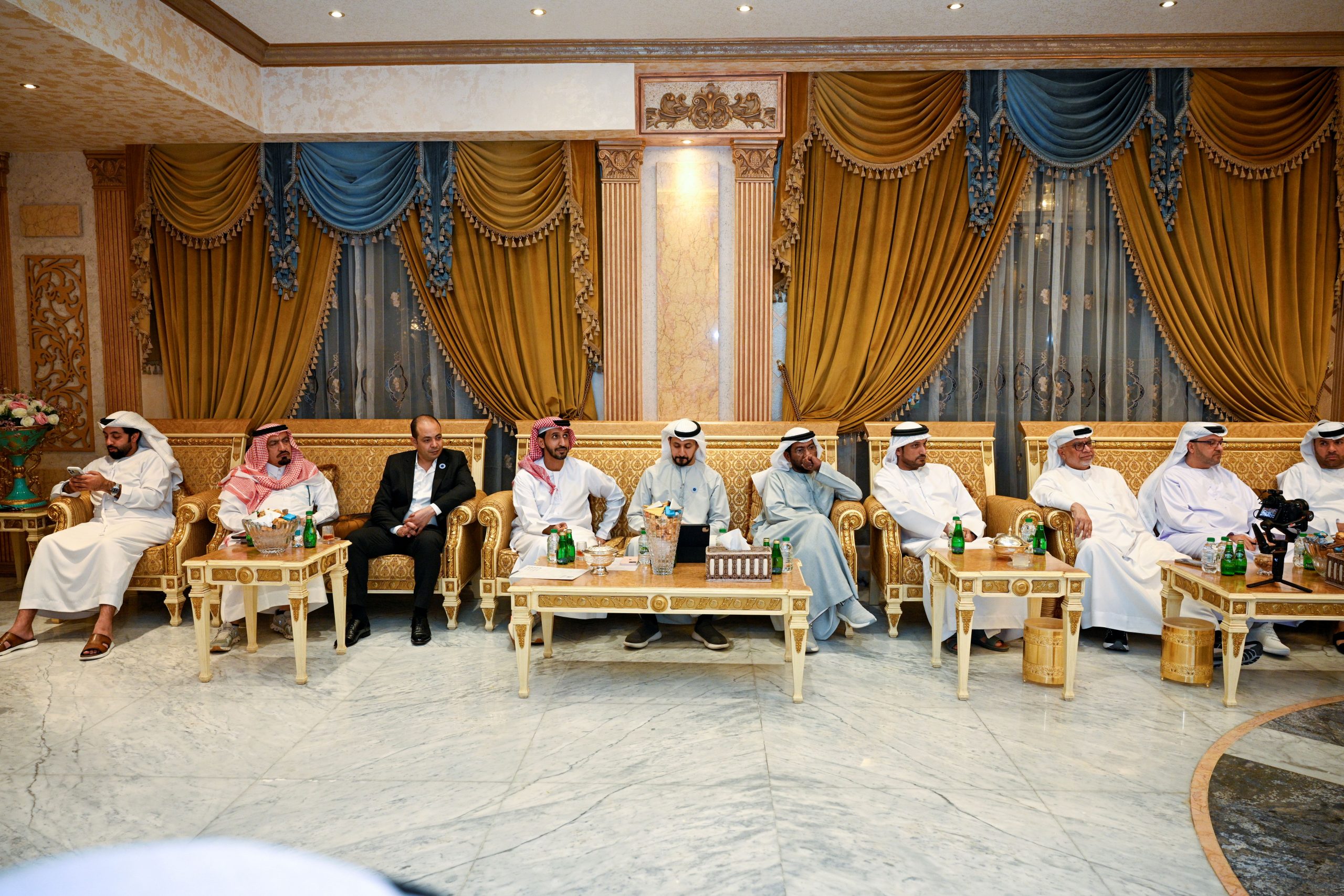
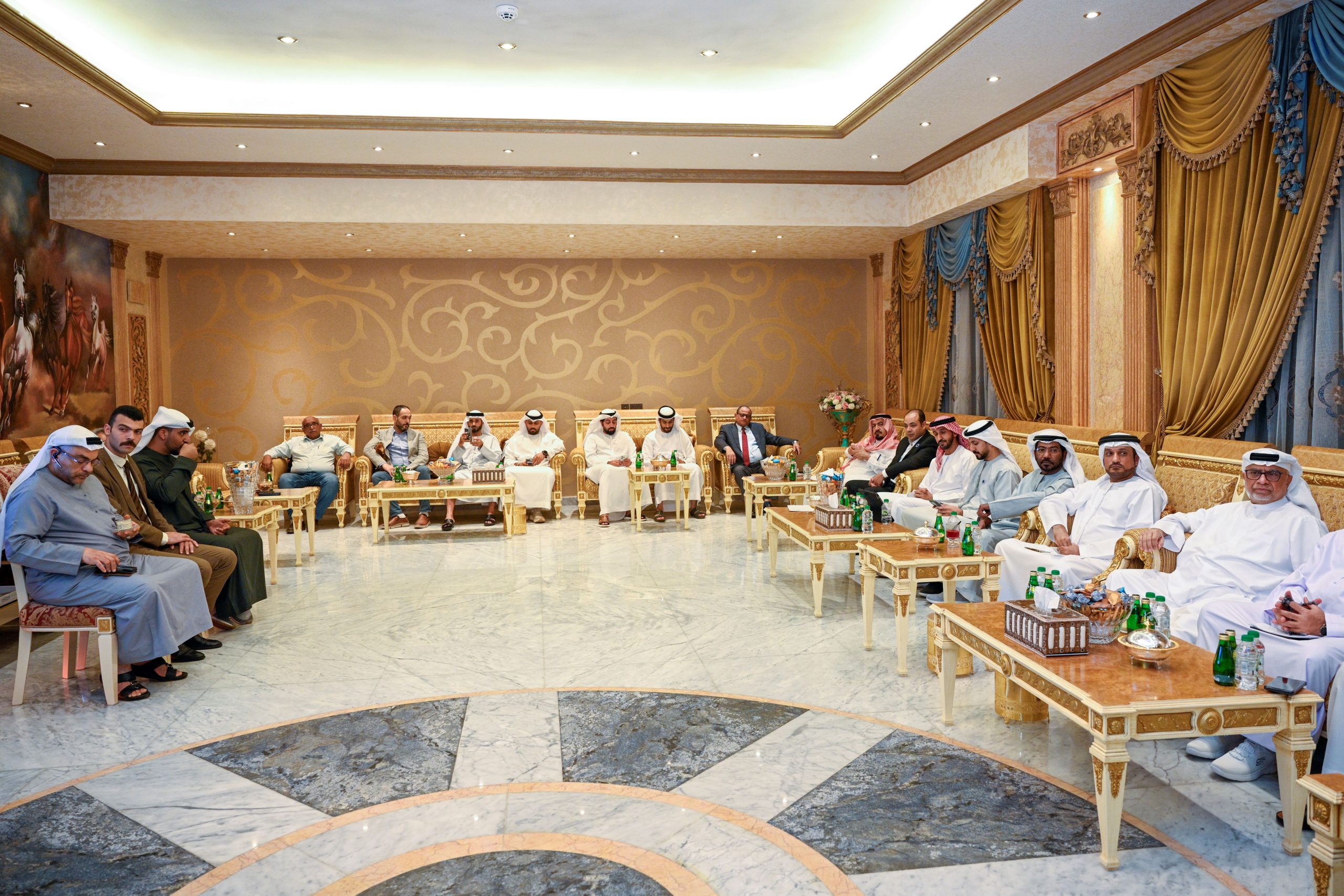
TRENDS Research & Advisory, through its Dubai office, participated in the Ramadan evening titled The UAE Media Narrative Amid Global Transformations: A State Vision and Media Responsibility, organized by the UAE Journalists Association. The event brought together a distinguished group of media professionals and specialists and was held at the majlis of Dr. Yousif Al Sharif in Muhaisnah 1, Dubai.
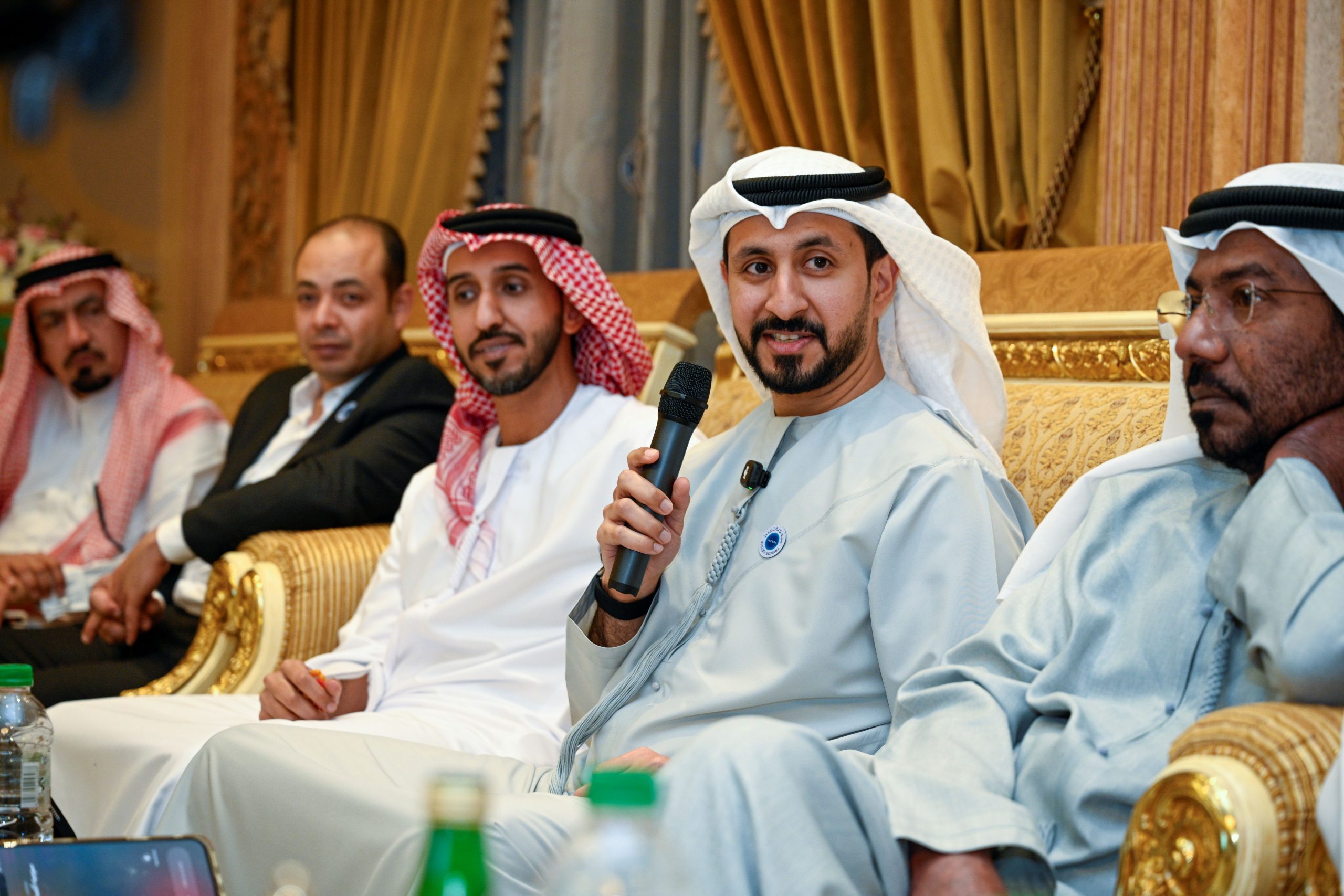
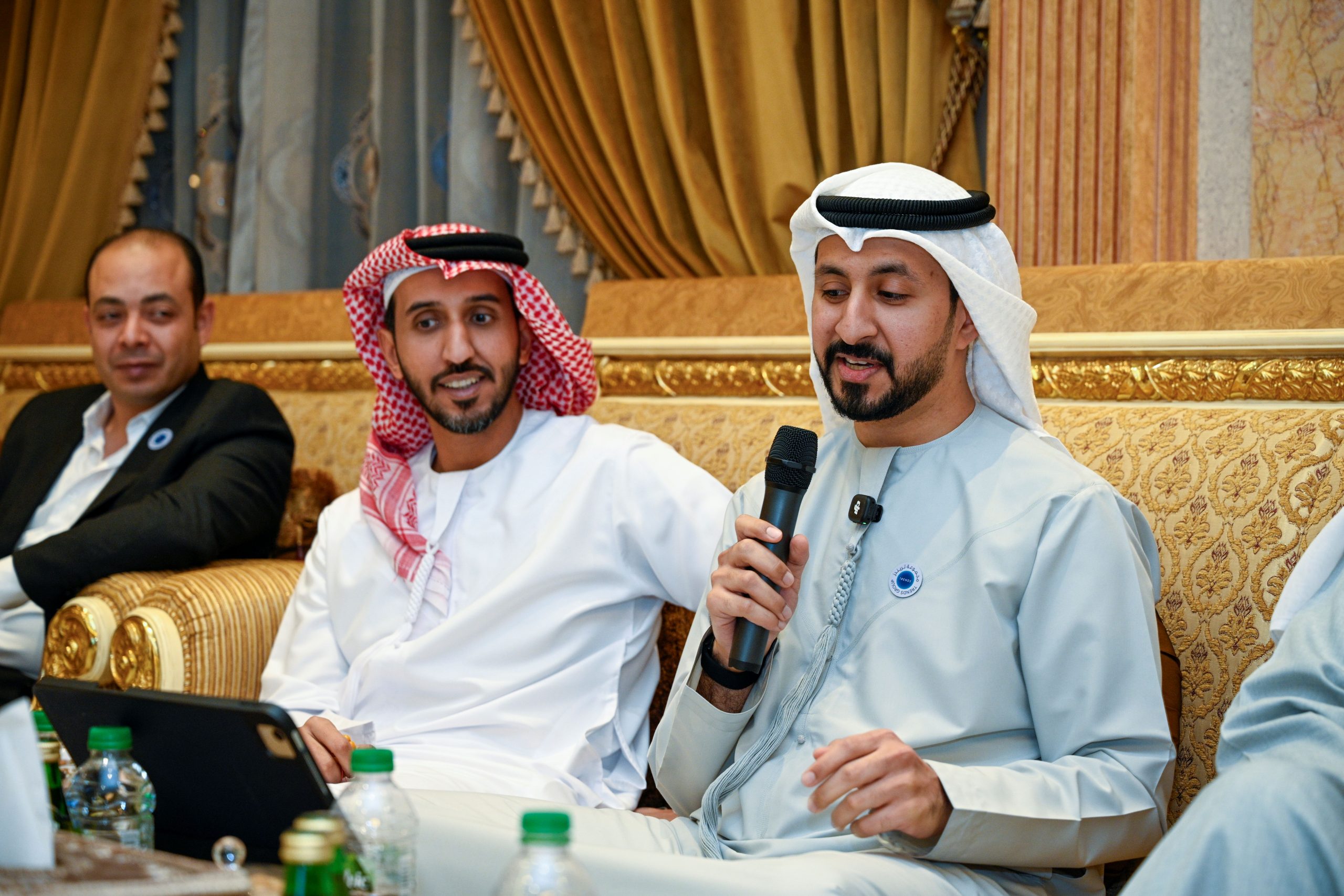
Ali Abdullah Al Ali, a researcher at TRENDS, stated that amid rapid global transformations, the challenge facing nations is no longer limited to conveying their narrative to the world. Instead, it now lies in the ability to build a coherent national narrative grounded in knowledge—one that anticipates challenges and addresses minds before emotions.
He explained that a cohesive media narrative requires activating the role of think tanks and scientific research centers, which have become key partners in supporting national media, not only through knowledge production, but also by analyzing complex international contexts, deconstructing competing narratives, and providing scientific content that contributes to building a media discourse based on evidence, facts, and accurate data.
Shaping Societal Awareness
Al Ali pointed out that the national media narrative has never been the product of a fleeting media moment; rather, it is an extension of a state vision that holds that the making of the future begins with shaping societal awareness. From this perspective, think tanks play a fundamental role in transforming knowledge into societal discourse. Strategic studies and analytical reports help equip media institutions with deeper interpretative frameworks for events, thereby enhancing the accuracy and credibility of their messages.
He further noted that think tanks possess the capacity to anticipate global trends and interpret transformations before they occur, thereby supporting the formulation of a proactive—not defensive—narrative. In addition, they play an effective role in building a country’s soft power by disseminating knowledge and promoting international dialogue.
Ali Al Ali emphasized that contemporary media today is in increasing need of the analytical depth provided by think tanks and research institutions, particularly in light of the spread of misinformation and the intensifying competition to shape international public opinion.
Reshaping Public Opinion
Regarding the role of digital platforms and artificial intelligence in reshaping public opinion, Al Ali affirmed that we have moved from the traditional mass communication model, once controlled by centralized media institutions, to a decentralized network model driven by algorithms. Digital platforms have become major actors in determining what is seen and how it is understood. With the advent of artificial intelligence technologies, the equation of shaping public opinion has shifted from content editing based on professional standards to content personalization based on behavioral patterns and interests.
He explained that public opinion today is increasingly constructed through big data analysis and trend prediction. This has led to fragmented public opinion, where each audience lives in its own informational bubble. It is precisely here that the role of think tanks becomes even more significant in producing rigorous knowledge capable of breaking these bubbles and offering narratives grounded in analysis rather than algorithms.
The Integration of Thought and Media
Addressing the state of contemporary media and whether it has become “without gatekeepers,” Al Ali noted that the gatekeepers have changed. In the past, the gatekeeper was the editor-in-chief, the media institution, and professional editorial policies. Today, however, the gatekeeper has become the algorithm, the digital platform, and the artificial intelligence model that determines priority of access and dissemination.
Hence, he underscored the need for a complementary role between think tanks and media institutions in interpretation and analysis, and in ensuring narrative balance within a media environment where digital influences are accelerating.