


-The UAE and Japan are global leaders in space and responsible AI
-The two countries are shaping an international model that balances rapid innovation with ethical responsibility
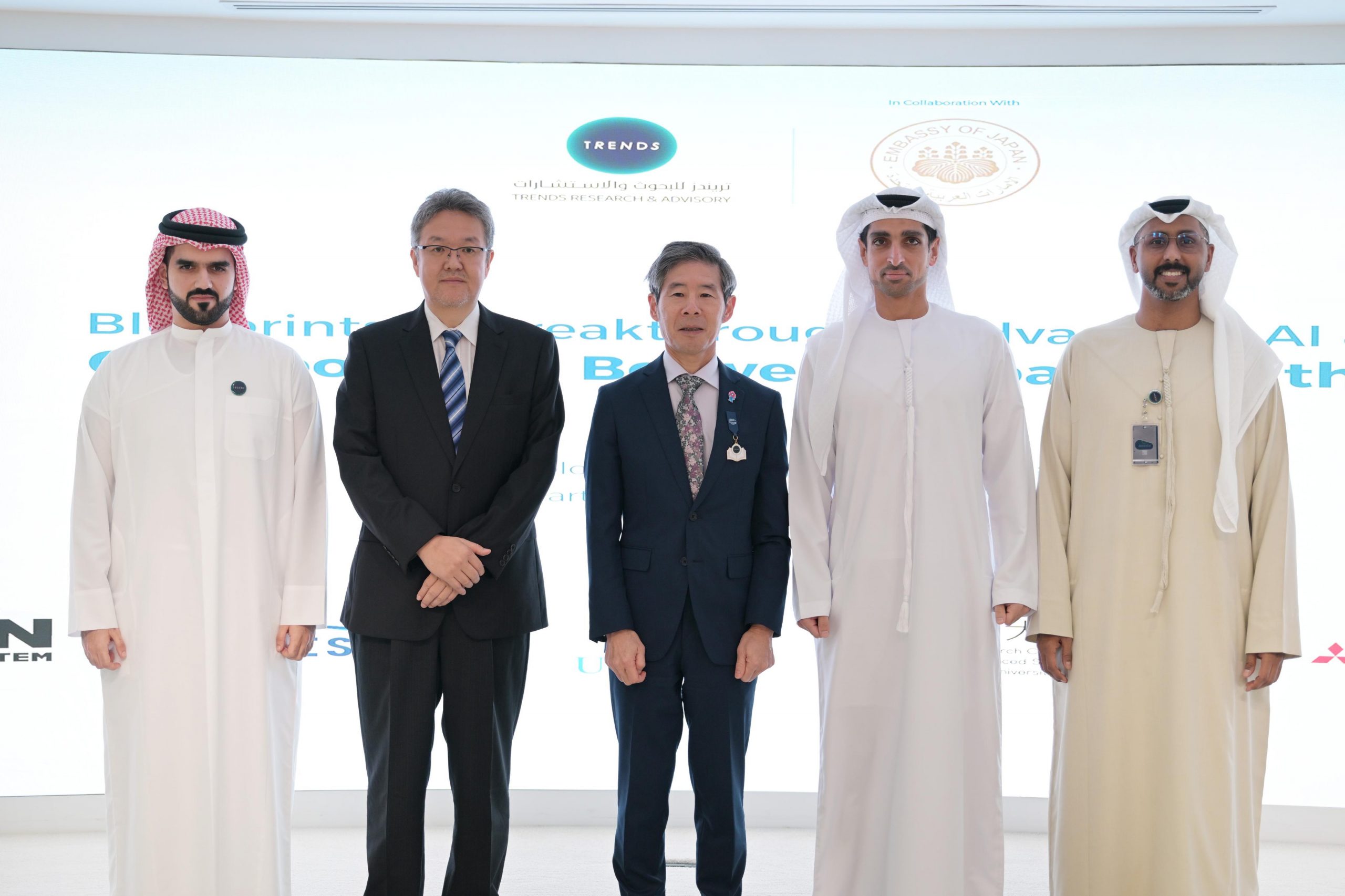
TRENDS Research & Advisory, in cooperation with the Embassy of Japan in the UAE, concluded the symposium, Blueprints to Breakthroughs: Advancing AI & Space Collaboration Between Japan and the UAE. The event attracted exceptional participation from officials, academics, and industry leaders from both countries, who articulated an ambitious vision to establish a permanent platform for technological cooperation and a roadmap for integrating innovative models and opening new technology markets.
Speakers, including government officials, experts, academics, and researchers from the UAE and Japan, recommended launching a permanent bilateral cooperation platform in the fields of artificial intelligence (AI) and space sciences. They also called for the development of a joint roadmap to strengthen technological integration and support the creation of innovation ecosystems capable of translating scientific research into practical applications with sustainable economic and knowledge impact.
The participants emphasized that the symposium marks an essential milestone in the strategic partnership between the UAE and Japan, which has evolved from traditional cooperation into an advanced knowledge- and technology-driven partnership. This partnership is founded on the exchange of expertise, alignment of policies, and the joint development of innovative solutions to global challenges in AI and space exploration.
Deep Partnership
In his welcoming remarks, Dr. Mohammed Al-Ali, CEO of TRENDS Research & Advisory, emphasized that organizing the event aligns with TRENDS’ vision of expanding international research cooperation, linking academic knowledge with decision-making, and anticipating major technological transformations that will shape the future.
He noted that the signing of a memorandum of understanding (MoU) with the Mitsubishi Research Institute (MRI) represents a practical step toward building long-term research partnerships. He stressed that UAE–Japan cooperation offers an advanced model of integration between strategic vision, speed of execution, and deep technical expertise.
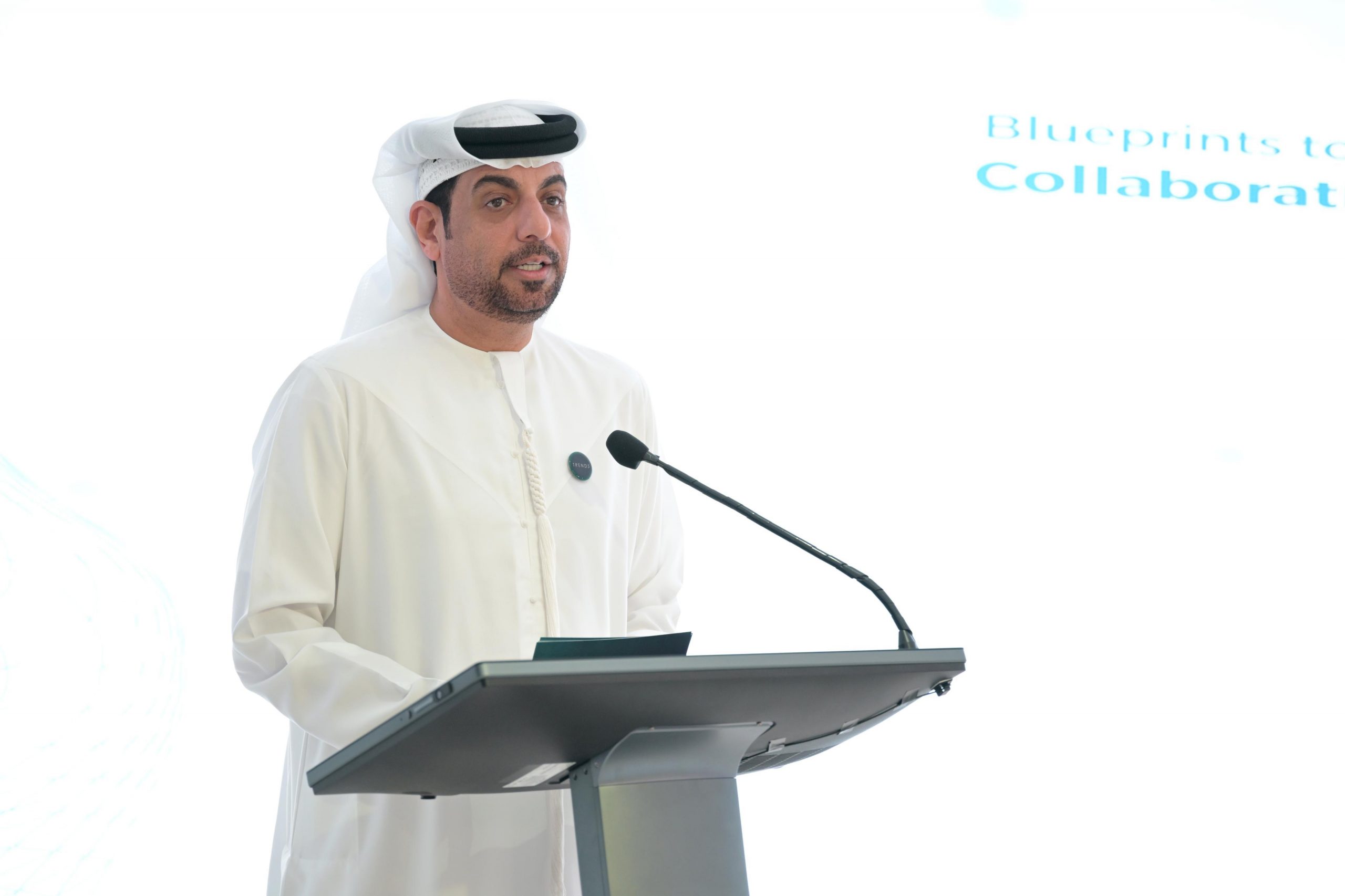
In his keynote address, H.E. Ken Okaniwa, Ambassador Extraordinary and Plenipotentiary of Japan in the UAE, highlighted the rapid development of bilateral relations, underscoring that AI and space sciences constitute two core pillars of future cooperation, particularly considering mounting global challenges and the growing need for responsible technological solutions.
Mr. Hirofumi Miyake, Deputy Assistant Minister for the Middle Eastern and African Affairs Bureau at Japan’s Ministry of Foreign Affairs, affirmed that the symposium comes at a critical moment, coinciding with a series of high-level visits between the two nations. He highlighted the UAE’s distinguished track record in space exploration, recalling the historic Hope Probe mission, and referred to Japan’s Osaka AI Process, emphasizing that cooperation with institutions such as Mohamed bin Zayed University of Artificial Intelligence (MBZUAI) is a key driver of the future economy.
A Model of Constructive Cooperation
In another keynote address, H.E. Omran Sharaf, Assistant Foreign Minister for Advanced Science and Technology, stated that UAE-Japan relations go beyond mere exchanges of interests and present an international model of constructive cooperation. He cautioned that the world is entering an era of intensifying competition in space and AI, underscoring the need to act as a unified force in responding to these shifts. He called for the partnership to serve as a driver of positive change, contributing to security and sustainable growth.
Ren Ito, Co-Founder of Sakana AI, presented a bold vision, questioning which actors will ultimately shape the future of the digital economy. He stressed that the future should not be confined to traditional great powers, but rather built on partnerships that develop technologies that empower stakeholders rather than render them dependent. Ito urged participants to challenge the notion that “bigger is better” in AI, advocating a focus on innovation in the post-training phase to develop efficient, transparent solutions that serve sectors such as defense and manufacturing.
In a recorded address, Prof. Hiroshi Yamakawa, President of the Japan Aerospace Exploration Agency (JAXA), highlighted the depth of space cooperation that began with the 2016 bilateral agreement. He noted that the successful launch of the Hope Probe and the UAE’s experiments aboard the International Space Station are the result of mutual respect and shared visions. He expressed hope that the symposium would catalyze further deepening cooperation as the two countries approach the tenth anniversary of their bilateral agreement next year.
Kenji Otsuka, Chairman of the Japanese Business Council (JBC), representing more than 100 Japanese companies, emphasized that understanding technological developments in the UAE is essential for ensuring sustainable business growth. He praised the UAE’s open and stable strategy, noting that Japanese companies are proud to operate in the UAE and aspire to expand investments in AI and space.
Perspectives on AI and Space
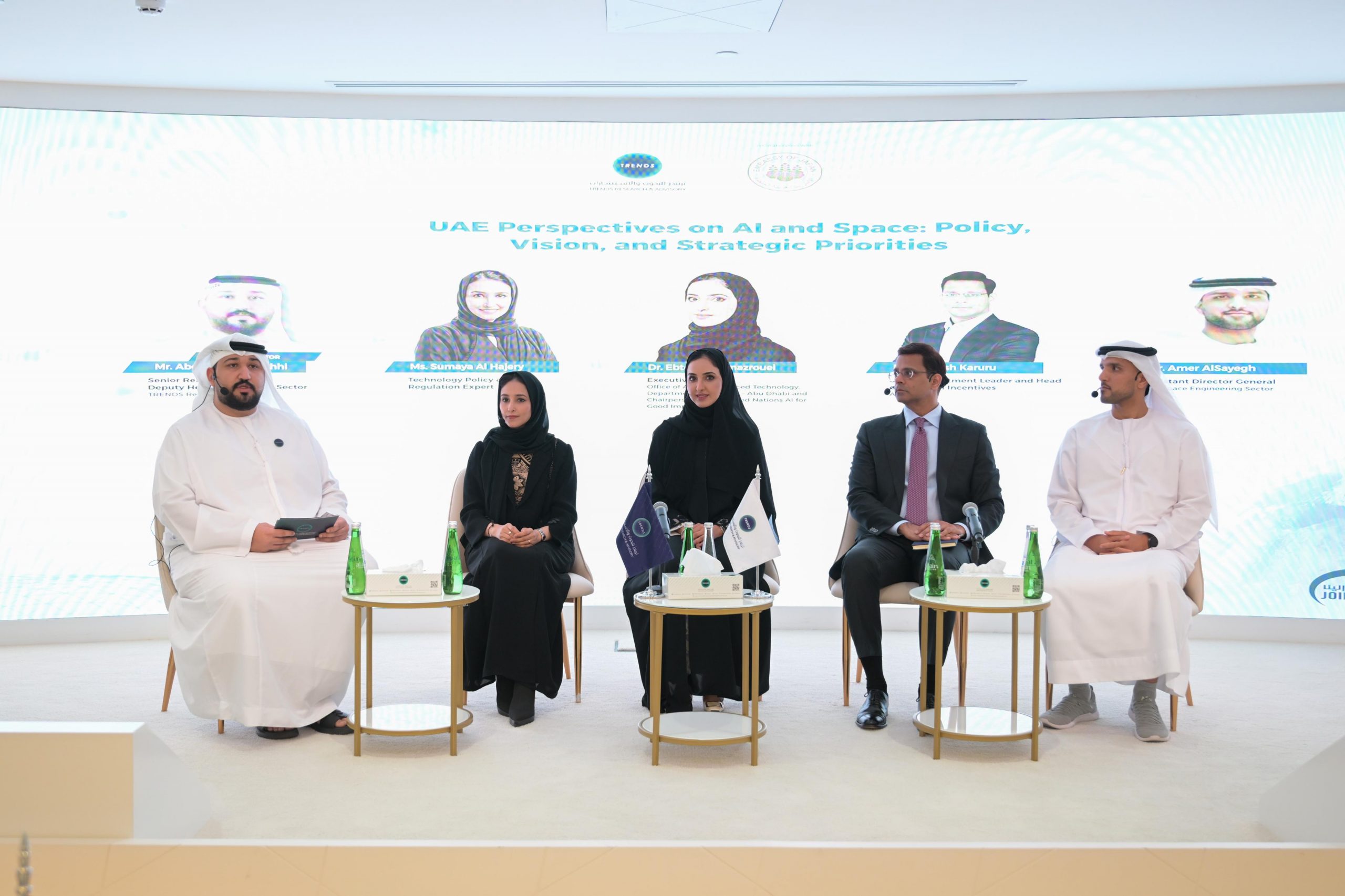
Abdulaziz Al-Shehhi, Researcher and Deputy Head of the Research Sector at TRENDS Research & Advisory, moderated the first session, UAE Perspectives on AI and Space.
The session featured Dr. Ebtesam Al-Mazrouei, Executive Director, Office of AI and Advanced Technology, Department of Finance – Abu Dhabi, and Chairperson of the United Nations AI for Good Impact Initiative; Ms. Sumaya Al-Hajery, Technology Policy and Regulation Expert, UAE; Mr. Amer Al-Sayegh, Assistant Director General – Aerospace Engineering Sector, MBRSC; and Mr. Santosh Karuru, Senior Investment Leader and Head of Financial Incentives, ADIO.
Discussions focused on the UAE’s AI policies, emphasizing governance frameworks grounded in ethical principles and transparency. The session also addressed the evolution of the space sector from exploration to the development of an integrated economic ecosystem based on technology localization, talent development, and strengthened partnerships with the private sector. Speakers stressed that global companies increasingly seek “regulatory trust,” which is a key advantage that Abu Dhabi offers as a supportive environment for robotics, smart manufacturing, and advanced technologies.
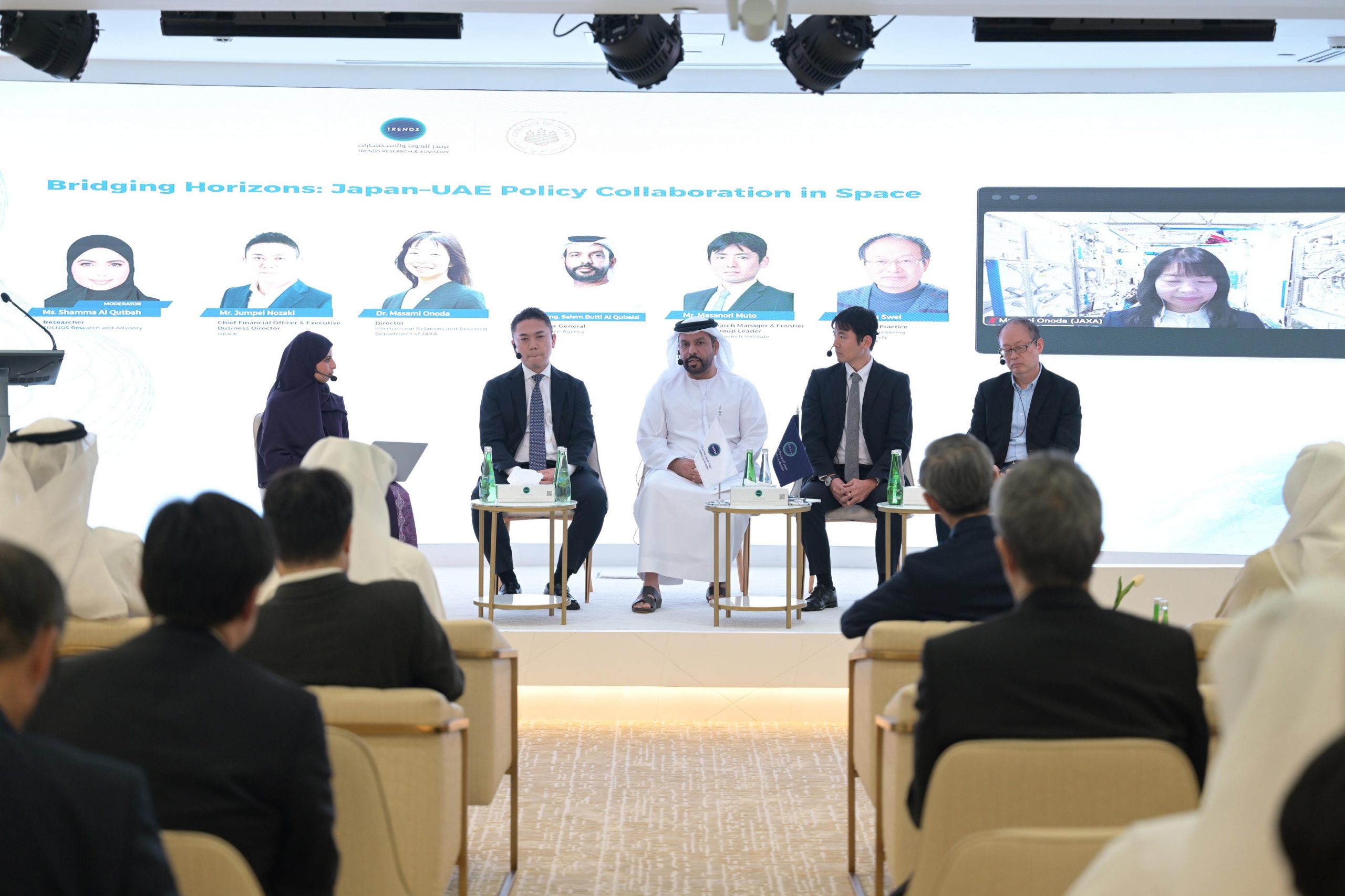
Bridging Horizons in Space Policy
The second session, Bridging Horizons: Japan–UAE Policy Collaboration in Space, was moderated by TRENDS Researcher, Shamma Al-Qutbah.
The session featured H.E. Eng. Salem Butti Al-Qubaisi, Director General of the UAE Space Agency; Prof. Sean Swei, Professor of Practice in Aerospace Engineering at Khalifa University; Dr. Masami Onada, Director of the International Relations and Research Department at the Japan Aerospace Exploration Agency (JAXA); Mr. Masanori Muto, Chief Research Manager and Frontier Strategy Group Leader at the Mitsubishi Research Institute (MRI); and Mr. Jumpei Nozaki, Chief Financial Officer and Executive Business Director at ispace.
Discussions focused on opportunities to expand cooperation to include the space economy, satellite traffic management, and the use of space data to support vital sectors. Speakers emphasized the role of the private sector in transforming innovation into economic value and the importance of mutual trust as a foundation for major joint projects, such as the Emirati interplanetary mission 2028. The session also highlighted ambitions to develop a sustainable “lunar economy” that would pave the way for the UAE’s long-term vision for Mars by 2170.
Research, Innovation, and Transformative Technologies
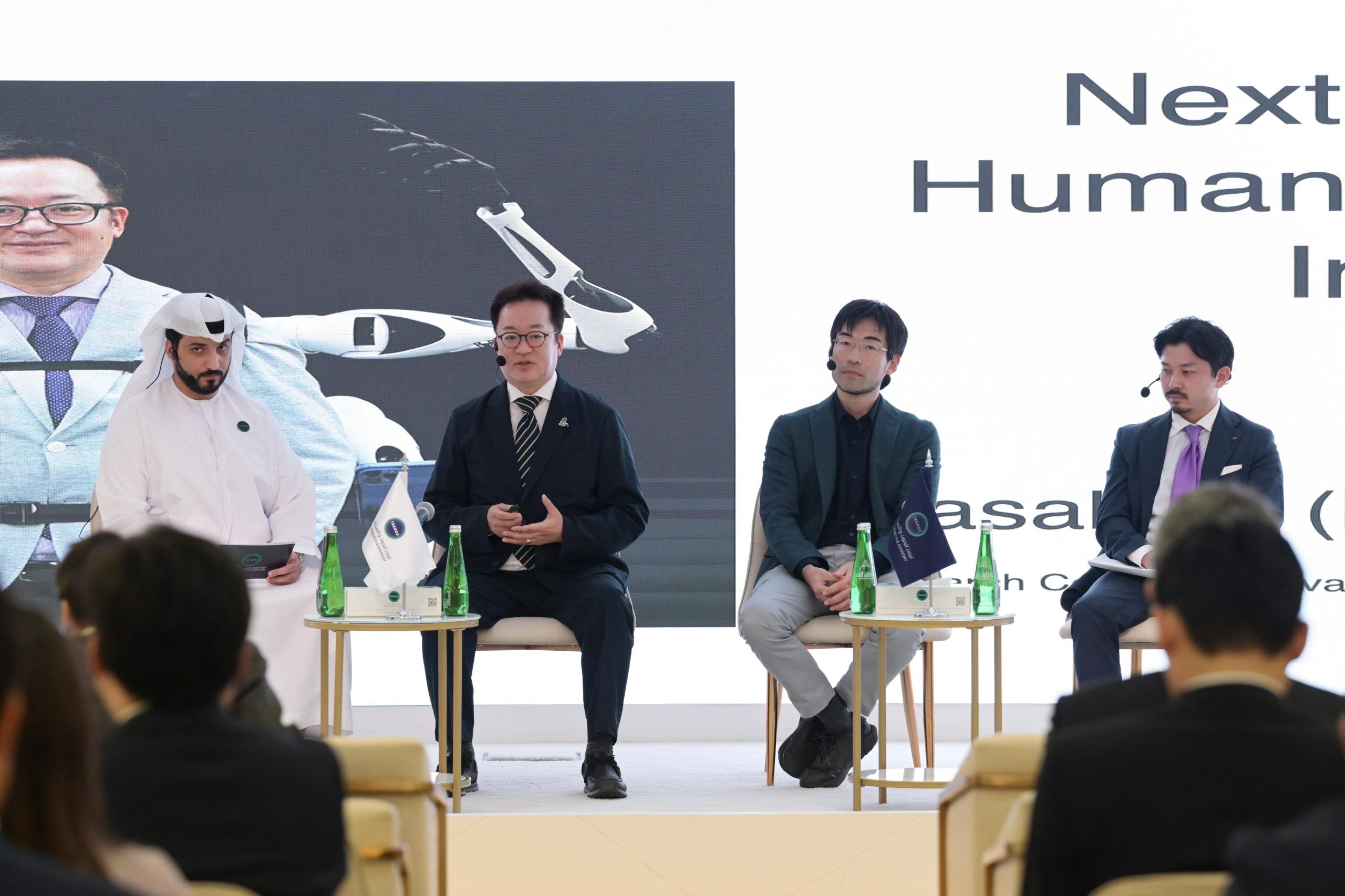
The third session, Harnessing Japan’s Innovation Edge: Applications Across Sectors, was moderated by Mr. Rashid Al-Zaabi, Researcher at TRENDS Research & Advisory. The session featured Prof. Masahiko Inami, Professor at the Research Center for Advanced Science and Technology (RCAST), The University of Tokyo; Dr. Yasuaki Monnai, Associate Professor at RCAST, The University of Tokyo; Prof. Hao Li, Dean of the Undergraduate Division, Director of the Metaverse Center, and Professor of Computer Vision at Mohamed bin Zayed University of Artificial Intelligence (MBZUAI); and Mr. Koki Shigenoi, Associate Researcher at RCAST, The University of Tokyo.
Discussions explored transformative technologies, including generative AI, robotics, and human–machine interfaces, and their role in driving qualitative shifts across healthcare, industry, and energy. The session also examined human-robot integration, emerging terahertz technology in healthcare applications, and the growing importance of sovereign AI in high-risk industrial environments.
AI Policy Cooperation
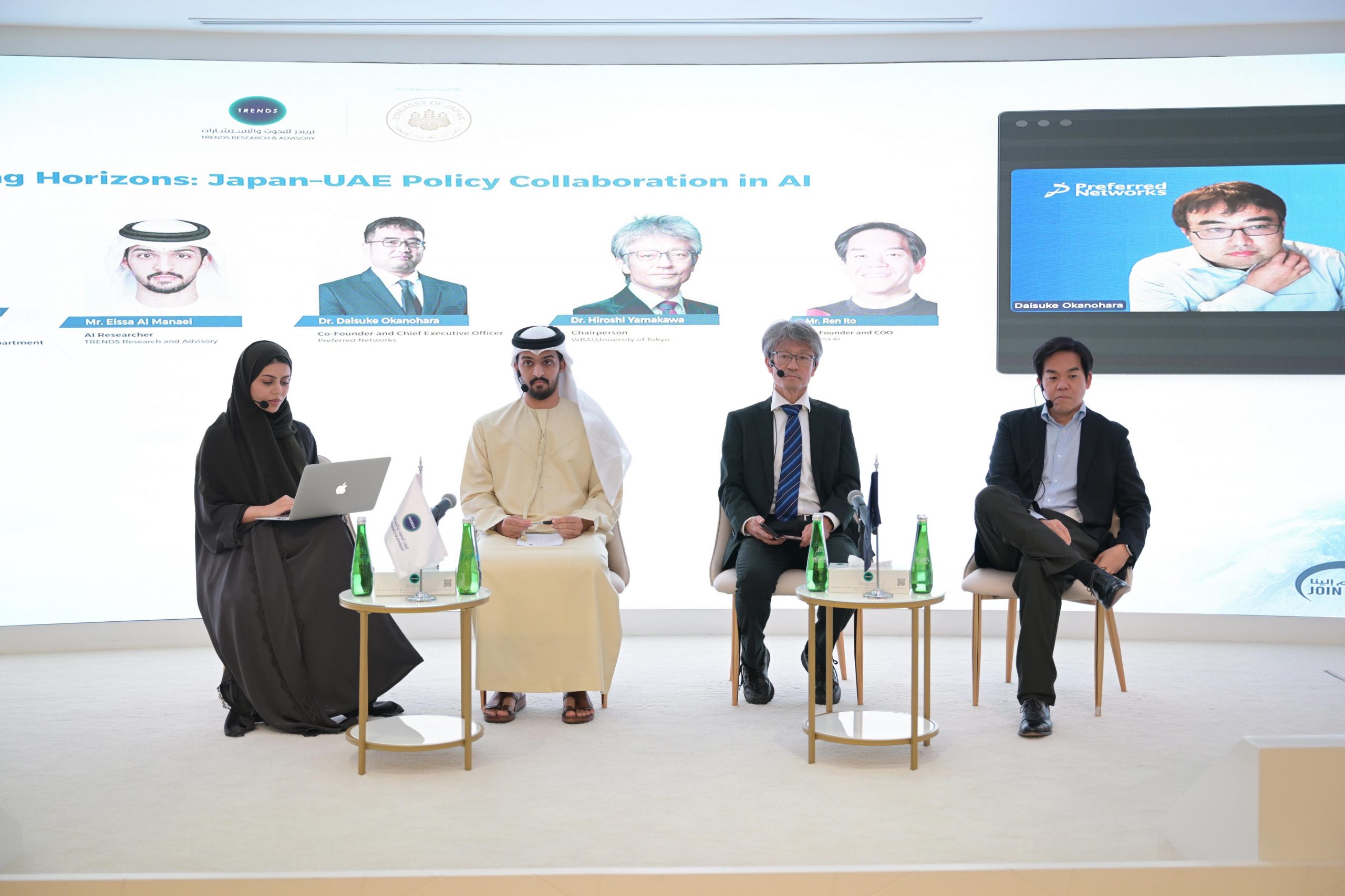
The symposium concluded with the fourth session, titled Bridging Horizons: Japan–UAE Policy Collaboration in AI, moderated by Mouza Al-Marzooqi, Senior Researcher and Director of the Economic Studies Department at TRENDS Research & Advisory. The session featured Eissa Al Manaei, AI Researcher at TRENDS; Mr. Ren Ito, Co-Founder and Chief Operating Officer of Sakana AI; Dr. Hiroshi Yamakawa, Whole Brain Architecture Initiative (WBAI), University of Tokyo; and Dr. Daisuke Okanohara, Co-Founder and Chief Executive Officer of Preferred Networks.
Speakers underscored the importance of building international governance frameworks for AI, linking scientific research to real-world applications, and strengthening trust in intelligent systems. Discussions also addressed the concept of an “AI immunity ecosystem” designed to detect and neutralize rogue or harmful behaviors, the need to develop energy-efficient AI chips, and calls to establish a Japan–UAE alliance that would serve as a “third pillar” for global AI safety, positioned beyond the rivalries of traditional geopolitical blocs.
Conclusion
The symposium concluded with a note that the UAE–Japan partnership in AI and space sciences represents an advanced model of international cooperation founded on integration, responsible governance, and sustainable innovation.
Speakers agreed that this alliance goes beyond technical collaboration, constituting the formulation of a global model that balances rapid innovation with ethical responsibility. The integration of Japan’s engineering expertise with the UAE’s speed of execution and regulatory agility will create a global platform capable of leading advances in autonomous logistics, healthcare, and industrial decarbonisation.
