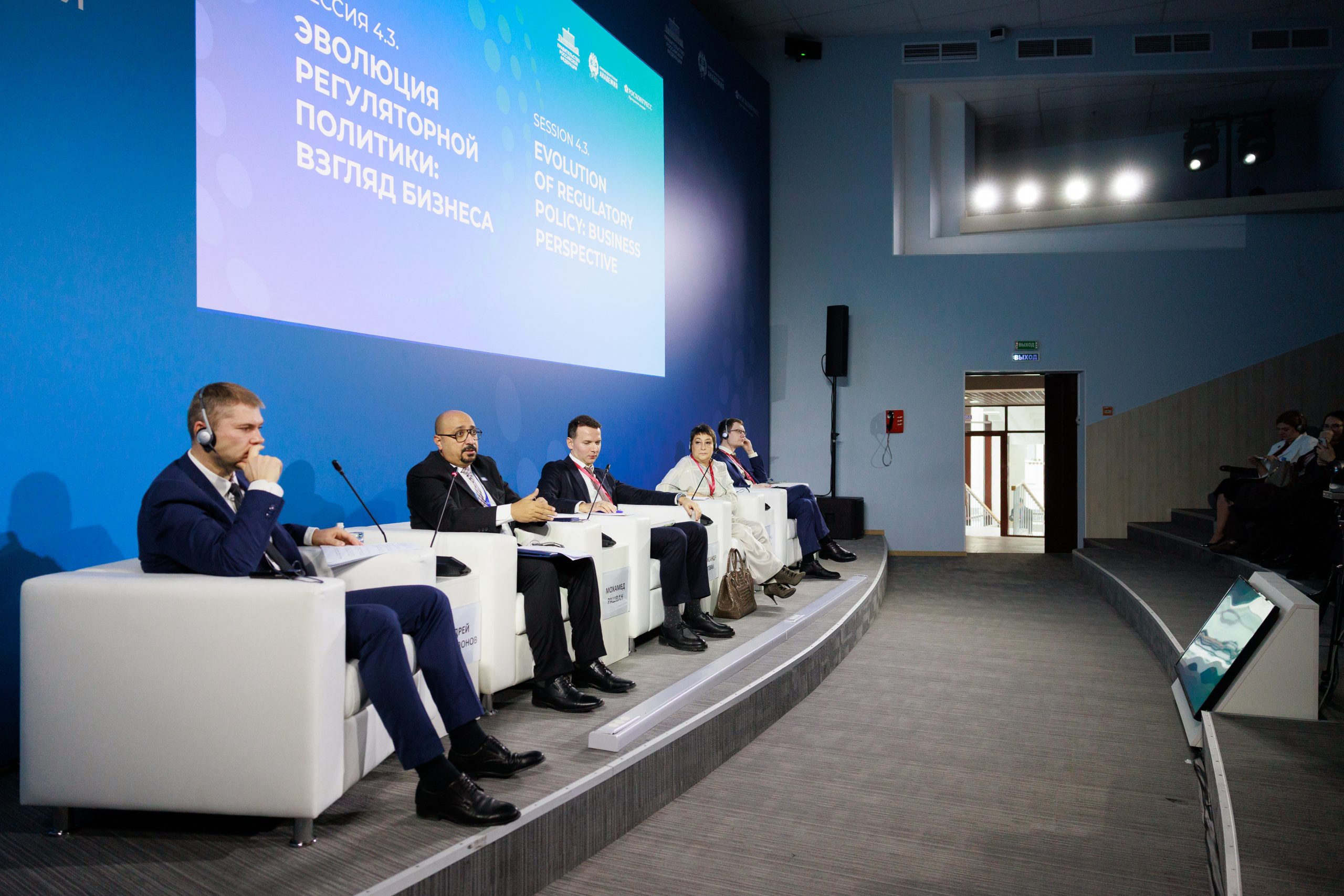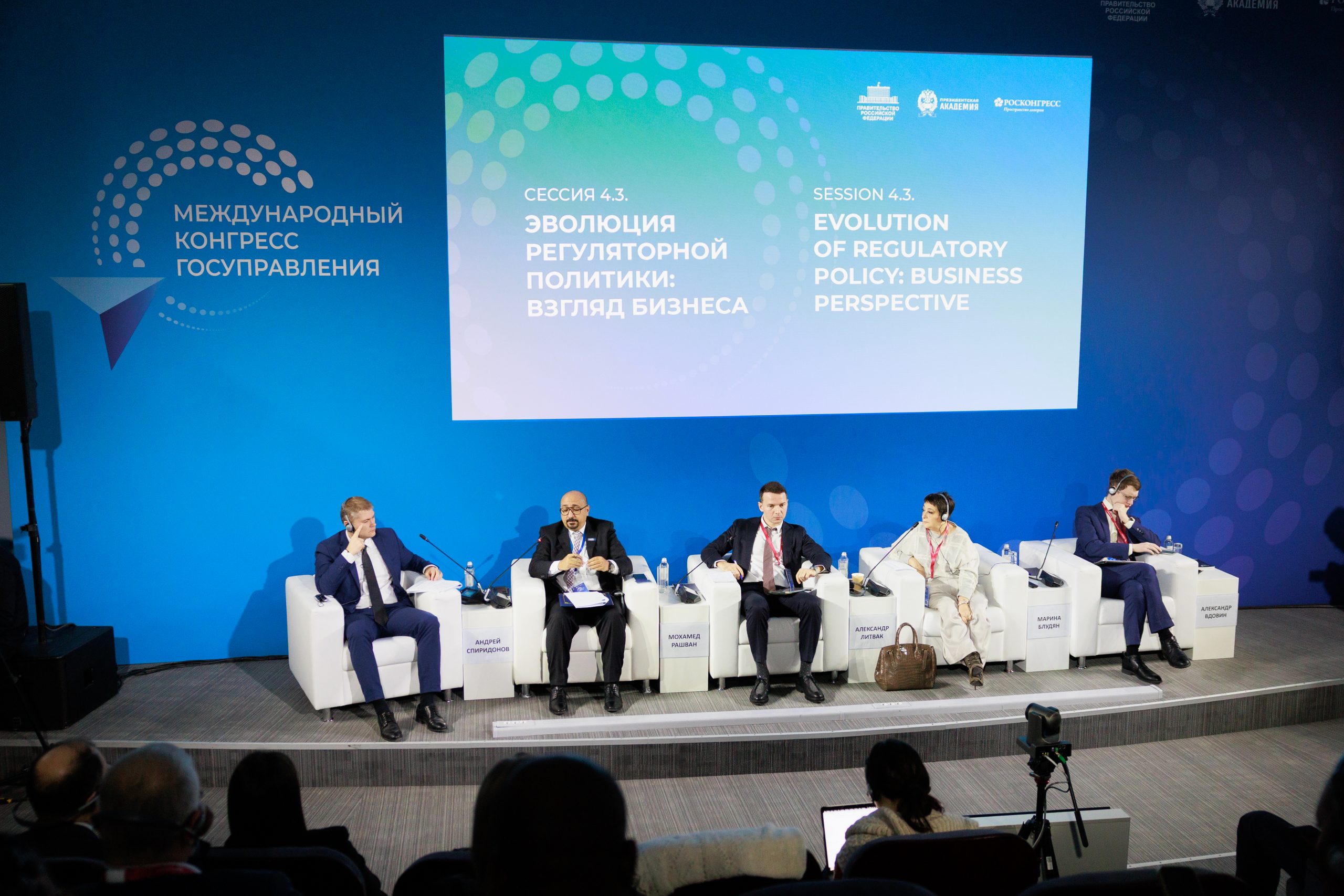
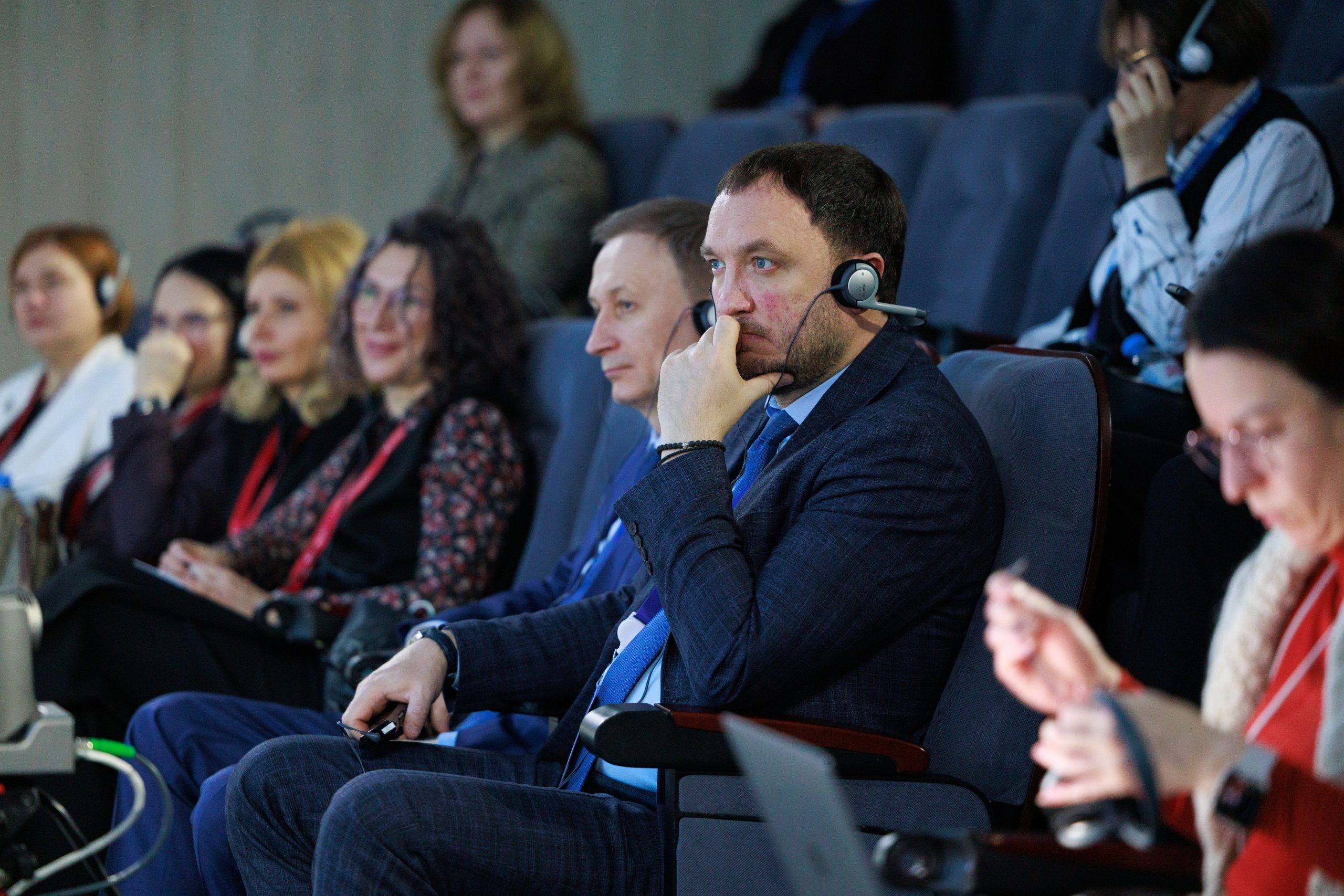
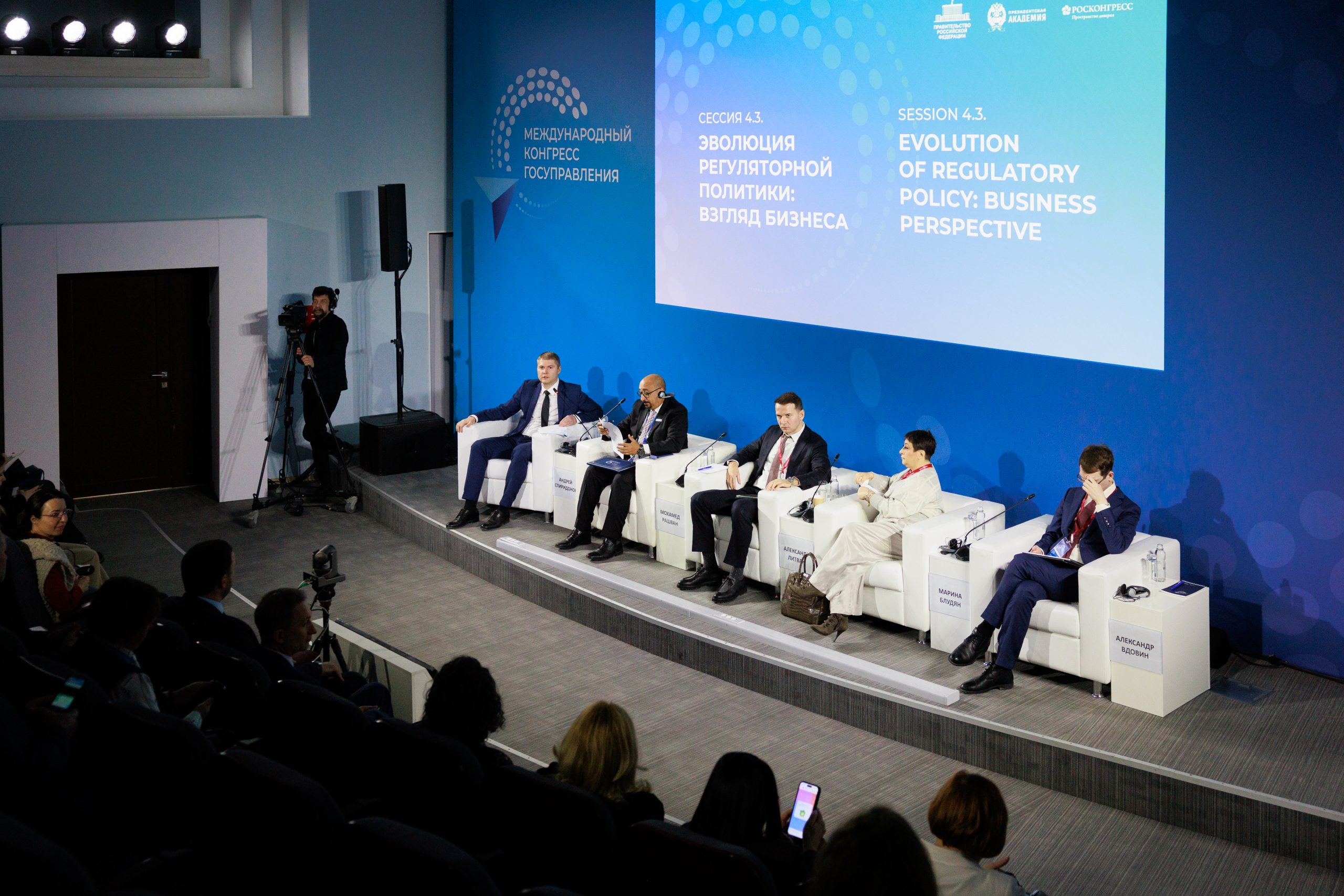
As part of its research tour in Moscow, TRENDS Research & Advisory, through its Russia Office, participated in the International Congress of Public Administration, hosted by the Russian Presidential Academy of National Economy and Public Administration (RANEPA) at its headquarters. The congress brought together more than 1,200 international experts, academics, economists, and public administration specialists from around the world.
Dr. Mohamed Abdelmonem Rashwan, Director of the TRENDS Russia Office, contributed to the conference by presenting a research paper titled The Attention Economy and the Future of Regulatory Policies: A Business Perspective on Enhancing Competitiveness. He said that the global economy is undergoing profound transformations driven by digitalization, the rise of the attention economy, and unprecedented shifts in consumer behavior. Developing regulatory policies, he stressed, is no longer an option but a strategic necessity to ensure business competitiveness and sustainable growth. He added that the attention economy has become an economic resource no less important than capital or data, as digital platforms and artificial intelligence compete for user attention as the main engine of innovation and growth.

Accelerating Innovation Cycles
Rashwan explained that the attention economy is an economic environment in which user attention becomes a scarce resource, competed over by companies and digital platforms. This shift has accelerated innovation cycles, triggered real-time changes in consumer behavior, increased reliance on big data, and elevated artificial intelligence as a central tool in decision-making. These transformations, he said, require institutions and governments to adopt administrative and regulatory models that are fast, flexible, and capable of continuous adaptation.
Drawing on international experiences, he emphasized that rapid adaptability is the decisive factor in today’s business environment. He pointed to the Yandex platform as a clear example, noting the company’s successful expansion into Middle Eastern markets through innovative services such as Yandex Go in smart mobility. This success, he said, reflects the regulatory flexibility that enabled the company to adjust its business models swiftly.
He also highlighted the pivotal role of research centers in this context, as they provide advanced insights that facilitate dialogue between governments and the business sector, support the development of regulatory policies responsive to global shifts, and contribute to improving the quality of life and economic development.
The Attention Economy Era
The Director of the TRENDS Russia Office outlined the conceptual foundations of a new framework for leading change in the era of the attention economy, known as Quick Witted Agile Dynamics (QWAD). He described it as an innovative model that integrates rapid intelligence, real-time agility, and deep reliance on artificial intelligence to enable institutions and governments to make instant decisions and continuously adjust their operational and regulatory plans. This approach, he said, ensures adaptation to rapid change and strengthens competitiveness.
He explained that the attention economy compels institutions and governments to rethink their regulatory and administrative tools, making them more responsive to change, more flexible in dealing with digital business models, and more prepared to embrace innovation.
Managing Rapid Adaptation
Rashwan concluded by noting that the Quick Witted Agile Dynamics (QWAD) theory offers a new vision for managing rapid adaptation in the era of the attention economy. Competitiveness today, he said, depends on the ability to make real-time decisions, swiftly adjust strategies, and rely on artificial intelligence as a core element of management and regulation. By adopting this model, institutions and governments can build a flexible, innovative business environment better equipped to keep pace with accelerating global transformations.