


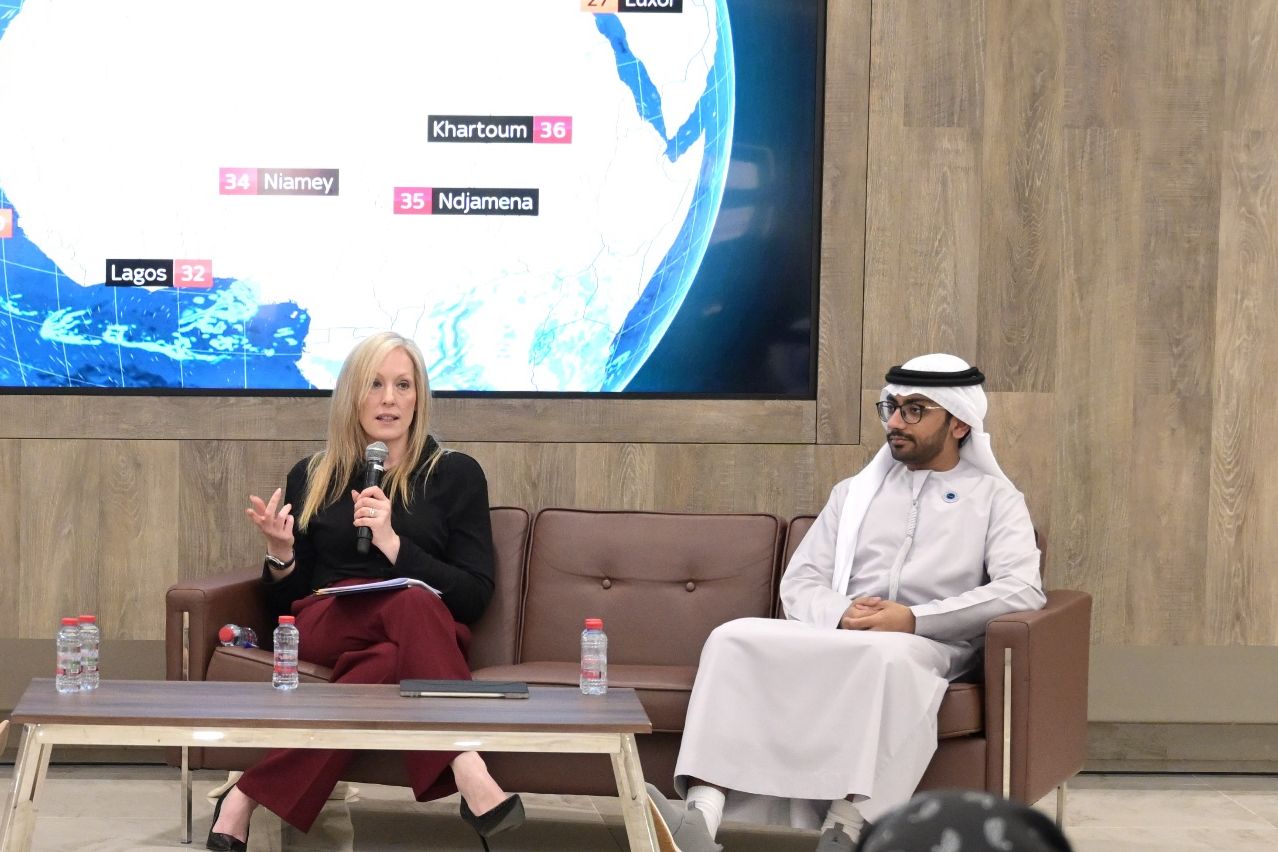
TRENDS Research & Advisory participated in a panel discussion titled U.S. Foreign Policy: What Does Trump Want?, organized by the College of Arts and Sciences at the American University of Sharjah. The session addressed the U.S. National Security Strategy for 2025, which represents the most significant shift in American foreign policy since World War II, in contrast to the 2017 strategy, which framed President Donald Trump’s priorities within more traditional diplomatic structures.
 Speakers focused on the strategy’s impact on alliance structures, the transition from automatic security commitments to conditional ones, the contradictions between a “sovereignty-first” rhetoric and behavior in areas of influence, as well as demands for burden-sharing with NATO, tariff policies, and tensions between immigration enforcement and economic dependence on migrant labor.
 Deals and the Exercise of Power
Abdullah Abdulrahman Al-Khaja, a researcher at TRENDS, noted that examining President Donald Trump’s foreign policy, particularly toward Venezuela and Greenland, reveals a shift toward open, transactional approaches and the exercise of power. In Venezuela, the Trump administration intensified maximum pressure, recognized opposition figures, imposed sanctions on the oil sector, and portrayed Maduro’s government as illegitimate and destabilizing in the Western Hemisphere. The message was clear: the United States intended to demonstrate its willingness to use economic influence aggressively in its sphere, even if it meant escalating tensions with countries such as Russia and China, which have vested interests there.
Al-Khaja added that the situation in Greenland, while different, reflects the same mindset. Trump’s renewed push to purchase Greenland was not symbolic but aimed at securing rare-earth minerals and establishing a strategic presence near the GIUK gap. It was also about dominating the Western Hemisphere and denying competitors space to maneuver and project influence. He emphasized that Washington’s allies grew concerned, as treating partners and rivals with the same aggressiveness erodes trust. The international system does not collapse overnight, but changes when the United States signals that power, not multilateralism, is central to its strategy.
Deals and the Exercise of Power
Abdullah Abdulrahman Al-Khaja, a researcher at TRENDS, noted that examining President Donald Trump’s foreign policy, particularly toward Venezuela and Greenland, reveals a shift toward open, transactional approaches and the exercise of power. In Venezuela, the Trump administration intensified maximum pressure, recognized opposition figures, imposed sanctions on the oil sector, and portrayed Maduro’s government as illegitimate and destabilizing in the Western Hemisphere. The message was clear: the United States intended to demonstrate its willingness to use economic influence aggressively in its sphere, even if it meant escalating tensions with countries such as Russia and China, which have vested interests there.
Al-Khaja added that the situation in Greenland, while different, reflects the same mindset. Trump’s renewed push to purchase Greenland was not symbolic but aimed at securing rare-earth minerals and establishing a strategic presence near the GIUK gap. It was also about dominating the Western Hemisphere and denying competitors space to maneuver and project influence. He emphasized that Washington’s allies grew concerned, as treating partners and rivals with the same aggressiveness erodes trust. The international system does not collapse overnight, but changes when the United States signals that power, not multilateralism, is central to its strategy.
 America 2025 Strategy
Gina Bou Serhal, a senior researcher at TRENDS, focused on the implications of the 2025 National Security Strategy. She noted that core priorities — such as “America First,” economic security, and border control — remain constant, but the way these ideas are presented has changed. Unlike the 2017 strategy, which communicated policies in a more traditional diplomatic tone, the 2025 version is more direct and clearly reflects the U.S. administration’s perspective without softening or reframing it.
Bou Serhal also addressed whether the 2025 strategy aims to guide or justify policy, concluding that it does both. It clearly sets priorities while reinforcing decisions already made on the ground. The strategy aligns actions with geography, economic interests, and sovereignty, functioning less as a constraint and more as a framework legitimizing political choices.
She emphasized that this approach reshapes international relations, signaling a shift toward more conditional, deal-based partnerships, with greater focus on burden-sharing and strategic value. According to Bou Serhal, the world is moving toward a more realistic, interest-driven order where flexibility and clear strategic prioritization are more important than ever.
America 2025 Strategy
Gina Bou Serhal, a senior researcher at TRENDS, focused on the implications of the 2025 National Security Strategy. She noted that core priorities — such as “America First,” economic security, and border control — remain constant, but the way these ideas are presented has changed. Unlike the 2017 strategy, which communicated policies in a more traditional diplomatic tone, the 2025 version is more direct and clearly reflects the U.S. administration’s perspective without softening or reframing it.
Bou Serhal also addressed whether the 2025 strategy aims to guide or justify policy, concluding that it does both. It clearly sets priorities while reinforcing decisions already made on the ground. The strategy aligns actions with geography, economic interests, and sovereignty, functioning less as a constraint and more as a framework legitimizing political choices.
She emphasized that this approach reshapes international relations, signaling a shift toward more conditional, deal-based partnerships, with greater focus on burden-sharing and strategic value. According to Bou Serhal, the world is moving toward a more realistic, interest-driven order where flexibility and clear strategic prioritization are more important than ever.

Speakers focused on the strategy’s impact on alliance structures, the transition from automatic security commitments to conditional ones, the contradictions between a “sovereignty-first” rhetoric and behavior in areas of influence, as well as demands for burden-sharing with NATO, tariff policies, and tensions between immigration enforcement and economic dependence on migrant labor.
Deals and the Exercise of Power
Abdullah Abdulrahman Al-Khaja, a researcher at TRENDS, noted that examining President Donald Trump’s foreign policy, particularly toward Venezuela and Greenland, reveals a shift toward open, transactional approaches and the exercise of power. In Venezuela, the Trump administration intensified maximum pressure, recognized opposition figures, imposed sanctions on the oil sector, and portrayed Maduro’s government as illegitimate and destabilizing in the Western Hemisphere. The message was clear: the United States intended to demonstrate its willingness to use economic influence aggressively in its sphere, even if it meant escalating tensions with countries such as Russia and China, which have vested interests there.
Al-Khaja added that the situation in Greenland, while different, reflects the same mindset. Trump’s renewed push to purchase Greenland was not symbolic but aimed at securing rare-earth minerals and establishing a strategic presence near the GIUK gap. It was also about dominating the Western Hemisphere and denying competitors space to maneuver and project influence. He emphasized that Washington’s allies grew concerned, as treating partners and rivals with the same aggressiveness erodes trust. The international system does not collapse overnight, but changes when the United States signals that power, not multilateralism, is central to its strategy.
America 2025 Strategy
Gina Bou Serhal, a senior researcher at TRENDS, focused on the implications of the 2025 National Security Strategy. She noted that core priorities — such as “America First,” economic security, and border control — remain constant, but the way these ideas are presented has changed. Unlike the 2017 strategy, which communicated policies in a more traditional diplomatic tone, the 2025 version is more direct and clearly reflects the U.S. administration’s perspective without softening or reframing it.
Bou Serhal also addressed whether the 2025 strategy aims to guide or justify policy, concluding that it does both. It clearly sets priorities while reinforcing decisions already made on the ground. The strategy aligns actions with geography, economic interests, and sovereignty, functioning less as a constraint and more as a framework legitimizing political choices.
She emphasized that this approach reshapes international relations, signaling a shift toward more conditional, deal-based partnerships, with greater focus on burden-sharing and strategic value. According to Bou Serhal, the world is moving toward a more realistic, interest-driven order where flexibility and clear strategic prioritization are more important than ever.
