


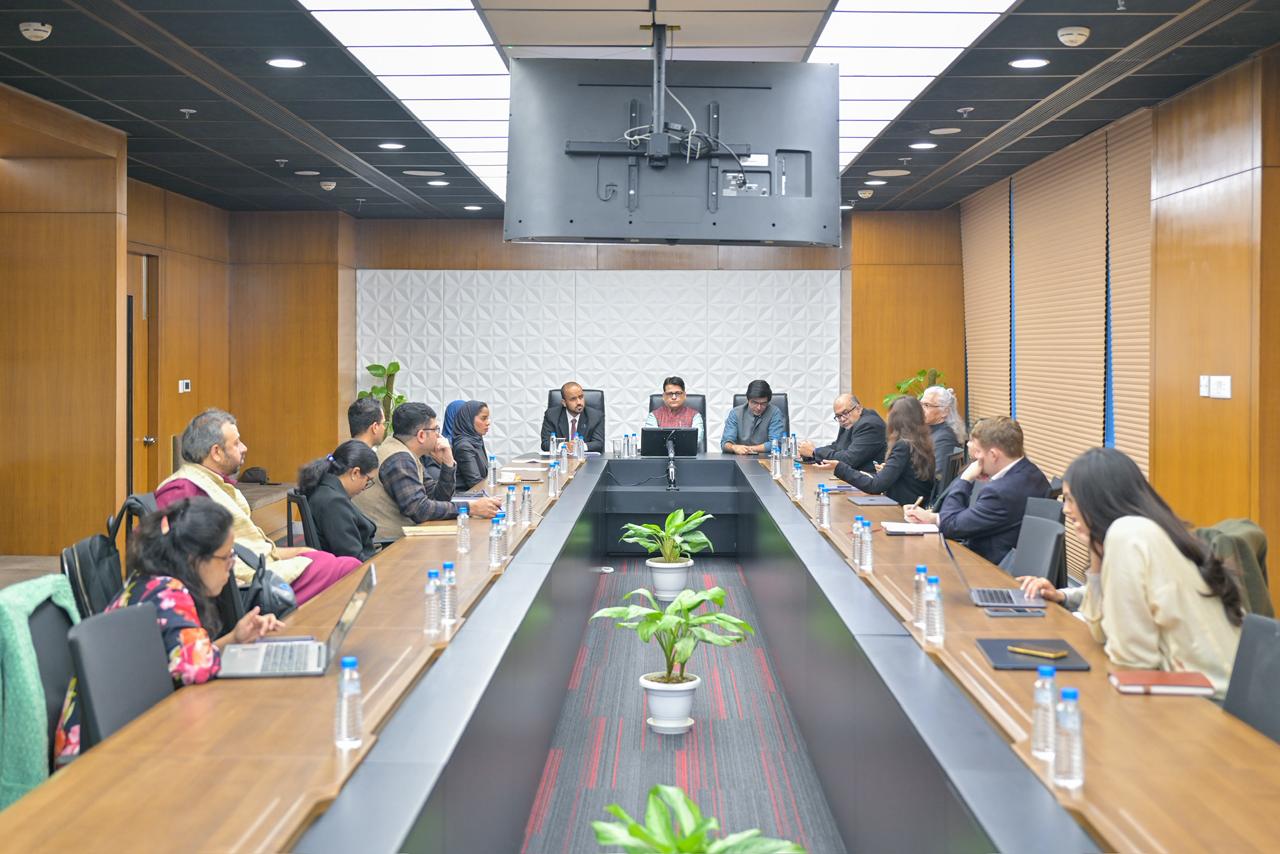
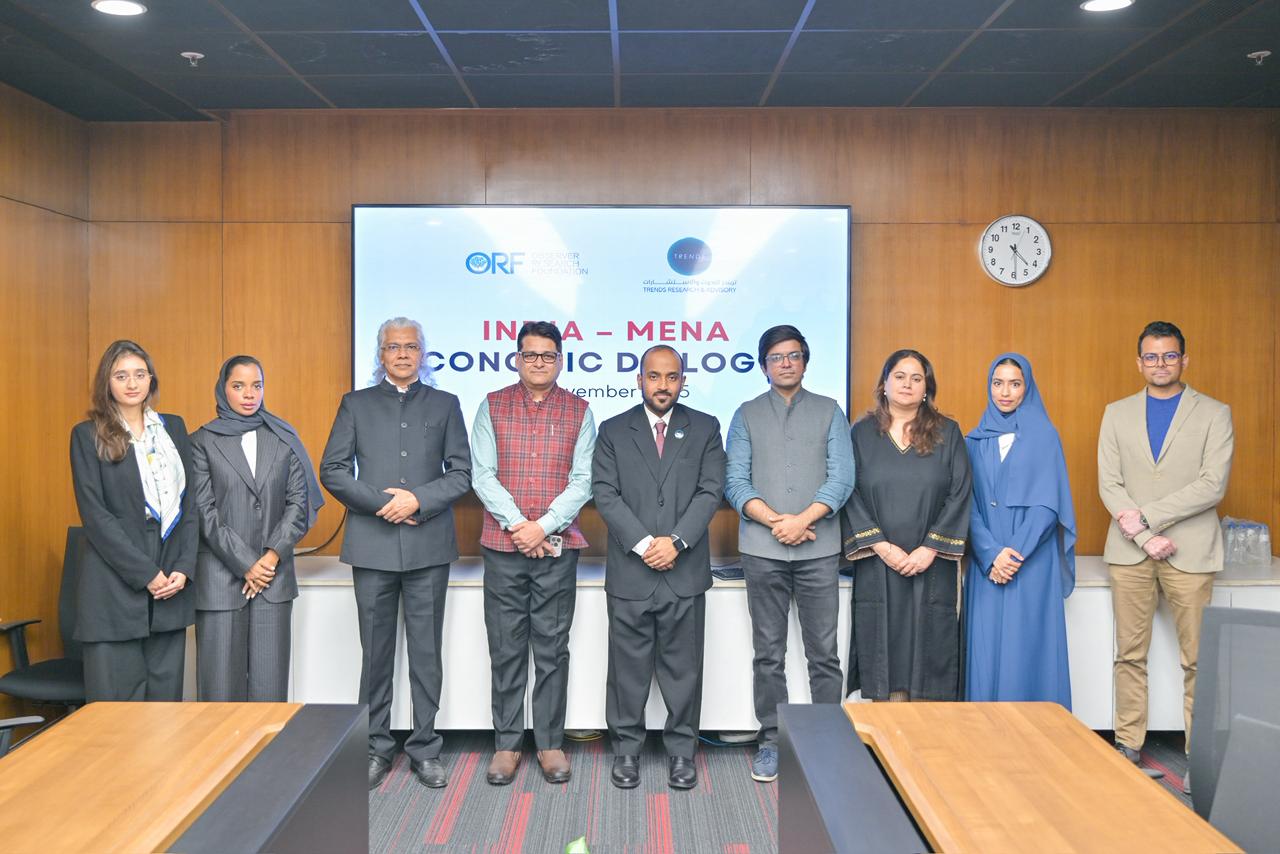
As part of its India research tour, and to promote dialogue and strengthen strategic cooperation with research, academic, and think tanks, TRENDS Research & Advisory, through its virtual office in New Delhi, organized the TRENDS–ORF Economic Dialogue titled MENA-India Economic Cooperation: Sharing Knowledge, Building Partnerships, and Advancing Strategies. The event was held in partnership with the Observer Research Foundation at the Dr. Ambedkar International Centre in New Delhi, India.
The dialogue brought together a distinguished group of academics, researchers, experts, and specialists who, over two extensive sessions, discussed ways to strengthen economic cooperation between the MENA and India within a rapidly changing global order. The discussions also examined the role of think tanks in enhancing economic collaboration between the three regions.
Middle East-India Relations
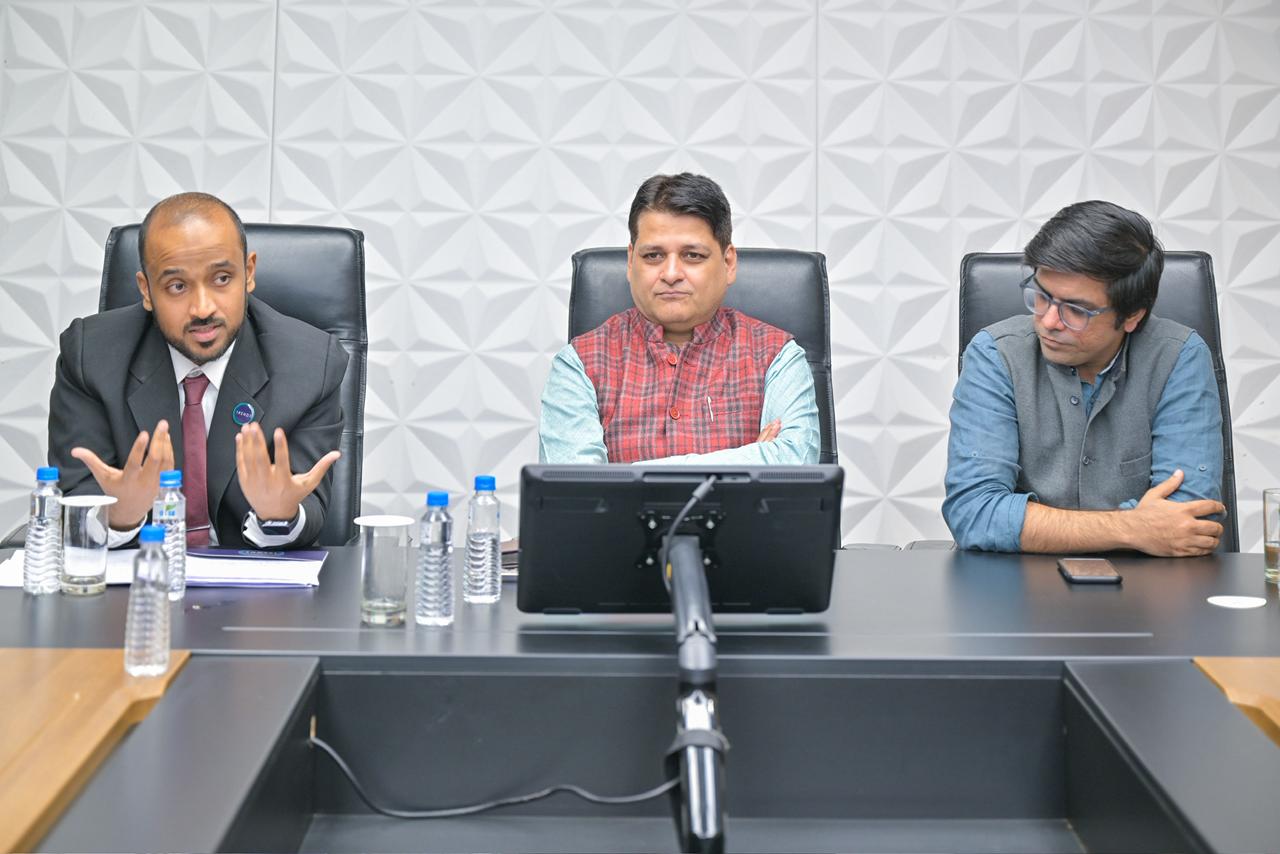
The first session featured a panel of experts and researchers, including Gautam Chikermane, Vice President at the Observer Research Foundation; Ms. Jhanvi Tripathi, Associate Fellow, Geoeconomics Program, Observer Research Foundation; and Mohamed Al Dhuhoori, Senior Researcher and Director of the Department of Advanced Political Studies at TRENDS Research & Advisory. The participants agreed that Middle Eastern-Indian relations hold great potential and offer a promising opportunity for future growth and cooperation through enhanced economic and political ties, regional collaboration, and cultural dialogue aimed at building strong, sustainable economic partnerships.
Participants emphasized that Middle East-India relations are distinctive and of great significance, given India’s strategic geographic location and its ties with countries in the MENA region. They noted that economic integration between India and the Middle East is vital, as it can expand economic partnership opportunities and help achieve the region’s sustainable development goals.
They explained that Gulf-Indian relations have deep historical roots, and the presence of a large Indian community in the Gulf countries further strengthens and deepens these ties. They added that about 66% of Indians living abroad reside in the Arab Gulf states, making this region vital to the Indian economy.
Global System Transformations
Participants in the session highlighted that the global system is undergoing significant shifts and rapid transformations, sparking debate over the nature of the current world order. They noted that the data and realities still point to a predominantly unipolar system, with the United States maintaining the most significant influence. However, they stressed that these evolving dynamics offer substantial opportunities for India and the countries of the Middle East and North Africa to strengthen economic and political cooperation.
Regarding the vital sectors expected to shape future Middle East-India economic relations, participants emphasized that artificial intelligence will play a dominant role in driving and deepening these relations, given its far-reaching impact across all aspects of life. They also underscored that the knowledge economy will be the main engine for building a better future for future generations, alongside major logistical projects that offer significant economic benefits to participating countries.
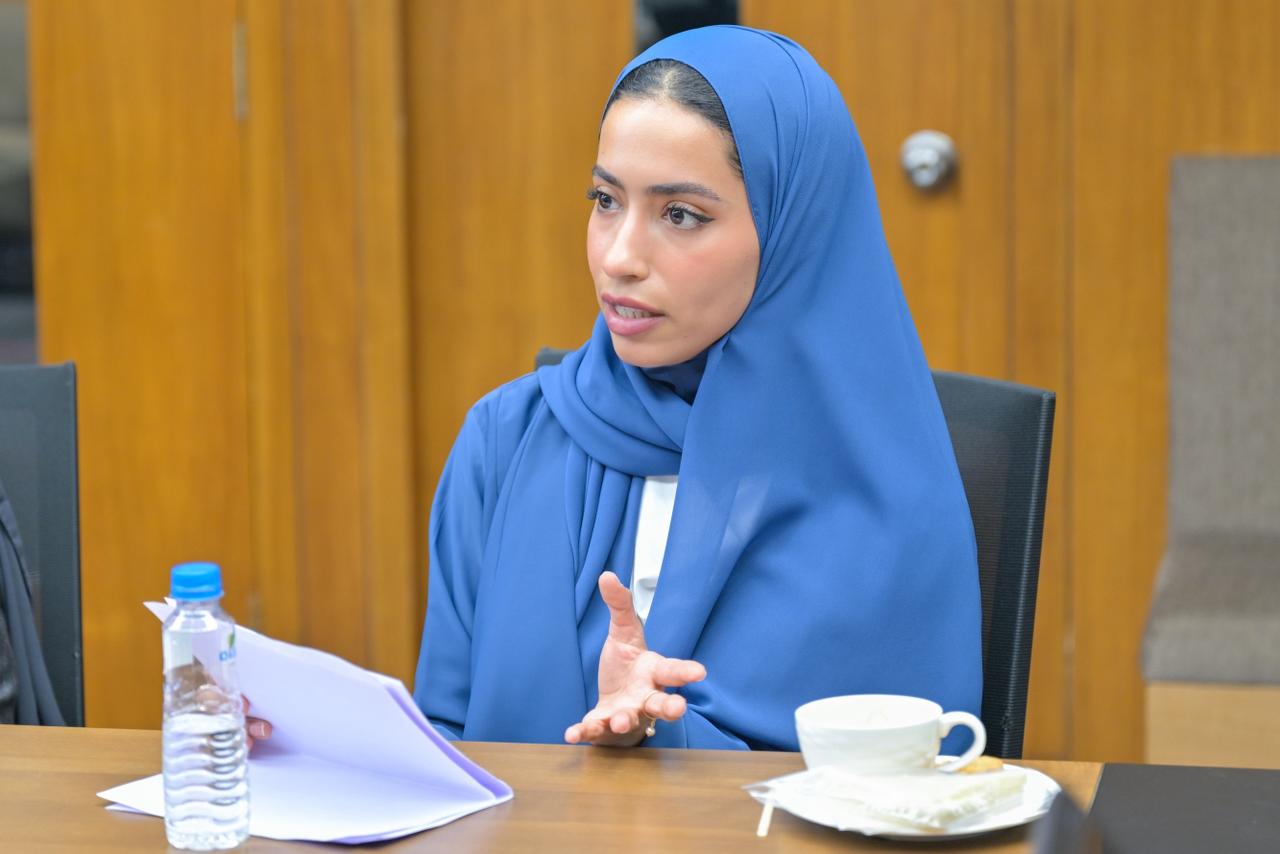
Speakers at the session emphasized the importance of fostering intellectual discourse and dialogue to identify the best approaches to building strong, sustainable economic relations between India and the Middle East. They also emphasised the need to strengthen strategic cooperation in key areas such as energy, trade, investment, education, and scientific research, as well as to advance regional collaboration through the establishment of regional organisations, the sharing of expertise, the exchange of knowledge, and the facilitation of intra-regional trade. The speakers further highlighted the importance of fostering cultural dialogue by expanding student exchange programs, promoting cultural cooperation, and encouraging mutual understanding between different cultures.
A Pivotal Role for Think Tanks
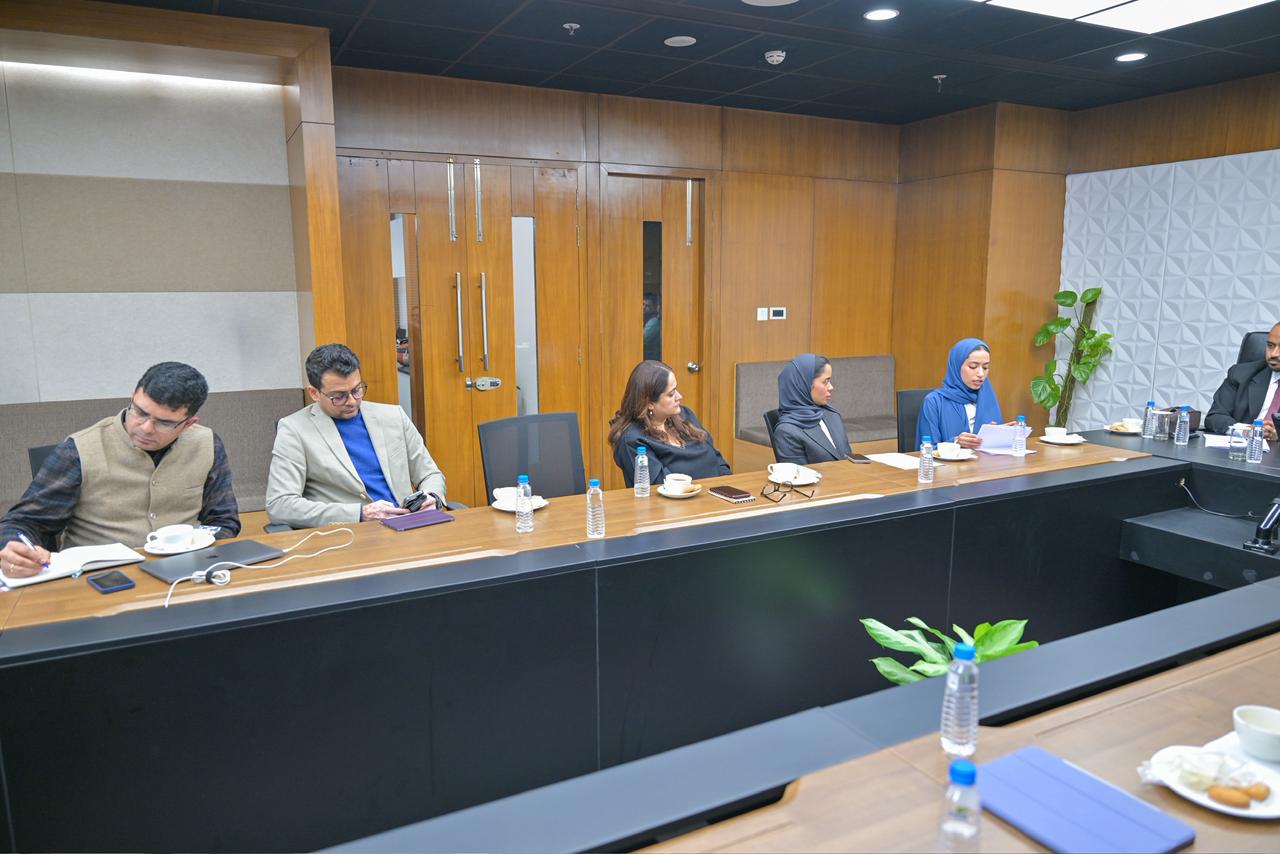
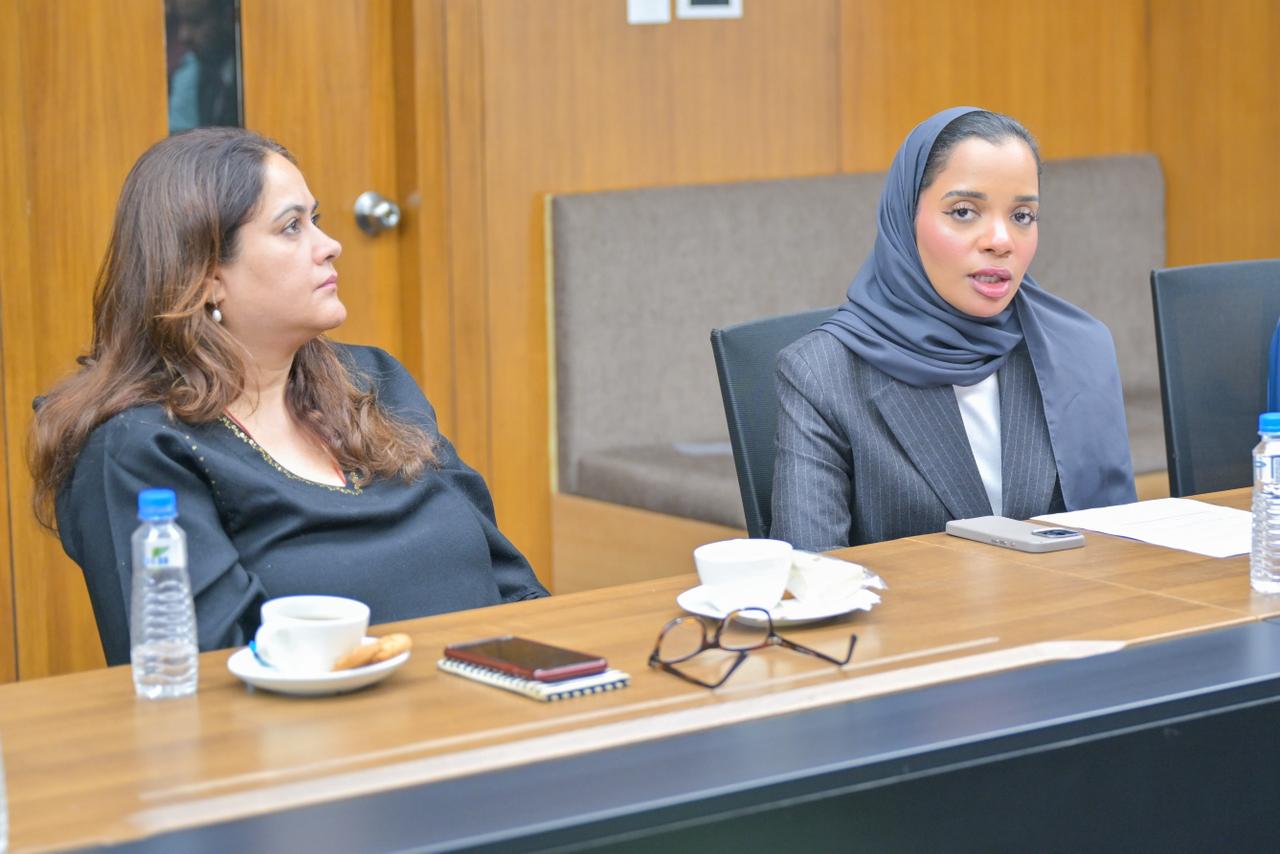
The second session, titled The Role of Think Tanks in Advancing MENA-India Economic Cooperation, featured the participation of Professor Harsh Pant, Vice President for Studies and Foreign Policy at the Observer Research Foundation; Kabir Tanga, Deputy Director of the Strategic Studies Department at the Observer Research Foundation; Mira Al Zaabi, Researcher and Media Specialist at TRENDS Research & Advisory; and Latifa Al Junaibi, Researcher and Partnerships Specialist at TRENDS.
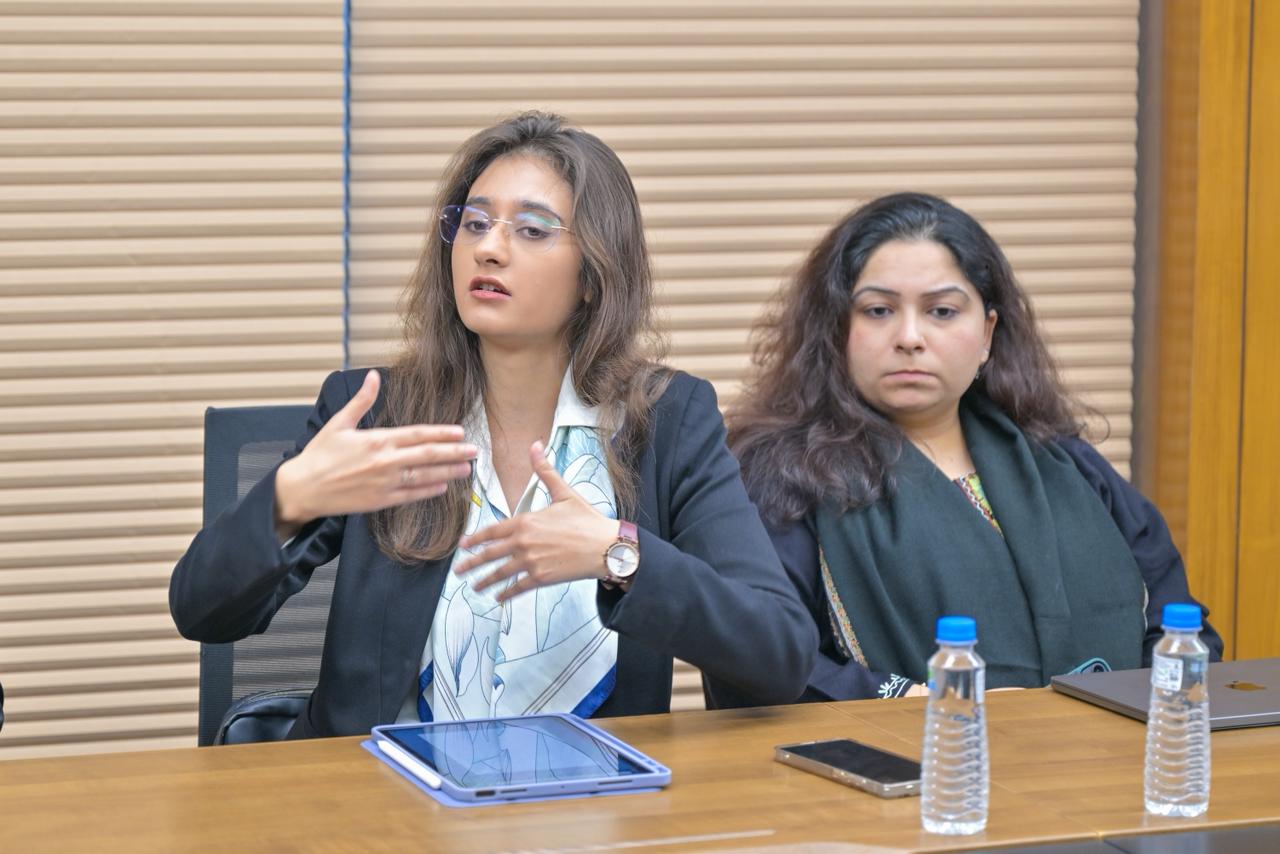
Participants in the session stated that think tanks, research, knowledge, and academic institutions play a pivotal role in strengthening economic cooperation by creating platforms for collaboration and dialogue among various stakeholders. This, they noted, helps shape practical avenues for joint action, supports scientific research, and offers clear insights into economic cooperation opportunities between the region and India. They also emphasized the importance of understanding shared priorities, building mutual trust, and providing well-informed analyses on trade and investment prospects. In addition, they highlighted the vital role of think tanks in advancing sustainable development by identifying opportunities for cooperation in technology, renewable energy, and the digital economy.
The speakers affirmed that economic dialogue between countries is a fundamental mechanism for strengthening cooperation and sustainable development, as it enables countries to identify common priorities, build trust, and reduce uncertainty in regional and international relations. They pointed out that the growing shift toward future-oriented fields such as technology, digital transformation, artificial intelligence, energy security, and sustainable development is creating new opportunities for international cooperation. Economic dialogue, they added, is no longer confined to financial policies but has evolved into a tool for supporting development, managing risks, and enhancing global economic resilience.
Partnerships Beyond Trade
Participants in the discussion session explained that partnerships between the MENA region and India are expanding beyond trade, with the United Arab Emirates emerging as a key link in this growing partnership. They added that think tanks and research institutions provide spaces for dialogue and discussion where different parties meet, and practical paths of cooperation take shape. These include strengthening collaboration in renewable energy, improving energy efficiency, anticipating cooperation in digital technology, and developing digital infrastructure. Cooperation also extends to global supply chains, improving transport and logistics efficiency, building research and scientific partnerships, and promoting the exchange of knowledge and expertise.
They emphasized that think tanks and research centers play a vital role in analyzing global changes to understand better how international partnerships can be developed and how they contribute to shaping the future of economic cooperation. They noted that this underscores the importance of their role in providing clear visions and an advanced understanding of the future of economic dialogue by supporting discussion and scientific research. They added that continuous economic dialogue, scientific collaboration, and strategic research partnerships are fundamental mechanisms for strengthening cooperation and achieving sustainable development between the MENA region and India.
