


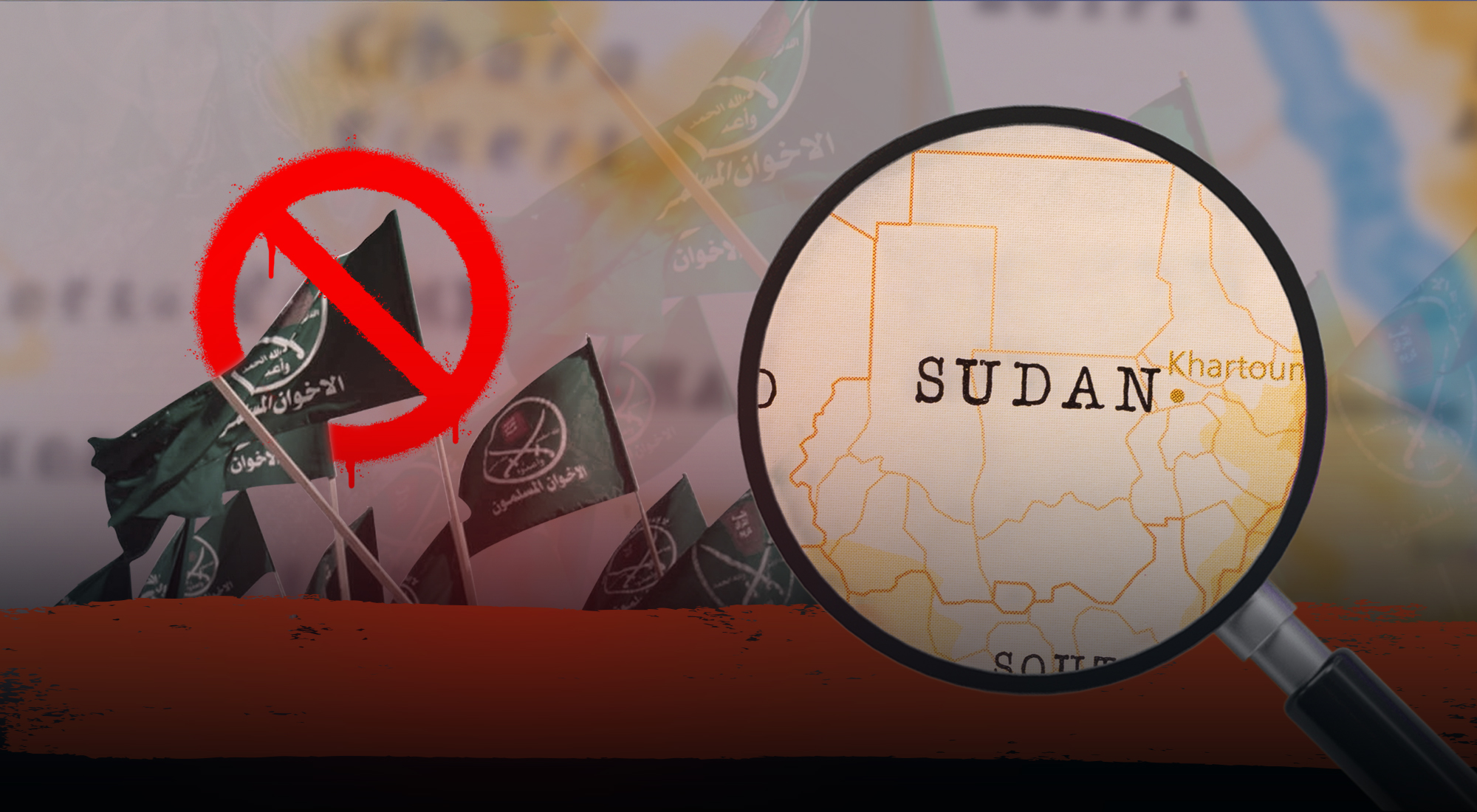
The study examines the dimensions of the recent U.S. decision and its political and security repercussions for the conflict in Sudan.
TRENDS Research & Advisory has released a new research study titled Framing Islamism as a Security Threat: The Designation of the Sudanese Muslim Brotherhood as a Terrorist Organization and Its Implications. The study examines the dimensions of the recent U.S. decision and its political and security repercussions for the conflict in Sudan, as well as the future of the Muslim Brotherhood across the region.
The study explains that the decision taken by the United States to designate the Sudanese Muslim Brotherhood as a terrorist organization represents a significant shift in the international approach to political Islamism when it transforms from an ideological actor into an armed security actor that threatens state stability.
The study further notes that the Sudanese experience provides a clear example of how the group transitioned from political activity to the use of armed violence and the penetration of state institutions, a development that has contributed to deepening the structural crisis Sudan has experienced for decades—particularly through the entrenched presence of Islamist networks within military and security institutions.
Reasons Behind the U.S. Decision
The study indicates that the U.S. decision was based on several practices attributed to the group. Among the most prominent are the use of violence against civilians through its military wing, known as the Al-Baraa bin Malik Brigade, as well as its participation in the ongoing war in Sudan through thousands of fighters, some of whom reportedly received training and support from the Islamic Revolutionary Guard Corps.
The study also highlights reports indicating that individuals affiliated with the group were involved in mass executions of civilians in areas of conflict, in addition to the group’s growing links with armed regional networks.
Contexts of the Decision
According to the study, the decision emerged within two primary contexts. The first relates to political debate within the United States over the designation of Muslim Brotherhood branches, particularly following the earlier listing of branches associated with the group in Egypt, Jordan, and Lebanon on terrorism lists.
The second context is tied to the complexities of Sudan’s internal war, where the conflict pits the Sudanese army, led by Abdel Fattah al-Burhan, against the Rapid Support Forces, led by Mohamed Hamdan Dagalo, amid mutual accusations of fueling the conflict and obstructing political settlement efforts.
Implications for Sudan
The study explains that designating the group as a terrorist organization may have significant implications for internal power dynamics in Sudan, potentially weakening the political and organizational influence of the Muslim Brotherhood within state institutions—particularly the army, where the Islamist movement had become deeply entrenched over decades since the rise to power of Omar al-Bashir in 1989.
The decision may also prompt various Sudanese actors to reassess their relations with the group in light of the rising political and legal costs of such ties, potentially reshaping the country’s political and military balances.
Broader Regional Effects
The study emphasizes that the U.S. decision is not limited to the Sudanese arena alone, but carries broader implications for the future of the Muslim Brotherhood in the region. It reflects a growing trend of reassessing the group’s activities and its transnational networks in light of their connections to regional conflicts.
The decision could also reduce the spaces that previously enabled the group to rebuild its organizational networks in fragile or conflict-affected environments, while weakening its support and financing networks.
Policies Toward Islamism
The study concludes that the designation of the Sudanese Muslim Brotherhood as a terrorist organization reflects a gradual shift in international approaches to the group—from viewing it as a political actor that could be integrated into political processes to perceiving it as part of a broader network of ideological actors linked to complex security dynamics in conflict zones.
It also stresses that the effectiveness of the decision will ultimately depend on the extent to which regional and international actors respond to it, as well as the ability of Sudanese political forces to develop a comprehensive national project aimed at rebuilding state institutions on professional and institutional foundations, away from the ideological polarization that has prolonged the conflict.

