


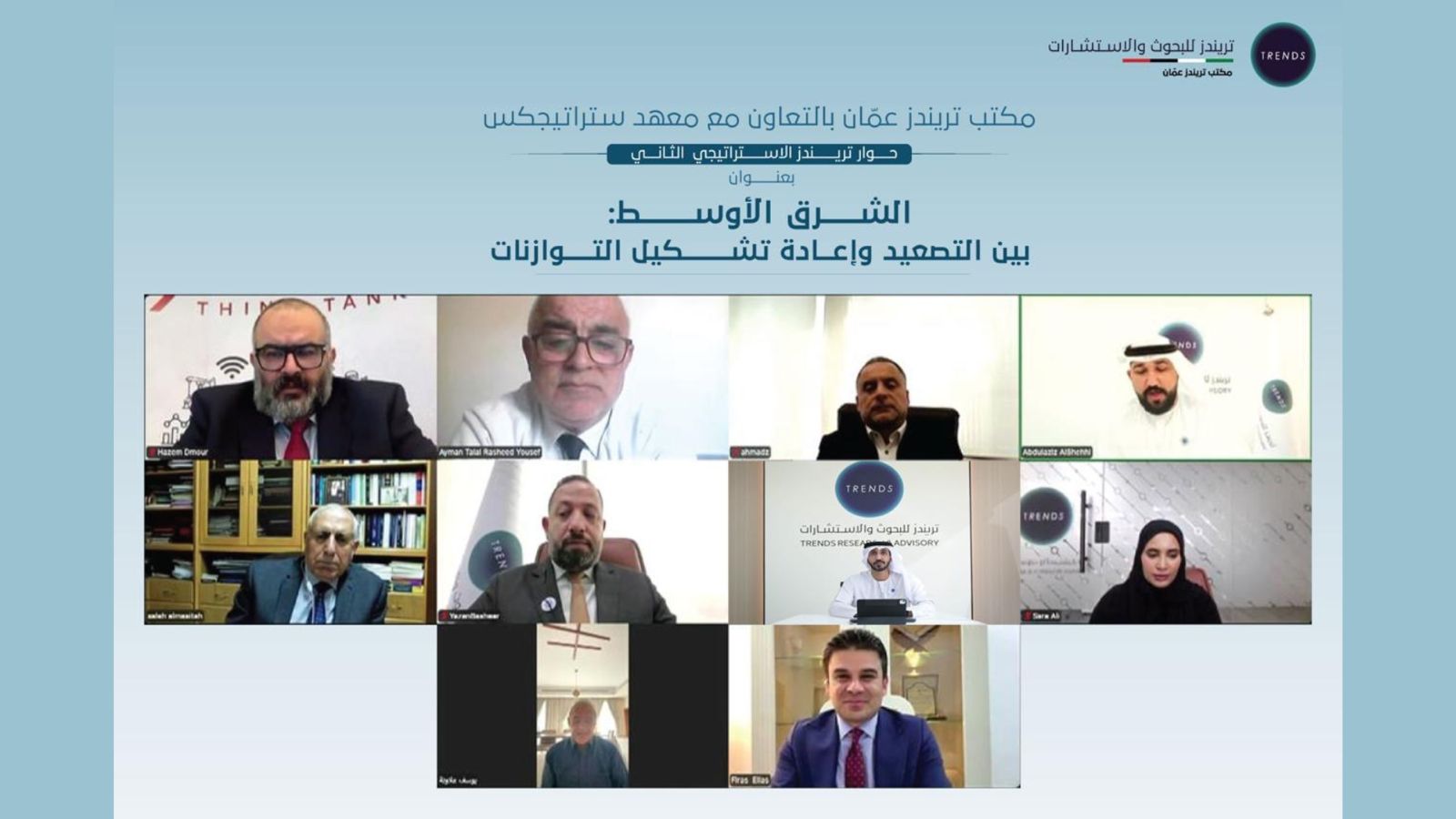
This dialogue comes at an exceptionally sensitive time, reflecting a shift in conflict, from proxy wars to direct engagement.
At a pivotal moment in the history of the Middle East, where escalating military tensions intersect with profound transformations in the structure of the international system, the Amman office of TRENDS Research & Advisory, in cooperation with the Strategiecs Institute for Strategic Studies, convened the Second TRENDS Strategic Dialogue titled The Middle East: Between Escalation and the Reshaping of Balances.
The dialogue comes at an exceptionally sensitive time, amid the intensifying confrontation between the United States and Israel on one side, and Iran on the other, reflecting a qualitative shift in conflict, from proxy wars to direct engagement that is redrawing the maps of power and influence in the region.
Held virtually, the dialogue brought together a distinguished group of experts, academics, and strategic researchers who offered in-depth analyses of the current landscape and presented multiple future scenarios, within a cross-border knowledge partnership that reflects the growing role of think tanks in shaping strategic understanding.
A Cross-Border Knowledge Partnership
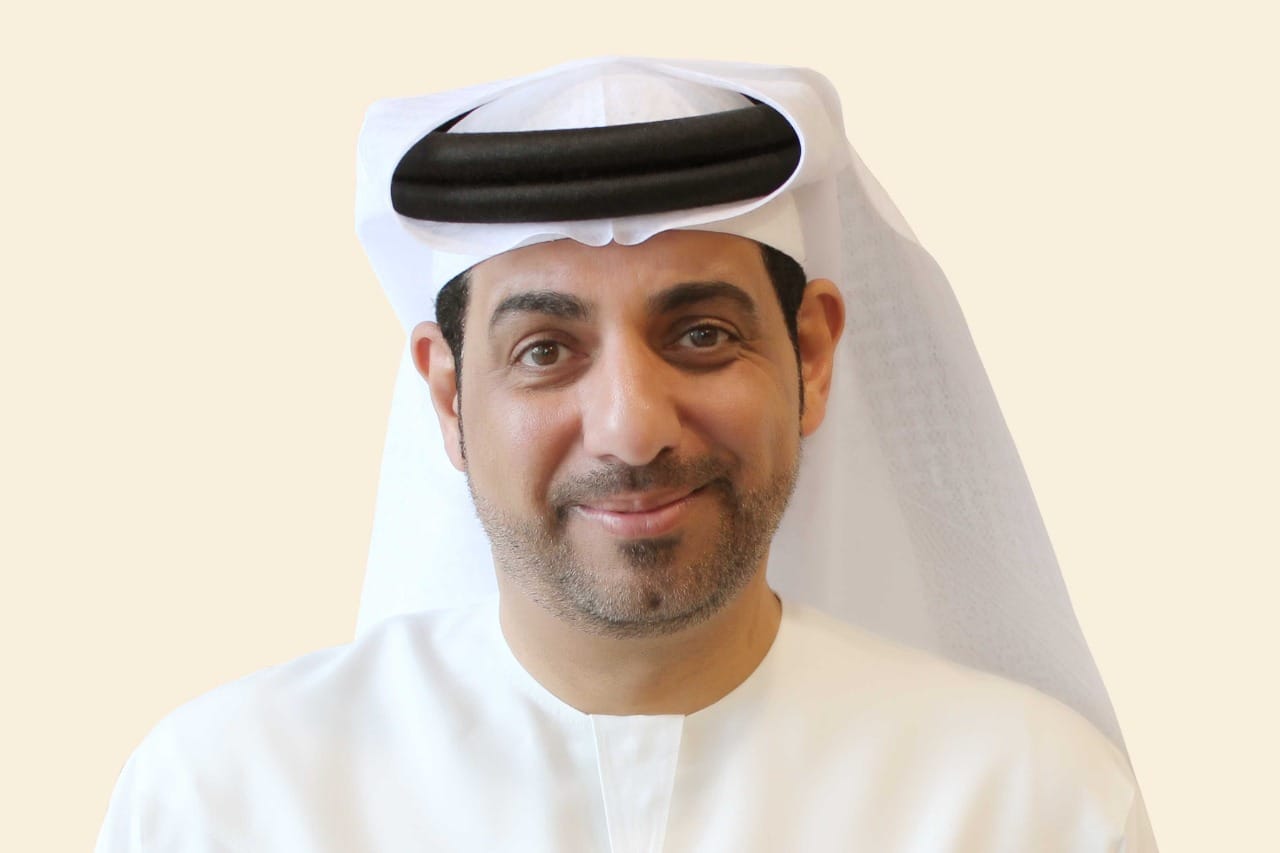
The dialogue opened with remarks by Dr. Mohammed Al-Ali, CEO of TRENDS Research & Advisory, delivered on his behalf by Mr. Fahd Al-Mehri, Head of the Dubai Office Sector. He emphasized that the region is undergoing a “critical phase” in which military conflict intersects with efforts to reshape geopolitical realities.
He noted that the current war has exposed the complexity of regional crises, the limitations of diplomacy in resolving conflicts, the fragility of traditional deterrence systems, and the increasing overlap among military, political, and economic dimensions. He also highlighted the spillover effects on maritime routes, energy markets, and global supply chains, as well as their direct impact on the stability of Arab states and the future of collective security arrangements.
He further explained that escalation in the region is no longer a temporary condition but a structural feature of the regional landscape, driven by the decline of crisis-management mechanisms, the weakening of multilateral frameworks, and the rise of power-based approaches. He also pointed to emerging efforts to rebalance through military repositioning, flexible alliances, and non-traditional tools such as cyber warfare, economic pressure, and proxy conflict management.
He stressed that the importance of this dialogue lies in its attempt to understand the trajectory of the ongoing war and anticipate its implications for the future of the regional order, raising questions about whether the region is heading toward a new deterrence balance or an extended phase of instability. He also emphasized the need to explore the options available to Arab states within a complex strategic environment, where neutrality is becoming harder to maintain, and the cost of alignment is increasing.
He noted that hosting the dialogue in Amman carries special significance, given Jordan’s model of balanced engagement aimed at containing crises, promoting stability, and preserving channels of dialogue, as well as the city’s role as a platform for serious strategic discussions.
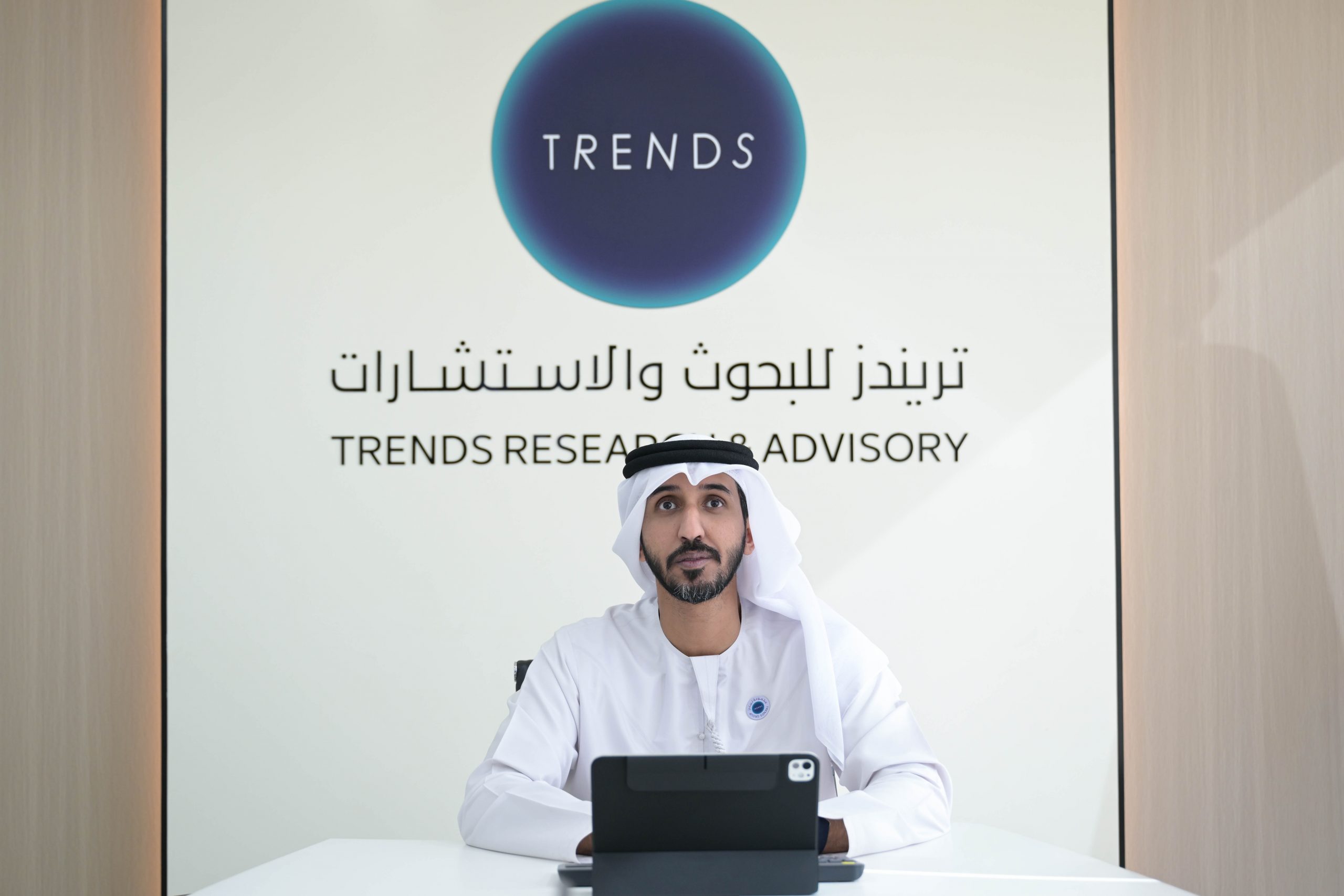
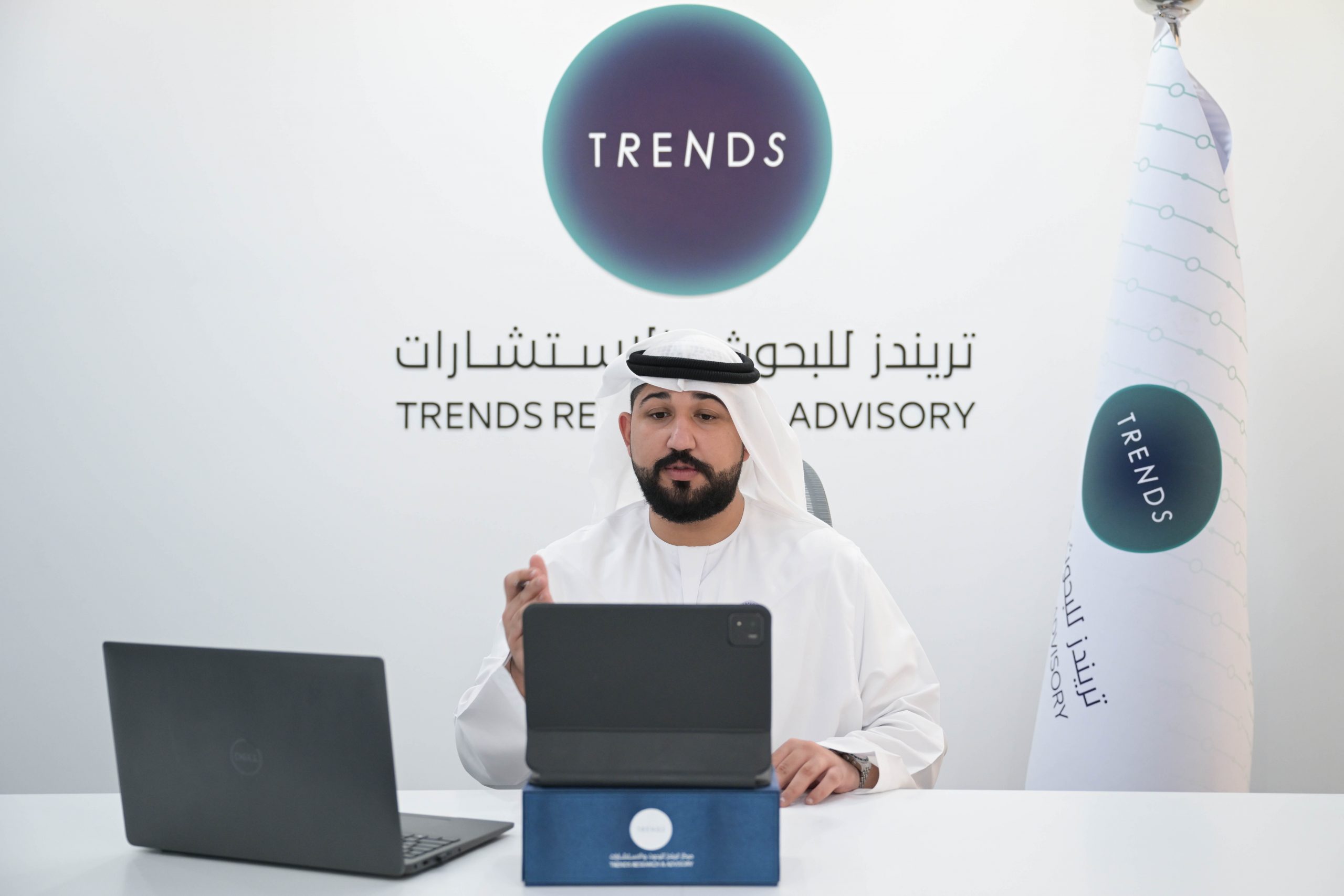
The session was moderated by Mr. Abdulaziz Al-Shahi, Senior Researcher at TRENDS, and introduced by Mr. Yazan Bashir, Director of the Amman Office.
Structural Shifts in Iranian Behavior
Mr. Hazem Al-Damour, Director General of Strategiecs, opened the interventions with a critical reading of the transformation in Iranian behavior, arguing that current developments reflect a shift from a traditional state model toward what resembles “state terrorism.”
He explained that Iran has adopted a “near-enemy” strategy, directing a significant portion of its strikes toward Gulf states despite its declared rhetoric against Israel. He also pointed to leadership disarray within Iran’s military structure, resulting from decentralized decision-making within the Revolutionary Guard.
He added that using the Strait of Hormuz as leverage is a limited option that may backfire domestically, and called for the development of an advanced Arab deterrence system, stressing the importance of peaceful nuclear programs in achieving strategic balance.
‘The Courage of Despair’
Retired Major General Dr. Saleh Al-Maaytah provided an in-depth analysis of the Iranian regime, describing it as a “tense state.” He highlighted a clear gap between “the power of influence,” represented by successful development models in the region, and “the influence of power,” grounded in chaos. He also pointed to the decline of the “unity of arenas” project, the weakening of regional proxies, and the duality between revolutionary and state institutions.
He argued that the loss of air and maritime control reflects a decline in actual sovereignty, suggesting that current behavior represents a “courage of despair” that may precede political collapse.
Iran’s Growing Isolation
Ms. Sarah Al-Neyadi, Senior Researcher at TRENDS, focused on the political repercussions, asserting that Iran has committed major strategic mistakes that have led to its international isolation.
She noted that targeting Gulf territories constitutes a clear violation of sovereignty and that the conflict has shifted toward attacks on infrastructure and civilians, reinforcing Iran’s image as a destabilizing force.
She added that there is an unprecedented international consensus against Tehran, reflected in widely supported international resolutions, emphasizing that the Iranian file now extends beyond the nuclear issue to include its missile program and regional policies.
Technological Gap and U.S. Strategic Shift
Dr. Ayman Yousef, Professor of Political Science and Conflict Resolution at the Arab American University in Jenin, discussed shifts in the balance of power, noting that the United States relies on Israel as a strategic proxy.
He emphasized the significant technological gap between Iran and Israel, the growing importance of Israel in U.S. strategy compared to Europe, and the dominance of military logic in decision-making in Washington.
Fragile Center and the Risk of Collapse
Dr. Ahmad Al-Zoubi, Professor at Saint Joseph University in Beirut, presented an analysis of Iran’s future, describing the war as an existential test.
He outlined three main scenarios: limited resilience with continued propaganda, a Venezuelan-style model of isolation and economic collapse, and sudden collapse—the most dangerous, given the absence of alternatives.
He warned that the fragmentation of Iranian influence could lead to the rise of more extreme forces unless the concept of the nation-state is strengthened.
Redistribution of Regional Power
Dr. Firas Elias, Professor of International Relations at the University of Mosul, highlighted geopolitical shifts, describing the region as undergoing a “strategic earthquake.”
He noted that Iran’s future depends on the nature of its upcoming political elite and pointed to internal calls for adopting an economic model similar to China’s. He also suggested that ethnic groups within Iran could become tools of geopolitical pressure, while Israel seeks to position itself as a regional center in the “new Middle East.”
Decline of Ideological Projects
Journalist Youssef Alawneh offered a critical perspective, arguing that Iran’s regional proxies’ decline reflects the weakening of the “export of revolution” project.
The dialogue also included interventions on Gulf security, international responses, evolving deterrence and defense dynamics, and the role of non-state actors in reshaping the regional landscape.
A New Regional Order in the Making
The dialogue concluded with several key findings, most notably: a fundamental shift from proxy wars to confrontation; Gulf resilience based on wisdom and economic flexibility; the decline of the Iranian project and its growing isolation; the emergence of new alliances; and a comprehensive reshaping of regional balances.
Participants agreed that “Iran after March 17, 2026, will not be the same as before,” as the regime faces two options: integration as a normal state or persistence as a revolutionary entity at risk of fragmentation.
They also emphasized that hosting the dialogue in Amman reflects Jordan’s role as a center of balance and dialogue, capable of bringing together diverse perspectives amid rising polarization.
Mr. Hassan Ismaik, Chairman of the Board of Trustees of Strategiecs, stressed that this dialogue extends the strategic cooperation agreement between the two institutions, signed in September 2025. He noted that Arab think tanks are no longer merely analytical platforms but have become active partners in shaping public policy and providing independent national alternatives.
He also praised the UAE’s model of crisis management, describing it as an advanced approach to safeguarding national security and critical infrastructure, grounded in a long-term strategic vision and a high capacity to address complex challenges.

