


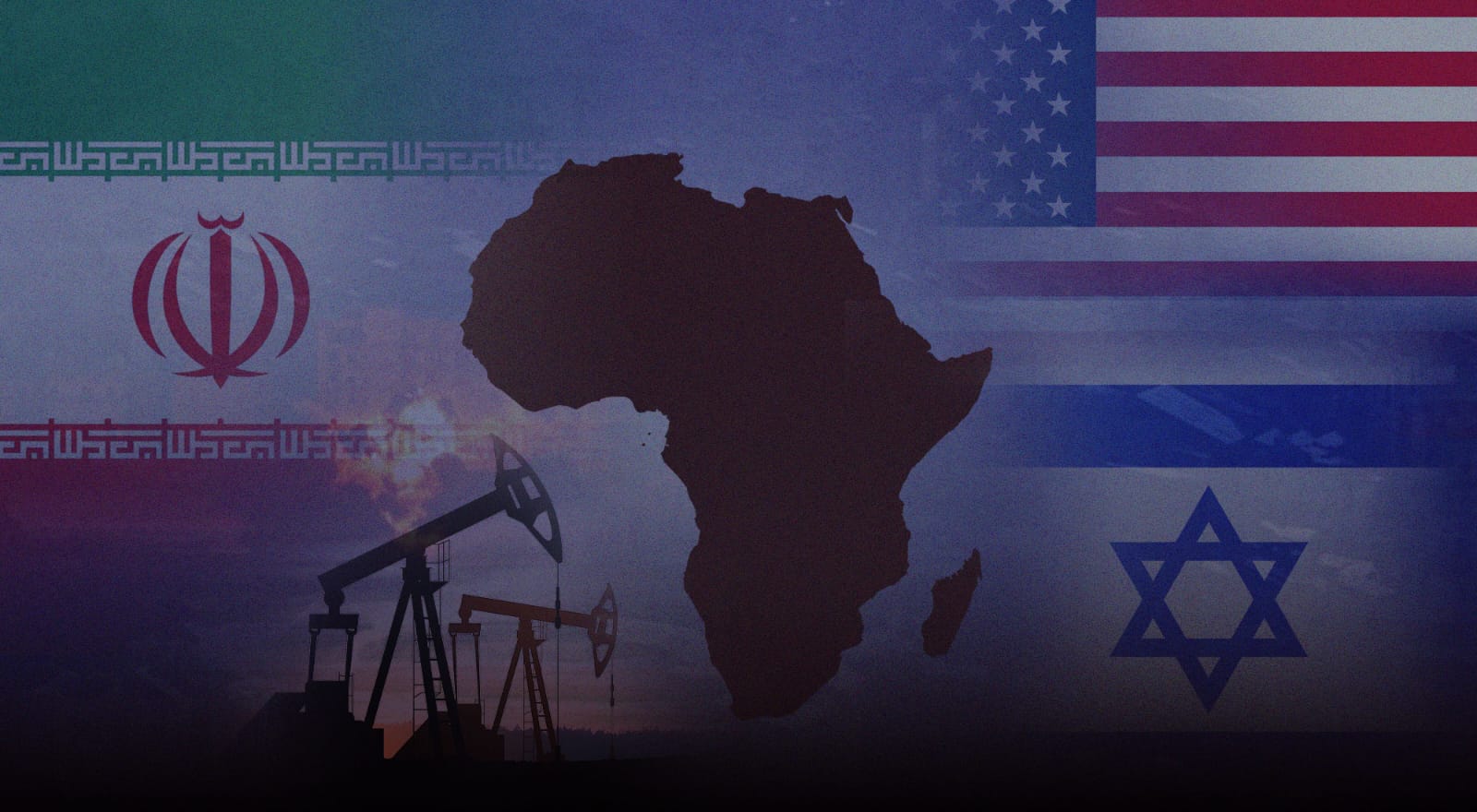
The study explains that the shift from diplomacy to military confrontation is a strategic transformation in conflict management, with rising risks across vital maritime corridors.
Amid the rapidly escalating military confrontation in the Middle East, a study issued by TRENDS Research & Advisory’s Virtual Office in Egypt has warned of far-reaching repercussions from the U.S.-Israeli war on Iran, stressing that its impacts are no longer confined to the region but have extended directly to Africa through economic, security, and global supply chain channels.
The study explained that the shift from diplomacy to military confrontation reflects a strategic transformation in conflict management, with rising risks across vital maritime corridors stretching from the Gulf to the Red Sea. This threatens global trade and places African economies — particularly import-dependent ones — under mounting pressure.
Mounting Economic Pressures
The study highlighted that, despite its geographic distance from the conflict, Africa is already experiencing direct economic consequences, most notably rising energy prices and increased shipping and insurance costs, which are fueling inflation across local markets. Brent crude surpassed $82 per barrel in March 2026, quickly impacting fuel, transportation, and essential commodity prices.
It also warned that any disruption to the Strait of Hormuz — through which around 20% of global oil trade passes — could trigger sharp price spikes, disrupt supply chains, and increase maritime transport costs by up to 50% on some routes.
In addition, the rerouting of shipping away from the Red Sea and the Suez Canal toward the Cape of Good Hope is extending transit times by 10 to 15 days, further driving up the cost of food and essential goods — especially in African countries that rely on imports for over 40% of their food needs.
African currencies are also facing increasing pressure due to rising demand for US dollars to finance imports, even as many countries are already burdened by high debt levels and fiscal constraints, further straining public budgets.
Rising Security Challenges
On the security front, the study warned that the militarization of maritime routes — particularly in the Red Sea and Bab el-Mandeb — is placing African coastal states in an increasingly complex security environment, with heightened risks to shipping and navigation.
It further noted that the Horn of Africa could become a hotspot for intensified international competition, given the presence of foreign military bases, raising the risk of military friction and deepening regional instability.
At the same time, armed groups may exploit the international community’s preoccupation with the Middle East conflict to expand their activities, particularly in the Sahel and the Horn of Africa, amid concerns over declining global support for counterterrorism efforts.
Diverging African Positions
The study found that African positions on the conflict remain fragmented, with no unified continental stance emerging. While the African Union has called for de-escalation and dialogue, countries such as South Africa have taken a more critical stance toward military action. In contrast, others have adopted pragmatic approaches focused on safeguarding economic interests.
Some states are also leaning toward strengthening ties with different international partners—including the United States, Gulf countries, and emerging powers such as China and Russia — in an effort to maintain strategic balance amid growing global polarization.
Complex Scenarios
The study projected that a prolonged conflict would lead to continued volatility in energy prices, rising shipping costs, and increased inflationary pressures, alongside intensified global competition over strategic ports and locations across Africa.
While some energy-producing African countries may benefit from higher prices, these gains are expected to remain limited compared to the broader challenges the continent faces.
Call for Greater Resilience
The study concluded that Africa has effectively become part of the conflict’s fallout, even without direct involvement, underscoring the need for strategies to enhance resilience. These include diversifying energy and food sources, building strategic reserves, improving debt management, and strengthening maritime and security capabilities.
Ultimately, the key challenge is no longer whether Africa will be affected, but rather how effectively it can transform this crisis into an opportunity to build more resilient, independent, and adaptive policies in an increasingly unstable global order.

