


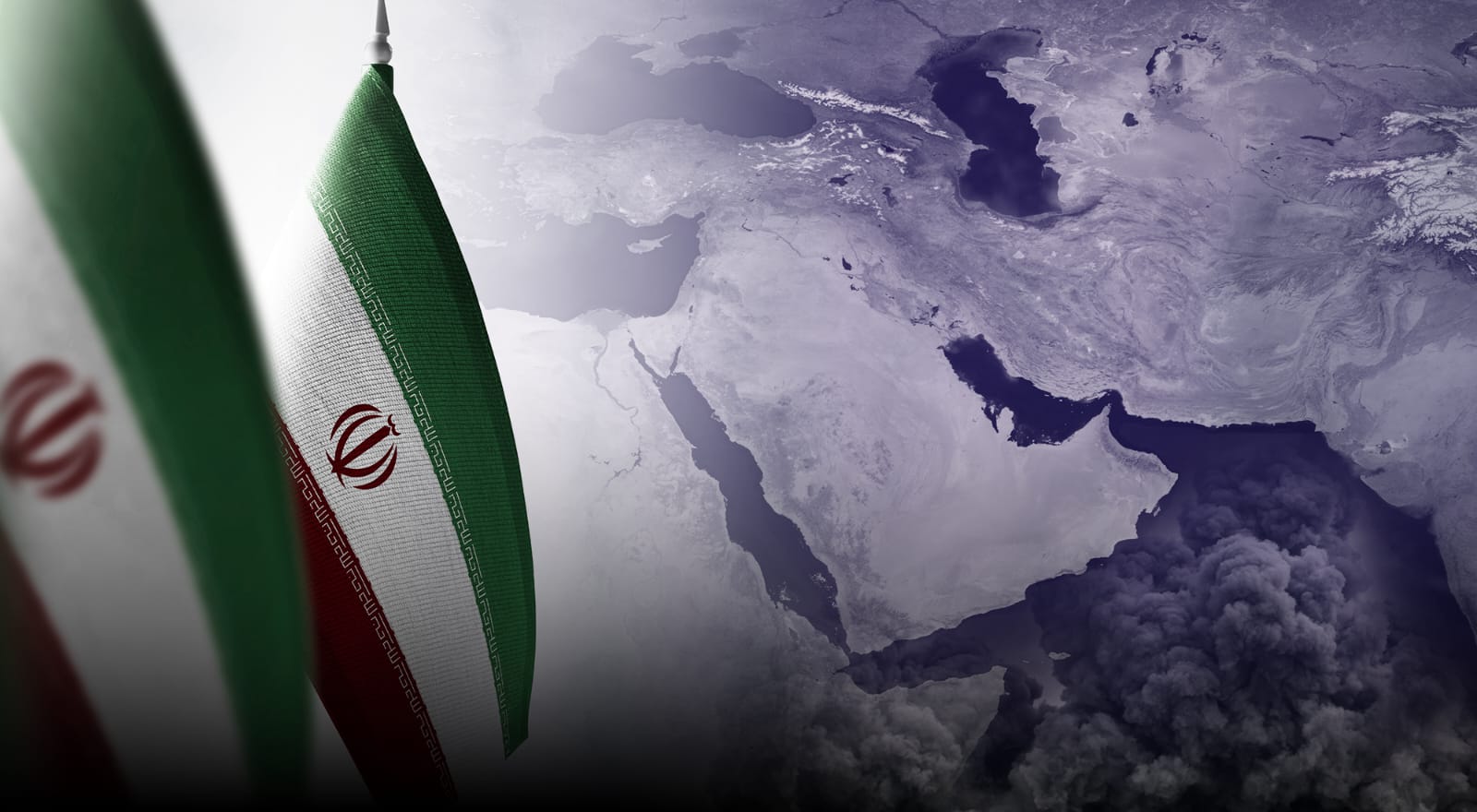
The study explained that, for over four decades, Iran has relied on a combination of ideological expansion, asymmetric warfare, and proxy networks.
The Middle East stands at the threshold of a pivotal historical moment amid the ongoing war surrounding Iran, which may not unfold along conventional trajectories but rather through a sudden, high-impact event known as a “Black Swan,” potentially reshaping the entire regional balance of power, a research study by TRENDS Research & Advisory has affirmed.
The study, prepared by Dr. Wael Saleh, Political Islam Affairs Advisor and Director of TRENDS’ offices in Canada and France, highlighted that current military and economic indicators point to unprecedented pressures on Iran, in terms of its military infrastructure and its internal economic conditions, placing the regime before strategic challenges that could lead to fundamental transformations in its political structure.
It explained that, for more than four decades, Iran has relied on a combination of ideological expansion, asymmetric warfare, and proxy networks across several Arab countries. However, these networks have begun to erode due to political transformations and internal conflicts in those states.
The study emphasized that the “Black Swan” concept provides an analytical framework for understanding the possible trajectories of the war, noting that the most likely outcome may not involve multiple scenarios converging on a single result, but rather their convergence toward a single outcome: the decline or collapse of Iran’s regional project. This could occur through sudden internal transformations, rapid economic collapse, military or technological shocks, or geopolitical shifts in its regional environment.
It further outlined several potential pathways that could accelerate such an outcome, including a restructuring of power centers within Iran, increased regional pressures, a comprehensive economic breakdown, or targeted strategic strikes against key infrastructure.
The study noted that any major transformation in Iran would extend beyond its borders to reshape the broader Middle East, potentially leading to the decline of transnational ideological projects, the resurgence of the Arab nation-state, and the emergence of new alliances based on economic and security interests. It also pointed out that such large-scale changes could reopen longstanding regional issues, including the UAE’s three islands — Greater Tunb, Lesser Tunb, and Abu Musa.
The study also examined the gap between realist analyses and ideological readings of the conflict, noting that some theoretical frameworks may fail to capture the realities on the ground, making “strategic surprise” as much a result of analytical limitations as of unfolding events.
This study was conducted as part of TRENDS’ ongoing research efforts, under the supervision of its international offices, particularly in Canada and France, reflecting its commitment to analyzing geopolitical transformations and anticipating future regional and global dynamics.
