


Introduction: A Study of the Two-Wheeler Sector in Africa
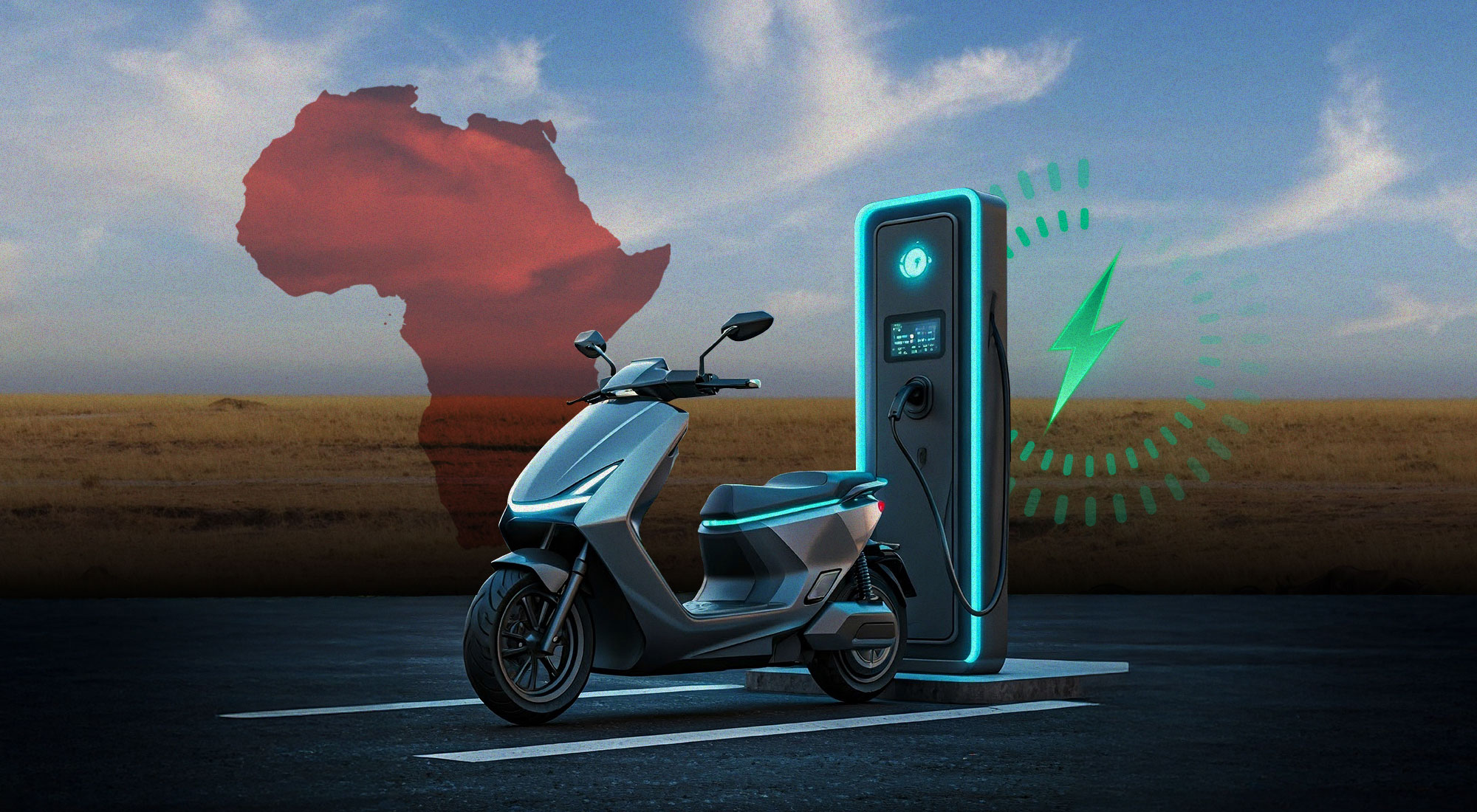
Africa’s cities are experiencing rapid growth, and with this growth comes a massive increase in the demand for transportation. Motorcycles have become the go-to solution for last-mile transport across the continent due to their affordability, agility in congested streets, and ability to navigate poor road conditions. The motorcycle sector supports millions of livelihoods; for example, in Kenya, around three million boda boda riders contribute to an estimated five million livelihoods. Overall, there are approximately 30 million motorcycles in use across Africa, making two-wheelers a vital component of daily mobility.[1] However, this widespread reliance on internal combustion engine (ICE) motorcycles brings significant drawbacks: fluctuating fuel prices, high maintenance costs, air pollution that poses serious health risks, and substantial carbon emissions. The incessant noise pollution from these vehicles also contributes to a more stressful and chaotic urban environment.
As governments and investors work to decarbonize African transport while fostering economic development, electric motorcycles have emerged as a promising solution. They provide significant savings in operating costs, produce zero tailpipe emissions, and operate quietly. However, concerns remain regarding their range, charging infrastructure, affordability, and local manufacturing capacity. To evaluate whether electric motorcycles can truly scale, it’s beneficial to examine a real-world test case.
This insight examines the potential of electric motorcycles to address these challenges. The objective is to provide a comprehensive analysis of the electric motorcycle industry in Sub-Saharan and East Africa. The study uses insights from a six-thousand-kilometer solar-powered journey from Nairobi, Kenya, to Stellenbosch, South Africa, completed on a Roam Air electric motorcycle in 2024.[2] The limitations of this study are that it primarily focuses on a single case study and emerging market data from 2025. The research plan is to use this case study, along with market forecasts, policy developments, and company insights, to evaluate whether electric motorcycles can truly scale across the continent.
The Transition to Electrified Transport in Africa: Key Features and Indicators
The African motorcycle market is a huge, untapped opportunity for electrification. It was valued at US$3.78 billion in 2024 and is projected to reach US$6.38 billion by 2033, with a substantial compound annual growth rate of nearly 6%.[3], [4] This represents a powerful growth trajectory, but it is important to contextualize it within the global market. Globally, the electric motorcycle market was valued at US$11.3 billion in 2023 and is projected to exceed US$15 billion by 2032. [5] The Asia-Pacific region, for instance, currently accounts for around 94% of electric motorcycle revenue, primarily due to Chinese and Indian manufacturers. Africa’s share of this market is currently tiny but is growing at a much faster rate. Analysts forecast that Africa’s electric vehicle market (including cars, buses, and motorcycles) could rise from US$15.6 billion in 2023 to US$28.3 billion by 2030, with the electric motorcycle segment expected to achieve around 22% adoption by that year.[6]
Despite the market’s size, the shift to electric has only just begun. For instance, in Kenya, a major two-wheeler market, electric motorcycles accounted for only 7.1% of new registrations in 2024, highlighting vast untapped potential for disruption and growth.[7] The reasons for this early-stage adoption are complex, but the market is showing clear signs of readiness for a major transition.
Several key factors are driving this slow but steady growth:
Significant Cost Savings: Electric motorcycles offer substantial savings on fuel and maintenance. Riders can save up to 80% per year on these operating costs, which can quickly offset the higher upfront price of the bike.[2] These savings are particularly critical for commercial riders, whose livelihoods depend on minimizing operational expenses. The predictable cost of electricity, especially when sourced from solar, provides a stable economic foundation that contrasts sharply with the volatility of petrol prices. This financial predictability allows riders to better plan their budgets and retain a larger portion of their earnings.
Demographic Trends: Africa’s rapidly growing and urbanizing population needs affordable and accessible transport. Electric bikes offer a path to economic participation with a lower cost of entry and greater income potential for riders. With millions of young people entering the workforce annually, providing a clean and cost-effective means of transport is essential for fostering economic development and social mobility. Motorcycles are often the first step toward entrepreneurship for many, and the lower running costs of an electric bike accelerate this path.
Support from Ride-Hailing Apps: Major ride-hailing and delivery platforms, such as Uber and Bolt, are beginning to electrify their fleets to reduce costs and meet sustainability targets, creating significant demand for electric motorcycles. These companies are powerful catalysts for adoption, as their large, centralized fleets can leverage bulk purchasing and a dedicated charging infrastructure. Partnering with these platforms also provides a consistent revenue stream for electric bike riders and manufacturers and helps build trust in the new technology.[8] The ability of these platforms to aggregate demand and provide a reliable customer base de-risks the business case for e-mobility companies, enabling them to scale faster. For instance, Roam secured a deal to supply 3,000 electric motorcycles to Uber, while other platforms are collaborating with companies like Ampersand and Spiro.[9]
Policy Incentives: Countries like South Africa, Rwanda and Kenya are introducing supportive policies to encourage adoption, including tax breaks, import duty exemptions, and low-interest loans.[10], [11], [12] These government initiatives are crucial for leveling the playing field against established ICE motorcycle markets. By removing financial barriers and providing a clear regulatory framework, governments signal their commitment to e-mobility, which in turn attracts further private investment and accelerates market growth. For example, Rwanda’s proactive stance has allowed companies to set up assembly plants and begin operations with greater certainty, while the Electric Mobility Association of Kenya (EMAK) is actively advocating for similar fiscal incentives and streamlined regulations. This top-down policy support is a fundamental pillar of the industry’s success, creating a more favorable environment for innovation and investment.[7]
Electric Motorcycles in Africa: Emergence, Maturity, and Case Studies
The electric motorcycle market in Africa is still in its early stages, but it is rapidly maturing. The “E-Cross Africa” expedition, where a team rode a Roam Air electric motorcycle 6,000 kilometers using only solar energy, serves as a powerful case study.[13] This journey demonstrated that electric motorcycles are not just a theoretical solution; they are robust enough to handle long distances and challenging African conditions and can be charged entirely off-grid. The bike successfully covered 6,000 kilometers in just 17 days, a feat that showcased its technical capabilities and the viability of solar charging in a continent with abundant sunlight. This practical demonstration helps to alleviate common concerns about range anxiety and infrastructure availability, building confidence among potential riders and investors alike.
The trip was a living laboratory, proving that even with a single bike and no existing charging network, long-distance travel is not only possible but also efficient with careful planning. The expedition team relied on a mobile solar charging system, consisting of solar panels and a large battery bank, carried by support vehicles. They demonstrated that by strategically swapping batteries, a rider could cover over 400 kilometers a day, a distance comparable to or even exceeding what many petrol bikes achieve daily. The team replaced only a single vendor screw throughout the entire journey, using a bike taken directly from the manufacturing line without any modifications, a testament to the vehicle’s rugged design.
The public response to the expedition was overwhelmingly positive. As the team traveled through various countries, communities and riders expressed curiosity and excitement about the technology, with many seeing it as a tangible solution to their transport challenges. This anecdotal evidence supports market surveys that show a strong interest in electric mobility once costs and reliability are addressed. The E-Cross Africa expedition serves as a powerful narrative, turning a theoretical concept into a compelling, real-world success story that has been instrumental in gaining both public and policy support.
Key Players and Strategies
The market is being shaped by several key players, each with a distinct business model:
Ampersand: A pioneer in Rwanda and Kenya, Ampersand focuses on commercial riders using a battery-as-a-service model. Riders pay for energy rather than owning the battery, which lowers the upfront cost of the bike and makes it instantly more accessible. This model is particularly effective in densely populated urban centers where a robust network of battery swap stations can be economically deployed.[14] The company’s success in Rwanda and Kenya demonstrates the power of a business model tailored to the specific needs of commercial riders, creating a predictable cost structure and minimizing downtime for charging. For a rider, a battery swap takes only minutes, preserving valuable working hours that would otherwise be lost to charging. For Ampersand, it creates a powerful lock-in mechanism and a recurring revenue stream from energy sales.
Spiro: Operating across six countries, Spiro is the largest player in the region, with over 18,000 electric bikes and a massive battery swap network. Their model includes fleet financing and a focus on scale. Spiro’s ability to operate in multiple countries highlights the potential for a pan-African approach to e-mobility.[15] By focusing on a large-scale network, they aim to create a seamless experience for riders who may travel between cities or even countries. Their strategy is centered on building a strong operational footprint first, which then serves as a platform for rapid expansion. This focus on infrastructure and scale positions them as a dominant force in the market.
Roam: Based in Kenya, Roam designs and manufactures electric motorcycles specifically for African roads. Roam emphasizes local engineering and aims to produce 70% of its components in-house within the next five years.[16] This commitment to localization is not just about manufacturing; it’s about building a sustainable and self-reliant industry that creates local jobs and expertise. Roam’s partnership with Uber and its market leadership in Kenya underscore the importance of designing products specifically for the local context, from a bike’s rugged frame to its ability to charge from multiple sources. Their in-house engineering and design process means their vehicles are built to withstand heavy loads and challenging terrain, a critical competitive advantage over imported, mass-produced bikes that are often not suited for African conditions.
These companies are not just selling a vehicle; they are selling a complete ecosystem of uptime, predictable energy, and network access, which is essential for commercial riders who depend on their bikes for their daily income. This holistic approach, which includes financing, maintenance, and charging solutions, is what sets them apart and is key to their success in the African market.
How an Innovation-Based Ecosystem Promotes the Localization of the Electric Motorcycle Industry in Key African Markets
The localization of the electric motorcycle industry is a critical step toward sustainable growth. However, local manufacturing costs in Africa are significantly higher than importing finished products, often more than 50% to over 300% higher, due to a lack of economies of scale, high costs of raw materials and tooling, expensive energy, multiple taxes on inputs, limited access to finance, and logistics inefficiencies [7]. This cost disparity makes it difficult for locally manufactured bikes to compete on price with imported models, creating a significant barrier to entry and growth.
An innovation-based ecosystem, supported by clear and consistent policies, is essential to overcome these challenges. The following are key strategies to promote localization:
- Supportive Policies: Governments can offer tax incentives for local assembly, subsidized loans, and streamlined customs processes. Rwanda’s policy of eliminating import taxes on electric vehicles has enabled companies like Ampersand to grow quickly by importing electric motorcycles, which fast-tracks the growth of electric fleets but can count against promoting local manufacturing initiatives. Such policies, if structured correctly, however, can reduce the financial burden on local manufacturers and make their products more competitive, thereby encouraging job creation and economic diversification. A clear and predictable regulatory framework also reduces risk for investors, encouraging the flow of patient capital into the sector. Without a clear commitment from governments, companies face significant long-term risk.
- Public-Private Partnerships: Collaborations between companies and academic institutions, like the partnership between Roam and Stellenbosch University, are crucial for research and development tailored to African conditions.[17] These partnerships ensure that the technology is robust enough for local roads and climate, while also developing a skilled workforce that can service and maintain these complex vehicles. This type of collaboration accelerates innovation and creates a feedback loop between research and practical application, ensuring that the technology is not only imported but also adapted and improved locally. This includes crucial work on battery management systems, motor controllers, and software diagnostics that are specific to the operating conditions in Africa.
- Developing a Local Supply Chain: Companies like Roam are committed to localizing production, which requires government support for the development of onshore suppliers. Building a robust local supply chain for components like batteries, motors, and controllers reduces reliance on volatile global markets and creates a more resilient industry. Local battery assembly and recycling facilities, in particular, will be crucial for reducing costs and managing end-of-life batteries responsibly, creating a circular economy where materials are reused and recycled, further reducing environmental impact. The development of these local supply chains is vital for achieving economies of scale and driving down the overall cost of electric motorcycles.
- Innovative Financing Models: Companies are developing creative financial and operational models to overcome the barrier of high upfront costs. Some offer a rental or subscription model, where the company owns the motorcycle and battery. Others use a battery-as-a-service model, where the rider owns the bike but leases the battery. These models reduce the initial capital outlay for the rider and help build a reliable customer base, which in turn attracts investment and allows the industry to scale. This is a critical development, as traditional banks are often hesitant to finance a new technology with a limited track record, and these models provide a solution that works for both the company and the rider.
Financial and Operating Models: What is Really Being Sold
The business of electric motorcycles in Sub-Saharan and East Africa is not just about selling hardware; it’s about selling uptime, predictable energy, and access to a network. The commercial logic clusters into three distinct archetypes, which operators often blend in practice. Understanding these models is critical for investors and policymakers alike, as they define the revenue streams, capital requirements, and risks for both the company and the rider.
Model A: Rental or Subscription of the Motorcycle with Compulsory Network Membership
In this arrangement, the company owns both the motorcycle and the battery. The rider pays a weekly or monthly fee to use the motorcycle and is required to remain subscribed to the company’s charging or swapping network. Energy is supplied at staffed depots or automated cabinets, and the rider keeps moving by exchanging a depleted battery for a charged one. Because the asset and the energy sit with one owner, service levels can be enforced, and batteries can be maintained to a consistent, high standard.
- For the Rider: The upside is obvious. The upfront cost is minimal, the swap is quick, and the energy price is known in advance. A courier who can exchange a battery in a few minutes preserves billable hours that would otherwise be lost to charging. The subscription also bundles maintenance, which reduces financial surprises and provides peace of mind. The drawback is lock-in. If a rider moves to a new district without dense network coverage, the value of the subscription falls. The rider cannot take advantage of cheaper home electricity, and tariff changes flow straight through to the rider’s daily cash flow.
- For the Operator and Investor: The strengths are the recurring nature of revenue and control of assets. The company earns a monthly access fee and a steady stream of energy sales. It can manage battery health, schedule preventative maintenance, and recover batteries at the end of their life for a second life or recycling. The weaknesses are capital intensity and execution risk. Funding motorcycles, spare batteries, depots, and cabinets demands patient capital. Returns depend on high utilization, intelligent siting, reliable grid connections or on-site solar, and strong collection discipline.
This model shines in dense urban environments with high demand. Many short trips, long rider workdays, and the ability to collocate charging with solar all support strong utilization. Utilities also tend to prefer this pattern because swapping spreads the load across daylight hours rather than concentrating it at night.
Model B: Lease or Sale of the Motorcycle Only with Battery as a Service and Compulsory Network Membership
The commercial idea here is simple: put the metal on the street through familiar finance and keep the expensive battery under central control. In this model, the rider buys or finances the rolling chassis at a price close to that of a petrol motorcycle, but the battery remains the property of the operator. Energy is purchased per swap or through a subscription. The rider benefits from a lower bike price and still enjoys fast swaps and high uptime. The company retains the battery pool, monitors battery health in real time, and can upgrade packs over time as technology evolves.
- For the Rider: This can be the best balance between ownership pride and operational reliability. Riders have a lower initial investment and still benefit from the speed and convenience of a dense swap network. However, there is still lock-in on energy, and if swap coverage is thin in a new neighborhood, the rider has fewer options.
- For the Operator and Investor: The positives are a smaller balance sheet for motorcycles and a focused balance sheet for batteries. The recurring energy revenue remains, and the company can tune tariffs, swap density, and battery-to-bike ratios as the network grows. The negatives are similar to Model A, as meaningful capital is still required for batteries and stations, and collection discipline is non-negotiable. This model wins in markets where local banks or asset financiers are comfortable with motorcycle loans and where the operator has a credible plan to fund and manage the battery pool. It also works well with platform partners because the chassis can be financed through existing credit rails while the platform steers riders to the swap network.
Model C: Lease or Sale of Both Motorcycle and Battery with Open Charging Choice and Optional Swapping
In the third pattern, the company sells or finances both the motorcycle and the battery and then leaves energy choice to the rider. Home charging overnight becomes the default where electricity is reliable and affordable. Riders can still pay to swap at third-party sites if available. This is common in delivery fleets that can charge at depots and in personal use segments where riders value ownership and flexibility more than maximum uptime.
- For the Rider: The upside is full freedom of energy choice. A rider with rooftop solar or access to a cheap night tariff can achieve very low energy costs. There is no subscription clock ticking. The trade-off is responsibility. Battery care and safety sit with the rider, and charging time can become a hidden cost for those who depend on the motorcycle for long working hours. In grids where evening supply is weak, home charging can fail at the very time riders want to prepare for the next day.
- For the Operator and Investor: The attraction is speed and lightness. There is no need to finance swap cabinets or carry a large battery pool. Revenue is recognized at the point of sale and maintenance events, or through a simple finance contract, and country expansion is faster. The downside is the loss of recurring energy revenue and of operational control. Unit economics rest entirely on product margins and finance collections, and warranty exposure rises if batteries are misused.
This model fits areas with strong home or depot solar, predictable night tariffs, and delivery work that can schedule charge windows. It can be the best way to seed a market before capital is committed to networks.
What Most Operators Are Doing and the System-Level Trade-Offs
Across active markets, most operators are anchoring riders to their own energy networks. The most common arrangement is to rent motorcycles and bundle a subscription that requires all swapping or charging to take place on the company’s network. A second common pattern is to lease or sell the motorcycle while keeping the battery as a service, which again ties the rider to the network for energy. The first two models maximize uptime, simplify servicing, and generate high-quality operational data on batteries and routes.
The charging strategy is not only a company choice, but also a power system choice. Swapping spreads the load through the day and can be paired with daytime solar, which reduces stress on evening peaks. Home charging shifts demand into the evening, which can raise peak loads if it scales without coordination. For the rider, the cost picture is clear: electricity is much cheaper per kilometer than petrol. The key question is about access to electricity and the trade-off between convenience and cost.
Electric Motorcycles and the Future of Environmental Sustainability and African Resource Savings
The transition to electric motorcycles offers immense social and environmental benefits for Africa. The economic impact alone is profound, as these vehicles can significantly raise incomes for riders by lowering operating expenses. With lower fuel and maintenance costs, riders retain a larger share of their earnings. This has been seen in Rwanda, where some riders have saved enough to buy land and send their children to better schools. This widespread adoption can be a powerful engine for poverty reduction, empowering individuals to improve their economic standing and invest in their families’ future. Furthermore, pay-as-you-go models make these vehicles more accessible to a wider demographic, breaking down financial barriers to entrepreneurship and creating new economic opportunities for both men and women. The health and environmental improvements are equally significant. The replacement of petrol bikes with electric models eliminates tailpipe emissions of nitrogen oxides, particulate matter, and carbon monoxide, which in turn reduces respiratory illnesses and improves air quality in densely populated urban areas. The E-Cross Africa trip demonstrated that long journeys can be powered by solar energy, showcasing the potential to completely decouple transport from fossil fuels. This is particularly important for a continent that is highly vulnerable to the impacts of climate change. Electric motorcycles also produce much less noise, which contributes to a more peaceful and less stressful urban environment. Finally, the industry fosters job creation and skills development. Local assembly plants, battery recycling facilities, and maintenance networks create jobs and foster the development of new technical skills. As the industry grows, it will require a new generation of engineers, technicians, and mechanics trained in electric drivetrain systems, battery management, and software diagnostics. This creates an opportunity for vocational training and skills development that can have a long-lasting positive impact on local economies. The potential for a new industry to emerge from battery recycling and second-life applications for used batteries is also a significant opportunity for sustainable economic growth, ensuring that the entire lifecycle of the product is managed.
Conclusion and Future Perspectives
Electric motorcycles represent a significant opportunity for Africa. The market is poised for rapid growth as demand for affordable transport rises and governments introduce supportive policies. While challenges such as high upfront costs, limited charging infrastructure, and supply chain issues persist, innovative companies are pioneering new business models to address them.
Looking ahead, a continued decline in battery prices, wider deployment of charging and swap stations, and supportive government policies will be critical for accelerating adoption. The success of the E-Cross Africa expedition has proven the viability of these vehicles in a real-world setting. As the market matures, there is potential for integration with renewable energy sources like solar mini-grids, diversification into other vehicle types like three-wheelers, and increased investment from impact funds and development finance institutions. The future of electric mobility in Africa is bright, promising a cleaner, more sustainable, and more economically empowering future.
[1] “Africa Motorcycle Market Size, Share, Growth & Trends 2033,” Market Data Forecast, accessed September 2, 2025, https://www.marketdataforecast.com/market-reports/africa-motorcycle-market.
[2] “Electric motorcycle completes solar-powered 6,000-kilometer journey through Africa,” CNN, October 31, 2024, accessed September 2, 2025, https://edition.cnn.com/world/africa/electric-motorcycle-roam-africa-solar-spc.
[3] “Motorcycles – Africa,” Statista, accessed September 5, 2025, https://www.statista.com/outlook/mmo/motorcycles/africa.
[4] “Africa Motorcycle Market Size, Share, Growth & Trends 2033.”
[5] “Electric Motorcycle & Scooters Market Size, Forecasts 2025-2034,” accessed September 2, 2025, https://www.gminsights.com/industry-analysis/electric-motorcycles-and-scooters-market.
[6] “Electric Motorcycle Market Size & Share, Forecasts Report 2032,” August 2025, accessed August 13, 2025, https://www.gminsights.com/industry-analysis/electric-motorcycle-market.
[7] “Electrifying Kenya’s Transportation Sector — EMAK Proposes Policy Measures to Promote Electric Mobility,” CleanTechnica, accessed September 2, 2025, https://cleantechnica.com/2025/07/09/electrifying-kenyas-transportation-sector-emak-proposes-policy-measures-to-promote-electric-mobility/.
[8] “Bolt top 50 drivers in Kenya earn over $9.2k in six months,” Africa Business Communities, accessed September 21, 2025, https://africabusinesscommunities.com/tech-24/bolt-top-50-drivers-in-kenya-earn-over-$9.2k-in-six-months/.
[9] “Welcome to Roam Electric,” accessed September 2, 2025, https://www.roam-electric.com/.
[10] “Electric Mobility Taskforce, Kenya E-MOBILITY POLICY, KENYA,” 2024.
[11] “Supercharging Rwanda’s E-mobility Transition Developing a National Sustainable Mobility Policy”.
[12] “Briefing by the dtic on Electric Vehicle (EV) White Paper Portfolio Committee on Trade, Industry and Competition,” 2024, accessed September 21, 2025, www.thedtic.gov.za.
[13] “Africa’s Solar-Powered Motorcycle Embarks on 6,000 km Test from Nairobi to Stellenbosch,” Electrical and Electronic Engineering, accessed September 2, 2025, https://ee.sun.ac.za/africas-solar-powered-motorcycle-embarks-on-6000-km-test-from-nairobi-to-stellenbosch/.
[14] “Insights from an entrepreneur leading Africa’s EV revolution,” Acumen, May 20, 2025, accessed September 2, 2025, https://acumen.org/blog/insights-from-an-entrepreneur-leading-africas-ev-revolution/.
[15] “Spiro,” accessed September 2, 2025, https://www.spironet.com/.
[16] “Roam Unveils Second-Gen Roam Air Electric Motorcycle in Kenya,” EV Mechanica, June 12, 2025, accessed September 2, 2025, https://www.evmechanica.com/roam-unveils-second-gen-roam-air-electric-motorcycle-in-kenya/.
[17] “Electric Mobility Lab,” Stellenbosch University, accessed September 2, 2025, https://ev.sun.ac.za/index.html.