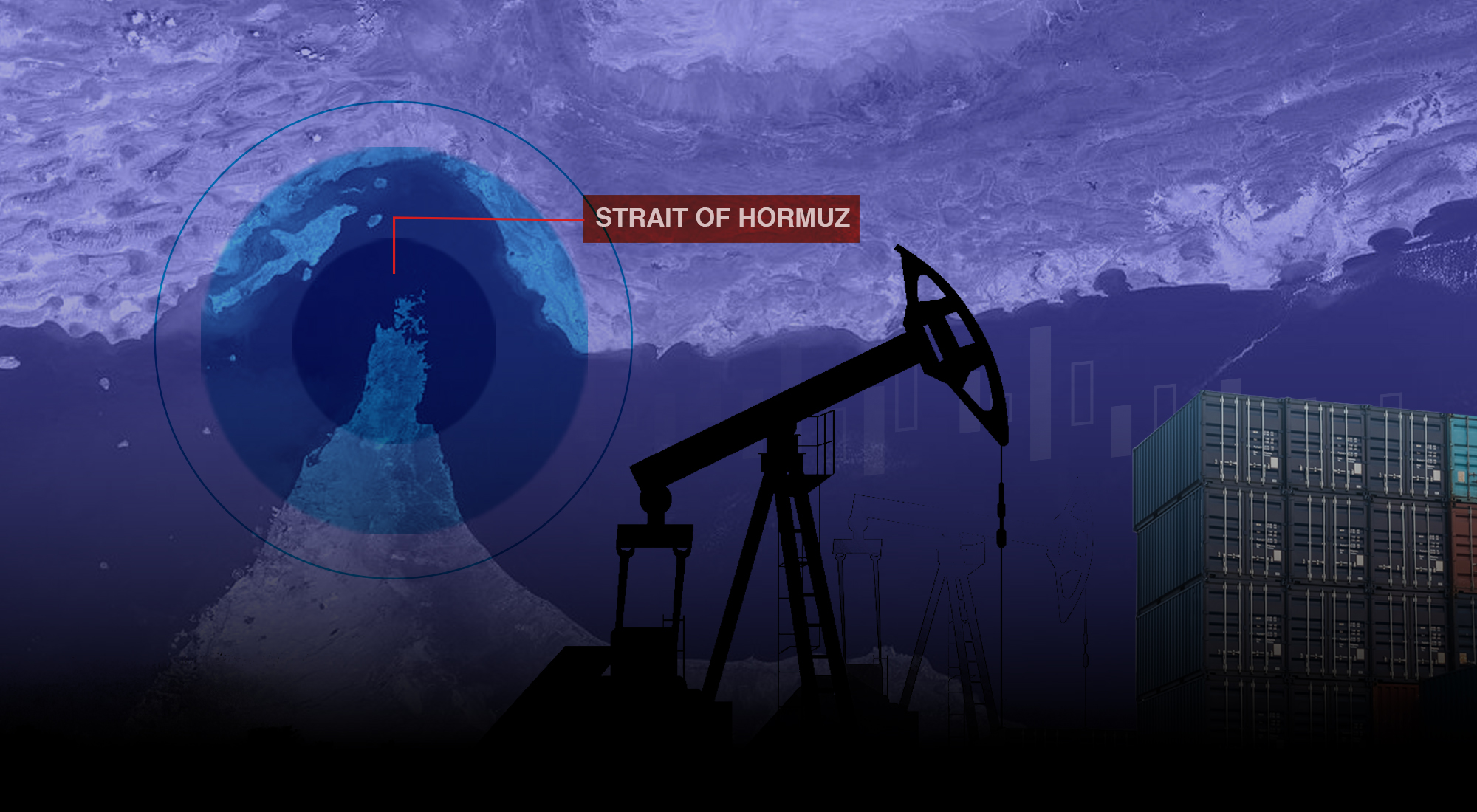


Disrupting shipping through the Strait of Hormuz during the conflict between Iran, the United States, and Israel has brought immediate pain to the world economy. Europe is facing resurgent inflation driven by high energy prices, while the dynamic Far East is struggling with energy shortages, rising fuel costs, and disrupted trade. Absent a swift resolution to the conflict and full reopening of the Strait, the energy supply shock is likely to develop into a broader growth shock affecting all vulnerable regions. The global energy situation remains intractable: energy supply either needs to be restored, or energy demand needs to fall.
Gulf nations are affected on multiple levels by disrupted commercial shipping. The inability to export energy through the Strait, particularly where alternative export pipelines are nonexistent or limited, is compounded by longer-term concerns. As both an energy and trade corridor, interrupting commerce through the Strait also imperils the position of Gulf nations as global trade hubs. Decades of investment and policy support have positioned the Gulf region as a global connector and global exporter, premising its strategic role in the global order on trade and connectivity.
However, we live in the age of geoeconomics. The last decade has witnessed a deepening and broadening in the use of economic instruments for geopolitical ends. Tariffs, trade policy, foreign investment screening, supply chains in critical materials, and sanctions have been increasingly used to gain leverage over economic adversaries. These instruments are typically narrowly applied and exist within complex global systems of trade, finance, and investment. As components of broader systems, their use is highly specific, and the consequences of their use remain manageable and largely predictable.
With the advent of the conflict, the Strait of Hormuz was captured by this logic and shifted from being an economic passage to becoming a strategic asset. Although maritime chokepoints have long been considered adjacent to the security domain, it is essential to prevent the over-securitization of maritime passage. When the conflict ends, the Strait must return to its former status as an economic passage.
Moreover, any framework for reopening the Strait must avoid introducing additional costs to trade and commerce: in order to realize its ambitions as a global connector, Gulf trade must not only remain open to trading partners and connected to the global economy but must also maintain its cost-competitiveness. Excessively securitizing maritime commerce would both impose significant cost burdens and would almost certainly narrow the range of potential trading partners. A model of maritime commerce grounded in the recognition of the right to free passage is therefore preferable to one in which access is secured or underwritten through coercive or costly mechanisms. Rather than securitizing trade, trade flows should become more resilient to external shocks.
Analyzing the current situation, the implications of stopping the transit of container and goods trade through the Strait can be broadly categorized into three categories. First, the blockade completely transforms the operating environment for Gulf shipping and logistics by imposing unsustainable costs on logistics and handling operations. Moreover, as time passes, the risk increases that global trade flows will reroute to more predictable maritime routes. Second, the reliability and efficiency of supply chains sustaining Gulf manufacturing and industry will come under increasing strain. This becomes all the more important against the background of Gulf plans to grow a domestic industrial and manufacturing base. Third, the effectiveness of the position of the Gulf as a global connector between and among global regions may be compromised unless conditions allowing for the mass maritime transit of goods are quickly restored.
Connectivity and cost in shipping and logistics
While Gulf commerce was built on the right of transit passage through the Strait of Hormuz, the conflict has almost paralyzed container and goods trade. Interrupting container trade to high-capacity port hubs such as Jebel Ali and Khalifa Ports in the UAE, King Abdulaziz Port in Saudi Arabia, and Hamad Port in Qatar has seriously disrupted the normal flow of trade. Well-versed in geopolitical risk, Gulf port operators have partially rerouted containerized trade through alternative logistics operations utilizing air, land and rail bridges. These redeployments prioritize food, medicines, and strategic goods, and have largely avoided bottlenecks.[1] In the UAE’s case, strategic grain storage at the port of Fujairah offers a significant buffer, with a total capacity of around 300,000 tonnes (330,000 Tons) distributed across 20 grain silos.[2] This ramping up of alternative operations has commendably—and seamlessly—supported the flow of essential goods over the two months since the beginning of the conflict.
However, the longer the Strait remains closed, the more limitations of scale will come into play: container ships docking at Jebel Ali Port typically handle between 12,000 and 18,000 twenty-foot containers, while a single train carries approximately 260 twenty-foot containers.[3] Relying on truck freight from the UAE or Oman’s eastern ports to supply Saudi Arabia and the UAE is inherently limited by capacity, refrigeration requirements (in relation to foodstuffs), and cost. Finally, there is a scale mismatch between and among ports, with Jebel Ali Port able to handle around 15 million containers per year, while the Indian Ocean ports of Fujairah and Khor Fakkan are typically able to handle slightly over one-third of Jebel Ali’s volume.
Despite these initiatives to keep essential trade running, soaring insurance and fuel costs have made the operating environment for shipping commercially unviable for many operators. While cargo insurers prior to the war were charging less than 0.1 percent of the cost of cargo to transit the Strait, insurance reportedly jumped to 7.5 percent of the insured cargo value at the peak of hostilities, before halving to 3.75 percent when the ceasefire was agreed on 8th April. Fuel oil used to power tankers and container ships also jumped in price between the end of February and mid-March, with bunkering fuel delivered to Singapore increasing by almost 120 percent over that period.[4]
Increases in insurance and shipping costs carry medium-term implications. Efficient and unfettered logistics underpin profitable maritime shipping, port operations, and associated industrial and supply chain activity. If the Strait continues to be perceived as unstable, higher fuel, insurance, freight and material costs will, over time, be passed on to producers and, eventually, consumers. As cost inflation flows through from logistics and shipping to materials, supply chains, production, and exports, prices will rise across sectors. From a national policy perspective, the net effect of higher costs in manufacturing, industry, and energy supply chains will be to make exports from the Gulf less competitive vis-à-vis global alternatives.
Reliability of supply chains for domestic industry and manufacturing
Together with inexpensive energy and low feedstock prices, international supply chains are essential inputs to competitively support Gulf manufacturing and industry. The region is fully invested in this strategy, with a decades-long commitment to develop export-oriented manufacturing free zones, logistics hubs, seaports and airports. National policy programs have been established to directly support industrial development and the goal of making Gulf manufacturing and industry competitive in global markets for advanced manufacturing, renewable energy, EV and automotive supply chains, batteries, aerospace, and other sectors.
These nascent industries critically depend on global supply chains to receive materials and production inputs and access to markets and open trade routes to be able to export industrial and manufactured products. The relatively small size of the total GCC population—approximately 60 million—means that Gulf nations must compete on world markets offering a global customer base. Reliably integrating into global supply chains, as both a provider and receiver of essential materials, components and other inputs, has been greatly complicated by the blockade of container traffic through the Strait.
Supply chains of raw materials and key inputs need to operate without disruption, and open maritime routes are necessary to export manufactured products. For example, in relation to battery manufacturing in the UAE and Saudi Arabia, lithium and other raw materials need to be imported reliably and quickly. In the area of renewable energy manufacturing, essential materials and components in the solar and hydrogen industries are imported from Asia and Europe. In terms of manufacturing and industry know-how, industrial and technology partnerships have been established with advanced economies, including the U.S., China, and South Korea, in sectors including advanced materials, biotechnology, vaccines, sensors, defense, space, robotics, and others. At the level of trade policy, market access for goods produced in the Gulf has been secured by engaging bilaterally, regionally, and globally with trade partners.
Without secure and reasonably priced trade routes supporting imports of raw materials and exports of finished products, the competitiveness of Gulf manufacturing exports will suffer in global markets. Beyond growth and competitiveness, security also enters the picture on multiple levels. First, the reliability and security of supply chains are increasingly considered a matter of long-term economic security, particularly in relation to defense and strategic industries.[5] Second, a competitive and technologically advanced manufacturing and industrial base is critically important to both economic security and defense, as it allows the integration of the civilian industrial and technological base with defense manufacturing.[6] Taking into consideration supply chains supporting both long-term economic growth and defense, the closure of the Strait of Hormuz represents not only an immediate crisis but also a long-term strategic challenge for Gulf nations.
Region-to-region connectivity: the Gulf and the Global South
Capitalizing on their position as a crossroads of the Eastern Hemisphere, Gulf nations have built a formidable and globally open infrastructure for trade and logistics. Moreover, decades of bilateral and multilateral political and diplomatic efforts, neutral foreign policy, energy supply reliability, defense cooperation, international investment, and humanitarian assistance have cultivated vast global networks of positive relations. Their next phase of economic development will depend on the role of the Gulf as a global connector among regions.
The India-Middle East-Europe Economic Corridor (IMEC), launched during the New Delhi G20 Summit held in September 2023, is one such concept. The IMEC is conceived as a means of connecting the regions of Asia, the Middle East, and Europe by transporting large volumes of goods, promoting the integration of cross-border value chains, and establishing connectivity-based and high-technology industries. From an economic development perspective, the IMEC is intended to boost deeper connectivity and economic integration between Asia, the Gulf, and Europe. Geopolitically, it was partly conceived as an alternative to the Red Sea and Suez Canal.
However, maritime trade from Indian ports of Mumbai and Mudra would have to flow through the Strait of Hormuz before reaching the Gulf mega-ports in the UAE and Saudi Arabia. The Hormuz blockade and current political conditions have shown the trade corridor to be unviable. Unless global supply chain restructuring reshapes trade dependencies with countries seeking to reduce future reliance on the Gulf, the IMEC project may return to the fore in the future.
Resilience and economic sovereignty in the geoeconomic age
Global trade will be the economic backbone of Gulf nations in a post-oil future. Resilience and economic sovereignty are therefore non-negotiable conditions for future Gulf prosperity. In this context, economic sovereignty for Gulf nations depends on two essential conditions. First, open passage through the Strait, offering the Gulf unimpeded access to global markets, and second, establishing alternative export routes for the export of Gulf energy and goods and increasing systemic resilience within existing trade networks.
It remains unknown how long the current blockade of the Strait of Hormuz will continue, and whether the Strait will be entirely demilitarized once hostilities cease. Its governance will be dictated by political realities at that time. It is, however, essential that conditions surrounding the reopening of the Strait be mindful of imposing further costs on trade and commerce. Gulf trade must not only be unfettered, but in an increasingly competitive global economy, must also be affordable. Any scenario involving risk to passage through the Strait would cause insurance costs to jump. Equally, shipping tolls would add permanent costs to global supply chains and would amount to a direct tax on the Gulf supply chain, seriously hindering global competition.
Militarized enforcement of free passage would impose significant cost burdens on the movement of energy and goods. Maritime commerce premised on full recognition of the right to free passage is preferable to open passage enforced or underwritten by any other means. Economic sovereignty is a precondition not only to the Gulf’s ability to trade with world markets, but also to its continued ability to develop its industrial and export base.
Having invested for decades in infrastructure and economic diplomacy, the challenge for Gulf nations will be to maintain global connectivity while making their international trade networks more resilient to external shocks. In the international context, resilience requires alternative export routes bypassing the Strait of Hormuz as well as building a broad matrix of trade and investment relationships across suppliers, technologies, and partners.
Given that the perception of guaranteed passage is already compromised, Gulf states have no choice but to develop alternative export routes to support their long-term trade-dependent economic strategies. While the volume of maritime trade normally flowing through the Strait means that sea trade cannot be replaced by alternative land routes, Gulf nations are now greatly incentivized to strengthen high-capacity multi-modal transport to and from existing ports on the Indian Ocean.
Premised on the concepts of redundancy, nodal logistics, and resilience, Gulf nations are rapidly supplementing port-centric connectivity with an expanded and integrated regional road-rail transport system to move high volumes of cargo.[7] Conceived prior to the current crisis, the UAE-Oman rail network connecting Oman’s deep-sea Sohar port to the UAE’s national rail network foreshadows the development of similar de-risked regional economic corridors. Gulf planners now envision more extensive sea-land bridges connecting the UAE’s east coast ports of Fujairah and Khor Fakkan overland to Saudi Arabia’s port of Jeddah on the Red Sea and potentially onwards to connect with the Mediterranean through the Suez Canal or the Syrian ports of Latakia and Tartus.[8] In order to handle increasing trade flows, plans to further scale up capacity at UAE-owned ports are similarly under way, with the port of Khor Fakkan in talks with Jebel Ali operator DP World to scale up operational capacity.[9]
In addition to offering alternative trade routes, the development of regional rail and overland logistics networks will facilitate the regionalization of industrial production. As economic corridors develop around trade routes and logistics hubs, selective reshoring of critical inputs and supply chains will become more feasible.
Beyond physical trade, resilience architecture also involves strengthening digital trade, services, and data flows—which are less vulnerable to physical disruption. An essential component of resilience in supply chains is digital readiness, trade facilitation, and international data connectivity.[10]
The Hormuz blockade is no longer an abstract possibility. Trade and connectivity are among the core strategies that will bring the jobs, technology, and skills necessary to sustain Gulf economies and populations over the coming decades. Against this background, interrupting maritime commerce through the Strait of Hormuz is a structural risk to the long-term economic future of the region.
[1] Will Milner, “AD Ports Deploys Air, Land and Sea Network to Keep Gulf Supply Chains Moving,” Arabian Business, April 17, 2026, https://www.arabianbusiness.com/business/transport/ad-ports-deploys-air-land-and-sea-network-to-keep-gulf-supply-chains-moving.
[2] “Etihad Mills, a Subsidiary of Al Dahra Holding, Initiates Grains’ Trading Operations out of Fujairah,” Al Dahra Holding, July 11, 2024, https://aldahra.com/etihad-mills-a-subsidiary-of-al-dahra-holding-initiates-grains-trading-operations-out-of-fujairah-with-the-aim-of-securing-ke/#.
[3] “Etihad Rail Targets Container Freight Flows,” MEED, October 17, 2012, https://www.meed.com/etihad-rail-targets-container-freight-flows/.
[4] Angelica Rauch, Paulina Canedo, and Emilio Quiroz, “Infographic: Ships Reroute, Freight Costs Rise amid War in Middle East,” S&P Global Commodity Insights, March 17, 2026, https://www.spglobal.com/energy/en/news-research/latest-news/shipping/031726-infographic-ships-reroute-freight-costs-rise-amid-war-in-middle-east.
[5] OECD, Economic Security in a Changing World (Paris: OECD Publishing, 2025), “Economic Security and Vulnerabilities in International Supply Chains,” https://www.oecd.org/en/publications/2025/09/economic-security-in-a-changing-world_78f3b129/full-report/economic-security-and-vulnerabilities-in-international-supply-chains.
[6] European Commission, “A New European Defence Industrial Strategy: Achieving EU Readiness through a Responsive and Resilient European Defence Industry,” March 5, 2024, https://defence-industry-space.ec.europa.eu/first-ever-defence-industrial-strategy-and-new-defence-industry-programme-enhance-europes-readiness-2024-03-05_en.
[7] Maha Raad and Hamza El Mounhi, “The Day After Hormuz: A Defining Moment for Logistics in the Gulf,” Strategy& Middle East, May 2026, https://www.strategyand.pwc.com/m1/en/industries/maritime/day-after-hormuz.html.
[8] Tom Hussain, “Middle East States Eye Transport Resilience with New Logistics Corridor to Bypass Hormuz.” South China Morning Post, May 3, 2026, https://www.scmp.com/week-asia/economics/article/3352166/middle-east-states-eye-transport-resilience-new-logistics-corridor-bypass-hormuz.
[9] “Gulf Food Supplies Rerouted as Iran Threats Hit Hormuz Shipping,” Financial Times, March 11, 2026, https://www.ft.com/content/e7345712-e99d-4567-b4fc-c7d20ab1faf3?syn-25a6b1a6=1.
[10] OECD, “Global Value and Supply Chains,” https://www.oecd.org/en/topics/policy-issues/global-value-and-supply-chains.html.