



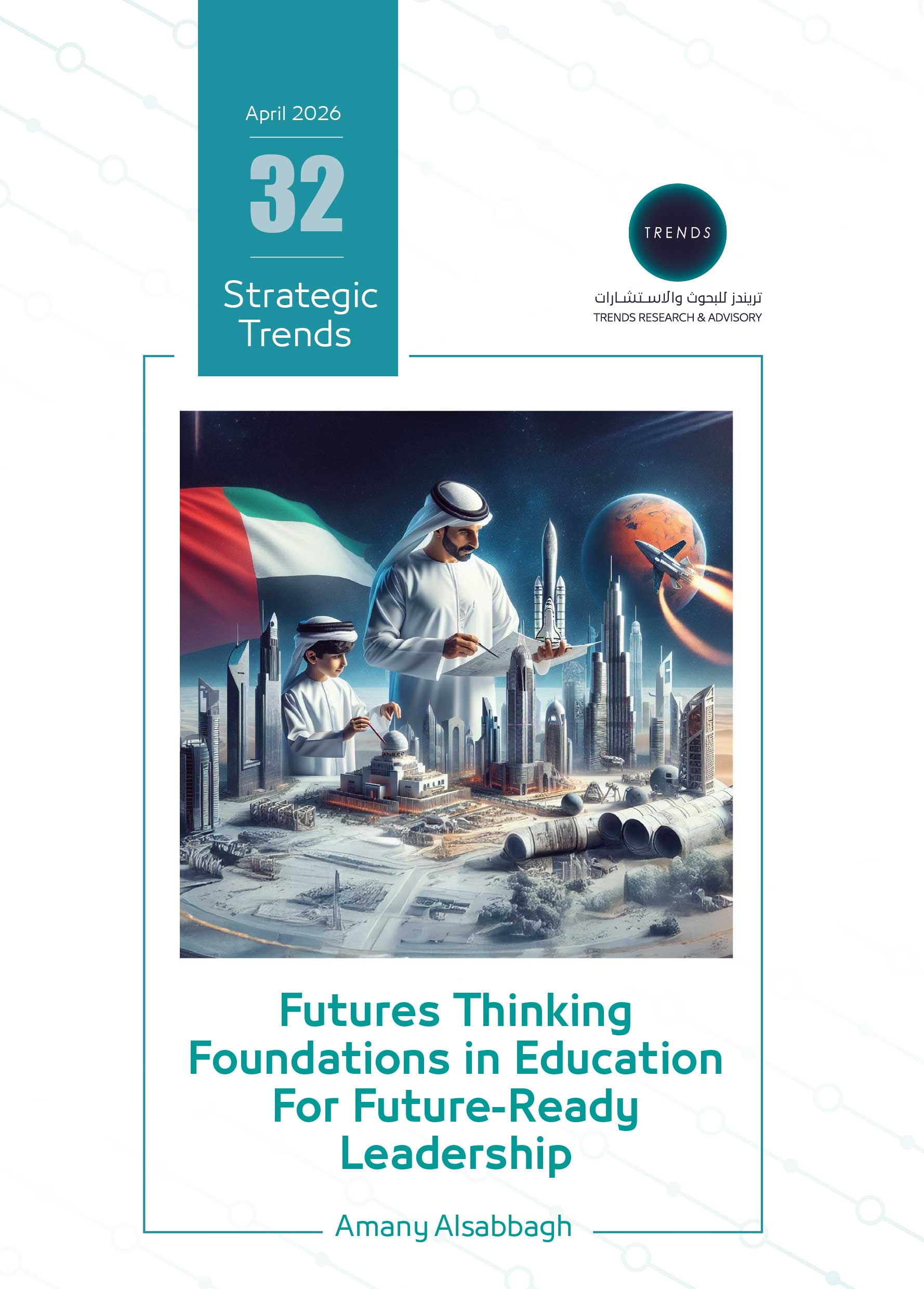
Futures Thinking Foundations in Education offers a rigorous and timely framework for rethinking educational leadership in an era defined by uncertainty, complexity, and rapid systemic change. Drawing on futures and foresight scholarship, the book argues that traditional planning and leadership models—rooted in prediction, linear extrapolation, and shortterm optimization—are increasingly inadequate for guiding educational systems confronted with climate instability, technological disruption, demographic shifts, and volatile labor markets. Instead, the book advances futures thinking as a disciplined and responsible approach to leadership that prioritizes preparedness over prediction.
Written for educational leaders, policymakers, senior administrators, and scholars, the book conceptualizes futures thinking not as speculative forecasting, but as a structured way of engaging with multiple plausible futures. It emphasizes the importance of making implicit assumptions about the future explicit, interrogating dominant narratives, and developing strategies that remain robust under changing conditions. At its core, the book reframes uncertainty as a permanent feature of contemporary education systems rather than a temporary disruption to be managed away.
The book is organized around three interrelated pillars of educational foresight: resilience, adaptability, and innovation. Resilience is presented as the foundational capacity that allows institutions to absorb shocks and maintain core functions. Adaptability extends beyond recovery, focusing on organizational flexibility, strategic agility, and the ability to recalibrate priorities in response to emerging conditions. Innovation is framed as a generative capacity that enables institutions not only to respond to change, but to shape preferred futures through transformative leadership and institutional learning. Together, these pillars form an integrated framework for future-ready educational systems.
A central contribution of the book is its detailed treatment of scenario development as a practical methodology for translating futures thinking into action. Rather than offering predictions, scenario planning is presented as a tool for testing decisions, exposing vulnerabilities, and exploring alternative pathways under conditions of uncertainty. Drawing on established foresight models, including the OECD’s schooling scenarios, the book provides a systematic guide for institutional scenario planning in both school and higher education contexts, supported by applied frameworks and case illustrations.
Throughout, the book addresses the psychological and organizational barriers that often inhibit anticipatory thinking, such as status quo bias, cognitive dissonance, and the neglect of weak signals. By distinguishing between reactive and anticipatory leadership, it highlights how futures thinking can reduce organizational stress, improve strategic coherence, and enhance long-term institutional capacity.
Ultimately, Futures Thinking Foundations in Education positions foresight as an essential leadership competence for the coming decades. It does not seek to define what the future of education will be, but to equip leaders with the conceptual tools, habits of mind, and strategic practices needed to engage an unpredictable future with clarity, responsibility, and confidence.
