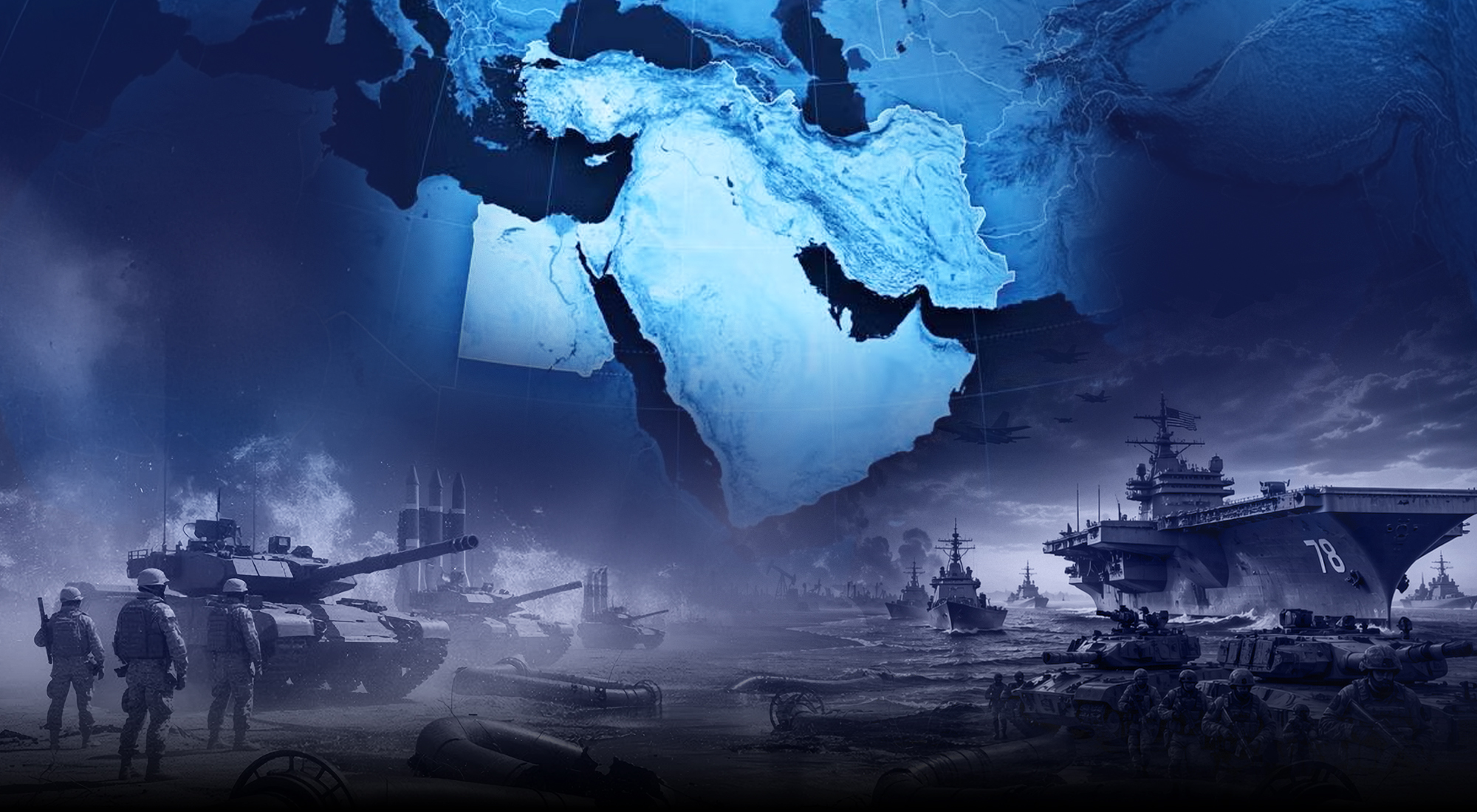

The war that erupted on 28 February had been decades in the making, tracing back to the 1979 Iranian Revolution. The preemptive strikes launched by the United States and Israel, Operation Epic Fury and Roaring Lion, resulted in a decapitation of leadership, killing Supreme Leader Ali Khamenei and other senior officials. Tehran’s retaliation included strikes on Gulf states, justified by their hosting of U.S. military bases, effectively drawing them into this unwanted war.
This situation presents a case study for a recurring question in international relations (IR): whether the security dilemma is escapable. The security dilemma is a foundational concept in IR: it arises when actors rely on self-help and cannot reliably interpret others’ intentions; even defensive capabilities may be perceived as threatening, fueling fear and arms competition. The claim that “the security dilemma is inescapable” is most persuasive when “inescapable” refers to the anarchic structure of the system rather than to a deterministic prediction of war. This distinction is central, as it shifts the analytical focus from the inevitability of conflict to the persistence of underlying insecurity.
Building on theoretical foundations, this analysis argues that the Gulf security dilemma is inherently inescapable because it is rooted in anarchy, uncertainty, and the inherent ambiguity about military capabilities. Its intensity, however, varies with the offense-defense balance and the degree to which offensive and defensive postures can be distinguished. In the Middle East, particularly within the Gulf subcomplex, these conditions are amplified by dense regional interdependence and external penetration, which intensify rather than mitigate insecurity. Military capability remains the most visible instrument of self-help: force structure, doctrine, and technology together determine whether these capabilities appear defensive, coercive, or ambiguous. Methodologically, this insight adopts a theory-driven approach, drawing on realist and regional security literatures and applying them to both contemporary and historical cases.
Understanding the Security Dilemma
John H. Herz, who first coined the term in 1950, attributes the security dilemma to a condition of political plurality without a “higher unity”, that is, the absence of an overarching authority to govern interactions among states.[1] In his view, insecurity stems from structure rather than intent, establishing the dilemma as a systematic condition rather than a product of individual state behavior.
Herbert Butterfield describes the security dilemma as an “absolute predicament” or “irreducible dilemma” that embodies a structural logic in which actors cannot avoid interaction, cannot be certain of others’ intentions, and therefore may rationally fear one another even in the absence of hostility.[2] Similarly, Herz emphasizes that this condition is not episodic but a recurrent feature of political life.[3] As such, insecurity is therefore persistent even under defensive intentions, reinforcing the argument that the dilemma cannot be fully resolved.
Building on this foundation, Robert Jervis identifies the core mechanism: cooperation is difficult because exploitation is costly, and many security-seeking actions generate threat externalities, as the same capabilities that can deter can also coerce.[4] Charles Glaser extends this logic, arguing that states with fundamentally compatible interests may nonetheless enter competition and war; the intensity of the dilemma, in his account, depends on offense-defense balance and the degree to which offensive and defensive postures can be distinguished.[5]
Shiping Tang adds analytical precision by identifying three prerequisites for a true security dilemma: anarchy, fear about malicious intent on either side, and the accumulation of offensive capabilities.[6] Meanwhile, Ken Booth and Nicholas J. Wheeler reconceptualize the idea as a “security paradox”, a two-level strategic problem.[7] The dilemma of interpretation demands policymakers to infer others’ motives and capabilities under conditions of limited information, whereas the dilemma of response concerns how to act on such judgments. They contend that the security dilemma is inescapable because decision-makers must operate under persistent, unresolvable uncertainty about rivals’ intentions.[8]
Taken together, these accounts converge on a structural claim: even when intentions are defensive, epistemic limits under anarchy transform the accumulation of capabilities into a generator of fear; their disagreements concern the severity and management options, rather than the existence of the dilemma itself.
The persistence of insecurity
Fundamentally, the security dilemma is inescapable, operating as both an enabling condition and a structural, enduring feature of international politics. For Herz, plurality without higher unity implies that even good faith cannot yield enforceable guarantees; rapprochement does not preclude renewed conflict.[9] Butterfield reinforces this view through the notion of an “irreducible dilemma”, in which fear remains rational and cannot be resolved through moral persuasion.[10]
According to Tang, unless anarchy is transcended or offensive capability is eliminated from technology, a practical impossibility, the dilemma remains structurally present.[11] Glaser admits that, while anarchy persists, variation in the offense-defense balance alters the likelihood of cooperation and war; management may be possible, but structural escape is not.[12]
For Booth and Wheeler, the dilemma is intensified by the “other minds” problem: the inability to confirm another state’s intent or “read their mind”, leading to worst-case assumptions.[13] For Jervis, two critical factors shape the dilemma: the contrast between offensive and defensive capabilities, and the question of which has the edge.[14] If defensive capabilities can be distinguished from offensive ones and defense has an edge, the intensity of the security dilemma can be substantially reduced, though not eliminated.
Anarchy, uncertainty, and military capability
The security dilemma operates through a chain of anarchy, uncertainty, and capabilities. Under anarchy, leaders cannot outsource survival or rely on the stability of others’ future intentions; while intentions may change, capabilities endure. As a result, the accumulation of military capability becomes a rational hedge against uncertainty, even as it generates insecurity for others.[15]
The dilemma intensifies when offense holds the advantage and when offensive and defensive postures are difficult to distinguish. In this context, military capability becomes the main instrument of self-help. Force structure, doctrine, and technology shape whether a state’s posture is perceived as defensive or coercive. A secure and credible retaliatory posture can reduce incentives for preemption, whereas ambiguous or decapitation-oriented strategies tend to heighten them. Jervis further associates a probable slowdown in arms racing with the development of credible second-strike capabilities in specific conditions.[16]
RSCT and structural amplification
Barry Buzan and Ole Wæver’s Regional Security Complex Theory (RSCT) highlights the interdependence of security dynamics within geographically proximate regions and limits of external control over local threat perceptions.[17] Applied to the Middle East, RSCT clarifies how the region functions as a dense regional security complex (RSC) in which structural uncertainty is not only presented but amplified.
RSCT begins from the premise that, although the international system is anarchic at the global level, security interdependence clusters regionally because threats travel more easily over short distances and states are primarily affected by developments in their immediate geographic environment.[18] As a result, international security is structured into regional complexes in which actors’ security concerns are so intertwined that they cannot be analyzed in isolation. Insecurity, therefore, is not only reproduced by anarchy but also concentrated geographically.
Within this framework, the Middle East constitutes a standard RSC characterized by intense conflictual interaction among multiple regional powers rather than domination by a single hegemon.[19] The Gulf sub-complex is shaped by interactions among Iran, Israel, and the Arab Gulf states, where overlapping rivalries, ideological cleavages, and historical grievances generate persistent patterns of insecurity. Perceptions of war risk and expectations of violence are continually recalibrated as shifts in the regional balance of power prompt alliance adjustments, deepen mistrust, and intensify the security dilemma.[20]
RSCT reinforces inescapability: regional proximity, layered rivalries (e.g., Sunni-Shia divides and Arab-Israeli tensions), and external penetration (e.g., the U.S.) amplify rather than mitigate structural uncertainty. In such complexes, mitigation may occur episodically, but the dilemma remains embedded, linking RSCT to enduring patterns of regional insecurity. Such a case illustrates the heightened intensity, rather than the resolution, of the security dilemma under regional conditions.
Historical patterns of security-dilemma escalation
While not a Gulf conflict, the October War (1973) reshaped how regional actors perceived threats and responded to them. Declassified documents indicate that uncertainty and strategic surprise influenced American threat assessment during the conflict.[21] The war “dramatically transformed” U.S. security policy in the Middle East, with worst-case scenarios embedded into regional calculations. In terms of the security dilemma, this episode shows that uncertainty in an anarchic environment may quickly escalate and deepen mistrust between states, even after active hostilities subside.[22]
The Iran-Iraq war (1980-88) represented the most Gulf-centered case; Iraq’s extensive use of chemical weapons (CW) is frequently cited as evidence of noncompliance with established norms, indicating how prolonged insecurity and desperation may drive decisions to adopt taboo-breaking capabilities.[23] While not reducible to the security dilemma alone, the war shows how fear-driven escalation becomes self-reinforcing when survival is perceived to be at stake.
The 2006 Lebanon War and Syrian crisis further shaped Gulf threat perceptions and capabilities planning via proxy dynamics and regional interventions. United Nations Security Council Resolution 1701 ended major hostilities and established the mechanisms to prevent renewed conflict; UN reporting identifies the resolution as critical to halting fighting after intense combat, illustrating once more that mitigation measures frequently arrive only after spirals have produced high costs.[24]
Since October 2023, Iranian influence in the Middle East has declined as the so-called “Axis of Resistance” faced sustained Israeli military pressure. Yet, RSCT views influence not just as material power, but as the density of security interactions across sub-complexes. Iran has often used forward defense and proxy operations in the Gulf and Levant sub-complexes, thereby creating interconnected arenas of insecurity and increasing suspicion. Even as influence fluctuates, the structural interdependence behind the security dilemma remains intact.
The 2026 escalation as a within-case test
The preemptive strikes that followed the collapse of negotiations in Geneva between the U.S. and Iran in February 2026 illustrate how bargaining breakdown under uncertainty can quickly lead to the use of preventive force.[25] This pattern is characteristic of security-dilemma escalation; one actor’s defensive preemption appears to the adversary as offensive escalation, prompting reciprocal countermeasures and third-party balancing that widen insecurity.
Israeli rhetoric preceding the episodic “12-day war” framed Iran as nearing nuclear capability, presenting intervention as necessary to prevent irreversible deterrence shifts. Such concerns reflect fears that a nuclear-armed Iran could constrain Israeli freedom of action and alter the regional balance from asymmetrical rivalry toward peer-level deterrence.
The leadership decapitation that targeted Iranian leadership intensified the security dilemma by magnifying the “other minds” problem.[26] The presence of U.S. forces compounds these uncertainties, as regional actors adjust their behavior in anticipation of American responses. At the same time, Israel has expanded operations aimed at reshaping the regional balance, establishing buffer zones, and weakening adversaries.
While the Gulf states continue to view diplomacy as a pathway to de-escalation, relations will nevertheless remain strained over the long term. Iranian paranoia toward Washington has kept it in an offensive posture akin to a suicidal policy; if it escalates, the global economy will continue to suffer, as Iran retains the capacity to disrupt oil exports through the Strait of Hormuz, thereby internationalizing the crisis. Concurrently, Tehran interprets U.S. pressure and strikes on critical infrastructure, such as Kharg Island and desalination sites, as existential threats, reinforcing its hardline behavior and narrowing the space for compromise despite ongoing diplomatic signals.
Indistinguishability and the intensification of the dilemma
The Middle East RSC has shifted from conventional deterrence toward a destabilizing doctrine of “offensive defense”. Whereas earlier conflicts, such as the 1973 Arab-Israeli War, depended on relatively legible force postures, the contemporary landscape is defined by precision strikes, drones, and proxy networks that compress decision-making time and obscure intent.[27]
Israel’s 2024-2025 strategy exemplifies this shift, prioritizing the anticipatory neutralization of perceived threats.[28] However, Jervis’s framework clarifies why this intensifies the security dilemma: when offensive and defensive postures are indistinguishable, mutual insecurity escalates.[29] The logic of “offensive defense” collapses the boundary between preemptive protection and aggression. To adversaries, suppression operations appear as attempts to erode deterrent capacity, incentivizing escalatory countermeasures and reciprocal balancing.
Applying Tang’s criteria, this environment satisfies the conditions of a true security dilemma: actors accumulate offensive capabilities for defensive ends under anarchy, while intentions remain unobservable.[30] The turn toward anticipatory force, therefore, deepens cycles of mutual suspicion; within a dense regional security web, defensive preemption is operationally indistinguishable from offensive aggression, sustaining those cycles.
Is escape possible?
Glaser argues that security-seeking states can, under favorable structural conditions, recognize each other as such and maintain the existing order. When defense has the upper hand and offensive and defensive postures are distinguishable, cooperation becomes more feasible, and the severity of the security dilemma may lessen.[31] Likewise, Jervis contends that the dilemma’s severity hinges on the recognizability of weapons and whether defense or offense holds the advantage; if defensive capabilities are easily identifiable and defense dominates, arms racing spirals are less likely.[32]
However, such conditions are contingent rather than fixed; technological ambiguity and shifting power balances weaken differentiation, ensuring that uncertainty remains fundamentally embedded.
Conclusion
The security dilemma is inescapable as a structural condition because political plurality under anarchy generates enduring uncertainty about intentions, and capability accumulation inevitably produces externalities. Its severity, however, varies with the offense-defense balance, the degree of differentiation, and the presence of transparency and verification mechanisms.
The Gulf sub-complex, characterized by dense interdependence, heavy arms acquisition, drone-enabled ambiguity, chokepoint vulnerability, and sustained external penetration, constitutes a turbulent environment in which security-dilemma spirals; this is illustrated by recent escalation sequences that have rapidly propagated from targeted strikes to regional missile-defense adjustments and maritime disruptions.
The dilemma, therefore, is not an episodic failure of diplomacy but a structural feature of regional and systemic politics: its intensity fluctuates, but never dissipates, as the absence of an authoritative power or a “Leviathan” ensures its inescapability. Accordingly, the dilemma lies not only in predicting inevitable war, but in explaining why insecurity persists even in periods of relative stability, and why efforts at mitigation remain inherently constrained by structural conditions.
[1] John H. Herz, “Idealist Internationalism and the Security Dilemma,” World Politics 2, no. 2 (January 1, 1950): 157–80, https://doi.org/10.2307/2009187.
[2] Alan Collins, “Conclusion: Application and Mitigation,” in The Security Dilemma of Southeast Asia, 1st ed. (Palgrave Macmillan, 2000), 173–89, https://doi.org/10.1057/9780333985632_6.
[3] Herz, “Idealist Internationalism and the Security Dilemma.”
[4] Robert Jervis, “Cooperation Under the Security Dilemma,” World Politics 30, no. 2 (January 1978): 167–214, https://doi.org/10.2307/2009958.
[5] Charles L. Glaser, “The Security Dilemma Revisited,” World Politics 50, no. 1 (October 1997): 171–201, https://www.jstor.org/stable/25054031.
[6] Shiping Tang, “The Security Dilemma: A Conceptual Analysis,” Security Studies 18, no. 3 (2009): 587–623, https://doi.org/10.1080/09636410903133050.
[7] Ken Booth and Nicholas J. Wheeler, The Security Dilemma: Fear, Cooperation and Trust in World Politics (Basingstoke: Palgrave Macmillan, 2008).
[8] Ibid.
[9] Herz, “Idealist Internationalism and the Security Dilemma.”
[10] Collins, “Conclusion: Application and Mitigation.”
[11] Tang, “The Security Dilemma: A Conceptual Analysis.”
[12] Glaser, “The Security Dilemma Revisited.”
[13] Booth and Wheeler, The Security Dilemma: Fear, Cooperation and Trust in World Politics.
[14] Jervis, “Cooperation Under the Security Dilemma.”
[15] Glaser, “The Security Dilemma Revisited.”
[16] Jervis, “Cooperation Under the Security Dilemma.”
[17] Barry Buzan and Ole Wæver, “Security Complexes: A Theory of Regional Security,” in Regions and Powers: The Structure of International Security (Cambridge University Press, 2003), 40–82, https://doi.org/10.1017/cbo9780511491252.007.
[18] Ibid.
[19] Ibid.
[20] Wojciech Grabowski, “Application of the Regional Security Complex Theory for Security Analysis in the Gulf,” Athenaeum Polskie Studia Politologiczne 2020, no. Vol. 68 (January 1, 2020): 18–31, https://doi.org/10.15804/athena.2020.68.02.
[21] Joel C. Christenson, Anthony R. Crain, and Richard A. Hunt, “The 1973 Arab-Israeli War,” in The Decline of Détente: Elliot Richardson, James Schlesinger, and Donald Rumsfeld, 1973-1977, vol. 8 (Historical Office, Office of the Secretary of Defense, 2024), https://history.defense.gov/Portals/70/Documents/secretaryofdefense/OSDSeries_Vol8_Chapter8.pdf?ver=DPFJTt9iqiaj9v8FdWqUKw%3D%3D.
[22] Ibid.
[23] Javed Ali, “Chemical Weapons and the Iran‐Iraq War: A Case Study in Noncompliance,” The Nonproliferation Review 8, no. 1 (2001): 43–58, https://doi.org/10.1080/10736700108436837.
[24] “Resolution 1701 (2006),” United Nations Security Council, August 11, 2006, https://unscr.com/en/resolutions/1701/.
[25] Parisa Hafezi, “US-Israeli Attack Triggers Fear and Panic in Iran,” Reuters, February 28, 2026, https://www.reuters.com/world/middle-east/us-israeli-attack-triggers-fear-panic-iran-2026-02-28/.
[26] Booth and Wheeler, The Security Dilemma: Fear, Cooperation and Trust in World Politics.
[27] Christenson, Crain, and Hunt, “The 1973 Arab-Israeli War”; Buzan and Wæver, “Security Complexes: A Theory of Regional Security.”
[28] Jones, “Israel and the Gulf Monarchies: A New Regional Security Complex or Just Complex Regional Security?”
[29] Jervis, “Cooperation Under the Security Dilemma”; Tang, “The Security Dilemma: A Conceptual Analysis.”
[30] Tang, “The Security Dilemma: A Conceptual Analysis.”
[31] Glaser, “The Security Dilemma Revisited.”
[32] Jervis, “Cooperation Under the Security Dilemma”; Tang, “The Security Dilemma: A Conceptual Analysis.”