
Türkiye stands at a critical juncture in its trade policy evolution, facing profound changes in global trade dynamics and regional integration. Historically anchored by its customs union with the European Union (EU), Türkiye has benefited from preferential access to European markets, shaping its industrial landscape and export patterns. However, new global challenges, such as regional conflicts, shifting alliances, emerging free trade agreements (FTAs), and macroeconomic pressures, are prompting Türkiye to reconsider its position and strategy. This insight provides an in-depth analysis of Türkiye’s geoeconomic context, the impact of the EU customs union, constraints, reform efforts, transatlantic relations, regional diversification, sectoral shifts, energy security, and policy recommendations for the future.
Introduction
Türkiye occupies a unique geoeconomic position at the crossroads of Europe, Asia, and Africa. Its strategic location has made it a central node in global and regional trade networks, facilitating the movement of goods, services, and energy supplies between continents. Over the past three decades, Türkiye’s trade policy has been heavily influenced by its customs union agreement[1] with the EU, signed in 1996. This arrangement provided Turkish industries with preferential access to the European market, encouraging alignment with EU standards and regulations. As a result, Türkiye’s export-oriented sectors experienced sustained growth, particularly in automotive, manufacturing, and industrial goods.
Despite these advantages, Türkiye’s trade policy is now subject to new pressures. Global trade ecosystems have become more fragile, and persistent political risks, ranging from trade disputes to shifting alliances, are redefining the landscape. The rise of emerging markets, regional agreements, and technological transformation further complicate Türkiye’s strategic choices, making trade policy reform a pressing issue for the Turkish government and business leaders alike.
Türkiye’s role in global trade networks
Türkiye’s participation in global trade is multifaceted and dynamic. As a bridge between the Middle East, Europe, and Africa, Türkiye facilitates vital trade flows across regions. The EU remains Türkiye’s largest trading partner, with more than 40% of Turkish exports destined for European markets, including key partners such as Germany, Italy, and Spain, which account for significant volumes of both imports and exports.
Beyond Europe, Türkiye maintains robust trade relationships with several countries. The United Arab Emirates (UAE) and Iraq are notable regional partners, reflecting Türkiye’s expanding influence in the Middle East. Trade with China has increased substantially, driven by global supply chain trends and Türkiye’s demand for consumer goods and industrial inputs. Russia is another major partner, supplying hydrocarbons that are crucial for Türkiye’s energy security. This diverse network underscores Türkiye’s strategic importance and its potential to act as a connector in global trade routes.
Figure 1: Türkiye’s Top Five Export Destinations (US$)
| Country | Export Value (US$ Billion) |
| Germany | 17.6 |
| United States | 13.7 |
| United Kingdom | 11.2 |
| Italy | 10.6 |
| Spain | 9.2 |
Source: Türkiye Exporters Assembly (TIM), https://www.tim.org.tr/en/export-export-figures.
Impact of the EU Customs Union
The customs union with the EU has been a cornerstone of Türkiye’s trade policy since 1996. By aligning Turkish industries with EU norms and regulations, the union facilitated access to European markets and spurred export-oriented growth. Sectors such as automotive, textiles, and industrial goods have benefited from strong EU demand, driving sustained expansion in Türkiye’s manufacturing base.
However, it also imposed significant limitations. Türkiye is required to harmonize its external trade policy with the EU, effectively forfeiting autonomy in negotiating FTAs with third countries. This restriction is compounded by Türkiye’s lack of representation in EU decision-making processes, as it is not a member state. While these constraints were manageable during periods of robust EU growth and close economic integration, contemporary realities have shifted. Slower growth in the EU, diversification of Türkiye’s export destinations, and evolving geopolitical alignments have diminished the customs union’s advantages, exposing Türkiye to asymmetric trade relationships and reduced flexibility, as demonstrated in the impact of the EU’s recent FTA with India on the Turkish textile sector.
Shifting global trade dynamics
Global trade dynamics are undergoing rapid transformation, with far-reaching implications for Türkiye. The EU’s recalibration of its trade policy, particularly in response to tensions with the United States, is reshaping traditional trade routes. The recent EU-India FTA,[2] concluded after two decades of negotiations, links two of the world’s largest trading blocs and alters the balance of global commerce.
Türkiye is directly affected by these shifts. The EU’s engagement with new partners, such as India, introduces competitive pressures that could erode Türkiye’s strategic value as a supplier to European markets. At the same time, trade tensions between Washington and Brussels offer Türkiye opportunities to expand its transatlantic trade relationships and leverage its unique position in the global ecosystem.
Constraints and challenges
Türkiye faces several constraints in its current trade policy framework. The most significant is its limited autonomy under the EU customs union, which restricts Türkiye’s ability to negotiate independent trade agreements. This has led to highly asymmetric relationships, with Türkiye often bound by decisions made in Brussels without direct input or representation.
The rise of predatory export-oriented economies, such as India, poses additional challenges. FTAs between the EU[3] and these countries enable foreign products to flood the Turkish market, undermining domestic industries and exposing Türkiye to competitive disadvantages. Turkish business interests have expressed concerns about these risks and are actively lobbying the EU to reposition Türkiye within the bloc’s trade architecture.
Macroeconomic pressures further complicate the landscape. Rising inflation, surging labor costs, and inadequate access to credit have strained Türkiye’s industrial base, reducing competitiveness and threatening export growth. Overvaluation of the Turkish currency, driven by high interest rates, has also contributed to slowing exports, raising concerns about long-term sustainability
Reform efforts
Türkiye has identified the urgent need to reform its customs union arrangement with the EU, aiming to recalibrate the agreement to better reflect contemporary economic realities and strategic interests. Ankara’s foremost objective is to expand the scope of the customs union beyond industrial goods to include agricultural products and services, sectors currently excluded and subject to separate, often restrictive, trade regimes. By integrating these areas into the customs union, Türkiye seeks to address longstanding asymmetries; for example, Turkish agricultural exports face barriers in the EU market, while European goods enjoy relatively unfettered access to Türkiye. Including services is equally significant, as it would unlock growth in knowledge-based industries and facilitate greater participation in the digital economy, thereby creating new avenues for bilateral trade and investment. These reforms would not only level the playing field but also enable Türkiye to capture higher value from its economic relationship with the EU.
The impetus for reform is shaped by both external and internal factors. Externally, shifting global trade dynamics, such as the EU’s pursuit of new FTAs with partners like India, and the emergence of competitive export-oriented economies, have altered traditional patterns and intensified competition for market access. The EU’s evolving partnerships threaten to erode Türkiye’s strategic value as a supplier, making it imperative for Ankara to secure more flexible and autonomous trade arrangements. Internally, Türkiye faces macroeconomic pressures including persistent inflation, rising labor costs, and rapid technological transformation, all of which challenge the competitiveness of its manufacturing base. Adaptive policy responses are required to mitigate these risks and promote sustainable growth.
Technology and service-oriented firms in Türkiye have demonstrated greater resilience in the face of economic volatility, as these sectors are less exposed to commodity price swings and can leverage innovation to remain competitive. Expanding trade in technology and services would diversify Türkiye’s export portfolio and reduce vulnerability to external shocks. The push to reform the customs union thus aligns with broader national strategies to modernize the economy, foster innovation, and enhance overall competitiveness. By advocating for a more inclusive and flexible customs union, Türkiye aims to position itself as a dynamic player in global value chains and ensure long-term economic sustainability within an increasingly complex international trade environment.
Transatlantic trade relations
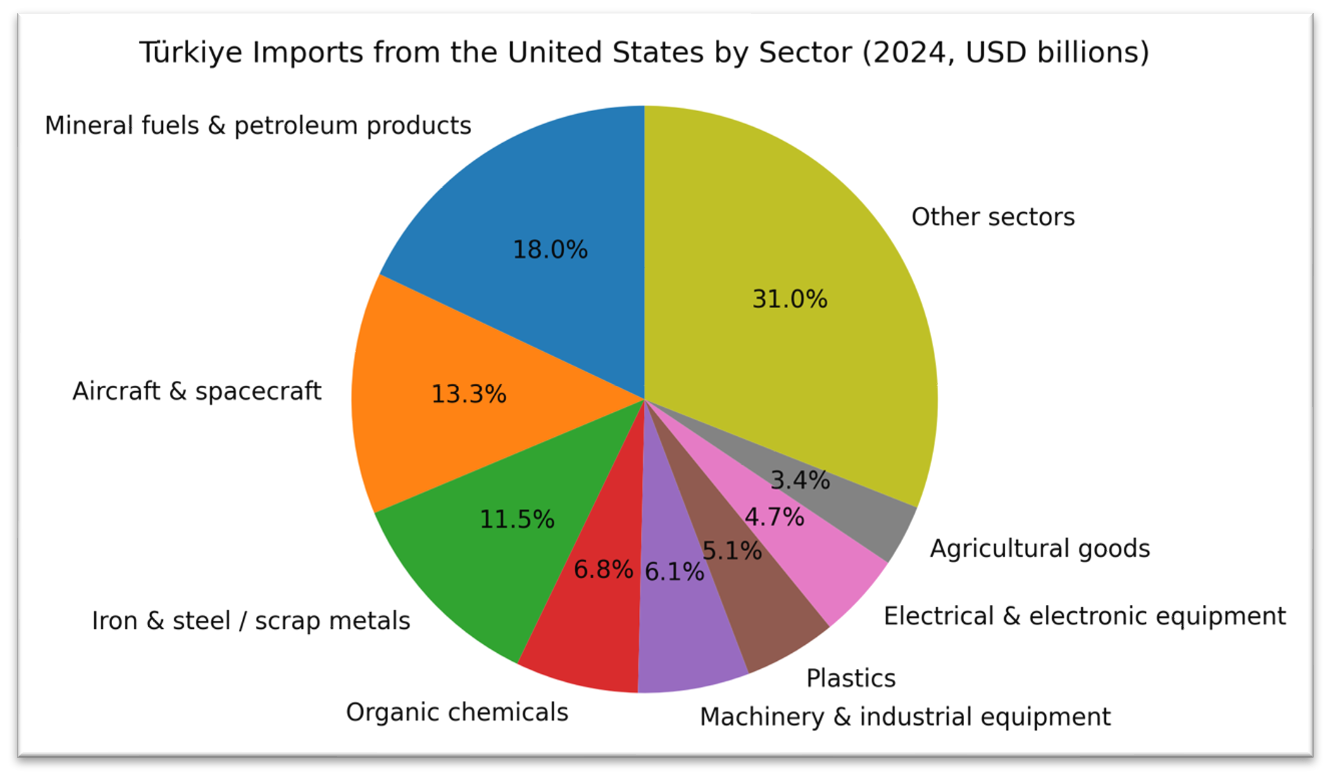
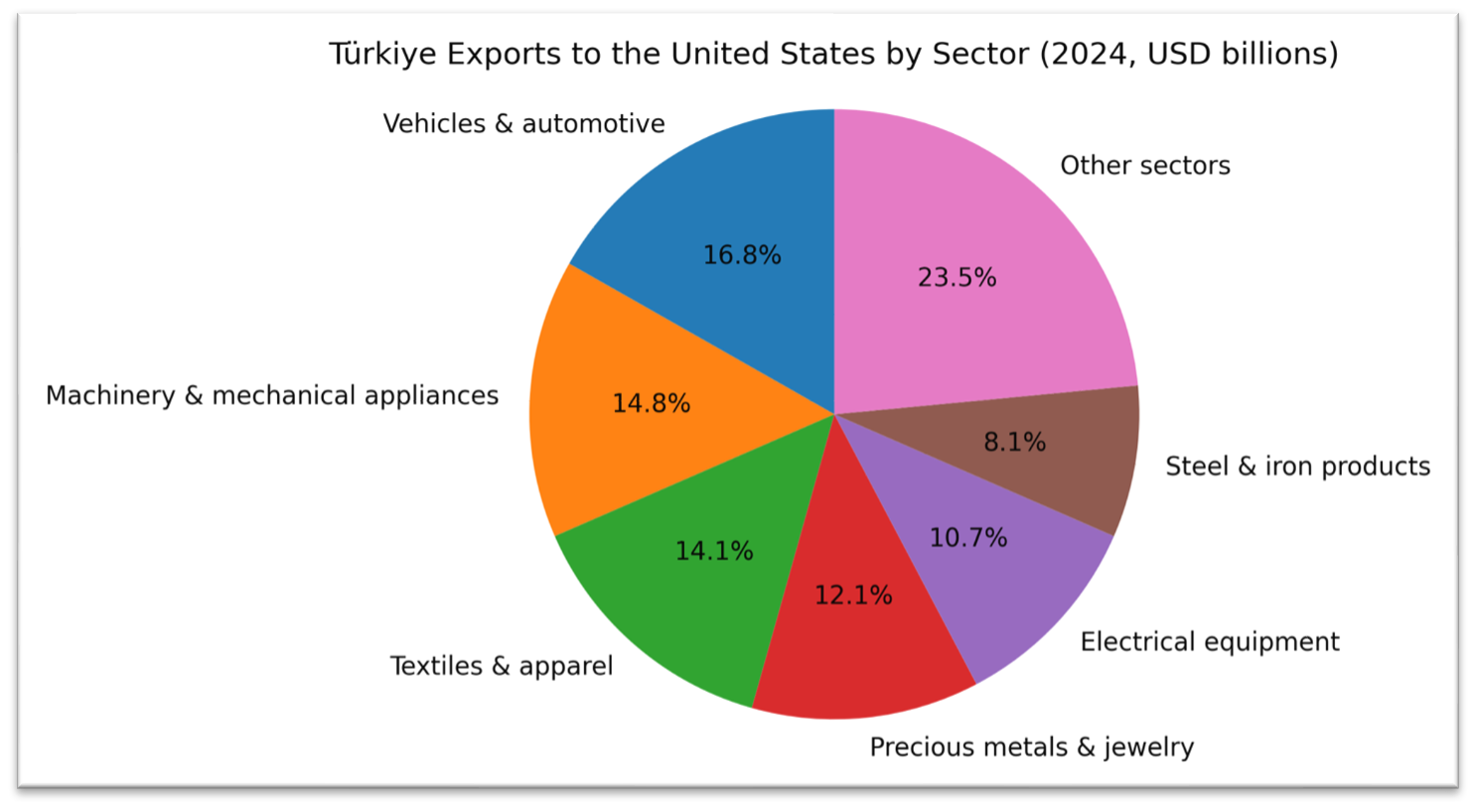
Türkiye’s trade policy has evolved to embrace not only its longstanding relationship with the EU but also a broader transatlantic dimension, particularly emphasizing ties with the United States. The commercial partnership between Türkiye and the United States is marked by mutually beneficial and largely complementary trade flows, with total bilateral trade surpassing US$32 billion in recent years. The structure of this trade is notably balanced; Türkiye exports a diverse range of goods to the United States, including automotive parts, machinery, textiles, and agricultural products, while importing aircraft, pharmaceuticals, chemicals, and advanced technology items. This equilibrium in imports and exports provides a stable platform for expanding cooperation and exploring new areas of economic engagement between the two countries.
Recognizing the potential for growth, both the Turkish and U.S. governments have articulated a shared interest in deepening bilateral trade relations. Recent initiatives have focused on enhancing collaboration in the energy[4] sector, particularly hydrocarbons, as Türkiye seeks to diversify its energy sources and reduce its reliance on traditional suppliers such as Russia and Iran. This includes joint exploration projects, investments in liquefied natural gas (LNG) infrastructure, and agreements to facilitate the flow of American energy resources into the Turkish market. In addition to hydrocarbons, Türkiye and the United States have also initiated discussions in the nuclear energy field, exploring avenues for technology transfer, safety cooperation, and long-term investments, all of which signal a strong commitment to deepening economic integration and energy security.
Amid ongoing trade frictions between Washington and Brussels, Türkiye finds itself in a strategic position to benefit from shifting global alliances. The current climate creates a window of opportunity for Ankara to pursue quasi-free trade agreements with the United States, particularly in sectors where tariff elimination would provide a competitive edge. Negotiations have centered on reducing or removing tariffs in areas such as automotive, machinery, defense industries, and advanced technology, potentially opening new markets for Turkish exporters while offering American businesses greater access to Türkiye’s dynamic domestic market. Such initiatives would not only promote mutual economic growth but also strengthen the transatlantic bond at a time of global uncertainty.
The Türkiye-U.S. trade relationship is poised for significant expansion as both nations seek to leverage complementary strengths and navigate the evolving landscape of transatlantic commerce. By building on balanced trade flows, expanding cooperation in critical sectors like energy and technology, and exploring the potential for deeper trade integration, Türkiye aims to secure a durable position within the global economy and enhance its strategic value to both the EU and the United States.
Figure 2: Türkiye’s Imports from U.S. by Sector
Source: Türkiye Exporters Assembly (TIM), https://www.tim.org.tr/en/export-export-figures.
Figure 3: Türkiye’s Exports to U.S. by Sector
Source: Türkiye Exporters Assembly (TIM), https://www.tim.org.tr/en/export-export-figures.
Regional integration
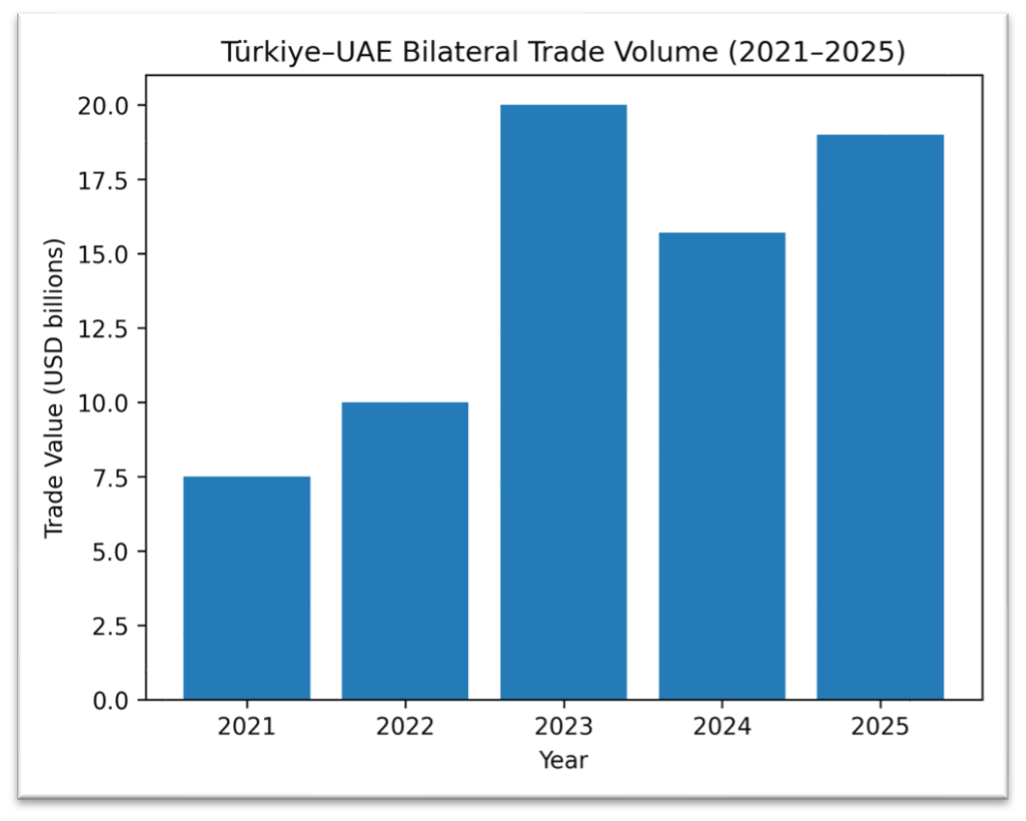
Türkiye’s approach to regional integration and trade diversification is multifaceted, encompassing partnerships across the Middle East, Gulf Cooperation Council (GCC), Iraq, and the Caucasus. The Comprehensive Economic Partnership Agreement (CEPA) with the UAE is a notable achievement, eliminating tariffs and duties across major sectors and driving trade volumes beyond US$40 billion. This agreement serves as a blueprint for further integration with the GCC, where Türkiye is pursuing a bloc-wide FTS.
Iraq represents another major export market for Türkiye, particularly in goods and services. The ambitious Development Road Project aims to connect Iraq’s Basra Port with Turkish land transfer routes via new railways, bridging the north-south trade divide and enhancing regional connectivity.
Opportunities are also emerging in the Caucasus, with Türkiye acting as a key link between oil-rich Azerbaijan and global markets. Recent political dialogue with Armenia, including the launch of direct flights[5] between Istanbul and Yerevan, highlights Türkiye’s potential to foster regional integration and shared prosperity. The planned Trump Route for International Peace and Prosperity (TRIPP) between Armenia and Azerbaijan could further strengthen these ties, positioning Türkiye as a connector in a politically fragmented region.
Figure 4: Türkiye-UAE Bilateral Trade (2021-2025)
Source: Türkiye Ministry of Trade, https://www.trade.gov.tr/statistics.
Sectoral shifts and economic transformation
Türkiye’s economic transformation is reshaping the foundations of its trade policy. Historically, Türkiye functioned as a manufacturing-heavy economy, focusing on final assembly and leveraging harmonization with EU standards. However, the rise of technologically advanced, innovation-driven sectors such as defense, fintech, and gaming is changing the landscape.
Manufacturing jobs, as in most advanced economies, are becoming less prevalent, while services now dominate the economic structure. Türkiye must adapt its trade policy to reflect these shifts, promoting exports in high-value and technology-intensive sectors. Failure to do so could result in lost revenue and missed opportunities for economic advancement. Reforming the customs union to support these new sectors is essential. Geopolitical cohesion with the EU, combined with strategic diversification, will accelerate Türkiye’s transition toward an advanced, innovation-driven economy.
Energy security and trade policy
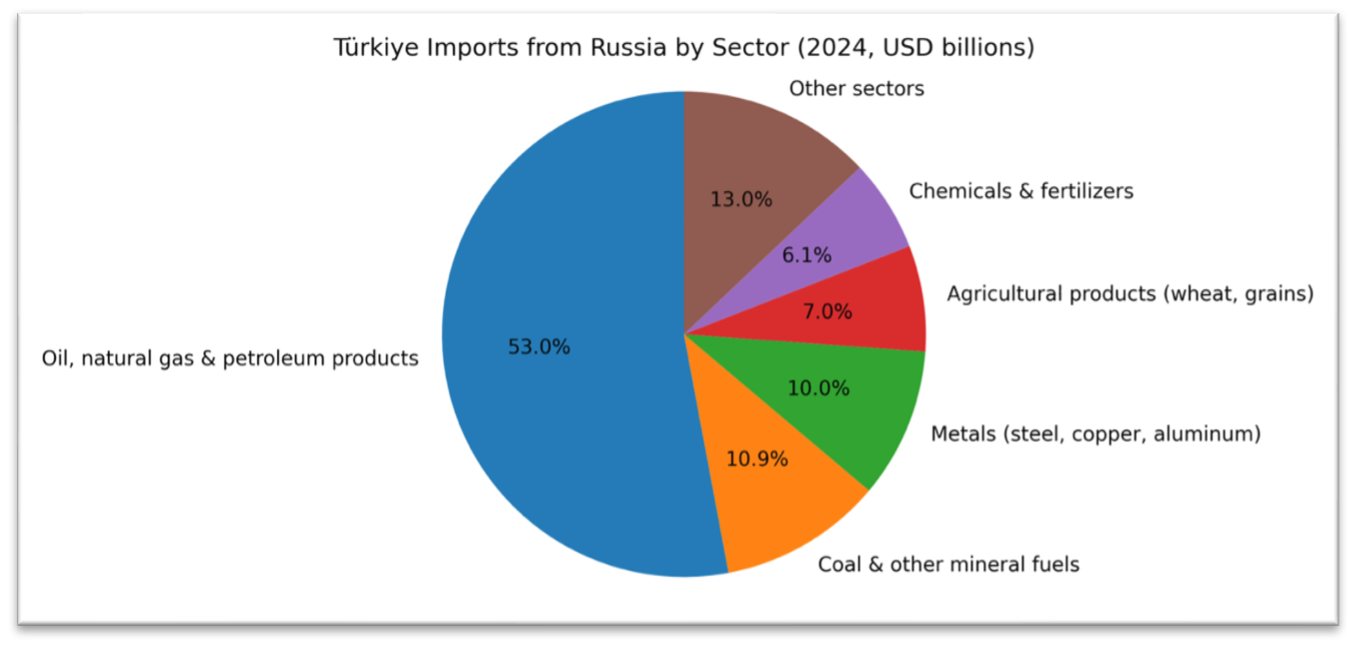
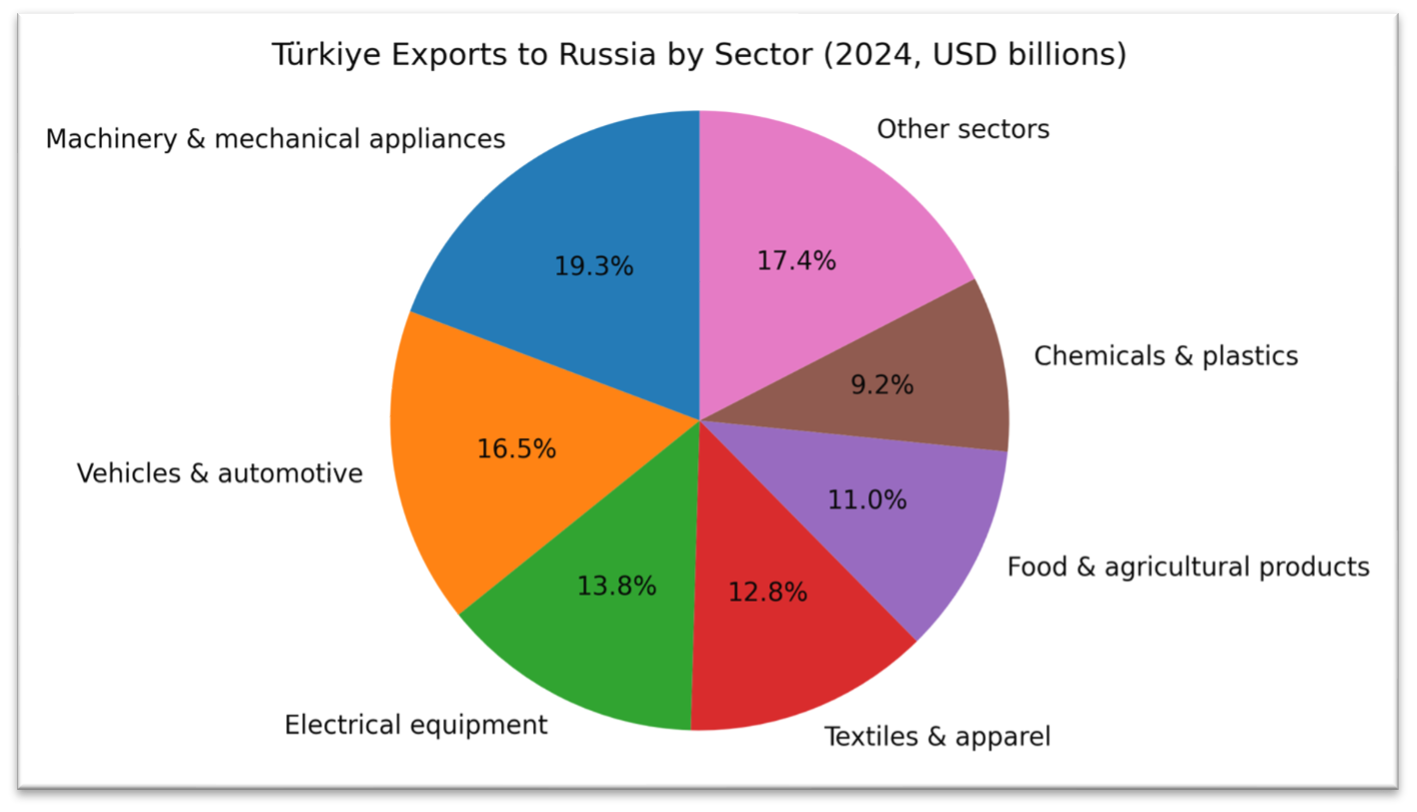
Energy security is a critical pillar of Türkiye’s trade policy, directly impacting the nation’s economic stability and growth prospects. Türkiye’s energy landscape is characterized by a marked reliance on imported resources, with hydrocarbons, especially natural gas and oil from Russia, constituting a substantial proportion of its energy supply. This dependency exposes Türkiye to significant strategic risks, as fluctuations in bilateral relations or disruptions in Russian energy flows could undermine the country’s economic and political interests.
Figure 5: Türkiye’s Imports from Russia by Sector
Source: Türkiye Exporters Assembly (TIM), https://www.tim.org.tr/en/export-export-figures.
Figure 6: Türkiye’s Exports to Russia by Sector
Source: Türkiye Exporters Assembly (TIM), https://www.tim.org.tr/en/export-export-figures.
The risks associated with overdependence on Moscow are multifaceted. Geopolitical tensions, sanctions, or supply interruptions have the potential to destabilize domestic markets, increase energy costs, and limit Türkiye’s leverage in transatlantic negotiations. Recognizing these vulnerabilities, Türkiye has prioritized diversification of its energy sources. Recent agreements with the United States and other global partners underscore a deliberate shift toward broadening access to alternative hydrocarbons and expanding cooperation in nuclear energy. These initiatives aim to reduce exposure to geopolitical uncertainties and foster sustainable development by securing reliable, cost-effective energy supplies.
Regional energy integration serves as a complementary strategy. Partnerships with Azerbaijan, leveraging the Southern Gas Corridor and other pipeline networks, have enhanced supply security and deepened economic ties. Similarly, engagement with Arab and African states, including investments in LNG infrastructure and joint ventures, has diversified Türkiye’s energy portfolio, mitigating risks associated with single-source dependence and promoting regional stability.
Balancing energy imports with the development of domestic capacity is essential for safeguarding Türkiye’s economic interests. Investments in renewable energy, expansion of local production, and modernization of energy infrastructure are critical steps toward reducing external vulnerability. This balanced approach not only fortifies Türkiye’s resilience against global market shocks but also positions the country for long-term, sustainable growth.
Türkiye’s proactive energy diversification and regional integration efforts are vital for enhancing economic security and maintaining competitiveness in an evolving global trade environment. By strategically aligning import policies with domestic developmental priorities, Türkiye can strengthen its resilience, support sustainable prosperity, and ensure its continued role as a key player in regional and international markets.
Policy recommendations
Türkiye’s evolving trade policy embodies a nuanced response to shifting global dynamics, regional integration imperatives, and profound domestic transformation. While the customs union with the EU has historically anchored Türkiye’s economic growth by facilitating access to European markets and encouraging production harmonization, its current structure imposes constraints that inhibit Türkiye’s capacity to address emerging challenges and seize new opportunities. In particular, the exclusion of agriculture and services from the customs union limits the full potential of Türkiye’s competitive sectors. Comprehensive reform that incorporates these fields is essential to future-proof Türkiye’s trade policy, enhance its global competitiveness, and ensure alignment with the country’s transition toward high-value, technology-driven industries.
Furthermore, Türkiye must proactively diversify its trade partners by leveraging regional agreements with the Gulf countries, Iraq, and the Caucasus. Deepening economic integration through these partnerships will help Türkiye mitigate risks associated with reliance on a limited set of markets and create new avenues for export growth. Expanding transatlantic ties with the United States, including the pursuit of quasi-FTAs, will further reinforce Türkiye’s global standing, enabling greater access to advanced technologies and high-value markets. Sectoral shifts toward innovation, technology, and services demand adaptive policy measures, such as targeted incentives, regulatory harmonization, and strategic investment, to foster sustainable growth and maintain international competitiveness.
Considering these developments, Türkiye must prioritize a multi-pronged approach to trade policy. This includes fortifying relationships with both traditional and emerging partners, investing in sectors with high growth potential, and ensuring that policy frameworks remain sufficiently agile to respond to global market shifts. The government should support sectoral transitions through workforce development programs, innovation grants, and infrastructure investments that facilitate the growth of technology and service industries. Such adaptive strategies will help Türkiye capitalize on evolving global trends and secure its place among advanced economies.
Energy security remains a cornerstone of Türkiye’s strategic outlook, requiring diversification of supply sources and balanced international partnerships. By reducing overdependence on any single supplier, especially in hydrocarbons, and investing in renewable energy, nuclear cooperation, and LNG infrastructure, Türkiye can mitigate geopolitical risks and safeguard its economic interests. Regional energy integration, such as partnerships with Azerbaijan, Central Asia, Africa, and Gulf states, further strengthens supply security and promotes stability. A balanced approach that combines import diversification with domestic capacity expansion will bolster Türkiye’s resilience against global energy market volatility and support sustainable development.
To summarize, Turkish policymakers should:
- Pursue comprehensive reform of the EU customs union, expanding its scope to include agriculture and services, thereby unlocking growth in sectors previously excluded and aligning with Türkiye’s evolving economic structure.
- Diversify trade partners through strengthened regional integration and negotiation of new free trade agreements (FTAs), reducing vulnerability to market fluctuations and enhancing export opportunities.
- Enhance competitiveness in technology and service sectors by investing in innovation, workforce development, and regulatory reforms that foster a dynamic, future-ready economy.
- Strengthen energy security through diversified imports, regional partnerships, and expansion of domestic renewable and conventional energy capacity to reduce strategic vulnerabilities and support long-term growth.
- Promote strategic, ongoing dialogue with the EU, United States, and key regional partners to collaboratively address emerging challenges, harmonize standards, and foster innovation-driven cooperation.
Türkiye’s prosperity depends on its ability to adapt proactively to global geoeconomic shifts, trade dynamics, embrace technological innovation, and forge resilient strategic partnerships. Policymakers and business leaders should work collaboratively to implement these recommendations, ensuring Türkiye’s continued relevance and competitiveness in the global economy. By fostering a culture of innovation and maintaining flexible, forward-looking trade policies, Türkiye can secure its position as a vital regional and international economic actor.
[1] Çiğdem Nas, “Turkey-EU Customs Union: Its Modernization and Potential for Turkey-EU Relations,” Insight Turkey, July 20, 2018, https://www.insightturkey.com/commentaries/turkey-eu-customs-union-its-modernization-and-potential-for-turkey-eu-relations.
[2] Harun Türker Kara, “Where Does Türkiye Stand in the EU-India Free Trade Agreement,” Daily Sabah, March 9, 2026, https://www.dailysabah.com/opinion/op-ed/where-does-turkiye-stand-in-the-eu-india-free-trade-agreement.
[3] Ivano di Carlo and Almut Möller, “Unleashing the Potential of EU-India Cooperation beyond the Free Trade Agreement,” European Policy Centre, March 3, 2026, https://www.epc.eu/publication/unleashing-the-potential-of-eu-india-cooperation-beyond-the-free-trade-agreement/.
[4] Pınar Dost, “How Energy and Trade Are Redefining US-Turkey Regional Cooperation,” Atlantic Council, October 9, 2025, https://www.atlanticcouncil.org/blogs/turkeysource/how-energy-and-trade-are-redefining-us-turkey-regional-cooperation/.
[5] “Turkish Airlines Launches Yerevan Flights amid Armenia-Türkiye Thaw,” Hürriyet Daily News, March 12, 2026, https://www.hurriyetdailynews.com/turkish-airlines-launches-yerevan-flights-amid-armenia-turkiye-thaw-219888.